You're typing the wrong question into Google.
“Best olive oil in USA” sounds smart, but it pushes you toward the worst kind of advice: static rankings, pretty bottles, and breathless claims from people who want you to shop with your eyes instead of your judgment.
A good buyer doesn't chase a mythical champion. A good buyer learns how to spot freshness, read labels, taste for defects, and match the oil to the food. Once you know that, you stop needing anyone's top-ten list. You can walk into a supermarket, a farm stand, or an online shop and make a strong decision in minutes.
That's the real edge. Not memorizing brands. Building a filter.
The Search for the Best Olive Oil Is a Trap
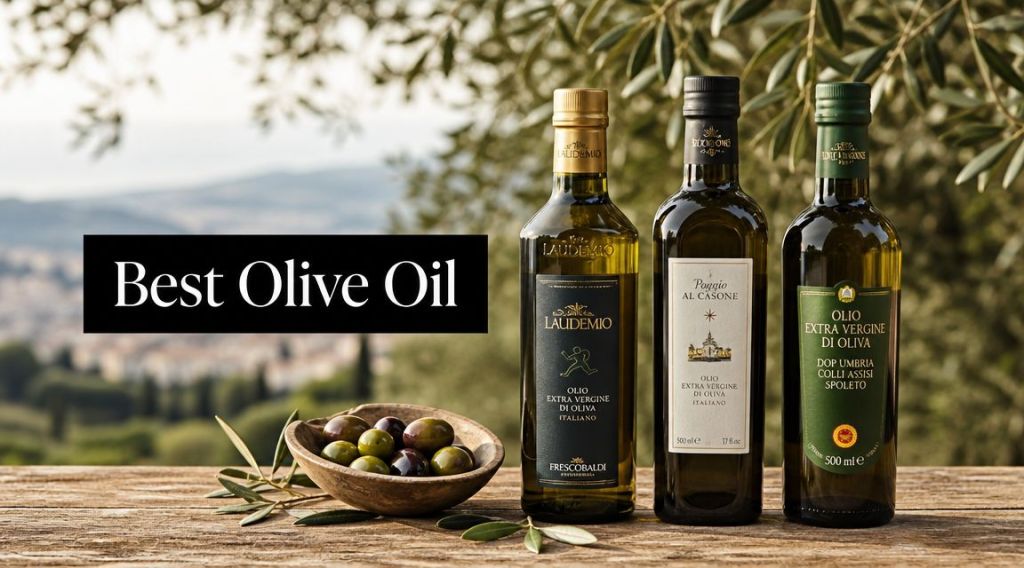
Stand in any grocery aisle and you'll see the con. Tall bottles. Rustic fonts. Gold medals. Tuscan villas. Words like “premium,” “pure,” “first cold pressed,” and “artisan” splashed across labels as if they mean the bottle deserves your trust.
Most of that is theater.
The popular advice says your first job is to worry about fake oil. That's outdated thinking. Fraud makes headlines because scandal sells. But the bigger problem for most American shoppers isn't counterfeit oil. It's buying oil that's tired, flat, badly stored, or chosen for the wrong use.
That changes everything.
If you think the mission is “find the one best bottle,” you'll shop like a tourist. You'll overpay for romance. You'll mistake expensive for excellent. You'll buy a peppery finishing oil, then burn through it in a skillet and wonder why olive oil feels overrated.
The industry loves confused buyers. Confused buyers cling to slogans. Informed buyers look for evidence.
The better question is simple: what oil is best for your purpose, your palate, and the condition the bottle is in right now?
That's a completely different game. It's a game you can win.
You need a framework that travels with you. One bottle at Whole Foods. Another at a farmers market. Another from a producer you found online. The same standard applies every time.
If you want a deeper primer on separating purity from quality, this guide on olive oil authenticity is worth reading before your next purchase.
Stop hunting for a crown. Start learning the tells.
The Three Pillars of True Olive Oil Quality
The best olive oil in the USA isn't a single bottle. It sits at the intersection of freshness, production integrity, and flavor profile.
Miss one, and the bottle can still disappoint.

Freshness beats mythology
Here's the fact most shoppers never hear. The California Olive Oil Council says its test results consistently show more than 98% of olive oils in U.S. supermarkets are authentic and not adulterated, while also noting that heat, light, and air degrade oil after bottling (California Olive Oil Council on purity and quality).
That should snap your attention away from internet folklore and toward the enemy: staleness.
Olive oil is fruit juice. You don't improve it by treating it like a collectible. You preserve it by buying it fresh, keeping it away from heat and light, and using it before it fades.
If I had to choose between a famous brand with weak freshness cues and a lesser-known bottle with a clear harvest date and careful packaging, I'd take the fresher bottle every time.
Production integrity tells you how much care went into the bottle
A serious producer leaves clues.
Look for transparent origin, clear labeling, and packaging that protects the oil. Dark glass and tins do a better job than clear bottles that put the oil on display like jewelry. A label that tells you where the olives came from is stronger than one that hides behind vague romance.
Buyers are often manipulated. They see “imported,” “Mediterranean,” or “estate style” and assume quality. Those words can be harmless, but they don't prove anything on their own.
Production integrity means the producer behaves like someone who expects scrutiny.
A useful related read is this guide to olive oil polyphenol content, especially if you care about intense, vivid oils rather than soft, anonymous ones.
Flavor profile decides whether the oil is right for you
Many shoppers buy the wrong olive oil because they think intensity equals superiority.
It doesn't.
Some excellent oils are mild and gentle. Others are grassy, bitter, and peppery. The point isn't to force every meal through one flavor profile. The point is to know what kind of oil you're buying and whether that matches the job.
Here's the cleanest way to understand it:
| Pillar | What to check | Why it matters |
|---|---|---|
| Freshness | Harvest date, packaging, storage conditions | Fresh oil tastes alive. Old oil tastes dull. |
| Production integrity | Specific origin, careful labeling, protected bottle | Serious producers make it easier to verify what you're buying. |
| Flavor profile | Delicate, medium, or robust character | The right oil for grilled bread isn't always the right oil for cake or fish. |
Practical rule: Don't ask whether a bottle is “the best.” Ask whether it's fresh, honestly presented, and suited to the way you'll use it.
That one shift will save you money and improve your cooking faster than any brand ranking.
How to Decode an Olive Oil Label Like an Expert
Most labels are designed to flatter you, not inform you. Your job is to ignore the flattery and hunt for the few details that matter.

Start with the dates
The first thing I look for is the harvest date. That's the bottle's birth certificate. It tells you when the olives were picked and gives you a real sense of the oil's life stage.
A best by date is weaker. It can still help, but it's not the same. “Best by” tells you what the seller wants you to believe about shelf life. Harvest date tells you when the story began.
If a bottle gives you both, good. If it gives you only “best by,” proceed with more caution. If it gives you neither, you're buying blind.
Look for what the grade actually means
The phrase extra virgin gets thrown around casually, but there is a real benchmark behind it. The USDA standard says U.S. Extra Virgin Olive Oil must be virgin olive oil with a median defect score of 0 and a median fruitiness greater than 0, which means excellent flavor and odor with clean fruit character (USDA olive oil standards).
That matters because it gives you a hard line in the sand. Extra virgin isn't supposed to be vague lifestyle branding. It's supposed to mean no sensory defects and actual fruitiness.
If a bottle claims greatness but tastes waxy, flat, or tired, the romance on the label doesn't rescue it.
Ignore the seductive nonsense
Some terms are useful. Some are decorative.
Use this filter:
- Helpful details: Harvest date, country or region of origin, olive varietal, and credible certification marks.
- Potentially useful but incomplete: Cold extracted or cold pressed. Nice to see, but not enough by itself.
- Mostly marketing fog: Premium, pure, crafted, reserve, rich taste, and similar fluff.
A bottle that says less but says something verifiable usually beats a bottle that says everything.
For a stronger checklist, this guide on how to read an olive oil label is a practical companion for shopping.
Read the bottle like a detective
I like a fast five-point scan:
- Find the harvest date. If there isn't one, the bottle loses points immediately.
- Read the origin carefully. Where were the olives grown, not just where was it bottled.
- Check the grade. “Extra virgin” should mean something sensory, not ornamental.
- Look at the container. Dark glass or tin earns trust faster than clear glass.
- Notice whether the producer gives specifics. Specificity is confidence. Vagueness is cover.
If the label makes you feel something but tells you nothing, put it back.
That habit alone will separate you from most shoppers in the aisle.
Trust Your Senses A Simple Guide to Tasting
You don't need a sommelier certificate to taste olive oil well. You need attention. That's all.
The olive oil world has become more rigorous because judging is no longer just gossip and personal preference. The NYIOOC statistics platform reflects a competition system where verified awards and producer rankings help buyers identify oils that perform well under structured sensory evaluation. That matters because your own tasting can follow the same broad logic: look for positive attributes, watch for defects, and trust what your mouth tells you.

Smell first
Pour a small amount into a glass. Cup it with your hand for a moment to warm it slightly, then inhale.
Good oil should smell alive. Green, herbaceous, nutty, fruity, maybe tomato leaf, maybe apple, maybe fresh-cut grass. The exact notes vary. The point is vitality.
Bad oil tells on itself quickly. If it smells stale, dusty, waxy, or oddly lifeless, listen.
Sip second
Take a small sip and move it across your tongue. Don't gulp. Let it spread.
You're looking for three positive signals:
- Fruitiness means the oil still expresses the olive.
- Bitterness often shows up on the tongue and can be a good sign in fresh oil.
- Pungency is the peppery catch in the throat that many good oils deliver.
Those last two scare beginners because they assume smooth means superior. Wrong. In excellent extra virgin olive oil, bitterness and pepper can be signs of freshness and character.
A bland oil isn't automatically elegant. Sometimes it's just tired.
Judge the finish
After you swallow, ask one question. Do you want another sip?
That sounds basic. It isn't. Great olive oil leaves a clean, compelling finish. It may be soft or assertive, but it should feel coherent. Nothing muddy. Nothing greasy. Nothing stale.
If you want a visual walkthrough, this short video is useful:
You can also sharpen your tasting habits with this guide on how to taste olive oil.
A simple home scorecard
Use this when tasting two or three bottles side by side:
| What you notice | Good sign | Warning sign |
|---|---|---|
| Aroma | Fresh, green, fruity, clean | Flat, stale, musty, waxy |
| Palate | Defined flavor, balance, liveliness | Greasy, dull, muddy |
| Finish | Pleasant bitterness or pepper, clean exit | Lingering staleness or no personality |
Do this twice and your palate gets sharper fast. Do it ten times and most label marketing loses its power over you.
Matching the Right Oil to Your Food
The smartest olive oil buyer doesn't own one magic bottle. They own a small lineup, or at least think in categories.
That's because “best” changes with the plate.
The most useful framing I've seen is this: ask what oil is best for the price and purpose, not what is best in the abstract. That use-case thinking is far more practical for real shopping and cooking (practical olive oil buying by purpose).

Delicate oils for quiet dishes
A delicate oil belongs where you want support, not a speech.
Use it for mild fish, soft cakes, simple mayonnaise, tender greens, or vegetables that don't need a peppery punch. If the oil shouts louder than the food, you chose the wrong bottle.
Medium oils for everyday cooking
This is the workhorse category. A medium-bodied extra virgin olive oil handles sautéing, vinaigrettes, roast vegetables, grains, beans, pasta, and weeknight cooking without fuss.
If you buy only one bottle, this is usually the lane to occupy. Not because it's the most glamorous, but because it's the most useful.
Robust oils for finishing
Full-bodied oil belongs at the table, not hidden in the pan.
Drizzle it over bean soup, grilled steak, bruschetta, bitter greens, tomato salad, or roasted mushrooms. Let the oil register. Let that bitterness and pepper do their job.
Many shoppers waste money by purchasing a beautiful, expressive oil and then using it where heat and other ingredients bury its personality.
Save your most distinctive oil for the moment people can actually taste it.
Build an olive oil wardrobe
You don't need a cellar. You need a little range.
- For daily cooking: Choose a balanced, medium-style EVOO that you won't feel guilty using generously.
- For finishing: Keep one more expressive bottle with clear character for bread, salads, soups, and grilled foods.
- For specialty dishes: Add a delicate option when needed for baking or subtle seafood.
If you cook Mediterranean food often, pairing meals with the right oil becomes easier when the dishes are planned with flavor in mind. An AI-generated Mediterranean plan can help you think through that pairing in a practical way, especially if you want to use one mild oil for cooking and save a stronger bottle for final drizzling.
The best olive oil in the USA for you might be one bottle on Tuesday and a different bottle on Saturday. That isn't inconsistency. That's skill.
Where to Find and Buy Exceptional US Olive Oil
Buy channels matter. A brilliant oil can die in a bad store. An ordinary-looking listing online can hide a superb producer who handles freshness with care.
So don't ask only what to buy. Ask where the bottle has been.
Online specialty retailers
This is often the strongest route if you care about selection and detail. Good online sellers usually give more information than a supermarket shelf tag ever will. They tend to show harvest data, origin, flavor notes, and producer background more clearly.
The risk is simple. You can't taste before buying. So the burden shifts to the seller's transparency.
When I shop online, I want to see specifics. If the listing is vague, overloaded with adjectives, or missing basic facts, I move on.
Farmers markets and direct-from-producer sales
This is the most educational way to buy.
You can ask direct questions. When was it harvested? What varieties are in the bottle? How do you recommend using it? Producers who know their oil answer cleanly and without theater.
This is also where smaller domestic producers can surprise you. If you want an example of how farm discovery can work outside the usual grocery ecosystem, you can discover Oliveira Farms through a marketplace that helps surface farms directly.
Supermarkets and upscale grocers
These stores win on convenience and lose on control.
Some have excellent bottles. Some also leave olive oil under bright lights for too long, stock old inventory, or mix careful producers with giant labels whose main talent is shelf presence. You have to inspect, not assume.
A good retailer makes freshness easier to verify. A lazy retailer makes every bottle a guess.
Use awards as a screening tool, not a religion
The official NYIOOC results list 95 award-winning extra virgin olive oils from the United States, which gives buyers a vetted way to find producers recognized for aroma, flavor, and lack of defects (NYIOOC United States award-winning oils).
That's useful. Very useful.
But don't turn awards into blind faith. Think of them as a shortlist generator. They tell you who deserves your attention. They don't replace your own judgment on freshness, style, and price.
A bottle can come from a strong producer and still be a poor buy if it's old, badly stored, or wrong for your kitchen.
What to ask before you buy
Here's the short version of my buying script:
- Ask about harvest timing: Freshness starts there, and a seller who doesn't know it is already on weak footing.
- Ask about flavor style: Delicate, medium, or intense is more useful than poetry about sun-drenched hillsides.
- Ask how the seller stores the oil: Heat and bright light are obvious red flags.
- Ask what the oil is best for: Cooking, dressing, finishing, or all-purpose use should get a direct answer.
If you want a non-promotional resource that helps with these quality cues, Learn Olive Oil's guide to high-quality olive oil covers the practical signs buyers should check before committing to a bottle.
My blunt buying hierarchy
If I want the best olive oil in the USA and I can't taste first, I rank my options like this:
| Buying option | What I like | What I watch for |
|---|---|---|
| Direct from producer | Best chance at transparency and freshness | Limited selection, seasonal availability |
| Specialty online retailer | Broad range, good filtering by style and origin | Need strong product details |
| Farmers market | Direct conversation, educational value | Varies by seller knowledge |
| Upscale supermarket | Convenience, occasional strong finds | Storage, old stock, vague labels |
| Mass supermarket shelf | Easy access | Requires stricter label scrutiny |
A smart buyer doesn't just find a producer. A smart buyer finds a reliable path to a good bottle.
You Are Now an Olive Oil Expert
Not in the ceremonial sense. In the useful sense.
You no longer need to stand in front of a shelf hoping a medal, a price tag, or an Italian-sounding name will save you from a bad choice. You know the ultimate test. Freshness. Integrity. Flavor. That's the whole game.
You know labels can mislead, but details rarely do. You know your senses matter more than the bottle's backstory. And you know the right oil depends on what's for dinner, not what won the prettiest packaging contest.
That's how people find the best olive oil in the USA. Not by memorizing a frozen list, but by learning a durable standard they can apply anywhere.
Buy one bottle with care. Taste it plain. Use it on food that lets it speak. Then compare the next bottle against that memory.
Do that a few times and your confidence will rise fast. More important, your cooking will change. Salads will taste sharper. Soups will finish cleaner. Toast, beans, fish, tomatoes, roasted vegetables, all of it will start revealing what good olive oil does.
That's when olive oil stops being a grocery item and starts becoming an ingredient you understand.
If you want to keep sharpening that skill, Learn Olive Oil is a practical next stop. It covers how to choose quality bottles, decode labels, taste with confidence, and buy with better judgment so you can keep improving long after this article.


Leave a Reply