Ever wonder what makes one bottle of extra virgin olive oil a genuine health elixir and another just… cooking oil? The secret, in a word, is polyphenols. These naturally occurring antioxidants are the real source of EVOO’s legendary health benefits and that signature peppery kick you feel at the back of your throat.
The Secret Power Inside Your Olive Oil

Think of polyphenols as the olive's built-in defense system. As olives ripen on the tree, they create these compounds to fend off environmental threats like harsh UV rays, pests, and other stressors. When we consume a true, high-quality extra virgin olive oil, we’re essentially borrowing those powerful protective benefits for ourselves.
This guide will walk you through exactly what these compounds are, why their concentration matters so much for your health, and how to spot a high-polyphenol oil on the shelf. For anyone serious about their health, learning to identify these oils is the key to getting the most out of this liquid gold.
Why Polyphenol Levels Matter
The concentration of these antioxidants directly shapes both the health benefits and the flavor of the oil. An oil with a high polyphenol count will often have a distinctly bitter or peppery finish. That isn't a flaw—it's the mark of quality. It’s the taste of potent compounds like oleocanthal doing their job.
These compounds are the reason EVOO is linked to so many wellness advantages, including:
- Cardiovascular Support: They help protect blood lipids from oxidative stress, a key factor in heart health.
- Anti-Inflammatory Action: Certain polyphenols have been shown to help lower systemic inflammation.
- Cellular Protection: As powerful antioxidants, they fight the free radicals that contribute to aging and disease.
The most important thing to remember is that not all olive oils are created equal. A standard, refined olive oil might have barely any polyphenols left, while a premium EVOO can be absolutely packed with them.
Several critical factors determine how many polyphenols actually make it into the bottle. Here's a quick summary of what makes the biggest difference.
Key Factors Influencing Polyphenol Levels
| Factor | Impact on Polyphenol Content |
|---|---|
| Olive Variety (Cultivar) | Some olive types, like Picual or Cornicabra, are naturally gifted at producing high levels of polyphenols. |
| Harvest Time | Olives picked early in the season, while still green, contain significantly more polyphenols than late-harvest, ripe olives. |
| Production Method | True cold-pressing preserves these delicate compounds. High heat or chemical extraction destroys them. |
| Storage | Polyphenols degrade when exposed to their three enemies: light, heat, and air. Proper storage is essential. |
Ultimately, from the farmer's choice of olive to the way you store the bottle in your kitchen, every step plays a role in preserving these invaluable compounds.
Alright, let's break down what these "polyphenols" in olive oil really are, without getting lost in a chemistry textbook.
What Exactly Are Olive Oil Polyphenols?
At their heart, polyphenols are a group of powerful, naturally occurring compounds found in plants. In the case of olive oil, they're created by the olive tree to protect its fruit from things like harsh sunlight and pests. Think of them as the olive's built-in defense system.
When we press those olives into a high-quality oil, that protective power is transferred to the oil itself—and ultimately, to us when we eat it. This is where the magic happens. You’re not just getting fat and flavor; you're getting a dose of the very compounds that kept the olive healthy.
Meet the Stars of the Show: Oleocanthal and Oleacein
While there are hundreds of different polyphenols, two of them are true rockstars in the world of extra virgin olive oil: oleocanthal and oleacein. These belong to a special class called secoiridoids, which are almost exclusively found in the olive family.
Ever tasted an olive oil that gives you a sharp, peppery tickle in the back of your throat? That's the signature of oleocanthal. It's not a flaw—far from it. That sensation is a direct signal of a fresh, high-quality oil packed with polyphenols. In fact, that peppery kick comes from an anti-inflammatory action so potent that scientists have compared it to a low dose of ibuprofen.
Its partner in crime, oleacein, is another superstar antioxidant. Together, these two compounds do the heavy lifting when it comes to the health benefits we associate with real extra virgin olive oil. They help fight oxidative stress, which you can think of as the cellular "rust" that builds up in our bodies over time from exposure to unstable molecules known as free radicals.
By neutralizing free radicals, polyphenols act as your body's internal guardians. They help protect everything from your heart to your brain, which is the incredible value you get from a genuinely high-polyphenol EVOO.
Just how much of this good stuff are we talking about? The difference between oils is huge. A standard extra virgin olive oil might have a polyphenol count around 210 mg/kg. But a truly exceptional, health-focused oil can soar to over 550 mg/kg. And in those top-tier oils, secoiridoids like oleocanthal and oleacein make up the lion's share—about 93% of the total. If you're curious, you can explore the detailed composition of olive oil polyphenols and see the full lineup.
The Supporting Cast of Compounds
Beyond the big two, a great olive oil contains a whole team of other polyphenols that work together to boost its health profile. They generally fall into a few key families:
- Tyrosols: This group includes simple but effective antioxidants like hydroxytyrosol and tyrosol, which our bodies can absorb very easily.
- Phenolic Acids: Known for their powerful antioxidant and anti-inflammatory capabilities.
- Flavonols and Flavones: These contribute to the oil's color and are linked to a wide array of protective health benefits.
The key takeaway is that a high olive oil polyphenol content doesn't just mean more of one thing. It means you're getting a complex, synergistic blend of nature's best protectors. It’s this natural variety that makes authentic EVOO such a cornerstone of a healthy diet.
What Science Says About High-Polyphenol EVOO

While it's easy to make vague wellness claims, the benefits tied to a high olive oil polyphenol content are specific, measurable, and backed by some serious science. These aren't just nutritional perks; these compounds work on a cellular level to protect your body.
In fact, the evidence is so strong that the European Union has approved an official health claim for it. The claim centers on how polyphenols protect blood lipids—think cholesterol—from oxidative damage. It's a bit like preventing the LDL cholesterol in your arteries from "rusting," a process that can lead to plaque buildup. By acting as powerful antioxidants, polyphenols help keep your cardiovascular system clear and healthy.
You don't need to consume a huge amount to get this benefit. A daily intake of just 20 grams of high-polyphenol olive oil (about 1.5 tablespoons) is enough to kickstart this protective effect. It’s a perfect example of how a small, simple change can have a big impact.
But fantastic cardiovascular support is just where the story starts. When you consistently use a high-polyphenol EVOO, the benefits extend to other critical areas of your health.
A Powerful Natural Anti-Inflammatory
You know that peppery kick you get in the back of your throat from a really good olive oil? That’s from a polyphenol called oleocanthal, and it does more than just tingle. It has natural anti-inflammatory properties that have been compared to a low dose of ibuprofen.
Chronic, low-grade inflammation is now understood to be a driver behind many modern diseases. Making this kind of olive oil a regular part of your diet helps your body manage that systemic inflammation. It's a proactive way to calm things down internally before they escalate into bigger issues.
Fueling a Healthier Brain
The brain is an energy hog, using a ton of oxygen, which makes it highly susceptible to oxidative stress. Here again, the antioxidant muscle of olive oil polyphenols comes into play, providing neuroprotection by shielding brain cells from this constant wear and tear.
This cellular defense is directly linked to preserving cognitive function as we age. Emerging research on the Mediterranean diet points to diets rich in these compounds as a factor in better long-term brain health, making a bottle of high-polyphenol oil a smart investment for your mind.
The real takeaway here is that these compounds are much more than a flavor enhancer. They deliver tangible, scientifically-validated benefits for some of the most important systems in your body. Choosing an EVOO with a high polyphenol count means you're getting:
- Heart Protection: Actively shields LDL cholesterol from damaging oxidation.
- Reduced Inflammation: Helps dial down chronic, body-wide inflammation.
- Brain Defense: Guards delicate brain cells against oxidative stress.
Once you grasp these advantages, it's clear why checking the olive oil polyphenol content is more than just a foodie detail—it's a crucial step for anyone serious about their long-term health.
How to Read the Numbers on the Bottle
Walking down the olive oil aisle can feel overwhelming. The labels are crowded with information, but once you know what to look for, you can easily spot an oil that’s packed with health-boosting polyphenols. The single most important number is the total polyphenol count, which you’ll usually see listed in milligrams per kilogram (mg/kg).
Think of this number as a direct measure of the oil’s antioxidant firepower. A higher number signals more of those beneficial compounds that fight inflammation and give great olive oil its signature peppery kick.
The difference between oils can be huge. A standard supermarket EVOO might only have 100-200 mg/kg. On the other hand, a premium, early-harvest oil can easily clear 500 mg/kg and sometimes even push toward 1000 mg/kg.
The EU Health Claim Benchmark
So, what number officially counts as "high polyphenol"? For that, we can thank the European Union. Back in 2012, they established a legal benchmark to cut through the marketing noise.
Under Regulation 432/2012, an olive oil can make a specific health claim if it contains at least 250 mg of polyphenols per kilogram. This claim states that the oil "contributes to the protection of blood lipids from oxidative stress." This isn't just a random number; it's based on research showing that a daily intake of about 20 grams (roughly 1.5 tablespoons) is needed to get this protective effect. You can dive deeper into the science behind this powerful superfood.
Put simply, this 250 mg/kg threshold is your starting line. Any oil that meets or exceeds this is officially recognized as a "high-phenolic" olive oil with scientifically validated benefits.
Why Higher Is Often Better
While 250 mg/kg is a great starting point, aiming even higher is a wise move. Polyphenols are fragile. They degrade over time when exposed to their three biggest enemies: light, heat, and oxygen.
Think of it like a car's gas tank. An oil starting with 600 mg/kg of polyphenols is like a full tank, ensuring you'll still have plenty of power months down the road. An oil starting at the 250 mg/kg minimum is like starting with half a tank—it will run out of gas much sooner.
This is why the harvest date is just as important as the polyphenol count. A fresh oil is a potent oil. When you find a bottle with a recent harvest date and a high initial polyphenol count, you’ve found the gold standard of therapeutic extra virgin olive oil.
A Practical Guide to Finding High Polyphenol Oils
Alright, now that we've covered the science, let's get practical. How do you actually spot a high-polyphenol olive oil on a crowded grocery store shelf? It's easier than you think once you know what to look for. Forget the confusing marketing buzzwords and focus on what really matters: the olive variety, when it was picked, and how it’s packaged.
The quest for high olive oil polyphenol content begins with the olive itself. Just like some grapes are destined to become bold red wines, certain olive varieties—or cultivars—are simply natural powerhouses when it comes to producing these beneficial compounds. Getting familiar with names like Picual, Coratina, or Moraiolo gives you an immediate advantage.
The Power of the Harvest Date
If you only look at one thing on the bottle, make it the harvest date. This is the single most important clue to an oil’s potency. Polyphenols are most concentrated when olives are young, green, and unripe. As they mature and darken, those precious polyphenol levels begin to plummet.
This is why "early harvest" isn't just a marketing term; it's a promise of quality. An oil bottled last month is useless if it was harvested two years ago. Always, always look for the most recent harvest date available, ideally from the latest season. This ensures the oil was at its peak when bottled and hasn't spent years slowly losing its punch.
That sharp, peppery kick you feel at the back of your throat? Or a distinctively bitter taste? That’s not a defect. It's the hallmark of a high-quality oil, the signature of powerful polyphenols like oleocanthal doing their job. You're literally tasting the antioxidant power.
The difference the harvest time makes is staggering. For instance, research shows that an early harvest oil from the Halkidiki cultivar in Greece can pack an average of 495 mg/kg of polyphenols, blowing past the more common average of around 330 mg/kg. You can dig into the findings on how olive variety impacts health benefits to see the data for yourself.
Decoding the Bottle and the Label
Finally, how the oil is bottled tells you a lot about the producer's commitment to quality. Light is the enemy of polyphenols; it degrades them quickly. Any producer who has worked hard to create a polyphenol-rich oil isn't going to sabotage it by putting it in a clear glass bottle.
Here’s what to look for:
- Opaque Packaging: This is non-negotiable. The oil must be in a dark green or black glass bottle, a tin, or a ceramic container to shield it from light.
- Specific Details: The best brands are proud of their work. They’ll tell you the polyphenol count (in mg/kg), the specific olive cultivar used, and the exact harvest date.
- Certifications: While not a deal-breaker, seals from third-party certifiers or Protected Designation of Origin (PDO) labels offer an extra layer of confidence.
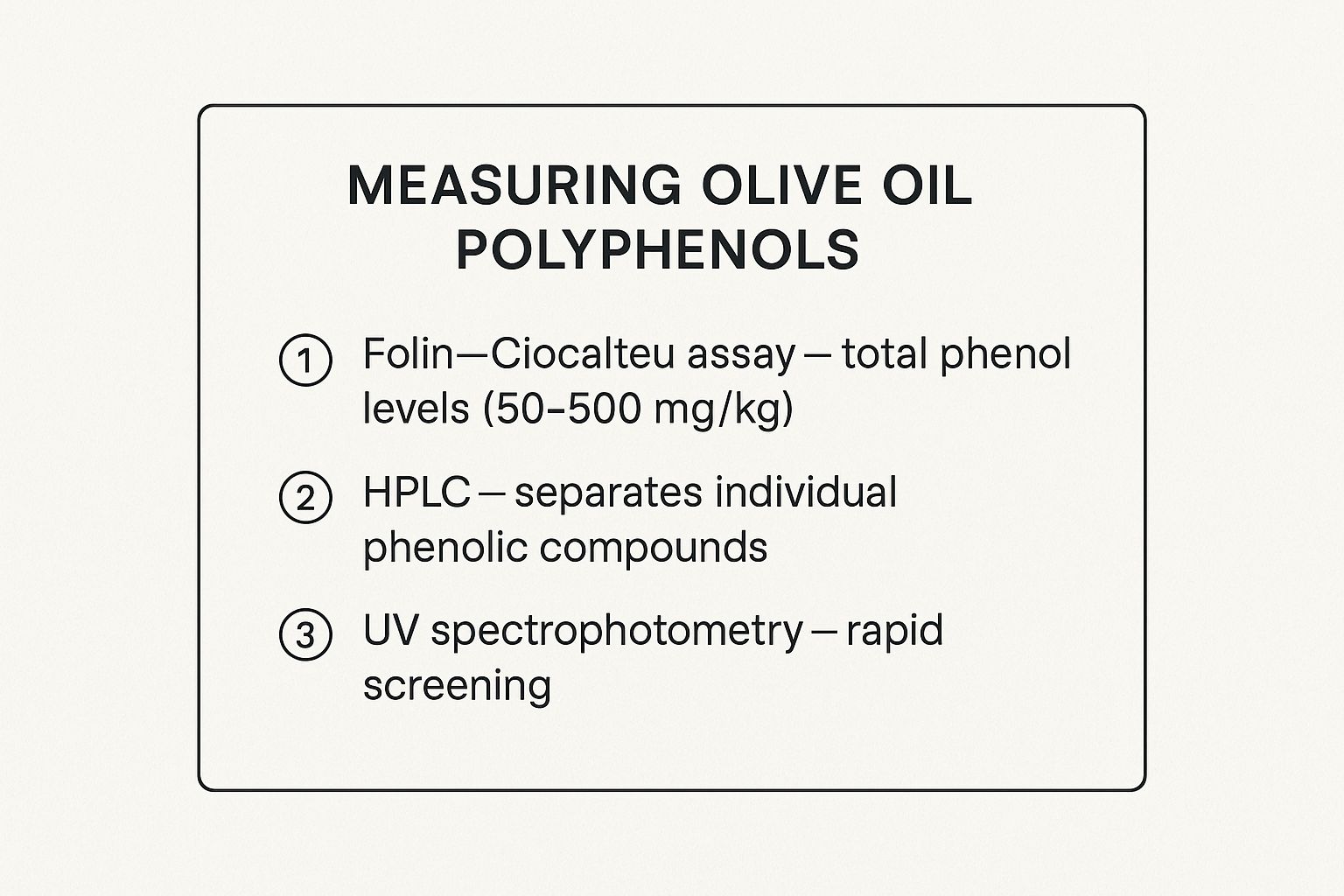
This chart gives you a peek behind the curtain, showing how professionals use advanced methods like HPLC to precisely measure the compounds you're after.
To make it even easier, here's a quick checklist to take with you on your next shopping trip.
High Polyphenol EVOO Shopping Checklist
This simple table summarizes the key indicators of a high-quality, polyphenol-rich extra virgin olive oil.
| Check for | Why It Matters |
|---|---|
| A Recent Harvest Date | Polyphenols are highest right after harvest and degrade over time. Fresh is best. |
| Opaque Bottle or Tin | Protects the fragile polyphenols from being destroyed by light exposure. |
| "Early Harvest" Label | Indicates the olives were picked when young and green for maximum polyphenol levels. |
| Specific Olive Cultivar | Cultivars like Coratina, Picual, or Moraiolo are known for high polyphenol content. |
| A Peppery/Bitter Taste | This "kick" is the taste of oleocanthal, a key anti-inflammatory polyphenol. |
| Polyphenol Count (mg/kg) | The ultimate proof. Look for numbers above 250 mg/kg, with 500+ being excellent. |
By arming yourself with this knowledge, you can move past the marketing fluff and choose an oil that truly delivers the health benefits you’re looking for. You're no longer just a consumer; you're a connoisseur.
How To Store and Use Your High Polyphenol Oil

So, you've found a fantastic extra virgin olive oil loaded with polyphenols. Great choice! Now, let's make sure you protect that liquid gold. Polyphenols are powerful, but they're also sensitive. Their three biggest enemies are heat, light, and oxygen, all of which can quickly break them down.
Proper storage is your first and most important job. Think of your high-polyphenol EVOO as a fine wine—it needs a stable, quiet environment to maintain its quality. The best place for it is in a cool, dark pantry or cupboard, far away from any windows or temperature swings. The absolute worst spot? Right next to your stove.
Always, always seal the cap tightly right after you pour. The moment air hits the oil, oxidation starts its work, degrading not only the health-boosting compounds but also that fresh, vibrant flavor. It's also a good idea to use up the bottle within a few months of opening it to really experience its peak benefits.
To Heat or Not To Heat
One of the most common questions I get is whether it's okay to cook with such a high-quality oil. The short answer is yes, but with a few caveats. A good high-polyphenol EVOO generally has a smoke point high enough for light sautéing or roasting over moderate heat.
That said, exposing it to high heat for a long time will inevitably destroy some of those precious polyphenols. If you want the biggest health bang for your buck, the best way to use it is raw.
The most potent benefits are unlocked when the oil is unheated. This preserves the full spectrum of delicate compounds, including the anti-inflammatory oleocanthal that gives the oil its signature peppery kick.
Here are the best ways to get the most out of every single drop:
- As a Finishing Oil: This is where it truly shines. Drizzle it generously over grilled fish, roasted vegetables, warm soups, or pasta just before you dig in.
- In Dressings and Dips: Whisk it into a simple vinaigrette or blend it into homemade hummus. You'll get a huge boost in both flavor and antioxidants.
- For Dipping: Sometimes simple is best. Just pour a little into a bowl and enjoy it with some fresh, crusty bread.
By following these straightforward tips for storage and use, you'll ensure that the exceptional olive oil polyphenol content you invested in actually nourishes your body instead of just degrading on a shelf.
Common Questions About Olive Oil Polyphenols
As you dive into the world of high-polyphenol olive oil, a few questions are bound to pop up. We've covered the science and the benefits, but now let's get into the practical side of things. I'll answer some of the most common questions I hear, giving you the confidence to choose and use these amazing oils.
Think of this as your go-to FAQ, tying everything together so you can make the best choices for your kitchen and your health.
Does a Peppery Taste Always Mean High Polyphenols?
For the most part, yes. That spicy, peppery kick you feel at the back of your throat is one of the most reliable signs of a high polyphenol content in olive oil.
This sensation comes mainly from a specific polyphenol called oleocanthal, a powerhouse compound known for its anti-inflammatory effects. So, when you taste an oil and get that strong, lingering peppery finish, you can be pretty sure you're getting a healthy dose of beneficial compounds. It's nature's own quality indicator, no lab report required.
How Much High-Polyphenol EVOO Should I Consume Daily?
To get the health benefits officially recognized by the European Union, the magic number is about 20 grams—that's roughly 1.5 tablespoons. This applies to oils that have a polyphenol count of at least 250 mg/kg.
That said, many people who are really focused on the therapeutic effects, like reducing inflammation, will often aim a little higher. It’s common to see people taking anywhere from one to two full tablespoons each day to ensure they’re getting a potent dose.
Can I Take High-Polyphenol Olive Oil Like a Supplement?
Absolutely. In fact, many people do just that. Taking a quick spoonful of high-phenolic EVOO every morning is a simple and direct way to get all its benefits. The polyphenols are most potent when the oil is raw, so this method is incredibly effective.
But you don't have to take it straight if that's not your style. Drizzling that same spoonful over a finished dish—like a salad, a warm soup, or some grilled vegetables—works just as well and is a lot tastier. The main thing is to add it after cooking, as high heat can break down these delicate compounds.
At Learn Olive Oil, we're dedicated to helping you discover the world of premium olive oil. Explore our expert guides and recommendations to elevate your health and culinary experiences. Start your journey with us today!
 Learn Olive Oil
Leave a comment