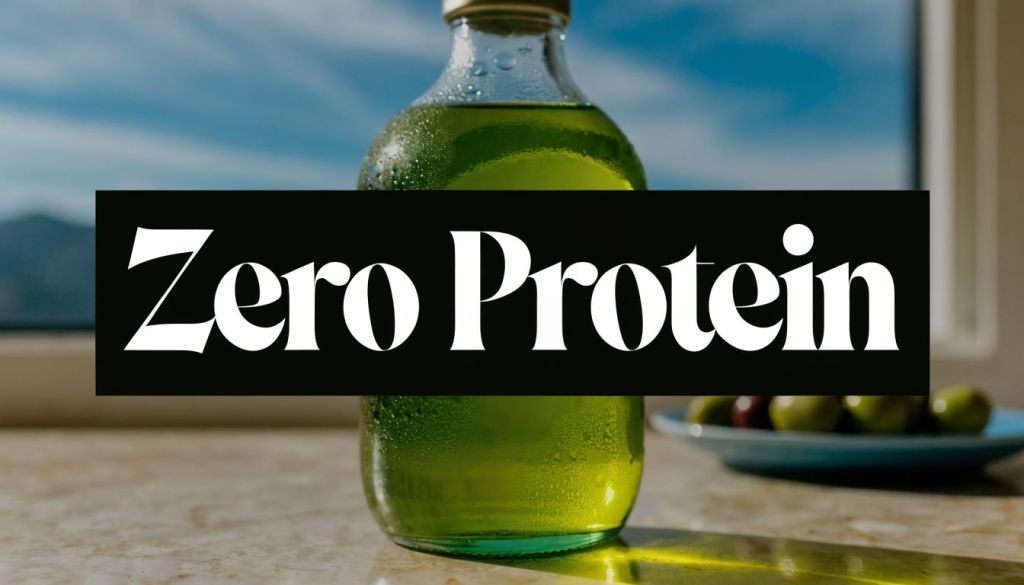
Olive oil contains 0 grams of protein per serving. But that clean little number on the nutrition label hides a more interesting story, because while the label says zero, premium extra virgin olive oil can still carry microscopic traces from the fruit itself.
Most advice stops at “no protein” and walks away. That's accurate for everyday nutrition. It's also incomplete. If you care about what you're buying, how olive oil is made, and why one bottle tastes alive while another tastes flat, the missing details matter.
The Surprising Answer to Your Protein Question
If you're asking, does olive oil have protein, the practical answer is no. Standard nutrition data treats olive oil as a pure fat. According to Foodstruct's olive oil nutrition breakdown, 100 grams of olive oil contains 884 calories, 100g of fat, 0g of protein, and 0g of carbs.
That's not a rounding trick in the way most home cooks mean the question. If you drizzle olive oil over tomatoes, whisk it into a vinaigrette, or use it to roast vegetables, you should count it as fat, not as a protein source.

What the label is really telling you
A nutrition label gives you the answer that matters for meal planning. Olive oil contributes fat and calories. It doesn't contribute meaningful protein. It also doesn't contribute carbohydrates, which is one reason people often pair it with low-carb eating patterns. If you want a fuller macro picture, this guide on how many carbs are in olive oil helps round out the story.
Where people get tripped up
The confusion starts because “contains no protein” sounds like “contains absolutely nothing except fat molecules.” That isn't quite how real foods work.
Practical rule: For nutrition, count olive oil as zero protein. For quality, pay attention to how the oil was made.
Those are two different questions. One belongs on a label. The other belongs in the mill, the bottle, and the glass.
The Journey from Olive to Oil Where Protein Gets Left Behind
To understand why olive oil ends up with no meaningful protein, it helps to think like a miller, not a marketer.
An olive is a whole fruit. It has water, fiber, skin, pulp, a pit, and many natural compounds bound up inside its cells. Olive oil is what you get when producers crush that fruit and separate out the liquid fat. That process is mechanical, not magical.
Pressing doesn't keep the whole fruit
A useful kitchen comparison is fresh juice. When you juice an orange, the liquid separates from much of the pulp and fiber. Olive oil extraction works with the same broad logic. The olive is crushed into a paste, then the oil is separated from water and solids.
The solids are where much of the fruit's non-fat material stays behind. That includes the parts associated with protein.
If you want to see that process more clearly, this walkthrough of how olive oil is made is worth a read.
Why fat makes it through and protein mostly doesn't
Fats and proteins behave differently during extraction. Olive oil is made of lipids. Proteins are different kinds of molecules, and they don't migrate into the finished oil in the same way or in the same amount.
During mechanical extraction, some tiny compounds from the olive can cross over. A scientific review indexed on PubMed notes that cellular disruption during extraction releases compounds from the fruit, and a 4.6 kDa polypeptide identified in olive pulp can be detected in the final oil. But the transfer is minimal compared with the fruit's overall protein content.
That's the heart of it. The oil phase is what's captured. The protein-bearing material is mostly left behind with the water and solids.
The bottle on your counter is not the whole olive in liquid form. It's the fat-rich essence of the olive, separated from the rest.
The simple takeaway for a home cook
When you sauté fish in olive oil, you're adding richness, aroma, and mouthfeel. You aren't adding protein.
Protein comes from the fish, the beans, the yogurt, the egg. Olive oil's job is different. It carries flavor, softens bitterness, rounds out texture, and helps turn ingredients into a meal that tastes finished.
The Secret of Trace Proteins in Extra Virgin Olive Oil
Now for the part most articles miss.
If you buy a good extra virgin olive oil, especially one that's minimally processed, the “zero protein” answer stays correct for nutrition. Yet the oil may still contain tiny remnants from the fruit and seed that never rise high enough to appear as grams on a label.

What those traces are
A scientific review summarized by HyperEleon explains that minimally processed extra virgin olive oil contains minor proteins from the fruit and seed, including oleosins. These are typically under 0.1g/100g, which is why labels round them down to 0g.
That detail changes how you think about a bottle of EVOO.
Refined oils are stripped down harder. Extra virgin oils, especially less aggressively processed ones, keep more of the olive's natural personality. That includes aroma compounds, polyphenols, and, in tiny amounts, these trace proteins.
Why this matters for quality
This doesn't make olive oil a protein food. It does make those traces interesting.
They can act like a fingerprint of minimal handling. In plain English, a little bit of the olive is still present in the oil. That's often what serious buyers want. Not contamination, but character.
A perfectly bland oil can be technically tidy and sensorially dead. A vivid extra virgin olive oil often carries signs of a gentler path from fruit to bottle.
Here's where many shoppers get nervous. They see slight cloudiness or a bit of sediment and assume something is wrong. Sometimes poor storage is the issue. But sometimes those “imperfections” are merely evidence that the oil hasn't been over-processed.
This guide to filtered or unfiltered olive oil helps sort out that distinction.
- Filtered oils usually look cleaner and more polished.
- Unfiltered oils may appear hazier because more tiny olive particles remain.
- Minimally processed EVOO can preserve more of the fruit's native compounds, including those minute protein traces.
A label tells you the macro story. A good extra virgin olive oil tells you a craftsmanship story.
That's the hidden twist. The “zero” on the bottle is true enough for diet tracking, but it doesn't tell the whole story of authenticity.
Olive Oil vs Whole Olives A Tale of Two Foods
One of the easiest ways to settle this question is to compare the fruit with the oil made from it.
Whole olives are a complete food. Olive oil is an extracted fat. Once you see them side by side, the difference becomes obvious.
Nutritional Showdown: Whole Olives vs. Olive Oil (per 100g)
| Nutrient | Black Olives (Canned) | Extra Virgin Olive Oil |
|---|---|---|
| Fat | Present | 100g |
| Protein | Small amount present | 0g |
| Carbohydrates | Present | 0g |
| Fiber | Present | 0g |
| Water | Present | Not a meaningful part of the finished oil |
| Calories | Lower than oil because the fruit contains water and solids | 884 |
The olive fruit still contains water, flesh, skin, and structural material. That's where you find the bits that make a food feel whole, including fiber and a small amount of protein.
The oil is a concentration. You gain intensity, texture, and the fruit's fat-soluble flavor compounds. You lose the rest.
Why the comparison matters in the kitchen
People often speak about olives and olive oil as if they're nutritionally interchangeable. They aren't.
A bowl of olives can behave like a snack. A splash of oil behaves like an ingredient. One is the fruit. One is the fruit's extracted fat.
If you've ever wondered why that distinction matters, this short piece on why an olive is a fruit adds useful context.
Whole olives and olive oil come from the same fruit, but they do different jobs on the plate and in your diet.
That's why olive oil doesn't “have protein” in the way the whole olive still does.
How Olive Oils Zero Protein Status Can Boost Your Health
The lack of protein in olive oil isn't a flaw. In many meals, it's a strength.
When you want to add richness without changing the protein count, olive oil gives you control. You can build a meal around eggs, fish, yogurt, chicken, beans, or lentils, then use olive oil to add body and flavor without muddying the macro picture.

Why it works so well with protein-rich foods
According to Strongr Fastr's olive oil nutrition page, olive oil acts as a “protein enhancer.” Its fat profile includes 73% oleic acid, and when paired with protein it can improve nutrient absorption and reduce post-meal insulin spikes by 15-20% compared to other fats.
That's useful in real cooking, not just in theory.
- With fish: Olive oil adds richness without competing with the fish as the protein anchor.
- With beans: A finishing drizzle makes legumes taste fuller and more luxurious.
- With chicken breast: It brings moisture and flavor to a lean protein that can otherwise eat dry.
- With eggs: It gives you fat for satiety while keeping the protein source obvious.
A few smart ways to use it
For savory meals, dress warm white beans with olive oil and herbs. Spoon it over grilled salmon. Toss it with chickpeas and roasted vegetables. In each case, the oil supports the meal rather than pretending to be the meal.
For baking, olive oil can also replace other fats when you want tenderness and a softer crumb. If you want a practical example outside the usual dinner plate, this Dashi recipe for homemade shortbread coins shows how olive oil can bring flavor and texture without turning the recipe into something heavy.
Where to learn the nutrition side without the fog
If you like reading labels and understanding what they mean in plain English, Learn Olive Oil's nutrition guide is one straightforward place to look.
Olive oil doesn't supply the protein. It helps the protein course taste better, feel better, and fit the meal more precisely.
That's a more useful way to think about it than asking whether the bottle itself is a protein food.
The Bottom Line on Protein and Your Olive Oil
So, does olive oil have protein?
For everyday nutrition, no. Treat it as a pure fat, not a protein source. If you're planning meals, counting macros, or reading a label, that's the answer you should use.
But there's a finer point worth keeping. In minimally processed extra virgin olive oil, tiny traces from the olive can remain. Not enough to nourish you as protein. Enough to remind you that authentic olive oil is an agricultural product, not just a neutral cooking fat.
That's what makes this humble question more interesting than it first appears. The label gives you the macro truth. The oil itself reveals the craft.
The next time you pour a grassy Tuscan oil over beans, or a peppery Spanish oil over grilled fish, you'll know what's happening. You're not adding protein. You're adding the concentrated fat of the olive, and in a good bottle, a faint signature of the fruit it came from.
If you want to get better at reading labels, understanding production methods, and choosing bottles with real character, visit Learn Olive Oil. It's a practical resource for buyers and home cooks who want to understand what separates ordinary olive oil from the kind worth savoring.
 Learn Olive Oil
Leave a comment