The Art and Science Behind Olive Oil Tasting
Tasting olive oil is more than a simple culinary act; it's a sensory exploration that reveals the richness and complexity of this treasured ingredient. This practice blends time-honored traditions with modern scientific understanding, changing how we perceive and appreciate olive oil. Developing this skill enhances not only your cooking but also your ability to select high-quality oils.
A History of Olive Oil Tasting
The tradition of olive oil tasting has its roots in the Mediterranean, stretching back millennia. However, the formalization of this practice into a scientific discipline is a relatively recent development. Before the 1990s, olive oil quality assessment relied primarily on visual inspection and the subjective judgments of producers and local consumers. The International Olive Council's establishment of standardized sensory evaluation protocols in 1991 marked a pivotal moment. These methods combined chemical analysis with sensory evaluation, creating a more objective and reliable system for grading olive oils. This shift has profoundly impacted the olive oil industry, leading to improved quality and consistency. For further insights into global olive oil consumption trends, see these statistics.
The Science of Taste and Smell
The evolution of olive oil tasting reveals a fascinating interplay of art and science. Even the simple act of smelling the oil involves a complex neurological process. Our olfactory receptors detect the volatile aromatic compounds, transmitting signals to the brain. Interestingly, these signals are processed near the emotional cortex, explaining the strong emotional connection we often have with scents. This makes olive oil tasting a deeply personal experience, capable of evoking memories and associations. Just as chefs value high-quality kitchen knives for their craft, tasters require well-maintained tools and a proper understanding of sensory perception.
Why Quality Matters
Understanding the science of taste and smell underscores the importance of a controlled tasting environment. Factors like ambient odors, oil temperature, and even the glass used can influence the tasting experience. Minimizing these external factors allows tasters to discern the subtle nuances that distinguish exceptional oils from ordinary ones. This careful attention to detail allows for a more accurate assessment of the oil's intrinsic characteristics. The ultimate goal of olive oil tasting is to appreciate the full spectrum of flavors, from fruity and grassy to peppery and bitter. These attributes, often mistaken for defects, are actually hallmarks of high-quality extra virgin olive oil. This knowledge transforms our relationship with olive oil, moving us from mere consumption to true appreciation.
Setting the Stage: Tools and Environment for Perfect Tasting
The right setup dramatically enhances the olive oil tasting experience. Just as a musician needs a properly tuned instrument, truly discerning the nuances of olive oil requires a controlled environment. This section will guide you through creating the optimal tasting setup, mirroring the practices of professional tasting panels worldwide. This allows you to unlock the full potential and complex flavors within your olive oil.
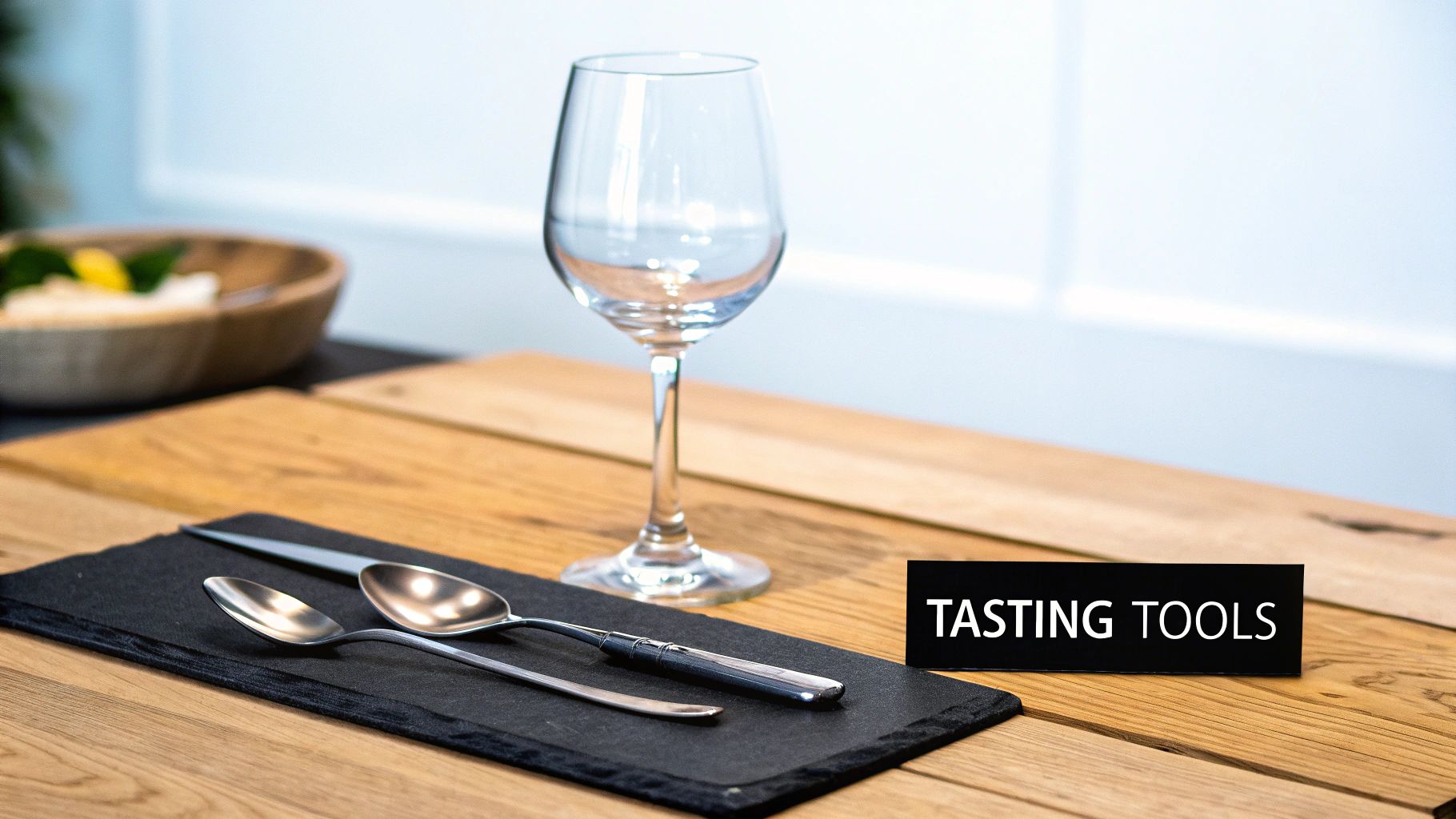
Essential Tools: The Tasting Glass
Forget standard clear glass tumblers. To taste olive oil like a professional, you need specialized tasting glasses. These small, cobalt-blue glasses aren't just a matter of tradition; their design is deeply rooted in science. The blue color masks the oil's natural hue, preventing visual bias from influencing your perception of flavor. This is crucial because the color of olive oil isn't a reliable indicator of quality. The standardized shape of the glass also concentrates the volatile aromatic compounds, making it easier to detect subtle aromas.
Controlling the Environment: Temperature and Scents
Temperature plays a key role in how olive oil expresses its aromas. The ideal temperature for tasting is 28°C/82°F. At this temperature, the volatile compounds responsible for the oil's aroma are released most effectively. Gently warming the glass in your hand is recommended to achieve this temperature, but avoid overheating.
Also, be mindful of ambient scents. Strong perfumes, lingering cooking smells, or even fragrant flowers can interfere with your ability to perceive the delicate aromas of the olive oil. A neutral-smelling environment is essential for an accurate tasting experience.
Preparing for the Tasting: Palate Cleansers and Oil Storage
Before you begin, cleansing your palate is crucial. Just as you wouldn't taste wine after eating a spicy dish, establishing a neutral baseline is necessary for olive oil tasting. Plain water or slices of green apple are effective palate cleansers, helping remove any lingering flavors and preparing your taste buds.
Finally, proper oil storage is paramount for preserving the oil's quality before tasting. Store your olive oil in a cool, dark place, shielded from heat and light. This prevents oxidation and ensures you're experiencing the oil's full flavor profile.
Checklist for the Perfect Tasting Setup:
- Cobalt-blue tasting glasses: Eliminate visual bias and concentrate aromas.
- Controlled temperature: Aim for 28°C/82°F by gently warming the glass.
- Neutral environment: Minimize ambient scents.
- Palate cleansers: Water or green apple slices.
- Proper oil storage: Cool, dark, and airtight.
By following these guidelines, you'll elevate your olive oil tasting experience, uncovering a world of complex flavors and truly appreciating the artistry behind this culinary treasure.
Master the Three-Step Tasting Method Professionals Use
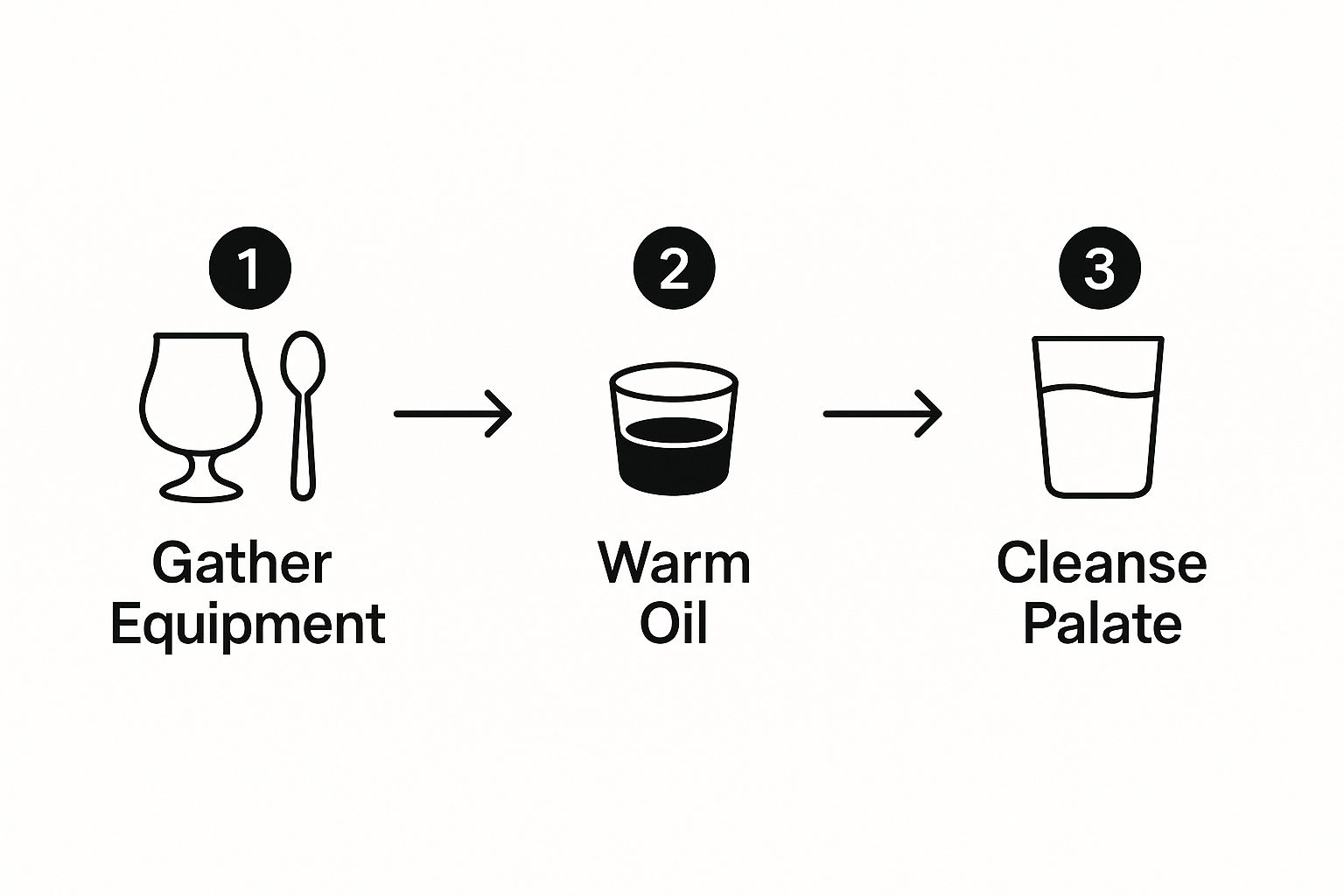
The infographic above illustrates the preparation for an olive oil tasting: gathering equipment, warming the oil, and cleansing the palate. These steps create a neutral starting point, allowing you to appreciate the olive oil's subtle nuances. Just as musicians tune their instruments, preparing yourself and your surroundings is key to a successful tasting.
Now, let's explore the three phases of the tasting process.
Phase 1: Visual Assessment
This phase focuses on clarity and appearance. While color isn't a reliable quality indicator, cloudiness or sediment can indicate spoilage or defects. Hold the glass to the light and examine the oil. High-quality olive oil should be clear, bright, and free of particles. This suggests proper filtering and storage.
Phase 2: Aroma Evaluation
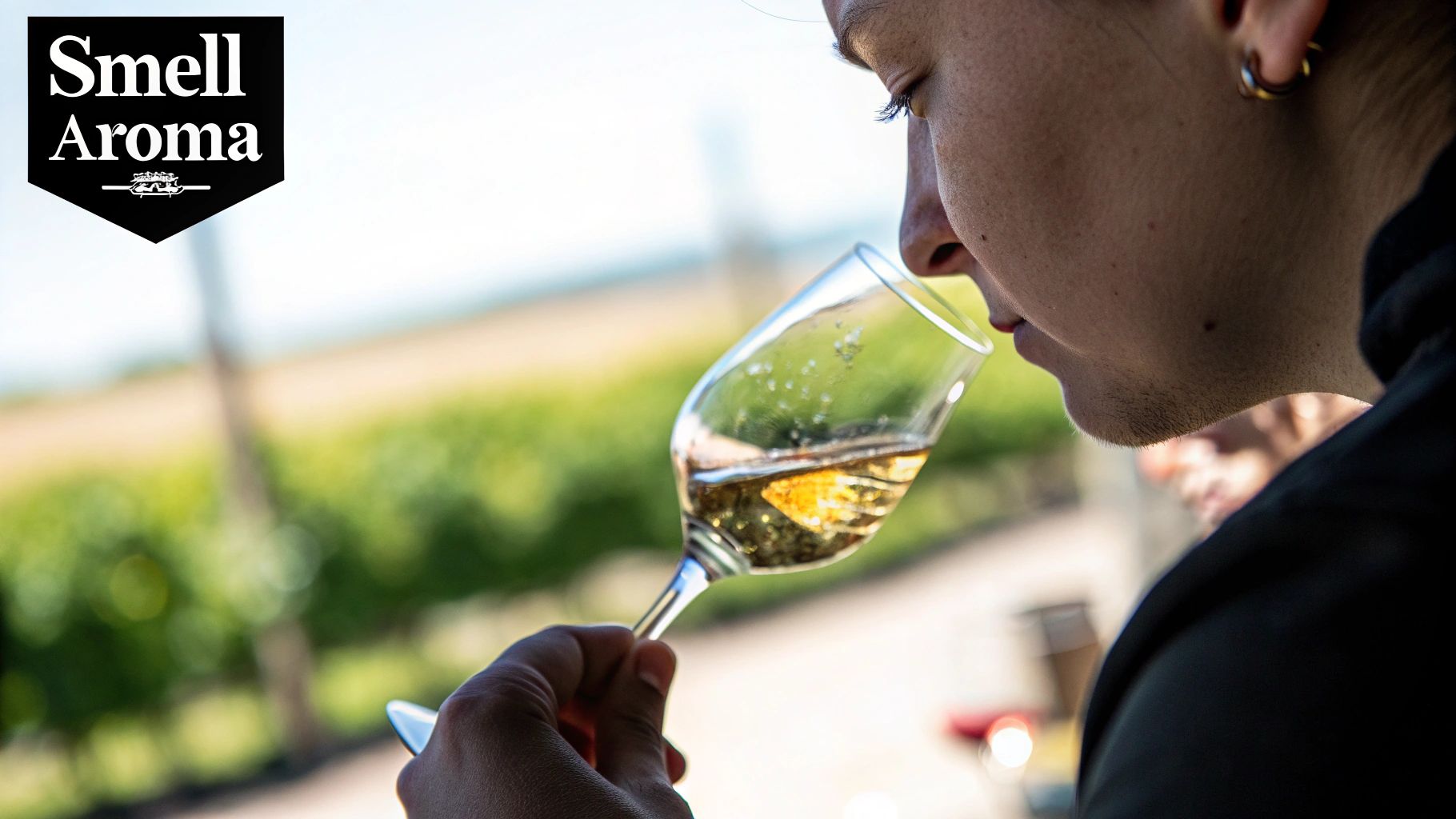
Here, the artistry of olive oil tasting truly begins. Cover the glass with your hand, swirling the oil to release its volatile aromatic compounds. Inhale deeply, noting the scents. Do you smell fresh-cut grass, ripe fruit, or herbs? This unveils the oil's aromatic complexity.
Phase 3: Taste Examination
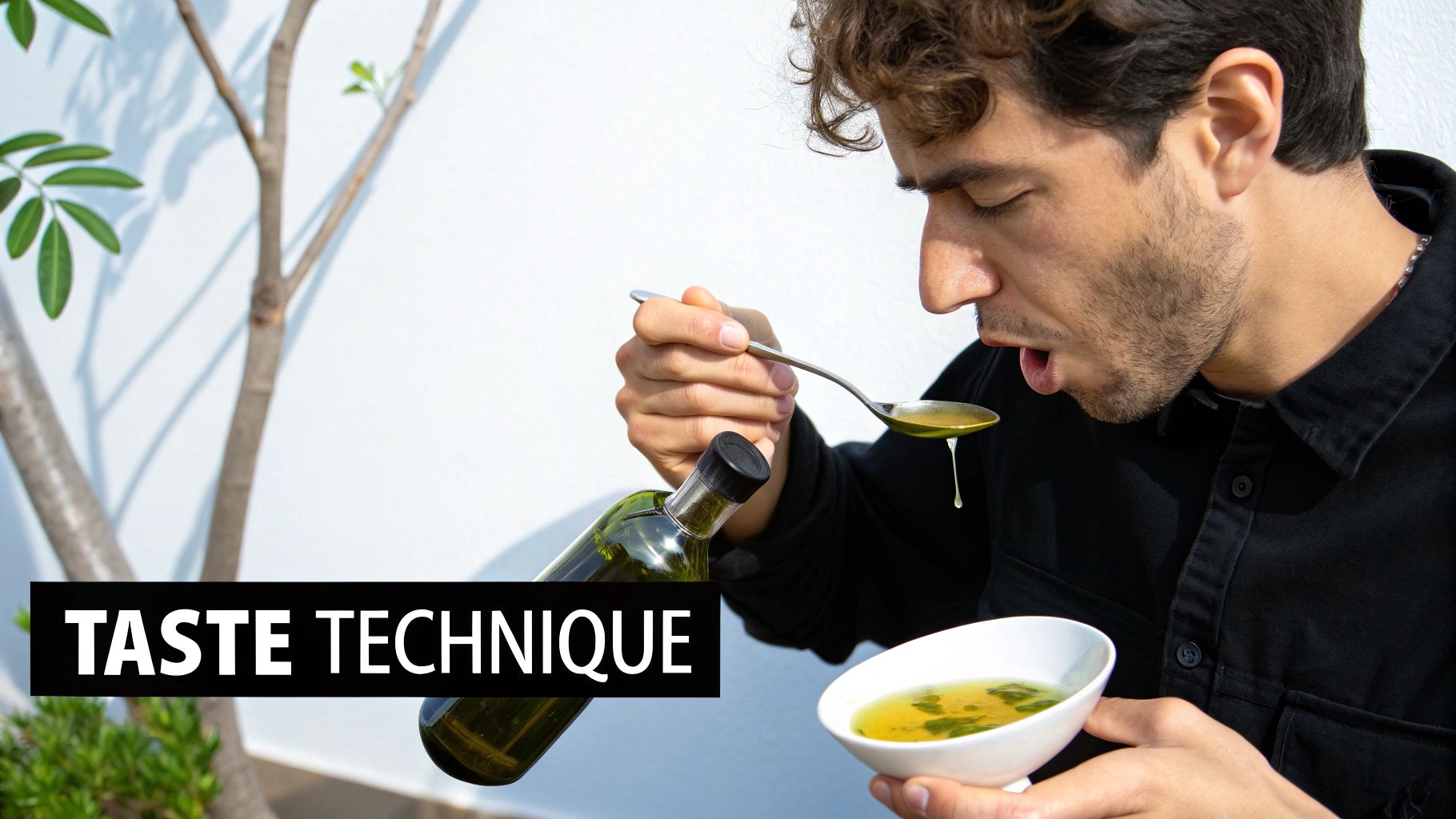
The final phase is the tasting itself. Take a small sip, letting the oil coat your tongue. Gently "strip" the oil across your palate, drawing air in through your teeth. This aerates the oil, unlocking its full flavor profile. Notice the fruitiness, bitterness, and pungency. These positive attributes indicate a vibrant, high-quality extra virgin olive oil.
Professional olive oil tasting, much like wine tasting, involves a formal sensory evaluation. This practice was standardized in the 1990s by organizations like the International Olive Council (IOC). Tasters assess appearance and color (though color doesn't determine quality), aroma (by swirling oil in a glass to release volatile compounds), and taste (noting bitterness, pungency, fruitiness, and other flavors). Learn more about the growing consumption of olive oil here.
To help illustrate the positive attributes you should be looking for, take a look at the table below:
Positive Attributes in Olive Oil Tasting
This table outlines the primary positive characteristics to identify when tasting olive oil and how to recognize them
| Attribute | Description | How to Detect | Indication of Quality |
|---|---|---|---|
| Fruitiness | The aroma and flavor of fresh olives. | Smell and taste the oil, noting any fruit-like notes. | Ripe, healthy olives used in production. |
| Bitterness | A slightly bitter taste. | Notice a sharp, bitter taste on the tongue. | Presence of antioxidants and polyphenols. |
| Pungency | A peppery sensation in the throat. | Feel a tingling or burning sensation in the back of the throat. | Freshly pressed oil with high levels of polyphenols. |
This table summarizes the key characteristics – fruitiness, bitterness, and pungency – which signify a high-quality extra virgin olive oil. These sensory experiences reflect the freshness and health of the olives used in production, as well as the presence of beneficial antioxidants and polyphenols.
Mastering the Nuances
By practicing these three steps, you'll appreciate the intricate flavors and aromas of olive oil. With practice, you’ll refine your palate, becoming a more discerning consumer, identifying high-quality extra virgin olive oils confidently. Olive oil tasting, like any skill, improves with experience. The more you taste, the more attuned your senses become to the subtle nuances of exceptional oils. This allows you to make informed choices at the store and in the kitchen, deepening your appreciation for this "liquid gold".
Detecting Red Flags: Common Defects to Watch For
Identifying defects in olive oil is essential to ensure you're using a top-quality product. This knowledge helps you avoid wasting money on subpar oils and enhances your cooking. Understanding the sensory cues of common defects will make you a more discerning olive oil consumer. Much like a doctor diagnoses illnesses by recognizing symptoms, you too can "diagnose" problematic oils by spotting these key indicators.
Understanding the Five Major Defects
Five main defects reveal poor production or storage: fusty/muddy, musty, winey/vinegary, rancid, and metallic. Recognizing these flaws is the first step in protecting yourself from inferior olive oil.
-
Fusty/Muddy: This defect has a damp, earthy aroma and flavor, similar to stagnant water or mud. It's caused by olives piled up and stored for too long before processing, allowing fermentation to start. Think of the smell of wet earth after a downpour – that's a close match to the fusty defect. This is a common problem in large-scale production where processing delays can happen.
-
Musty: Musty olive oil smells and tastes like mold or mildew. This defect indicates fungal growth, usually from contaminated olives or unclean processing equipment. The musty defect is comparable to the smell of a damp, old basement. This flaw significantly affects the oil's quality and enjoyment.
-
Winey/Vinegary: This defect has a sour, acidic taste and smell, like wine or vinegar. It comes from the fermentation of olive pulp and often appears cloudy. The scent of overripe fruit left to ferment offers a comparable sensory experience. This points to a problem in the production process.
-
Rancid: Rancidity is arguably the most frequent olive oil defect. It happens when the oil is exposed to too much heat, light, or air, leading to oxidation. The oil takes on a stale, greasy taste and smell, losing its fresh, fruity notes. Imagine the smell of old cooking oil – that’s the telltale sign of rancidity. This defect diminishes the oil's health benefits and flavor.
-
Metallic: A metallic defect gives a tinny taste and aroma, like metal pipes or coins. It results from contact with metal during processing or storage. The taste is similar to licking a metal spoon. This flaw is quite unpleasant and readily noticeable.
Connecting Defects to Production Failures
Each defect gives insight into the oil's history, highlighting problems in processing or storage. A fusty defect, for instance, suggests improperly stored olives, while a musty defect signals mold. Understanding these connections helps you see how production methods impact the final product. This makes you a smarter olive oil shopper.
The image above shows olives that were probably improperly stored, a primary cause of defects like the fusty/muddy flavor. Knowing the causes of these defects helps you identify high-quality oils.
To further understand these defects and their origins, let's examine the following table:
Common Olive Oil Defects and Their Causes: A comprehensive guide to identifying negative characteristics in olive oil and understanding their origins.
| Defect | Sensory Characteristics | Typical Causes | Found in Grade |
|---|---|---|---|
| Fusty/Muddy | Damp, earthy aroma and flavor, like stagnant water or mud | Olives stored in heaps for too long before processing, allowing fermentation | Lampante, sometimes Virgin |
| Musty | Moldy or mildew-like smell and taste | Fungal growth due to contaminated olives or unsanitary equipment | Lampante |
| Winey/Vinegary | Sour, acidic taste and smell, like wine or vinegar | Fermentation of olive pulp | Lampante |
| Rancid | Stale, greasy taste and smell; loss of fresh, fruity notes | Oxidation from excessive heat, light, or air exposure | Lampante, sometimes Virgin |
| Metallic | Tinny, metallic taste and aroma, like metal pipes or coins | Contact with metal surfaces during processing or storage | Lampante, sometimes Virgin |
This table summarizes the key defects, their sensory characteristics, typical causes, and the grades of olive oil they are typically found in. Remember, the presence of these defects downgrades the olive oil quality.
Mastering these detection skills enhances your understanding of olive oil quality. Recognizing these defects lets you make better choices when buying and using olive oil, leading to a more enjoyable culinary experience. By learning to interpret these sensory signals, you'll gain a deeper appreciation for the nuances of olive oil from the olive grove to your table.
Decoding Labels: How Tasting Reveals True Quality
Now that you understand how to taste olive oil, let's connect those skills to your purchasing decisions. This isn't simply about enjoying the diverse flavors; it's about becoming a more informed consumer. It’s about learning to distinguish true quality from clever marketing. With a trained palate, you can confidently decide if an olive oil deserves the "extra virgin" label—and the higher price that comes with it.
Professional Tasting Panels and Grading Standards
Professional tasting panels, like those used by the International Olive Council (IOC), use strict standards to classify olive oils. These expert tasters employ a standardized methodology, carefully evaluating sensory attributes and assigning numerical scores. Their evaluations go beyond simply identifying pleasant tastes. They determine whether an oil meets the chemical and sensory criteria for specific grades, ensuring authenticity and quality.
The Importance of Sensory Evaluation
Sensory analysis is essential to olive oil grading. While chemical tests offer valuable data, they can’t fully capture the subtle flavors and aromas that define a high-quality olive oil. A trained human palate detects subtle defects and positive qualities that laboratory equipment might miss. For example, while a chemical analysis might overlook rancidity, a trained taster will immediately recognize this flaw. This highlights the crucial role of human sensory evaluation.
Sensory Thresholds for Extra Virgin Olive Oil
To be classified as "extra virgin," an olive oil must meet specific sensory standards. It must be completely free from defects and possess a certain degree of fruitiness. Even a slightly musty or fusty aroma can disqualify an oil, regardless of its chemical makeup. This underscores the high bar set for this prestigious designation. The oil must also exhibit positive attributes like bitterness and pungency, often indicators of freshness and high antioxidant content.
The Growing Importance of Olive Oil Tasting
Interestingly, olive oil tasting has evolved into a commercially significant skill due to the growth in global consumption. Recent data reveals worldwide consumption nearing 3 million metric tons, with Mediterranean countries leading in both production and consumption. Spain, a major producer, accounts for 43% of global olive oil production.
Comparative Tasting: Putting Your Skills to the Test
The best way to hone your olive oil tasting skills is through comparative tasting. By sampling different oils side-by-side, you'll discern subtle differences in fruitiness, bitterness, pungency, and any potential defects. Begin by comparing vastly different oils to train your palate. As your skills develop, move on to comparing similar extra virgin oils to refine your ability to identify nuances in quality.
Understanding Label Claims and Marketing Tactics
Armed with tasting knowledge, you become a more discerning shopper. You'll learn to see past marketing hype and evaluate labels with a critical eye. Terms like "cold-pressed" or "first cold-pressed," for instance, don't necessarily guarantee top-tier quality. Your palate, however, provides a reliable assessment. Through mindful tasting, you can determine whether a premium-priced oil delivers genuine quality or simply clever packaging. This empowers you to make informed decisions and appreciate the quality in every drop.
World Tour: Tasting Distinctive Regional Profiles
Just as a vineyard’s unique characteristics influence the flavor of its wine, olive oil carries the distinct fingerprint of its origin. Embark on a sensory journey exploring how terroir, olive varieties, harvesting times, and processing methods create distinctive regional profiles across the olive-growing world. This exploration will enhance your understanding of how to truly taste olive oil, transforming you from a casual consumer to a knowledgeable connoisseur.
The Influence of Terroir and Olive Varieties
Terroir, encompassing the soil composition, climate, and geographical features of a region, plays a crucial role in shaping an olive oil’s character. The rocky slopes of Tuscany, for instance, yield oils with a robust, peppery intensity. This contrasts sharply with the fruity, aromatic oils of Spain. The specific olive variety also contributes significantly. The Picual olive, commonly grown in Andalusia, produces oils with a smooth, buttery texture, while the Coratina olive of Puglia results in oils known for their pungent, bitter notes. These regional and varietal variations create a wide spectrum of flavors ripe for discovery.
Exploring Key Olive Oil Regions
-
Tuscany, Italy: Renowned for robust, peppery oils, Tuscan producers often utilize Frantoio, Leccino, and Moraiolo olives. These oils pair beautifully with grilled meats, hearty soups, and crusty Tuscan bread.
-
Andalusia, Spain: This region is the heartland of smooth, fruity oils, primarily made with Picual olives. Their versatile nature makes them ideal for dipping, salads, and even frying.
-
Crete, Greece: Crete is famed for its balanced, aromatic oils, often crafted with Koroneiki olives. These oils shine in Greek salads, seafood dishes, and drizzled over fresh vegetables.
-
Sicily, Italy: This island boasts bold, intense oils, typically from Nocellara del Belice olives. These robust oils stand up well to strong cheeses, red meats, and rich pasta sauces.
-
California, USA: A relative newcomer to the olive oil scene, California is known for its innovative techniques and a diverse range of olive varieties, producing oils that span the spectrum from delicate and buttery to robust and peppery.
Organizing Comparative Tastings
To fully grasp these regional differences, organize a comparative tasting. Select extra virgin olive oils from various regions. Employ the three-step tasting method: assess the oil's visual appearance, appreciate its aroma, and finally, savor its taste. Be sure to note the unique characteristics of each oil. Prepare palate cleansers like water or slices of green apple to neutralize your senses between samples. This methodical approach will unlock your understanding of the subtleties of regional variation.
Culinary Pairings: Enhancing Your Dishes
Discovering the perfect culinary pairings can elevate your dishes from simple to sublime. Consider the regional profile of the oil when deciding which dish to use it with. A robust Tuscan oil will enhance a grilled steak, while a more delicate Greek oil complements a fresh salad. For example, the intense flavor of a Sicilian oil pairs beautifully with a rich tomato sauce, while the smooth texture of a Spanish oil enhances a simple gazpacho. By carefully matching oil and dish, you create harmonious flavor combinations.
Through exploration and mindful tasting, you'll develop a profound appreciation for the diverse world of olive oil. Understanding these regional influences allows you to choose the right oil for your cooking and embark on a sensory adventure with every taste.
Train Your Palate: Practical Exercises for Rapid Progress
Transform your olive oil tasting abilities with practical exercises inspired by professionals. This progressive, at-home program will guide you from novice to confident connoisseur, enabling you to discern the subtle qualities of exceptional olive oils.
Fundamental Comparison Exercises
Begin by comparing two drastically different oils. Select a mild and buttery oil, such as a Spanish Picual, alongside a robust, peppery Tuscan oil made with Frantoio olives. This contrast highlights fundamental differences in fruitiness, bitterness, and pungency, laying the groundwork for recognizing the broad spectrum of olive oil flavors.
As your palate refines, compare premium extra virgin olive oils within the same regional profile. For example, compare two Tuscan extra virgin olive oils to notice nuanced variations in intensity and aroma complexity within a specific style.
Aroma Identification Techniques
Developing a strong aroma vocabulary is crucial. Start with familiar ingredients to anchor specific flavor memories. Crush a fresh tomato leaf to imprint the scent of green, herbaceous notes. Smell a ripe green apple to identify fruity, sweet aromas. Sniff freshly ground black pepper to recognize pungent, spicy characteristics.
When exploring regional profiles, consider how packaging can influence perception, much like wine bottle boxes impact the perception of wines. This awareness translates to olive oil as well. By associating common scents with descriptive terms, you build a framework for identifying complex aromas in olive oil.
Triangle Tests and Tasting Journals
Triangle tests sharpen discrimination abilities. You're presented with three samples: two identical, one different. Your task is to identify the unique sample, honing your ability to detect minute variations.
Maintain a structured tasting journal. Record the date, oil name, producer, origin, visual appearance, aroma descriptors, and taste impressions. Note the intensity of fruitiness, bitterness, and pungency. This journal becomes a valuable reference, tracking your progress and deepening your understanding.
Overcoming Common Challenges
Beginners often struggle with palate fatigue and aroma identification. To combat palate fatigue, cleanse your palate with plain water or green apple slices between samples, refreshing your taste buds.
If identifying aromas is difficult, revisit your aroma identification exercises using household ingredients. Consistent practice with familiar scents will enhance your ability to detect and articulate nuances in olive oil.
Continuing Your Education
Olive oil tasting is a continuous exploration. Numerous resources support your development. Consider joining online forums or local tasting groups to share discoveries. Look for certified olive oil tasting courses to deepen your knowledge and connect with fellow connoisseurs. With dedication and practice, you can transform your olive oil tasting experience into a sensory adventure.
Ready to elevate your olive oil experience? Visit Learn Olive Oil to expand your knowledge, refine your palate, and discover premium olive oils.


Leave a Reply