Have you ever tasted an olive oil so bold it made you cough? A sharp, peppery kick that catches you by surprise at the back of your throat?
Most people would mistake this for a flaw. A sign of poor quality.
They couldn't be more wrong.
That startling sensation is, in fact, the unmistakable calling card of a truly extraordinary olive oil. It is the taste of power. It is the taste of polyphenols.
The Hidden Potency in Your Olive Oil
These miraculous, naturally occurring compounds are the secret ingredient that elevates olive oil from a simple cooking fat into a life-enhancing elixir. They are what separate the mundane from the medicinal. While the "extra virgin" label is a fine start, the real story—the one that matters to your health—is written in the oil’s polyphenol content.
What Are Polyphenols, Exactly?
Imagine polyphenols as the olive's personal bodyguards. They are the natural defense system the fruit creates to shield itself from the relentless stress of pests and the sun’s harsh rays. When we carefully press those olives into oil, these fiercely protective compounds—like the celebrated oleocanthal and hydroxytyrosol—are transferred directly into the bottle.
And here’s where the magic happens. Once inside our bodies, they don’t stop working. They become our bodyguards, acting as powerful antioxidants that defend our cells against the ceaseless damage of modern life.
So, what separates a good olive oil from a great one? It's all in the concentration, measured in milligrams per kilogram (mg/kg). While nearly every extra virgin olive oil contains some, the world's finest are crafted with the deliberate, singular goal of maximizing these life-giving compounds. You can explore the complex world of olive oil phenols to truly grasp their profound impact.
The Proof Is in the Power
The chasm between a standard EVOO and a high-polyphenol oil is not just a gap—it's a canyon. Consider, for a moment, an oil from a recent harvest that clocked in at an astonishing 2,236 mg/kg of total polyphenols.
To put that number into stunning perspective, the European Union grants a prestigious health claim to oils containing a mere 250 mg/kg. This exceptional oil doesn't just meet that standard; it obliterates it by nearly 900%. This isn't a marketing flourish; it's a testament to what's possible. For centuries, the antioxidants in olive oil have been the bedrock of the Mediterranean diet, famously linked to astonishing heart health. In fact, studies reveal that populations who regularly consume high-polyphenol EVOO may enjoy up to a 30% lower risk of cardiovascular events.
By the time you finish this guide, you will see with absolute clarity why choosing a high-polyphenol olive oil is one of the most significant upgrades you can make—not just for the taste of your food, but for the trajectory of your health. It is the difference between simply eating and actively arming your body for a longer, more vibrant life.
Why Polyphenols Are Your Body’s Most Powerful Ally
To truly appreciate the wonder of high-polyphenol olive oil, you must look beyond the kitchen counter and peer deep inside your own body, down to the cellular level. Picture your body as a magnificent, sprawling city. Every day, this city faces two relentless threats: thousands of tiny fires (inflammation) constantly breaking out, and a corrosive rust (oxidative stress) silently spreading everywhere.
Left unchecked, these two forces are the hidden architects of nearly every major long-term health problem we face. This is where polyphenols make their dramatic entrance. They are not some vague health trend; they are your body’s elite, highly-trained emergency response team.
Nature's Firefighters and Rust Removers
The most renowned polyphenols in olive oil, oleocanthal and hydroxytyrosol, are specialists with unique missions. Oleocanthal is nature’s firefighter. In a fascinating twist of biological genius, it functions in a way remarkably similar to ibuprofen, extinguishing the low-grade, chronic inflammation that smolders in our arteries and strains our hearts. It’s like having a dedicated fire crew on call 24/7, preventing tiny sparks from erupting into catastrophic infernos.
Hydroxytyrosol, meanwhile, is the master rust remover. It is one of the most potent antioxidants ever discovered in nature. Its job is to hunt down and neutralize unstable molecules called free radicals—the very source of that cellular rust. This rust damages everything it touches, from our DNA to our brain cells. By eliminating these corrosive agents, hydroxytyrosol protects the very fabric of our being.
This one-two punch—a relentless assault on both inflammation and oxidative stress—is the secret behind the profound, life-altering benefits of high-polyphenol olive oil. It’s not just food; it’s a daily defensive strategy for your body.
Chronic inflammation is a silent enemy, a quiet saboteur behind countless health issues. For those who wish to understand this threat more deeply, understanding inflammatory markers and how they are measured can be a shocking revelation.
From Cellular Defense to Real-World Results
This microscopic battle translates directly into tangible, life-changing benefits that scientific research continues to affirm. When your body is fortified against the daily onslaught of inflammation and oxidative stress, incredible things begin to happen.
The explosive interest in high-phenolic oils is no passing fad. Prestigious events like the Olympia Awards now rigorously test over 900 samples to certify their potency. This scientific validation underpins the official EU health claim that a mere 20g per day can shield blood lipids from oxidation. The global market for polyphenols is forecast to surge at a 7.7% CAGR through 2029, propelled by staggering evidence—including studies that link high intake to a jaw-dropping 25% lower risk of Alzheimer's.
This is modern science finally catching up to the ancient wisdom of Mediterranean cultures. The benefits are not isolated; they trigger a cascade of positive changes throughout the body.
- Heart Protection: By helping to manage cholesterol and maintain arterial flexibility, polyphenols are a cornerstone of cardiovascular resilience.
- Brain Health: Their antioxidant might shields delicate brain cells from harm, bolstering cognitive function and preserving memory as we age.
- Longevity: By mitigating the daily cellular wear-and-tear that defines aging, polyphenols are a powerful tool for a longer, healthier life.
In the end, the reason polyphenols are your body's strongest ally is breathtakingly simple. They wage war on the root causes of disease, not just the symptoms. A daily dose of a superior polyphenol olive oil is more than a culinary choice—it’s a profound investment in your future. To explore this further, our complete guide to olive oil health benefits reveals how it fits into a life of optimal wellness.
The Journey From Green Olive to Liquid Gold
Let me be blunt: not all extra virgin olive oils are created equal. You could line up two bottles, side by side, and one might possess a universe of healing power that the other completely lacks. This is no accident. It is the direct result of a thousand deliberate, painstaking choices made by a producer who is fanatically committed to quality over quantity.
Crafting a true high-polyphenol olive oil is not mass manufacturing. It is an art form, akin to the work of a master watchmaker, where every single detail is critical. Let’s pull back the curtain on this remarkable journey, from a young green fruit on a sun-drenched branch to the liquid gold in your bottle.
The Decisive Moment of Harvest
If one singular decision dictates an oil's final potency, it is the timing of the harvest. Polyphenols reach their absolute, explosive peak when the olive is still young, hard, and vibrantly green—weeks before it fully ripens.
A producer focused solely on volume will wait. They will let the olives mature, turn black, and swell with oil. This patient approach yields far more liquid, but it comes at a catastrophic cost: the precious polyphenol content plummets with each passing day.
The artisan producer, however, makes a courageous sacrifice. They choose to harvest early, knowing full well they will get less oil from each olive. But the oil they do extract is a concentrated, powerful elixir, bursting with that signature peppery bite that screams of high oleocanthal levels.
This unwavering commitment to an early harvest is the first, and most powerful, signal of a producer who places your health above their profits. They are intentionally creating a more potent, more beneficial oil, even if it means producing less of it.
The Genetic Blueprint of the Olive
Beyond when you pick them, the specific variety of the olive itself plays a starring role. Just as a winemaker selects specific grapes for their unique character, a master oil producer chooses olive cultivars that are genetically programmed to be polyphenol powerhouses.
Some varieties are simply born champions. Here are a few of the most celebrated:
- Koroneiki: This small but mighty Greek olive is legendary for producing intensely aromatic, peppery oils that consistently rank among the highest in polyphenols.
- Picual: A Spanish icon, this variety is treasured for its remarkable stability and exceptionally high antioxidant content, which imparts a robust, gloriously bitter flavor.
- Coratina: An Italian titan, this olive yields intensely fruity and pungent oils that often shatter records for the highest polyphenol counts in the world.
This infographic reveals precisely how the polyphenols from these prized olives go to work inside your body, fighting the twin demons of inflammation and oxidative stress that pave the way for chronic disease.
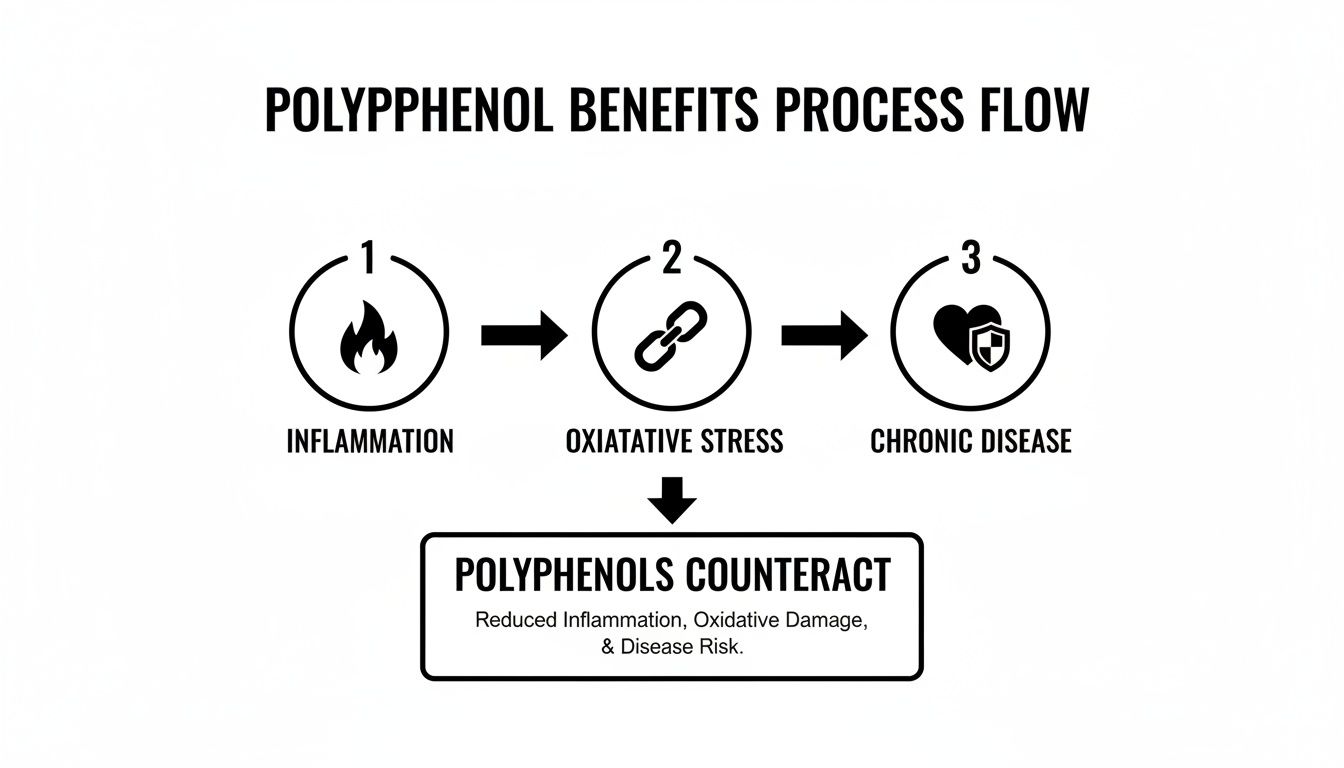
As you can see, these potent compounds are biological circuit-breakers, interrupting a destructive chain reaction and protecting our bodies at the most fundamental level.
Spain, for example, has become a global force, producing over 1.4 million tons of olive oil in a recent season. A significant portion of this is now dedicated to high-polyphenol oils from early-harvest Koroneiki and Picual olives. The results are stunning, with many premium Spanish EVOOs testing between 300-800 mg/kg. These elite oils contain 20-30% higher antioxidant levels than their late-harvest counterparts—a direct consequence of prioritizing potency over profit.
From Grove to Mill: The Art of Cold Extraction
Once those perfect green olives are plucked from the tree, the clock begins to tick. The journey to the mill must be a frantic race against time—ideally mere hours—to halt oxidation and preserve the fragile compounds locked inside.
Here, modern milling technology is absolutely paramount. You’ve likely seen the term "cold-pressed" or the more accurate "cold extraction" on a label. This is not marketing jargon; it is a sacred vow of quality.
Heat is the mortal enemy of polyphenols. The milling process naturally creates friction and warmth, but elite producers deploy advanced cooling systems to keep the olive paste below a strict 27°C (80.6°F) throughout the entire process. This gentle, meticulous handling ensures that the volatile, life-giving polyphenols are not destroyed before they even reach the bottle.
By understanding the intricate dance involved in making olive oil, you gain a profound appreciation for the craftsmanship required. From the olive's genetic code to the precise moment of harvest and the temperature-controlled mill, every decision is a deliberate step toward creating a potent, health-giving oil. This is what separates a mere commodity from a true functional food.
How to Read an Olive Oil Label Like an Expert
You are standing in the grocery aisle, confronted by a wall of olive oil bottles. They gleam under the lights, their labels whispering promises of "first press" and "cold-pressed" purity. But behind this seductive facade, how do you uncover the one bottle that is genuinely overflowing with the health benefits you seek?
The secret is to stop being a consumer and start being a detective. Reading an olive oil label is a skill, and once you acquire it, you will never see that wall of bottles the same way again. The truth about a genuine polyphenol olive oil is rarely found in the bold claims on the front; it is hidden in the fine print on the back.
The Most Important Date on the Bottle
Your first, non-negotiable mission is to locate the harvest date. This is the single most critical piece of intelligence on the entire bottle. It reveals when the olives were actually picked from the tree, not just when the oil was poured into the bottle.
Why does this one date hold so much power? Because polyphenols are fleeting. Their potency and health benefits are at their zenith the moment the oil is made, and they begin a slow, steady decline from that day forward. Time is their enemy.
A bottle without a harvest date is a bottle with a dark secret. A producer who is proud of their fresh, potent, high-polyphenol oil will display this date like a badge of honor. If you cannot find it, put the bottle down and walk away.
Look for a harvest date from the most recent season. If it is currently the autumn of 2025, you want an oil harvested in the fall of 2024 (from the Northern Hemisphere) or the spring of 2025 (from the Southern Hemisphere). Any oil more than 18-24 months past its harvest is a pale ghost of its former self.
Decoding the Numbers: The Polyphenol Count
Now we come to the heart of the matter: the polyphenol count. This is the ultimate tell. Producers who endure the arduous, low-yield process of creating high-polyphenol oil are desperate for you to know it.
You will find this number listed as total polyphenols or biophenols, measured in milligrams per kilogram (mg/kg). It might also be listed as parts per million (ppm), which is identical. Think of this number as a direct measurement of the oil’s antioxidant firepower.
So, what should you look for? Use this as your guide:
- Below 250 mg/kg: A standard extra virgin olive oil. It's not bad, but it lacks the therapeutic potency you’re after.
- 250 – 500 mg/kg: You are now in legitimate high-polyphenol territory. These oils have earned the right to make the official EU health claim and will deliver that distinct, peppery finish.
- Over 500 mg/kg: This is the realm of the elite. These are often called "medicinal grade" oils, packing a robust, bitter, and intensely pungent flavor profile.
For example, discovering an oil with a lab-certified count of 428 mg/kg is a clear sign of a producer who has masterfully balanced profound potency with exceptional flavor.
Other Crucial Clues on the Label
Once you've confirmed the harvest date and polyphenol count, a few final details can seal the deal. A transparent label tells a story of pride and quality. While the world of olive oil labeling can be complex, these last checkpoints will make you a discerning buyer.
Keep an eye out for these final clues:
- Country of Origin: Be skeptical of vague terms. "Product of Italy" can simply mean the oil was bottled there using olives from other countries. Demand specificity: look for regions or estates like Tuscany, Italy, or Andalusia, Spain.
- Olive Varietal: Just like with wine grapes, the type of olive is immensely important. Labels that proudly name varieties like Koroneiki, Picual, or Coratina are signaling a superior level of craftsmanship.
- Dark Glass or Tin: Light is one of the three arch-enemies of olive oil (along with heat and oxygen). Any producer serious about protecting their polyphenols will use opaque packaging to shield their precious creation from harm.
By focusing on these key facts, you slice through the marketing fog and get straight to the truth. You will be able to confidently select a potent, fresh, and profoundly beneficial polyphenol olive oil, every single time.
A Sensory Guide to Tasting for Quality
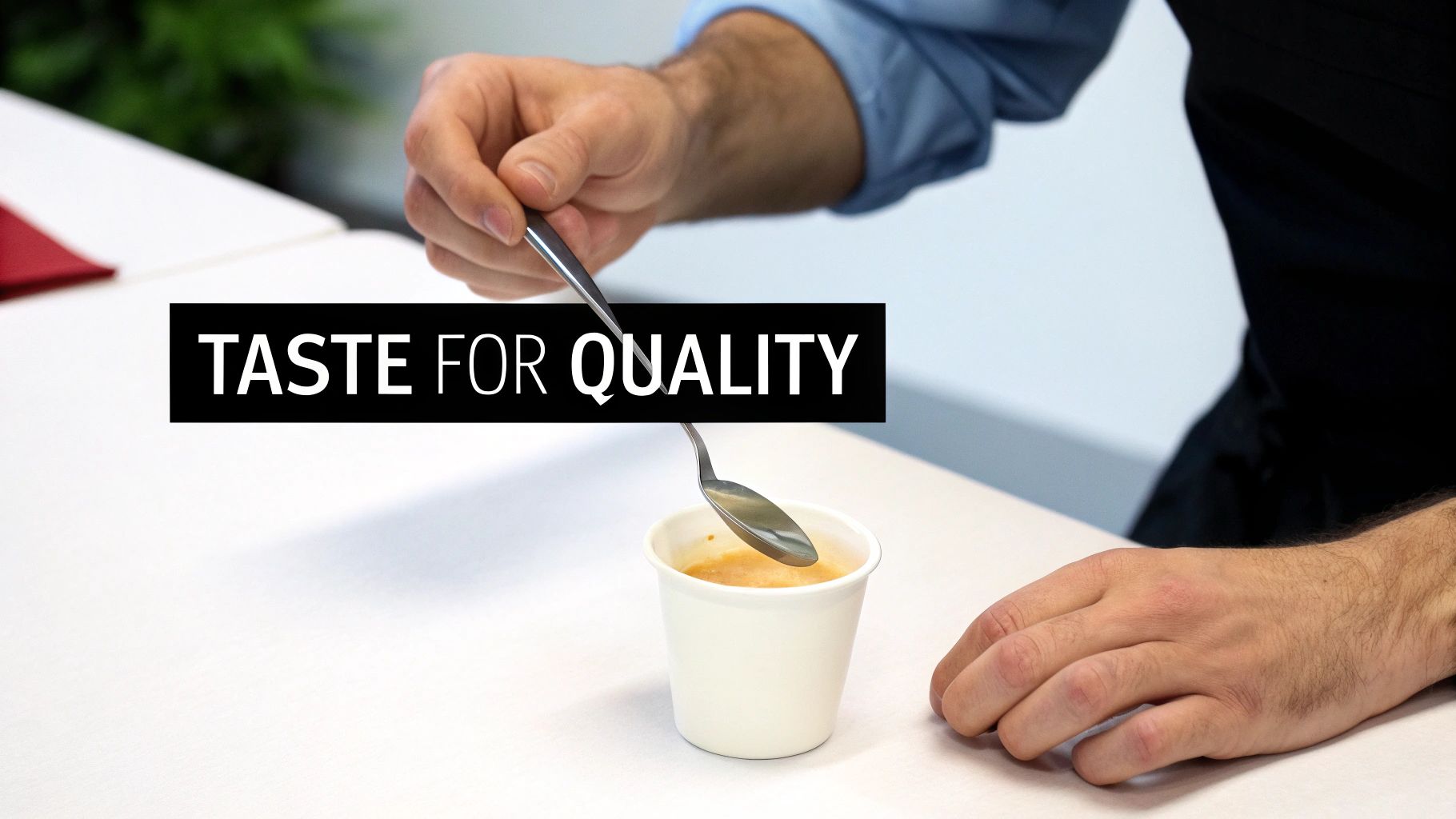
After you have deciphered the label, your own senses become the final, and most trustworthy, judge of a truly potent polyphenol olive oil. The numbers and dates get you into the ballpark, but the tasting experience is where you discover the truth. This is more than just about flavor; it's a direct conversation with the oil's chemistry.
Remember that peppery sting in the back of your throat? That is not a defect. That is the signature of greatness. It is the taste of health itself, a clear signal from powerful compounds like oleocanthal that they are present and ready to go to work for you.
Learning to trust your palate is the ultimate key. It will empower you to distinguish an exceptional oil from a mediocre one, regardless of the claims on the bottle. It is time to learn how to taste like an expert.
The Three Pillars of a Powerhouse Oil
When professionals evaluate an extra virgin olive oil, they are not searching for a bland, forgettable fat. They are hunting for three specific, positive attributes that form a complex and harmonious symphony of flavor. These are the tell-tale signs of a fresh, masterfully made, and polyphenol-rich oil.
-
Fruitiness: This is the vibrant aroma of fresh, healthy olives. It can manifest in a thrilling variety of ways—from notes of freshly cut green grass and artichoke to hints of green apple or tomato leaf. A lively, fresh aroma is the very first sign of a superior product.
-
Bitterness: This is a distinct taste you will register on your tongue, particularly towards the back. While bitterness can be an acquired taste, in the universe of elite olive oil, it is a highly coveted trait. It is a direct measure of the beneficial polyphenols within.
-
Pungency: This is that classic peppery or spicy sensation that grabs your throat and can even make you cough. This is the calling card of oleocanthal, one of the most celebrated anti-inflammatory compounds in the world. The more potent the "cough factor," the higher the concentration of oleocanthal.
Together, these three characteristics—fruitiness, bitterness, and pungency—form the holy trinity of a high-polyphenol olive oil. If an oil lacks these qualities, you can be certain it is old, over-processed, or made from inferior, late-harvest olives.
How to Perform a Proper Tasting
To truly hear what an oil has to say, you must taste it alone, unadulterated by other foods. Professional tasters use a specific ritual to awaken the oil's full spectrum of aromas and flavors, and you can easily replicate it at home.
-
Pour and Warm: Pour about a tablespoon of oil into a small cup (a wine glass is perfect). Cup the glass in one hand while covering the top with your other to trap the aromas. Gently swirl the glass for a minute. The warmth from your hand will coax the oil to release its delicate aromatic compounds.
-
Smell Deeply: Uncover the glass, bring it to your nose, and inhale deeply. What do you detect? Is it fresh and grassy? Fruity, like green bananas? Or does it smell flat and musty, like crayons or old walnuts? A high-quality oil will always smell distinctly fresh and "green."
-
Slurp with a "Stripaggio": Take a small sip. Now for the professional move, the 'stripaggio': suck a bit of air in through your teeth and across the oil. It may feel strange, but this action atomizes the oil, spraying it across all your taste receptors and unlocking its entire flavor profile.
-
Swallow and Evaluate: Finally, swallow the oil and pay close attention. Do you feel that peppery kick in your throat? A single, sharp cough is a spectacular sign of a high-quality, potent oil.
By mastering this simple ritual, you connect directly with the oil's essence. For a more detailed guide, you can learn how to taste olive oil and further refine your palate. Soon, your senses will become your most reliable guide.
Protecting the Potency of Your Olive Oil
Congratulations. You've done the work. You’ve learned to read the labels, to trust your senses, and you've finally brought home a bottle of magnificent, high-potency polyphenol olive oil. But acquiring it is only half the battle. Now, you must become its guardian.
Those miraculous polyphenol compounds are not invincible. Think of them as precious and delicate. Their power begins to diminish the moment they are exposed to their three greatest enemies: light, heat, and oxygen. Protecting your investment means shielding your oil from these elements from the first pour to the last.
The Three Enemies Hiding in Plain Sight
Most kitchens are, tragically, perfect environments for destroying good olive oil. That common habit of keeping a bottle of EVOO right next to the stove? It is the single fastest way to turn liquid gold into a bland, ineffective fat.
Let's unmask these threats and learn how to defeat them:
- Light: Clear glass bottles may look beautiful, but they are a death sentence for polyphenols. UV rays trigger oxidation, a process that viciously dismantles the very compounds you paid a premium to acquire. Rule number one: always choose oils sold in dark, opaque glass bottles or metal tins.
- Heat: Storing your oil next to the stove, on a sun-drenched windowsill, or in a warm cabinet is like slow-cooking it to death. Heat accelerates the breakdown of polyphenols and can rapidly turn the oil rancid. Your oil’s sanctuary is a cool, dark place like a pantry or cupboard.
- Oxygen: Every time you open the bottle, oxygen rushes in and begins its work of degradation. This is why you must buy a bottle size you can realistically finish within a month or two of opening. And always, always screw the cap back on tightly.
Here is the best way to think about it: treat your high-polyphenol olive oil like a fine bottle of wine after it's been opened. You would never leave a glass of Cabernet sitting on a sunny counter for a week. Your oil demands and deserves the same respect.
The Great Cooking Debate: Can You Really Use It?
This brings us to one of the most persistent and damaging myths in the culinary world: that you should not cook with extra virgin olive oil. It is time to put this falsehood to rest, permanently. A genuine, polyphenol-rich EVOO is not just safe for cooking—it is one of the most stable cooking fats you can possibly use.
Its strength lies in its high concentration of stable monounsaturated fats, fortified by those powerful antioxidant bodyguards. While some polyphenols will inevitably degrade with prolonged, high heat, a significant number remain intact. Better still, fascinating studies show that the antioxidants can transfer from the oil into the food you're cooking, helping to prevent the formation of harmful compounds.
With a smoke point typically between 375-410°F (190-210°C), it’s more than robust enough for everyday sautéing and roasting.
Maximizing Every Last Drop
To truly harness the full power of your polyphenol olive oil, think of using it in layers. By all means, use it for your daily cooking—sautéing vegetables, pan-searing fish—knowing it is a profoundly healthier and more stable choice than most other oils.
But to experience the full, unadulterated thunder of its peppery goodness, adopt the habit of using it as a finishing oil. A generous, final drizzle over a bowl of soup, a fresh salad, grilled steak, or even a simple piece of toast is the most direct way to deliver those potent polyphenols right where they belong: into your body. This simple daily ritual ensures you are capturing every ounce of its life-giving power.
A Few Common Questions About High-Polyphenol Olive Oil
Stepping into the world of high-potency olive oil for the first time usually sparks a few questions. Let's walk through some of the most common ones we hear, so you can feel completely confident about what you're buying and how to use it.
What’s Considered a “High” Polyphenol Count?
This is a great question, because "high" can feel like a pretty vague term. The best place to start is with the official benchmark: 250 mg/kg. This number is significant because it's the minimum level required for an olive oil to carry the EU-approved health claim for protecting blood lipids from oxidative stress.
- Oils between 250 mg/kg and 500 mg/kg are solidly in the high-polyphenol camp. You'll notice their distinctively bitter and peppery kick.
- Anything above 500 mg/kg is truly exceptional. Many people refer to these as "medicinal grade" oils.
- The most potent oils can even climb past 1,000 mg/kg, delivering an incredibly robust and pungent flavor that's prized for its health benefits.
Can I Actually Cook with This Stuff?
Yes, you absolutely can—and should! There's a persistent myth that you can't heat high-quality olive oil, but it’s time to put that one to rest. A top-notch extra virgin polyphenol olive oil is loaded with stable monounsaturated fats that hold up beautifully to heat.
Its smoke point is typically around 375-410°F (190-210°C), which is perfect for most home cooking, from sautéing vegetables to roasting chicken. While some polyphenols will degrade with prolonged, intense heat, many will remain. It's still a far healthier choice than refined seed oils.
That said, to get the full, unadulterated polyphenol punch, nothing beats a generous drizzle over your food right before you eat it.
Don't be afraid to use your best oil. Its true value comes from being enjoyed daily, not from sitting unused in your pantry.
Does the Color of the Oil Tell Me Anything About Its Quality?
This is another common misconception. The color of olive oil—whether it's a bright, grassy green or a soft, buttery gold—really just tells you how much chlorophyll was in the olives when they were crushed.
It's true that early-harvest green olives (which are richer in polyphenols) tend to produce greener oil. However, color alone is not a reliable indicator of quality or potency. A stunning golden oil can be packed with just as many polyphenols.
If you want the real story, look for these clues instead:
- The harvest date (the fresher, the better).
- A lab-certified polyphenol count printed on the label.
- The taste—that tell-tale bitter bite and peppery finish in your throat.
How Much Should I Take Each Day?
To get the specific heart-health benefit recognized by the European Union, the magic number is about 20 grams a day. That works out to roughly one and a half tablespoons.
This amount provides the 5 mg of hydroxytyrosol and its derivatives needed for the protective effect. Some people like to take it straight, like a daily wellness shot, while others prefer to weave it into their meals by drizzling it over salads, soups, or roasted vegetables.
At Learn Olive Oil, we believe that knowing these details completely changes how you shop for, taste, and benefit from this ancient superfood. Our goal is to give you the expert insights you need to make every choice a great one. Discover the World of Premium Olive Oil and continue your journey with us.


Leave a comment