Let's settle this once and for all.
The real difference boils down to one simple, unavoidable fact: true olive oil is the pure juice, mechanically pressed directly from fresh olives. Olive pomace oil, on the other hand, is chemically scavenged from the leftover waste using industrial solvents. This single, stark contrast in origin dictates everything—from its nutritional firepower and flavor to its rightful place in your kitchen.
The Critical Difference Between Pomace Oil and Olive Oil
Before you grab that bottle off the shelf, you must understand where it came from. Because that glossy label only tells a sliver of the story. In the great debate of pomace oil vs olive oil, the story starts in two completely different worlds: one in a sun-drenched orchard, the other in an industrial processing plant.
This isn't just about being a food snob; it's about making a clear-eyed choice for your cooking, your health, and your family. True olive oil is the pure, unadulterated essence of the olive fruit. Pomace oil is a salvage operation. It’s what’s recovered from the dregs—the skins, pits, and dry pulp—after all the real, valuable olive oil has already been pressed out.
From Fruit vs. From Waste
An oil's journey defines its character. The highest grades, like Extra Virgin Olive Oil, are born from a simple act of nature: crushing fresh olives and collecting the liquid gold that runs out. It’s a completely natural, mechanical process that fiercely guards the fruit's incredible flavor and powerful health compounds.
Olive pomace oil’s story begins where the olive oil process ends. To wring out the last stubborn droplets of fat from the leftover paste, manufacturers must turn to the heavy machinery of industrial chemistry. This means deploying chemical solvents, like hexane, to dissolve and extract whatever oil remains in the solid waste. The final product is much cheaper, yes, but its chemical and nutritional profile is a universe away from true olive oil.
The core truth is inescapable: one is a fruit juice, the other is an industrial fat extracted from waste. This distinction isn't a matter of opinion—it’s a matter of chemistry, nutrition, and common sense.
A First Glance at the Family Tree
To make a smart choice, you have to know who the players are. Not all olive oils are created equal, and pomace oil sits at the very bottom rung of the quality ladder. For a deeper dive into this hierarchy, check out this guide on the different types of olive oil.
The table below gives you an unvarnished look at how these oils truly stack up against each other.
Core Differences At a Glance
Here’s a direct comparison of the defining attributes of pomace oil versus the primary grades of true olive oil. This is where you can see the fundamental distinctions in source, processing, and quality laid bare.
| Attribute | Extra Virgin Olive Oil (EVOO) | Refined Olive Oil | Olive Pomace Oil |
|---|---|---|---|
| Source Material | Fresh, high-quality olives | Lower-quality olives | Leftover solid waste (pomace) |
| Extraction Method | Mechanical pressing (cold-pressed) | Mechanical, then refined with heat/chemicals | Chemical solvents (like hexane) |
| Flavor Profile | Robust, fruity, peppery, complex | Mild, neutral, very light flavor | Neutral and tasteless |
| Nutritional Value | High in antioxidants & polyphenols | Very few nutrients remain after refining | Essentially no beneficial compounds |
As you can plainly see, the differences are not subtle. From the moment the olive leaves the tree to the final product in the bottle, these oils follow entirely separate paths, resulting in products that serve vastly different purposes.
From the Grove to the Factory: A Tale of Two Oils
To truly grasp the chasm between olive oil and pomace oil, you must start at the very beginning. One begins its life in a sun-drenched olive grove, a place of agriculture and time-honored tradition. The other is born in an industrial plant, surrounded by stainless steel vats and chemical solvents.
This isn't a minor difference; it's a fundamental gap in their very creation. One is a natural fruit juice, the other is an industrial extract.
The Honest Journey of Olive Oil
Making a true, high-quality extra virgin olive oil is a refreshingly straightforward process. It's a symphony of mechanics, not chemistry. There are no harsh chemicals, no extreme heat, and no heavy-handed refining.
It’s a direct, uncorrupted path from fruit to bottle:
- Harvest and Cleaning: Olives are picked at peak ripeness and rushed to the mill to prevent oxidation. Once there, they're washed to remove any leaves or dirt.
- Crushing: The whole olives—pits and all—are ground into a thick paste. This crucial step breaks open the fruit's cells to release the oil.
- Malaxation: That olive paste is then slowly churned. This encourages the tiny oil droplets to pool together, making them much easier to separate.
- Extraction: Finally, the oil is separated from the water and solids, usually with a centrifuge. This is the moment the "liquid gold" is collected.
What you're left with is the pure, unadulterated essence of the olive. A fresh, vibrant fruit juice brimming with all the flavor and nutrients nature intended. For a closer look at this traditional method, you can explore the complete olive oil manufacturing process.
The Harsh Reality of Pomace Oil
The story for pomace oil picks up right where the olive oil story ends. It starts with the leftovers: a dry mash of pits, skins, and pulp called pomace. This waste material still has a tiny amount of oil trapped inside—somewhere around 5-8% of its total weight—that mechanical presses simply cannot reach.
To wring out this last bit of oil, the process turns aggressive and industrial.
This isn't a harvest; it's a chemical extraction. The goal isn't to preserve the character of the olive, but to strip every last molecule of fat from what is essentially agricultural waste.
First, the pomace is trucked to a massive extraction facility. There, it's soaked in a chemical solvent—most often hexane, a petroleum byproduct. The hexane dissolves the oil, which is then separated from the solid pomace.
This raw, solvent-laced extract is completely inedible. It must undergo an intense refining process to become usable, which includes:
- Neutralization: Using acid to strip out impurities.
- Bleaching: Filtering the oil through activated clays to remove its dark, unappealing color.
- Deodorization: Using high-heat steam and a vacuum to get rid of foul odors and any lingering solvent taste.
The final product is a neutral, colorless, and odorless fat. To even call it "olive pomace oil," manufacturers typically add a tiny amount of virgin olive oil back into it for a hint of flavor and color.
This infographic lays out the stark contrast between the two production paths—one from a fresh fruit, the other from an industrial byproduct.
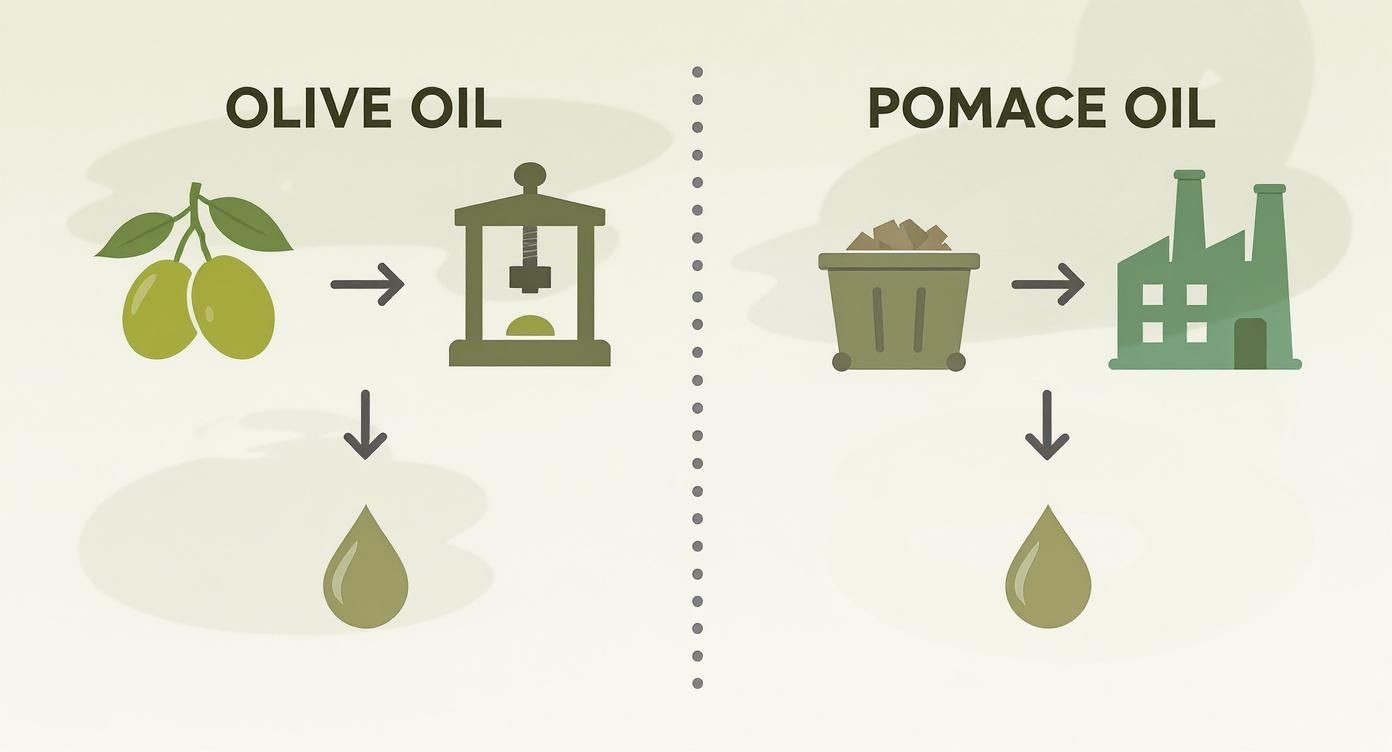
The visual makes it painfully clear: olive oil is a direct product of the fruit, while pomace oil is a secondary product manufactured from its waste. Grasping this deep divide in their origins is the key to understanding why they are, and always will be, fundamentally different.
What Each Oil Means for Your Health
Every time you pour oil into a pan, you're making a choice that affects your body. When you're standing in the aisle looking at pomace oil versus olive oil, you're not just picking a cooking fat—you're deciding what kind of fuel you want to run on. The real difference between these two isn't just marketing; it's written in their very molecular makeup.
Extra virgin olive oil has earned its sterling reputation as a nutritional heavyweight for good reason. It's packed with heart-healthy monounsaturated fats, primarily oleic acid, which has been a cornerstone of cardiovascular health studies for decades.
But that’s only half the story. The real magic of true olive oil comes from the precious micronutrients that survive the simple, mechanical pressing process.
The Antioxidant Power of True Olive Oil
A high-quality extra virgin olive oil is brimming with powerful antioxidants and anti-inflammatory compounds known as polyphenols. Think of these as your body’s private security team, working 24/7 to defend your cells against the relentless damage caused by oxidative stress.
These are the compounds that give olive oil its incredible health halo:
- Oleocanthal: A unique polyphenol with impressive anti-inflammatory effects, often compared to a low dose of ibuprofen in its mechanism.
- Hydroxytyrosol: One of nature’s most potent antioxidants, it helps keep blood vessels flexible and prevents the oxidation of LDL (the "bad") cholesterol.
- Vitamin E: A classic fat-soluble vitamin that adds another layer of protection against cellular damage.
These components don't just work in isolation; they create a powerful synergy that helps lower inflammation and promote overall wellness. This is precisely why olive oil is a foundational element in some of the world's healthiest diets.
The Empty Shell of Pomace Oil
Now, let's turn to olive pomace oil. The journey it takes from leftover pulp to a bottle on the shelf is a brutal one. It involves aggressive, solvent-based extraction and high-heat refining, a process that is absolutely catastrophic for its nutritional value. It’s a method of annihilation, not gentle preservation.
Nearly all of the delicate polyphenols, vitamins, and antioxidants are obliterated by the intense heat and chemical solvents. What’s left is an empty shell. Sure, the basic monounsaturated fat profile is technically still there, but all the protective compounds that make olive oil special are long gone.
Pomace oil is a source of fat, but it delivers none of the active, protective benefits that earn olive oil its place in a healthy diet. It's a stripped-down commodity, hollowed out and disconnected from the very elements that make the olive so valuable.
Choosing pomace oil for its health benefits is like eating an orange peel and tossing the fruit. You get the container, but none of the good stuff inside.
The Question of Chemical Residues
Beyond what’s missing, we must consider what might be added. Pomace oil production depends on industrial solvents like hexane, a byproduct of petroleum. While the final refining steps are meant to remove these chemicals, the possibility of trace residues is a valid concern for anyone careful about what they eat.
Modern refining is quite efficient, and government regulations set strict limits on these residues. Still, the thought of using a food product that was once saturated in an industrial solvent is unsettling for many. It introduces a risk of industrial contamination that you simply don’t have to worry about with pure, mechanically pressed virgin olive oils. When you are deciding which olive oil is healthiest for your daily use, these production differences are critical to understand.
When it comes to your health, this isn’t a close contest. Extra virgin olive oil is a functional food that actively improves your well-being. Pomace oil is just a functional fat, stripped of its biological value and carrying the baggage of its industrial past. The choice is yours.
How Flavor Defines Culinary Purpose
In the kitchen, your palate is the final judge. When you're choosing an oil, you aren't just selecting a fat; you're deciding if your dish needs an active, vibrant flavor or a silent, functional background player. One adds a story to your food, while the other is merely a tool.
A good extra virgin olive oil is a symphony of complex flavors. Depending on the olive variety, region, and harvest time, it can be grassy and herbaceous, sharply peppery, buttery and smooth, or bright and fruity. This isn't just oil; it's a finishing condiment, a key ingredient that can transform a simple dish into something truly memorable.
The flavor in extra virgin olive oil isn't an accident—it's the direct expression of its antioxidants and polyphenols. That peppery kick you feel at the back of your throat? That's the taste of oleocanthal, a powerful anti-inflammatory compound.
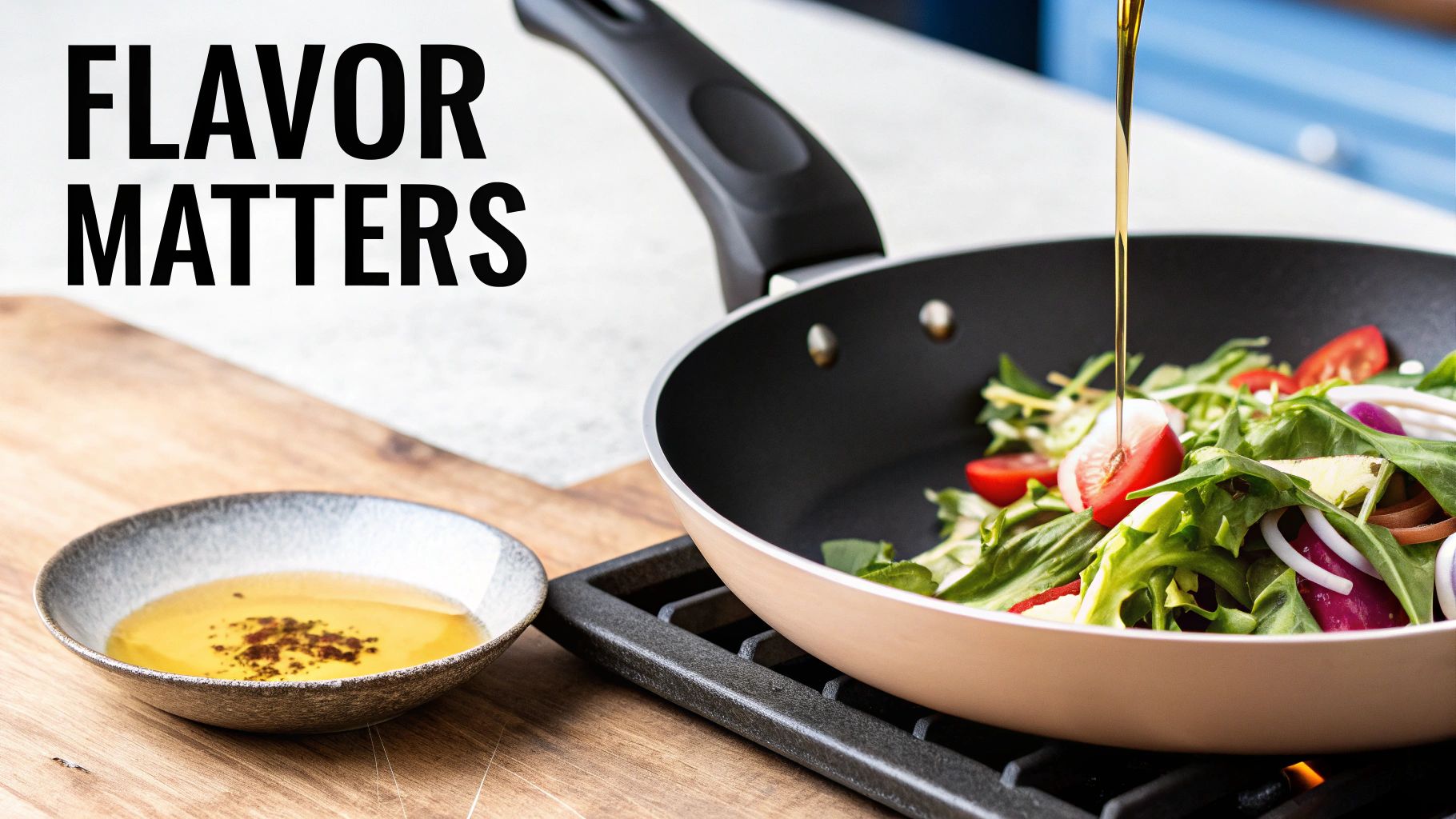
In stark contrast, olive pomace oil is engineered to be a ghost. The aggressive refining process, involving both chemicals and high heat, scrubs away every last trace of character. The flavor, the aroma, the color—it's all intentionally annihilated, leaving a completely neutral, tasteless fat.
When to Use Each Oil in the Kitchen
Choosing the right oil is a strategic decision that hinges entirely on your culinary goal. Think of one as an ingredient meant to be tasted, while the other is designed to disappear.
-
Extra Virgin Olive Oil (EVOO): This is your flavor powerhouse. You should use it anywhere the oil itself is a star. Drizzle a robust, peppery EVOO over a grilled steak or a hearty bean soup. Use a delicate, fruity one to dress fresh greens or finish a piece of grilled fish. It's perfect for dipping bread, making vinaigrettes, or creating pesto where its vibrant character can truly shine.
-
Olive Pomace Oil: Its main role is in high-heat applications where you need a cheap, neutral fat and aren't concerned with flavor or nutrition. Think deep-frying in a commercial kitchen where cost is the primary driver. It brings absolutely nothing to the table in terms of taste.
The Taste Test: A World of Difference
To truly appreciate the chasm between these two oils, you must taste them side-by-side. Learning how to taste olive oil reveals its hidden complexities—the fruitiness on the nose, the bitterness on the tongue, and the pungency in the throat. This sensory experience is a direct indicator of quality and freshness.
Pomace oil, if you were to taste it on its own, would just offer a flat, greasy sensation with no discernible character. It’s the culinary equivalent of a blank page. To see how much flavor matters, consider a recipe like this Foodie Friday Leak Mushroom Frittata, where a quality olive oil would add a beautiful, subtle note that pomace oil simply couldn't.
A Question of Value and Purpose
The market itself tells the story of this quality gap. The price difference and consumer demand clearly distinguish between a prized agricultural product and an industrial byproduct.
Ultimately, your choice comes down to a simple question: Do you want your oil to be an ingredient that adds depth and character, or do you just need something to keep food from sticking to a pan?
Decoding Labels and Understanding the Market
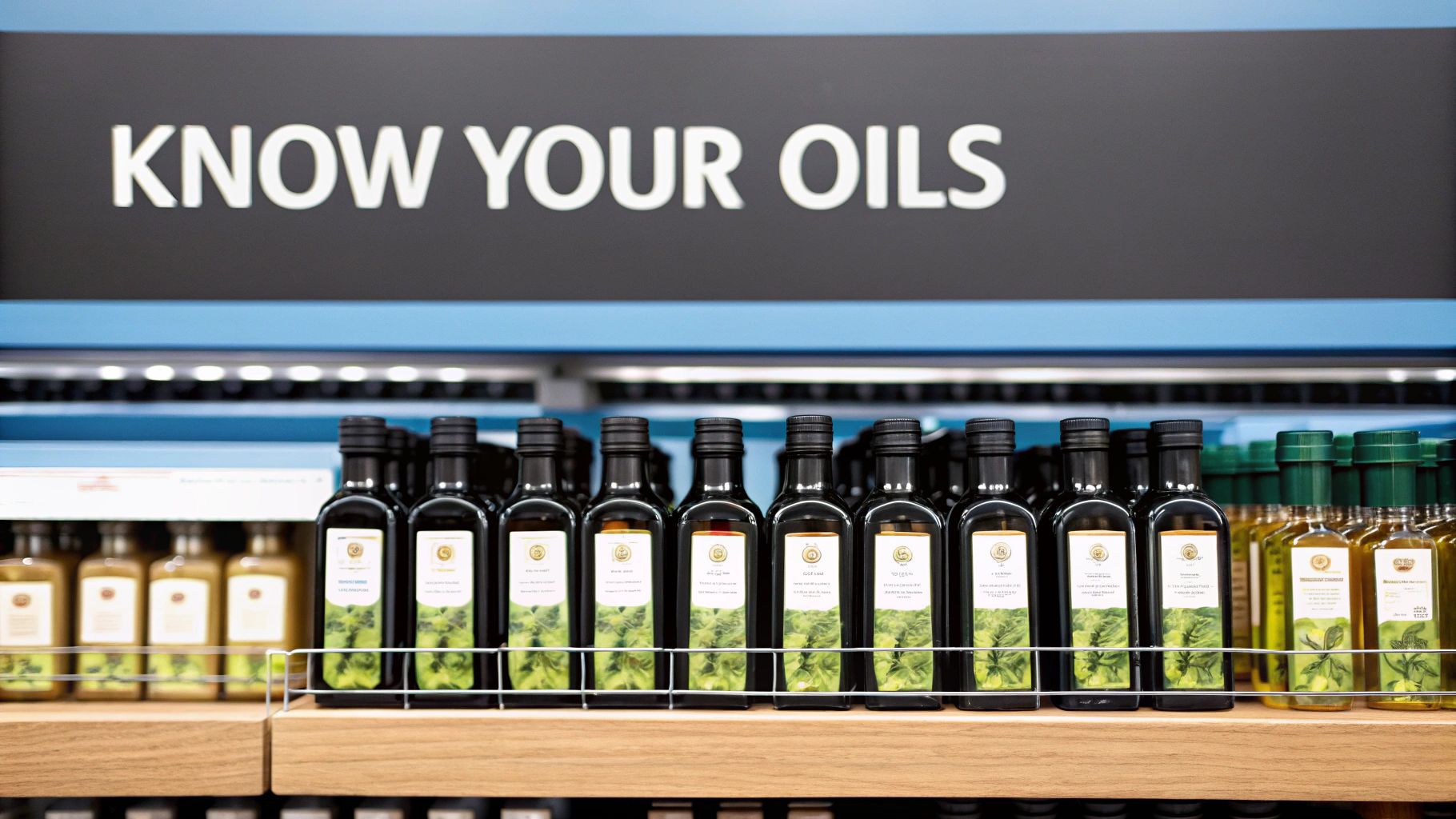
Walking down the olive oil aisle can feel like navigating a minefield of confusing terms. Bottles are plastered with words like ‘Pure,’ ‘Light,’ and ‘Extra Virgin,’ but what do they really mean? This is where savvy marketing can easily dupe an unsuspecting buyer, turning the search for quality into a guessing game. To come out on top, you must learn to decode the language of the label.
Frankly, most of these terms aren't what they seem. They are carefully chosen words meant to create an impression of quality that often just isn't there. Getting a handle on these labels is your first line of defense in separating a genuine agricultural product from a highly refined industrial commodity.
Cracking the Code on Common Labels
Let's pull back the curtain on the most common—and often misleading—terms you'll see on the shelf. This is critical knowledge for anyone who wants to understand the real difference between pomace oil and olive oil.
- ‘Pure Olive Oil’: This one sounds wholesome, doesn't it? It’s a masterclass in misdirection. ‘Pure’ is simply a marketing label for what is actually refined olive oil mixed with a tiny bit of virgin olive oil to add a hint of color and flavor. It's a pale, nearly tasteless oil that has been chemically and physically stripped of its nutrients.
- ‘Light Olive Oil’: The word ‘Light’ refers only to the flavor and color, not the calories or fat content. Just like ‘Pure,’ this is a blend of heavily refined olive oil with a drop of virgin oil. It was created specifically for consumers who want a neutral cooking fat without the distinct, peppery taste of real olives.
- ‘Olive Pomace Oil’: The label here is honest, but only if you already know what ‘pomace’ means. It’s a dead giveaway that the oil was extracted from the leftover waste pulp using chemical solvents, then refined and blended with a touch of virgin oil to make it sellable. This is the lowest grade you can possibly buy.
Here’s the single most important takeaway: if the front of the bottle says anything other than ‘Extra Virgin’ or ‘Virgin,’ you can be certain the oil inside has undergone significant industrial refining. This process completely erases the authentic flavor, aroma, and health benefits of the original olive.
For a complete rundown of these classifications, you can learn more about official olive oil labeling. Knowing the rules helps you see right past the marketing fluff.
The Market Chasm Between Product and Byproduct
The difference between these oils isn't just in the bottle; it's deeply rooted in the global market. Extra virgin olive oil is a premium agricultural product, its supply and price subject to the whims of weather and harvest quality. Pomace oil, on the other hand, is a stable industrial commodity manufactured from agricultural leftovers.
The global olive oil market is facing some serious challenges. Spain, the world's top producer, managed to churn out around 1.41 million tons in the 2024/25 season. But extreme weather, like droughts and blistering heatwaves, is causing experts to predict a 10% decline in global production for the following year. That, of course, drives up the price of high-quality oil.
This volatility hits true olive oil far harder than it does pomace. The price of EVOO is directly tied to the success of the harvest, while the price of pomace oil is tied to industrial processing costs. This creates a massive chasm in both price and quality between the two.
Why Pomace Oil Even Exists
So, who is actually buying this stuff? Pomace oil was created to fill a very specific market need: a cheap, high-heat cooking fat for industrial food production and restaurants desperate to cut costs. It's the go-to oil for large-scale deep fryers where flavor and nutrition are totally irrelevant, and only the bottom-line price tag matters.
You will almost never find a bottle of pomace oil proudly displayed in a home kitchen. Its purpose is purely functional and economic. To navigate this confusing world, learning how to read food labels like a pro is an invaluable skill. It gives you the power to see past the clever branding and understand what you’re actually getting.
Armed with this knowledge, you're no longer just a passive consumer. You become an empowered buyer who can't be fooled by slick marketing, spotting the red flags of a low-quality product from a mile away and confidently choosing an oil that truly serves your needs.
Your Top Questions About Pomace Oil, Answered
Let's clear the air. When you stand in the cooking oil aisle, the difference between olive pomace oil and other olive oils isn't always obvious. The labels can be confusing and the marketing even more so. Here, we'll tackle the most common questions head-on, giving you the straightforward answers you need to choose wisely for your kitchen.
Is Olive Pomace Oil Actually Healthy?
To be blunt, not really. While it’s true that olive pomace oil is primarily composed of monounsaturated fat, which is good for your heart, that’s about where the health benefits stop. The real story lies in the aggressive production process. It’s subjected to high heat and chemical solvents, a combination that essentially obliterates the very things that make olive oil a health superstar: its powerful polyphenols and antioxidants.
Then there’s the issue of what might be left in the oil. Lingering concerns about trace amounts of industrial solvents like hexane are valid. Even though levels are regulated, the fact that the oil starts its life being washed with a petroleum-derived chemical is a serious consideration for anyone who cares about clean eating.
When it comes to your health, think of it this way: pomace oil is a fat source, nothing more. It’s been stripped of the protective compounds that define high-quality olive oil. The genuine, well-researched health benefits come from minimally processed extra virgin and virgin olive oils, period.
Can I Substitute Pomace Oil for Olive Oil?
You can, but only in a very limited way. Pomace oil’s one real strength is as a cheap, neutral-tasting fat for high-heat applications like industrial deep-frying. In that specific role, it's a functional, budget-friendly tool.
But you should never, ever swap it in when the flavor of olive oil is meant to shine. Drizzling it on a salad, finishing a pasta dish, or using it for dipping bread will give you a flat, greasy, and profoundly underwhelming result. This is a substitution born of necessity—for heat tolerance and cost-cutting—not one of quality or taste. It's a functional stand-in, not an equal.
Why Is Pomace Oil So Inexpensive?
The price tag tells you everything you need to know about its origin. Extra virgin olive oil is the first, pristine pressing of the best olives. Pomace oil, on the other hand, is what’s salvaged from the leftover paste—the industrial waste that remains after all the good stuff has been extracted.
Its raw material is literally a byproduct that might otherwise be thrown away. The process relies on inexpensive chemical solvents and large-scale industrial refining, not the careful, quality-driven milling of true olive oil. You're paying for exactly what it is: an oil rescued from waste, not pressed from fruit. The low price is a direct reflection of its inferior source and quality.
Is Pomace Oil Considered Real Olive Oil?
Legally, no. While it comes from olives, major regulatory bodies like the International Olive Council do not permit it to be labeled simply as ‘olive oil.’ It must be clearly identified by its own distinct, lower-grade category: ‘Olive Pomace Oil.’
This isn't just about wording; it’s a critical consumer protection measure. The solvent extraction method is a world away from the purely mechanical pressing required for every other grade, from extra virgin right down to refined olive oil. That legal firewall exists for a reason: to make sure an industrial byproduct can't be mistaken for a true agricultural product. It ensures you know whether you're buying the fresh juice of the olive or an extract from its leftover pulp.
At Learn Olive Oil, we believe that understanding the world of olive oil should be simple and rewarding. From the sun-drenched groves to your table, our mission is to provide you with the expert insights needed to choose, taste, and cook with confidence.
Ready to elevate your culinary journey? Discover the World of Premium Olive Oil and start your path to becoming a true connoisseur today.


Leave a Reply