When someone asks which olive oil is the healthiest, the answer is surprisingly straightforward: Extra Virgin Olive Oil (EVOO). And it’s not a tight race. If you’re after real, life-enhancing health benefits, high-quality EVOO isn't just the winner—it’s in a league of its own.
The Definitive Answer on the Healthiest Olive Oil
Walking down the cooking oil aisle is an exercise in confusion. But the words on an olive oil label can tell you everything you need to know, if you know the secret. “Extra Virgin” isn’t a slick marketing term; it is a guarantee of quality and purity, a promise that the oil inside was made one way, and one way only: by mechanically cold-pressing fresh olives, without the use of high heat or chemical trickery.
That gentle, ancient method is precisely what makes EVOO a nutritional powerhouse. It preserves the oil’s most precious cargo: the polyphenols. These are the potent antioxidants celebrated for shielding our bodies from the ravages of inflammation and cellular decay.
In stark contrast, oils deceptively labeled "Pure," "Light," or just "Olive Oil" have a dirty little secret. They are products of an aggressive industrial refining process. This treatment strips away nearly all of those vital polyphenols, leaving you with little more than monounsaturated fat. While that fat is still a better choice than many others, you are cheated out of the profound health rewards that only the antioxidants can deliver.
The Science Behind the Superiority
The chorus of praise for EVOO isn't just folklore; it's a symphony of hard science. For instance, one landmark study drew a direct, undeniable line between higher olive oil consumption and a longer life. The researchers discovered that people who consumed just over half a tablespoon daily had a 19% lower risk of overall mortality over a 28-year period.
Even more striking? When participants replaced fats like butter with olive oil, that risk reduction skyrocketed to an incredible 34%. You can explore the full Harvard study findings on longevity to see the astonishing data for yourself.
This kind of evidence makes one thing crystal clear: choosing the right olive oil is one of the simplest yet most powerful dietary decisions you can make for your future. The trick is knowing what separates a health-boosting powerhouse from an empty, lifeless bottle.
To help you choose wisely, it’s crucial to understand how different olive oils are made and how that production method seals their nutritional fate. Here’s a quick breakdown of the key differences.
| Feature | Extra Virgin Olive Oil (EVOO) | Refined Olive Oil ("Light," "Pure") |
|---|---|---|
| Processing | Cold-pressed, unrefined | Heat and/or chemically refined |
| Polyphenols | High (50-500+ mg/kg) | Very low or non-existent |
| Flavor Profile | Fruity, peppery, complex | Neutral, bland, flavorless |
| Health Impact | Anti-inflammatory, antioxidant-rich | Primarily a source of monounsaturated fat |
At the end of the day, the antioxidant content is what truly sets them apart. If you want the most potent health benefits, I highly recommend reading our guide on finding the olive oil with the highest polyphenols. It will give you the knowledge you need to pick an oil that genuinely nourishes your body.
Decoding the Labels: Extra Virgin Versus Refined Oils
Standing in the grocery aisle, you’re not just choosing a cooking oil. You are making a decision that will either arm your body with powerful defenders or leave it short-changed. The labels whisper promises of "Pure," "Light," and "Extra Virgin." They sound similar, but the difference isn't a matter of taste—it's a night-and-day distinction in how they're made and what they do for your body.
The gap between a true Extra Virgin Olive Oil (EVOO) and its refined cousins is immense. One is a vibrant, living fruit juice, bursting with compounds that wage war on disease. The others? They are pale imitations, stripped of their nutritional heart and soul through a brutal industrial process.
The Unseen Battle of Production
An olive oil's health journey begins the moment the olive is plucked from the tree. To earn the coveted Extra Virgin label, the oil must be extracted using only mechanical methods—a clean, honest process of crushing and pressing the fruit without the taint of high heat or chemical solvents.
This gentle, "cold-press" approach is the secret to its power. It is the only way to keep the oil's most valuable warriors intact: its polyphenols. These are the mighty antioxidants that fight inflammation, protect your cells from assault, and give olive oil its legendary health status. It's like comparing fresh-squeezed orange juice, alive with vitamins, to a lifeless concentrate made with chemicals and scorching heat; the nutritional chasm is staggering.
Refined oils, on the other hand, start as rejects. They are made from low-grade oils that failed the strict tests for "Extra Virgin" status. To make them sellable, they undergo an aggressive industrial makeover.
- High-Heat Treatment: The oil is heated to extreme temperatures to burn off offensive defects.
- Chemical Solvents: Industrial solvents like hexane are often used to wring every last drop of oil from the olive pulp.
- Bleaching and Deodorizing: Finally, the oil is bleached with clays and deodorized with steam, creating a colorless, tasteless liquid.
This harsh processing obliterates almost all the beneficial polyphenols and vitamins. What’s left is little more than empty monounsaturated fat. While it's still a better option than many processed seed oils, you are robbed of the very compounds that make olive oil a genuine superfood.
This quick visual guide highlights the key health benefits you should be looking for—nearly all of which are found exclusively in Extra Virgin Olive Oil.
The science is clear: consistent consumption of high-quality EVOO is a direct path to significant health improvements, especially for your heart.
The Great Divide in Health Benefits
The stark contrast in how these oils are made leads to a colossal difference in their health impact. This isn't just a theory—it's a scientific fact cemented by mountains of research. A systematic review of dozens of studies confirmed that the incredible benefits of EVOO, from lowering bad LDL cholesterol to improving blood sugar control, are driven almost entirely by its rich polyphenol content, not just its monounsaturated fats.
When you opt for a "Light" or "Pure" olive oil, you're essentially getting an empty vessel. You get the calories, but none of the therapeutic compounds that do the real work.
Choosing refined olive oil for your health is like buying a high-performance car and removing the engine. It might look the part, but it's missing the very thing that gives it power and purpose.
For a clearer picture, here's how the different types of olive oil stack up against each other.
Olive Oil Health Profile Comparison
This table breaks down the key differences in processing, polyphenol content, and overall health value between the most common olive oil varieties you'll find on the shelf.
| Attribute | Extra Virgin Olive Oil (EVOO) | Virgin Olive Oil | Refined Olive Oil ('Pure' or 'Light') |
|---|---|---|---|
| Processing Method | Mechanical cold-pressing; no chemicals or high heat. | Mechanical pressing; minor flavor defects, no refining. | High heat, chemical solvents, bleaching, and deodorizing. |
| Polyphenol Content | High (50-500+ mg/kg), providing potent antioxidant and anti-inflammatory benefits. | Moderate; lower than EVOO but still contains some beneficial compounds. | Negligible; almost entirely destroyed during the refining process. |
| Overall Health Impact | Maximum health benefits; protects against chronic disease. | Good health benefits, but a step down from EVOO. | Minimal health benefits beyond its monounsaturated fat content. |
The takeaway here is that not all olive oils are created equal. The health benefits you read about are overwhelmingly tied to the quality and integrity of Extra Virgin Olive Oil.
This comparison makes the choice simple. If you want to know which olive oil is healthiest, the answer is always an authentic, well-made Extra Virgin Olive Oil. For those ready to dive deeper, our guide on what is the best extra virgin olive oil provides detailed recommendations to help you find a truly exceptional product. Now you know how to read the story the label is telling you.
The Power of Polyphenols: Why They're the Real Prize
If there’s one secret to take away from this guide, it’s this: the true health magic of olive oil isn't in the fat—it’s in the polyphenols. Yes, the heart-healthy monounsaturated fats are wonderful, but they're just the opening act. The profound, life-altering benefits that science has uncovered come from these potent little compounds.
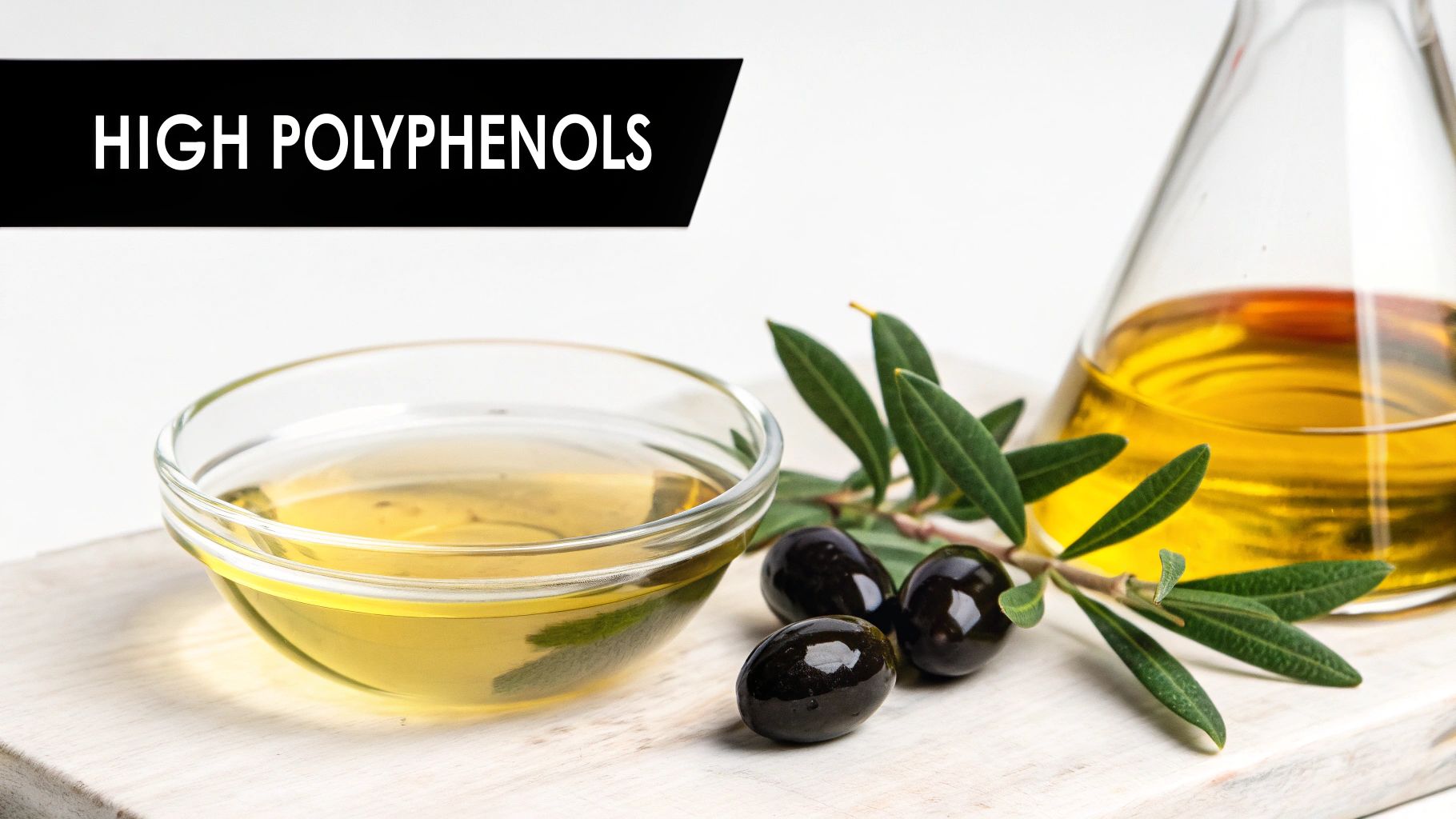
Polyphenols are a group of powerful antioxidants that plants produce to protect themselves from harm. In olive oil, they’re responsible for that peppery bite in your throat, the pleasant bitterness on your tongue, and nearly all the incredible health perks researchers rave about. Think of them as your body's personal security detail, on constant patrol fighting off cellular damage and inflammation.
When you settle for an oil that's been processed to the point where these compounds are gone, you're missing the entire point. It's like choosing filtered water over a nutrient-dense green juice. Sure, both provide hydration, but only one is actively working to fortify your body from the inside out.
Oleocanthal: Nature's Anti-Inflammatory
Let's put one of olive oil's most amazing polyphenols under the microscope: oleocanthal. This is the specific compound that creates that tell-tale peppery tickle in the back of your throat when you taste a truly high-quality extra virgin olive oil. That sensation is more than a flavor cue; it's the signature of a potent, natural anti-inflammatory at work.
In fact, scientists have discovered that oleocanthal's anti-inflammatory mechanism is shockingly similar to that of ibuprofen, just on a daily, gentle scale. It works on the very same biological pathways to cool inflammation, which is now understood to be a key trigger for major health scourges like heart disease, arthritis, and even neurodegenerative diseases.
Ponder this for a moment: every time you finish a dish with a drizzle of high-polyphenol olive oil, you're not just adding flavor. You're delivering your body a small, consistent dose of a natural anti-inflammatory, helping to quiet the slow burn of chronic inflammation, meal by meal.
This isn't some minor perk; it's central to what makes olive oil a true medicinal food. An oil that lacks that peppery finish is an oil without oleocanthal, which means it’s missing one of its most valuable protective tools.
Hydroxytyrosol: The Ultimate Antioxidant Shield
Another polyphenol superstar is hydroxytyrosol. It's widely regarded as one of the most powerful antioxidants ever discovered in nature. Its primary mission is to seek out and neutralize destructive free radicals—those rogue molecules that cause oxidative stress, wreaking havoc on your cells, DNA, and tissues.
This constant oxidative stress is a key driver in how we age and develop disease. By making hydroxytyrosol-rich olive oil a regular part of your diet, you are essentially reinforcing your body's defensive walls at the most fundamental, cellular level.
Here’s what that looks like in practice:
- Artery Protection: Hydroxytyrosol is a champion at preventing the oxidation of LDL cholesterol (the "bad" kind). Since oxidized LDL is a critical first step in the buildup of artery-clogging plaque, this makes it a formidable weapon for your cardiovascular health.
- Blood Vessel Health: It helps keep the lining of your blood vessels flexible and healthy, which is crucial for maintaining proper blood flow and blood pressure.
- Cellular Guardian: It acts as a shield, protecting your cells from the daily barrage of environmental toxins and metabolic byproducts that can lead to long-term cellular disaster.
The presence of compounds like oleocanthal and hydroxytyrosol elevates olive oil from a simple cooking fat into a true functional food. Choosing the right bottle is an active investment in your long-term wellness. To make sure you're getting the real deal, take a look at our detailed guide on how to find a genuine high-polyphenol olive oil that actually delivers.
How to Buy the Healthiest Olive Oil
Walking down the olive oil aisle can feel like navigating a minefield. With so many bottles, beautiful labels, and tempting stories, how do you find the one that’s actually good for you? The secret is to ignore the marketing fluff and learn to spot the tell-tale signs of a high-potency Extra Virgin Olive Oil packed with health-boosting compounds. Think of it less like a simple grocery purchase and more like a strategic investment in your future.
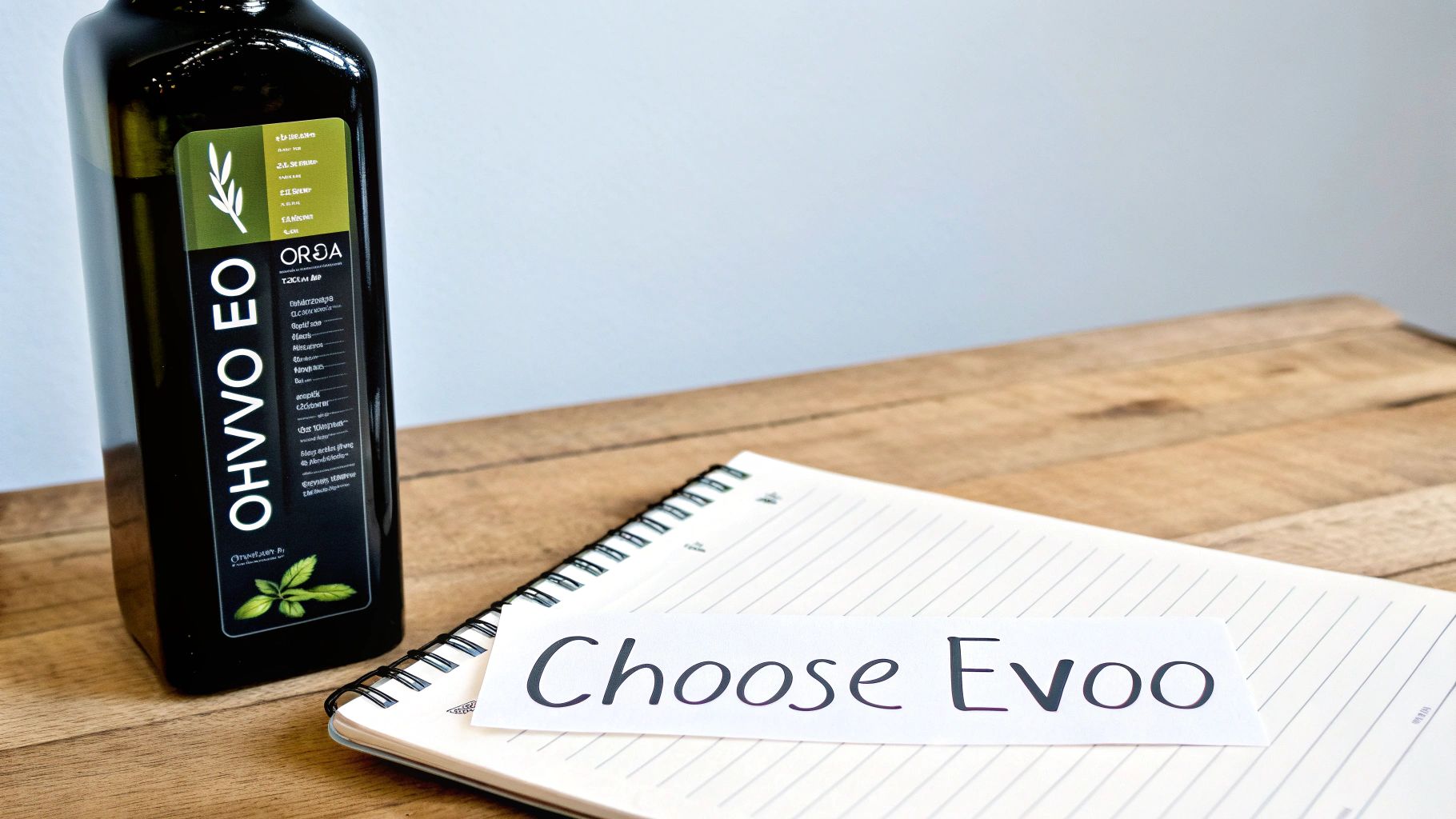
Forget the charming farm story on the back. The most authentic, potent oils aren’t afraid to show you the hard facts right on the label. The best producers have nothing to hide; in fact, they're proud to prove their quality.
Decode the Label Like a Pro
First, and most importantly: find the harvest date. This is non-negotiable. Olive oil is a fresh fruit juice, and its powerful polyphenols begin to degrade the moment the olives are pressed. The closer you are to that date, the more potent and healthier the oil.
Your mission is to find a harvest date within the last year. If you only see a "best by" date, be suspicious. That date can be set up to two years after bottling, leaving you to guess the oil's true age. A missing harvest date is a giant red flag—it often means the producer would rather you didn't know how old their product is.
Next, look for the country of origin. Vague descriptions like "Product of Italy" can be misleading. This often just means olives from various countries were blended and bottled in Italy. A top-tier oil will proudly state the specific region or even the single estate where the olives were grown and milled. That level of detail reveals a genuine commitment to quality and transparency.
Finally, hunt for third-party seals of approval. These certifications are your guarantee that the oil has passed rigorous, unbiased testing. Key ones to look for include:
- California Olive Oil Council (COOC) Certified Extra Virgin: This seal means the oil passed chemical and sensory tests that are even stricter than international standards.
- Protected Designation of Origin (PDO): This is a European Union certification ensuring every step—from growing to pressing—happened in a specific geographical area using traditional, high-quality methods.
These seals cut through the marketing noise. They are unbiased proof that you're getting a genuinely premium product.
Judge the Bottle by Its Cover
After inspecting the label, take a hard look at the packaging. The bottle itself is a crucial line of defense against olive oil's two worst enemies: light and air. Both will rapidly destroy the delicate polyphenols and turn the oil rancid.
A dark glass bottle (think green or brown) or a metal tin is an absolute must. If you spot olive oil in a clear glass or plastic bottle, just keep walking. That producer either doesn't know how to protect their product or, more likely, doesn't care because the contents are already low-quality.
The right container shows the producer respects what's inside. It's a simple visual cue that signals a commitment to quality. For an even more in-depth look at what to watch for, our complete guide on how to buy olive oil has more expert tips.
Ultimately, your own senses are one of your best tools. A genuine high-polyphenol olive oil should have a peppery or spicy kick that you feel in the back of your throat. It might even make you cough. That's the oleocanthal, a powerful anti-inflammatory compound, announcing its presence. Don't be put off by that peppery finish—it's the signature taste of an oil that is truly working to nourish your body.
Using Olive Oil to Maximize Health Benefits
https://www.youtube.com/embed/l_aFHrzSBrM
Bringing home a bottle of authentic, high-polyphenol Extra Virgin Olive Oil is a massive victory for your health. But your job isn’t done. How you use that liquid gold in your kitchen determines whether you get its full, life-enhancing power or unknowingly destroy the very compounds you paid for.
The good news is, unlocking these benefits is simple. It just requires unlearning a few stubborn myths and adopting a couple of key strategies. Let’s turn your kitchen into a place where every meal is an opportunity to build better health, one drizzle and sauté at a time.
The Great Smoke Point Myth
Let's clear the air on one of the most persistent—and damaging—myths in the culinary world: the belief that you can't cook with Extra Virgin Olive Oil. This dangerous misconception is based almost entirely on a misunderstanding of smoke point, the temperature at which an oil begins to break down and smoke.
Many believe EVOO has a low smoke point, making it unsuitable for anything but salads. The truth is, a high-quality EVOO has a smoke point ranging from 350°F to 410°F (177°C to 210°C). This is well above the temperatures used for most everyday cooking, including sautéing and roasting.
More importantly, smoke point isn't the only thing that matters. What truly counts is an oil’s oxidative stability—its resistance to breaking down under heat. Thanks to its sky-high antioxidant content, EVOO is incredibly stable. Those powerful polyphenols don't just protect your cells; they protect the oil itself from heat damage, preventing the formation of harmful compounds.
In one study that heated various cooking oils, researchers made a stunning discovery: EVOO was the most stable oil tested, outperforming oils with much higher smoke points like canola, grapeseed, and sunflower oil. It held its structure and retained its beneficial compounds far better under heat.
So, feel free to use your EVOO for sautéing vegetables, pan-searing fish, or roasting chicken. You’re not only safe, you’re infusing your food with stable, healthy fats and protective antioxidants.
Strategic Use for Maximum Potency
While EVOO is a robust cooking companion, there are strategic ways to use it to get the absolute most from every drop. The key is to think about heat exposure. Although EVOO is stable, its most delicate flavor notes and a portion of its polyphenols can diminish with prolonged high heat.
This leads to a simple, two-pronged approach:
- Cook With a Good EVOO: Use a quality, everyday EVOO for your general cooking needs. It will still provide tremendous stability and health benefits far superior to refined oils.
- Finish With Your Best EVOO: Reserve your most prized, peppery, high-polyphenol olive oil for finishing dishes. This is where its magic truly shines.
Drizzling a robust EVOO over food just before serving is the single best way to get a full, undiluted blast of its powerful antioxidants and anti-inflammatory compounds.
Here’s how that looks in the real world:
- Soups and Stews: Ladle the soup into a bowl, then add a generous swirl of your best EVOO right before it hits the table.
- Grilled Meats and Fish: Once the protein is off the grill and resting, drizzle it with a finishing oil.
- Roasted Vegetables: After they come out of the oven, toss them with a fresh splash of EVOO.
- Pasta Dishes: Instead of mixing all the oil into the hot sauce, finish each plate with a final, vibrant drizzle.
This finishing technique ensures you’re getting the maximum dose of oleocanthal and other polyphenols in their most potent state. It also adds an incredible layer of fresh, complex flavor that elevates any dish from good to unforgettable. To get more ideas, you can check out our guide on how to use extra virgin olive oil for creative culinary inspiration.
The consistent, daily inclusion of EVOO is what drives its remarkable health outcomes. Research consistently links olive oil consumption with a lower risk of cardiovascular disease (CVD) and death from all causes. In fact, a major analysis found that every 5-gram daily increase in olive oil intake was associated with a 4% reduction in CVD risk. This protective effect appears to be maximized at around 20 grams per day—just under two tablespoons. Read the full research on how olive oil intake impacts longevity. This data proves that small, daily habits truly make the biggest difference.
Common Questions About Healthy Olive Oil
Walking down the olive oil aisle can feel overwhelming. With so many labels and so much conflicting advice, it's tough to know what's true. Let's clear up some of the most common questions and separate fact from marketing fiction.
Does the Color of Olive Oil Mean It's Higher Quality?
You might think a deep green color screams quality, but that's a common misconception. In reality, color is a terrible judge of an olive oil's character. A top-tier Extra Virgin Olive Oil can be anything from a rich, grassy green to a pale, liquid gold.
So, what determines the color? It all comes down to the olive variety, how ripe the fruit was at harvest, and the amount of chlorophyll present. Greener oils often come from underripe olives, which can mean more polyphenols and a punchier, peppery kick. But a golden oil from riper olives can be just as healthy and flavorful.
Professional tasters actually use special cobalt blue glasses for their tastings. This is done specifically to hide the oil's color so it can't sway their judgment.
The real takeaway is simple: Forget the color. Focus on the harvest date, official certifications, and a fresh, peppery taste. Those are the true signs of a healthy, high-quality olive oil.
What's the Right Way to Store Olive Oil?
How you store your olive oil is just as important as which one you buy. If you don't store it correctly, you're essentially throwing away the very health benefits you paid for. Olive oil's three biggest enemies are heat, light, and air. Exposing it to any of these will quickly break down its precious polyphenols, turning it rancid and stripping it of its flavor and nutrition.
Protecting your olive oil is easy if you follow a few simple guidelines:
- Find a cool, dark home for it, like a pantry or cupboard. The worst place for it is next to the stove or on a sunny windowsill. Don't put it in the fridge, either—condensation can spoil the oil.
- Always seal the cap tightly. Oxygen is the fastest way to ruin freshness. Every second the bottle is open, the oil is oxidizing.
- Choose oil in dark glass bottles or opaque tins. If you see olive oil in a clear bottle, that's a huge red flag. It tells you the producer isn't serious about protecting what's inside.
Treat your olive oil like a fine wine. It needs the right conditions to stay potent and delicious.
Is "Light" Olive Oil Lower in Calories?
This is one of the biggest marketing lies on the grocery shelf. The word "Light" on an olive oil label has absolutely nothing to do with calories or fat. "Light" or "Extra Light" olive oil has the exact same 120 calories per tablespoon as every other olive oil.
So what does "light" actually mean? It refers to the oil's incredibly mild flavor and color. This is because it's a heavily refined product, processed with high heat and chemical solvents that strip away nearly all of the good stuff—the polyphenols, antioxidants, and vitamins.
You're left with a neutral, bland oil that offers none of the powerful health benefits that make Extra Virgin Olive Oil so special. When your goal is health, "Light" olive oil is never the right choice.
At Learn Olive Oil, we cut through the confusion to bring you expert insights and clear guidance on finding the world's best olive oils. Discover how to taste, buy, and use this liquid gold to elevate your cooking and your health. Start your journey today at https://learnoliveoil.com.


Leave a comment