Most advice about cooking chicken in olive oil gets the central question wrong.
People obsess over whether olive oil will “take the heat,” then reach for a bland, industrial oil as if neutrality were a virtue. It isn’t. Chicken loves olive oil. Not just because it tastes better, but because good olive oil behaves better in the pan than the smoke-point-only crowd would have you believe.
The difference matters. A chicken breast cooked in olive oil browns with more character. The pan smells alive, not flat. The fond has depth. Herbs bloom instead of just floating. And if you understand the mechanics, you can get crisp skin, moist meat, and a cleaner flavor without treating your skillet like a chemistry lab.
This is the kitchen version of replacing folk wisdom with working knowledge. Once you know what olive oil is doing under heat, cooking chicken in olive oil stops feeling risky and starts feeling obvious.
The Biggest Lie You Were Told About Olive Oil
The biggest lie is simple: olive oil is bad for frying chicken because its smoke point is too low.
That advice survives because it sounds tidy. One number. One warning. One substitute. But tidy kitchen advice is often the most misleading kind. It leaves out the part that matters more, which is how an oil holds up under heat, not just the temperature where it starts to smoke.
Chef Dorian and the USDA both validate that extra virgin olive oil’s 350°F smoke point is “plenty high” for frying chicken, as discussed in this expert discussion of frying chicken in extra virgin olive oil. That should end the argument for most home cooks, because most good pan-frying happens below the scorched-earth temperatures people imagine.
Smoke point is not the whole story
The smoke point myth keeps people focused on the wrong measurement. In real cooking, chicken doesn’t reward reckless heat. It rewards controlled heat.
A skillet that’s too hot gives you a dark exterior and a tense, dry center. A skillet in the proper range gives you color, crust, and enough time for the meat to cook through before the outside turns bitter. That’s where extra virgin olive oil earns its keep.
For a useful primer on matching heat to the oil in your bottle, see this guide to olive oil cooking temperatures.
Good chicken isn’t cooked in the hottest pan possible. It’s cooked in a pan hot enough to brown, but calm enough to control.
What gets lost when you avoid olive oil
When people swap out olive oil automatically, they give up three things.
- Flavor: Olive oil contributes actual taste, not just lubrication. With chicken, that matters.
- Aromatics: Garlic, rosemary, thyme, lemon peel, and paprika open up beautifully in olive oil.
- Kitchen control: A good olive oil gives visual and aromatic cues as it heats. You can read it.
That last point is underrated. Seasoned cooks don’t rely on fear-based rules. They watch the shimmer, listen to the sizzle, smell the pan, and adjust. Olive oil gives you signals. Cheap neutral oils often give you very little until they’re over the edge.
The old warning was never entirely useless. If you blast delicate oil in a neglected pan until it burns, you’ll ruin dinner. But that’s not an olive-oil problem. That’s a technique problem.
How to Choose the Right Olive Oil for Your Chicken
The bottle matters more than the label hierarchy people recite at the store.
For chicken, I choose olive oil by two things first. How hard I plan to cook with it, and whether I want the oil to leave a fingerprint on the finished dish. Price comes after that.

Start with what the pan and the plate need
If the chicken is going into a skillet, a roasting pan, or a shallow fry, extra virgin olive oil is usually the first bottle I reach for. Not because it has the highest smoke point on paper. Because good EVOO brings more oxidative stability and more natural antioxidants into the pan than the stripped-down bottles sold as “light.” That matters during real cooking, where oil sits over heat for minutes, hits protein, and picks up browned bits.
The smoke point shortcut misses the point. Chicken is not cooked by setting oil on fire. It is cooked in a workable heat range where the oil stays glossy, the surface browns steadily, and the flavor stays clean. In that zone, a fresh EVOO performs very well and gives you aroma that neutral oils cannot.
If you want a bottle guide before buying, this breakdown of types of olive oil for cooking covers the categories clearly.
Match the oil to the job
For pan-fried breast or thigh, use EVOO if you want the chicken to taste like something beyond salt and heat. A grassy, peppery oil gives browned chicken more depth, especially with garlic, rosemary, lemon, or pan juices spooned over the top.
For breaded cutlets, either EVOO or a milder olive oil works. I use EVOO when the crust is lightly seasoned and I want more character. I switch to a milder bottle when the coating, cheese, or sauce is already doing heavy lifting.
For very thin cut pieces cooked fast, a lighter-flavored olive oil can be the safer choice if your stove runs hot or you know you tend to push the pan too far. That is not because EVOO is delicate. It is because expensive, expressive oil loses some of its best flavor if you treat it like fuel.
For roast chicken, EVOO earns its cost. The oil clings to the skin, carries herbs well, and improves the drippings. You taste it in the finished bird.
For marinades, use EVOO again. Chicken is mild, so the oil has room to show up. Fruity, peppery, or buttery notes all come through depending on the bottle.
Flavor matters more than many labels suggest
“Light” olive oil refers to flavor, not calories. It stays quieter in the pan, which can be useful for dishes where you want lemon, capers, or a crisp crumb to lead.
EVOO is more involved. A firm, peppery oil suits grilled or roasted thighs. A rounder, softer one flatters breast meat, especially with parsley, butter, or a squeeze of lemon at the end. A greener oil can make a simple skillet chicken taste sharper and more intentional.
Buy with that in mind. If the oil will be tasted, buy for flavor. If the oil is mainly there to coat the pan and handle heat, buy for freshness, stability, and cost.
Spend where it shows
Do not waste your best bottle on a job that mutes it. If you are frying breaded chicken for a crowd, a solid everyday olive oil makes more sense than an expensive finishing EVOO. Volume matters, and subtle notes disappear under crust and seasoning.
Spend more on EVOO when the oil stays visible in the final dish. Roast chicken, warm pan sauces, spooning oil over carved meat, and simple marinades all reward a better bottle.
The practical setup is two bottles in the kitchen. Keep one flavorful EVOO for dishes where you will notice it. Keep one dependable, less expensive olive oil for heavier cooking. That gives you better chicken and fewer bad compromises.
Mastering the Perfect Pan-Fried Chicken Breast
Pan-fried chicken breast exposes every weak habit in the kitchen. If the meat is wet, the pan is thin, or the heat is rushed, olive oil gets blamed for mistakes it did not cause.
What matters in the skillet is not a smoke-point panic. It is stability under real cooking conditions. Good olive oil holds up well for pan-frying because its fatty acid profile and natural antioxidants help it resist breakdown while the chicken browns. That gives you a wider margin for error than the usual internet advice suggests, as long as you control the heat instead of chasing maximum temperature.

Read the pan before you read the clock
Use a heavy skillet. Cast iron gives strong browning. Stainless steel gives excellent fond if you want to build a pan sauce. Either works if it holds steady heat.
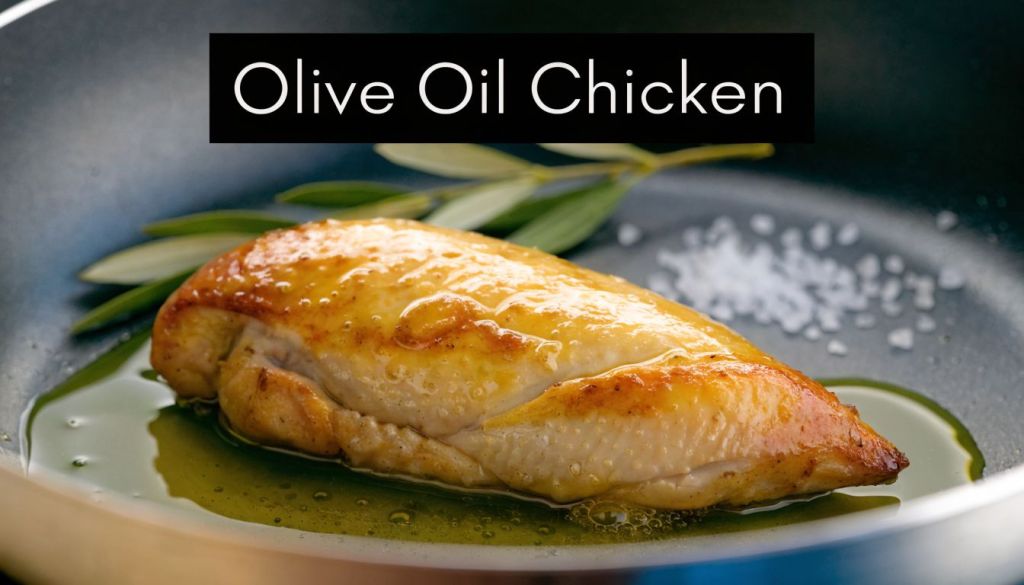
Start with dry chicken and a modest layer of oil. Preheat until the oil looks loose and glossy and slides quickly across the pan. That visual cue matters more than obsessing over smoke point charts. In actual pan-frying, chicken releases moisture, the pan temperature rises and falls, and the oil is in contact with food rather than sitting empty over a burner.
That is why experienced cooks watch behavior. Shimmering oil and a clean sizzle mean you are in the right zone.
A method that gets color without drying the center
For a reliable baseline, follow a step-by-step olive oil sautéing method for chicken that keeps the heat in a practical frying range and finishes the meat at a safe internal temperature. Then pay attention to the parts no timer can solve for you.
- Pat the chicken dry and season it early. Salt adheres better to a dry surface, and dry meat browns instead of steaming.
- Even out the thickness. A lightly pounded breast cooks more evenly and gives you a larger window between browned exterior and dry interior.
- Set the breast in the pan away from you. That protects your hand from splatter and helps the surface land flat.
- Leave the first side alone. The crust forms before the meat releases. Interfering too soon tears the surface.
- Flip once, or as close to once as the cut allows. Frequent flipping slows browning and sheds heat.
- Rest before slicing. A few minutes off the heat keeps more juice in the meat instead of on the board.
In my kitchen, the best pan-fried breast usually needs one strong sear, one controlled flip, and a brief rest. Fancy technique has less to do with it than restraint.
What success sounds and smells like
Listen first. The right sound is steady and lively, not explosive. Violent sputtering usually means surface moisture. A weak hiss means the pan never recovered its heat.
Smell matters too. Olive oil in a properly managed skillet smells nutty, savory, and faintly grassy. If it turns acrid, the heat is too aggressive or the oil has been left too long without the chicken moderating the temperature. This is one reason olive oil works so well with chicken. It brings flavor, and its natural compounds help it stay serviceable in the pan when you cook with attention instead of abuse.
A bruised garlic clove, thyme sprig, or strip of lemon peel added late can perfume the oil without scorching. Add them near the end, not at the beginning.
Here’s a visual walk-through if you like seeing the rhythm before trying it yourself.
The mistakes that ruin chicken breast fast
Three problems show up again and again.
- Uneven thickness. The thin end goes chalky before the thick end is done.
- Crowding the pan. Chicken releases moisture, the pan cools, and browning stalls.
- Forcing the flip. If the breast grips the metal hard, the crust has not set.
Here is the quick fix chart I wish more home cooks kept in mind:
| Problem | Likely cause | Fix |
|---|---|---|
| Pale surface | Pan not hot enough | Preheat longer before adding chicken |
| Bitter flavor | Oil overheated | Lower heat and start with fresh oil |
| Torn crust | Flipped too early | Wait until the surface naturally releases |
| Dry center | Breast too thick or overcooked | Even out thickness and pull earlier |
One more trade-off matters. Higher heat gives faster browning, but it narrows your margin for hitting a juicy center. Moderate, controlled heat is usually the better choice with breast meat.
Single-flip discipline pays off
Watch the edges of the breast after it hits the pan. The opaque line will creep upward from the bottom, and the contact side will deepen from blond to golden brown. That is the moment to trust the pan.
If the color is right but the center still needs time, lower the heat after the flip. Good cooks do this constantly. Heat is not a fixed setting. It is something you adjust based on color, thickness, and how fast the pan is working.
This is also why olive oil makes sense for chicken cookery beyond a basic skillet breast. The same stability and flavor payoff carry into dishes like this chicken and chorizo paella recipe, where the oil has to support browning, aromatics, and steady cooking rather than one brief blast of heat.
Resting finishes the job
Rest the breast before you cut it. Carryover heat finishes the center gently, and the juices settle back into the meat.
Slice too soon and the board gets the moisture you wanted on the plate. Give it a short pause and the chicken stays glossy, tender, and worth repeating.
Beyond the Pan Roasting and Shallow-Frying
Chicken and olive oil don’t belong only in a skillet. They belong in the oven, under breadcrumbs, and in the kind of weeknight improvisation that uses less oil than people think possible.
The pleasure here is range. One bottle can help roast a whole bird, fry a cutlet, or crisp up a piece of chicken with barely more than a spoonful in the pan.

Roasting for self-basting flavor
Roasting is where olive oil shows its generous side. A whole chicken or a tray of thighs rubbed with EVOO develops handsome color and a more expressive aroma than the same bird brushed with a neutral oil.
Olive oil also gives you better drippings. The fat in the pan tastes like something. That matters when you spoon it over carved meat, fold it into beans, or drag bread through it at the table.
If you like Mediterranean-style chicken dishes where olive oil is part of the structure rather than an afterthought, a good example of that broader approach is this chicken and chorizo paella recipe, where the oil supports browning, carries aromatics, and helps unify the dish.
Shallow-frying for cutlets and Milanese
Shallow-frying is the middle path between pan-searing and deep-frying. You use enough oil to encourage even browning and crispness, but not so much that the chicken is fully submerged.
For breaded cutlets, olive oil gives a crust that tastes more complete. Seed oils can crisp. Olive oil crisps and seasons at the same time. That distinction is easy to miss on paper and obvious on the plate.
If you want a broader overview of frying applications, this guide on whether you can deep-fry in olive oil helps sort out what each style asks of the oil.
The overlooked minimal-oil method
There’s another approach that deserves more respect. You can get crisp, satisfying chicken with just 1 to 2 tablespoons of olive oil, and one source describes this as a 40 to 45 minute method that avoids the waste and splatter of deep frying in this minimal-oil fried chicken technique.
That’s useful for two reasons. First, it lowers the psychological barrier for anyone reluctant to “use up” good olive oil. Second, it makes cleanup easier and weeknight cooking more realistic.
A lot of home cooks don’t need more oil. They need better heat management and a better pan.
A simple comparison makes the trade-offs clearer:
- Roasting: Best for whole birds, bone-in pieces, and deep flavor in drippings.
- Shallow-frying: Best for cutlets, Milanese, and crisp crust development.
- Minimal-oil cooking: Best for lighter mess, smaller portions, and economical use of premium oil.
All three work. The right choice depends less on dogma than on what kind of chicken you want to eat tonight.
The Surprising Science of Health and Heat
Most kitchen myths survive because they mix one visible truth with one false conclusion. Yes, oil can smoke. Yes, overheated fat can taste harsh. But from there, many people leap to the claim that cooking chicken in olive oil automatically creates harmful compounds or destroys the very qualities that make olive oil valuable.
That leap doesn’t hold up.
The reason is oxidative stability. Olive oil’s behavior under heat has less to do with simplistic scare talk and more to do with what the oil is made of. Olive oil is rich in monounsaturated fat, and that structure is more stable in cooking than the public conversation often admits. It also contains natural antioxidants, including polyphenols, that help the oil resist breakdown during normal kitchen use.

What the heat-stability evidence actually shows
A 1999 study found that after frying potatoes at 356°F (180°C) and reusing olive oil up to 8 times, trans fatty acid formation remained below 0.002%, according to this review of olive oil and trans fat formation. The same source explains that olive oil’s stability is tied to its composition, including roughly 73% monounsaturated fat and natural antioxidants.
That matters because it cuts directly against the old claim that olive oil “turns into trans fat” when heated for ordinary cooking. The evidence cited above says otherwise.
For a separate look at why smoke point alone is a weak guide to performance, this explanation of the olive oil smoking point is worth reading alongside the kitchen evidence.
Why chicken benefits from that stability
Chicken is an excellent test case because it often asks an oil to do several jobs at once. The oil has to lubricate the pan, support browning, carry seasonings, and stay pleasant enough to build a sauce or fond. A fragile oil struggles there.
Olive oil’s stable fatty acid profile makes it unusually useful for chicken because the cooking temperatures that produce good results in a skillet are well within normal culinary use. You aren’t trying to punish the oil. You’re trying to brown meat while preserving moisture and flavor.
When the oil stays composed, the whole dish stays composed. The crust tastes cleaner, the pan drippings taste better, and the aromatics don’t get bullied by burnt fat.
The health case is practical, not theoretical
This isn’t just nutrition chatter from a distance. It changes how the food eats.
When you sauté chicken in olive oil, the oil doesn’t merely sit around it. It interacts with the food. The fat carries flavor compounds from garlic, rosemary, cumin, coriander, black pepper, lemon zest, and chile. It helps those seasonings coat the meat more evenly. With a good EVOO, the final result tastes rounder and less hollow.
A short summary makes the argument easier to hold onto:
| Concern | What the evidence supports |
|---|---|
| “Olive oil creates harmful trans fats in normal chicken cooking” | The cited frying study found below 0.002% trans fatty acid formation even after repeated high-heat reuse |
| “Smoke point tells you everything” | It doesn’t. Stability depends on composition and antioxidants, not just one temperature marker |
| “Olive oil is only for salads or finishing” | Practical frying guidance and kitchen performance say otherwise |
The bigger mistake people make
The mistake isn’t cooking chicken in olive oil. It’s treating all oils as interchangeable because they can all make a pan shiny.
They can’t all contribute flavor the same way. They can’t all bring the same composition to the heat. They can’t all leave behind drippings you want to spoon over chicken, beans, rice, or roasted vegetables.
Once you understand that, the choice becomes less about fear and more about standards. If you care how the chicken tastes, how the kitchen smells, and how the oil behaves under normal cooking conditions, olive oil stops looking like a compromise and starts looking like the sensible default.
Finishing Touches and Troubleshooting Common Mistakes
Good chicken often gets ruined in the last two minutes.
The pan is full of useful flavor at that point. You have seasoned olive oil, browned bits, and rendered juices. Use them well and the plate tastes finished. Ignore them and even properly cooked chicken can feel flat.
Warm olive oil carries aroma fast, so timing matters. Garlic that goes in too early turns bitter. Garlic added at the end softens into the oil and perfumes the chicken instead of burning on contact. Woody herbs such as rosemary, sage, oregano, and thyme also do better late, when they can release their oils without scorching.
The finish that makes the plate feel intentional
As soon as the chicken leaves the pan, decide what kind of finish it needs. Rich, browned chicken usually wants brightness. Lean chicken breast often wants moisture and aroma more than extra salt.
A few reliable options:
- Lemon zest or juice: Add off the heat, or over very low heat, so the flavor stays sharp instead of dull.
- Fresh herbs: Parsley gives lift. Thyme adds warmth. Rosemary adds depth, but use less than you think.
- A spoonful of resting juices: Pour them over sliced chicken just before serving.
- A final drizzle of fresh olive oil: Use a small amount for fragrance and a fuller finish.
That last drizzle matters more than many home cooks realize. Fresh olive oil gives back the grassy, peppery notes that long heat softens, so the chicken tastes lively instead of tired.
What to do when things go wrong
Olive oil is forgiving with chicken, but it still responds to mistakes. The fix depends on reading the pan correctly.
| Problem | What happened | What to do next |
|---|---|---|
| Chicken sticks hard | It went into the pan damp, or you tried to turn it before the crust set | Leave it alone for another minute. Once the surface browns properly, it usually releases on its own |
| Oil starts smoking | The burner is too aggressive, or the pan preheated too long | Slide the pan partly off the heat and lower the flame. If the oil smells harsh or burnt, wipe out the pan and start with fresh oil |
| Crust is patchy | The chicken had surface moisture, or the pan was crowded | Pat the meat drier next time and cook in batches so moisture can evaporate |
| Meat looks brown but is still underdone | The outside cooked faster than the center, usually from high heat or uneven thickness | Lower the heat and finish gently, or move it to the oven if the cut is thick |
If you like comparing oils before you cook, keep a comprehensive cooking oil smoke point chart handy. It helps as a quick reference. It does not tell you which oil will hold up best in real chicken cooking, because stability depends on more than the first wisp of smoke.
A brief puff of smoke is not instant failure. Burnt smell is the primary warning sign. If the oil smells acrid and the fond tastes scorched, cut your losses and start over.
Don’t skip the rest
Rest the chicken for a few minutes before slicing. That pause gives the juices time to settle, and it gives you time to use the pan properly.
I usually tilt the pan, spoon up a little of the warm olive oil and juices, then pass that over the chicken after slicing. The meat stays glossier, the seasoning tastes more even, and the board does not steal the best part of the dish.
The chef’s mindset
Cooks who get consistent results with olive oil do a few small things every time. They taste the oil before it hits the pan. They adjust heat instead of locking into one burner setting. They pay attention to smell, because olive oil tells you a lot before it reaches a bad point.
That approach matters more than chasing one smoke point number. With chicken, the better question is whether the oil still smells clean, supports the browning, and leaves drippings you want to eat. Good olive oil does all three.
If you want to cook with more confidence and buy better bottles with fewer regrets, Learn Olive Oil is a smart next stop. It’s packed with practical guidance on choosing premium olive oil, understanding flavor profiles, and using the right oil for the way you cook.
 Learn Olive Oil
Leave a comment