If you’re standing in the grocery store, a bottle of olive oil in your hand, a nagging question in your mind… "Is this safe?"… I have some reassuring news for you.
Let’s get the most important fact on the table immediately: Pure, unadulterated olive oil is 100% naturally gluten-free.
Think about it for a moment. Olives are fruits, hanging from a tree. Just like an apple or a cherry, they contain absolutely no gluten. Gluten, that troublesome protein that causes such misery for those with celiac disease or gluten sensitivity, is a stowaway from the world of grains—wheat, barley, and rye. Since olive oil is simply the pure, golden liquid pressed from olives, it begins its life as innocent and gluten-free as a mountain spring.
The Real Question Isn't the Olive, It's the Journey
But if the answer is that simple, why the confusion? Why the doubt that creeps in as you scan the shelf?
Because while the olive oil itself is pure, its journey from the grove to your pantry is where the risk lies. The real story isn't about the oil; it's about the company it keeps along the way. It's about what happens after the olive is pressed. This is where a savvy, informed shopper separates themselves from the rest.
Here is the secret in a single sentence: Gluten isn't native to olive oil. The real danger is what might get added to it, either by design or by accident, before it reaches your kitchen.
Understanding this distinction is the key to unlocking total confidence in your choices. It transforms fear into knowledge.
Why Purity Is Everything
The inherent gluten-free nature of olive oil isn't just a theory; it's a proven fact. A major 2021 survey subjected over 100 different extra virgin olive oils from the world's leading brands to rigorous testing. The result? More than 99% of them had no detectable gluten. This should give you tremendous confidence in the product itself.
This natural purity is a cornerstone of its reputation as a health food. When you select a bottle, you’re not just checking for gluten; you’re investing in quality. To go deeper on this, explore our guide on which olive oil is healthiest.
The one variable that can tarnish this pristine record is a concept every gluten-free person knows all too well: cross-contamination.
Olive Oil and Gluten Risk at a Glance
To bring this into sharp focus, here is a simple breakdown of where danger might lurk when you're dealing with olive oil products.
| Product Type | Natural Gluten Content | Potential Contamination Risk |
|---|---|---|
| Pure & Extra Virgin Olive Oil | None. | Low. The risk stems from shared bottling lines. |
| Flavored or Infused Olive Oils | None. | Moderate. Gluten-based thickeners or flavorings are a possibility. |
| Olive Oil-Based Dressings | None. | High. Often loaded with soy sauce, malt vinegar, or wheat starch. |
| Restaurants/Bulk Bins | None. | High. A significant risk of cross-contact with other ingredients. |
As you can clearly see, the risk isn't in the oil. It's in the additions and the environment. Now, let's explore exactly what that means for you.
Why Pure Olive Oil Is a Gluten-Free Powerhouse
When you commit to a gluten-free diet, you’re not just avoiding harm; you are actively building a foundation for a healthier life. Think of pure olive oil as one of the most powerful cornerstones you can lay. It isn’t merely a 'safe' choice—it’s a nutritional champion that elevates your diet from simply being gluten-free to being profoundly nourishing.
At its very essence, olive oil is a treasure trove of healthy fats. It is brimming with monounsaturated fatty acids, particularly one superstar named oleic acid. This is the specific fat that gives the Mediterranean diet its legendary power to combat inflammation and fortify heart health. For anyone navigating the gluten-free world, especially those with celiac disease, those anti-inflammatory gifts are a priceless benefit.
More Than Just a Cooking Oil
For people whose bodies are sensitive to gluten, nutrient absorption can be an uphill battle. A compromised gut struggles to pull the full value from the food you eat. This is where high-quality olive oil transforms from a simple ingredient into an indispensable ally.
The healthy fats in olive oil do more than provide clean energy. They act like a master key, unlocking your body's ability to absorb fat-soluble vitamins—A, D, E, and K—from all the other wonderful foods on your plate.
This remarkable teamwork turns an ordinary meal into a nutritional symphony. When you drizzle golden olive oil over a fresh salad or roasted vegetables, you’re doing far more than adding flavor. You are actively boosting your body’s power to absorb those vital nutrients.
Understanding what is pure olive oil helps you choose a bottle that delivers the greatest health benefits. By choosing a high-quality, pure olive oil, you make a conscious decision to fortify your health from the inside out.
How a Safe Oil Can Become a Hidden Risk
Here is where we must become detectives. While pure olive oil starts its life completely innocent, its journey to your kitchen shelf can expose it to hidden dangers. We are talking, of course, about cross-contamination. If you must maintain a strict gluten-free diet, this is the single most critical concept you need to master.
Imagine this: you have a perfectly clean, empty glass. You use it to serve a milkshake. Then, you give it a quick rinse and fill it with water. Would you be surprised to find traces of milk in your water? Of course not. The water itself is pure, but the container was compromised. The very same logic applies to olive oil. The problem isn’t the oil; it's the environment it passes through.
This is why getting familiar with the olive oil manufacturing process can be so empowering. When you understand the steps, you become a far more intelligent shopper, capable of spotting potential red flags from a mile away.
Where Gluten Might Be Lurking
The real trouble begins when a facility processes more than just olive oil. If the same machinery—the bottling lines, the storage tanks—is used for other products without a rigorous, certified cleaning protocol, tiny gluten particles can easily find their way into your oil.
Here are two real-world scenarios of how this happens:
- Shared Equipment: Imagine a facility bottles pure olive oil on the morning shift. But in the afternoon, they switch to bottling a garlic marinade made with wheat-based soy sauce or a salad dressing thickened with flour. Without an intensive, validated deep clean, microscopic gluten particles can linger and contaminate the next batch of pure oil.
- Airborne Particles: Picture a massive food processing plant. Vats of pure olive oil could be stored right next to pallets of flour or breadcrumbs. Flour dust is notoriously fine; it can travel through the air, settling on equipment, lids, and other surfaces, eventually tainting what should be a pristine product.
Cross-contamination is a game of microscopic amounts. For someone with celiac disease, a trace of gluten so small you could never see, taste, or smell it is more than enough to trigger a serious immune reaction. This is why vigilance is not optional.
The point here isn't to create fear. It's to arm you with knowledge. When you understand these specific risks, you know exactly what to look for on a label and what questions to ask a manufacturer to guarantee the oil you bring home is truly safe.
How to Read Labels and Find Certified Gluten-Free Oil
Walking down the supermarket aisle can feel like navigating a minefield when you’re trying to avoid gluten. But once you know the secret language of the label, you can shop with absolute confidence. Your most powerful ally in this mission? The Certified Gluten-Free seal.
This small symbol is your guarantee of safety. It is not a marketing gimmick. It is proof that the company has invested in independent, third-party testing to verify their product meets the strictest standards—containing less than 20 parts per million (ppm) of gluten. For anyone with celiac disease, that seal is your shortcut to peace of mind.
This flowchart reveals the decision-making process you should use when standing in front of the olive oil shelf.
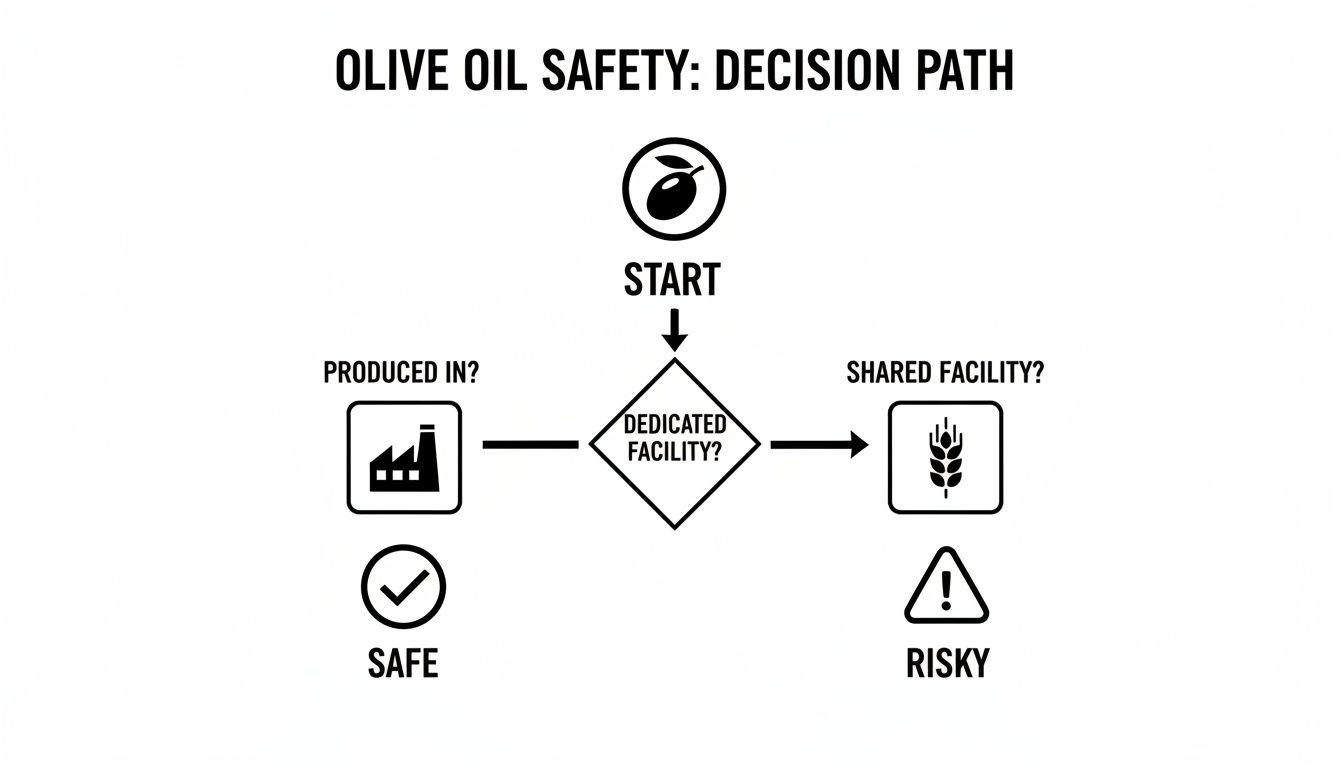
As you can see, an oil produced in a dedicated gluten-free facility is the gold standard. The real detective work begins when a facility is shared.
What to Do Without a Certification
What if your favorite brand lacks that certification seal? Don't panic. This is where you put on your investigator's hat and scrutinize the label.
First, scan the ingredient list. This is absolutely critical for flavored or infused oils. Be wary of vague terms like "natural flavors" or "spices," as these can sometimes hide gluten from sources like barley or wheat-based broths. Becoming an expert on olive oil labeling will give you a decisive advantage.
Here is a simple rule of thumb: If the only ingredient listed is "olive oil" or "extra virgin olive oil," your risk is incredibly low. The more ingredients you see, the more vigilant you must be.
With any naturally gluten-free product, cross-contamination is the true enemy. Reputable brands know this. Companies like California Olive Ranch and Lucini Italia offer certified gluten-free oils, often going the extra mile to use dedicated facilities and rigorous testing protocols to ensure not a single trace of gluten ever gets near their bottles.
These principles extend far beyond olive oil. Learning to verify the safety of other products is the key to mastering the gluten-free lifestyle. For example, you can apply the same logic when you're finding certified gluten-free supplements. Armed with this knowledge, you can stock your entire kitchen with confidence, knowing every single choice is a safe one.
Navigating Flavored Oils, Dressings, and Dining Out
Your circle of safety must extend beyond the bottle of pure olive oil in your pantry. The moment other ingredients or a restaurant kitchen enter the picture, the rules of the game change entirely. Gluten can hide in the most unlikely places, turning what should be a safe meal into a source of anxiety.
Consider flavored or infused olive oils. The oil itself is perfectly safe, but what has been added to it? Many flavorings, especially savory broth bases, use wheat or barley derivatives as thickeners or flavor enhancers. It’s a classic trap for the unwary. A brilliant way to sidestep this risk is learning how to make infused olive oil at home. This puts you in complete control of every last ingredient.
The Dangers in Dressings and Dining
Salad dressings are notorious hiding places for gluten. Many popular store-bought vinaigrettes contain ingredients that are immediate red flags for anyone asking, "does olive oil have gluten?"
- Soy Sauce: A common ingredient for that savory, umami flavor, but traditional soy sauce is brewed with wheat.
- Malt Vinegar: The name says it all. This vinegar is derived from barley, a major gluten-containing grain.
- Thickeners: Creamy dressings often owe their texture to wheat starch or modified food starch, which could be derived from wheat.
When you dine out, the restaurant kitchen can feel like a minefield of cross-contact. A busy chef might use the same tongs to toss a pasta salad just moments before mixing your "gluten-free" greens. Before you even leave the house, doing a little reconnaissance using local restaurant information can help you find establishments better equipped to handle your needs safely.
Your greatest defense is to ask polite, but highly specific, questions. Don't just ask if a dish is gluten-free—ask how it is prepared. Inquire about shared fryers, separate utensils, and dedicated prep surfaces.
Clear communication is your most powerful tool. A simple question like, "Do you prepare gluten-free orders on a separate surface?" signals to the staff that you have a serious medical need, not a casual preference. This simple act can transform your dining experience from a risky gamble into a confident, enjoyable meal.
Your Olive Oil and Gluten Questions Answered
Even with the best knowledge, specific questions always arise. Let's tackle the most common ones head-on, so you can feel completely secure the next time you're shopping for olive oil.
Is Extra Virgin Olive Oil Safer Than Other Types?
In the vast majority of cases, the answer is yes. Extra Virgin Olive Oil (EVOO) is the purest, least processed form of olive oil available. It is produced by simply cold-pressing olives, a mechanical process with very few steps. Fewer steps mean fewer opportunities for something like gluten to be introduced.
Refined oils, such as those labeled 'light' or 'pure' olive oil, undergo significantly more processing. These additional steps might occur in facilities that also process wheat or other grains. While choosing EVOO is a smart move, your ultimate guarantee of safety is printed on the bottle. A "Certified Gluten-Free" seal is always your safest bet.
What If I React to a Certified Gluten-Free Olive Oil?
This is a perplexing situation, but a reaction to a certified product is almost certainly not from gluten. The testing standards for that certification are extraordinarily strict, making any significant gluten contamination highly improbable. It is far more likely that something else is at play.
It could be a rare sensitivity to olives themselves, or perhaps an ingredient in an infused oil, like garlic or chili, is the true culprit. For some individuals, especially those with conditions like IBS, a large amount of any fat can trigger symptoms. If you experience a reaction, your best course of action is to speak with your doctor to uncover the real cause.
The key takeaway is this: Trust the certification. If you have a reaction, start investigating other potential triggers before you assume it's a gluten issue.
My Favorite Olive Oil Isn’t Certified. What Should I Do?
When your go-to brand lacks that gluten-free seal, it's time to do a little detective work.
First, meticulously scan the ingredient list. This is particularly crucial for any flavored or infused oils. Next, visit the company's website. Look for an allergen statement or an FAQ page where they might disclose their manufacturing practices.
Many reputable brands are transparent about whether they use shared equipment. If you can't find the information, do not hesitate to contact their customer service directly. A simple email or phone call asking about their protocols for preventing cross-contamination will give you the definitive answer you need to make an informed decision.
At Learn Olive Oil, we believe that understanding the details turns a simple purchase into a confident choice for your health. We provide the expert insights you need to explore the world of premium olive oil, from tasting like a pro to choosing the perfect bottle. Discover more at https://learnoliveoil.com.

 Learn Olive Oil
Leave a comment