You've seen it on the shelf, a quiet neighbor to its more celebrated cousin, extra virgin. But what, precisely, is pure olive oil? If you've ever felt a flicker of confusion, you're not alone. Let's cut through the marketing jargon and get straight to the truth.
Pure olive oil is a purpose-driven blend—a masterful combination of mostly refined olive oil with just enough virgin olive oil to whisper, not shout, its origins.
The Unsung Hero of Your Kitchen
Dismiss any notion that “pure” means second-best. Instead, think of it as a different tool for a different job. It is the dependable, all-purpose workhorse, engineered for consistency and culinary versatility. While extra virgin olive oil commands attention with its bold, peppery finish—perfect for dressing a salad—pure olive oil is designed to let your ingredients take center stage.
The process behind it is a testament to smart, practical oil-making. It begins with a base of refined olive oil, which has been gently purified to create a neutral flavor and a higher smoke point. This isn’t about stripping away the good; it's about crafting a clean, stable oil that excels under heat.
The Art of the Blend
Here’s where the real craft comes in. A small, carefully measured amount of virgin or extra virgin olive oil—typically between 10% and 20%—is blended back into the refined base. This is the crucial step that reintroduces a subtle hint of that classic olive aroma and taste, but without overpowering the dish you’re creating.
This precise marriage of refined and virgin oils is what officially qualifies an oil as "pure olive oil" under strict regulations in the United States and the European Union. These rules are your assurance that you're getting a product meeting specific quality standards—a reliable choice for your kitchen. You can learn more about these global production standards and how they shape the bottle in your hand.
Think of pure olive oil as the cook's secret weapon. It delivers the heart-healthy fats of olives with a gentle flavor, making it the perfect partner for sautéing, baking, and roasting. It supports your ingredients; it never steals the show.
In the end, this humble oil solves a real kitchen dilemma. It provides a budget-friendly, reliable option that stands up to heat far better than its extra virgin counterpart, making it one of the most practical staples you can keep in your pantry.
From Imperfect Olive to Perfect Cooking Oil
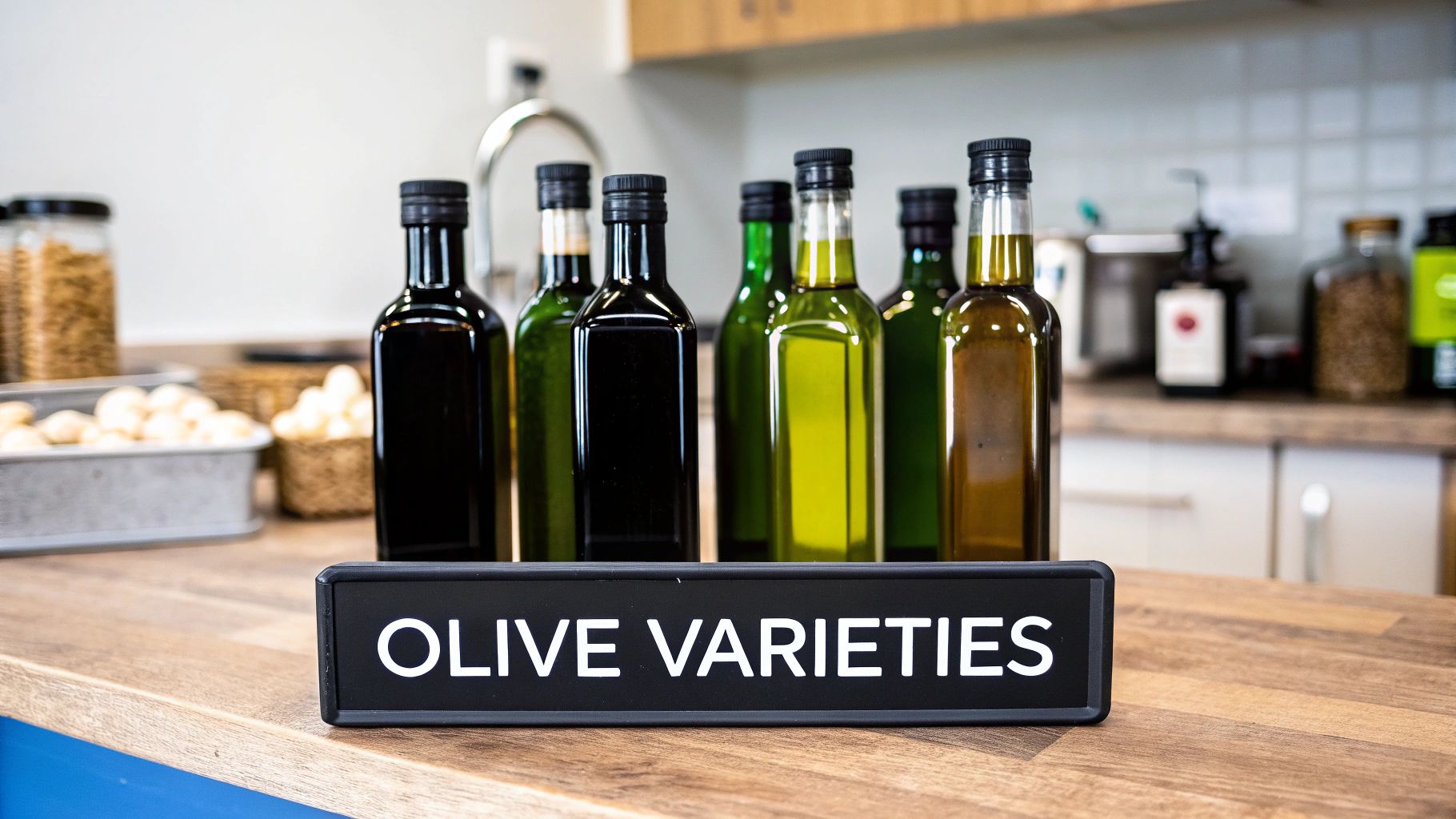
Every bottle of what we call “pure olive oil” holds a fascinating story of transformation. It begins with olives that, for one reason or another, didn't quite make the cut for the coveted extra virgin label. Perhaps their acidity was a fraction too high, or their flavor profile wasn't flawless.
But in the world of olive oil, nothing good is ever wasted. This is where a clever process gives these olives a second chance to shine.
These olives undergo a purification process to become a clean, neutral cooking oil. Think of it less as an industrial procedure and more like a refining spa treatment that prepares the oil for its true calling in your kitchen.
The Refining Journey
The entire goal is to gently remove the imperfections, leaving behind a stable and utterly dependable oil. It’s a multi-step transformation that turns a flawed raw material into a culinary workhorse.
Here’s a simplified look at how it works:
- Neutralization: The oil is carefully heated and filtered, often with natural clays or charcoal, to remove the excess free fatty acids. These are the culprits behind off-flavors and a lower smoke point.
- Deodorization: This step uses steam to gently lift away any remaining unwanted aromas, resulting in a product that’s remarkably neutral. It won’t impose its own flavor on your food.
What you're left with is a highly stable, refined olive oil with a light color and a much higher smoke point. It’s a blank canvas, which is just one of the many different types of olive oil you can find.
But the story doesn't end there. This is where the artistry begins.
A carefully measured amount of flavorful virgin or extra virgin olive oil is blended back into the refined base. This isn’t a mere afterthought; it’s a deliberate craft.
This final blend is what gives pure olive oil its characteristic golden hue and a subtle hint of that classic olive flavor. The aim is to create a perfectly balanced and dependable oil, one built for the realities of everyday cooking—from a gentle sauté to a high-heat roast.
It’s a perfect example of turning imperfection into practical, culinary perfection.
Choosing the Right Oil for the Right Job
Do you ever feel a sense of paralysis when staring at the wall of olive oils in the grocery store? It doesn't have to be so complicated. Deciding between pure olive oil and extra virgin simply comes down to one question: what job does this oil need to do?
Think of extra virgin olive oil as a finishing oil, much like a fine condiment. It possesses a bold, often peppery and fruity flavor that you want to experience directly. It is perfect for drizzling over a finished pasta, whipping into a vinaigrette, or dipping a crusty piece of bread into. You use it when you want its flavor to be a star of the show.
On the other hand, pure olive oil is your everyday cooking champion. This is the bottle you'll reach for instinctively when you're sautéing onions and garlic, roasting a tray of vegetables, or pan-searing a piece of chicken. Its much milder, more neutral flavor won't overpower your ingredients, and it handles heat with grace.
This image perfectly illustrates the core differences in fat content, antioxidant levels, and smoke points.
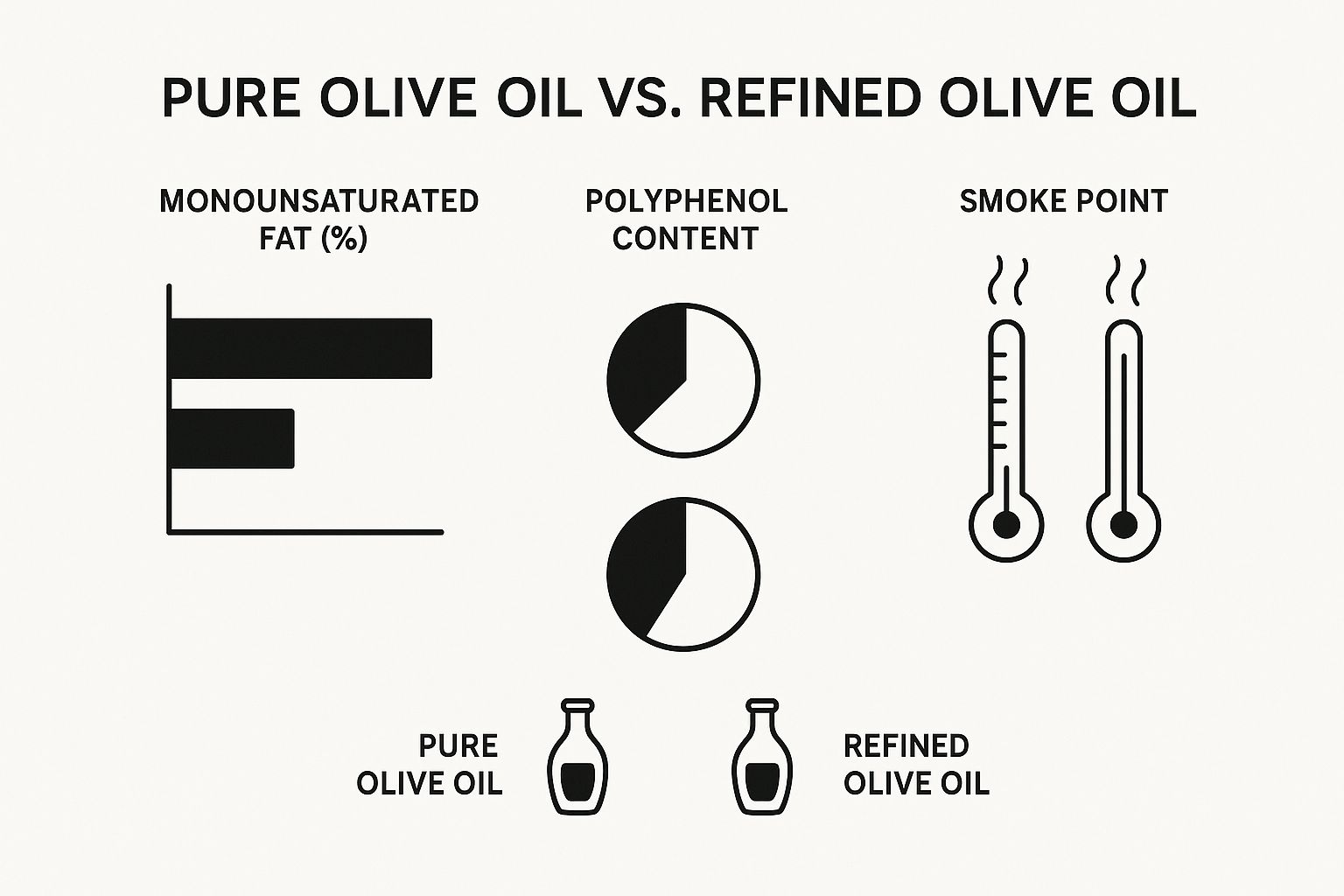
As you can see, that higher smoke point is a game-changer, making pure olive oil a much more stable and reliable choice for most of your daily cooking needs.
Making the Smart Choice in the Kitchen
The differences don't stop at flavor and heat; they also impact your wallet and your cooking strategy. Let’s lay it out simply.
Here’s a simple table to keep the key distinctions straight.
Pure Olive Oil vs Extra Virgin Olive Oil at a Glance
| Characteristic | Pure Olive Oil | Extra Virgin Olive Oil |
|---|---|---|
| Best For | Everyday cooking: Sautéing, roasting, baking | Finishing: Dressings, dips, drizzling |
| Flavor Profile | Mild, neutral, light | Robust, fruity, peppery, complex |
| Smoke Point | Higher (around 215°C / 420°F) | Lower (around 190°C / 375°F) |
| Price | More affordable (often 30-50% cheaper) | More expensive |
| Processing | Refined oil + a little virgin oil | Cold-pressed, unrefined |
This side-by-side view makes it undeniable: pure olive oil's affordability and higher heat tolerance make it the logical choice for high-heat cooking.
Just a quick note on labeling—it can differ depending on where you shop. In the EU, this type is usually just called 'olive oil.' Here in the US, you’ll see the term 'pure olive oil' used more often to make that clear distinction from extra virgin.
Mastering these basics is the first step. If you want to dive deeper, our guide on how to buy olive oil will transform you into a confident shopper.
The Cook's Secret Weapon for Everyday Meals
While food enthusiasts might debate the peppery finish of a rare extra virgin, seasoned home cooks know a secret. They reach for a different bottle. They understand the value of a true kitchen workhorse, and that’s exactly what pure olive oil is.
Let's be perfectly clear. Pure olive oil isn't a "lesser" oil; it's an oil designed for a specific, vital job. Its two greatest strengths make it the go-to choice for the real world of daily cooking.
Built for the Heat
First, let's talk about heat. A delicate, unfiltered extra virgin olive oil has a smoke point that sits around 375°F (190°C). Push it past that limit, and its beautiful, complex flavors begin to break down, leaving your food with a bitter, acrid taste. No one wants that.
Pure olive oil, on the other hand, can handle much higher temperatures, with a smoke point that comfortably reaches 420°F (215°C). This stability makes it a far more reliable partner for cooking at high heat.
It’s the perfect choice for:
- Pan-searing a piece of fish to get that irresistible golden crust.
- Roasting vegetables until they’re perfectly caramelized and tender.
- Sautéing or lightly frying without filling your kitchen with smoke.
At these temperatures, using an expensive extra virgin isn't just a waste of its nuanced flavor; it's a genuine risk to your dish. Pure olive oil lets you crank up the heat with confidence.
A Flavor That Complements, Not Competes
The second major advantage is its milder flavor, which is a feature, not a flaw. The bold, grassy punch of a high-quality finishing oil can easily overwhelm more delicate ingredients. Pure olive oil gives you all the benefits of heart-healthy monounsaturated fats but allows your food to be the star of the show.
Imagine sautéing mushrooms or wilting a large handful of spinach. You want to taste those earthy, fresh vegetables, not a powerful olive oil. This is where the subtle character of pure olive oil truly shines, making it the practical, cost-effective champion for the everyday cook. Understanding this helps put the various extra virgin olive oil prices and quality tiers into perspective.
The Unsung Hero of the Olive Oil Market
Pure olive oil is much more than another bottle on the grocery store shelf. It plays a surprisingly critical role in the global food system, acting as a brilliant example of agricultural sustainability. At its core, it ensures that virtually nothing from the olive harvest ever goes to waste.
Think about it: not every single olive can meet the incredibly high standards required for extra virgin status. By creating a reliable, mainstream market for these other olives, the production of pure olive oil prevents what would otherwise be a colossal agricultural loss. This practice is the economic backbone for countless growers, providing stability and helping to satisfy the world’s massive demand for a versatile, everyday cooking oil.
A Quiet Economic Powerhouse
The scale of this is staggering. Global olive oil production often hovers around 3.1 to 3.4 million metric tons per season, and pure olive oil accounts for a very significant slice of that pie. It delivers a stable, long-lasting product that’s just as at home in a family kitchen as it is in a large-scale food production facility, which helps keep prices accessible for everyone.
You could say pure olive oil is the great balancer of the olive oil world. It bridges the gap between premium and practical, ensuring there's a quality, affordable option for every purpose and budget.
This balance is what creates a healthy market. It allows extra virgin olive oil to be celebrated for its artistry while ensuring a dependable workhorse oil is always available. It's the product that quietly makes the entire system work, from the farmer's grove to your dinner table.
Understanding this economic role is key to appreciating why pure olive oil is such a pantry staple. It's not just a lesser-known cousin to EVOO; it's an ingenious solution that supports farmers, feeds families, and ensures the many olive oil health benefits are within reach for all of us.
Common Questions About Pure Olive Oil
Even after laying out the facts, a few questions always seem to surface. Let’s clear the air and tackle some of the most common things people ask about pure olive oil.
Think of this as your final, rapid-fire guide. Getting these details straight will give you total confidence the next time you’re standing in the grocery store aisle or reaching for a bottle in your kitchen.
Is Pure Olive Oil Still Healthy?
Yes, absolutely. Let's get right to the point. While the refining process does reduce the level of antioxidant polyphenols that extra virgin olive oil is so famous for, the main health benefit remains firmly intact.
Pure olive oil is still loaded with heart-healthy monounsaturated fats. This alone makes it a far better choice for your daily cooking than saturated fats like butter or many other vegetable oils on the shelf. If you want to dive deeper into the specifics, you can explore the complete olive oil nutrition facts to see the full breakdown.
The bottom line is simple: pure olive oil is a healthy fat. It delivers the core goodness of olives in a form that’s built for everyday cooking, making it an easy win for your well-being.
Storing and Using Your Oil Correctly
Getting the most from your olive oil comes down to a few simple habits. Proper storage and understanding its limits are the keys to preserving its quality and flavor.
Here are a few common questions I hear all the time:
- How should I store it? Treat it exactly as you would a fine extra virgin olive oil. Keep it in a cool, dark place, away from sunlight and heat. A pantry or cupboard is ideal—just don't leave it sitting next to your hot stove.
- Can I use it for deep frying? Its smoke point is higher than extra virgin's, which is great for light frying, sautéing, or roasting. However, for true high-temperature deep frying, you're better off with an oil that has an even higher smoke point, like avocado oil, which will be more stable.
- Does 'light' olive oil have fewer calories? No. This is a very common misconception. The word "light" refers only to the oil's milder flavor and pale color, not its calorie count. It has the exact same amount of fat and calories as any other olive oil.
Knowing the difference between pure and extra virgin oils isn’t just for home cooks; it’s essential for the entire global market. Major producers like Spain, Italy, and Greece—who collectively produce the bulk of the 3 million tons of olive oil each year—depend on clear labeling to maintain trust. Pure olive oil fills a crucial role by providing a stable, affordable supply for kitchens all over the world. You can learn more about how global olive oil production is tracked and its massive economic impact.
At Learn Olive Oil, we believe that understanding the world of olive oil should be simple and rewarding. From the groves to your table, we're here to help you discover the perfect oil for every dish.
Discover the World of Premium Olive Oil at learnoliveoil.com

 Learn Olive Oil
Leave a comment