Why Making Your Own Infused Olive Oil Beats Store-Bought Every Time
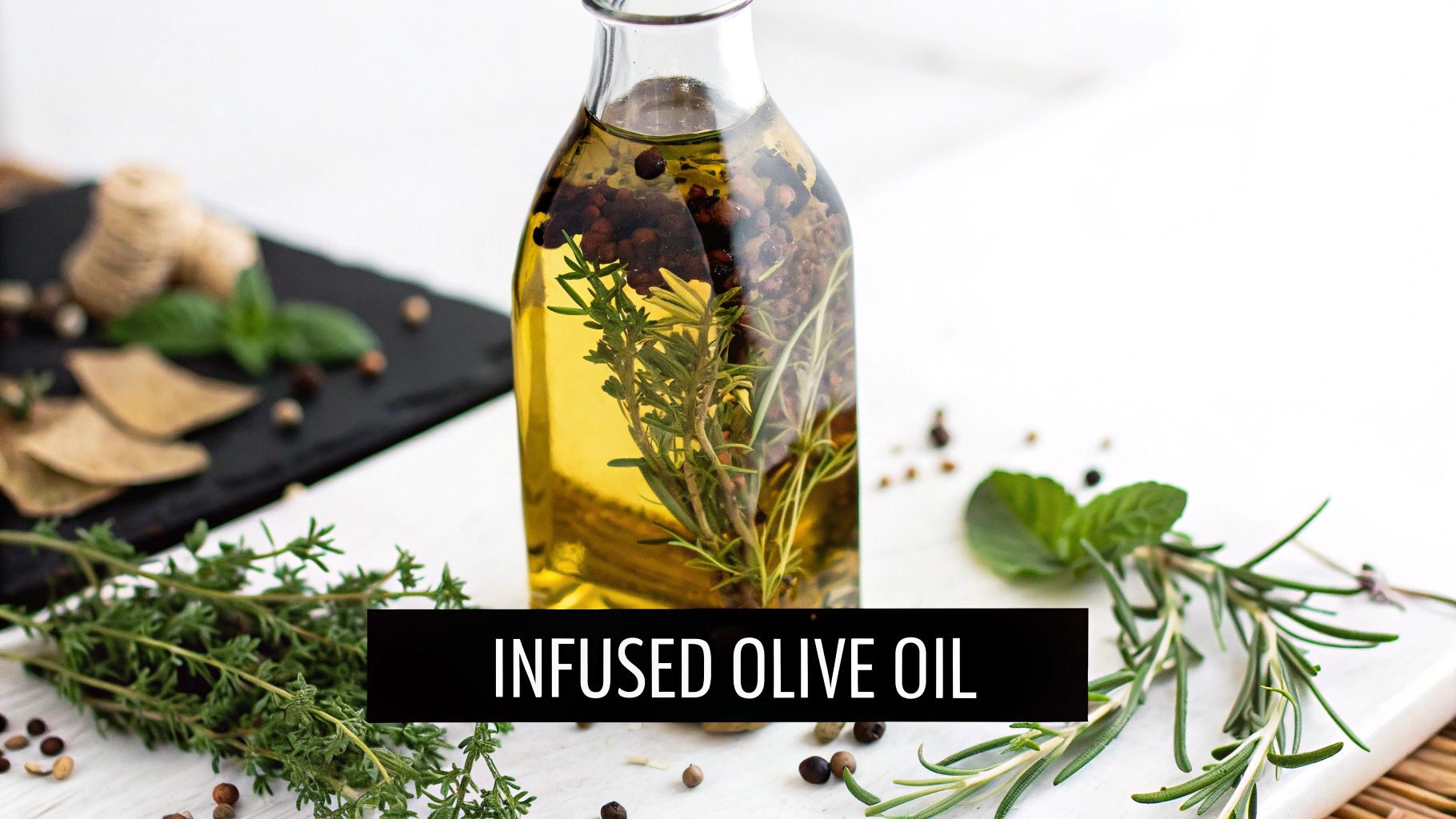
I'll never forget that first taste of homemade garlic-rosemary olive oil. It was a total game-changer. The aroma, the silky texture, the depth of flavor… it was a revelation. It completely shifted my perspective on cooking, and even gift-giving! Seriously, homemade infused oils aren’t just better than store-bought – they're an entirely different experience. And trust me, this isn't just foodie snobbery.
One of the biggest differences is freshness. Think about it: store-bought oils often sit on shelves for who knows how long, their vibrant flavors fading with each passing day. When you infuse your own oil, you're capturing the ingredients at their peak, resulting in a brightness and intensity that just can't be replicated. It's like the difference between fresh-squeezed orange juice and that stuff from a carton – you just know.
Another huge advantage is control. You're the boss of your own oil destiny! You choose the finest ingredients, the perfect olive oil, and you tailor the flavors to your exact preferences. Craving a fiery chili oil? Go for it. Prefer a subtle hint of basil? Easy peasy. That level of customization is simply impossible with store-bought options.
And let's not forget how satisfying the process itself is. I've watched friends transform from nervous novices into confident oil artisans, whipping up custom blends that become the star of every potluck. It’s a truly rewarding experience. This surge in homemade infused oils isn’t just anecdotal either. The global market is booming! Currently, the market is valued around USD 1.2 billion, and it’s projected to hit USD 2.5 billion by 2032. That’s a pretty clear indicator of the growing demand for premium, gourmet ingredients. Discover more insights into the infused oil market.
Finally, let's talk gifts. A bottle of your own beautifully crafted infused oil is a thoughtful, personalized present that blows generic store-bought options out of the water. It shows you put in the time and effort to create something truly special. Plus, it connects you to a rich culinary history. It’s a gift from the heart, infused with flavor and love.
Finding Your Perfect Olive Oil Foundation
Let’s talk infused olive oils. One of the biggest lessons I’ve learned? Not all olive oils are created equal, especially when it comes to infusing. I wish someone had told me that before I ruined a whole batch of chili oil using expensive extra virgin olive oil! Picking the right oil is the foundation of a great infusion, and it's something I've come to understand through trial, error, and yes, a few costly mistakes.
Extra virgin olive oil, with its peppery bite, is fantastic with bold ingredients. I love using it with garlic, rosemary, or even hot peppers. These strong flavors work together beautifully. For example, my chili-infused olive oil gets this wonderful complexity when I start with a good extra virgin. But what about more delicate flavors?
When I’m working with basil or tarragon, I switch to a lighter olive oil. Something more neutral lets those subtle herbal notes really shine. It's all about balance. That’s the key thing that changed my infusion game: realizing that oil isn't just a carrier for flavor, it’s the canvas too.
A good quality oil with pleasant but not overpowering characteristics gives you so much more flexibility. This might surprise you, but it means mid-range olive oils often work better for infusions than that fancy bottle you save for drizzling. This is especially true for milder herb infusions in my experience.
Considering Oil Characteristics for Infusion
Heat tolerance is another important factor. Some oils just don't do well with heat; they can break down and get bitter. Keep this in mind if you’re planning on using a warm infusion method, like the stovetop or slow cooker. And of course, the oil's overall flavor profile matters. You don't want a strong oil competing with delicate herbs.
Think of it like painting. You wouldn't use a rough canvas for a delicate watercolor, right? You'd choose something smooth and fine-grained. Choosing your olive oil is the same – it’s all about setting the stage for your flavor masterpiece. The right oil is the foundation, and it can be the difference between a vibrant infusion and a muddy mess.
To help you out, I’ve put together this little table summarizing what I’ve learned about different olive oil types and which flavors they pair best with:
Olive Oil Types and Best Infusion Matches
| Oil Type | Flavor Profile | Best For | Heat Tolerance |
|---|---|---|---|
| Extra Virgin Olive Oil | Robust, peppery, sometimes fruity | Strong herbs (rosemary, thyme), garlic, chili peppers | Moderate |
| Virgin Olive Oil | Milder than extra virgin, still some fruitiness | Medium-intensity herbs (oregano, basil), citrus zest | Moderate |
| Light Olive Oil/Refined Olive Oil | Neutral, very little flavor of its own | Delicate herbs (tarragon, chives), floral infusions | High |
| Olive Pomace Oil | Very neutral, almost tasteless | Flavor-forward ingredients where you want the added flavor to be the star | High |
This table is my go-to guide now. It helps me quickly decide which oil to grab based on the flavor profile I'm aiming for. Remember, choosing wisely prevents flavor clashes and keeps your infusions tasting bright and delicious.
Choosing Ingredients That Actually Work Together
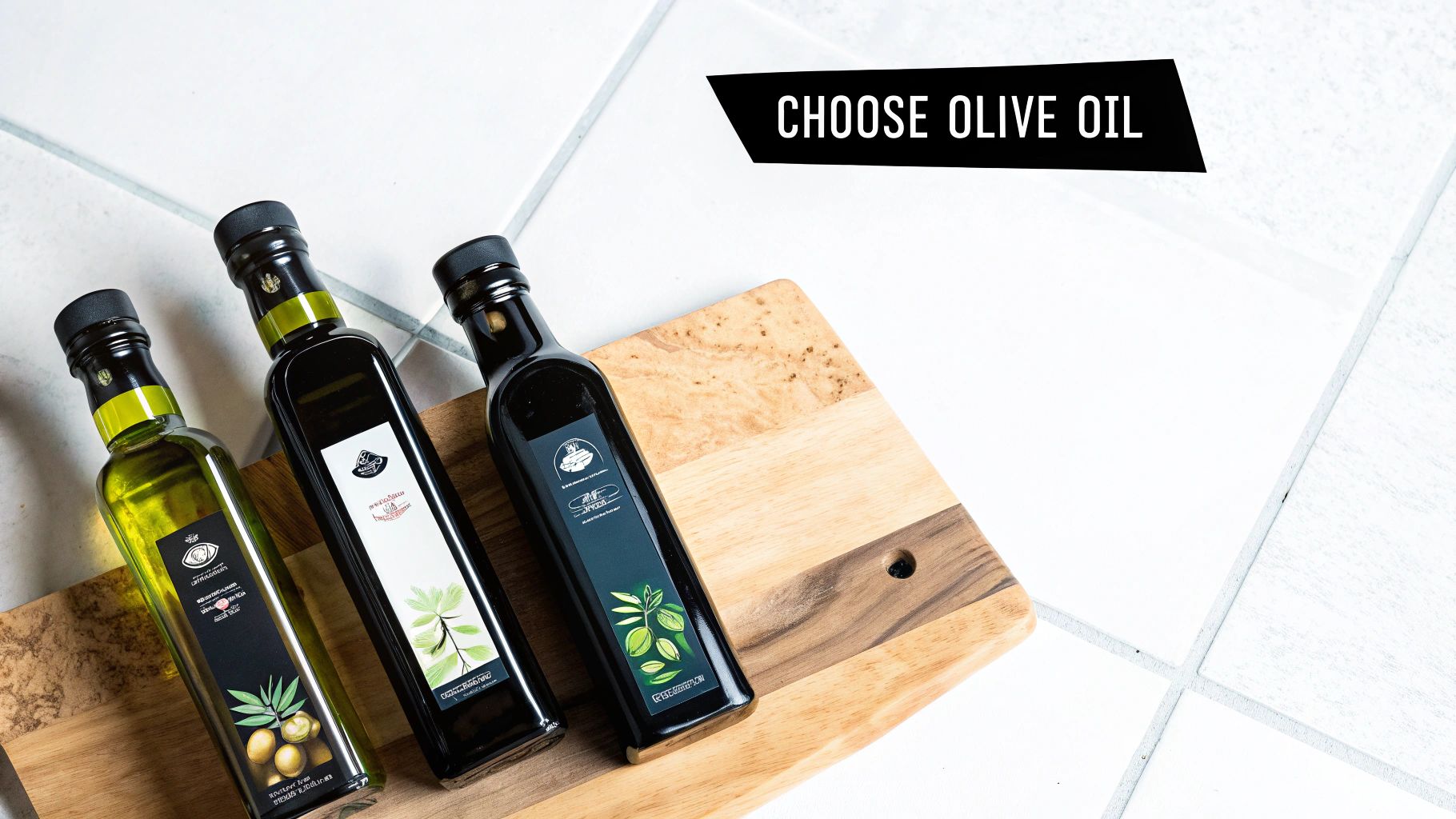
Let me tell you, the secret to a truly amazing infused olive oil isn't some fancy technique, it's all about the ingredients. And I don't just mean what you use, but also how you prep them. Trust me, I've learned this the hard way. My first attempt at a herby oil tasted…well, let's just say it wasn't the fragrant masterpiece I'd envisioned.
One of the biggest game-changers for me was understanding the difference between fresh and dried herbs. Fresh herbs, like basil, bring a bright, vibrant flavor, but they also contain water. And that water can shorten the oil's shelf life and even lead to some icky stuff growing in your beautiful creation (yuck!). Dried herbs, on the other hand, have a much more concentrated flavor and are less likely to cause issues. For example, think about how much more potent a tablespoon of dried oregano is compared to a tablespoon of fresh. It’s a huge difference!
Prepping Ingredients for Maximum Flavor
Some ingredients need a little extra attention before they take a dip in the olive oil. Garlic, for example, can carry the risk of botulism if not handled properly, so you have to be careful. And citrus peels, a popular choice for infusions, need to be completely dry to prevent spoilage. Let me tell you, I learned these lessons through experience (and a few questionable batches!).
Over time, I’ve picked up a few tricks. Lightly bruising fresh herbs helps release their essential oils, giving the oil a more intense flavor. Toasting whole spices, like peppercorns or fennel seeds, creates a deeper, more complex taste. It’s like unlocking a whole new level of flavor!
Considering Seasonality and Quality
Here’s another thing I didn't realize at first: seasonality matters. Summer basil, bursting with flavor from the sun, infuses much differently than basil grown in a greenhouse during winter. And even dried herbs can lose their punch if they’ve been sitting in your pantry for too long. I’ve learned that using the best quality, freshest ingredients I can find makes a world of difference. Seriously, the success of your infused olive oil depends on these small but important details.
So, what's my approach now? I source the best ingredients I can get my hands on, prepare them carefully, and think of each ingredient as part of a final, delicious symphony of flavor. It’s all about respecting the ingredients and letting their unique flavors shine through in the oil.
Mastering Heat Versus Cold Infusion Methods
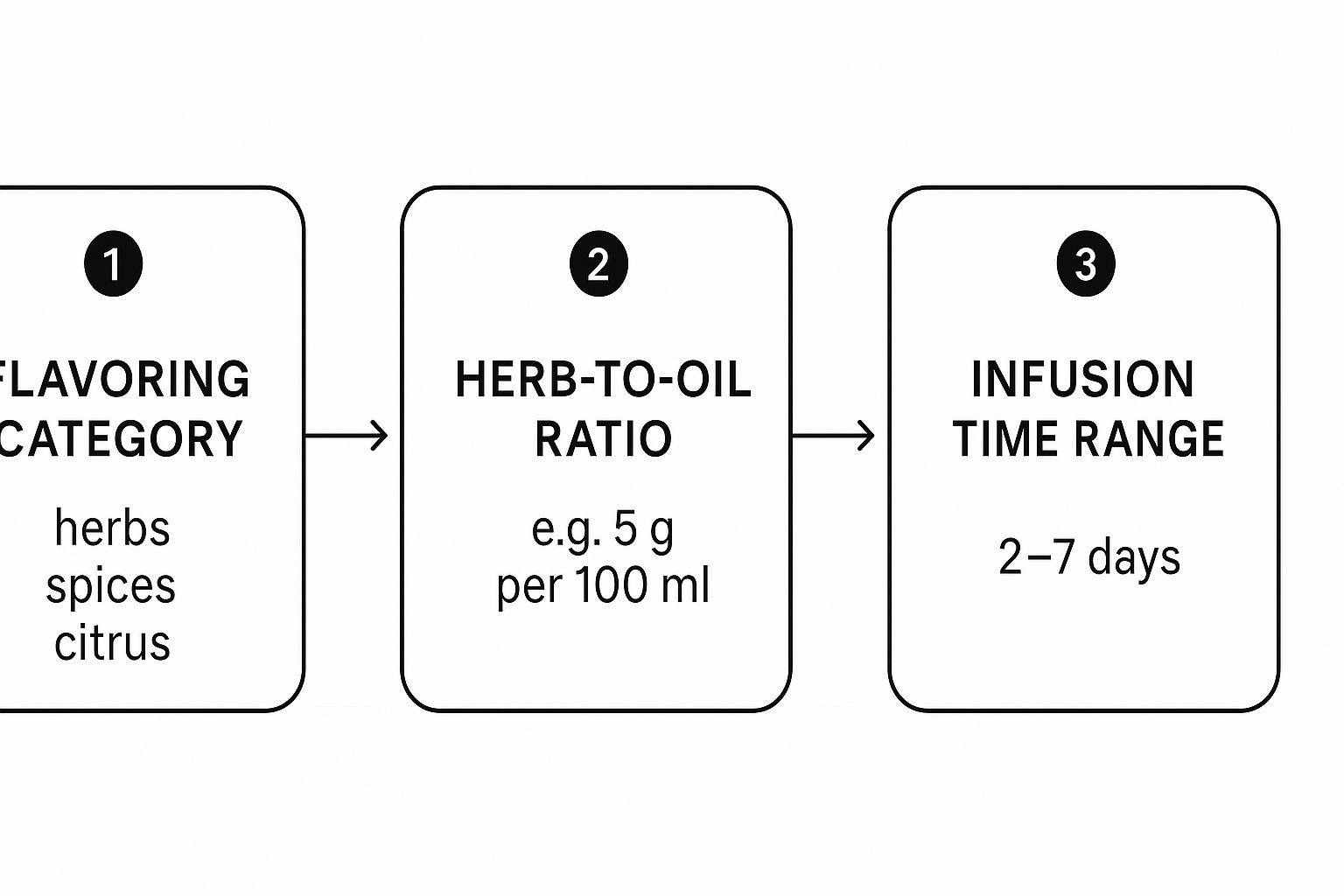
This infographic gives you a great overview of the infused olive oil process. It shows the connection between the type of ingredient, the herb-to-oil ratio, and how long the infusion typically takes. See how the suggested infusion time goes up as you move from delicate herbs to stronger spices? That’s a key principle we’ll be diving into – matching your infusion method to your ingredients.
After years of playing around with infusions in my own kitchen, I've realized that choosing between heat and cold infusion isn't just about speed. It really changes the final flavor you get. For delicate ingredients like fresh basil, citrus zest, or even flower petals, cold infusion is my absolute favorite. I love how it preserves those bright, fresh, almost delicate top notes.
Cold infusion does take patience, sometimes even weeks. But trust me, the payoff is a clean, pure flavor that really captures the essence of your ingredients. For example, I recently made a basil-infused olive oil using the cold method. I tucked it away in my cool, dark pantry and tasted it every week until the flavor was perfect. That vibrant green oil tasted like summer in a bottle! And that brings us to our other method: heat infusion.
Unleashing Deeper Flavors with Heat
Heat infusion is fantastic for heartier ingredients. Think garlic, rosemary, or dried chilies. The gentle heat speeds up the infusion process, pulling out deeper, more complex flavors. But there's a trick to it! You need that sweet spot between extracting those rich notes and burning your ingredients to a crisp.
My trick is to keep the temperature between 180-200°F. Hot enough to do the job, but not so hot that it ruins the delicate flavor compounds or creates a bitter taste. I've also learned to trust my eyes. I look for the garlic to turn a gorgeous golden color or for the dried herbs to start visibly releasing their oils. This is where experience comes in handy – you get a feel for when it's just right. And of course, a thermometer is always a good idea!
Combining Methods for Layered Complexity
Here’s a game-changer I discovered: you can combine methods! It was a real "aha!" moment for me. Imagine starting with a gentle heat infusion to get the base flavors from something robust, like rosemary and garlic. Then, after it cools, you add delicate finishing touches like lemon zest or fresh thyme using the cold infusion method.
This layered approach gives you unbelievably nuanced and complex flavors you could never get with just one method. It's like painting a culinary masterpiece, building layers of flavor one thoughtful step at a time.
Let’s look at the two methods side-by-side so you can really see the differences. This table breaks down the key characteristics of each:
Infusion Methods Comparison: Detailed comparison of cold vs. heat infusion techniques with timing and best uses
| Method | Temperature | Time Required | Best Ingredients | Flavor Result |
|---|---|---|---|---|
| Cold Infusion | Room Temperature | Several weeks | Delicate herbs (basil, parsley), citrus zest, flower petals | Clean, pure, bright flavors; preserves delicate top notes |
| Heat Infusion | 180-200°F | 30 minutes – 2 hours | Robust herbs (rosemary, thyme), garlic, spices, chilies | Deeper, richer, more complex flavors; faster extraction |
As you can see, the best method really depends on the ingredients you choose and the type of flavor you’re after. Experiment! Have fun with it! That’s the best way to find what works for you.
Staying Safe Without Getting Paranoid
Let's be real, the idea of making your own infused olive oil can seem a bit daunting. The word "botulism" gets thrown around, and suddenly your fun kitchen project feels like a biohazard waiting to happen. I totally get it. I've had a few near-misses myself, and after a deep dive into research (including chats with actual food safety pros), I've found a way to stay safe without losing my mind.
The biggest risk with infused olive oil, especially when you're using garlic or fresh herbs, is anaerobic bacteria. These are tiny microorganisms that love oxygen-free environments. They're the potential bad guys behind botulism. So, how do we keep them away without sacrificing flavor? My approach is all about managing three key things: moisture, acidity, and storage.
Practical Safety Measures
Instead of avoiding flavorful ingredients altogether, I've learned how to prep them the right way. Thoroughly drying fresh ingredients is essential. I'm talking bone dry. Any extra moisture is like a welcome mat for those unwanted bacteria. I also make sure everything I'm using is sparkling clean. It sounds basic, but this simple step makes a world of difference.
When it comes to storing the oil, refrigeration is non-negotiable for higher-risk infusions. Anything with garlic or fresh herbs goes straight into the fridge. This seriously slows down bacterial growth and keeps your oil safe and delicious. I also started using pH testing strips for infusions with citrus or vinegar. Checking the acidity gives me extra peace of mind. A lower pH makes it harder for harmful bacteria to grow.
Trusting Your Senses (and Small Batches)
The biggest game-changer for me was realizing that the right technique and storage pretty much eliminate most of the risks. You don't need a sterile lab, just consistent attention to detail. I’ve also started trusting my senses more. Oils that have gone bad will definitely let you know. Off smells, cloudiness, or a weird texture are all warning signs. If anything seems even a little bit off, toss it. It's not worth the risk.
One last tip that helped me chill out: make small test batches. This lets you get to know what’s “normal” for each infusion before you make a big batch. It's a fantastic way to build confidence and learn how different ingredients behave during the infusion process. You'll become familiar with the textures, colors, and aromas of a good infused oil, making it much easier to spot potential problems later on.
Flavor Combinations That Will Blow Your Mind

Let me tell you, some of my best infused olive oils have come from the most surprising combinations. I’m talking flavors that, at first glance, seem totally mismatched. But the final result? Absolutely incredible. After lots of experimenting, I've realized that the key to a truly amazing blend is flavor harmony, not just putting obvious flavors together. It's like composing music – you need different notes to create something beautiful.
My “lightbulb moment” came when I shifted my thinking away from individual ingredients and started focusing on how they interact with each other. For example, my lemon-thyme-black pepper oil is a total crowd-pleaser. It actually started as a happy accident while cleaning out my herb drawer! The bright lemon lifts the earthy thyme, and the black pepper adds a subtle kick that brings it all together.
Seasonal Inspiration
Seasonal combinations have become a real specialty of mine. Think vibrant spring oils with fresh herbs and edible flowers, summery blends with sun-dried tomatoes and basil, autumnal infusions with sage and orange zest, and warm winter oils featuring rosemary and garlic. Each season offers a whole new world of flavors just waiting to be discovered.
This ties into a bigger trend in the food world – the growing demand for premium, flavorful ingredients. The United States is actually a huge importer of infused oils, with a market predicted to be worth over $1 billion by 2025. This shows how people are increasingly interested in healthier eating and unique culinary experiences. Find out more about the infused oil market.
The Art of Layering Flavors
Building a complex flavor profile is a bit like building a house. You need a solid foundation (your dominant flavor), strong supporting walls (complementary flavors), and then maybe a surprising architectural detail (an unexpected twist) to make things interesting. One of my most popular gift oils, for example, combines dried porcini mushrooms, rosemary, and a hint of truffle salt. Sounds fancy, right? It is, but in the best way. The result is pure umami magic – an explosion of flavor that elevates everything from pasta to roasted vegetables.
Don’t be afraid to experiment! You might be surprised. Sometimes the most unusual pairings lead to the most memorable infusions. It’s all about having fun with flavors and finding what delights your palate.
Making Your Liquid Gold Last and Shine
Losing a beautiful batch of infused olive oil to rancidity is a real bummer. Trust me, I’ve been there. This painful experience taught me a valuable lesson: proper storage is everything. It's the difference between weeks of enjoying amazing flavor and pouring your hard work down the drain.
Early on, my oils would go bad way too fast. Then I discovered the magic of dark glass bottles. Seriously, these were a game changer! They protect the oil from light, which can degrade the flavor in a surprisingly short time. Now, all my infused oils live in a cool, dark cabinet. No exceptions.
I also started making smaller batches more often. This way, I use up the oil before it has a chance to go off. Temperature control is crucial, too. Oils stored in fluctuating temperatures develop weird off-flavors and don't last nearly as long. I learned this the hard way when I kept a batch near the oven. Let's just say the heat didn't do it any favors.
Presentation and Gifting
Gifting infused olive oils has become one of my favorite things. Over time, I've developed a little system. Attractive labels are a must – I always include the date it was made, the ingredients, and storage tips. This is partly for safety, but also because people are always curious about how to recreate the flavors they love.
Presentation matters more than you might think. A pretty bottle with a handwritten note turns a simple gift into something really special.
Here’s a peek at the different grades of olive oil, which can influence how they infuse: Look at the range, from extra virgin to refined. This shows you the different flavor profiles and chemical makeups, which are important to consider when choosing your base oil.
Another thing I've learned? Choose container sizes that make sense for how the oil will be used. Including serving suggestions is a nice touch, too. For example, a chili-infused oil could be paired with a spicy noodle recipe, while rosemary-infused oil might go with roasted potatoes. These little details elevate the gift from a simple bottle of oil to a thoughtful and memorable present.
Ready to dive into the world of premium olive oils and take your cooking to the next level? Learn Olive Oil has all the secrets to selecting, tasting, and using the best oils out there. Visit learnoliveoil.com and start your olive oil adventure today!
 Learn Olive Oil
Leave a comment