Walk down any grocery store aisle, and you’re met with a bewildering wall of olive oil. But one phrase, if you can find it, cuts through the noise like a lighthouse beam in a fog: first cold pressed extra virgin olive oil. This isn't just marketing glitter; it's a promise. A stamp of quality that whispers of the purest, most flavorful, and healthiest oil money can buy.
Imagine the difference between an orange squeezed moments after being plucked from a sun-drenched tree and a bland concentrate made from leftover pulp. One is bursting with life; the other is a pale, lifeless ghost of the real thing. This is the chasm that separates true olive oil from its impostors.
Unpacking The Gold Standard of Olive Oil
That long, slightly cumbersome phrase on the bottle tells a story—a story of craftsmanship. It’s a promise of purity, a solemn commitment to capturing the very soul of the olive. When you see “first cold pressed extra virgin olive oil,” you’re not just looking at a condiment. You’re looking at the absolute pinnacle of quality—a world away from the bland, industrial oils that tragically dominate most store shelves.
To truly appreciate it, let's pull apart what each part of that promise really means. These are not buzzwords. They are specific, verifiable markers of excellence.
- Extra Virgin: This is the highest grade possible. It’s a seal of both chemical purity and flawless flavor. To earn this coveted title, an oil must have absolutely no taste defects and an astonishingly low free fatty acid content. It is perfection.
- First Pressed: This reveals the oil was born from the very first mechanical crushing of the olives. This initial run is where the magic lives, yielding the most potent, aromatic, and nutrient-dense oil the olive has to give.
- Cold Pressed: This is your guarantee that no external heat was used to bleed more oil from the fruit. While a blast of heat would certainly squeeze out a higher quantity, it would be a pyrrhic victory—destroying the delicate flavors and incinerating the precious health compounds that make this oil so extraordinary.
A Mark of True Craftsmanship
The idea of "first cold pressing" is not some modern invention. The sacred practice of gently crushing olives to release their purest juice is an ancient tradition, even if the official regulations are more recent. Today, iron-clad standards demand that the oil is extracted at temperatures kept below a cool 27°C (80.6°F).
This painstaking, low-temperature handling is what shields the oil’s gossamer aromas and vital nutrients from harm. These benchmarks, established in the mid-20th century, also created the grueling chemical and sensory tests that authentic EVOO must pass, including a free acidity level below a razor-thin 0.8% and zero taste defects.
It all boils down to a simple choice: quality over quantity. Producers could easily use heat or even chemical solvents to get a higher yield. But that would be like burning a masterpiece to warm your hands—it would strip the oil of everything that makes it "liquid gold."
“In the world of olive oil, ‘extra virgin’ is a grade of supreme excellence, while ‘first cold pressed’ is the sacred method used to achieve it. Together, they represent an unwavering commitment to flavor, purity, and health.”
Why These Terms Matter to You
Once you understand this language, a profound shift occurs. You cease being a casual buyer and become an empowered consumer. You learn to see past the pretty labels and the confusing, often deceitful, marketing jargon.
When you reach for a bottle that proudly declares it's first cold pressed extra virgin olive oil, you’re choosing an oil crafted with reverence. You're not just buying a cooking fat; you're investing in an authentic agricultural treasure, designed for maximum flavor and life-enhancing benefits. This is what separates a truly great oil from the rest.
These meticulous methods ensure the final product is brimming with polyphenols—the powerful antioxidants that give great olive oil its signature peppery kick and profound anti-inflammatory properties. To plunge deeper into this world, explore our guide on what cold pressed olive oil truly is.
Decoding Your Olive Oil Label
To help you make sense of it all at a glance, here’s a quick guide to the most important terms you'll find on a bottle of olive oil.
| Term | What It Really Means | Sign of Quality |
|---|---|---|
| Extra Virgin Olive Oil | The highest grade. Made from pure, cold-pressed olives with no taste defects and low acidity (<0.8%). | Excellent |
| Virgin Olive Oil | A lower grade than extra virgin. It has minor flavor defects and a slightly higher acidity level (up to 2.0%). | Good |
| "Light" or "Pure" Olive Oil | This is a refined oil, often blended with a small amount of virgin oil. The flavor and nutrients are stripped out. | Poor |
| Harvest Date | The month and year the olives were picked. Freshness is key—look for the most recent date possible. | Excellent |
| "Best By" Date | A general guideline. Aim for a date that is at least 18-24 months away from the harvest date. | Good |
| Country of Origin | Where the olives were grown and milled. A specific region or single estate is often a better sign than "product of multiple countries." | Good to Excellent |
This table should help you quickly assess a bottle and feel more confident that you're buying the real deal. In the end, it's about finding an oil that not only tastes incredible but also delivers the health benefits you're looking for.
From Ancient Groves to Your Kitchen
Picture a perfect, ripe olive, glistening on a sun-drenched branch. In that one fleeting moment, it is bursting with peak flavor and a host of fragile, health-giving compounds. The journey to create a true first cold pressed extra virgin olive oil is nothing short of a race against time—a desperate mission to capture that fleeting perfection before it vanishes into thin air.
This isn’t some romantic, leisurely stroll from grove to mill. It's an all-out sprint. The very second an olive is plucked from its branch, it begins to oxidize and ferment. Every minute that ticks by degrades its quality. This is why top-tier producers rush their harvest to the mill within mere hours, not days. This urgency is the first, non-negotiable step in crafting an oil that tastes vibrant and alive.
This tradition is woven into the very fabric of Mediterranean culture, where olive oil has been a cornerstone of life for millennia. Archaeologists in Greece have unearthed presses and storage jars from the Mycenaean era (around 1600–1100 BCE), proving just how long we've been mechanically pressing olives. Since heat was not a common part of early extraction, the "cold press" method is a symbol of a tradition that has truly stood the test of time. You can dive deeper into the sector's long history and current stats over at the International Olive Council.
The Art of Gentle Extraction
Once the olives arrive at the mill, the artisan's careful work begins. First, they are crushed into a thick paste. This isn't a violent, industrial grinding. It is a gentle process, meticulously designed to break open the fruit's cells without generating friction and destructive heat.
Next, this olive paste enters a phase called malaxation, where it is slowly and continuously mixed. This crucial step encourages the tiny droplets of oil to coalesce, making them easier to separate from the fruit’s pulp and water. But this is where the most important detail comes into play: temperature.
Throughout this entire process, the temperature of the olive paste is obsessively monitored. It is never, ever allowed to climb above 27°C (80.6°F). This is the "cold press" promise in action. Keeping things cool is absolutely essential for preserving the delicate aromatic compounds and the powerful polyphenols that give great olive oil its signature peppery finish and profound health benefits.
This visual flow shows how each term—Extra Virgin, First Press, and Cold Press—builds on the last to define an oil of exceptional quality.
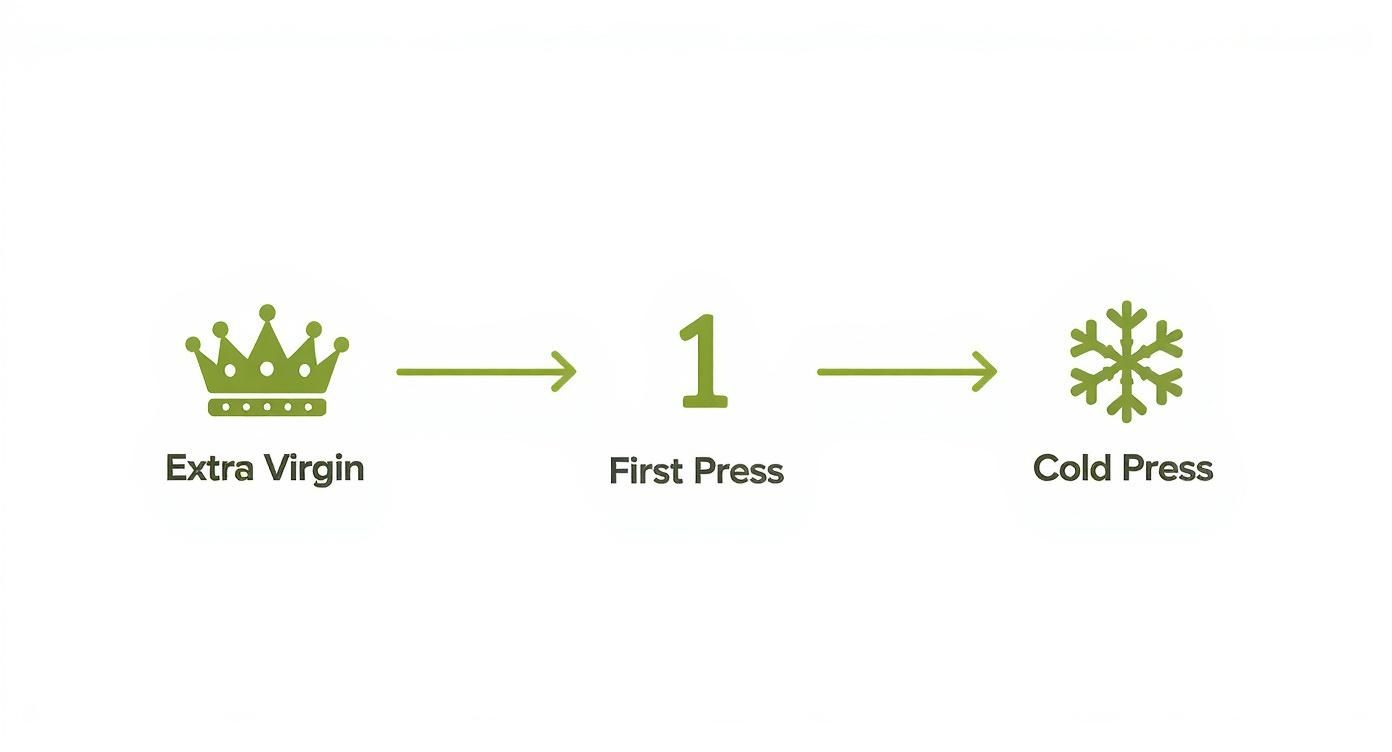
As the infographic shows, each step acts as a filter for quality. The process culminates in an oil that has cleared the highest hurdles for purity, extraction method, and temperature control.
Why the First Press Is Everything
The final stage is the extraction itself, where the oil is separated from the solids and water. What emerges is the purest expression of the olive. This is the first press—the liquid gold from that initial, unadulterated run.
This method is a universe away from industrial production, which places volume far ahead of virtue. High-volume producers often use heat, sometimes cranking temperatures well above 30°C (86°F), to wring more oil from the paste. It increases their yield, to be sure, but it's a deal with the devil.
The heat effectively "cooks" the oil. It obliterates the nuanced flavors, murders the antioxidants, and results in a flat, lifeless product that lacks the vitality of its cold-pressed cousin.
Worse still, some industrial operations take the leftover paste (called pomace) and subject it to a second pressing, often using chemical solvents to squeeze out every last drop. The resulting oil is bland, dead, and must be refined before it’s even edible.
Choosing a first cold pressed extra virgin olive oil is a conscious decision to favor quality over quantity. It shows an appreciation for a process that honors the olive, preserving its natural integrity all the way from the ancient grove to your kitchen table. And that commitment is something you can taste in every single drop.
How to Taste Olive Oil Like an Expert
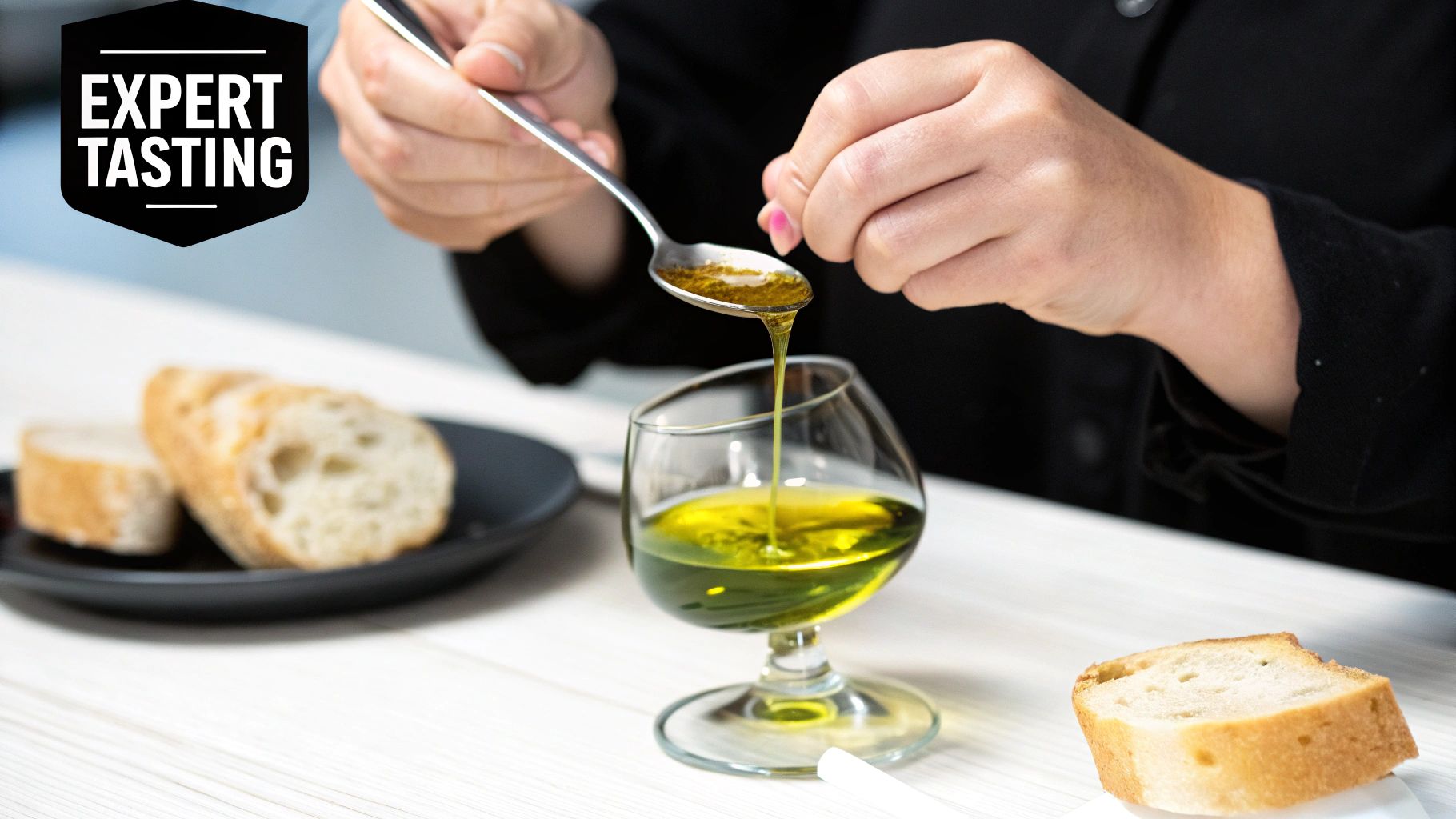
Let's shatter a common myth right now. Most people judge an olive oil by its color, assuming a deep, emerald green means higher quality. But here’s a little secret from the pros: color means almost nothing when it comes to an oil's real character.
In fact, professional tasters use special cobalt-blue glasses specifically to hide the oil's hue. This simple trick prevents any bias from creeping in, forcing them to rely on what truly matters: aroma and flavor.
This is your guide to doing exactly that. With a few simple steps, you can learn to taste like a seasoned expert, confidently distinguishing a world-class oil from a cheap impostor on the shelf.
The Professional Tasting Technique
You don't need any fancy equipment to begin—a small wine glass or even a shot glass will do beautifully. We're going to use a method pros call "the slurp," which is designed to vaporize the oil and coat your entire palate to reveal its hidden complexities.
-
Warm the Oil: Pour about a tablespoon of oil into your glass. Cup the glass in one hand to gently warm it with your body heat and cover the top with your other hand to trap the precious aromas inside. Swirl it gently for about 30 seconds.
-
Take in the Aroma: Lift the glass to your nose, uncover it, and inhale deeply. What do you smell? A true first cold pressed extra virgin olive oil should smell fresh and alive, full of what experts call "fruity" notes.
-
Sip and Slurp: Take a small sip. Now, with the oil in your mouth, suck in some air through your teeth. Don't be shy about making a slurping sound—this is what aerates the oil and broadcasts it across all your taste buds.
-
Feel the Finish: Finally, swallow the oil. Pay close attention to the sensation at the very back of your throat.
The Three Hallmarks of Authentic EVOO
As you taste, you're hunting for three specific, positive attributes. These are the undeniable signatures of a fresh, healthy, and high-quality oil.
-
Fruitiness: This is all about the aroma. Does it remind you of freshly cut grass, artichoke, or green almonds? Or is it softer and riper, like tropical fruit or herbs? Both green and ripe notes are wonderful signs, reflecting the olive variety and its moment of harvest.
-
Bitterness: That's right—bitterness is a very good thing! It’s a clear indicator that the oil was made from fresh, healthy olives and is brimming with beneficial antioxidants. You'll notice this sensation mostly on the sides of your tongue.
-
Pungency: This is that peppery tickle or kick you feel in your throat after you swallow. That wonderful "cough" is caused by oleocanthal, a powerful anti-inflammatory compound found only in the best oils. The more it makes you cough, the healthier the oil.
A truly exceptional extra virgin olive oil creates a beautiful harmony between fruitiness, bitterness, and pungency. It should taste clean and vibrant—never greasy, heavy, or flat.
Spotting a Defective Oil
Just as important as knowing what to look for is knowing what to avoid. If you notice any of the following off-notes, the oil is likely old, was poorly made, or has been stored incorrectly. For a deeper dive, there's a fantastic guide on how to properly taste olive oil that details these common defects.
Keep your senses peeled for these red flags:
- Rancid: The most common defect. It smells and tastes like old crayons, stale nuts, or that tube of lipstick you forgot about in a drawer.
- Musty: A dusty, moldy aroma that signals the olives were stored in damp conditions before being milled.
- Fusty: This one’s unmistakable—it’s an unpleasant smell like sweaty gym socks, a result of the olives fermenting without oxygen before pressing.
Once you master this tasting method, you'll never look at a bottle of olive oil the same way again. You’ll possess the skills to sidestep the duds and bring home only the very best.
The Hidden Health Benefits in Every Drop
While the magnificent taste of a true first cold pressed extra virgin olive oil is reason enough to seek it out, its real magic lies hidden within. This isn't just another cooking fat. It's a functional food, a liquid gold packed with wellness compounds that science is still struggling to fully understand.
So, what gives it this almost medicinal quality? It all comes down to two critical factors that separate the great oils from the mediocre: remarkably low acidity and a high concentration of powerful antioxidants. These aren't just technical stats; they are direct proof of healthy olives and meticulous, expert craftsmanship.
The Truth About Acidity
When experts talk about the "acidity" of olive oil, they're not talking about a sour or tangy taste. They are measuring its free fatty acid (FFA) content, which is like a report card on the health of the olive at the exact moment it was crushed.
A high FFA level is a glaring red flag. It screams that the olives were likely damaged, bruised, or left sitting around for too long after being picked, causing them to begin decomposing. To earn the extra virgin title, an oil must have a free acidity below 0.8%. But the world’s best producers don't just meet that standard—they shatter it, often bottling oils with levels below a stunning 0.3%.
This number is far more than a lab result; it’s a direct reflection of quality. Low acidity is an undeniable sign of a careful harvest and quick, gentle processing—the hallmarks of an oil that has locked in its natural goodness.
This is precisely what the "cold pressed" method is all about. By keeping heat out of the equation and rushing the olives from the tree to the mill, producers prevent the very degradation that causes acidity to rise. They are preserving the oil’s fresh, clean profile and all its health-promoting properties.
Meet the Polyphenols: Your Body’s Protectors
If low acidity is the sign of a perfect process, then polyphenols are the ultimate prize. These are the vibrant, naturally occurring compounds that act as the olive's personal bodyguards, and they become ours when we consume the oil.
Think of the potent antioxidants you hear about in blueberries, green tea, or red wine. Olive oil has its own unique army, including superstars like oleocanthal, oleuropein, and hydroxytyrosol. These are the very compounds behind that peppery kick in the back of your throat and the pleasant bitterness you taste—the sensory clues that scream high-quality oil.
But these natural protectors do so much more than just give the oil its signature punch. They are the source of its most significant health benefits.
- Powerful Anti-Inflammatory Action: Oleocanthal, the polyphenol that creates that peppery sting, has been shown to have a similar effect to ibuprofen, helping to dial down inflammation in the body.
- Heart Health Guardian: Polyphenols help shield LDL cholesterol (the "bad" kind) from oxidative damage, a critical factor in preventing heart disease.
- Cellular Defense: As potent antioxidants, they help neutralize damaging free radicals, protecting our cells from the daily wear and tear that contributes to chronic illness and aging.
The connection here is simple and direct: the gentle, heat-free "cold pressed" method is designed specifically to protect these delicate compounds. Adding heat would destroy them, stripping the oil of its most valuable assets. To get a better sense of how different oils stack up, you can learn more about measuring olive oil polyphenol content and what those numbers mean for your health.
Choosing a genuine first cold pressed extra virgin olive oil isn't just a culinary decision. It's a conscious investment in your well-being, ensuring every drizzle adds not just incredible flavor, but a potent dose of nature’s protective medicine.
A Smart Shopper's Guide to Buying Real EVOO
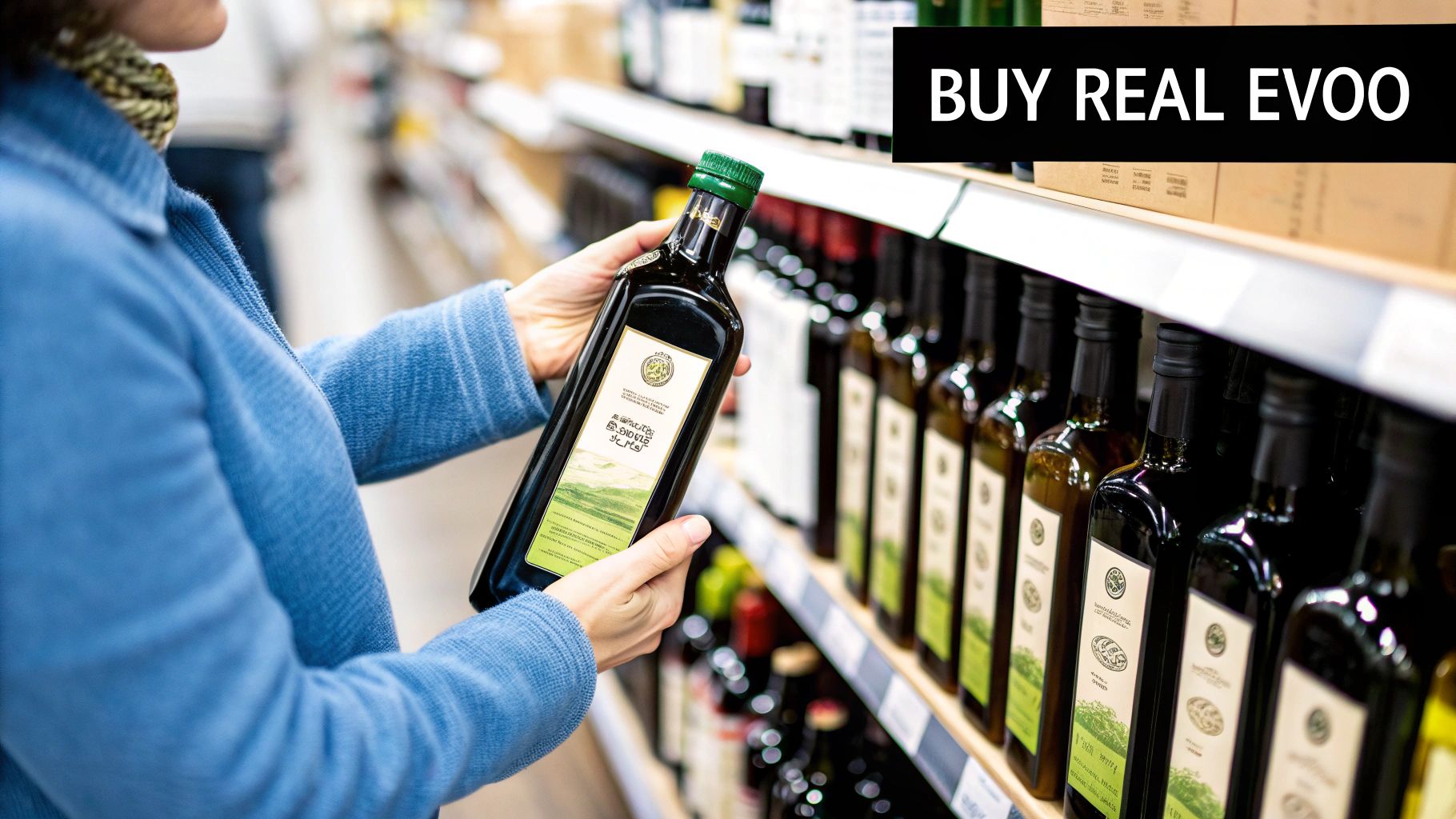
Walking into the olive oil aisle can feel like stepping into a minefield. Glossy labels make grand promises, but beneath the surface, many bottles are filled with old, subpar, or even fraudulent oil. This section is your map out of that trap.
Armed with a few key pieces of insider knowledge, you can cut through the marketing noise and confidently choose a genuine bottle of liquid gold every time. The good news? You don't need to be a professional taster to make a great choice. The clues are right there on the label—if you know what to look for.
Hunt for the Harvest Date, Not the "Best By"
The single most important piece of information on any bottle of first cold pressed extra virgin olive oil is the harvest date. Think of olive oil as a fresh fruit juice, because that's exactly what it is. It absolutely, positively does not get better with age.
The closer you are to the date the olives were picked and crushed, the more vibrant, flavorful, and healthy the oil will be. Look for a specific month and year, which tells you precisely when the oil was made.
A "best by" date, on the other hand, is mostly a marketing suggestion. It's often set two years after bottling, which could be months or even a year after the oil was actually produced.
Ignore the “best by” date completely. It’s a marketing tool. The harvest date is a statement of fact and your most reliable guide to freshness.
This focus on freshness is driving a global shift. As shoppers get savvier, the demand for authentic first cold pressed extra virgin olive oil is growing. The US alone imported 362,618 tonnes of olive oil, with premium EVOO commanding higher prices precisely because of its superior quality and documented freshness.
Decode the Origin and Packaging
Next, play detective with the bottle itself. Where the oil comes from and how it’s protected tells you a great deal about what's inside. Vague origins and poor packaging are major red flags that separate industrial products from artisanal ones.
-
Look for Specificity: A label stating "Product of Italy" is often a warning. It could be a blend of oils from multiple countries, all just bottled there. You want to see a specific region (like Tuscany or Andalusia) or, even better, a single estate or farm named on the label.
-
Demand Dark Glass or Tin: Light is one of olive oil's worst enemies, causing it to go rancid with alarming speed. Never buy oil packaged in a clear glass bottle, no matter how pretty it looks on the shelf. Quality producers always use dark green or brown bottles, or opaque tins, to protect their investment.
Avoid These Red Flags at All Costs
Finally, you must learn to spot the misleading marketing terms and signs of a low-quality product. The industry is filled with cleverly worded traps designed to confuse you. For more detailed examples, check out this guide on how to spot fake olive oil.
Here are the biggest imposters to watch out for:
- Misleading Words: Terms like "pure," "light," or "extra light" are just marketing gimmicks for highly refined, flavorless oils that have been stripped of all their health benefits.
- Unbelievably Low Prices: Making real EVOO is an expensive, labor-intensive process. If a large bottle costs less than $10, it’s almost certainly not the real deal. Quality has a price.
- Plastic Bottles: Except for tiny single-serving packets, no serious producer would put their premium oil in a plastic bottle. It fails to protect the oil from light and can even leach chemicals into it over time.
Protecting Your Investment: How to Store Olive Oil
So, you've brought home a beautiful bottle of first cold pressed extra virgin olive oil. That's the first step. The next, and just as critical, is protecting it. This liquid gold has three sworn enemies that will actively destroy its incredible flavor and health benefits: light, heat, and air.
Think of it like a freshly pressed juice. You wouldn't leave a glass of raw apple juice sitting out on a sunny windowsill, would you? The same logic applies here. Proper storage isn't just a recommendation—it's the only way to preserve the quality you paid for.
The Three Enemies of Freshness
That convenient spot right next to your stove? It's the absolute worst place to keep your olive oil. The constant heat will fast-track its decline, turning a peppery, complex oil into something bland and boring in a matter of weeks. Light is just as destructive, kicking off a process called photo-oxidation that creates those nasty, stale, crayon-like flavors.
And then there's oxygen. Every single time you open the bottle, air rushes in and begins to degrade the oil. This is why you must seal it up tight, every time. These three elements work in tandem to break down the very polyphenols and fragile flavor compounds that make EVOO so special in the first place.
Protecting your oil isn't just about preserving the taste. It's about safeguarding the powerful anti-inflammatory and antioxidant compounds that make it a true cornerstone of a healthy diet.
Your Storage Game Plan
Thankfully, keeping your oil safe is straightforward. It just takes a little thought and the right spot in your kitchen. Stick to these rules, and you'll find the last drop in the bottle is nearly as fantastic as the first.
- Find a Cool, Dark Home: A pantry or a kitchen cabinet away from the stove and direct sunlight is perfect. The ideal temperature range is between 55-65°F (13-18°C). Resist the urge to refrigerate it—condensation can introduce moisture, and the constant chilling and warming can sabotage the flavor.
- Always Seal It Tight: The moment you're done pouring, screw that cap back on securely. This one simple habit dramatically reduces the oil's exposure to oxygen, its most relentless enemy.
- Buy Smart and Use It Up: Don't be tempted by that giant tin of oil unless you're running a restaurant. It's far better to buy a smaller bottle that you'll use within a couple of months. Once opened, you should aim to finish a bottle within 60 days for the best possible flavor and freshness.
Following these simple steps honors the incredible journey of that oil, all the way from the olive grove to your kitchen. To become a true expert, dive deeper into our complete guide on olive oil storage. These habits will ensure the vibrant, healthy qualities you wanted are there for you to enjoy, from the first drizzle to the very last drop.
Your Top Olive Oil Questions, Answered
Even when you know what to look for, a few practical questions always come up. Getting the most out of your first cold pressed extra virgin olive oil is about more than just buying the right bottle; it's about using it with confidence. Let's tackle some of the most common queries and bust a few myths along the way.
Think of this as your go-to guide for making sure that liquid gold doesn't just sit on the shelf.
Can You Actually Cook with First Cold Pressed EVOO?
This is the number one question I get, and the answer is a big, emphatic yes. The notion that you can't cook with good olive oil is probably the most persistent myth in the culinary world. In reality, a high-quality EVOO has a smoke point somewhere between 375-410°F (190-210°C).
That range makes it perfectly safe and incredibly delicious for everyday cooking like sautéing, roasting, and even some lighter frying. In fact, its high antioxidant content makes it more stable under heat than many people realize, protecting both the oil and your food. You're not just adding flavor; you're using a healthier, more stable fat.
Are "First Press" and "Cold Press" the Same Thing?
They're two sides of the same quality coin. "First press" tells you the oil came from the very first mechanical crushing of the olives—that initial squeeze where all the best, most flavorful juice is released. "Cold press" is your guarantee that no extra heat was added to get more oil out, a gentle process that keeps all the delicate flavors and healthy compounds intact.
Truth be told, nearly all modern extra virgin olive oil is technically a "first press." But seeing "cold pressed" on the label is that extra reassurance. It signals a commitment to a slow, careful extraction method that puts quality far ahead of quantity.
Together, these terms paint a clear picture of a process that hasn't been compromised. One without the other might leave you wondering, but seeing both on the label is a sign that the producer is holding themselves to the highest standard.
Why Does the Real Stuff Cost So Much More?
When you see the price on a bottle of genuine EVOO, you're not just paying for oil—you're paying for craftsmanship. Making truly great olive oil is an expensive, low-yield process that’s a world away from how industrial seed oils are produced.
Here's a quick look at what that price tag actually covers:
- Meticulous harvesting, often done by hand to keep the olives from getting bruised.
- A race against the clock to get the olives from the tree to the mill in just a few hours.
- State-of-the-art cold extraction, which yields far less oil than methods using heat or chemicals.
- Third-party testing, including both chemical analysis and a professional sensory panel to certify it as "extra virgin."
- Protective packaging, like dark glass bottles or tins, to keep the oil safe from light and air.
You're investing in an agricultural product that delivers incredible flavor and proven health benefits. It's a completely different food compared to a refined, mass-produced oil that's engineered to be as cheap as possible.
At Learn Olive Oil, we believe that understanding what's in your bottle is the first step toward a richer culinary life. We're here to help you navigate the world of premium olive oil with confidence and joy.
Find your next favorite oil by exploring our expert guides and recommendations at https://learnoliveoil.com.
 Learn Olive Oil
Leave a comment