Why Your Olive Oil Is Losing Its Magic (And You Don't Even Know It)
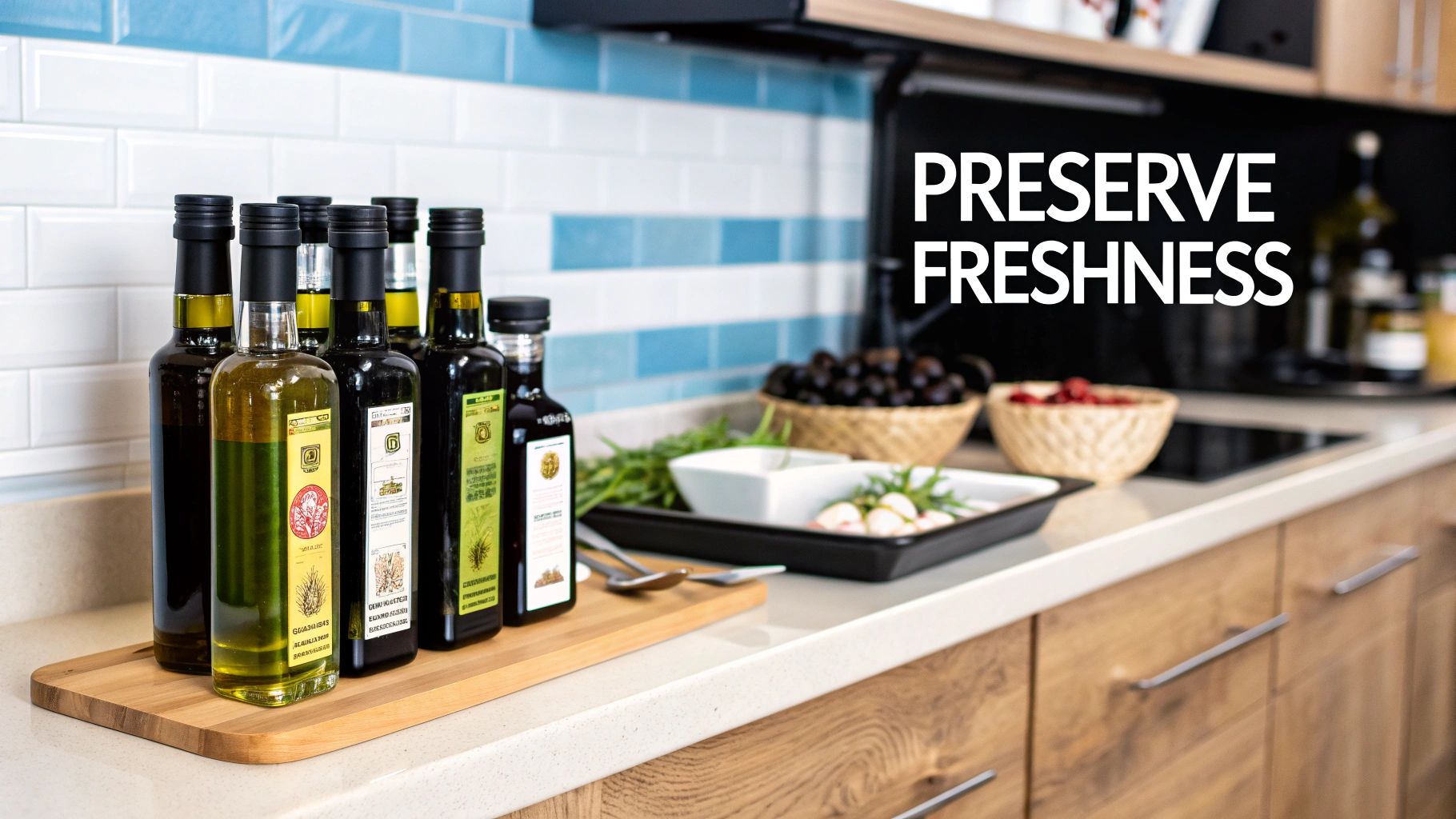
That beautiful bottle of extra virgin olive oil you proudly display next to your stove? It might be losing its vibrant, peppery flavor a lot quicker than you realize. Many of us happily spend a little extra on high-quality olive oil for its amazing taste and health perks, only to accidentally ruin it with common olive oil storage mistakes. The reality is that olive oil is essentially a fresh fruit juice, and its biggest enemies are probably hanging out in your kitchen right now.
I’ve learned from talking to multi-generational olive growers in Italy that they treat their oil with the reverence of a fine wine. Meanwhile, many of us leave it exposed to the three things that cause it to break down: light, heat, and air. This trio kicks off oxidation, a process that dismantles the oil’s delicate flavor compounds and healthy polyphenols. It slowly turns your liquid gold into a bland, or even rancid, cooking fat. The change isn't instant, but that gradual loss of a grassy aroma or a spicy kick is the first clue your oil's magic is fading.
The Silent Saboteurs in Your Kitchen
It's easy to think any old spot in the pantry will do, but the wrong environment can make a good oil go bad. Here are a few common slip-ups I see all the time:
- The Convenient Countertop: Keeping oil next to the stove for quick access seems practical, but it exposes it to constant heat and light, which dramatically speeds up spoilage.
- The Sunny Windowsill: Direct sunlight is a major problem. Its UV rays can start degrading the quality of your oil in just a few weeks.
- The Original Bottle (After It's Open): Every time you uncap the bottle, you're letting in oxygen. If you're someone who uses oil slowly, the air sitting in that headspace will degrade what’s left inside.
The global olive oil market is massive and is expected to reach $13.59 billion in 2025. This means producers are working harder than ever to protect the oil's quality during shipping and on store shelves. You can read more about this in the latest industry analysis about the global olive oil market from The Business Research Company. But once that carefully handled bottle gets to your kitchen, keeping it fresh is all on you. By adopting better olive oil storage habits, you're protecting the quality and flavor you paid for.
Transform Your Kitchen Into an Olive Oil Sanctuary
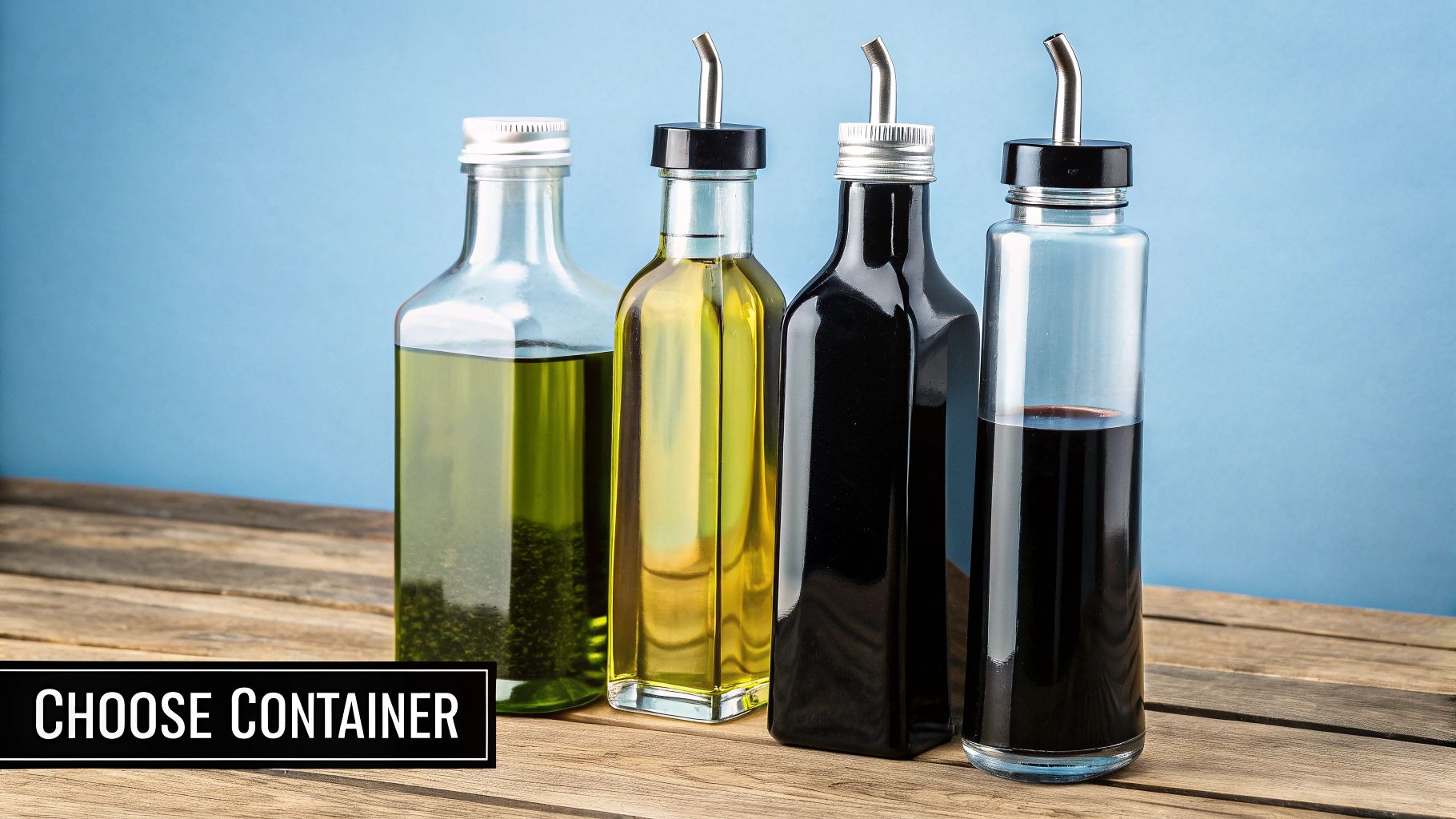
It’s easy to assume your olive oil is fine wherever it lands, but your kitchen’s layout might be its worst enemy. With a few simple changes, you can create a safe haven that protects its flavor and quality. The secret to proper olive oil storage is to copy what the pros do: find a cool, dark, and stable spot. Don’t worry, this doesn’t require a custom-built wine cellar—just a little creativity.
That spot right next to your stove might seem convenient, but it's a "hot zone" that will quickly ruin your oil. The heat from cooking and your oven will accelerate degradation. Likewise, a bottle perched on a sunny windowsill looks lovely but is just as bad. The ideal temperature for olive oil is between 50°F and 70°F (10°C-21°C). The key is consistency, so avoid places with big temperature swings.
Finding Your Oil's Safe Space
Take a moment to think about the coolest and darkest areas in your home. Surprisingly, the perfect spot for your olive oil might not even be in the kitchen.
- The Back of the Pantry: A dark pantry or a low kitchen cabinet is often your best bet, especially if it's away from heat-producing appliances like the oven or dishwasher. I keep my everyday bottle tucked away here.
- A Seldom-Used Closet: Believe it or not, a hallway or bedroom closet can be a fantastic storage location. It offers consistent darkness and a more stable temperature than most kitchens.
- The Basement: If you're lucky enough to have a basement, its natural coolness makes it the perfect place to store unopened bottles for the long term.
Once you've identified a safe zone, it's helpful to consider the specific needs of different oils. To help with this, I've put together a table outlining the best conditions for preserving the unique qualities and health benefits of various olive oil types.
Optimal Storage Conditions for Different Olive Oil Types
Comparison of temperature, light, and humidity requirements for extra virgin, virgin, and refined olive oils.
| Oil Type | Temperature Range | Light Exposure | Humidity Level | Expected Shelf Life |
|---|---|---|---|---|
| Extra Virgin | 55-65°F (13-18°C) | Minimal to none | Low | 18-24 months unopened |
| Virgin | 55-70°F (13-21°C) | Minimal | Low | 12-18 months unopened |
| Refined | 60-75°F (15-24°C) | Low | Low-Moderate | 24+ months unopened |
As you can see, higher-quality oils like extra virgin are more sensitive and benefit from cooler, darker conditions to protect their delicate flavors. Refined oils are a bit more forgiving, but all types last longer when stored properly. A little effort goes a long way in making sure every drop tastes as good as the day it was bottled.
Choosing Containers That Actually Protect Your Investment
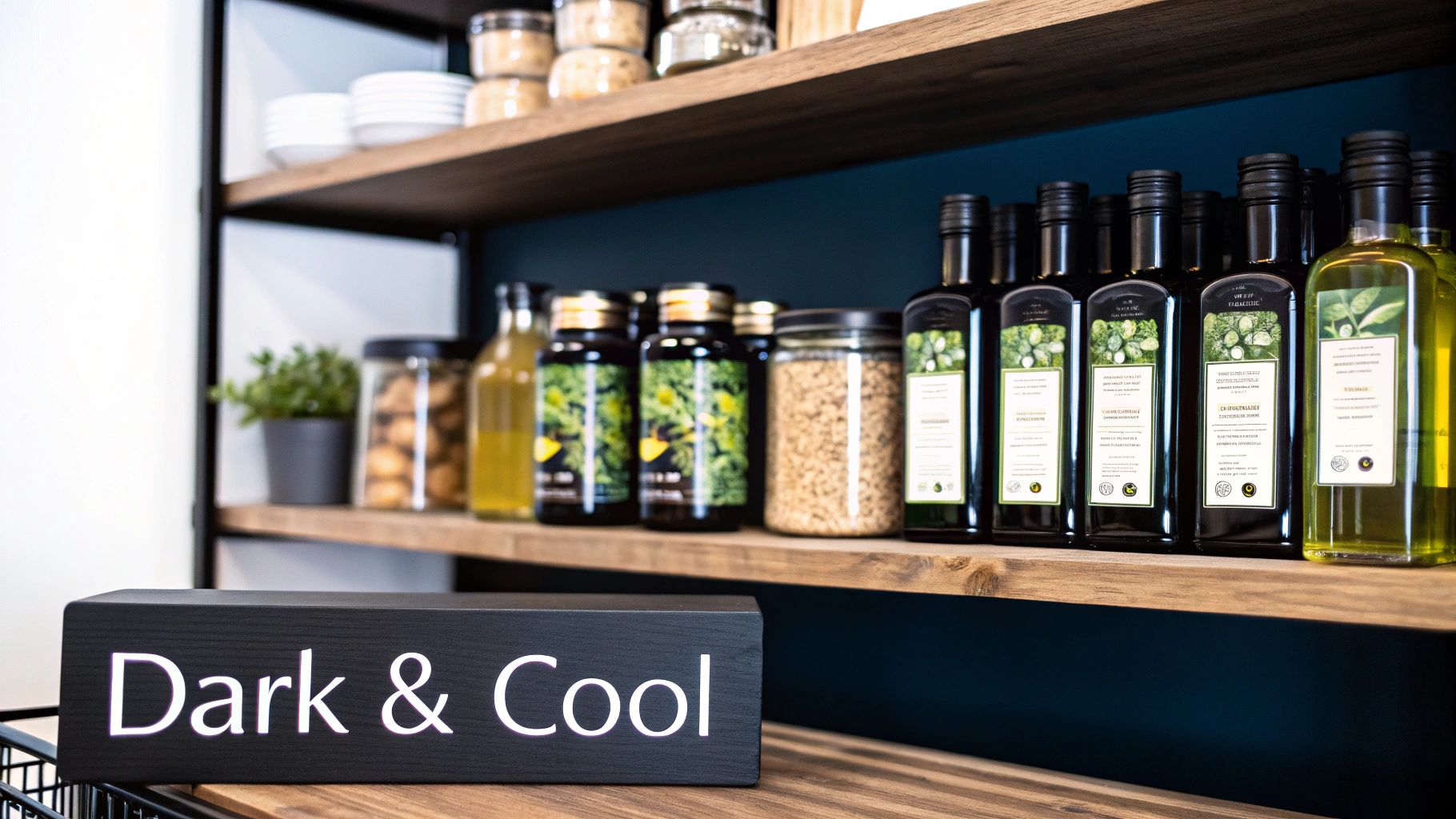
Just as important as finding the right spot in your kitchen is picking the right home for your olive oil storage. You can think of the container as your oil’s personal bodyguard, shielding it from its biggest enemy: oxygen. The original bottle your oil arrived in might look great on the counter, but as soon as you open it, the empty space at the top starts filling with air. That headspace is where oxidation kicks off, slowly chipping away at the oil's quality every time you pour some out.
This is why I'm a big believer in decanting. It sounds fancy, but it just means moving your oil from a large tin or bottle into smaller, everyday-use containers. This simple habit minimizes air exposure for the bulk of your oil, keeping it sealed and fresh while you work through a smaller amount. Let's dig into the best materials for the job.
Material Matters: Glass vs. Steel
The debate between dark glass and stainless steel is a classic one in the olive oil world. Both are great at blocking light, which is a critical part of preservation. Here’s how I see it from a practical standpoint:
- Dark Glass Bottles: These are perfect for your daily-use oil that you'll go through relatively quickly. They're easy to find and won't break the bank. The key, however, is making sure the glass is genuinely dark (think deep amber or forest green) to be effective. A clear glass bottle, no matter how pretty, is a hard pass.
- Stainless Steel Containers: Often called a "fusti," a stainless steel container is my top recommendation for serious olive oil storage. It’s totally opaque, built to last, and the airtight spigots are fantastic for stopping oxygen in its tracks.
So, what's the right call? It really comes down to how you use olive oil. If you fly through a bottle in a few weeks, a dark glass container will serve you well. But for those of us who buy in bulk to get a better deal, investing in a small fusti from a trusted source like Learn Olive Oil is a game-changer. It will easily pay for itself by protecting your oil's flavor and dramatically extending its life.
Managing Multiple Oils Like a Professional Chef
If your pantry looks like a small olive oil shop, you get it. Smart olive oil storage is more than just finding a dark corner; it's about creating a system that works for you. Professional chefs don't just buy oil; they actively manage their inventory to make sure every dish gets the peak flavor it deserves. Thinking this way will help you waste less and enjoy your oils a lot more.
Smart Rotation and Dating
The simplest trick in the book, and honestly the most effective, is First-In, First-Out (FIFO). When you bring home a new bottle, just tuck it in behind the one you're already using. This little habit ensures you always grab the oldest oil first, so no bottle gets forgotten until it's past its prime and lost its punch.
Another key part of this is dating your bottles. The moment you crack open a new bottle or tin, grab a permanent marker and jot down the date. Don't just go by the "best by" date on the label—that's for an unopened bottle. Once you open it, the clock on its freshness starts ticking immediately.
Keep Varieties Separate but Organized
For those of us who love having a few different oils on hand—maybe a peppery Tuscan for finishing a pasta, a buttery Spanish Arbequina for drizzling on fish, and an everyday blend for general cooking—organization becomes even more crucial.
- Avoid Flavor Contamination: This one's a biggie. Never reuse a container for a different kind of oil without giving it a thorough wash and making sure it's completely dry. The lingering notes from a bold, robust oil can easily steamroll a more delicate one.
- Create Zones: It sounds simple, but designating specific spots on your shelf for "finishing oils" and "cooking oils" can be a game-changer. This mental map helps you instinctively reach for the right bottle without having to stop and think, especially when you're in the middle of cooking.
Keeping your collection in order also helps you adapt to what's happening in the wider world of olive oil. For example, with global olive oil consumption predicted to jump by 10% in the 2024/25 season, managing your personal stash efficiently is just smart. Good storage means you get the most out of every drop. If you're curious about what's driving these changes, you can find more details about olive oil market trends at Certified Origins.
Avoiding the Costly Mistakes Everyone Makes
It’s a real shame when you splash out on a premium extra virgin olive oil, expecting that robust, peppery flavor, only for it to taste flat and greasy a week later. It happens to the best of us. Even the most careful home cooks can fall into common olive oil storage traps that seem harmless but completely ruin the very qualities we pay for. These simple mistakes don't just waste your money; they steal the incredible flavor from your food.
One of the biggest slip-ups I see is keeping oil in a beautiful, clear glass bottle right next to the stove. It looks fantastic and feels convenient, but you're creating the perfect storm for spoilage: constant exposure to both heat and light. This daily stress quickly destroys the oil's delicate flavor compounds, turning a vibrant, high-quality oil into something bland and forgettable. Another classic error is topping off a half-used dispenser with fresh oil. This just contaminates your new, pristine oil with the older, already oxidizing oil, speeding up the breakdown of the entire batch.
The Problem of Stale Air
The silent killer of your olive oil's flavor is the air inside the bottle. Specifically, the oxygen in that empty space, or headspace, is the enemy. Every time you pour some oil, you let more air in, which accelerates oxidation. A practical trick I swear by is decanting. Whenever I buy a large tin of oil, I immediately pour about a week's worth into a small, dark glass bottle. The rest of the oil stays sealed tight in the original tin, protected from air until I need a refill.
This method isn’t just for picky chefs; it has a real financial benefit. With global production numbers always in flux, as noted in a recent USDA report, the cost and availability of good oil can vary. Smart olive oil storage is a key strategy for both producers and consumers to manage these changes. By protecting your investment at home, you ensure that not a single drop of that liquid gold goes to waste. You can find out more about how global supply impacts the oil you buy and learn about USDA production forecasts on Olive Oil Times.
Professional-Grade Storage Techniques for Serious Enthusiasts
When you've treated yourself to a truly special, single-varietal olive oil, the last thing you want is for its amazing flavor to fade away in your pantry. For those of us who are serious about our olive oil, stepping up our storage game is essential to make sure every drop stays as complex and delicious as the day it was pressed. This means getting a bit more technical than just keeping it away from the stove.
Temperature and Atmosphere Control
To really protect your investment, you need to go on the offensive against oxidation, olive oil's number one enemy. A surprisingly effective trick I've picked up is using a vacuum sealer made for liquids. Each time you pour some oil, you can reseal the bottle and pull out the damaging oxygen. This works wonders, especially for those larger tins you only use for special occasions.
Another pro-level move is to use an inert gas, like nitrogen or argon, to push the oxygen out of the bottle. You can find small, affordable canisters of these gases online. A quick spray into the bottle before you cork it displaces the oxygen and can add weeks, if not months, to the life of a prized oil.
This infographic really puts into perspective how much of a difference the right container and temperature can make.
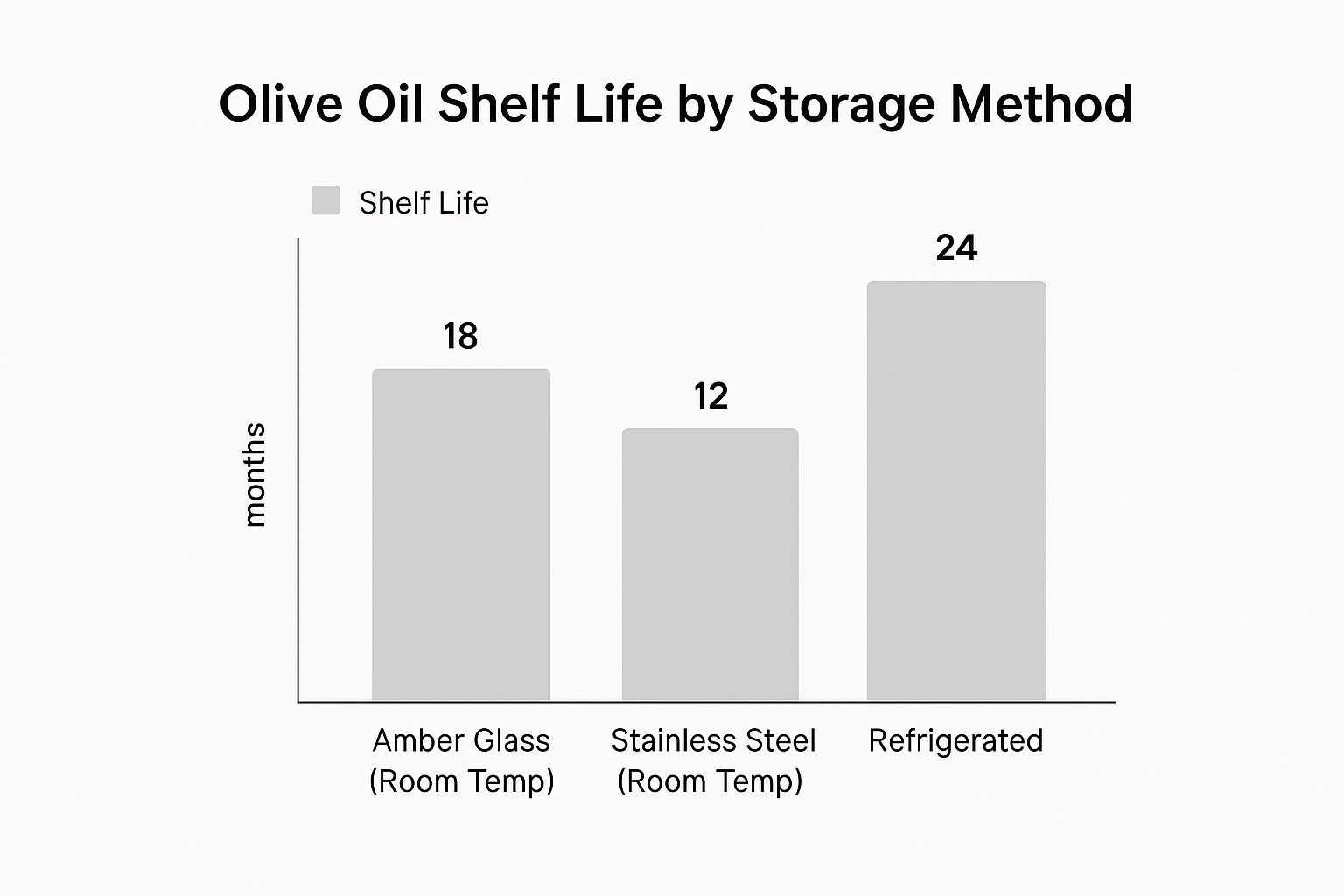
As you can see, keeping your oil cool and in the dark is a game-changer, with refrigeration offering the best long-term protection against spoilage.
To help you decide which advanced method might be right for you, let's compare the costs and benefits.
Storage Method Comparison: Cost vs. Effectiveness
Analysis of different storage approaches showing investment required and preservation results
| Storage Method | Initial Cost | Maintenance | Preservation Effectiveness | Best For |
|---|---|---|---|---|
| Vacuum Sealer | Moderate ($50-$150) | Minimal (bags/canisters) | High | Large tins or bottles used infrequently. |
| Inert Gas System | Low ($20-$40 for a canister) | Moderate (canister refills) | Very High | High-end, delicate oils you want to savor over time. |
| Wine Fridge | High ($200+) | Low (electricity) | Excellent | Serious collectors with multiple valuable oils. |
| Cool Basement/Cellar | Free | None | Good | Anyone with a naturally cool, dark space in their home. |
Ultimately, the best method comes down to your collection and how you use your oil. A wine fridge is a fantastic set-it-and-forget-it solution, while inert gas offers top-tier protection for a very low entry cost.
Seasonal Storage Adjustments
Your olive oil storage plan shouldn't be static; it needs to adapt to the changing seasons. During a hot summer, a standard kitchen pantry can easily get warm enough to start damaging your oil, even if it's dark. This is the perfect time to find a new home for your best bottles.
A cool basement or a dedicated wine fridge set to about 57°F (14°C) is the ideal environment. Moving your oil to a cooler spot during the warmer months is a simple adjustment that prevents heat from making it go rancid. It’s a small effort that ensures the nuanced, peppery, or fruity notes you paid a premium for are there every time you reach for the bottle.
Your Action Plan for Olive Oil Storage Success
It’s time to take all this great info and put it into action in your own kitchen. Building a smart plan for your olive oil storage isn’t about a massive overhaul. It’s all about making small, deliberate tweaks that go a long way in protecting your oil’s amazing flavor and health benefits. A great starting point is to just take a quick look at your current habits. Where does your go-to bottle of olive oil live right now? Is it sitting next to the warm stove or catching some rays on a sunny windowsill?
Your First Steps to Better Storage
Honestly, the biggest and easiest win is moving your oil to a better home. You're looking for a spot that's both cool and dark—think the back of a pantry or a low cabinet that’s far from the heat of your oven or dishwasher. This one simple change makes a huge difference, dramatically slowing down the damage that heat and light can cause.
Next up, let's talk containers. If you’re like me and love buying those big, economical tins of olive oil, don't just leave the whole thing open on the counter. A better approach is to pour a smaller amount, maybe enough for a week or so, into a dark glass or ceramic bottle for daily use. This strategy keeps the majority of your precious oil sealed and safe from its enemy, oxygen.
To help you get started, here's a quick mental checklist:
- Evaluate: Take a hard look at where you keep your oil. Is it getting warm or hit by sunlight during the day?
- Relocate: Find that perfect cool, dark spot—a cabinet or pantry is ideal.
- Downsize: Keep a small, opaque bottle on hand for everyday cooking and finishing dishes.
- Label: Grab a permanent marker and jot down the date you first opened the main tin or bottle. This helps you keep track of its freshness.
By making these simple adjustments, you're taking charge of your olive oil storage and guaranteeing that every drop you paid for stays fresh and delicious for as long as possible. Eager to dive deeper into the world of authentic, high-quality olive oils? Find your next favorite bottle over at Learn Olive Oil.
 Learn Olive Oil
Leave a comment