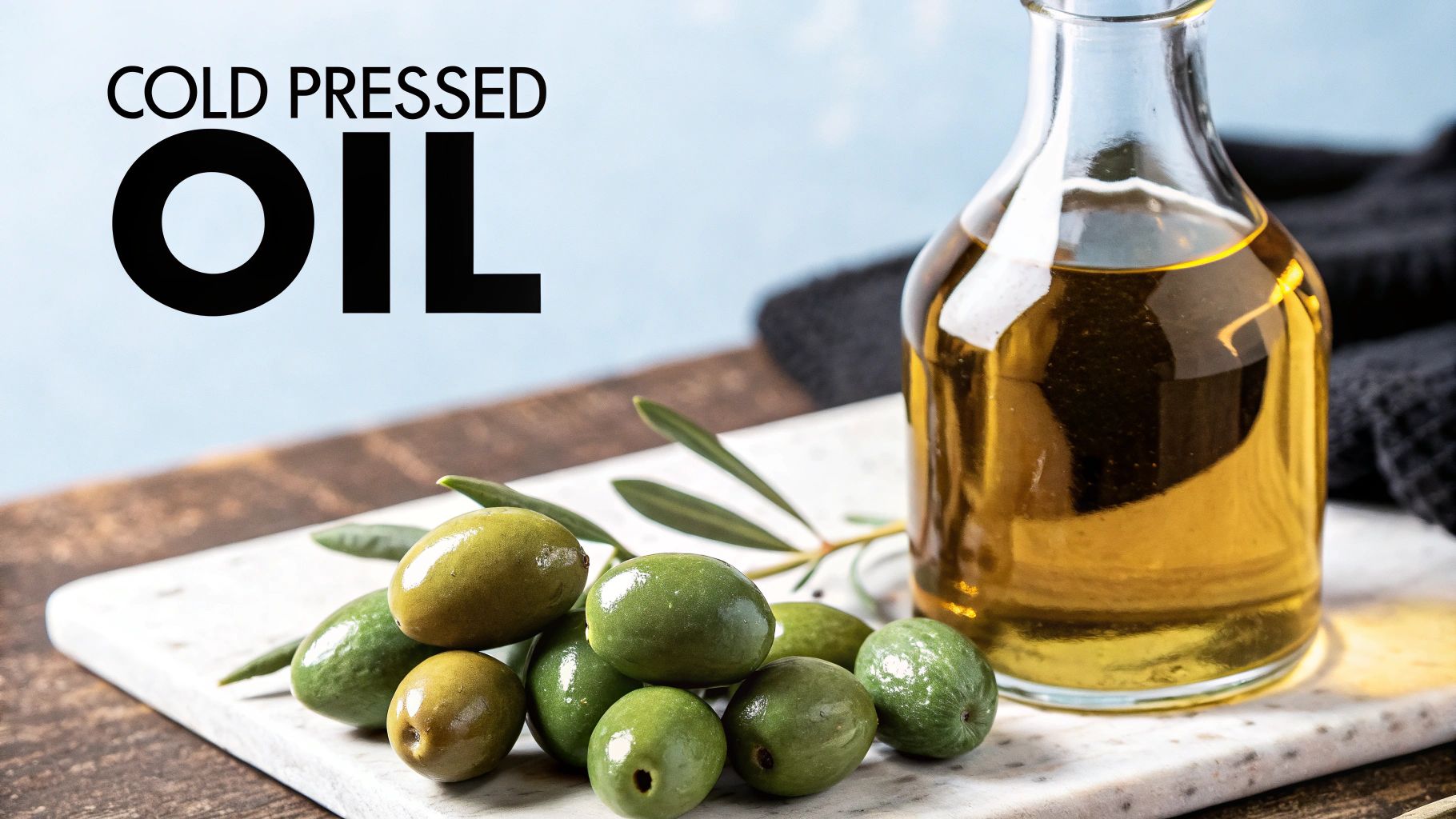
Ever wondered what makes one bottle of olive oil so much better than another? Often, the secret lies in two simple words: cold pressed.
Think of it like juicing an orange. You can either squeeze it by hand to get pure, fresh juice, or you can use a machine that heats and processes it, losing a lot of the natural flavor and vitamins along the way. Cold pressed olive oil is the fresh-squeezed version—pure, vibrant, and full of the olive's natural goodness. This gentle extraction is what locks in its exceptional taste and powerful nutritional benefits.
Decoding the Cold Pressed Method
The term "cold pressed" isn't just marketing jargon; it's a promise of quality. It describes a specific production method that puts purity first, rather than just trying to squeeze every last drop out of the olives. The process is entirely mechanical: olives are crushed into a thick paste, and that paste is then slowly pressed to release its precious oil.
But the real magic is in the temperature. To be officially labeled "cold pressed," the entire process must stay below a strict threshold of 27°C (about 80°F). This low temperature is absolutely crucial for protecting all the delicate compounds that make a great extra virgin olive oil so special.
Why Temperature Matters So Much
Imagine you're brewing a delicate green tea. If you use boiling water, you'll scorch the leaves and end up with a bitter, unpleasant cup. It's the same idea with olive oil.
When heat gets into the extraction process, it acts like a wrecking ball, destroying the fragile antioxidants and flavor molecules that give the oil its character. By keeping things cool, producers ensure the final product retains its full, complex personality.
This meticulous temperature control is what protects the oil’s valuable antioxidants, polyphenols, and vitamins. You can find more details about this high-quality production standard on Wikipedia.
The core philosophy behind cold pressing is surprisingly simple: gentle handling preserves the oil's natural integrity. This method guarantees a product that’s as close to the fresh-picked fruit as possible, delivering a more authentic and healthful experience.
Cold Pressed vs Regular Olive Oil At a Glance
The differences between a true cold pressed olive oil and other types can be night and day. One method is all about preserving quality, while others often sacrifice flavor and nutrition for higher yield, using intense heat or even chemical solvents to extract more oil.
This table breaks down the fundamental distinctions at a glance.
| Attribute | Cold Pressed Olive Oil | Regular (Heat/Chemically Extracted) Olive Oil |
|---|---|---|
| Extraction Method | Purely mechanical (crushing and pressing) | Involves high heat and/or chemical solvents |
| Temperature | Kept below 27°C (80°F) | Can reach very high temperatures, degrading quality |
| Flavor Profile | Robust, fruity, peppery, and complex | Often bland, mild, or can have off-flavors |
| Nutrient Content | High in antioxidants and polyphenols | Significantly lower due to heat and processing |
| Acidity Level | Very low (typically under 0.8% for EVOO) | Higher and often needs refining to be edible |
| Color | Vibrant green to golden yellow | Pale yellow or very light in color |
As you can see, choosing cold pressed oil means you're getting a superior product in every way that counts—from its rich, nuanced flavor to its powerful health benefits.
The Journey from Olive Grove to Golden Oil
The story of a truly great cold-pressed olive oil is one of tradition and careful timing. It all starts in the grove, where farmers watch their olives like hawks, waiting for that perfect moment of ripeness. Pick them too soon, and the oil will be overly bitter; wait too long, and it loses its vibrant, peppery character. This first decision shapes everything that follows.
Once picked, it’s a race against the clock. The olives are whisked away to the mill, sometimes within just a few hours. Any delay invites oxidation and fermentation, the two arch-enemies of high-quality olive oil. At the mill, the olives get a thorough cleaning to remove any stray leaves or twigs, ensuring only pristine fruit makes it to the press.
From Fruit to Paste
With the olives cleaned, they’re crushed into a thick, bright green paste. This is where the real artistry begins in a process called malaxation. Imagine gently kneading a very delicate dough—the goal is to coax the tiny oil droplets out of the olive's fruit cells so they can clump together.
The paste is stirred slowly and methodically in a special basin. The most important rule here? Keep it cool. The temperature is strictly kept below 27°C (80°F). This is the "cold" in "cold-pressed," and it's essential for protecting the oil’s fragile flavors and health-boosting antioxidants, which heat would otherwise destroy.
The art of malaxation is a delicate balance. Too little stirring means you leave precious oil behind. But stir too aggressively, and you introduce heat and air, which dull the flavor. It’s a true test of the oil maker’s skill.
Extracting the Liquid Gold
After the paste has been properly mixed, it’s time to separate the oil. While old stone presses are iconic, modern producers rely on a decanter centrifuge. This machine spins the olive paste at incredible speeds, using centrifugal force to neatly separate its components by weight:
- The solid pomace (the leftover skins, pits, and flesh)
- The vegetable water naturally present in the fruit
- And finally, the pure, golden-green olive oil
This infographic shows how the purely mechanical process works to squeeze out the oil without compromising its quality.
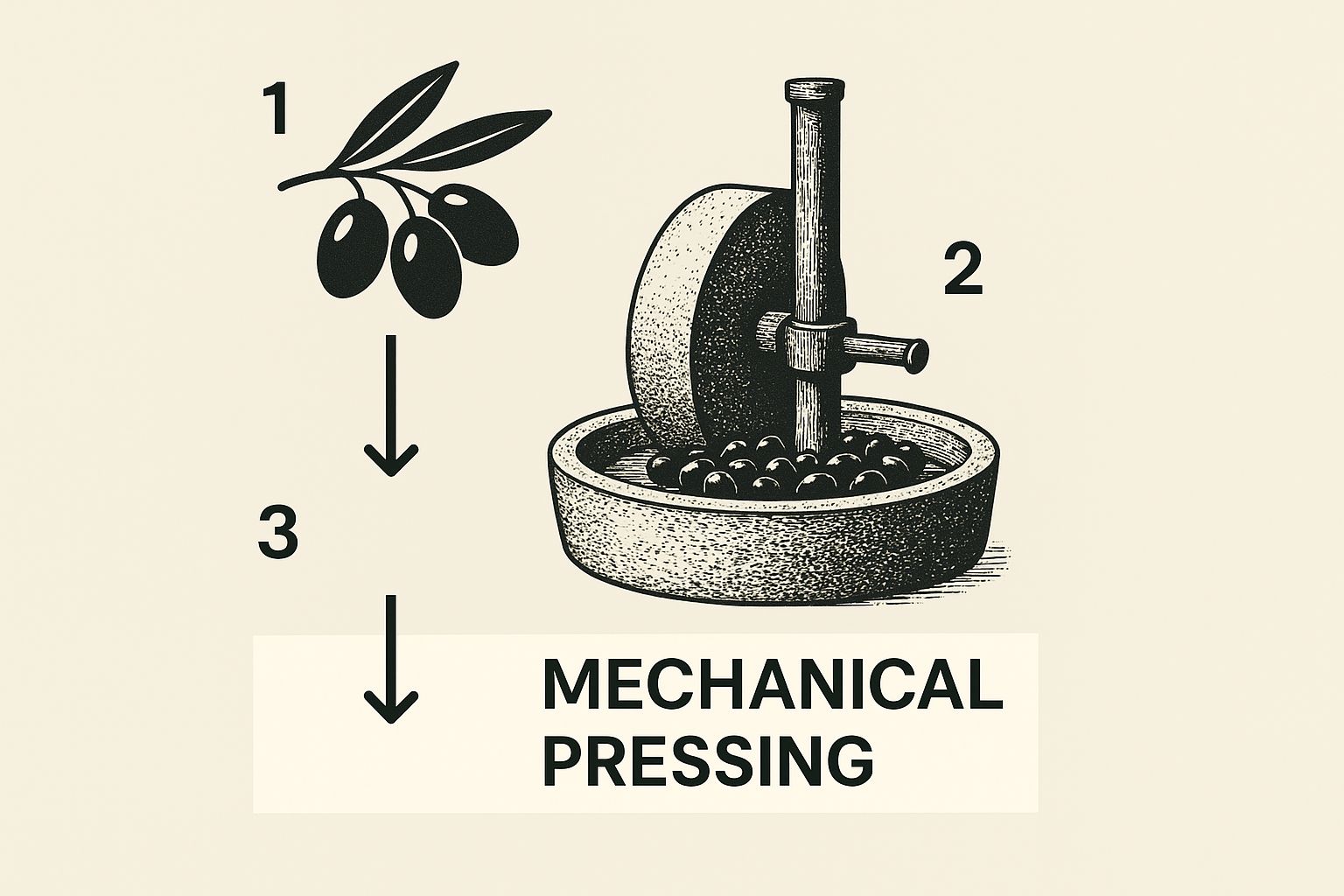
As the visual explains, the entire extraction is done with physical force—no heat, no chemicals. This is the fundamental difference between a true cold-pressed extra virgin olive oil and mass-produced refined oils that often rely on industrial solvents. What you get in the end is the purest expression of the olive: unheated, unfiltered, and full of character, ready to be bottled and enjoyed.
Unlocking the Health Benefits in Every Drop
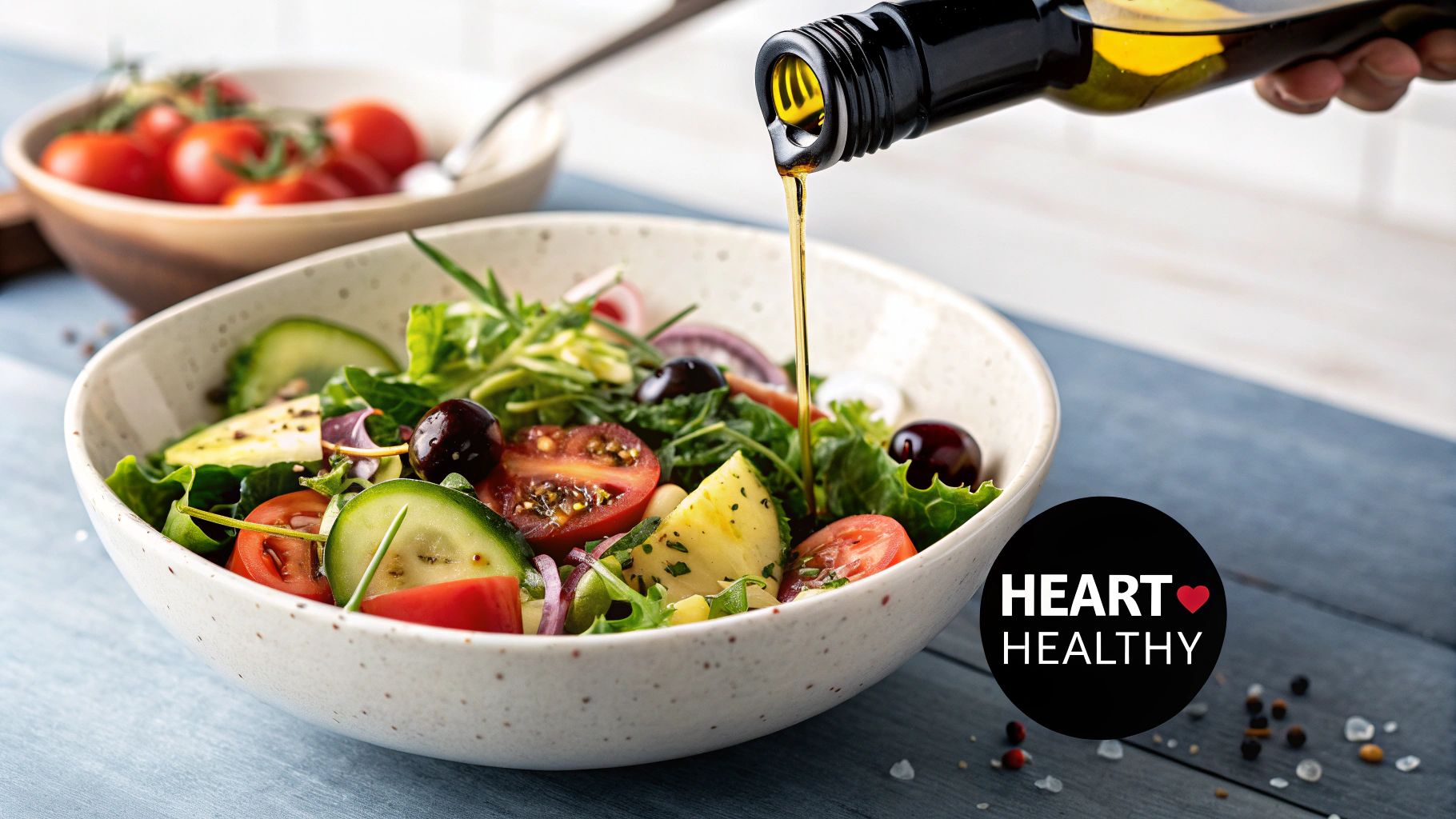
Beyond its incredible flavour, what is cold pressed olive oil really good for? Think of it less as a simple ingredient and more as a functional food. It doesn't just make your meals taste better; it actively works to support your long-term health. There's a reason it's the cornerstone of the celebrated Mediterranean diet, and it’s all down to the powerful compounds packed inside.
The magic truly lies in that gentle, heat-free extraction process. By keeping things cool, producers ensure the oil makes it to your bottle with all its potent, natural goodness intact. This isn’t just another cooking fat—it's a source of nutrients that protect and nourish your body from the inside out.
At the very core of these benefits are monounsaturated fats, with the main one being oleic acid. This is the kind of "good fat" you hear about, and it's famous for its role in supporting a healthy heart and maintaining good cholesterol levels. Unlike the saturated fats you find in butter or many processed foods, oleic acid is a constructive part of a balanced diet.
This is precisely why swapping out butter or margarine for a drizzle of cold pressed olive oil is such a smart and simple upgrade for your everyday meals.
A Powerhouse of Antioxidants
While the healthy fats get a lot of attention, the real heroes in cold pressed olive oil are its polyphenols. These compounds are powerful antioxidants. You can think of them as your body's personal security team, constantly on patrol to defend your cells against damage from unstable molecules known as free radicals.
One of the most impressive polyphenols is oleocanthal. It's the compound behind that distinct peppery tickle you feel at the back of your throat when you taste a truly high-quality oil. But it does more than just add a kick; oleocanthal has natural anti-inflammatory properties that work in a way that's surprisingly similar to ibuprofen, just on a much milder, everyday scale.
That peppery finish isn't a flaw—it's a sign of quality. It's the oil telling you that its most potent, health-giving compounds are present and ready to go to work for you.
Key Health-Promoting Compounds
The benefits don't come from just one or two things. A great cold pressed olive oil contains a whole team of compounds working together. Here are the key players you're getting in every single drop:
- Oleic Acid: The star monounsaturated fat, making up most of the oil's fatty acid profile. It's widely praised for its positive impact on cardiovascular health by helping to maintain a healthy cholesterol balance.
- Oleocanthal: As we mentioned, this unique polyphenol is a dual-threat, delivering both antioxidant protection and anti-inflammatory effects. Its presence is a calling card for fresh, premium-grade oil.
- Vitamin E and Vitamin K: These essential fat-soluble vitamins are crucial for your body to function properly. Vitamin E is another powerful antioxidant that helps protect your cells, while Vitamin K is vital for blood clotting and bone health.
When you reach for a bottle of cold pressed olive oil, you're doing more than just choosing something to cook with. You're bringing home a blend of compounds that supports your heart, helps manage inflammation, and protects your cells. It’s a simple, delicious way to enrich not just your diet, but your overall well-being.
How to Choose the Best Cold-Pressed Olive Oil
Walking down the olive oil aisle can be dizzying. Rows upon rows of bottles all seem to promise the same thing, but how do you spot the real deal among the pretenders? It's actually simpler than it looks. You just need to know the clues.
First things first, look for the words "extra virgin." This is non-negotiable. It's the highest grade an olive oil can receive, meaning it’s been extracted without chemicals and has passed rigorous tests for both its chemical profile and, just as importantly, its taste. If the label just says "olive oil" or "light olive oil," you're looking at a refined product that's been stripped of the very things that make it so good for you.
Next, play detective and find the date. The most crucial date on a bottle is the harvest date. Think of olive oil as fresh-squeezed fruit juice—because that's what it is! You want it as fresh as possible. An oil from a recent harvest (ideally within the last year) will have the vibrant, peppery notes you're after. A "best by" date isn't nearly as helpful, as it can be set up to two years after bottling, telling you nothing about when the olives were actually picked and pressed.
The Bottle Tells Its Own Story
The packaging is just as important as the words on the label. Light is a major enemy of olive oil; it causes the oil to break down and go rancid far more quickly.
- Go for dark glass or tins: Always reach for oils housed in dark green or brown glass bottles. An opaque tin is even better. This packaging is like a shield, protecting the delicate oil inside from damaging UV light.
- Steer clear of transparent bottles: A clear glass bottle is a huge red flag. While it may look appealing on the shelf, it shows that the producer isn't prioritizing quality. The oil inside has been exposed to light from the moment it was bottled.
This push for better quality isn't just a niche interest; it's a massive global trend. The cold-pressed oil market was valued at around $34.18 billion and is expected to keep growing as more people hunt for authentic, nutrient-dense foods. You can get a deeper look at this trend and its effect on the global olive oil market from Fortune Business Insights.
Decoding Olive Oil Labels
Let's cut through some of the jargon you'll find on labels. Knowing what to look for—and what to ignore—makes choosing the right bottle a breeze. This quick guide will help you understand the terms that truly matter.
| Term | What It Really Means | What to Look For |
|---|---|---|
| Extra Virgin | The highest grade. Unrefined, with very low acidity and a flawless taste profile. | This is the gold standard. Don't settle for less if you want top quality. |
| First Cold Press | Mostly a marketing throwback. Modern centrifuges get all the oil in a single extraction. | "Cold Pressed" or "Cold Extracted" are the modern, meaningful terms. |
| Unfiltered | The oil contains tiny bits of olive fruit, giving it a cloudy appearance and a bolder taste. | Great for a robust, rustic flavor, but it has a shorter shelf life. Best used quickly. |
| Protected Designation of Origin (PDO) | A European certification guaranteeing the oil was grown, pressed, and bottled in a specific region. | This is a fantastic seal of authenticity and a guarantee of regional character. |
Ultimately, choosing a great cold-pressed olive oil isn't about finding a fancy bottle. It's about knowing the two most important signs of quality: a recent harvest date and protective, dark packaging. If you find a bottle that ticks both those boxes, you can be confident you're taking home a product that will deliver the authentic flavor and health benefits you're paying for.
Cooking and Finishing with Cold Pressed Olive Oil
So, you've brought home a beautiful bottle of cold pressed olive oil. Now for the fun part—letting it work its magic in your kitchen. The real question isn't just "what is it?" but "what can it do for my food?" Think of it less as a simple cooking fat and more as a final, transformative ingredient.
Unlike neutral oils that just prevent sticking, a good cold pressed oil brings its own personality to the party. It might be a peppery bite, a hint of fresh-cut grass, or a smooth, buttery finish. The trick is understanding how to protect those incredible flavors.
To Heat or Not to Heat
Let’s bust a common myth right now: you absolutely can cook with high-quality extra virgin olive oil. The idea that it has a low smoke point is simply outdated. A quality cold pressed oil typically has a smoke point between 190–215°C (375–420°F), making it perfectly safe for everyday sautéing, roasting, and even baking.
But the better question isn't if you can heat it, but should you?
High heat is the enemy of delicate flavors. While cooking with it is perfectly fine, you'll lose the nuanced aromas and complex tastes that make cold pressed olive oil so special. Its true potential is unlocked when you use it raw, right at the end.
Using it as a finishing oil preserves the very essence of what you paid for.
Best Ways to Use Cold Pressed Olive Oil
Treat your bottle like a secret weapon for flavor, ready to be deployed just before serving. The possibilities are endless, but here are a few simple ways to let its character shine.
- Whip Up a Killer Vinaigrette: This is the classic for a reason. A simple whisk of oil, a good vinegar or lemon juice, salt, and maybe a dab of mustard creates a dressing that makes salads unforgettable. It's worlds away from anything you can buy in a store.
- Drizzle Generously Over Finished Dishes: This is where the magic happens. A final swirl over a steaming bowl of pasta, a hearty bean soup, or grilled fish adds a layer of fragrant richness you can't get any other way. It’s also spectacular over roasted vegetables or even a simple plate of fresh tomatoes and mozzarella.
- Create Dips and Spreads with Depth: Use it as the backbone for an incredibly creamy hummus, a vibrant pesto, or just a simple dipping bowl for crusty bread. Add some fresh herbs and garlic, and you have an instant, elegant appetizer that showcases the oil's quality.
- Finish Grilled Meats and Seafood: Let your steak or fish rest for a few minutes after it comes off the grill, then anoint it with a good drizzle of oil. The food's residual heat gently warms the oil, releasing its incredible aromas and adding a final touch of luxury.
Answering Your Questions About Cold Pressed Olive Oil
As you start to explore the world of truly great olive oil, you'll naturally have a few questions. The labels can be a bit confusing, even for experienced home cooks. Let's tackle some of the most common points of confusion so you can shop with confidence and get more out of every bottle.
Knowing what to look for—and what certain phrases really mean—is the key to finding an oil that delivers on its promise of incredible flavor and quality.
Is "First Cold Press" Better Than "Cold Pressed"?
This is a classic. You'll see "first cold press" splashed across many labels, but honestly, it’s more of a nostalgic marketing term than a modern-day quality indicator.
Back in the day, olive paste was pressed using old-fashioned hydraulic screw presses, and sometimes it took multiple pressings to get all the oil out. The first press was the best. Today, however, almost all quality olive oil is made using a centrifuge. This modern method extracts all the oil in one continuous go. So, by default, every extra virgin olive oil is from the "first"—and only—press.
The term you really want to look for is "cold pressed" or "cold extracted." That’s your guarantee that the temperature was kept low to preserve the oil’s flavor and nutrients. The word "first" doesn't add any extra value.
Takeaway: Don't get caught up on the word "first." Instead, focus on finding an "extra virgin" oil that clearly states it was "cold pressed." That’s the real mark of quality.
Can I Actually Cook With Extra Virgin Olive Oil?
Yes, you absolutely can! This is one of the biggest and most persistent myths in the food world.
A high-quality, cold pressed extra virgin olive oil has a smoke point somewhere between 190–215°C (375–420°F). This is plenty high for most everyday cooking, including sautéing vegetables, roasting, and even baking.
The real question isn't if you can cook with it, but if you should. The main reason to buy a premium oil is for its complex, delicious, and often delicate flavors. High heat can mute those beautiful notes. So, while it’s perfectly safe for cooking, many people prefer to save their best oil for finishing a dish—a drizzle over pasta, soup, or grilled fish—or for raw uses like a simple vinaigrette where its character can truly shine.
What Is the Best Way to Store Olive Oil?
Proper storage is simple, but it's crucial for keeping your oil tasting fresh. You just need to protect it from its three biggest enemies: heat, light, and air.
- Find a cool, dark home for it. A pantry or a kitchen cupboard is perfect. Just be sure to keep it away from the stove and out of a sunny spot on the counter.
- Always put the cap back on tightly. Oxygen is the enemy of freshness. A tight seal stops air from getting in and causing the oil to oxidize and go rancid.
- Resist the urge to refrigerate. It might seem like a good idea, but chilling your oil can cause condensation to form inside the bottle, which can mess with its quality and texture.
Following these simple steps will preserve the wonderful taste and health benefits you paid for.
Ready to explore the world of premium olive oil with confidence? At Learn Olive Oil, we provide expert guides, tasting notes, and recommendations to help you discover the best bottles from around the globe. Start your journey with us and elevate your appreciation for this liquid gold.

 Learn Olive Oil
Leave a comment