The Olive Oil Fraud Crisis: What You're Really Buying
The olive oil in your pantry might not be what its label claims. The global olive oil market is unfortunately susceptible to fraudulent practices, impacting both your wallet and your health. This deception undermines the hard work of honest olive growers and lessens the culinary experience for consumers everywhere. It's crucial to learn how to identify fake olive oil.
Understanding The Scope of The Problem
The high price of olive oil, particularly extra virgin olive oil (EVOO), makes it a common target for adulteration. Dishonest producers frequently mix EVOO with less expensive, lower-quality oils like soybean or canola oil. This practice not only misleads consumers but can also introduce unexpected allergens and reduce the health benefits linked to real EVOO.
Genuine EVOO is packed with antioxidants and beneficial fats, but these are diminished or lost entirely when combined with other oils.
The complicated supply chain also contributes to the issue. Olive oil often changes hands multiple times before it reaches the consumer, creating opportunities for fraud at each step. This makes tracing the oil's origins difficult and underscores the need to buy from trustworthy suppliers. Even a label indicating a specific region of origin doesn't guarantee the oil inside isn't a blend from multiple, potentially questionable sources.
The Economic and Health Implications
The olive oil fraud crisis has widespread consequences. The global olive oil market is a significant target for fraud, given its high value and the relative ease of substituting inferior oils. In 2023, the market was valued at over $14 billion, and it's projected to surpass $20 billion within the next decade. This lucrative market encourages fraudulent activities, like mixing olive oil with cheaper vegetable oils and falsely labeling it as extra virgin.
The European Union has experienced a rise in these cases, emphasizing the need for stronger detection methods. This protects consumers and maintains confidence in the industry. Researchers have developed advanced methods like high-resolution mass spectrometry (HRMS) and nuclear magnetic resonance (NMR) for precise identification of adulterated olive oils. Learn more about this issue here.
This prevalent fraud not only cheats consumers financially but also poses potential health risks. Adulterated olive oil might include undeclared allergens, endangering those with sensitivities. Additionally, the nutritional value of real EVOO is compromised when blended with inferior oils, robbing consumers of its health benefits.
To better understand the different ways olive oil can be adulterated, take a look at the table below:
Common Types of Olive Oil Fraud
This table outlines the most prevalent fraudulent practices in the olive oil industry that consumers should be aware of.
| Fraud Type | Description | Warning Signs |
|---|---|---|
| Adulteration | Mixing extra virgin olive oil with cheaper oils like soybean, canola, or lampante oil. | Unusually low price, bland flavor, lack of peppery finish. |
| Mislabeling | Selling lower-grade olive oil as "extra virgin." | Price discrepancies compared to other extra virgin oils, muted aromas, and a less vibrant color than expected. |
| Counterfeit Labeling | Using packaging and labels that mimic legitimate brands. | Discrepancies in label details compared to the authentic brand, potentially lower quality packaging, or unusual retail outlets. |
| False Origin Claims | Claiming an olive oil originates from a specific region when it doesn't. | Suspiciously low prices for oils from prestigious regions, inconsistent flavor profiles, and vague or missing geographical indicators on the label. |
| Reuse of Bottles | Refilling bottles of reputable brands with lower-quality oil. | Damaged or tampered seals, inconsistencies in label or bottle appearance, and a noticeable difference in taste or aroma compared to previous purchases of the same brand. |
This information empowers consumers to make informed decisions and protect themselves from economic deceit and potential health concerns. Understanding the extent of this problem emphasizes the importance of consumer vigilance and awareness about how to detect fake olive oil.
Decoding Deceptive Labels: What Marketers Don't Want You to Know
That attractive bottle of olive oil, adorned with pictures of idyllic Tuscan landscapes, might not be as authentic as it seems. Marketing strategies often use misleading language and psychological tactics to sell lower-quality oils at inflated prices. Consumers must be aware of these tactics to ensure they get what they pay for.
Common Labeling Tricks
One common tactic is using vague terms like "pure," "light," or "imported from." While "pure" olive oil exists as a grade, consumers often misinterpret it as superior, when it actually ranks below extra virgin and virgin olive oils. "Light" olive oil simply indicates a lighter color and flavor, not a reduction in calories or fat. "Imported from" can be especially misleading. A label might say "Imported from Italy," but this doesn't guarantee the olives were grown or the oil was produced there. It might simply mean the oil was bottled in Italy.
The "Estate Bottled" Advantage
Look for olive oils labeled "Estate Bottled." This means the olives were grown, pressed, and bottled on the same estate, ensuring higher quality control and traceability. Phrases like “100% California Grown” offer similar geographical clarity and transparency.
The Price Trap
Price is another key factor. Authentic extra virgin olive oil is labor-intensive to produce, so it won't be exceptionally cheap. If a price seems too good to be true, it probably is. Fraud in the olive oil industry often involves substituting high-quality oil with cheaper vegetable or seed oils. Between September 2016 and December 2019, the Joint Research Center of the European Commission documented 32 cases of fraud globally, with 20 in Europe alone. These fraudulent practices included selling virgin oil as extra virgin and mixing olive and vegetable oils, sometimes even adding green dye to mimic real olive oil. This illegal activity costs the industry an estimated 8-12 billion euros annually. More detailed statistics can be found here. This underscores the importance of carefully reading labels and understanding the true value of high-quality olive oil.
Packaging Matters
When considering deceptive labeling, it's also wise to think about tamper-evident packaging. This provides additional security against potential fraud, as consumers increasingly seek assurance that their purchases haven't been tampered with.
By understanding these deceptive marketing practices, you can make more informed choices and select authentic, high-quality olive oil. A healthy skepticism toward marketing claims will benefit your health, culinary experiences, and support ethical producers.
The Sensory Test Suite: Using Your Senses to Detect Fraud

Your most reliable tools for identifying fraudulent olive oil are readily at hand: your senses. This section explains how to use sight, smell, and taste to determine olive oil authenticity, adapting professional methods for home use. Combined, these tests offer a powerful way to distinguish genuine olive oil from fake.
Visual Examination: Looking Beyond the Label
Start by observing the oil's appearance. Pour a small quantity into a clear glass. Genuine Extra Virgin Olive Oil (EVOO) often displays a vibrant greenish-gold color. However, the color can change depending on the olive variety and the time of harvest. Thus, color alone isn't a conclusive indicator.
Next, examine its clarity. A little sediment in unfiltered oils is normal, but excessive cloudiness or murkiness might indicate problems. Dishonest labeling often relies on branding, making it vital for consumers to understand a robust branding strategy.
Finally, swirl the oil and check its viscosity. Authentic EVOO has a slightly thick, viscous texture, like syrup, because of its high monounsaturated fat content. Thin, watery oil is a warning sign.
Olfactory Assessment: The Aroma of Authenticity
Now, engage your sense of smell. Warm the glass gently in your hands to release the oil's aromas. Inhale deeply. High-quality EVOO presents a complex array of fragrant, fruity notes. Imagine scents like fresh-cut grass, green apple, or ripe tomato.
A musty, bland, or metallic smell suggests potential issues, such as rancidity or adulteration with other oils. The absence of a distinct, fruity aroma warrants suspicion.
Gustatory Evaluation: The Taste Test
Finally, the taste test. Drizzle a small amount of oil onto a spoon. Allow it to coat your tongue. Authentic EVOO offers a complex flavor profile. It combines fruitiness, a subtle bitterness, and a noticeable peppery bite at the back of your throat.
This pungency is a key characteristic of fresh EVOO, attributed to its beneficial polyphenols. Fake olive oil often tastes bland, greasy, or metallic and lacks this peppery finish. A lingering, unpleasant aftertaste further suggests adulteration.
Debunking Myths: The Refrigerator Test and Other Misconceptions
While many at-home tests are available online, some are scientifically inaccurate. One common example is the refrigerator test, which suggests that real olive oil solidifies when refrigerated. This is unreliable, as several factors affect olive oil's solidification point, including its fatty acid composition. This means even pure olive oil might stay liquid at refrigerator temperatures.
More reliable methods include evaluating heat response—genuine EVOO becomes thinner when heated—and the traditional oil lamp test, where pure oil burns with a clean, bright flame. Combining sensory evaluation with these more dependable tests helps you create a strong system for detecting fake olive oil.
Certification Deep Dive: The Seals That Actually Matter
When it comes to olive oil, not all certifications hold the same weight. Understanding the difference between legitimate quality indicators and marketing tactics is essential for finding authentic olive oil. This section will give you the knowledge you need to navigate the sometimes confusing world of olive oil labeling.
Understanding Olive Oil Grades
The first step in identifying genuine olive oil involves understanding the different grades. These grades, which range from Extra Virgin to Pomace, reflect the oil’s quality and the processes used in its production. Extra Virgin Olive Oil (EVOO) represents the highest grade, produced from the first cold-pressing of olives without heat or chemicals. This method preserves the oil's flavor and beneficial compounds.
Lower grades like Virgin Olive Oil, Pure Olive Oil, and Light Olive Oil undergo refining processes that can compromise flavor and nutritional content. Pomace Olive Oil, the lowest grade, is extracted from leftover olive pulp using solvents. Knowing these distinctions is fundamental to assessing the quality of a bottle of olive oil.
Certification Bodies: Who to Trust
Several certification bodies exist, each with varying standards. Reputable organizations like the International Olive Council (IOC), the North American Olive Oil Association (NAOOA), and the California Olive Oil Council (COOC) enforce strict quality controls. Look for their seals on bottles as a mark of authenticity.
However, some certifications are less stringent. Some organizations operate on a "pay-to-play" basis, allowing producers to obtain certification regardless of actual quality. Don't automatically equate a certification with genuine quality. Research the certifying body to ensure its standards align with true EVOO criteria.
To help you navigate the world of olive oil certifications, we've compiled a helpful guide:
This table, "Olive Oil Certification Guide", compares various olive oil certifications and helps consumers understand what each one guarantees.
| Certification | Issuing Organization | Standards Verified | Reliability Level |
|---|---|---|---|
| IOC | International Olive Council | Chemical composition, sensory evaluation | High |
| NAOOA | North American Olive Oil Association | Purity, quality, labeling accuracy | High |
| COOC | California Olive Oil Council | Purity, quality, California origin | High |
| USDA Organic | United States Department of Agriculture | Organic production methods | Medium (focus is on organic practices, not specifically EVOO quality) |
| Generic "Extra Virgin" | Varies, may be self-certified | May not be independently verified | Low |
As you can see, while some certifications offer robust guarantees of quality, others may be less reliable. Always research the specific certification to understand what it truly represents.
Decoding the Label: Key Information
Beyond certifications, genuine producers provide crucial details on their labels. Look for harvest dates, indicating the oil’s freshness, and acidity levels. EVOO must have an acidity level of 0.8% or less. Lower acidity generally correlates with higher quality.
Other indicators include polyphenol content, reflecting antioxidant properties, and the specific olive cultivars used. These details show transparency and a dedication to quality. Authentic producers often detail production methods and storage recommendations.
The following infographic visually summarizes key differences between authentic and fake olive oil based on bitterness, aroma, and color:
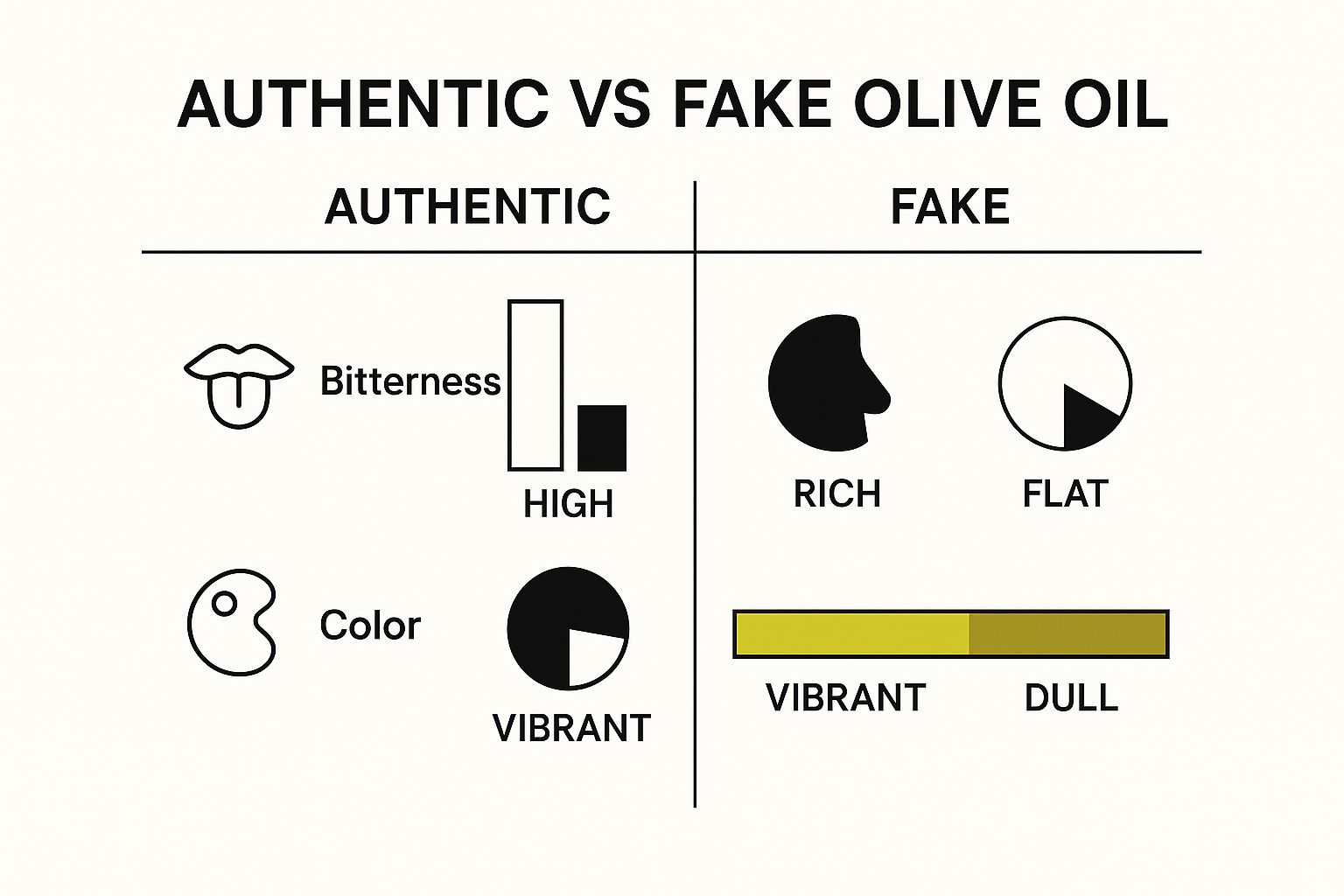
Authentic olive oil typically exhibits a noticeable bitterness, a rich aroma, and a vibrant color, unlike the bland characteristics of fake olive oil.
Protected Designations of Origin (PDO) and Protected Geographical Indications (PGI)
For European olive oils, look for PDO (Protected Designation of Origin) and PGI (Protected Geographical Indication) designations. These certifications guarantee the oil’s origin from a specific region and adherence to traditional production methods, providing further assurance of authenticity and regional character. By mastering these label-reading skills, you can confidently identify olive oils that meet international quality standards. This empowers you to choose the best olive oil for your needs and support ethical, quality-focused producers.
The Science of Authentication: How Experts Catch Fraudsters
Behind the scenes, scientists and authenticators are working tirelessly to combat olive oil fraud. They employ advanced technologies to ensure the quality and purity of the olive oil we consume, protecting consumers and upholding the integrity of the olive oil industry.
Advanced Testing Methods: Unmasking Adulteration
Technological advancements are revolutionizing the fight against olive oil fraud. Mass spectrometry, for instance, identifies the precise chemical composition of the oil, revealing the presence of adulterants such as cheaper seed oils. Chromatographic fingerprinting creates a unique "fingerprint" of the oil's components, allowing for comparison against a database of authentic olive oil profiles.
Even minor adulterations, often undetectable by conventional tests, can now be identified with precision. These technologies are actively used by industry experts to verify the authenticity of olive oil products.
DNA and Isotope Analysis: Tracing Origins and Purity
Researchers go beyond chemical composition, delving into the oil's genetic makeup and geographical origins. DNA testing can pinpoint the specific olive varieties used, confirming label accuracy and regional claims. Isotope analysis examines the oil's isotopic ratios – unique markers influenced by the environment where the olives were grown.
This allows experts to verify origin claims and detect fraudulent labeling by pinpointing the oil's geographical origin. These advanced techniques provide a detailed understanding of the oil's origin and variety. Detecting and preventing olive oil fraud is crucial due to its significant economic and health implications. For example, in Europe, olive oil adulteration erodes consumer trust and introduces health risks from potential allergens in mislabeled products. Learn more about this issue here.
Blockchain Technology: Ensuring Transparency and Traceability
Blockchain technology adds another layer of security, transforming how some premium producers track their olive oil from grove to table. Blockchain creates a permanent, unalterable record of every step in the supply chain.
This record includes details like the location of olive groves, harvest dates, processing methods, and distribution details. This transparency and traceability make it nearly impossible for fraudulent oil to enter the system, empowering producers to demonstrate authenticity and build consumer confidence.
Emerging Home Testing Technologies: Empowering Consumers
While professionals primarily use these advanced technologies, consumer-accessible versions are emerging. Portable devices using simplified versions of spectrometry and other methods may soon allow for quick home testing.
User-friendly smartphone apps are also being developed. These apps can scan labels and provide detailed information about the producer, certifications, and even the oil’s chemical fingerprint, putting the power of authentication directly into the hands of the consumer. These developments empower consumers to make informed decisions and ensure they purchase genuine olive oil.
Sourcing Strategies: Where Experts Actually Buy Their Oil
Forget navigating crowded supermarket shelves and deciphering misleading labels. Olive oil experts employ a completely different approach to sourcing their oil, and these strategies can be adopted regardless of your budget. It's about moving beyond simple price comparisons and focusing on building relationships and asking insightful questions.
Beyond the Supermarket: Exploring Your Options
Specialty retailers dedicated to olive oil offer a curated selection of high-quality oils. Many feature tasting bars, allowing you to experience the oils firsthand and develop your palate before purchasing. Knowledgeable staff can guide you towards oils that suit your tastes and culinary needs.
Direct-from-producer programs connect you directly with the source, providing access to harvest-fresh oils at peak quality. Many producers offer subscriptions or online ordering, delivering the freshest oil to your door. This guarantees authenticity and supports independent olive growers.
Reputable online retailers specializing in olive oil can expand your access to global oils. Look for detailed product information, including harvest dates, acidity levels, and certifications. User reviews can also provide valuable insights into quality and authenticity.
Local farmers' markets offer a chance to connect directly with local producers, ask questions about their methods, and sample their oils. Building a relationship with a local producer can be your best resource for authentic, fresh olive oil.
Consider co-op buying arrangements. By joining with other enthusiasts, you can purchase larger quantities of high-quality oil directly from producers, often at reduced prices. This grants access to premium oils while supporting smaller olive groves.
The Art of Inquiry: Questions to Ask Your Vendor
Asking the right questions can reveal a vendor's expertise and the authenticity of their products. Inquire about the harvest date, as freshness is key. Olive oil, like all food products, degrades over time.
Ask about the specific olive cultivars used. Different varieties offer unique flavor profiles. Knowing which cultivars a producer uses demonstrates their understanding of olive oil nuances.
Inquire about the oil's acidity level. Authentic extra virgin olive oil must have an acidity of 0.8% or less. A vendor readily providing this information demonstrates transparency and a focus on quality.
Ask about certification details. Which certifying bodies have verified the oil? Reputable certifications, like those from the International Olive Council (IOC) or the North American Olive Oil Association (NAOOA), provide assurance of quality and authenticity.
Inquire about storage practices. Proper storage is crucial for maintaining quality. A vendor who can detail their methods demonstrates a commitment to preserving the oil's flavor and health benefits.
Navigating Price Expectations: Quality vs. Cost
Authentic extra virgin olive oil requires more effort to produce, so it won't be as cheap as refined or adulterated oils. However, it doesn’t need to be prohibitively expensive. Understanding the reasonable price range for real EVOO helps avoid bargain traps that often lead to fake olive oil.
Building a relationship with knowledgeable vendors is invaluable. They become trusted guides, helping you navigate olive oil selection and ensuring you receive high-quality oil. Over time, your trusted vendor can introduce you to new oils, inform you about harvest variations, and personalize your olive oil experience. By embracing these strategies, you'll be well-equipped to find authentic, delicious olive oil that elevates your cooking and enhances your well-being. Visit Learn Olive Oil for more information.
The Olive Oil Authentication Toolkit: Your Action Plan
Now, let's turn our knowledge of spotting fake olive oil into a practical plan. This toolkit provides a complete authentication framework, from pre-purchase research to in-store assessments and at-home confirmation.
Pre-Purchase Research: Arm Yourself With Knowledge
Before heading to the store, online research can significantly improve your olive oil purchases. Start by researching reputable olive oil producers and brands. Look for producers focused on quality, transparency, and sustainable practices.
Next, investigate certifications. Seals from organizations like the International Olive Council (IOC) or the North American Olive Oil Association (NAOOA) indicate adherence to quality standards.
Finally, read online reviews. Websites and forums dedicated to olive oil offer insights from experts and enthusiasts, helping you identify quality producers and retailers. This groundwork informs your purchasing decisions.
In-Store Assessment: Engaging Your Senses
In the store, your senses become valuable tools. First, visually examine the oil. The color should align with the olive variety (vibrant green to golden yellow), and note the oil's clarity. Some sediment is acceptable in unfiltered oils, but excessive cloudiness may indicate problems. Assess the oil's viscosity. Genuine EVOO has a noticeable thickness.
Next, evaluate the aroma. Gently warm the bottle to release volatile compounds. Authentic EVOO has a complex, fruity fragrance, perhaps reminiscent of fresh-cut grass, green apple, or ripe tomato. Musty, bland, or metallic aromas are warning signs.
Finally, if possible, do a taste test. A small drizzle reveals the bitter-pungent flavor of genuine EVOO. The peppery bite at the back of the throat, a sign of beneficial polyphenols, is often absent in fake oils.
Label Analysis: Decoding the Details
Careful label reading is essential. Look for the "extra virgin olive oil" designation. Terms like "pure" or "light" indicate lower grades. Check the country of origin and look for specifics like "estate bottled," signifying higher quality control. Look for a harvest date and an acidity level (0.8% or less for EVOO). Details about polyphenol content and specific olive cultivars show a producer's commitment to quality.
At-Home Confirmation: Further Verification
At home, further tests can confirm authenticity. Evaluate the oil's heat response: genuine EVOO thins when heated. Avoid the refrigerator test, as solidification points vary. Conduct a comparative tasting with known high-quality EVOO. This develops your palate and highlights differences.
Building Your Expertise: Refining Your Palate
Developing olive oil tasting skills takes time and practice. Conduct regular comparative tastings. Store oils properly in a cool, dark place to preserve quality. These authentication steps aren't strict rules. Building your olive oil toolkit is a journey enhancing your appreciation for this culinary treasure.
Visit Learn Olive Oil to explore premium olive oil and elevate your culinary experience.
 Learn Olive Oil
Leave a comment