The real magic of olive oil isn't in its flavor. It’s in a group of powerful natural compounds called polyphenols that fight cellular damage and crush inflammation. This isn't just about a cooking fat; it's about a potent, protective liquid that stands guard over everything from your heart to your brain. It's also the one thing that separates a true health-giving extra virgin olive oil from the countless fakes lining store shelves.
Why Some Olive Oil Is a Superfood—and Most Is Just Greasy Water
Wander down the oil aisle in any supermarket, and you're met with a wall of impostors. Bottle after bottle of what claims to be "extra virgin olive oil" is, in truth, a nutritional ghost—stripped of the very compounds that made this ancient food a legend in the first place. This is a story about polyphenols—the secret guardians locked inside the world's best olives.
Forget the dry chemistry lesson. Think of polyphenols as a round-the-clock security detail for your body's cells. These natural compounds are your frontline defense against the daily onslaught of oxidative stress, a biological rust that speeds up aging and paves the way for chronic disease. They are the reason a genuinely high-quality olive oil isn't just a fat—it's a functional food with near-medicinal power.
The Power of the Polyphenol
So, what exactly are these compounds? Polyphenols are naturally occurring chemicals that plants, including olive trees, produce to protect themselves from harsh conditions and predators. When we consume them, that protective shield gets passed on to us. The most celebrated benefits of polyphenol-rich olive oil boil down to its antioxidant and anti-inflammatory might.
Here’s what makes a high-polyphenol oil a completely different product from its cheap cousins:
- Antioxidant Action: They actively neutralize "free radicals," the rogue molecules that wreak havoc on our cells and are linked to nearly every chronic health problem known to man.
- Anti-Inflammatory Effects: One of the star polyphenols, oleocanthal, has been shown to have an effect similar to ibuprofen, helping to extinguish the low-grade, silent inflammation that smolders beneath the surface of modern diseases.
- Cardiovascular Support: These compounds help maintain healthy cholesterol levels and keep our blood vessels flexible and strong, fighting the hardening of the arteries that leads to catastrophe.
The critical takeaway is this: not all olive oil delivers these benefits. Most of the cheap, mass-produced oils are processed with heat and chemicals that obliterate these delicate, health-giving compounds. Only oils crafted with meticulous care retain a high polyphenol count.
The Signature of Authenticity
This leads us to a simple but profound truth. If you want to experience the full spectrum of benefits from polyphenol-rich olive oil, you must choose the right bottle. And once you do, you'll finally understand why that sharp, peppery sensation at the back of your throat isn't a defect—it’s the calling card of immense protective power.
That distinct pungent kick is the taste of potent polyphenols doing their job. It's the first clue you're on the right track to choosing an oil that genuinely contributes to your long-term wellness. If you've ever wondered which olive oil is healthiest, the answer is almost always the one packed with the highest concentration of these life-preserving compounds.
Shielding Your Heart with Every Tablespoon
Your heart is a relentless engine, beating over 100,000 times every single day. Doesn't it deserve the best protection we can give it? Emerging science is consistently pointing to a simple, ancient food as one of its most powerful guardians: polyphenol-rich olive oil.
The cardiovascular benefits go so much deeper than the old "good fats" argument. We're talking about specific, bioactive compounds that actively fortify your entire cardiovascular system. Think of them less as passive nutrients and more as a dedicated maintenance crew for your body's most vital organ.
The Science of a Stronger Heart
When you choose an olive oil loaded with polyphenols, you're getting a concentrated dose of nature's best defenders. Compounds like oleocanthal and hydroxytyrosol don't just sit there; they launch a multi-front campaign to support your heart's health, shifting olive oil from a simple cooking ingredient into a therapeutic tool.
Here's how they get the job done:
- Tackling 'Bad' Cholesterol: Polyphenols help stop LDL cholesterol (the "bad" kind) from oxidizing. This is huge, because it's the oxidized LDL that forms the dangerous plaque that stiffens arteries and raises heart disease risk.
- Calming Silent Inflammation: As we've discussed, chronic inflammation is a hidden driver of heart disease. Oleocanthal, in particular, has a unique ability to disrupt inflammatory pathways, dialing down the internal stress that damages arterial walls.
- Keeping Blood Vessels Flexible: For healthy blood flow, your arteries need to be supple, not rigid. Polyphenols boost endothelial function—the health of the inner lining of your blood vessels—helping them expand and contract properly.
This isn't just theory. It's a real, measurable response in the body. A daily spoonful can tangibly strengthen your cardiovascular defenses, drawing a clear line between the quality of your olive oil and the vitality of your heart.
Evidence You Can Count On
The scientific backing for this is becoming impossible to ignore. A major 2023 study found that consuming extra virgin olive oil high in polyphenols significantly improved people's blood lipid profiles. Researchers saw total cholesterol drop while HDL ("good") cholesterol levels rose.
Even a small amount made a difference. Just over half a tablespoon a day was linked to a 14% lower risk of cardiovascular disease. This kind of data reframes olive oil, elevating it from a kitchen staple to a science-backed tool for protecting your heart.
This ability to keep blood vessels flexible is also a key factor in managing blood pressure. If you're interested in learning more, our guide explains how the right olive oil for blood pressure can be a powerful part of a holistic health plan. The science is clear: the polyphenols are the real heroes, working to keep your heart's engine running smoothly for the long haul.
A Natural Defense Against Inflammation and Metabolic Stress
Chronic inflammation is the quiet culprit behind so many of our modern health struggles. Think of it as a low-grade, constant fire inside your body, smoldering away and contributing to everything from metabolic syndrome to stubborn weight gain. In this fight, high-polyphenol olive oil isn't just another food—it's a powerful, natural ally.
Its compounds work almost like peacekeepers, entering your system to quiet the internal chaos that throws your body off balance. This isn't about just soothing symptoms; it’s about getting to the root of the problem. The anti-inflammatory power of polyphenols translates into real, measurable benefits that help bring your body back to a state of harmony.
Restoring Metabolic Harmony
The link between inflammation and metabolic health is incredibly strong. When your body is constantly on high alert, crucial systems like blood sugar regulation and blood pressure control can start to go haywire. The polyphenols in olive oil, especially a powerhouse compound called oleocanthal, step in at a biological level to interrupt this destructive inflammatory cycle. Learning about inflammatory markers can help you appreciate just how profound this effect really is.
This intervention helps your body manage its resources far more efficiently, triggering a cascade of positive changes:
- Improved Blood Sugar Control: By tamping down inflammation, polyphenols can make your body more responsive to insulin. This is a game-changer for preventing and managing metabolic issues.
- Healthier Blood Pressure: These natural compounds help your blood vessels relax and widen, which can lower blood pressure and reduce the strain on your heart.
- Better Weight Management: Chronic inflammation can mess with the hormones that control your appetite and tell your body to store fat. Calming that inflammation creates a much better internal environment for maintaining a healthy weight.
If you want to get into the nitty-gritty of how this works, our detailed guide on olive oil’s anti-inflammatory properties breaks down the science. But the big idea is simple: polyphenols help your body do its job the way it was always meant to.
Clinical Evidence for Real-World Results
This isn't just wishful thinking; the science is solid. Study after study has shown significant metabolic improvements in people who make high-polyphenol extra virgin olive oil a regular part of their diet. It’s one of the clearest examples we have of food as a form of potent, preventative medicine.
The proof is in the results. Choosing a true high-polyphenol olive oil is a direct investment in calming the internal stress that drives metabolic dysfunction, empowering you to reclaim control over your health.
For example, a major 10-year review of the scientific literature uncovered some remarkable findings. It showed that for patients with type 2 diabetes, a daily dose of just 25 mL of high-polyphenol EVOO led to a weight reduction of nearly 1 kg compared to those using refined olive oil. The benefits didn't stop there. LDL cholesterol dropped by 4% to 10%, and even in healthy adults, peripheral systolic blood pressure fell by 2.5 mmHg after just three weeks. These studies show just how high-polyphenol EVOO can be a secret weapon against metabolic issues.
How to Find Authentic High-Polyphenol Olive Oil
You understand the science and the incredible health benefits. Now comes the real-world challenge: standing in a grocery store aisle, faced with dozens of bottles, how do you actually find the good stuff?
Think of this as your field guide to becoming a savvy olive oil buyer, someone who can easily separate the potent, health-giving elixirs from the imposters.
The first step is learning to read a label like a pro. Most of what you see on the front of a bottle is just marketing. The real story—the information that actually matters—is usually tucked away in the fine print on the back. You have to learn to look past the fancy designs and focus on what truly counts.
This decision tree gives you a clear roadmap for choosing an oil that actively supports your metabolic health.
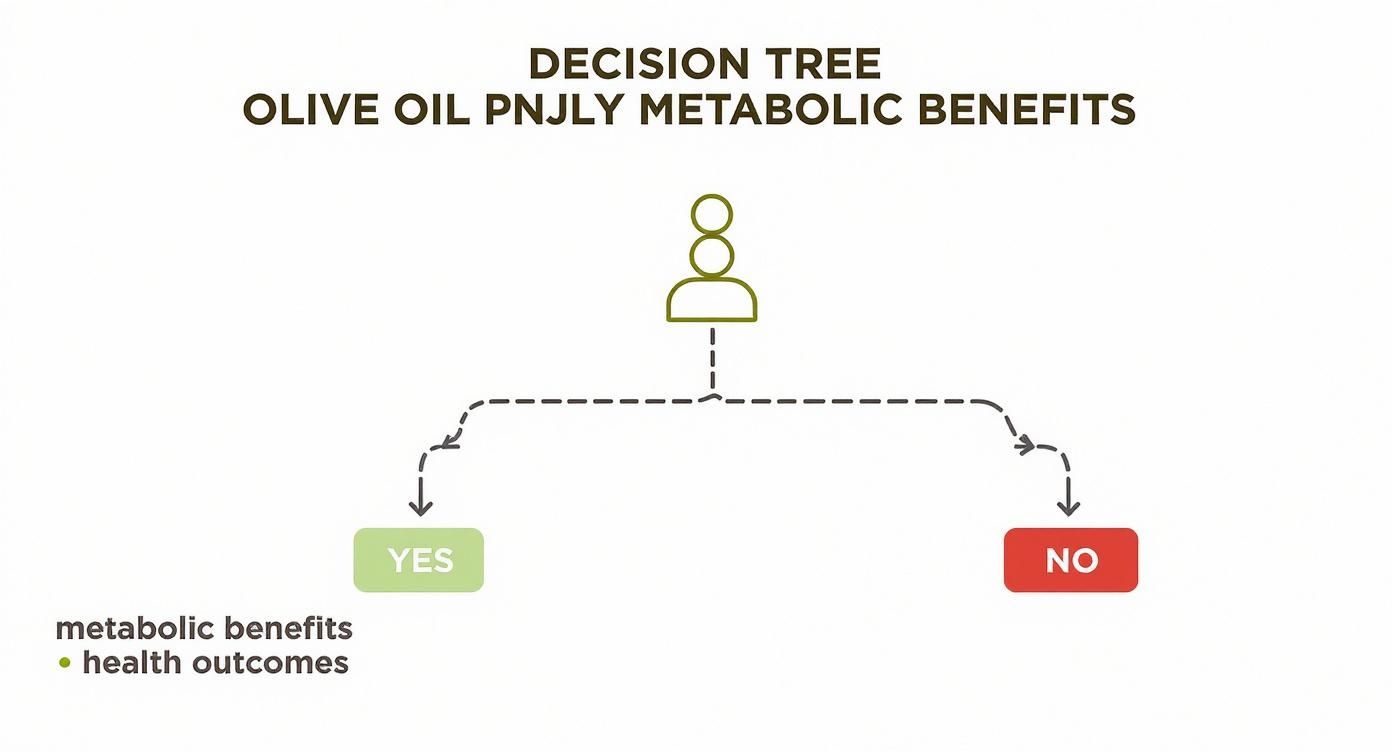
As you can see, making the effort to find authentic, high-polyphenol oil is a direct path to real health benefits. Settling for a generic alternative just doesn't offer the same metabolic advantage.
Decoding Your Olive Oil Label
Your mission is to find an oil that has protected its precious compounds from the orchard to the shelf. The table below cuts through the noise, showing you exactly what to look for and what to avoid.
| Indicator to Look For | What It Means for Polyphenol Content | Red Flag to Avoid |
|---|---|---|
| Harvest Date | The most critical piece of info. A recent harvest (within the last year) means higher polyphenol levels, as they degrade over time. | A "Best By" date without a harvest date. This can be misleading, as it's often two years from bottling, not harvesting. |
| Dark Glass or Tin | Shows the producer is serious about quality. Opaque packaging protects polyphenols from light damage. | Clear or light-colored glass bottles. Light is the enemy of fresh olive oil and will destroy its beneficial compounds. |
| Olive Cultivar/Varietal | Listing the specific olive type (e.g., Coratina, Picual, Moraiolo) shows pride and transparency. Some varietals are naturally richer in polyphenols. | Vague terms like "Pure Olive Oil" or "Light Olive Oil." These are often refined oils with very few polyphenols left. |
| "Extra Virgin" Status | This is the minimum standard. It means the oil is unrefined and extracted without chemicals, which is necessary to preserve polyphenols. | Any other grade like "Pure," "Light," or just "Olive Oil." These are refined and have been stripped of their health benefits. |
Remember, the concentration of these beneficial compounds can vary dramatically—from as low as 50 mg/kg to well over 1,000 mg/kg. As a helpful benchmark, the EU Health Claim established in 2012 requires a minimum of 250 mg/kg for an oil to make official statements about its health benefits.
Trust Your Senses: The Ultimate Test
Once you’ve bought a bottle and opened it at home, your own palate becomes the most reliable tool you have.
The signature of a powerful, polyphenol-rich olive oil isn't a mild, smooth taste. It's a bold, assertive flavor. You're looking for a distinct bitterness on your tongue and a peppery kick in the back of your throat that might even make you cough.
That pungent, peppery sensation is the taste of oleocanthal, one of the most powerful anti-inflammatory polyphenols in olive oil.
If an oil tastes bland, buttery, or greasy, it’s a sure sign that the health-giving compounds are either gone or were never there to begin with. Learning to appreciate this robust flavor is what turns you from a hopeful shopper into a confident buyer who knows exactly what you're paying for.
For a deeper dive into all the factors that impact potency, check out our complete guide to olive oil polyphenol content.
Making the Most of Your Liquid Gold
https://www.youtube.com/embed/riFXWwL6zdM
Getting a bottle of authentic, high-polyphenol olive oil into your kitchen is a great first step. But the real win is knowing how to unlock its full potential. This isn't just about cooking—it's about turning a simple ingredient into a powerful daily health ritual.
The secret isn’t in complicated recipes or a total diet overhaul. It’s all about consistency. To see the best results, start thinking of this potent oil less like a cooking fat and more like a daily supplement. Most of the studies showing significant health benefits involve a dose of one to two tablespoons (15-30 mL) per day. That’s the sweet spot to aim for.
Preserving Potency From Bottle to Body
The very compounds that make this olive oil so special are also quite delicate. To get the maximum benefit, you have to protect them. The simplest, most direct way to get your daily dose is straight off a spoon. It’s not for everyone, but it guarantees every single polyphenol makes it into your system, untouched by heat.
Of course, its bold, peppery flavor is also a gift in the kitchen. A brilliant strategy is to drizzle it over your meals after you’re done cooking.
- Finish Your Soups: A generous swirl of high-quality EVOO just before serving adds a fantastic layer of flavor and delivers its full anti-inflammatory punch.
- Dress Salads and Veggies: Use it as the star of a simple vinaigrette or pour it right over steamed greens. It elevates both the taste and the nutritional value.
- Enhance Your Proteins: A final drizzle over grilled fish, chicken, or even a simple bowl of beans preserves the oil's integrity while making the dish taste incredible.
This approach lets you enjoy the amazing taste without destroying the very compounds you bought the oil for in the first place. And while you're focused on olive oil, it's also a good idea to diversify your intake of beneficial polyphenols from other foods to round out your diet.
Defeating the Three Enemies of Olive Oil
Your oil has three mortal enemies: heat, light, and air. Each one works to break down the precious polyphenols, turning a potent health elixir into little more than ordinary cooking fat. Fortunately, winning this battle is simple if you just follow the rules.
The moment you open the bottle, the clock starts ticking. Oxygen rushes in, and the delicate polyphenols begin to break down. Proper storage isn’t just a suggestion; it’s an absolute necessity for protecting your investment.
Always keep your bottle sealed tightly and store it in a cool, dark place, like a pantry or cupboard. Never, ever keep it on the counter next to your stove. Even light from a window or bright kitchen bulbs can speed up decay. By mastering these simple principles, you ensure every drop you paid for remains as powerful and life-giving as the day it was pressed. To really nail this crucial step, check out this guide on proper olive oil storage.
Your Questions About High-Polyphenol Olive Oil, Answered
Even after you're sold on the benefits, a few practical questions always pop up. Getting straight answers is the last step before you can confidently bring this powerhouse food into your daily routine. Let's tackle the most common ones so you can make this liquid gold a seamless part of your life.
Can I Cook with High-Polyphenol Olive Oil?
This is probably the most important question of all. The short answer is, you can, but you probably shouldn't. While high-quality extra virgin olive oil has a smoke point that’s higher than most people think (around 410°F / 210°C), you'll destroy its most valuable assets when you heat it.
Think of it like this: cooking with a high-polyphenol oil is like taking a finely crafted Swiss watch into a sauna. It might come out looking okay, but its delicate inner workings will be compromised. The heat breaks down the very polyphenols that deliver all those incredible antioxidant and anti-inflammatory benefits.
For maximum health impact, the best way to use it is as a finishing oil. Drizzle it over your food—salads, soups, roasted vegetables, even grilled fish—right before you eat. This way, you get all those fragile compounds intact and at their most potent.
How Much Should I Take Each Day?
The scientific evidence points to a daily dose of one to two tablespoons (15-30 mL) for real, noticeable health benefits. The key here is consistency. It helps to think of it less like a cooking fat and more like a daily nutritional supplement.
A steady, daily dose is far more effective for your long-term health than just using a large amount every now and then. It’s the cumulative effect of these powerful compounds day after day that really builds up your body's defenses over time.
What Does High-Polyphenol Olive Oil Taste Like?
If you're used to the bland, buttery stuff from the supermarket, the taste of a truly potent olive oil might catch you by surprise. A genuine high-polyphenol oil has a bold, complex flavor that is a direct reflection of its power.
There are two main things you're looking for:
- Bitterness: A distinct, pleasant bitterness that hits the sides of your tongue.
- Pungency: A peppery kick in the back of your throat that might even make you cough.
That peppery feeling is the calling card of oleocanthal, one of the most powerful anti-inflammatory polyphenols in the oil. It’s not a defect; it’s the taste of authenticity. If an oil tastes bland, it's almost a guarantee that it's low in polyphenols.
Is More Expensive Olive Oil Always Better?
Price isn't a perfect indicator, but there's a very strong link between cost and quality. Making a truly high-polyphenol olive oil is an incredibly labor-intensive and expensive endeavor.
It means harvesting olives when they are young and green, which gives a much lower yield of oil compared to harvesting them when they're ripe. It also requires immediate, state-of-the-art cold-pressing and special bottling to protect the oil from light and oxygen.
A cheap price tag is a massive red flag. It almost certainly means shortcuts were taken, and the polyphenol content is going to be low. The best producers are proud of their work and will be transparent, listing the polyphenol count (mg/kg) and harvest date right on the bottle—that's what justifies the premium you pay for a genuinely potent product.
At Learn Olive Oil, our mission is to cut through the confusion and help you discover the world of premium olive oil. From understanding labels to developing your palate, we provide the expert insights you need to make every drop count. Explore our guides and start your journey today.


Leave a comment