Why Blood Pressure Numbers Tell Your Heart's Story
Think of your body's circulatory system like the plumbing in your house. Your heart, the powerful pump, pushes blood, like water, through the pipes – your arteries – delivering essential oxygen and nutrients to every corner of your body. Blood pressure is simply the force of that blood pushing against the artery walls. And just like with your household plumbing, too much pressure can cause problems.
This pressure is measured using two key numbers: systolic and diastolic. The systolic reading (the top number) is like measuring the water pressure when the faucet is fully on, representing the pressure when your heart beats. The diastolic reading (the bottom number) is like measuring the pressure when the faucet is off, representing the pressure when your heart rests between beats. Take a look at this helpful illustration from Wikipedia:
The image clearly shows the normal blood pressure ranges and what levels are considered hypertension, or high blood pressure. Just like consistently high water pressure can damage pipes, consistently high blood pressure puts a strain on your heart and arteries. Over time, this can lead to serious health issues.
The Silent Threat of High Blood Pressure
One of the biggest dangers of high blood pressure is that it often has no noticeable symptoms. It’s often called "the silent killer" because many people don't realize they have it until they experience a significant health event, such as a stroke or heart attack. This is why regular blood pressure checks are so important. Think of them as routine maintenance for your plumbing, helping catch potential problems before they become major disasters.
The Ripple Effect on Your Health
The impact of high blood pressure extends far beyond just your heart. Remember our plumbing analogy? If the pressure is too high in the main pipes, it affects the entire system. Similarly, uncontrolled high blood pressure can damage the blood vessels that supply your brain, increasing your risk of stroke.
It can also harm your kidneys, potentially leading to chronic kidney disease. And the ripple effect doesn’t stop there. High blood pressure can contribute to vision problems and even erectile dysfunction. Understanding and managing your blood pressure is crucial for your overall well-being, not just your heart health. This is where exploring natural approaches, such as incorporating olive oil, becomes particularly interesting. It offers a potential way to support your cardiovascular health and overall wellness.
The Mediterranean Discovery That Changed Heart Medicine
This screenshot from Wikipedia provides a great visual of the Mediterranean diet. Notice how olive oil takes center stage among the plant-based foods, whole grains, and healthy fats. The pyramid structure cleverly shows us the ideal proportions of each food group, emphasizing the importance of olive oil in this healthy eating pattern.
In the 1960s, researchers began a study that would completely change how we think about heart health: the Seven Countries Study. This landmark research investigated the link between diet and heart disease across seven different populations, including the United States, Finland, and Italy. The results were surprising.
They discovered that people living near the Mediterranean Sea, particularly in Crete and parts of Italy, had remarkably low rates of heart disease, even though their diets were higher in fat. This puzzling finding became known as the Mediterranean Paradox.
Unraveling the French Paradox
This concept of a dietary paradox wasn't limited to just one region. Further research revealed a similar trend in other Mediterranean populations. The French Paradox, for example, described the low heart disease rates among the French, despite their cuisine being rich in saturated fats.
This led scientists to search for the protective elements within these diets. Olive oil, a staple of the Mediterranean diet, quickly emerged as a key suspect.
Olive Oil and Blood Pressure: The Early Studies
Important studies began to draw a clear connection between olive oil, blood pressure, and overall cardiovascular well-being. These studies weren't simply observational; they dug deep into the specific ways olive oil benefits our hearts. It turned out that extra virgin olive oil, in particular, is full of heart-healthy compounds.
From Cultural Tradition to Medical Recommendation
The traditional Mediterranean way of eating, with its focus on olive oil, offered a unique opportunity for researchers – a real-world, long-term experiment on the effects of diet. These time-honored eating habits, passed down through generations, had unintentionally been protecting people from heart disease for centuries.
Science has now confirmed the wisdom of these traditions, making the Mediterranean diet the gold standard for heart health. Olive oil is no longer just a delicious ingredient; it's a recognized tool for cardiovascular wellness. This rich cultural and scientific heritage emphasizes that olive oil is more than just a culinary staple; it's a time-tested element of a healthy lifestyle.
How Olive Oil Actually Works Inside Your Arteries
Imagine your arteries as a network of flexible pipes carrying blood throughout your body. When blood pressure increases, these pipes constrict, restricting the smooth flow of blood, much like squeezing a garden hose. This is where olive oil comes in, acting as a natural relaxant for your arteries.
The infographic below illustrates this process:
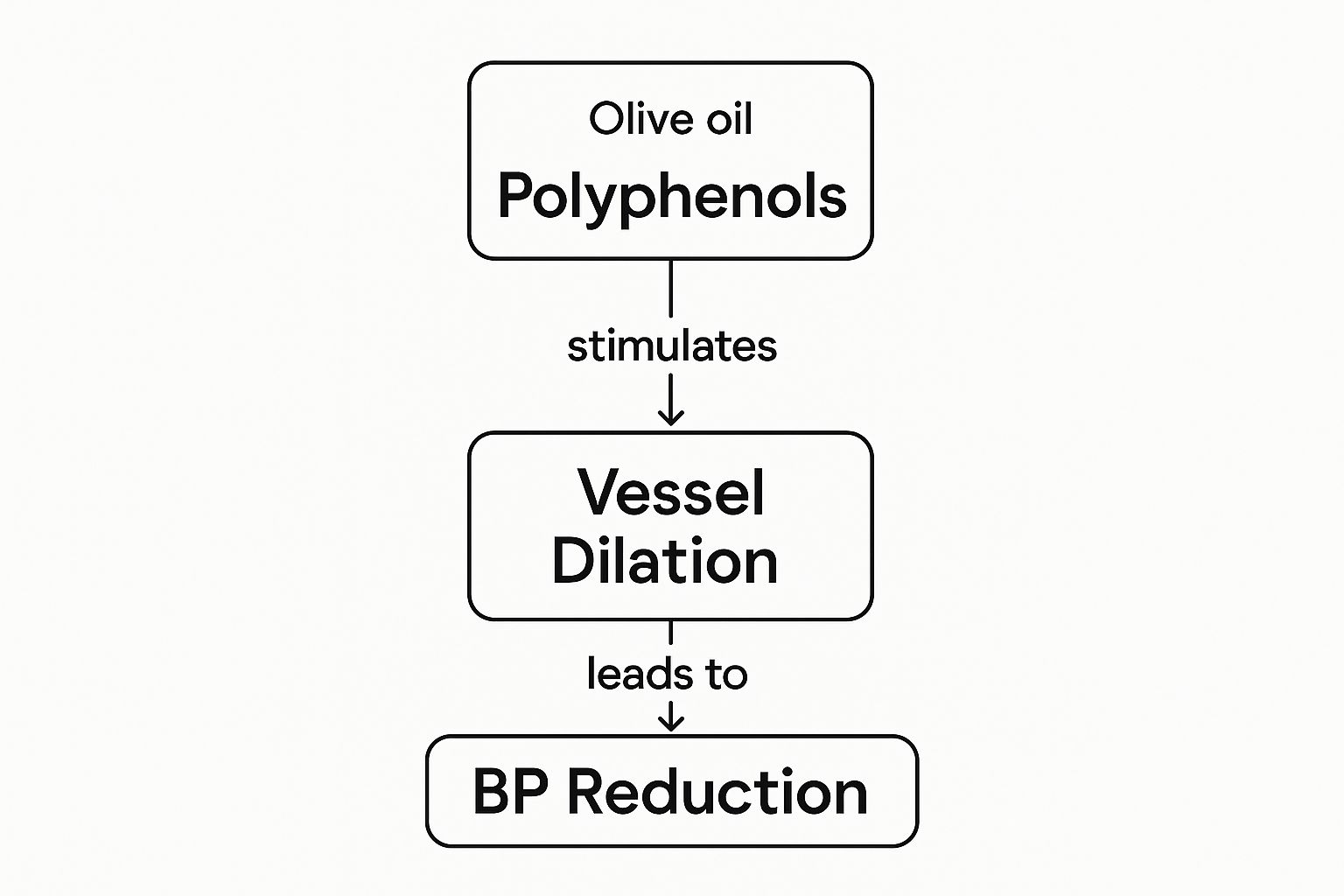
As you can see, components within olive oil encourage the blood vessels to dilate, easing blood flow and reducing pressure. This isn’t just a helpful visualization; it’s a process supported by scientific research.
The Power of Polyphenols
Polyphenols, powerful antioxidants abundant in extra virgin olive oil, are key to this process. Think of them as tiny communicators that interact with your artery walls, signaling them to relax and widen. This widening improves blood flow and lowers pressure, similar to widening a congested road to ease traffic.
Extra virgin olive oil (EVOO) contains higher concentrations of these helpful polyphenols than other types of olive oil.
Oleic Acid: The Flow Improver
Olive oil also contains oleic acid, a monounsaturated fatty acid. This beneficial fat contributes to the elasticity of your arteries, allowing them to expand and contract more effectively. It's like adding a lubricant to the inside of those pipes, allowing blood to flow more smoothly.
Hydroxytyrosol and Oleocanthal: The Inflammation Fighters
Hydroxytyrosol and oleocanthal are two other potent polyphenols in extra virgin olive oil. These compounds have significant anti-inflammatory effects. By reducing inflammation in the artery walls, they contribute to improved blood vessel function and subsequently, lower blood pressure.
A 2020 study demonstrated the positive impact of high polyphenol olive oil (HPOO) on blood pressure. Participants who consumed HPOO saw a reduction in systolic blood pressure (SBP) by 2.5 mmHg (peripheral) and 2.7 mmHg (central) over three weeks. You can delve deeper into the study findings here.
Let's take a look at a comparison of how olive oil stacks up against other oils in terms of blood pressure reduction:
To illustrate the impact of different oils on blood pressure, let's analyze some research data.
| Oil Type | Systolic BP Reduction (mmHg) | Study Duration | Participants |
|---|---|---|---|
| Extra Virgin Olive Oil (High Polyphenol) | 2.5 – 2.7 | 3 weeks | Varies by study |
| Other Olive Oils | Varies depending on polyphenol content | Varies by study | Varies by study |
| Other Vegetable Oils (e.g., Sunflower, Corn) | Limited or no significant reduction in many studies | Varies by study | Varies by study |
Note: The specific blood pressure reduction from olive oil can vary depending on factors like the individual, the olive oil's polyphenol content, and overall diet.
The table highlights the potential of extra virgin olive oil, particularly those high in polyphenols, to contribute to healthy blood pressure levels. While other oils may have some benefits, they often don't demonstrate the same significant impact.
Why Quality Matters
It's crucial to remember that the quality of olive oil significantly impacts its health benefits. EVOO’s extraction process—mechanical methods without heat or chemicals—preserves these vital polyphenols and other beneficial compounds. This preservation is why choosing EVOO is key for optimizing potential blood pressure benefits.
Real People, Real Results: What Clinical Studies Reveal
Olive oil and blood pressure. It's a connection you've probably heard about, but how much is hype and how much is hard science? The truth is, the research on olive oil's impact on blood pressure is surprisingly robust, grounded in real-world studies involving real people. Let's delve into some of the key findings that showcase just how impactful olive oil can be.
The Power of Extra Virgin Olive Oil (EVOO)
Imagine a six-month study where men and women with high blood pressure incorporated extra virgin olive oil into their daily diets. Now, picture the researchers’ astonishment when a significant portion of the participants – 35% – were able to stop taking their blood pressure medication entirely, all under the watchful eye of their physicians.
This wasn't just a minor tweak; it was a life-altering change for many. It highlights the potential of EVOO, not as a quick fix, but as a valuable component of a comprehensive approach to managing blood pressure.
Olive Oil's Edge Over Other Oils
We often hear about "healthy" oils, but how do they stack up against each other? Interestingly, studies comparing extra virgin olive oil to oils high in polyunsaturated fats (like sunflower oil) have revealed a clear winner. EVOO consistently demonstrates superior performance in lowering both systolic and diastolic blood pressure.
One comprehensive review of various studies cemented EVOO's position as a top contender in blood pressure management. A striking finding from one study showed that, again, 35% of participants incorporating EVOO were able to discontinue their hypertension medications. You can explore this fascinating research further here. The point isn’t to villainize other oils, but to understand the unique benefits EVOO offers for blood pressure control.
From Research to Real Life
These aren't just numbers on a page; they represent the real-life experiences of people looking for natural ways to manage their health. The research provides a glimpse into what's achievable with olive oil, helping us form realistic expectations and make informed decisions about our own well-being.
Consistency Across Diverse Groups
What’s even more compelling is the consistency of these positive results across different populations and study durations. This wide applicability reinforces the idea that olive oil’s benefits aren't confined to a specific group, but can be experienced by a broad range of individuals.
A Realistic Perspective on Olive Oil
While the research is undoubtedly exciting, it’s important to remember that olive oil isn’t a magical cure. Think of it as a powerful tool in your toolkit for managing blood pressure, best used in conjunction with other healthy lifestyle choices. These studies provide valuable context, guiding us toward making smart decisions that support our long-term cardiovascular health. By understanding the science and the experiences of others, we can make empowered choices about incorporating olive oil into our own lives.
Selecting Olive Oil That Actually Works for Your Heart
Not all olive oils are the same. When focusing on heart health, particularly blood pressure, olive oil quality becomes incredibly important. It's a bit like choosing the right medication. You'd want the most effective option, right? Choosing the right olive oil has a similar impact on your cardiovascular health.
Decoding Olive Oil Labels: A Guide to Quality
Olive oil labels can seem like a foreign language. But terms like "first cold-pressed" and "polyphenol content" aren't just marketing fluff; they tell a story about the oil's quality. "First cold-pressed" means the oil was extracted purely mechanically, without heat or chemicals, which preserves those good nutrients and polyphenols. The harvest date matters too. A recent date usually indicates a fresher, higher-quality oil.
Let's talk about polyphenols for a moment. These are powerful antioxidants, and olive oil is packed with them. Think of them as tiny bodyguards protecting your cells from damage. They're a big part of why olive oil is so good for you.
The Price of Health: Is Expensive Olive Oil Worth It?
Now, about that price tag. Is that expensive bottle of extra virgin olive oil really worth it? For blood pressure management, it often is. Higher quality extra virgin olive oil contains a greater concentration of beneficial compounds, especially those polyphenols we discussed. These polyphenols are key players in supporting healthy blood pressure. So, investing in quality can mean investing in your health.
Identifying Quality Through Sight and Taste
Beyond the label, you can actually see and taste quality. A good extra virgin olive oil often has a vibrant green-gold color and a peppery kick. That peppery taste? That's oleocanthal, a potent anti-inflammatory compound linked to blood pressure benefits.
Choosing Wisely: Olive Oil Quality Indicators for Heart Health
To help you navigate the options, here’s a quick guide to choosing the best olive oil for your heart:
Olive Oil Quality Indicators for Heart Health
| Quality Factor | What to Look For | Why It Matters | Red Flags to Avoid |
|---|---|---|---|
| Extraction Method | "First Cold-Pressed" | Preserves nutrients and polyphenols | "Expeller-Pressed" or any mention of heat or chemicals |
| Color | Vibrant Green-Gold | Indicates freshness and high polyphenol content | Dull or pale yellow |
| Taste | Peppery, Fruity | Sign of oleocanthal, a beneficial anti-inflammatory | Bland, rancid, or metallic taste |
| Harvest Date | Recent date | Fresher oil retains more beneficial compounds | No harvest date or a very old date |
| Label | "Extra Virgin Olive Oil" | Highest quality grade | "Pure Olive Oil" or "Olive Oil" (these are blends and lower quality) |
This table summarizes the key things to look for when choosing olive oil to support healthy blood pressure. Remember, these factors work together to indicate the overall quality and potential health benefits of the oil.
Trusted Sources and Brand Recommendations
Figuring out which brands consistently deliver quality can be tricky. Learn Olive Oil is a great resource for finding reputable producers and authentic extra virgin olive oil. It's a treasure trove of information to empower your olive oil choices.
Preserving the Goodness: Proper Storage and Freshness
Even the best olive oil can go bad if not stored properly. Keep it in a cool, dark place, away from heat and light. Heat and light can break down those beneficial compounds. Also, check that expiration date. While olive oil lasts a while, using it within a reasonable time ensures you’re reaping the full benefits.
The Problem of Fake Olive Oil: Protecting Yourself from Counterfeits
Unfortunately, fake olive oil is a real problem. Some oils are diluted with other, less beneficial oils, or they're not extracted properly. This is why knowing what to look for is so important. By becoming an informed consumer, you can avoid these counterfeits and ensure you’re getting the real deal, especially when it comes to managing your blood pressure.
Finding Your Therapeutic Dose Without the Guesswork
So, how much olive oil do you need to enjoy its blood pressure-lowering benefits? Let's translate the science into practical advice you can use in your own kitchen. We want to help you find your "therapeutic window"—the optimal amount where you get the most benefits without consuming too many calories.
Understanding the Dosage Sweet Spot
Research often uses about two tablespoons of extra virgin olive oil (EVOO) daily to achieve significant blood pressure reductions. This isn't a strict rule, but a good place to start. Think of it like finding the correct dose of any medicine—enough to be effective, but not so much that it causes unwanted side effects.
Addressing Fat Intake Concerns
Many people are concerned about consuming too much fat. Remember, not all fats are the same. EVOO is full of monounsaturated fats, considered beneficial for your heart. While EVOO does have calories, using it to replace less healthy fats (like saturated and trans fats) can be a smart dietary choice. It's all about making informed decisions and balancing your overall calorie intake.
Practical Incorporation Strategies
Adding two tablespoons of EVOO to your daily diet is easier than you might think. Here are some simple and delicious ideas:
- Drizzle it over salads: A classic and easy way to incorporate EVOO.
- Use it in cooking: EVOO is a stable oil for cooking at moderate temperatures.
- Dip bread in it: A traditional Mediterranean approach.
- Add it to soups or stews: A flavorful boost of EVOO.
Balancing Olive Oil With Your Broader Health Goals
Research shows that olive oil's impact on blood pressure is seen across various populations. For instance, a study found that both East Asian Chinese and European Caucasian participants who consumed EVOO experienced noteworthy drops in systolic blood pressure—4.3 mmHg over 24 hours and about 5.5 mmHg during the daytime over two weeks. You can explore more about this study here.
Adding olive oil to your diet should fit with your overall health goals. It's not about drastic changes, but about thoughtful substitutions and additions. Instead of butter on your toast, try EVOO. Instead of a creamy salad dressing, use a vinaigrette made with EVOO.
Making Olive Oil a Sustainable Habit
The key is to find ways to enjoy EVOO that you can easily maintain. This isn’t a strict medical regime, but a path to making sustainable changes that will benefit your heart health for years to come. It's about embracing a flavorful and heart-healthy addition to your everyday life.
Your Complete Action Plan for Heart-Healthy Success
Let's turn everything we've discussed about olive oil and blood pressure into a simple, actionable plan you can begin today. Forget restrictive diets and complicated routines – this is about manageable, long-term changes that fit easily into your life.
Phase 1: Getting Started (Weeks 1-4)
-
Choose Your Olive Oil: Extra virgin olive oil (EVOO) is your best bet. Look for the words "first cold-pressed" and a harvest date that's relatively recent. Investing in high-quality EVOO ensures a higher concentration of beneficial polyphenols, making it worthwhile. A good starting point for finding top-notch EVOO is Learn Olive Oil.
-
Start Slowly: Begin incorporating one tablespoon of EVOO into your daily diet. You can drizzle it on salads, dip whole-grain bread in it, or use it while cooking. Starting gradually gives your body time to adjust and allows you to discover different ways to enjoy the flavor.
-
Monitor Your Blood Pressure: It's important to regularly check your blood pressure, either at home or at the doctor's office. This establishes a baseline and allows you to track how your body responds to the added olive oil.
-
Consult Your Doctor: Especially if you're on blood pressure medication, talking with your doctor before adding olive oil to your routine is crucial. They can monitor your progress and adjust your medication if necessary.
Phase 2: Increasing Intake and Refining Your Approach (Weeks 5-8)
-
Gradually Increase to Two Tablespoons: If you're handling one tablespoon of EVOO well, gradually work your way up to two tablespoons, which is the amount often used in research studies.
-
Experiment with Different Uses: Have fun exploring different ways to use EVOO in your cooking! Marinades, soups, and roasted vegetables are just a few ideas to get you started. This helps you find ways to enjoy olive oil as a regular part of your meals.
-
Focus on Healthy Swaps: Replace less healthy fats, like butter or margarine, with EVOO. This boosts your EVOO intake and improves your overall diet.
-
Continue Monitoring: Keep an eye on your blood pressure and regularly check in with your doctor to discuss your progress.
Phase 3: Long-Term Integration and Maintenance (Week 9 and Beyond)
-
Maintain Consistent Intake: Aim for two tablespoons of EVOO each day as part of a balanced diet.
-
Prioritize Whole Foods: Olive oil is most beneficial as part of a healthy lifestyle. Concentrate on a diet rich in fruits, vegetables, whole grains, and lean proteins, similar to the Mediterranean diet.
-
Listen to Your Body: Pay attention to how you feel and adjust your olive oil intake accordingly.
-
Regular Check-ups: Continue regular blood pressure monitoring and check-ups with your doctor.
This action plan is meant to be a flexible guide, not a strict set of rules. Adapt it to your own needs and preferences. Start your journey toward better heart health with the power of olive oil today! Learn more about choosing, tasting, and using premium olive oil at Learn Olive Oil.
 Learn Olive Oil
Leave a comment