That beautiful bottle of olive oil sitting on your kitchen counter holds a dirty secret. Here is the simple truth: You are almost certainly using rancid olive oil and you don’t even know it. We have all become so accustomed to the flat, waxy taste of stale oil that we’ve forgotten what the real thing even tastes like.
The Unspoken Truth About Your Olive Oil
Imagine the aroma of a freshly baked loaf of bread. The crust is perfect, the inside warm and soft. Now, picture that same loaf one week later—stale, hard, and utterly lifeless. Olive oil undergoes a similar, though much quieter, transformation. It doesn’t just spoil overnight; it exists on a freshness continuum that begins the second the olive is pressed.
The vibrant, peppery, and grassy notes that define a truly magnificent oil gradually fade, replaced by something far less pleasant. This slow decay is what olive oil rancidity is all about. It’s a natural process, but it robs the oil of its soul—its flavor, its aroma, and all of its astounding health benefits. Getting a handle on this ticking clock is the first step toward reclaiming the quality you paid for.
Why Freshness Has Become a Foreign Concept
For most of us, especially in places like the United States, we’ve grown so accustomed to the taste of degraded products that it has become our baseline. The timeline for rancidity depends on a few key factors: storage temperature, exposure to light, contact with air, and the oil's own natural concentration of protective antioxidants.
This normalization of mediocrity means most people are completely missing out. They've never experienced the authentic, lively character of a truly fresh extra virgin olive oil. Instead, they're settling for a muted, greasy liquid that does a profound disservice to their cooking.
The greatest trick rancidity ever pulled was convincing the world it tasted normal. Once you taste truly fresh olive oil, you can never go back.
The Awakening Your Palate Deserves
This isn't about pointing fingers; it's about an awakening. Once you can recognize the telltale signs of rancidity, you are empowered to make dramatically better choices. You can protect not just your recipes but also your health, because the beneficial compounds in olive oil are the first casualties of its decay.
Before we dive into how to spot a bad oil, it helps to understand what this liquid gold is actually made of. To learn more, check out our guide on what olive oil is made of. This knowledge will transform you from a passive consumer into an informed connoisseur, ready to enjoy olive oil exactly as nature intended.
How to Identify Rancid Oil in Seconds
First things first: forget the "Best By" date printed on the bottle. Think of it as a loose suggestion at best, not an ironclad rule. Your most reliable tools for detecting olive oil rancidity are your own nose and palate. They are far more accurate than any printed label.
Learning to trust your senses is the single greatest skill you can develop to avoid ruining a good meal with bad oil. It all comes down to a simple "sip and sniff" test. Once you know what to look for, the signs of rancidity aren’t subtle at all—they are glaring red flags.
This isn’t about becoming a sommelier overnight. It’s about learning to spot the obvious off-notes that scream “stale.”
The All-Important Sniff Test
The quickest and easiest check is to simply smell the oil. Pour a small amount into a glass, swirl it around, and take a good, deep whiff. A fresh, high-quality extra virgin olive oil should smell vibrant and alive. You might detect notes of fresh-cut grass, green apple, or even a peppery, herbal aroma. It smells clean.
Rancid oil is the complete opposite. It smells stale, tired, and lifeless. All those beautiful, fruity aromas are gone, replaced by something much less appealing.
A rancid oil smells like the past—like something forgotten in the back of a cupboard. It’s the smell of decay, not life.
Keep your nose tuned for these unmistakable scents of olive oil rancidity:
- Waxy Crayons: This is the dead giveaway. If your oil reminds you of a box of Crayola crayons, it has definitely oxidized.
- Stale Nuts: Think of old walnuts or that jar of peanut butter that’s been open for months.
- Damp Cardboard or Putty: Any kind of musty, flat smell is a sure sign the oil has turned.
If you smell any of these, stop right there. The oil is past its prime and has no place in your kitchen.
What Your Palate Will Tell You
If the oil passes the sniff test, it's time for a taste. Pour about a tablespoon into a small cup, warm it with your hands, and take a sip. A fresh oil feels clean in your mouth and often delivers a peppery kick in the back of your throat. That tingle is a good thing—it’s a sign of healthy polyphenols doing their job.
A rancid oil, on the other hand, is a completely different experience. The flavor is often flat and unappealing, but the biggest clue is the mouthfeel. It leaves a greasy, slick, and fatty film on your tongue that just won't go away. It’s a heavy, unpleasant oiliness that fresh oil never has. You'll know it the second you feel it.
If you're interested in refining these skills, it's worth learning how the pros do it. You can find more formal techniques in our guide on how to taste olive oil.
Fresh vs Rancid Olive Oil Sensory Cues
To make things even simpler, here’s a quick reference table breaking down what your senses will tell you when you're checking your olive oil.
| Sensory Cue | Signs of a Fresh Oil | Signs of a Rancid Oil |
|---|---|---|
| Aroma | Clean, grassy, fruity, or peppery. | Like crayons, stale nuts, or damp cardboard. |
| Taste | Vibrant and clean, often with a bitter or spicy note. | Flat, greasy, and tastes like old, stale nuts. |
| Feel | Clean in the mouth with a peppery finish in the throat. | Leaves a heavy, greasy, and slick film on the tongue. |
By keeping these simple cues in mind, you can instantly spot olive oil rancidity without a second thought. You’ll never have to wonder if the oil you’re using is helping or harming your cooking—you'll just know. And your food will thank you for it.
The Three Enemies That Destroy Your Olive Oil
Every bottle of pristine olive oil, with its vibrant flavors and powerful health benefits, is in a constant battle for survival. It’s being attacked by three invisible forces, silent assassins working tirelessly to turn your liquid gold into a flavorless, unhealthy liability. These culprits are Oxygen, Light, and Heat.
Understanding how these three enemies cause olive oil rancidity isn't some complex chemistry lesson. It's a simple story of cause and effect. Once you see them for what they are, every storage rule will suddenly make perfect sense.
Enemy Number One: Oxygen, The Relentless Thief
The most persistent enemy of your olive oil is the very air we breathe. Oxygen is a relentless thief, constantly trying to steal electrons from the healthy fatty acids that make up your oil. This destructive process is called oxidation, and it’s the primary reason olive oil goes rancid.
Imagine the healthy fat molecules in your oil as perfectly stable little structures. Oxygen comes along, rips away a piece, and leaves the molecule damaged and unstable. This sets off a chain reaction, where newly damaged molecules start attacking others, spreading decay throughout the entire bottle.
This is exactly why a half-empty bottle of olive oil goes bad faster than a full one. With more air in the bottle, there are more oxygen molecules available to launch their attack. Each time you open the cap, you’re letting in fresh reinforcements for the enemy.
As you can see, knowing how to spot rancidity is a crucial skill for anyone who wants to enjoy quality oil, which is constantly under threat from these environmental factors.
Enemy Number Two: Light, The Accomplice
If oxygen is the thief, then light is its energetic accomplice. Light, especially the UV rays from the sun, provides the energy that supercharges the oxidation process. It’s like a shot of adrenaline for the oxygen molecules, making them far more aggressive and efficient in their attack.
Think of it this way: oxygen might be able to pick the lock on a fat molecule, but light kicks the door wide open. This is why you must never, ever buy olive oil packaged in a clear glass bottle. A clear bottle offers zero protection, leaving the oil completely exposed and vulnerable.
A dark green bottle, a tin, or a ceramic container acts like armor. It blocks the damaging light, slowing the process of olive oil rancidity down to a crawl. That dark packaging isn’t just for looks—it’s a critical line of defense. Storing your oil on a sunny windowsill is the fastest way to invite this enemy right into your kitchen.
Enemy Number Three: Heat, The Getaway Driver
The final member of this destructive trio is heat. Heat acts as the getaway driver, dramatically speeding up the entire criminal operation. For every 10°C (18°F) increase in temperature, the rate of oxidation roughly doubles.
Heat makes the molecules in your oil move faster and more erratically, which makes them easier targets for oxygen to attack. It accelerates that chain reaction of decay, turning a slow decline into a rapid downfall.
Storing your olive oil next to the stove might seem convenient, but it’s a death sentence for its flavor and health benefits. The constant exposure to warmth ensures it will become rancid in a fraction of the time.
Heat doesn't just warm your oil; it cooks the life out of it. It’s the fastest way to destroy the very qualities that make extra virgin olive oil so special.
It’s not just anecdotal, either. Research shows that storing olive oil at temperatures above 20°C (68°F) or under bright light can increase its oxidative degradation by over 50% compared to keeping it in a cool, dark place. The packaging is a crucial barrier, with dark glass and tins being the most effective guards against light-induced rancidity.
Understanding heat is also essential when you bring your oil to the stove. While good quality oil can handle the heat, it's important to know its limits. To learn more, you might be interested in our detailed guide on the olive oil smoking point.
By recognizing these three enemies—oxygen, light, and heat—you can finally understand the "why" behind proper storage. You’re not just following rules; you’re actively protecting your investment, your meals, and your health from the forces that cause olive oil rancidity.
Why Rancid Oil Is a Threat to Your Health
That off-putting taste on your tongue is more than just a ruined salad dressing—it’s a warning sign. When olive oil goes rancid, it doesn't just lose its beautiful flavor. It undergoes a troubling transformation, turning from a celebrated health food into something that quietly works against your body.
A spoiled flavor is just the beginning. The real problem with olive oil rancidity is what’s been lost and, more importantly, what’s been created in its place. The very compounds that make extra virgin olive oil a cornerstone of a healthy diet are the first casualties in the battle against oxidation.
The Disappearance of Protective Antioxidants
Fresh, high-quality extra virgin olive oil is loaded with polyphenols. These are the powerful antioxidants that give the oil its peppery kick and incredible anti-inflammatory properties. Think of them as bodyguards for your cells, protecting you from the daily damage that can lead to chronic disease.
But as soon as oxygen, light, and heat start their assault, these polyphenols sacrifice themselves to protect the fat molecules. They're the front-line soldiers, and in the fight to prevent rancidity, they get wiped out first. This means a rancid oil isn't just bland—it's nutritionally barren. All those health benefits you paid a premium for are gone.
The very compounds that fight disease are the first to be destroyed by rancidity. You're left with an empty shell of what was once a nutritional powerhouse.
What's left behind is far worse than just a neutral fat. The chemical decay of the oil actually creates something actively harmful.
The Creation of Harmful Free Radicals
Once those protective antioxidants are gone, the oxidation process runs wild, breaking down the healthy monounsaturated fats. This chemical breakdown creates new, damaging compounds, including free radicals. These are unstable, aggressive molecules that cause chaos inside your body.
Think of free radicals as tiny vandals. They race through your system, stealing electrons from healthy cells and setting off a chain reaction of damage called oxidative stress. This kind of cellular damage is a well-known contributor to a long list of health problems.
Here lies the great irony of using rancid oil. People choose olive oil to fight inflammation, but a rancid bottle will actively promote it. The very tool you’re using for your health has been turned into a weapon against it.
From Kitchen Staple to Health Hazard
This damage isn't just theoretical. Consuming oxidized fats is linked to a variety of health issues, essentially speeding up the aging process at a cellular level. It’s no longer a simple matter of a bad taste in your mouth.
Here’s what you’re putting into your body when you use rancid oil:
- Increased Inflammation: Free radicals are known to trigger inflammatory responses system-wide.
- Cellular Damage: They can damage cell membranes, essential proteins, and even your DNA.
- Nutrient Depletion: Rancid oil can even interfere with your body's ability to absorb certain vitamins.
This completely reframes the problem. Drizzling rancid olive oil over your food isn't just a culinary mistake; it's a health compromise you might be making every day without even realizing it. For a deeper dive, check out our complete guide on if it's safe to use expired olive oil and how it truly impacts your well-being.
Ignoring the signs of olive oil rancidity means you're not just missing out on the amazing benefits of fresh oil—you're actively exposing yourself to compounds that undermine your health. It’s time to stop thinking of rancidity as a kitchen inconvenience and start treating it as the legitimate health risk it is.
Your Action Plan to Keep Olive Oil Fresh
Alright, you now understand the enemies of olive oil and why rancidity is such a problem. But knowing is only half the battle. It’s time to put that knowledge to work with a straightforward strategy to protect every bottle you bring into your kitchen.
These aren't complicated chores. They're simple, powerful habits that create a solid defense plan, making sure every drop of oil you use is as vibrant, delicious, and healthy as it should be.
Master Your Kitchen Environment
The most critical decision you'll make for your olive oil is where it lives. We know that heat, light, and air are its mortal enemies. So, the absolute worst place to keep it is next to your stove or on a sunny windowsill. It might seem convenient, but you're effectively killing it slowly.
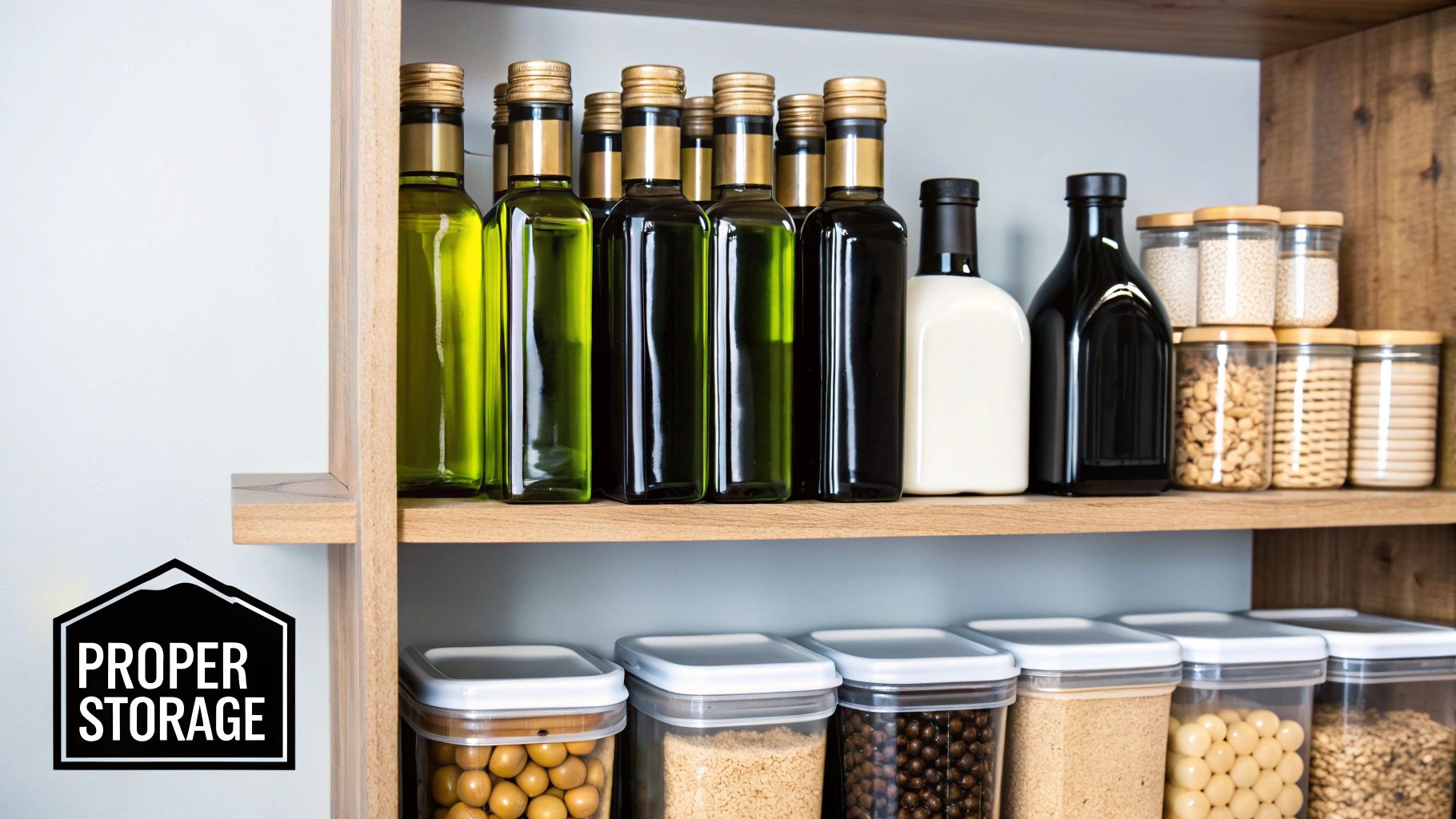
Find a cool, dark spot. A kitchen cabinet or pantry, far away from the oven and out of direct sunlight, is perfect. The ideal temperature is around 14-18°C (57-64°F). Consistency is what really matters, so avoid any location with dramatic temperature swings.
Think of your olive oil like a fine wine, not a can of cooking spray. It deserves to be stored with care to preserve its character and quality.
For a complete rundown of what to do, you can learn more about proper olive oil storage in our detailed guide. This one small change in location makes a huge difference in preventing olive oil rancidity.
Buy Smarter, Not Bigger
I know it’s tempting to grab that giant, economy-sized tin of olive oil. It feels like a great deal. But unless you’re running a pizzeria from your kitchen, it's almost always a mistake. Remember oxygen? Every time you open that big container, you're letting in more air, which just speeds up the clock on oxidation.
The better move is to buy smaller bottles more frequently. A smaller bottle means you’ll use it up relatively quickly after opening it—long before rancidity has a chance to creep in. This approach guarantees you’re using fresh, flavorful oil from the first pour to the last.
A few simple rules for buying:
- Choose the Right Size: Pick a bottle you can realistically finish within a month or two of opening.
- Opt for Dark Packaging: Never, ever buy olive oil in a clear glass bottle. Always reach for dark green glass, a tin, or another opaque container. Think of it as armor against light damage.
- Keep it Sealed: As soon as you're done using it, screw the cap back on tightly. This simple action minimizes exposure to air, the relentless thief of freshness.
Learn to Read the Label Like an Expert
Olive oil labels can be a bit of a maze, but there are a couple of key dates that will help you avoid bringing home a product that’s already past its prime. Most people look for a "Best By" date, but honestly, this date is often useless. It’s usually set two years from the bottling date, not the harvest, so it tells you very little about the oil’s true age.
The single most important date to find is the Harvest Date or Press Date. This is the truth-teller. It tells you exactly when the olives were picked and crushed, which is when the freshness clock really starts ticking.
Always look for the most recent harvest date you can find. A quality producer will display this information proudly because it’s a mark of transparency and a testament to their oil's freshness. If a bottle doesn't have a harvest date listed, be suspicious. It’s often a sign they have something to hide.
By adopting these three habits—storing it right, buying the right size, and reading the label correctly—you take full control. You’re no longer a passive victim of olive oil rancidity. You become the active guardian of your oil’s freshness, ensuring every meal gets the full benefit of this liquid gold.
A Few Lingering Questions About Olive Oil
Even with a solid grasp of how to spot and stop olive oil rancidity, some questions always seem to pop up. It’s a topic filled with old wives' tales and confusing advice, so let’s cut through the noise. Here are some clear, direct answers to the most common questions we hear.
Can Rancid Olive Oil Actually Make You Sick?
This is probably the most pressing question, and it’s a good one. The short answer is no, not in the way you'd get sick from food poisoning. A little bit of rancid oil in a salad dressing, for example, isn’t going to send you running to the bathroom.
The real issue is more subtle and long-term. As we've covered, rancid oil has been stripped of its amazing health benefits—all those powerful antioxidants are gone. In their place are harmful free radicals, which contribute to oxidative stress and inflammation throughout your body.
So, while it won't give you a stomach bug, it silently works against your health over time. Think of it this way: it's no longer a health food, it's just a bad fat.
Does Refrigerating Olive Oil Keep It Fresher?
It seems like a good idea, doesn't it? We stick other fresh foods in the fridge to make them last. For olive oil, though, it’s a hard no. While the cold does slow down the chemical process of oxidation, it creates a whole new set of problems.
When you chill olive oil, it gets cloudy and can even turn solid. That part is perfectly normal. The trouble starts when you take it out, use some, and put it back. This constant cycle of warming and chilling can cause condensation to form inside the bottle. Water is an enemy of olive oil, accelerating its breakdown and messing with the flavor.
The best place for your oil is where it’s always been: a cool, dark cupboard or pantry. That stable environment is exactly what it needs to stay fresh, no fridge required.
How Long Does Olive Oil Really Last Once Opened?
This is where you need to ignore the "Best By" date and look for the "Harvest Date." A top-notch extra virgin olive oil is at its peak for about 12 to 18 months from when it was harvested. But that clock starts ticking much, much faster the second you break the seal.
Once you open that bottle, oxygen is invited to the party. From that point on, you really want to try and use it up within 30 to 60 days. After a couple of months, even the most incredible olive oil will start to lose its vibrant flavor as oxidation does its work. This is why it’s always smarter to buy a smaller bottle you’ll finish quickly instead of a giant jug to save a few bucks. It’s no bargain if you end up pouring half of it down the drain.
Is Cloudy Olive Oil a Sign of Rancidity?
People often see cloudy oil and assume the worst, but it's almost never a sign of spoilage or olive oil rancidity. In reality, cloudiness usually points to one of two things:
- It's just cold: Like we mentioned, if the oil gets too chilly, some of its natural waxes start to solidify, making it look hazy. It’s completely harmless and will clear right up as it warms to room temperature.
- It's unfiltered: Some producers bottle their oil "Olio Nuovo" style, leaving in tiny bits of the olive fruit for a more rustic, punchy flavor. This cloudiness is intentional, though these oils do have a much shorter shelf life.
Rancidity is a chemical change you can’t see. It's all about smell and taste. Always trust your nose before your eyes.
Can You Cook with Extra Virgin Olive Oil?
Absolutely! The idea that you can't cook with extra virgin olive oil is one of the most stubborn kitchen myths out there. The whole debate centers on the "smoke point"—the temperature where an oil starts to break down and smoke.
A good-quality extra virgin olive oil has a smoke point somewhere between 190°C and 215°C (375°F and 420°F). This is plenty high for everyday cooking like sautéing and pan-frying.
The trick is to start with fresh, high-quality oil. A degraded, rancid oil will have a much lower smoke point and won't hold up to heat. But if you’re using the good stuff and aren't deep-frying at screaming-hot temperatures, EVOO is not only perfectly safe for cooking, but it also makes your food taste a whole lot better.
At Learn Olive Oil, we believe that understanding the journey from the grove to your table is the key to appreciating this liquid gold. With the right knowledge, you can confidently choose, store, and enjoy olive oil as it was meant to be—fresh, flavorful, and full of life. Discover the World of Premium Olive Oil and elevate your culinary experience today.


Leave a comment