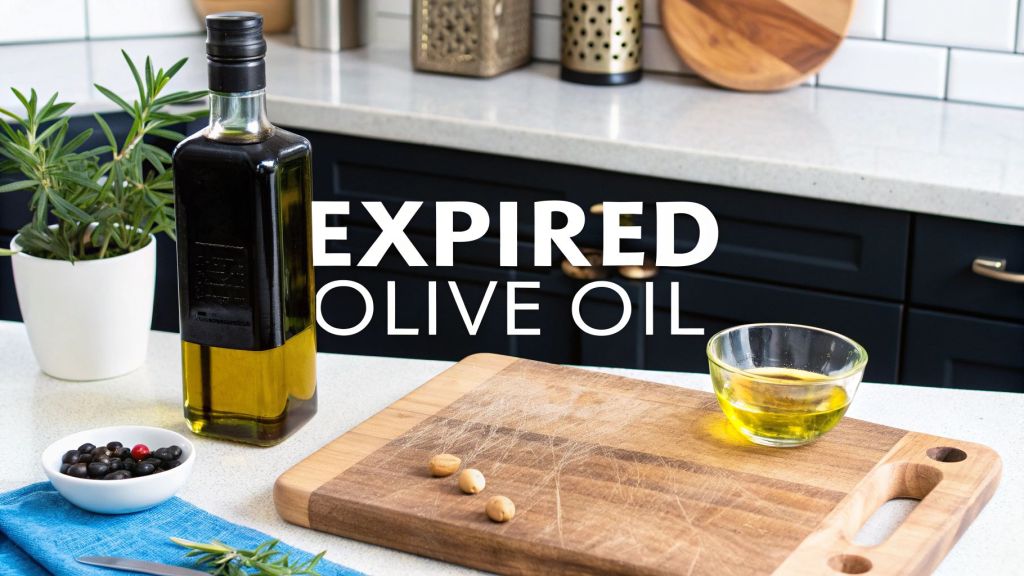
So, you found a forgotten bottle of olive oil hiding in the back of your pantry. The “best by” date looks like a distant memory from another lifetime. And now you’re wondering… can you still use it?
Let’s get right to it: Yes, you can use expired olive oil. It won’t send you to the hospital. It won’t grow scary bacteria. But that simple answer hides a more important truth.
That oil you’re holding is not the same liquid sunshine you once bought. It has lost nearly everything that made it special: the vibrant, peppery flavor, the fresh aroma, and the powerful health benefits that made it a legend of the Mediterranean.
What’s left in that bottle is, frankly, just flavorless, uninspired grease.
The Secret Life of a Forgotten Olive Oil Bottle
We’ve all done it. You buy a beautiful bottle of extra virgin olive oil, imagining the delicious dressings and perfectly finished dishes. But life gets in the way, and it gets pushed to the back, forgotten.
The question isn't just about safety—it's about the promise that’s been broken. You paid a premium for that bright flavor and its life-giving health properties. Once that “best by” date passes, the oil begins a slow, silent surrender to its three mortal enemies:
- Light: Like a photograph left in the sun, light mercilessly breaks down the delicate, beneficial compounds that make the oil a nutritional powerhouse.
- Heat: Storing your bottle next to the stove is like putting it on a fast track to ruin. Heat accelerates its decay with alarming speed.
- Oxygen: Every single time you open that bottle, a little puff of air gets inside, relentlessly chipping away at the oil’s integrity.
This process of decay, known as oxidation, is precisely why that date is stamped on the bottle. It’s not an expiration date like you’d find on milk; it’s the producer’s promise of peak quality.
Here’s the reality: an expired date signals a catastrophic loss of quality, not a risk of illness. The oil loses the very antioxidants and polyphenols that earned its reputation as a cornerstone of health, transforming it from a culinary champion into little more than empty calories.
The Unforgiving Timeline of Freshness
How long does the magic really last? As a rule of thumb, a high-quality, unopened bottle of extra virgin olive oil (EVOO) has a shelf life of about 18 months from bottling, provided it’s stored like a precious treasure.
But once you break that seal and introduce its greatest enemy—oxygen—the clock starts ticking with a vengeance. You have, at most, six months before oxidation truly conquers it, and the quality plummets off a cliff. This chemical assault not only destroys the healthy fats and antioxidants but also creates profoundly unpleasant off-flavors. While it’s highly unlikely to make you sick, you’re left with an oil that has squandered its nutritional value and tastes stale.
If you wish to dig deeper into the science, you can learn more about how long unopened olive oil lasts and the factors that dictate its fate.
How to Become Your Own Olive Oil Expert in 60 Seconds
Forget the date printed on the label. That little collection of numbers can’t tell you the whole story of what’s inside. The most reliable tools for judging the life left in your olive oil are the ones you were born with—your nose and your tongue. Learning to trust them is the secret to never being fooled by a "best by" date again.
Here's the simple method professionals use. Pour a small amount of oil into a glass. Cup it in your hands for a minute to gently warm it. This simple act awakens the aromas, releasing the secrets trapped inside.
Now, bring the glass to your nose and inhale deeply. What story is it telling you?
- Alive and Vibrant: A fresh, healthy oil will sing with notes of fresh-cut grass, green tomato, maybe even apple or artichoke. It smells alive.
- Dull and Dead: An oil that has gone bad will smell like a dusty, forgotten attic. If you get a whiff of old crayons, stale nuts, or waxy putty, I’m sorry to say it’s rancid.
Our guide on how to tell if olive oil is rancid can help you become a master at spotting these warning signs.
The Final Verdict from a Single Sip
Now for the moment of truth: the taste. Take a tiny sip and let it coat your tongue.
A high-quality, fresh oil will feel clean and bright in your mouth, often finishing with a peppery, slightly bitter kick at the back of your throat. That tingle is the calling card of healthy polyphenols—a sign of immense quality.
But if what you taste is a greasy, waxy, or utterly flavorless sensation, that oil has given up the ghost. It has lost the very soul that makes it a premium food.
Even the world's foremost authorities, like the International Olive Council, will tell you that sensory evaluation is the true test. They suggest using oil within 12 to 18 months, but they emphasize that your senses provide the final, most trustworthy verdict.
What’s Really Happening Inside That Aging Bottle
Ever wonder what’s actually going on inside that bottle as it sits on your shelf? It helps to think of extra virgin olive oil not as a pantry staple, but as a fresh, living product—more like a fruit juice than a cooking fat. And its vibrant, life-sustaining compounds were never meant to last forever.
From the moment the olives are crushed, a clock starts ticking. The oil’s three sworn enemies—oxygen, light, and heat—immediately begin their assault, triggering a process called oxidative degradation.
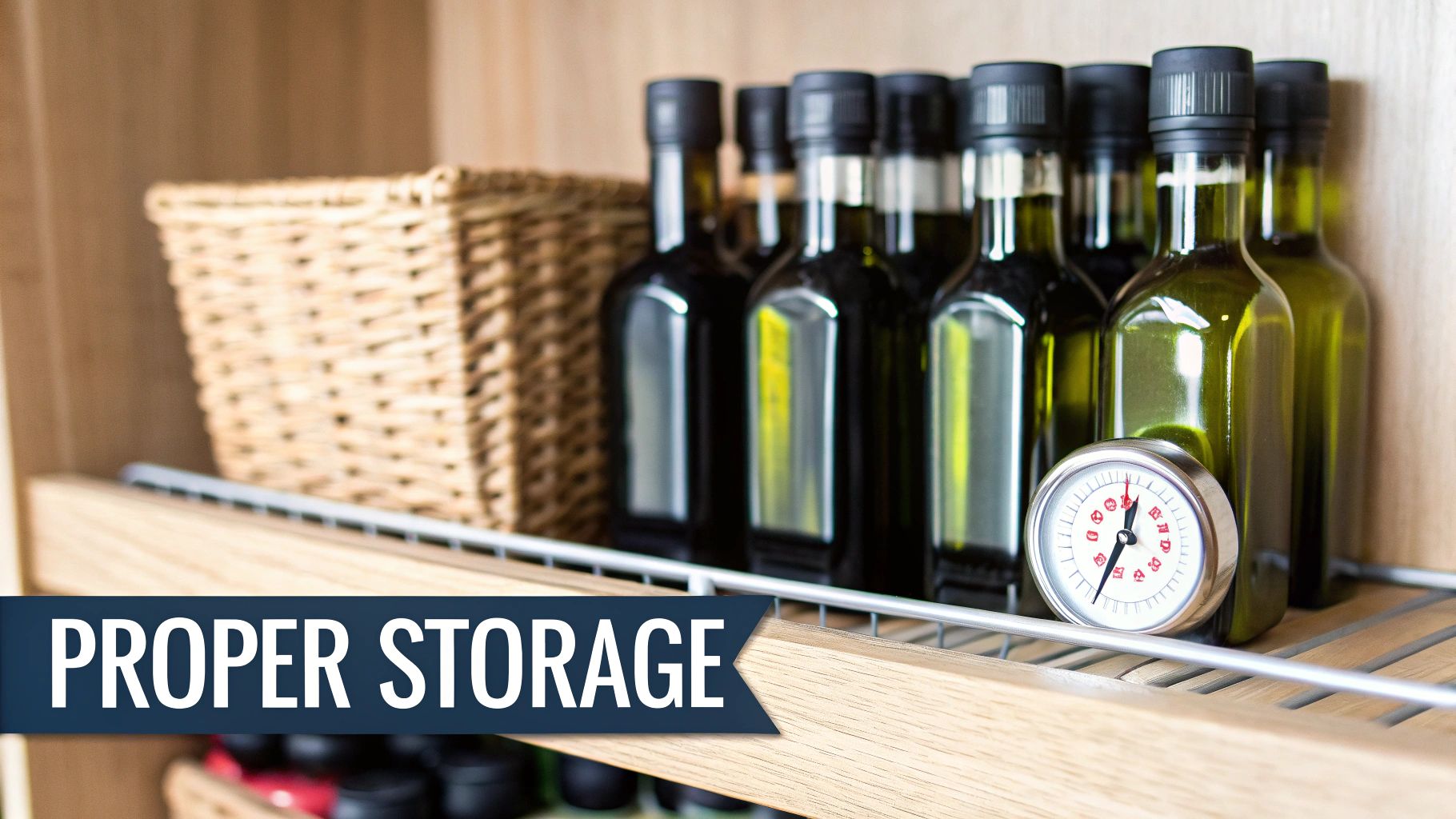
This relentless breakdown attacks the very essence of what makes extra virgin olive oil a nutritional titan. The first casualties are the healthy unsaturated fats and the potent antioxidants known as polyphenols—the very compounds responsible for EVOO’s signature peppery kick and legendary anti-inflammatory powers.
The Science of Decline
At a chemical level, the oil's structure is fragile, making it incredibly vulnerable. As it’s exposed to the elements, its molecular makeup changes, creating foul flavors and stripping away its nutritional might.
The result? Your brilliant, health-giving oil slowly morphs into a bland, featureless fat. Those bright, fruity notes vanish, replaced by a greasy, stale character. This is why knowing does olive oil go rancid? is about more than just taste; it’s about demanding the quality and health benefits you paid for.
The bottom line is this: time robs olive oil of its magic. The degradation isn't just a loss of flavor; it’s the systematic destruction of the very health benefits that make it a cornerstone of human well-being. This makes proper storage more than a suggestion—it’s an absolute necessity.
Don't Throw It Out! Ingenious Uses for Past-Its-Prime Olive Oil
You’ve done the sniff and sip test, and the verdict is in: your olive oil is no longer fit for your salad. But before you even think about pouring that liquid gold down the drain, stop. Just because its culinary career is over doesn't mean it’s useless.
Think of that bottle not as expired food, but as a high-quality, natural oil ready for a second career. An oil that’s no longer fit for your kitchen can become a surprisingly powerful ally all around your home. You're about to transform a pantry problem into a household hero.
From the Kitchen to the Garage
That slightly musty-smelling olive oil can work wonders where you'd least expect it. Its natural lubricating properties are second to none for silencing a squeaky door hinge or un-sticking a stubborn lock. Why reach for a can of foul-smelling chemicals when a natural, effective solution is sitting in your cabinet?
It’s also a fantastic rust-proofer. Wipe a thin coat of the oil onto your garden shears, shovels, or other metal tools. This simple act creates a protective barrier against moisture, helping to keep rust at bay and dramatically extending the life of your equipment.
Don’t let the word “expired” fool you. While its delicate flavor has fled, the oil's fundamental lubricating and protective qualities remain fully intact. It’s a powerful, multi-purpose tool waiting for a new mission.
This natural breakdown is all about exposure to the elements.
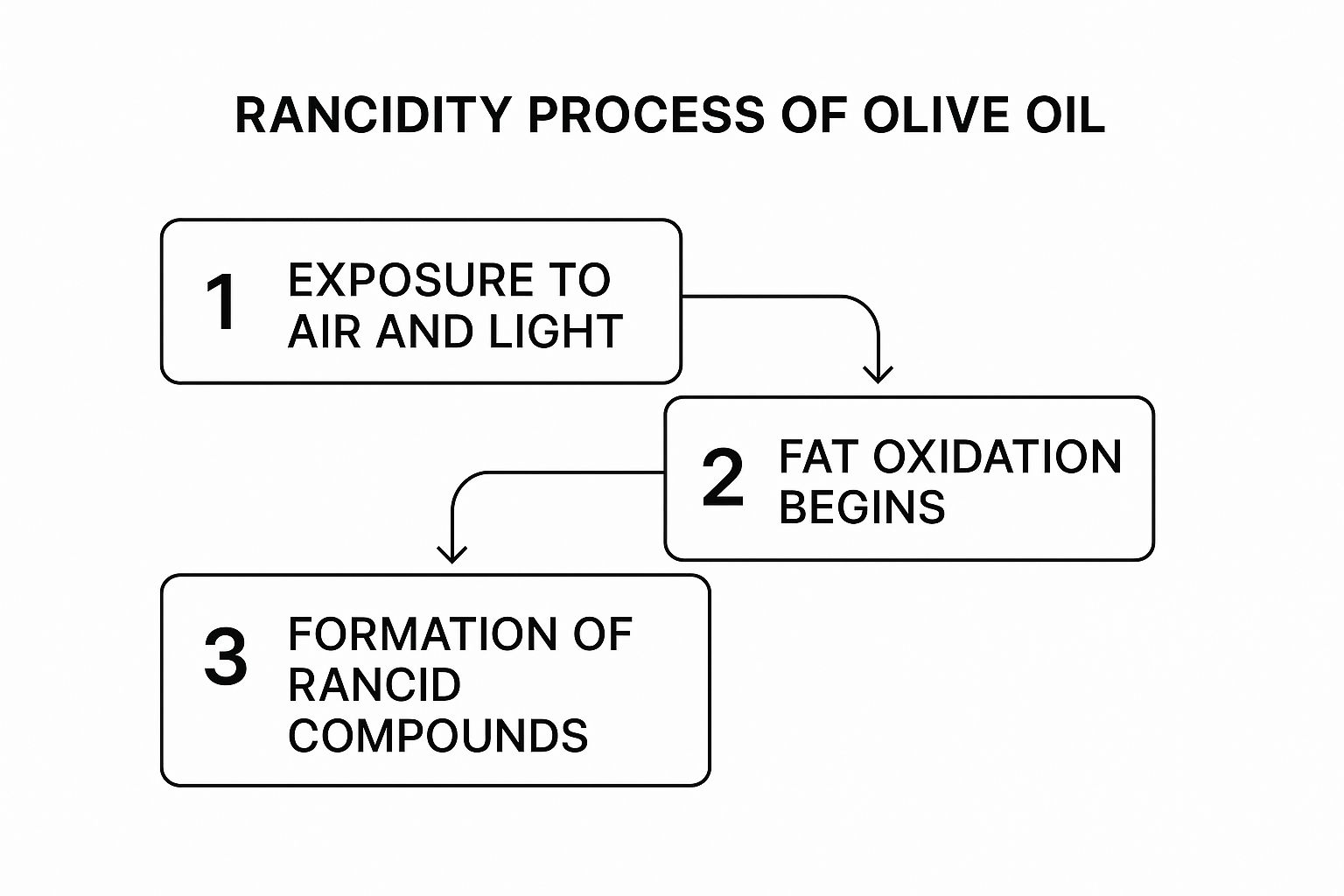
As you can see, everyday forces like air and light are the true villains that cause rancidity, not some flaw in the oil itself.
Give Your Home a Natural Luster
Back inside, that same oil can bring a beautiful, subtle shine back to your stainless steel appliances. Just buff them with a small amount on a soft cloth to erase fingerprints and leave a protective, streak-free gleam.
Here are a few more brilliant ways to put it to work:
- Condition Wood: Breathe new life into dry wooden cutting boards, utensils, or even furniture. Rub a small amount into the wood, let it penetrate for a few minutes, then wipe away the excess.
- DIY Furniture Polish: Mix the oil with a splash of lemon juice to create a simple, all-natural furniture polish that cleans, shines, and smells amazing.
- Remove Sticky Labels with Ease: A stubborn price tag or label residue doesn't stand a chance. Dab some oil on the sticky spot, let it sit, and the label will peel right off.
For even more inspiration, explore other extra virgin olive oil uses that go far beyond the kitchen. It’s all about a resourceful mindset that turns potential waste into something genuinely valuable.
How to Keep Your Next Bottle of Olive Oil Perfectly Fresh
The best way to deal with expired olive oil? Never let it happen in the first place. Protecting your oil’s freshness is surprisingly simple, but it demands you break a few common kitchen habits. Proper storage isn’t something you do later—it begins the moment you bring that new bottle home.
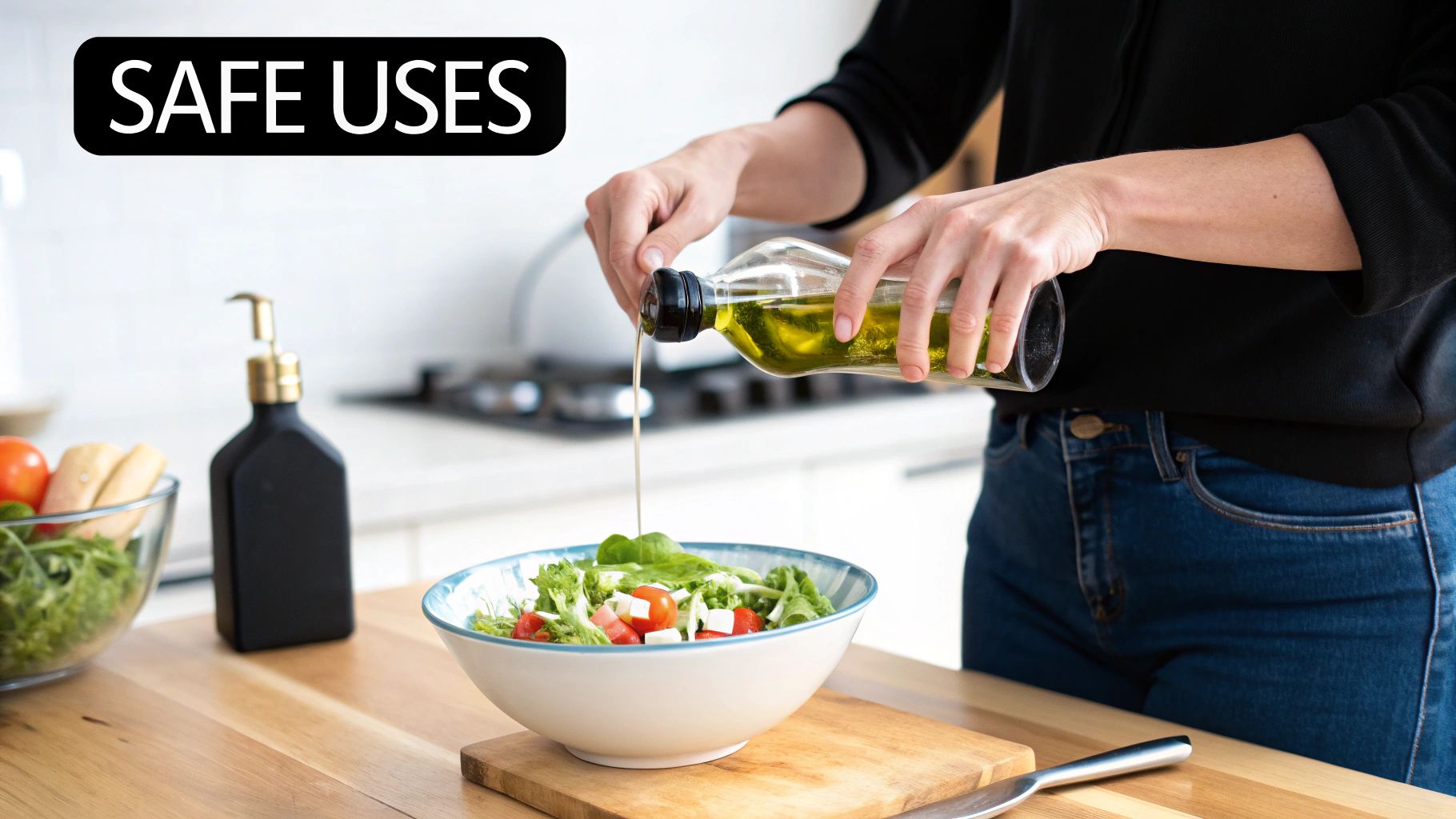
I know it’s convenient to keep your oil right by the stove. It’s also the absolute fastest way to murder a perfectly good bottle. Heat is olive oil’s public enemy number one, incinerating the delicate compounds that give it its glorious flavor and health benefits. Find it a home in a cool, dark place, like a pantry or a cabinet far from the oven’s reach.
Defend Against the Three Enemies
Think of yourself as the guardian of your olive oil. It is under constant attack from its three enemies—heat, light, and air. Your mission is to protect it from all three.
-
Live in the Dark: Light is a silent killer. It triggers a reaction that degrades the oil’s precious antioxidants. This is why you must only buy olive oil that comes in dark glass bottles or opaque tins. That packaging is its first and most important line of defense.
-
Seal It Tight, Every Single Time: Oxygen is the fuel for the fire of oxidation. Every time you leave the cap a little loose, you’re inviting the enemy inside to wreak havoc. Make it a sacred ritual to twist that cap on securely the moment you are done pouring.
The entire goal is to create a stable, protected fortress for your oil. A cool, dark pantry and a hermetically sealed cap are all it takes to dramatically extend its life and preserve the flavor and nutrition you paid for.
One final piece of wisdom: resist the siren call of that giant, economy-sized tin of olive oil, unless you’re feeding an army. It may seem like a bargain, but as you use the oil, you leave more and more space for destructive air inside the container.
It is far smarter to buy a smaller bottle you know you’ll use within a few months. That way, every drop is as fresh, potent, and delicious as the day it was pressed. For more insider tips, check out our definitive guide on how to store olive oil after opening.
A Few Lingering Questions About Olive Oil
Let's clear up some of the most common questions that arise when you’re staring at that bottle in your pantry. Here are some quick, no-nonsense answers.
Can I Still Cook With Expired Olive Oil?
Technically, yes. You can use expired olive oil for cooking, and it won't make you sick. But the more important question is, should you?
When olive oil turns, it becomes rancid. A rancid oil will impart a stale, crayon-like flavor that can utterly ruin a dish you’ve worked hard on. While you might get away with it for high-heat cooking where the flavor is masked, I would never use it in a dressing or as a finishing oil. Its foul taste will be front and center, and it will be a disaster.
Is the Refrigerator a Good Place to Store Olive Oil?
This is a widespread myth, but storing olive oil in the fridge is a terrible idea. The cold temperature causes the natural waxes in the oil to solidify, which is why it becomes cloudy and thick.
This constant cycle of chilling and returning to room temperature can also create condensation inside the bottle. Water is a mortal enemy of oil quality. Avoid the fridge at all costs.
A cool, dark place like a pantry or cabinet is always the superior choice. A stable, consistent temperature preserves the oil's integrity far better than the cold shock of a refrigerator.
Will I Get Sick From Old Olive Oil?
Relax. It is virtually impossible to get sick from old olive oil. Unlike foods that can spoil with dangerous bacteria, olive oil simply degrades through the natural process of oxidation.
This process breaks down the healthy fats and antioxidants, which is what creates that unpleasant rancid taste. However, it does not create the kinds of pathogens that cause food poisoning. The absolute worst you’ll experience is a bad taste in your mouth.
At Learn Olive Oil, we believe that to know your olive oil is to love it. From the ancient groves to your kitchen table, we're here to make that journey simple and delicious. Discover more expert insights and elevate your appreciation for this liquid gold at https://learnoliveoil.com.


Leave a comment