Imagine, for a moment, that you could capture a story in a bottle. Not just any story, but one filled with centuries of tradition, the soul of a sun-drenched Italian hillside, and the pride of a family that has tended the same olive groves for generations. That, my friend, is what true imported Italian olive oil is. It's not merely a condiment; it's liquid history.
What Defines Authentic Italian Olive Oil
Picture yourself standing in a sun-drenched grove in Sicily, the air thick with the scent of olives right before the harvest. That feeling—that specific sense of place and time—is the essence of authenticity. It’s an experience that simply can't be faked.
But in a market flooded with clever labels and vague promises, how do you find the real deal?
This is where our journey begins. We're going to cut through the noise and show you what sets genuine Italian olive oil worlds apart from mass-produced imitators. It's about so much more than a "Product of Italy" stamp, which, believe it or not, can be incredibly misleading.
Real quality is rooted in specific olive varieties, protected terroirs, and the passed-down wisdom of generations.
The Myth of the Single Italian Flavor
First things first, let's shatter a colossal myth. There is no single "Italian" flavor. Italy's breathtakingly diverse geography, from the Alpine foothills to the sun-baked islands, creates a spectacular spectrum of oils, each with its own distinct personality.
An oil from the breezy coastal groves of Liguria will be delicate and sweet. In contrast, one from the rugged hills of Puglia might hit you with a robust, peppery kick. You see, authenticity isn't about one expected taste; it's about honestly reflecting a specific place. It’s the difference between a generic greeting card and a heartfelt, handwritten letter.
The core of authenticity lies in traceability and terroir. A genuine imported Italian olive oil should be traceable back to a specific estate or mill, showcasing the unique character imparted by its native soil and climate.
This sacred bond between the land and the final flavor is absolutely everything.
Beyond the Bottle: A Story of Origin
An authentic bottle of olive oil tells you its life story. It speaks of the family that tended the groves, the specific olives used (like a Coratina, Frantoio, or Taggiasca), and exactly when the fruit was picked. These details are the hallmarks of a producer who takes immense pride in their craft.
To get the full picture of olive oil authenticity, it helps to know a bit about the certifications and labeling laws designed to protect these regional treasures.
When you're shopping, look for these key indicators of a genuine product:
- Estate Name: The oil comes from a specific farm or producer, not a massive, anonymous blending facility.
- Harvest Date: Freshness is king. This date tells you when the olives were actually picked, which is a much better indicator of quality than a generic "best by" date.
- Olive Varietal(s): Knowing the type of olive gives you a fantastic clue about the oil's potential flavor profile.
It’s time to look past the marketing hype. This guide will give you a clear understanding of the character, tradition, and uncompromising quality that defines Italy's most famous export. You'll soon be able to spot the real thing, ensuring every bottle you bring home is a true taste of Italy.
A Flavor Tour of Italy's Olive Oil Regions
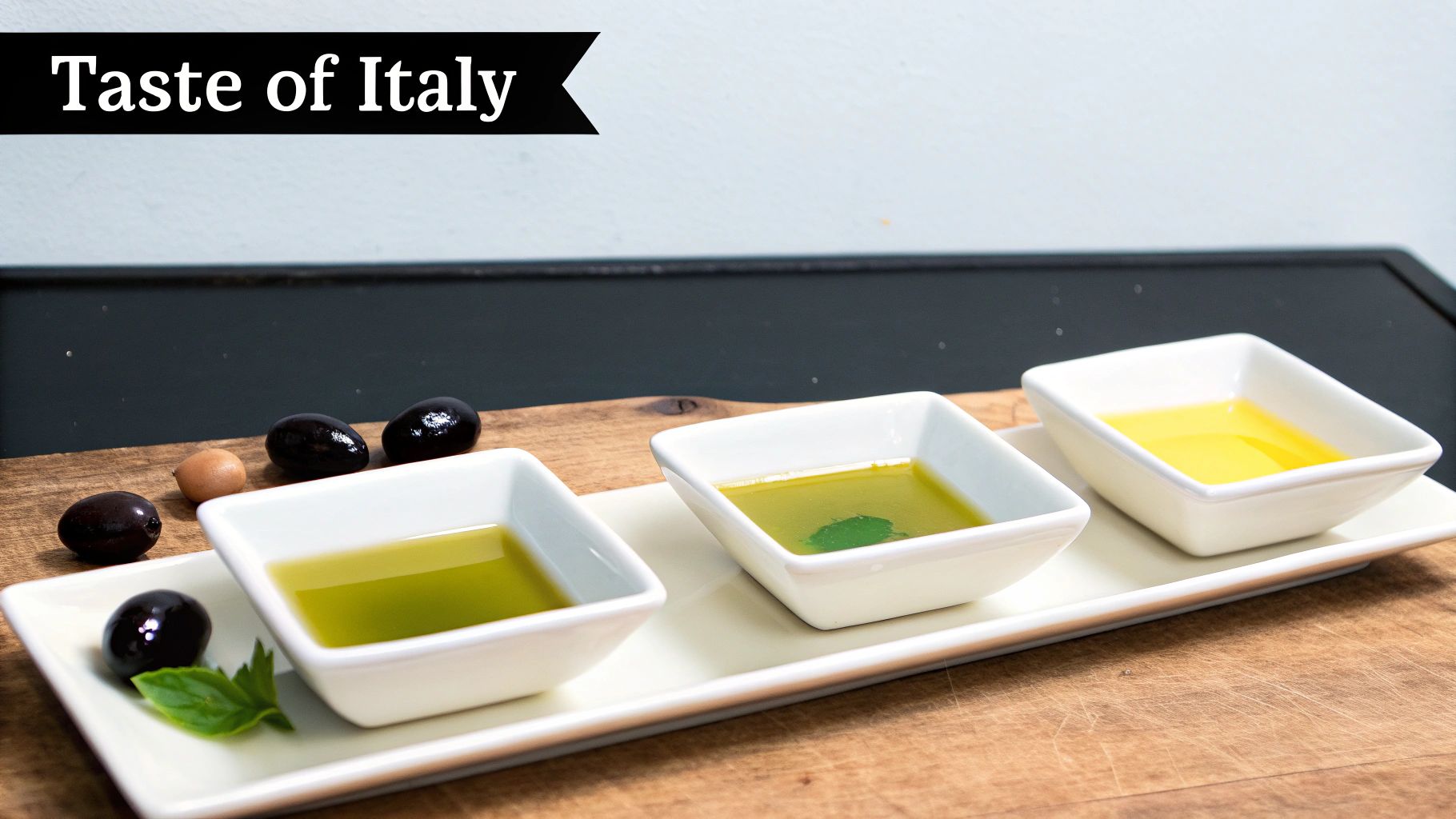
If you truly want to understand imported Italian olive oil, you must first understand the land itself. Italy isn’t one monolithic place. It’s a patchwork of fiercely proud regions, each with its own culinary soul. The olive oil from one valley can be as different from its neighbor's as night and day, all thanks to the unique sun, soil, and ancient trees that grow there.
Let’s take a journey through Italy's most celebrated olive oil territories. We'll travel from the breezy, cooler north to the sun-baked south, uncovering how climate and native olive varieties create an incredible spectrum of flavors.
The Delicate and Sweet North
We begin our tour up north in Liguria, the crescent-shaped region tucked between the mountains and the sea. This is the home of the Taggiasca olive, which produces an oil that completely shatters the stereotype of aggressive, peppery Italian oils.
Ligurian oils are golden, buttery, and surprisingly sweet, with gentle hints of almond and pine nut. They are the perfect choice for delicate dishes where you don't want the oil to steal the show—think fresh seafood, homemade pesto, or a drizzle over mild cheeses. Their subtlety is their strength; these oils whisper rather than shout.
The Green and Peppery Heart
Moving south, we arrive in the rolling hills of Tuscany, the postcard image of the Italian countryside. The oils here are just as iconic. Made mostly from Frantoio, Leccino, and Moraiolo olives, Tuscan oils are famous for their brilliant green color and bold, assertive character.
Here is where you'll discover those classic grassy aromas, notes of artichoke, and a distinctive peppery finish that catches you in the back of the throat. That spicy kick, called pizzico in Italian, is a tell-tale sign of high polyphenol content—a hallmark of freshness and supreme quality. These powerful oils are a perfect match for hearty Tuscan food like grilled steak, bean soup, and crusty bruschetta.
The flavor of an olive oil is a direct reflection of its terroir—the unique alchemy of soil, climate, and topography. A Taggiasca olive grown in the rocky hills of Liguria will produce a profoundly different oil than a Coratina olive baked by the southern sun of Puglia.
The Italian olive oil industry is nothing if not resilient. One recent report noted that climate challenges caused production to drop by 24%. And yet, in that same period, Italy exported a staggering 344,000 tonnes of olive oil. This highlights its dual role as both a producer of world-class oils and a master blender for the global market.
The Robust and Fruity South
Our final destination is the sun-drenched south, where Puglia and Sicily reign as the powerhouses of Italian olive oil production. The intense heat and arid landscape here create oils that are bold, fruity, and unapologetically powerful. Puglia, the "heel" of Italy's boot, is legendary for its Coratina olive, which yields an intensely fruity and bitter oil with a serious peppery punch.
Down in Sicily, oils made from Biancolilla or Nocellara del Belice olives are just as intense but often carry unique notes of green tomato, citrus, and wild herbs. These are true finishing oils, designed to make a statement. Drizzle them over grilled vegetables, robust pasta dishes, or a simple slice of bread to appreciate their magnificent character. To dive deeper into these regions, check out our guide on olive oils from Italy.
Decoding the Language on the Label
Walking down the olive oil aisle can feel like trying to decipher an ancient secret code. Bottles whisper promises of "First Cold-Pressed," "Light," and "Pure," while others flash mysterious golden seals. How do you separate the truth from the marketing tricks?
It’s actually simpler than you think. Once you learn to crack the code, you'll see right past the fancy packaging and understand the true story of the imported Italian olive oil inside the bottle.
The All-Important Grade
The first and most critical term to look for is Extra Virgin Olive Oil (EVOO). This isn't just a pretty name—it’s the highest grade possible, a legally defined standard that signals unimpeachable quality.
Think of it as getting a prime cut of steak instead of a lesser one. To earn the "Extra Virgin" title, an oil must pass two strict tests: one in a lab and one with human tasters. Chemically, its free fatty acid level must be incredibly low, under 0.8%. This is a non-negotiable scientific measure of quality.
Then comes the sensory panel. A team of certified tasters must agree that the oil has zero defects and tastes fruity. This two-part process is your guarantee that you’re getting pure olive juice, extracted without chemicals or high heat.
Extra Virgin is the only grade that guarantees the oil was made from fresh, high-quality olives. Anything less—like 'Virgin,' 'Pure,' or 'Light' olive oil—has been refined, processed, or made from inferior fruit, stripping it of the very flavor and health benefits you're looking for.
To make this even clearer, let's break down the main grades you'll find on a shelf.
Understanding Italian Olive Oil Grades
The different grades can be confusing, but they boil down to a few key distinctions in how the oil is made and what it's best for. This table cuts through the noise.
| Grade | Acidity Level | Production Method | Best For |
|---|---|---|---|
| Extra Virgin (EVOO) | Below 0.8% | Mechanical extraction, no heat/chemicals | Drizzling, dressings, dipping, finishing |
| Virgin Olive Oil | Below 2.0% | Mechanical extraction, has slight defects | General cooking, sautéing |
| "Pure" or "Light" Olive Oil | N/A | Refined with chemicals/heat, mixed with some virgin oil | High-heat cooking, frying, baking |
| Olive Pomace Oil | N/A | Extracted from leftover pulp with solvents | Industrial use, not recommended for home cooking |
As you can see, "Extra Virgin" stands in a class of its own. It's the only one that delivers the full flavor and health benefits that make Italian olive oil so special.
Dates That Actually Matter
Here is a secret that separates the novice from the pro: ignore the "Best By" or "Expiration" date. These are often just arbitrary numbers, typically set two years from the bottling date, not the harvest. The single most important date on any bottle of good olive oil is the harvest date.
Freshness is everything. Olive oil is a perishable fruit juice, and its vibrant flavors and powerful antioxidants start to fade right after it's made. The harvest date tells you exactly when the olives were picked and pressed, giving you the real story of its age. Always, always choose the most recent harvest year you can find.
Seals of Approval That Guarantee Origin
Beyond the grade and date, certain seals provide an ironclad guarantee of where the oil comes from. These aren't just for show; they are legally protected designations that tie the oil to a specific place, ensuring the olives were grown, pressed, and bottled right there.
- DOP (Denominazione di Origine Protetta): This is the gold standard. A DOP seal means every single step of the process—from the tree to the bottle—happened within a specific, designated geographical area. It’s a promise of pure, unadulterated local character.
- IGP (Indicazione Geografica Protetta): This seal is a bit more flexible but is still a fantastic sign of quality. An IGP certification guarantees that at least one phase of production took place in a specific Italian region.
These seals are your best defense against misleading labels that say "Packed in Italy" but use olives sourced from all over the Mediterranean. True quality is tied to a place, and these certifications are the proof. For a deeper dive, you can explore more about understanding olive oil labeling and what each term means.
By focusing on these three key things—the Extra Virgin grade, a recent harvest date, and a DOP or IGP seal—you can instantly cut through the confusion. You're no longer just a shopper; you're an informed buyer who can spot the true liquid gold on any shelf.
How to Taste Olive Oil Like a Professional
Are you ready to really taste olive oil for the first time? I’m not talking about just dipping a piece of bread. I'm going to reveal how to unlock the incredible world of flavor and aroma hiding inside a bottle of high-quality imported Italian olive oil.
Professional tasters have a simple but powerful technique up their sleeves called strippaggio. The whole point is to get the oil's aromatic compounds airborne, releasing them so you can capture every last nuance. It might feel a little odd at first, but trust me, this is the key to truly understanding what's in your glass.
The Professional Tasting Method
When we taste oil this way, we're not eating—we're evaluating. Start by pouring a small amount, maybe a tablespoon, into a little glass. A small wine glass or even a shot glass will do the trick.
Now for the ritual. It's just three simple steps that will change the way you think about olive oil forever.
-
Warm the Oil: Cradle the glass in one hand and place your other hand over the top to trap the aromas. Swirl it gently for about a minute. The heat from your hand will warm the oil just enough to help its delicate scents come alive, much like you'd warm a glass of fine brandy.
-
Smell Deeply: Lift the glass to your nose, uncover it, and take a good, deep sniff. What do you get? Is it fresh-cut grass? Green almonds? Maybe tomato leaf? A truly great oil will smell clean, green, and vibrant.
-
Slurp with Gusto: This is the strippaggio moment. Take a tiny sip, and with your teeth slightly together, suck in a quick burst of air through your mouth. It’s a sharp, noisy slurp that sprays the oil across your entire palate, letting you taste all its complexities at once.
This infographic gives you a great visual of the quality grades you'll learn to spot through tasting, from the peak of Extra Virgin down to the lesser oils.
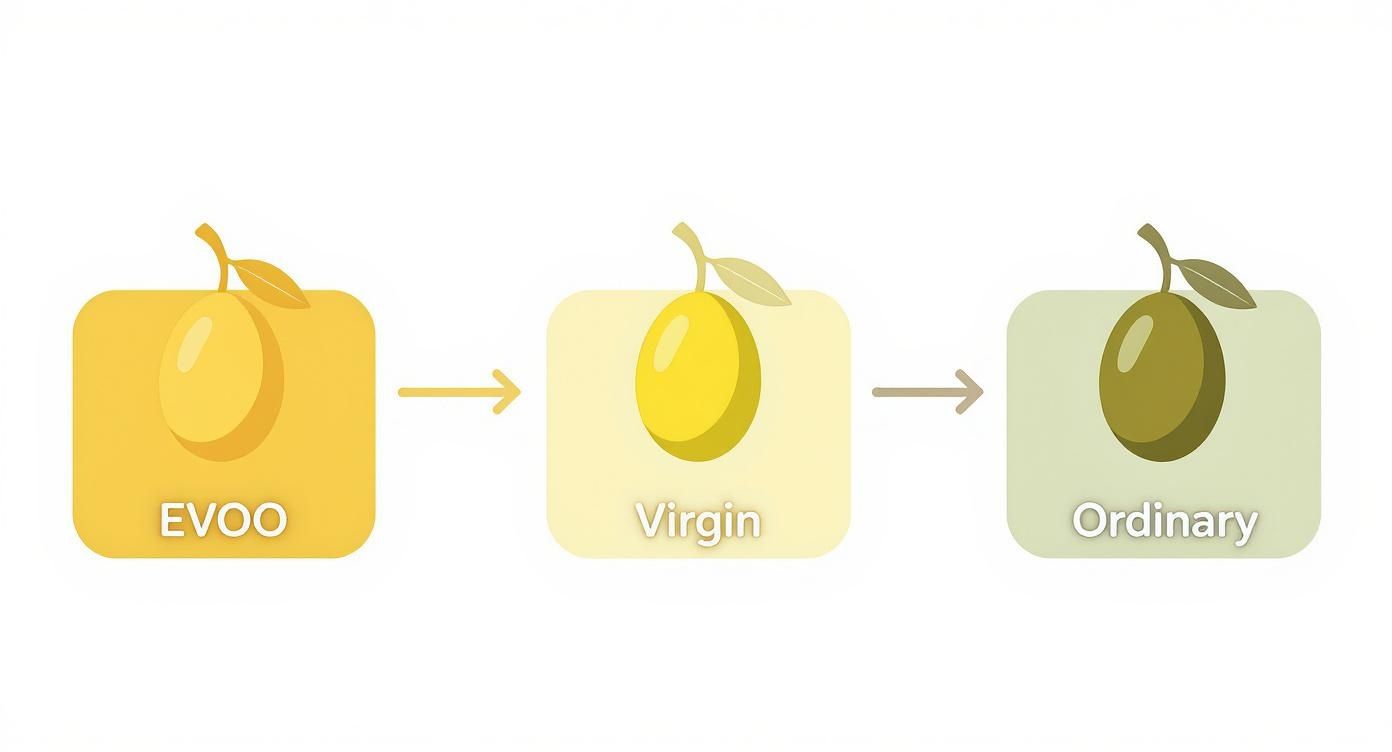
As you can see, EVOO sits at the top, representing the purest and most flavorful expression of the olive. A proper tasting will confirm that with every sip.
Identifying the Signs of Quality
Once you've slurped, pay attention to what's happening in your mouth. A world-class Extra Virgin Olive Oil is defined by three positive attributes. The magic happens when they're all in balance.
- Fruitiness (Fruttato): This is the aroma of fresh, healthy olives. It can range from delicate to intense and might bring to mind things like green apples, fresh herbs, or even artichoke.
- Bitterness (Amaro): That's right, bitterness is a good thing here! It’s a clean, pleasant bitterness you'll notice on the sides of your tongue. This flavor comes from young, green olives and is a clear indicator of healthy antioxidants.
- Pungency (Piccante): This is that classic peppery tickle or even a slight burn you feel at the back of your throat. That kick comes from oleocanthal, a potent anti-inflammatory compound you'll only find in the best, freshest oils.
That peppery sensation that makes you cough isn’t a flaw—it's the signature of a fresh, high-quality oil loaded with polyphenols. The more it makes you cough, the better the oil often is.
This method is your ticket to a much deeper appreciation for authentic olive oil. To build on these skills, you can learn more about how to taste olive oil and continue to refine your palate. Once you start tasting this way, you'll never see olive oil as just another cooking fat again. It’s a complex, living ingredient with a story to tell.
Your Checklist for Buying Authentic Olive Oil
So, you've learned the language of the land and the secrets of the label. Now it’s time to put that knowledge to work in the real world. Think of this as your secret weapon for navigating the olive oil aisle—a simple checklist that turns a confusing chore into a confident choice.
This is your roadmap to bringing home a bottle of genuine, high-quality imported Italian olive oil every single time. No more guessing games. No more falling for clever marketing traps. Just pure, delicious, authentic olive oil.
The Five Pillars of a Great Purchase
When you’re standing in front of that wall of bottles, just try to tune out the noise. Ignore the pretty pictures and fancy fonts for a moment. Your eyes should be laser-focused on five specific, non-negotiable signs of quality.
These are the little details that separate the true artisans from the mass-market pretenders.
-
1. A Dark Glass Bottle: Light is the sworn enemy of olive oil. Any producer who truly cares about their product will protect it in dark green or brown glass, or maybe even an opaque tin. If it’s sitting there in a clear glass bottle, just walk away.
-
2. A Clear Harvest Date: Don't get fooled by a "best by" date. The only date that tells you about the oil's true freshness is the harvest date. Always look for the most recent one you can find.
-
3. The Producer’s Name and Estate: Vague labels like "Packed in Italy" are a massive red flag. A proud producer will always put their name and the specific estate on the bottle. It shows accountability and a direct link to the land where the olives were grown.
Verifying Origin and Avoiding Fakes
Beyond those basics, keep an eye out for official seals that guarantee the oil’s origin. A DOP (Protected Designation of Origin) or IGP (Protected Geographical Indication) seal is your assurance that the oil is authentically tied to a specific Italian region.
These certifications are legally binding and they exist to protect both you and the traditional producers. Italy, after all, is a major player on the world stage. It holds its position as the second-largest olive oil supplier to the United States, accounting for a whopping 32.4% of total US imports. Much of that success is built on the premium quality you find in these authentic regional products.
Price often tells a story. If you see a large bottle of extra virgin olive oil that costs less than a fancy coffee, be deeply suspicious. True quality requires immense care and labor, from hand-harvesting the olives to the meticulous milling process, and its price will always reflect that.
Finally, be aware of common marketing tricks. Terms like "first cold-pressed" are largely meaningless today, as nearly all real EVOO is made this way. Our guide on how to spot fake olive oil can give you more advanced tips for sniffing out fraudulent products. The challenges of verifying authenticity aren't unique to olive oil, either. For a broader perspective, you might find interesting parallels in an article focused on solving the mystery of authenticity in Italian products.
With this checklist in hand, you are now fully equipped to make an excellent choice.
A Few Final Questions About Italian Olive Oil
You’ve traveled through Italy's olive regions, learned to decipher labels, and even picked up some tasting skills. But a few questions might still be lingering. Let's clear up some of the most common points of confusion so you can buy, store, and enjoy your imported Italian olive oil with complete confidence.
What Does "First Cold Pressed" Really Mean?
That phrase sounds impressive, doesn't it? The truth is, it's mostly a relic of the past, a term held over from when producers used old-school hydraulic presses.
Today, virtually all high-quality Extra Virgin Olive Oil is made using a modern centrifuge. This machine gently spins the olive paste to separate the oil, keeping temperatures consistently below a cool 27°C (80.6°F). This protects the oil’s delicate flavors and preserves its healthy compounds.
So, while "cold-pressed" is a reassuring term, it’s the "Extra Virgin" grade itself that guarantees the oil was extracted without heat. It’s become more of a marketing buzzword than a true indicator of quality in today's market.
Is Cloudy Olive Oil a Good or Bad Thing?
Seeing a cloudy bottle of olive oil might give you pause, but don't worry—it can actually be a great sign. The cloudiness simply means the oil is unfiltered.
This oil, often called olio nuovo (new oil), still has tiny, microscopic bits of the olive fruit suspended in it. These particles give the oil a rustic, opaque look and often a bolder, more peppery flavor that many olive oil lovers actively seek out.
Cloudiness isn't a flaw; it's a feature of unfiltered oil. It often signals a fresh, robust product straight from the mill. Just keep in mind that these oils have a shorter shelf life, so you'll want to enjoy them quickly to catch them at their peak.
Think of it like the difference between orange juice with pulp and clear, filtered juice. Both are delicious, but they offer completely different experiences. If you grab a bottle of unfiltered oil, just plan to use it within a few months.
How Should I Store My Olive Oil?
You've brought home a beautiful bottle of liquid gold, and now you need to protect it. Olive oil has three key enemies that will quickly destroy its flavor and health benefits: light, heat, and air.
Luckily, shielding your oil is simple if you follow a few rules.
- Find a dark spot: Keep your bottle tucked away in a cool, dark cupboard or pantry. Never leave it out on a sunny countertop.
- Keep it cool: Store it away from the stove, oven, or any other heat source. Heat speeds up oxidation and will make the oil go rancid fast.
- Seal it tight: Air is the enemy of freshness. Always screw the cap back on tightly as soon as you're done pouring to keep oxygen out.
When stored correctly, a great EVOO will stay at its best for 18-24 months from its harvest date. And remember, that harvest date is always your best guide to freshness.
Ready to put your newfound knowledge to the test? At Learn Olive Oil, we offer expert insights, tasting guides, and recommendations to help you discover your next favorite bottle. Start exploring and take your appreciation for this liquid gold to the next level.


Leave a Reply