At first light in Crete, I put my palm against an olive trunk so knotted it looked less grown than carved by wind and prayer. A few hours later, I tasted the oil from that same grove, green, bitter, peppery, alive, and the line from tree to bottle stopped being theory.
The Ancient Soul of Greek Olive Trees
In Greece, an olive tree isn't just a crop. It's ancestry with roots.
Some of the oldest greek olive trees on Earth still stand in production today. Verified trees exceed 5,000 years in age, and a famous tree on Crete, dated to roughly 3,000 to 5,000 years old, still bears olives, as noted in this history of Greek olive oil. That fact changes the way you look at a bottle. You're not buying a fashionable pantry item. You're handling the latest expression of a living tradition older than most civilizations' memory.

Trees that outlive empires
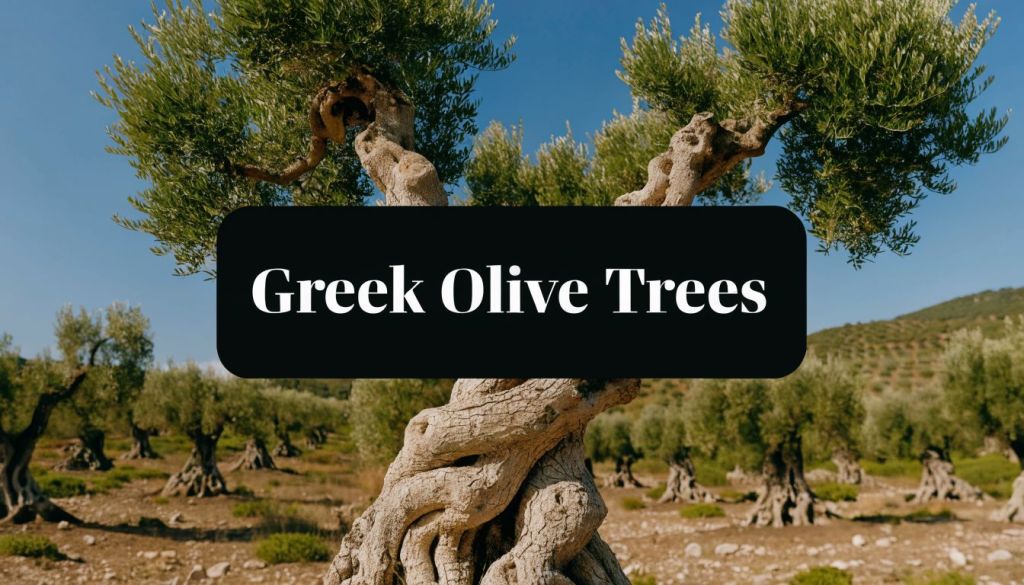
Walk through an old Greek grove and the first shock is scale. Not height, necessarily. Presence. The trunks twist into hollow chambers, polished by weather and age, while new shoots keep pushing outward as if time were irrelevant.
That resilience isn't romantic myth. Greek growers have long prized the olive tree's ability to regenerate and endure. It's one reason these groves became more than farmland. They became inheritance, law, ritual, and daily bread all at once.
Some trees give fruit. Ancient olive trees give continuity.
The Greeks understood early that olive oil was wealth, nourishment, ceremony, and trade. But the more intimate truth is this. Oil from old lands carries memory in a practical form. It tells you what a people preserved because they couldn't imagine living well without it.
Why heritage matters in the bottle
When buyers ask whether history affects quality, the honest answer is yes, but not in the sentimental way marketers often suggest. Age alone doesn't guarantee great oil. A neglected old grove can give poor fruit. A well-run younger grove can produce magnificent extra virgin olive oil.
What history does provide is a standard. In Greece, that standard has been sharpened over millennia of cultivation, harvest timing, milling decisions, and hard lessons about what the land rewards. If you want the broad map behind that legacy, this guide to the origins of olive oil is useful background.
Greek olive oil earned the old phrase "liquid gold" because it was never just decorative. It mattered too much for that. It still does.
A Connoisseurs Guide to Greek Olive Varieties
If terroir is the accent, variety is the voice.
Too many buyers shop olive oil by label design or price tier. Farmers don't think that way. They start with the olive itself. The variety tells you what kind of oil is possible before soil, weather, and harvest sharpen the final result.

Koroneiki leads the conversation
Among greek olive trees, Koroneiki is the workhorse aristocrat. Small fruit. Serious oil. It has a reputation for producing full-bodied, peppery, green-fruited oils that many experienced tasters seek out first.
Its agricultural value is just as impressive. Koroneiki is suited to super high-density planting systems of 600 to 1,600 trees per hectare, and it begins producing at commercially meaningful levels in the third year, which is why growers view it as a benchmark for scalable production, according to this detailed Koroneiki cultivation guide.
That doesn't mean every Koroneiki oil tastes the same. It means the variety has a recognizable spine. Expect strength, structure, and often a peppery finish that tells you the oil has something to say.
The table varieties and the quieter oils
Not every Greek olive is trying to punch through a tasting glass.
A few broad buying cues help:
- Kalamata often enters the conversation as a table olive first. In oil terms, buyers tend to associate it with a softer, fruitier personality than Koroneiki.
- Manaki is the olive for people who want grace rather than force. These oils are often described as milder, gentler, more rounded.
- Amfissas is widely recognized at the table, cured and eaten rather than chased as a powerhouse oil olive.
- Athinolia is prized by tasters who like aromatic complexity and a more nuanced profile.
Buying shortcut: If you love a grassy sting at the back of the throat, start with Koroneiki. If you want a calmer oil for baking, delicate fish, or fresh cheese, look toward milder varieties or blends built around them.
How to read variety on a label
A good label gives you clues, even when it doesn't tell the whole story.
Look for these signals:
| What to look for | What it usually tells you |
|---|---|
| Single variety named | The producer wants you to taste the olive's distinct character |
| Koroneiki on the front or back label | Expect a more assertive profile in many cases |
| Blend with no variety listed | The oil may be built for consistency rather than varietal expression |
| Specific region plus variety | You're getting closer to the oil's true identity |
If you want a broader field guide to names you'll see on labels and in tasting rooms, this overview of types of Greek olives is worth bookmarking.
The practical point is simple. Don't ask only, "Is this Greek?" Ask, "Which olive made this oil?" That's when your buying gets sharper.
From Cretan Hills to Peloponnesian Plains The Role of Terroir
Take the same olive variety, plant it in two different Greek terrains, and you'll often get two different personalities in the bottle. That's terroir. Not as a fashionable wine word, but as the plain truth of agriculture.
Olive oil has always carried the value of place in Greece. Olive trees have been central to Greek economic life since at least 3,500 BCE, and under Solon, around 640 to 560 BCE, olive oil was designated as Athens' sole permissible agricultural export, a sign that origin already mattered commercially and culturally, as described in this ancient Mediterranean history of the olive.

Place changes flavor
A rocky Cretan hillside tends to stress a tree differently than a more forgiving plain in the Peloponnese. Wind exposure, drainage, reflected heat, sea influence, and soil texture all shape how the fruit ripens and how the oil expresses itself.
Growers know this in their bones. They may not always use the word terroir, but they'll tell you one slope gives fiercer oil, another gives more perfume, another gives fruit that behaves better in a difficult harvest.
Reading a region like a taster
When you're choosing olive oil by origin, think in layers:
- Island exposure often brings wind, sun, and harsher growing conditions that can concentrate character.
- Mountain or hillside groves usually drain better and force roots to work harder.
- Plains and more fertile sites can give softer, broader oils, depending on the variety and farming style.
- Sea proximity can influence the grove's microclimate in ways growers monitor closely, especially during ripening.
The bottle doesn't start in the mill. It starts in the ground.
That matters because buyers often overvalue branding and undervalue geography. A producer may own excellent machinery and still be limited by dull fruit from the wrong site, picked at the wrong moment. Another may work from an austere, stony grove and deliver an oil with astonishing edge and freshness.
For anyone trying to buy with more precision, it helps to study olive oil origin the way a wine drinker studies appellations. The goal isn't to memorize maps. It's to understand that flavor is local.
What works and what doesn't
What works is pairing expectation to place. If you want nerve, bitterness, and a peppery finish, seek oils from tougher environments and varieties that can translate that stress into flavor. What doesn't work is assuming all oils from Greece taste "rich" or "fruity" in the same broad way.
Good buyers don't chase nationality alone. They chase a conversation between variety and region. That's where the bottle starts to speak clearly.
The Patient Art of Cultivating Hellenic Gold
A great olive oil isn't made once a year. It's made all year, then revealed at harvest.
That starts with the tree's physical design. Koroneiki leaves have an elliptic-lanceolate shape with an upward curve called hyponasty, a form that helps with solar capture. The tree can tolerate temperatures down to -7°C and up to 42°C, but it's notably vulnerable to olive fruit fly and olive knot, according to this close look at Koroneiki cultivation and resilience.

Pruning is flavor management
Many novices think pruning is mainly about tidiness. In serious groves, pruning is a flavor decision.
Open the canopy too little and you invite shade, sluggish drying after moisture, and poor air movement. Open it too much and the tree can respond with unhelpful vigor or expose fruit in ways that complicate balance. Good growers prune for light penetration, air flow, and manageable fruiting wood.
Three practical truths hold up in the field:
- Sunlight matters: Fruit tucked deep in a dense canopy rarely develops with the same consistency as fruit exposed to balanced light.
- Air movement matters: Tight, damp canopies make disease pressure harder to manage.
- Harvest access matters: A tree that's impossible to work efficiently often gets harvested too slowly.
Water and stress need balance
Olive trees are tough, but toughness isn't the same as indifference. A tree under disciplined stress can produce concentrated fruit. A tree pushed too far may shut down in ways that hurt both yield and quality.
Experienced growers separate themselves from romantics. They don't brag that the trees survived. They watch whether the fruit matured evenly, whether the skin stayed healthy, whether the oil developed the profile they wanted.
Field note: Controlled hardship can sharpen an olive oil. Neglect ruins it.
Pests punish complacency
The olive fruit fly can wreck a promising season. Olive knot can disfigure trees and complicate grove hygiene. Growers who produce clean, premium oil stay vigilant long before a problem is visible to casual visitors.
That means orchard observation, sanitation, pruning discipline, and timely intervention. What doesn't work is waiting for obvious damage. By then, quality has often already slipped.
A short look at harvest practice makes this easier to visualize:
Harvest timing is the final argument
The season's culmination lies in the picking. Pick earlier and you often get greener, more pungent, more structurally intense oils. Pick later and you may gain softness and volume, but often lose edge.
No serious producer treats harvest date as a casual scheduling issue. It's one of the sharpest trade-offs in olive oil. You can chase yield, or you can chase aromatic lift, bitterness, and pepper. Sometimes you can balance both. Usually you lean one way.
If you want the mechanics behind that decision, this guide to olive oil harvesting adds useful detail. But the core principle is simple. The finest Greek oils aren't accidents. They're the result of disciplined choices made month after month.
Connecting Variety to Flavor in Your Olive Oil
Most buyers taste olive oil backwards. They sip first, then search for words. It works better the other way around. Start with the olive variety, then predict the experience in the glass.
How genetics show up on the palate
A Koroneiki oil often announces itself with energy. Think cut grass, green almond, a firm bitterness, then that familiar peppery catch in the throat. That's why many tasters compare it, loosely, to a bold red wine. Not because it tastes like wine, of course, but because it behaves with similar authority at the table.
A Manaki oil usually moves in a different register. Softer entrance. Gentler bitterness. A more buttery or sweet-seeming impression, especially when used on mild vegetables, white fish, or cakes where a severe oil would dominate.
Athinolia and other less common Greek varieties often reward patient tasters. They may not shout, but they can offer layered aroma and a more intricate finish.
Use flavor by purpose, not prestige
A stronger oil isn't always better. It just does a different job.
Here's a practical way to match style to use:
- For grilled bread, tomato salads, beans, and bitter greens: choose a strong oil, often Koroneiki-led.
- For baking or delicate dishes: choose a milder oil such as one built around Manaki or a gentle blend.
- For finishing soups or legumes: look for oils with aroma first, not brute force.
- For raw tasting with bread: pick an oil with enough bitterness and pepper to stay interesting after the first dip.
A good bottle should taste like it came from a specific tree in a specific place, not from a committee.
What single-varietal oils teach you
If you want to educate your palate quickly, buy single-varietal oils whenever possible. They strip away confusion. You start learning what belongs to the olive itself and what belongs to harvest style or region.
This is why exploring single-varietal olive oil is so useful. It trains you to taste cause and effect. Once you know the olive's signature, labels become easier to decode and your kitchen choices get much more deliberate.
How to Choose and Grow Your Own Greek Olive Tree
A smart olive oil buyer looks for more than romance on the label. A smart home grower does the same with nursery stock. In both cases, the mistake is identical. Falling for the idea while ignoring the conditions.
How to buy Greek olive oil with fewer regrets
Greek olive oil can be magnificent, but buyers need to pay attention to producer stability, not just storytelling. Greece's production fell to its lowest point in six years in 2023/24, dropping to 150,000 to 170,000 tons, with some regions losing up to 70% of typical yields. Early forecasts for 2024/25 suggested a rebound to 220,000 to 230,000 tons, contingent on weather, as discussed in this analysis of Greece's olive oil volatility and buyer risk.
That matters because unreliable supply changes everything. Freshness, consistency, price, and even authenticity become harder to judge when a producer is under pressure.
Buy with this checklist in mind:
- Check the origin carefully: A precise Greek region tells you more than vague Mediterranean language.
- Look for variety information: A named olive such as Koroneiki or Manaki gives you a flavor clue.
- Ask about harvest and milling transparency: Producers who answer clearly usually run tighter operations.
- Consider supply resilience: Multi-region sourcing, careful inventory, and a stable harvest pattern matter in volatile years.
- Be wary of pure nostalgia: Heritage is valuable, but it doesn't excuse careless handling.
How to grow one at home without fooling yourself
Greek olive trees can adapt well in the right outdoor setting, a sunny courtyard, a warm garden, a protected terrace. Indoors, they usually struggle for the same reasons many Mediterranean plants do. Light is too weak, air is too still, and seasonal signals get blurred. If you're considering one for the house, this practical piece on why indoor olive trees struggle and how to keep them alive gives realistic guidance.
For home growing, keep the basics strict:
- Choose sun first. Olive trees want long, bright exposure.
- Use fast-draining soil. Wet feet cause slow misery.
- Don't overwater. Let the tree work a little.
- Prune for openness. Even a potted tree needs light moving through the canopy.
- Respect climate limits. If your winters are harsh, container growing gives you more control.
A home olive tree won't make you a Cretan farmer. But cared for properly, it will teach you the same lesson Greek groves have taught for ages. Flavor starts with discipline long before the fruit appears.
Frequently Asked Questions About Greek Olive Trees
Is Greek extra virgin olive oil automatically better
No. Extra virgin describes a quality category, not a guarantee of brilliance. Greece produces outstanding extra virgin olive oil, but the best bottles still depend on sound fruit, clean milling, careful storage, and honest labeling.
Is unfiltered Greek olive oil better
Not automatically. Unfiltered oil can be vivid and attractive when fresh, but it may also be less stable if handled poorly. Filtered oil often keeps its balance better over time. Buy based on freshness and producer care, not on a romantic preference alone.
How long does a good Greek olive oil last
High-quality olive oil is best treated like fresh juice, not like wine for aging. Use it while its aroma is lively and its bitterness and pepper still feel integrated. Heat, light, and oxygen are what ruin it fastest.
Can you cure olives from a homegrown Greek olive tree
Yes, but not by eating them straight from the branch. Fresh olives are bitter and need curing. Home curing can be rewarding, though it requires patience, repeated rinsing or brining, and a willingness to accept that some batches turn out better than others.
What's the simplest way to taste whether an oil suits you
Pour a little into a small glass, warm it in your hand, smell first, then sip. Good oil should smell fresh, alive, and plant-like. In the mouth, pay attention to fruitiness, bitterness, and pepper. If those elements feel dull or flat, the bottle probably won't improve your cooking.
If you want to go deeper into tasting, buying, and understanding premium bottles from grove to table, visit Learn Olive Oil. It's a strong place to sharpen your palate and make more confident choices.
 Learn Olive Oil
Leave a comment