You’ve probably heard the rule so often it feels sacred: never cook with extra virgin olive oil. Save it for salads. Drizzle it at the end. Keep it away from the flame.
That advice has done more damage in home kitchens than is commonly understood.
It has trained good cooks to reach for blander oils when they want heat, even though cooking with extra virgin olive oil gives you something those neutral oils never can. Real flavor. Better texture. And, used properly, remarkable stability in the pan. The result is a strange modern habit. People buy a beautiful bottle of EVOO, then treat it like perfume instead of food.
A cook doesn’t need more fear. A cook needs a working framework.
The question isn’t “Can you cook with extra virgin olive oil?” Yes, you can. The better question is, which extra virgin olive oil belongs in which pan, for which dish, at which moment? That’s where things get interesting. A soft, almondy oil behaves differently from a grassy, peppery one. A pan sauce wants one style. Roast potatoes want another. Fried calamari asks for something else again.
Once you understand that, the whole subject opens up. EVOO stops being a precious finishing touch and becomes what it has always been in serious kitchens: one of the most useful fats you can own.
The Great Olive Oil Mistake You're Probably Making
The mistake isn’t using extra virgin olive oil over heat.
The mistake is treating all extra virgin olive oil as if it were meant for the same job.
That old warning against heating EVOO came from a thin understanding of cooking and an even thinner understanding of olive oil. People heard “extra virgin” and assumed fragility. They saw pepper, fruit, and bitterness as delicate tasting notes that would collapse in a skillet. So they pushed olive oil to the cold side of the kitchen and handed the hot work to neutral oils.
That’s backward.
A good cook knows fat is not just a lubricant. Fat is a flavor carrier. It coats the food, transmits heat, and leaves its own signature behind. When you sauté onions in EVOO, you aren’t merely preventing sticking. You’re building the dish from the first breath of aroma. The oil matters from second one.
What really holds cooks back is broad, lazy advice. “Never heat EVOO” belongs in the same bin as “all olive oils taste the same” and “darker bottles mean better quality.” If you want a quick myth-busting primer, this roundup on olive oil myths is useful background.
Why the myth survives
Part of it is cost. People don’t want to “waste” a nice bottle in a hot pan.
That instinct isn’t crazy. But it often leads to the wrong conclusion. The smart move isn’t avoiding EVOO. The smart move is matching the right bottle to the job. Use your bold, expensive, highly expressive oil where its personality will be noticed. Use a balanced everyday EVOO where you need reliable cooking performance and gentle flavor.
What experienced cooks do instead
In professional kitchens and serious home kitchens alike, EVOO is not restricted to finishing. It’s used to sweat garlic, roast fish, glaze vegetables, bake cakes, shallow-fry cutlets, and carry herbs into the food itself.
Use the oil as an ingredient, not as decoration. That shift changes everything.
The home cook who learns this becomes freer overnight. You stop hoarding oil. You stop second-guessing the pan. You start choosing with intent.
How to Choose the Right EVOO for Your Pan
Buying olive oil gets easier when you stop shopping by romance alone.
Country of origin, estate photos, and beautiful labels can be lovely. But when the pan is hot, three practical categories matter more: delicate, medium, and intense. Those aren’t official legal grades. They’re working kitchen terms. They tell you how loudly the oil speaks.

Delicate, medium, robust
A delicate EVOO tends to feel softer on the palate. Think butter, almond, ripe apple, gentle herbs, sometimes a floral edge. It’s wonderful with eggs, white fish, tender cakes, mayonnaise, and vegetables that don’t want a lot of interference.
A medium EVOO is the workhorse. It gives you fruit, some green notes, a little bitterness, maybe a mild pepper finish. This is the bottle I’d keep nearest the stove for most households. It handles sautéing, roasting, pan sauces, grain dishes, and everyday baking without stealing the whole show.
A bold EVOO announces itself. Grass, artichoke, green tomato leaf, chicory, black pepper, a firm bitter structure. This is the oil for foods that can stand up and answer back. Steak. Lamb. Bitter greens. Beans. Charred vegetables. Tomato-rich dishes. It’s also a powerful finishing oil when you want presence.
A practical way to decide
Don’t ask only, “Is this a good oil?”
Ask these three questions instead:
What’s the food’s personality
Delicate foods need restraint. Swordfish can handle more than sole. Zucchini can take more than butter lettuce.What happens to the flavor under heat
Heat rounds sharp edges. A peppery oil can mellow beautifully in a pan. A very delicate oil can lose nuance if the dish cooks hard and long.Will the oil be tasted directly at the end
If yes, spend more attention on aromatic complexity. If no, prioritize balance and versatility.
Quick pairing guide
| EVOO style | Flavor profile | Best uses |
|---|---|---|
| Delicate | Buttery, soft, almondy, floral | Eggs, baking, light fish, gentle sautés |
| Medium | Fruity, balanced, lightly green | Everyday pan cooking, roasting, soups, grains |
| Robust | Peppery, grassy, bitter, assertive | Red meat, beans, bitter greens, tomato dishes, finishing |
Everyday cooking oil versus finishing oil
Most kitchens do best with two bottles, not one.
One should be an everyday cooking EVOO. Balanced, dependable, reasonably priced, pleasant enough to enjoy but not so rare that you hesitate to pour. The other should be a finishing EVOO with more personality.
That split saves money and improves your food. It also keeps you from making the classic error of using a magnificent pepper bomb to fry a mild piece of cod, or wasting a subtle oil in a braise where its best notes vanish into the background.
For a more detailed buying lens, especially if labels tend to blur together in the aisle, this guide to extra virgin olive oil quality helps sharpen your eye.
What nutrition tells you about choosing well
A tablespoon of EVOO provides 119 to 126 calories, 14g fat, 13% DV vitamin E, and 7% DV vitamin K, and 73% of that fat is monounsaturated oleic acid. More important in the kitchen, phenols can transfer to the food during cooking, and vegetables cooked in EVOO can end up with more antioxidants than when they’re boiled or eaten raw, as summarized by Healthline’s review of extra virgin olive oil.
That matters because the oil isn’t sitting outside the dish. It’s entering the dish.
Buy olive oil the way you buy wine for cooking. Not every bottle belongs in every pot. The right one makes the meal feel inevitable.
The Truth About Smoke Point and Heat Stability
The smoke point panic around EVOO confuses one useful metric for the whole story.
Smoke point matters. It tells you the temperature at which an oil visibly begins to smoke. But if you treat smoke point as the only standard, you miss the thing cooks care about most. How well does the oil hold together in real cooking?

What the numbers actually say
Extra virgin olive oil typically has a smoke point of 350 to 410°F (175 to 210°C), according to this summary of common olive oil myths and facts.
That range already covers most home cooking. Sautéing, pan-frying, roasting, and a lot of baking live comfortably inside it. Good-quality EVOO can sit exactly where many home cooks need it to sit.
If you want a broader side-by-side reference for various fats, Mise has a useful Ultimate Cooking Oil Smoke Point Chart. It’s handy for context, especially when you’re comparing oils for a specific technique.
Smoke point is not the whole test
Here’s the key distinction. An oil can have a respectable smoke point and still perform poorly under heat if it breaks down easily.
EVOO’s strength is that it doesn’t rely on smoke point alone. Its makeup does a lot of protective work. It contains a high proportion of monounsaturated fat, especially oleic acid, and naturally occurring antioxidants, including phenolic compounds. Those compounds help the oil resist oxidation.
A 2018 study referenced in the source above found EVOO to be the most stable cooking oil when heated, producing fewer harmful compounds than oils such as canola or sunflower in that comparison. The same source notes that this stability continues even beyond the initial smoke point.
That’s the part most quick kitchen advice leaves out.
How this plays out in a pan
Think of smoke point as the first visible warning sign, not the complete biography of the oil.
When I teach cooks to use EVOO, I tell them to watch the whole pan, not a single statistic. Is the oil shimmering gently? Good. Is the garlic browning too fast? Heat’s too high. Is the oil smoking aggressively while the food remains pale? You’ve overshot the target.
Those are cooking cues. They matter more than fear.
A pan should speak softly. If your oil is shouting, lower the flame.
Better habits than obsessing over the thermometer
Use this checklist instead of repeating the old myth:
Heat gradually
Don’t blast the burner from cold. Give the oil a moment to warm up evenly.Match the oil to the task
For a hard sear on something assertive, a medium or intense EVOO makes sense. For a light sauté, use a softer bottle.Let the food help regulate the pan
Moisture from vegetables and proteins often keeps actual cooking conditions more moderate than people imagine.Trust signs of stability, not folklore
Clean aroma, even shimmer, and calm behavior in the pan tell you plenty.
For a focused explanation of this subject, this page on the smoke point of EVOO is worth bookmarking.
Mastering Kitchen Techniques with Extra Virgin Olive Oil
Technique is where theory earns its keep.
A bottle of EVOO on the counter doesn’t improve dinner by itself. The difference comes from how you use it. Angle of heat. Style of oil. Timing. Whether the food wants the oil to melt into the background or stride to the front.

Sautéing and searing
Most cooks should begin with this.
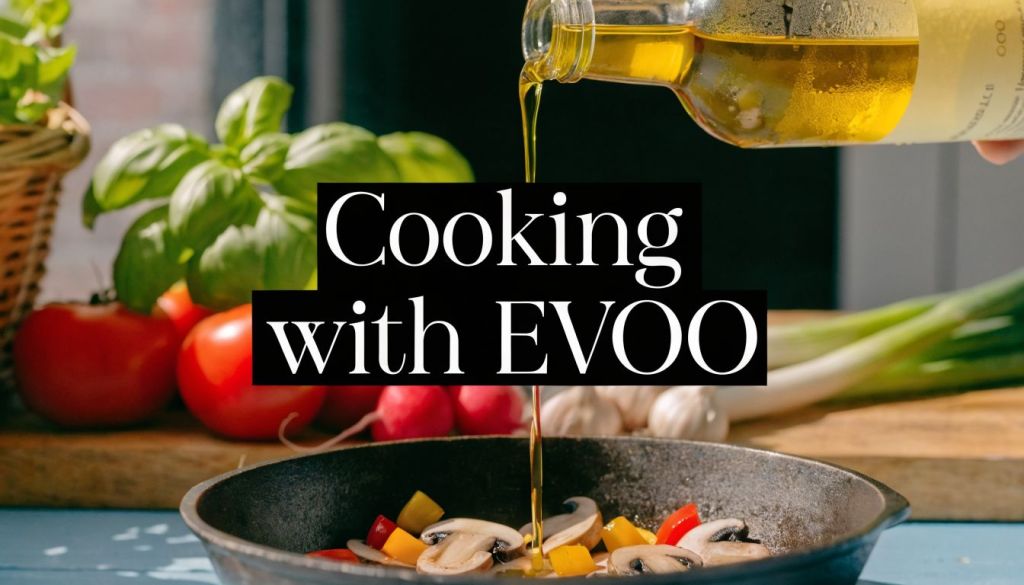
For onions, zucchini, mushrooms, peppers, chickpeas, shrimp, chicken cutlets, or a piece of cod, a medium EVOO is usually the sweet spot. It gives enough flavor to matter and enough restraint to play well with the rest of the dish.
Get the pan warm first. Add the oil. Watch for a loose, satiny shimmer. Then add the food and listen. You want a lively sizzle, not an angry hiss.
An assertive oil can be magnificent here with the right ingredients. Broccoli rabe, sausage, eggplant, lamb, and thick slices of sourdough all welcome that green, peppery edge. The heat softens the oil’s bitterness and folds it into the food.
For practical technique notes in this lane, this guide on olive oil sautéing is a solid companion.
Roasting and baking
Roasting is one of EVOO’s easiest victories.
Toss carrots, cauliflower, potatoes, fennel, squash, or chicken in a medium or full-bodied EVOO and the oil does several jobs at once. It helps browning. It carries salt and spice. It deepens the surface flavor so the finished food tastes fuller, not just cooked.
In baking, delicate to medium EVOOs work best when you want tenderness with character. Olive oil cakes are the obvious example, but the principle goes further. Savory quick breads, focaccia, crackers, and certain cookies all gain a supple crumb and a cleaner finish than they get from heavier fats.
A useful conversion from the verified data is this: 3 tablespoons of EVOO can replace 1/4 cup butter in baking, a swap noted in the nutrition source cited earlier. It’s a practical move when you want less saturated fat and a lighter feel.
Shallow frying and deep frying
Many people still flinch, and they don’t need to.
For deep frying, experts recommend heating a high-oleic EVOO such as Picual to 180°C (356°F). The same source reports that International Olive Council tests found EVOO, when temperature is controlled, outperformed sunflower oil in flavor retention and reduced acrylamide formation by 30 to 50%. It also notes that the oil can be filtered and reused 2 to 3 times. Those details come from this overview of cooking techniques with hot olive oil.
That doesn’t mean every fancy finishing oil belongs in the fryer. It means the technique is sound when the oil is chosen and managed correctly.
Use a balanced or sturdier cooking EVOO, not your most expensive finishing bottle. Heat it steadily. Fry in small batches. Salt after draining. The result can be crisp, clean, and less greasy than skeptics expect.
For fried food, temperature discipline matters more than dogma.
A quick visual demonstration helps here:
Finishing and dressings
This is the classic role for EVOO, and it remains one of the best.
Use a delicate oil over fresh mozzarella, poached fish, spring peas, or warm white beans when you want gloss and grace. Use an intense oil over tomato soup, grilled steak, lentils, bruschetta, or bitter greens when you want a final flash of pepper and fruit.
The professional trick is restraint. Don’t drown the plate. A finishing oil should catch the dish like a spotlight, not bury it under a blanket.
A simple matching rule
If the dish is subtle, choose an oil softer than you think.
If the dish is hearty, choose an oil with enough backbone to survive contact.
If the oil is the final note, make sure that note belongs in the song.
Preserving Your Liquid Gold for Peak Performance
A lot of disappointing olive oil cooking starts long before the pan.
It starts on the counter, in a clear bottle, beside the stove, under light and warmth, slowly losing the very qualities you paid for. People blame the oil when dinner tastes flat. Often the culprit is storage.

The three enemies
Olive oil has three routine adversaries in a home kitchen.
Light
Clear glass looks pretty, but it exposes the oil.Heat
The cabinet beside the oven is convenient and unkind.Oxygen
Every opening invites change, especially over time.
Research also points to a gap that consumers rarely hear explained well. Storage conditions affect the phenolic compounds that contribute to cooking performance, yet most advice doesn’t clearly connect storage to how an opened bottle may lose cooking benefits or how a cook can detect that decline. That gap is discussed in this review on EVOO storage and phenolic degradation.
That matters because a bottle isn’t static. Freshness influences performance.
Storage rules worth following
These are the habits that pay off:
Choose dark glass or tin
Better protection from light.Keep it in a cool, dark cupboard
Not next to the range. Not on a sunny sill.Close it promptly
Oxygen is patient.Buy with your cooking pace in mind
If you cook occasionally, a giant bottle can become a stale bargain.
For readers building an EVOO-centered way of eating, practical meal ideas from this collection of Mediterranean Diet Foods Recipes can help you use your oil regularly instead of letting it linger too long.
How to tell when oil is past its best
You don’t need a laboratory. You need attention.
Fresh EVOO smells alive. Depending on the oil, you may find grass, almond, tomato leaf, herbs, apple, or artichoke. Rancid oil smells tired. Waxy. Flat. Sometimes like old nuts or a crayon box left in the heat.
If the aroma feels dull and greasy, don’t argue with it.
Good olive oil should smell edible before it ever touches the pan.
For a fuller primer on care and handling, this page on olive oil storage gives the basics in plain language.
Common Questions About Cooking with EVOO
Can you reuse EVOO after frying
Yes, if the oil was handled well.
Strain out crumbs after it cools. Store it sealed. Reuse it for similar savory applications, not forever and not indiscriminately. If it smells stale, overly toasted, or unpleasantly heavy, discard it.
The point isn’t to stretch it beyond reason. The point is that properly managed EVOO can remain useful after frying, which surprises people who still think of it as too fragile for heat.
Is it wasteful to use premium EVOO for sautéing
Usually, yes.
Not because EVOO shouldn’t be heated, but because the pan may not showcase the finest details of a highly expressive oil. Save your most characterful bottle for finishing, dipping, dressings, or very simple dishes where its aroma can be appreciated directly.
Use a balanced everyday bottle for routine cooking. That’s frugal and smart.
Should you cook with delicate oils at all
Absolutely. Just match them carefully.
A delicate oil shines with eggs, pale vegetables, mild fish, soft cakes, and gentle braises. What it won’t do is bully its way through strongly spiced, charred, or tomato-heavy food. In those dishes, it can disappear.
Filtered or unfiltered for cooking
For everyday cooking, many cooks prefer filtered oil because it tends to be cleaner in the bottle and more predictable in use.
Unfiltered oils can be gorgeous, especially when fresh, but they’re often better treated as flavor-first oils. Use them where you can taste their personality clearly. If you love one, drizzle it over beans, grilled bread, soup, or a just-roasted vegetable dish.
Does stronger always mean better
No.
A peppery oil is not automatically superior to a gentle one. Strength only matters if it suits the food. The best EVOO for a skillet of shrimp and lemon may be completely wrong for a bowl of lentils with charred sausage.
What’s the biggest practical mistake
Using one bottle for every purpose.
That’s the kitchen version of wearing patent leather shoes to the beach. You can do it, but you’ll fight the conditions all day. Keep one dependable cooking EVOO and one expressive finishing EVOO. Most of the confusion disappears right there.
Your Kitchen Is Now Open for Business
The old rule has earned retirement.
Extra virgin olive oil is not a fragile garnish trapped in a bottle until salad night. In a competent kitchen, it is a daily cooking fat with range, personality, and muscle. It can soften onions, carry spices, crisp potatoes, roast chicken, perfume beans, and finish a plate with style.
The trick is not blind loyalty. It’s judgment.
Choose the oil by flavor profile, not label poetry. Give delicate oils delicate jobs. Give full-bodied oils food with enough backbone to answer them. Store your bottles properly. Heat with intention. Taste as you go.
That’s how cooks gain confidence. Not by memorizing myths, but by watching what works in the pan and understanding why it works.
Use EVOO more often. Use it more precisely. Once you do, the bottle stops being a precious object and becomes what it was always meant to be. One of the great working ingredients in your kitchen.
If you want to sharpen your palate, buy better bottles with more confidence, and learn how to use premium olive oil with the judgment of a pro, visit Learn Olive Oil . It’s a smart place to deepen your understanding of quality, tasting, storage, and everyday cooking with EVOO.


Leave a comment