Before you grab another bottle of olive oil off the shelf, let's get one thing straight. The term extra virgin olive oil isn't just marketing fluff—it's a hard-won, legally protected standard of quality. At its heart, it refers to the purest olive oil you can find: the fresh, unblemished juice of olives, coaxed out without chemicals or destructive heat. It is, in essence, liquid gold.
What Does "Extra Virgin" Actually Mean?
Think of it this way: "extra virgin" is to olive oil what "freshly squeezed, not from concentrate" is to orange juice. It's a solemn promise that what you're getting is the highest grade possible—a grade that must be earned through a battery of rigorous tests.
For an olive oil to earn the coveted "extra virgin" label, it must stand on three non-negotiable pillars of quality. These are the uncompromising gatekeepers that separate the truly sublime oils from the legions of ordinary ones.
The Three Pillars of EVOO Quality
- Pristine Chemical Profile: First, the oil faces the cold, hard scrutiny of a laboratory. A crucial test measures its free fatty acidity, which is an impeccable indicator of the health of the olives at the very moment they were crushed.
- Flawless Sensory Experience: Next, it confronts a panel of certified human tasters. To pass this unforgiving trial, the oil must possess zero sensory defects—not a whisper of mustiness, rancidity, or other foul flavors—and must exhibit some degree of a positive fruity characteristic.
- Pure Production Method: Finally, the oil's lineage is examined. It must be extracted using only mechanical methods. This process, often called "cold-extraction," shuns the use of chemicals and high temperatures that would ruthlessly degrade the oil's delicate flavors and life-giving health benefits.
This trifecta of chemical purity, sensory perfection, and clean extraction is the very soul of an authentic olive oil. An oil cannot pass two out of three tests and still call itself extra virgin. It is an all-or-nothing proposition.
This strict definition is recognized across the globe. The International Olive Council (IOC), the world's governing body, mandates that EVOO must have a free acidity level below the razor-thin threshold of 0.8%. The market power of this grade is undeniable; EVOO recently accounted for over half of Europe's colossal $15.6 billion olive oil industry.
Grasping these fundamentals is the first real step toward appreciating the incredible craft poured into every genuine bottle. It's also the secret to discerning this top-tier product from lower grades, a crucial part of understanding what makes olive oil virgin in the first place.
The Hidden Science Behind the EVOO Label
So, what truly separates a genuine extra virgin olive oil from a pretender sitting on the grocery store shelf? It’s not just a matter of taste. The real guardians of quality are a pair of key chemical markers—think of them as the oil's unblinking vital signs.
To understand what makes an EVOO special, you must look beyond the beautiful label and embrace the science. Two critical lab tests stand guard, ensuring the oil in your bottle is pure, stable, and brimming with goodness. These aren't just obscure terms; they are direct, irrefutable measures of an oil's health and freshness.
Free Acidity: The Ultimate Freshness Gauge
First is free fatty acidity (FFA). Don't let the name intimidate you. Simply think of it as a stopwatch that begins ticking the second an olive is plucked from its branch. A low acidity level is the chemical signature of perfectly healthy, undamaged olives that were rushed to the mill within hours of harvest.
For an oil to earn the ‘extra virgin’ title, international standards demand a free acidity of 0.8% or less. But the world's best producers don't just meet this standard; they shatter it. You'll find many premium oils boasting levels as low as a remarkable 0.2%. A high FFA, on the other hand, is a blaring red flag. It tells a grim story of bruised, overripe, or neglected fruit—olives that languished for too long, allowing decay to creep in before they were ever pressed.
In simple terms, free fatty acidity is a direct measure of an oil’s purity and freshness. It’s the difference between the crisp, clean snap of a just-picked apple and the dull, lifeless mush of one that’s been bruised and forgotten on the counter.
Peroxide Value: A Window into the Oil's Age
Next, we have the peroxide value. If acidity reveals the olive's quality at the moment it was crushed, the peroxide value tells you how well the oil has held up since then. It is a direct measure of oxidation—the very same insidious process that makes iron rust or a sliced avocado turn brown.
Oxygen is olive oil's mortal enemy. Over time, it mercilessly attacks the oil's healthy fats, introducing stale, rancid flavors. A high peroxide value is a dead giveaway of age and decay, signaling an oil that is far past its prime and losing its precious antioxidant power. It means the bottle was likely exposed to too much light, heat, or air somewhere on its long journey to you.
These chemical metrics, along with sensory analysis (a professional taste test), form the non-negotiable requirements for any oil labeled 'extra virgin'. They are your assurance that you're getting the real thing. Here’s a quick breakdown of what those standards look like.
Decoding EVOO Quality Standards
| Quality Metric | Required Standard | What It Really Means For You |
|---|---|---|
| Free Fatty Acidity | ≤ 0.8% | A low number reveals fresh, healthy olives were used and processed with great speed. It’s a sign of a clean, masterfully made oil. |
| Peroxide Value | ≤ 20 meq O2/kg | This measures oxidation. A low value proves the oil is fresh and has been stored properly, safeguarding its flavor and nutrients. |
| Sensory Defects | Zero defects | A trained panel must taste the oil and find no flaws (like rancid or musty notes) and confirm it possesses some fruity character. |
These scientific benchmarks are the unwavering guardians of the extra virgin label. They are a core part of the complex system that dictates what can, and cannot, be sold as this top-tier product. To get even better at spotting quality, you can learn more about how to decode olive oil labeling and make smarter choices. This hidden science is your best defense against a bad bottle.
The Journey from Olive Grove to Golden Oil
The soul of a true extra virgin olive oil isn't born in a factory. It’s forged in the handful of critical hours between the olive leaving its branch and the first precious drops of liquid gold emerging from the press. This journey is a desperate sprint against time, where every decision can either preserve or completely shatter the oil's potential for greatness.
It all begins in the grove. Picking olives at the perfect moment of ripeness is more art than science, a delicate balance between youthful greenness and mature richness. The finest producers treat their harvest like fragile jewels, because a single bruise or break in the skin swings open the door to oxidation and decay. This is why they race the olives to the mill, often within a breathtaking 4 to 6 hours of picking.
The Gentle Art of Cold Extraction
Once the olives arrive at the mill, the true alchemy begins. You'll often see the term "cold-extraction" or "cold-pressed" on a quality bottle. This isn't just marketing jargon; it's a sacred vow. It means the oil was gently persuaded from the olive paste using only mechanical means, never allowing the temperature to rise above a mild 80.6°F (27°C).
Think of it as gentle persuasion rather than brutal force. Heat might squeeze out more oil, but it is the sworn enemy of quality, scorching the delicate flavors and annihilating the precious, health-giving polyphenols. This gentle, cool process ensures that everything that makes an oil special remains perfectly intact. You can dive deeper into the full story of the olive oil manufacturing process to see just how critical each step is.
This entire philosophy is about preserving the integrity of the fruit, as the infographic below neatly captures.
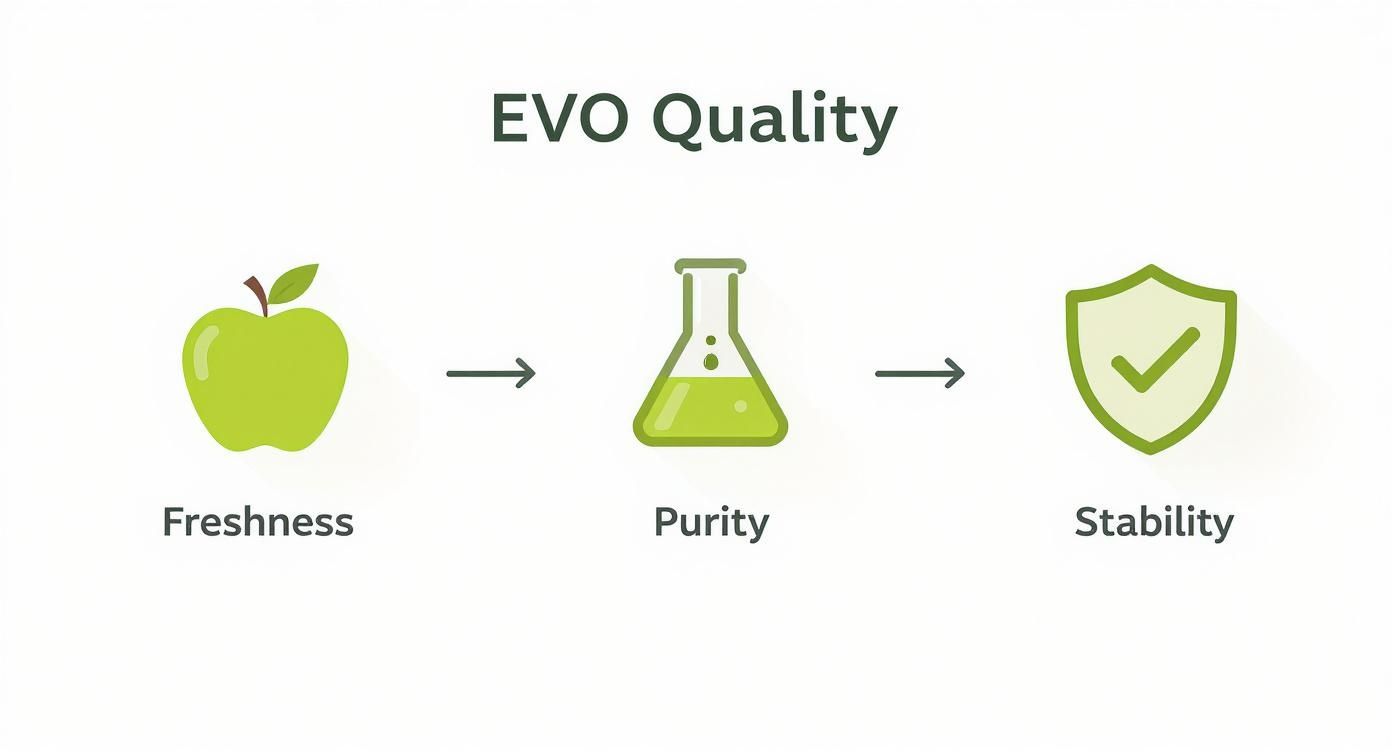
This visual journey drives home the point that excellence is a chain of custody—from the orchard's freshness, through the purity checks, all the way to a stable, magnificent final product.
The meaning of extra virgin oil is defined right here: it's the uncompromised result of a swift, careful, and cool journey. A delay, a bruise, or a degree of extra heat, and the oil’s chance at greatness is lost forever.
This painstaking method is precisely what separates authentic EVOO from lesser oils. It’s a profound commitment to quality over quantity, flavor over efficiency, and purity above all else.
Why Human Taste Is the Ultimate Test
After an olive oil aces its chemical exams, it must face one final, formidable hurdle. This isn't a test run by a machine or measured in a lab; the ultimate judgment on an oil's quality comes down to the finely tuned human palate.
This is where sensory analysis enters the picture. Officially certified tasting panels serve as the final arbiters, trained to detect subtleties that science simply cannot quantify. They ensure the oil doesn't just meet a technical standard but actually delivers pleasure. After all, a perfect acidity score means nothing if the oil tastes like yesterday's dishwater.
The Holy Trinity of Positive Attributes
Trained tasters are searching for a beautiful harmony of three key characteristics. These aren't flaws—they are the vibrant, complex signatures of a high-quality oil crafted from fresh, healthy olives.
- Fruitiness: This covers a whole spectrum of aromas, from green apple and fresh-cut grass to ripe tomato and artichoke. It’s the first confirmation that the oil came from fresh, not rotten, fruit.
- Bitterness: A pleasant bitterness on the tongue is another hallmark of a young, fresh oil. It is also a direct indicator of the potent, healthy antioxidants within.
- Pungency: That’s the peppery, spicy kick you feel in the back of your throat—the one that might make you cough. This glorious sensation comes from oleocanthal, a powerful anti-inflammatory compound you will only find in the best oils.
When these three qualities sing in harmony, you experience the complex, delightful flavor that defines a true extra virgin olive oil. But the panel’s most critical task is actually hunting for the opposite: defects.
Hunting for Disqualifying Defects
The true meaning of "extra virgin" lies in its absolute purity of taste. If a taster detects even one sensory defect, the oil automatically fails. It is disqualified from the extra virgin category, no matter how perfect its chemistry looks on paper.
A single off-flavor, detected by a trained human taster, is enough to strip an oil of its 'extra virgin' crown. There is no appeal.
These foul notes tell a tale of what went wrong between the olive grove and the bottle. A musty flavor, for instance, points to moldy olives. A winey-vinegary taste is a dead giveaway that the olives began to ferment before they were pressed. The most common defect of all is rancidity, which tastes like stale nuts or old crayons and tells you the oil has oxidized from age or poor storage.
Learning to recognize these signals can utterly transform how you shop and taste. You can find out more about what to look for and how to taste olive oil like a professional, which puts you in a much better position to find a truly fantastic bottle. This final human checkpoint is what ensures the "extra virgin" label stands for flawless flavor, not just a passing grade on a lab report.
How a Good Olive Oil Elevates Your Health and Food
https://www.youtube.com/embed/1s9GZ5w044s
So, why go through all the trouble of meeting these strict standards and painstaking production methods? It’s not just about earning a fancy label. The real prize is found in the profound benefits for both your health and your cooking. Choosing genuine EVOO isn't just a purchase; it’s an investment in vibrant flavor and long-term well-being.
At its heart, authentic extra virgin olive oil is a nutritional powerhouse. It’s brimming with heart-healthy monounsaturated fats, powerful antioxidants, and anti-inflammatory compounds that make it a cornerstone of the famously healthy Mediterranean diet. This isn't just folk wisdom—solid research reveals that regular consumption can be a tremendous boost for cardiovascular health. This growing awareness is even shaping the global market, with more and more people seeking out these exact benefits.
More Than Just a Healthy Fat
The true magic behind EVOO's superstar status comes from its polyphenols. Think of these as nature's bodyguards—they protect the oil from going rancid, and they do the same for your body's cells, shielding them from the ravages of time and environmental damage.
Have you ever tasted a fresh, high-quality oil and felt a peppery tickle in the back of your throat? That's the taste of a polyphenol called oleocanthal, a natural anti-inflammatory compound, hard at work. The higher the oil's quality and the fresher the olives were at harvest, the more of these incredible compounds you'll find. Understanding more about the olive oil polyphenol content will give you a new appreciation for why that pungent, slightly bitter kick is a feature to celebrate, not a flaw to avoid. Beyond its general health profile, you can even explore specific benefits, such as using olive oil for weight loss.
The robust, peppery flavor of a high-quality EVOO is not a defect—it is the taste of health. It’s the audible proof that the oil is packed with the very antioxidants that provide its most significant benefits.
Transforming Your Culinary World
In the kitchen, a truly great EVOO changes everything. It's so much more than a simple base for salad dressing. A drizzle of a robust, peppery oil can be the perfect finishing touch on a grilled steak, pulling out all its savory notes. On the other hand, a more delicate and fruity oil can be the secret to an unbelievably moist and flavorful olive oil cake.
It’s an incredibly versatile ingredient. Try using it to:
- Finish Dishes: A generous pour over grilled fish, roasted vegetables, or a warm bowl of soup right before it hits the table adds a burst of fresh, vibrant flavor.
- Enhance Flavors: Whisk it into sauces and vinaigrettes to create a rich, smooth emulsion that lesser oils simply cannot match.
- Bake Beautifully: Swap it in for butter in recipes for cakes, muffins, and breads to add incredible moisture and a subtle, complex taste.
Once you begin exploring its versatility, you'll unlock an entire world of flavor that lesser oils simply can't provide.
Got Questions About Extra Virgin Olive Oil? Let's Get Them Answered.
Even when you know what "extra virgin" is supposed to mean, a lot of practical questions pop up. Let's tackle some of the most common ones so you can feel completely confident when you're buying, using, and storing your olive oil.
So, Can I Actually Cook with Extra Virgin Olive Oil?
This is perhaps the greatest myth we hear, and it simply refuses to die. The answer is an emphatic, definitive yes. High-quality EVOO is so much more than a finishing oil for salads; it's a steadfast workhorse in the kitchen.
A good EVOO has a smoke point that usually sits somewhere between 375-410°F (190-210°C). That’s more than high enough for most everyday cooking, including sautéing and pan-frying. In fact, all those wonderful antioxidants in real extra virgin olive oil actually make it more stable under heat than many of the refined seed oils out there. So please, don't save your best oil for special occasions—use it to make your everyday meals taste better and pack a healthier punch.
What’s the Right Way to Store Olive Oil?
Think of your olive oil as having three mortal enemies: light, heat, and air. If you want to protect that beautiful flavor and all its health benefits, you must keep it safe from them.
Luckily, proper storage is simple. Just keep the bottle in a cool, dark place like a pantry or a cupboard. Whatever you do, don't leave it on the counter right next to your stove; the constant temperature fluctuations will degrade it in no time. And always, always screw the cap back on tightly to keep destructive oxygen out.
There's a reason the best producers use dark glass bottles or opaque tins. It’s the first sign that they care about protecting their oil long after it's left the mill.
What Should I Be Looking for on the Label?
When you’re staring at a wall of olive oil in the store, the label is your best friend. You just have to know how to cut through the marketing noise.
First, hunt for a harvest or press date. Fresher is always, always better. Olive oil is a fruit juice, after all, and you wouldn't buy year-old orange juice. Try to choose an oil that was harvested within the last year.
Next, see if you can spot a quality certification seal. Seals like PDO (Protected Designation of Origin) or PGI (Protected Geographical Indication) are excellent indicators. They guarantee not only where the oil came from but also that it was produced according to strict, time-honored standards.
Finally, as we just discussed, check the packaging. A producer who bottles their oil in dark glass or a tin is signaling that they're serious about quality. These simple checks will give you a much better shot at taking home a truly fantastic bottle.
Here at Learn Olive Oil, we're convinced that the more you understand what extra virgin olive oil really is, the better choices you'll make for your health and in your kitchen. Keep exploring our guides to continue your journey into the world of this liquid gold.
Discover the World of Premium Olive Oil at https://learnoliveoil.com

 Learn Olive Oil
Leave a comment