Let’s settle an old kitchen debate once and for all. Can you fry fish in olive oil? The answer is not only a resounding “yes,” but a well-kept secret to achieving a shatteringly crisp, golden crust and unbelievably tender, flaky fish—without the heavy, greasy aftermath you’ve come to expect.
Forget what you’ve heard. Using a quality olive oil isn't just possible; it's a culinary revelation.
Your Secret Weapon for a Perfect Golden Crust
There's a stubborn myth floating around kitchens that olive oil simply can't take the heat. This single piece of misinformation has cheated countless home cooks out of the sheer joy of a perfectly fried fillet. The truth is, chefs obsessed with flavor and texture have been reaching for olive oil for years.
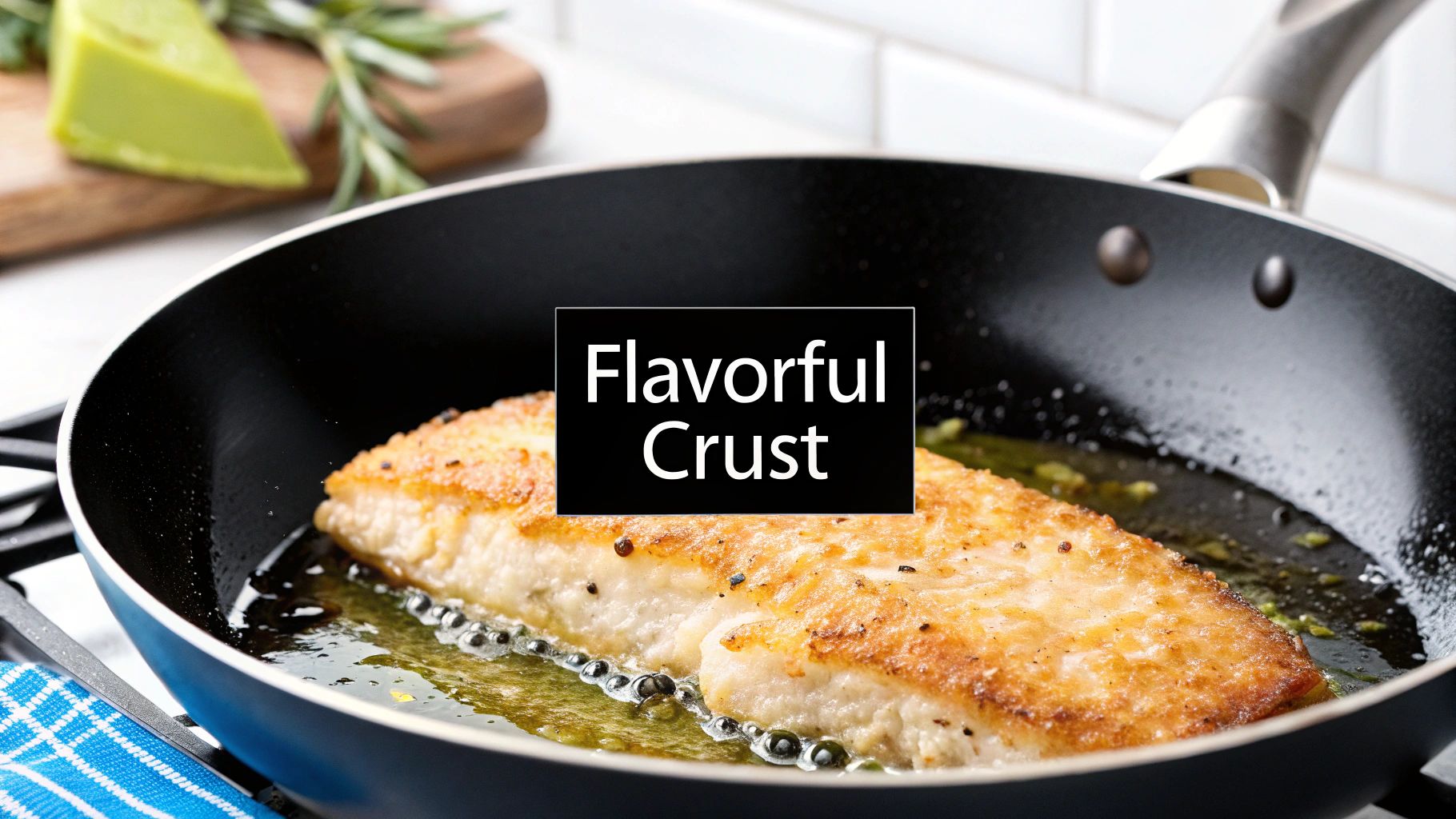
Here's where the magic happens: the moment your fish touches the hot oil, a good olive oil creates a beautiful, crisp crust that acts like a shield. This golden barrier instantly seals the surface, locking in all the natural moisture and juices while preventing the fillet from soaking up excess fat.
The result is the holy grail of fried fish: a fillet that’s succulent and tender on the inside with a deeply satisfying crunch on the outside.
This isn’t just some Mediterranean cooking trick; it’s a globally recognized technique for superior results. In fact, global consumption is projected to climb by 10% during the 2024/2025 season, with huge increases in markets like China (96%) and Japan (29%).
The Flavor Advantage
Unlike bland, neutral seed oils that are merely a means to an end, olive oil is an active participant in your dish. It doesn’t just cook the fish; it elevates it. Depending on the bottle you choose, a good olive oil can impart subtle fruity or peppery notes that complement the seafood, transforming a simple meal into something truly memorable.
Think of it this way: you wouldn't use a flavorless ingredient in your sauce, so why would you settle for one in your cooking fat? This is where a little knowledge can revolutionize your results. Our guide on how to cook with olive oil dives deeper into this very principle.
The goal isn't just to cook the fish, but to build layers of flavor from the moment it hits the pan. Olive oil is an active ingredient, not just a utility.
Benefits Beyond the Pan
Frying fish in olive oil delivers more than just spectacular taste and texture. Here’s what makes it such an intelligent choice:
- Heat Stability: High-quality olive oils are rich in powerful antioxidants and monounsaturated fats. This unique structure makes them far more stable at high temperatures than many people believe, helping them resist breaking down into harmful compounds.
- Less Grease, More Crisp: Because it forms such an effective crust, the fish absorbs less oil overall. Your final dish is lighter and crisper, not weighed down and soggy.
- Nutrient Transfer: When you fry fish in olive oil, some of the oil’s healthy fats and beneficial polyphenols are actually absorbed by the fish, giving your meal an unexpected nutritional boost.
We aren't talking about deep-frying. This is all about a shallow pan-fry that harnesses the unique properties of olive oil to turn a humble piece of fish into a dish you’d be proud to serve anyone.
For a quick reference, here's a simple table summarizing the key points for success.
Quick Guide to Frying Fish with Olive Oil
| Factor | Recommendation | Why It Matters |
|---|---|---|
| Oil Type | Regular Olive Oil or Light Olive Oil | Higher smoke point (~410°F) and neutral flavor won't overpower the fish. |
| Pan Temperature | 350°F to 375°F | Hot enough to create an instant crust, preventing sogginess and oil absorption. |
| Fish Prep | Pat fish completely dry | Moisture is the enemy of crispiness and causes dangerous oil splatters. |
| Amount of Oil | 1/4 to 1/2 inch in the pan | Enough for a shallow fry, ensuring even cooking without submerging the fish. |
Following these simple guidelines will help you get that perfect golden-brown, crispy fillet every single time.
Choosing the Right Bottle for a Perfect Fry
Walking down the supermarket oil aisle can be a dizzying experience. You're faced with a wall of green bottles, all claiming to be the best, and trying to pick one for frying fish feels like a high-stakes gamble. Let's cut through that confusion for good.
Not all olive oils are created equal, especially when you're cranking up the heat. The secret to a perfect, crispy fry lies in picking the right partner for your fish—an oil that can handle the temperature and complement the flavor without stealing the show.
Decoding the Labels: Extra Virgin vs. Regular
First, let's break down the main players on the shelf. You’ll typically see a few key grades, but for frying, we're focused on Extra Virgin Olive Oil (EVOO) and regular Olive Oil (sometimes labeled as "Light" or "Classic").
- Extra Virgin Olive Oil (EVOO): This is the top-shelf stuff—the highest quality, cold-pressed oil with a flavor that can be fruity, grassy, and even a little peppery. Many people wrongly believe its smoke point is too low for frying, but a quality EVOO is surprisingly stable.
- Regular Olive Oil: This is usually a blend of refined olive oil with a touch of virgin olive oil mixed in for flavor. The taste is much milder and more neutral, and it boasts a higher smoke point. This makes it a reliable and often more budget-friendly choice for frying fish.
Your decision really comes down to the flavor profile you want. If you're frying a delicate white fish like sole or flounder, a neutral, regular olive oil is a fantastic, foolproof option. It does its job beautifully without interfering with the fish's subtle taste.
Smoke Point: The Myth and The Reality
The term smoke point gets thrown around a lot, and frankly, it's often misunderstood. It's simply the temperature where an oil starts to visibly break down and smoke. For pan-frying fish, you need an oil that stays stable in that sweet spot of 350-375°F (175-190°C).
And here’s the good news: most olive oils are more than up to the task.
A common myth is that EVOO has a low smoke point. In reality, a high-quality extra virgin olive oil can have a smoke point ranging from 375°F to 410°F, which is well above the temperature you need for pan-frying.
Regular or "light" olive oil pushes that even higher, often to around 410-465°F (210-240°C), giving you a massive margin for error. The takeaway is simple: whether you choose a quality EVOO or a standard olive oil, you are well within the safe and effective range for getting that perfect golden crust. Knowing which is the best olive oil to cook with for different methods is a game-changer in the kitchen.
Matching Flavor to Your Fish
Beyond the technical specs, the most important decision comes down to taste. It helps to think of the oil as an ingredient—a seasoning, not just a cooking medium.
If you’re making a bold, Mediterranean-style dish with a heartier fish like mackerel or sardines, a robust and peppery EVOO can be absolutely spectacular. It infuses the entire dish with its own unique character. On the flip side, for a classic fish and chips with cod or haddock, a mild, light olive oil lets the clean, simple flavor of the fish shine.
Your goal here is harmony. Before you grab a bottle, just ask yourself what you want the final dish to taste like. Do you want the oil to be a background note or a co-star? Answering that question is the final step to picking the perfect bottle and ensuring your fried fish is unforgettable.
Mastering Heat for an Unbeatable Crust
The difference between a flawlessly crisp, golden-brown fillet and a greasy, sad disappointment comes down to one thing: heat. Get this right, and you'll nail that crave-worthy crunch every single time. It's not just about cranking up the stove; it's about controlling the heat like a seasoned pro.
You're aiming for a very specific temperature window: 350-375°F (175-190°C). This is the sweet spot where the crust forms instantly, sealing the fish and preventing it from soaking up oil like a sponge.
Don't have a thermometer? No problem. The oil itself will tell you when it’s ready. Look for a subtle shimmer, almost like delicate waves moving across the surface of the pan. If you see even the faintest wisps of smoke, you’ve gone too far. Pull the pan off the heat for a moment and turn the burner down before you proceed.
Your Pre-Frying Checklist
Before a single piece of fish even thinks about hitting that hot oil, there are two crucial steps you must not skip. Trust me, they will save you from disaster.
- Pat the Fish Dry: Moisture is the arch-nemesis of crispy skin. When water hits hot oil, it causes dangerous splattering and creates steam—and steam is what makes your coating soggy. Use paper towels and pat every inch of that fillet completely dry.
- Give It Space: This is the cardinal sin of frying. Overcrowding the pan causes the oil's temperature to plummet, forcing your fish to steam instead of fry. Always cook in batches if you must. A little patience here pays off with a perfect crust on every single piece.
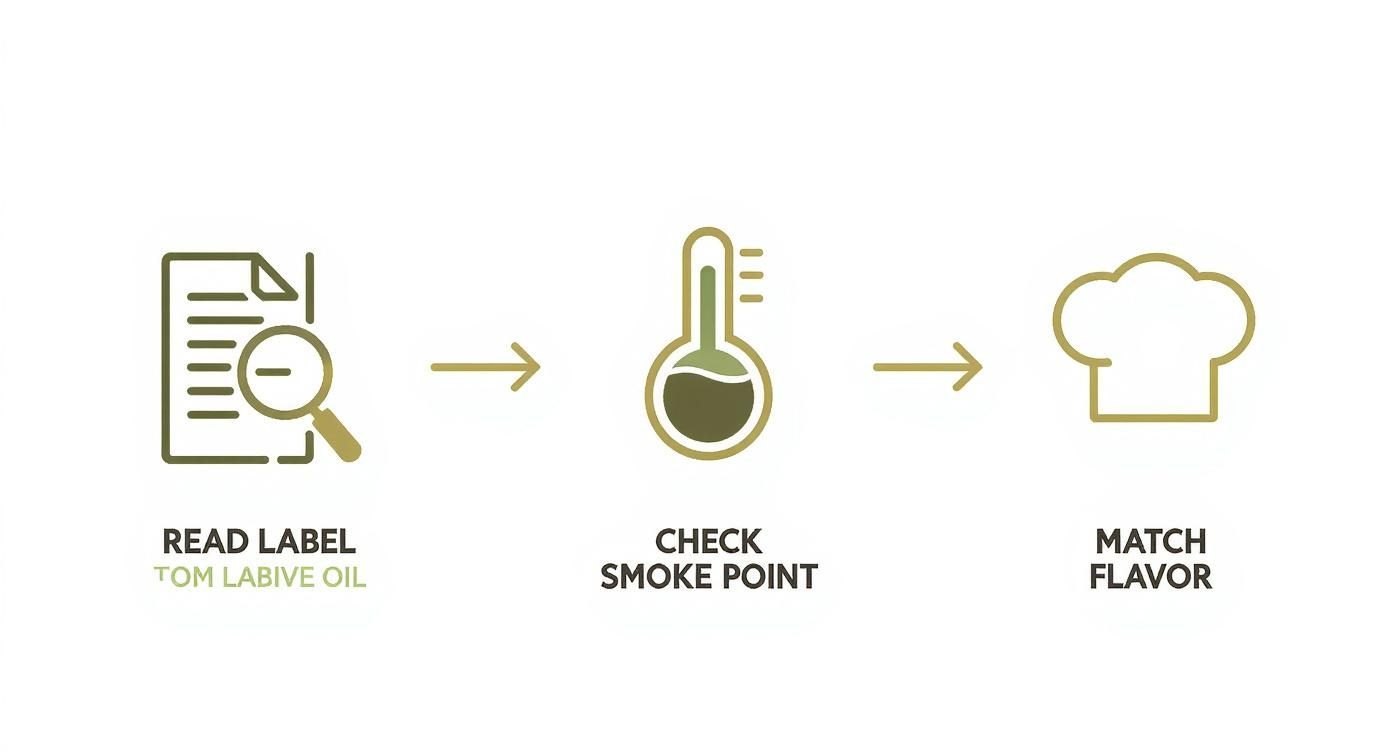
Ultimately, getting that perfect fry starts before you even turn on the stove. Choosing the right oil by checking its label and understanding its smoke point is the first, and most important, step.
Why Temperature Control Is Crucial
Holding a steady temperature isn't just about texture; it's also about health and stability. Olive oil often gets the nod for frying fish because it produces significantly fewer harmful compounds at high heat compared to many other common cooking oils.
Its resilience is key. In some commercial settings, oil might be used for up to six frying cycles before being replaced. Olive oil's ability to stand up to these conditions with minimal breakdown makes it a much more stable and reliable choice.
While we're talking about pan-frying, it's interesting to see how the pros manage heat on a bigger scale. This commercial deep fryer guide offers a peek into how professional kitchens get those consistently crispy results—the principles are exactly the same for your home kitchen. Digging into the details of the olive oil smoke point will also give you more confidence at the stove.
Remember, you are in control. The shimmer of the oil, the sizzle of the fish, and the space in the pan are all signals you can read and react to. Frying isn't guesswork; it's about paying attention.
Frying Without the Health Hang-Ups
Let's be honest. The word "fried" doesn't exactly scream "healthy." It often brings to mind heavy, greasy meals that leave you feeling sluggish. But when you’re frying fish in a good quality olive oil, you need to completely rethink that stereotype. What’s happening in the pan is actually a fascinating nutritional trade-off, and it's one that works in your favor.
It's true that high heat changes food. A common myth is that all the amazing omega-3s in fish are destroyed the second they hit a hot pan, but that's just not the whole story. A huge portion of these good fats remains perfectly intact, ready to support your brain and heart.
But here’s where it gets really interesting. While some of the fish's natural fats change, the fillet gains something incredible in return.
The Great Fatty Acid Exchange
The real magic of pan-frying fish in olive oil is a process I like to call the "fatty acid exchange." As the fish sizzles away, it absorbs some of the oil it's cooking in, and this actually improves its nutritional profile. This isn't just wishful thinking; it's a measurable, beneficial process.
When fish is pan-fried in olive oil, its EPA and DHA omega-3 content does decrease a bit, but it still holds onto a solid 70-75% of the original amount. In return, the fish soaks up a massive dose of oleic acid—the monounsaturated superstar that makes olive oil a pillar of the heart-healthy Mediterranean diet. In fact, studies show this beneficial fat can increase by nearly fivefold in the fillet. You can read more about these lipid profile changes on journal.pan.olsztyn.pl.
You are essentially enriching your fish with one of the healthiest fats on the planet. The fillet becomes a vessel for oleic acid, giving you a delicious meal that's much smarter than its "fried" label suggests.
This is exactly why pan-frying in olive oil is such an intelligent choice. You get that irresistible crispy skin without the nutritional baggage you might expect.
Antioxidants as Your Bodyguard
Another huge benefit comes from olive oil's secret weapon: its antioxidants. These powerful compounds, like polyphenols and vitamin E, don’t just vanish when you heat the oil. Instead, they act like tiny bodyguards for both the oil and the fish.
Here’s what they do:
- Protect the Oil: These antioxidants provide stability at high heat, helping the olive oil resist breaking down and forming harmful compounds.
- Shield the Fish: They also help protect the delicate omega-3s still in the fish from being damaged by heat and oxidation.
This dual-action protection means you end up with a cleaner, healthier, and more stable final dish. It’s a compelling reason why this method is about more than just amazing flavor and texture; it's a genuinely smart way to cook. For a deeper dive into making healthy choices, our guide on the healthiest olive oil for cooking offers even more great advice.
So go ahead and enjoy that golden, crispy fillet. It's a pleasure you don't have to feel guilty about.
Finishing Touches That Make the Meal
You've done the hard work. The fish is fried to a perfect golden-brown, with that irresistible crackling crust and tender, flaky inside. Now for the fun part—the final flourishes that take a simple piece of fried fish from good to absolutely unforgettable.
This is where you play with flavor and texture, turning that beautiful fillet into a complete, well-rounded meal that people will talk about long after the plates are cleared. It's about creating a little magic on the plate.
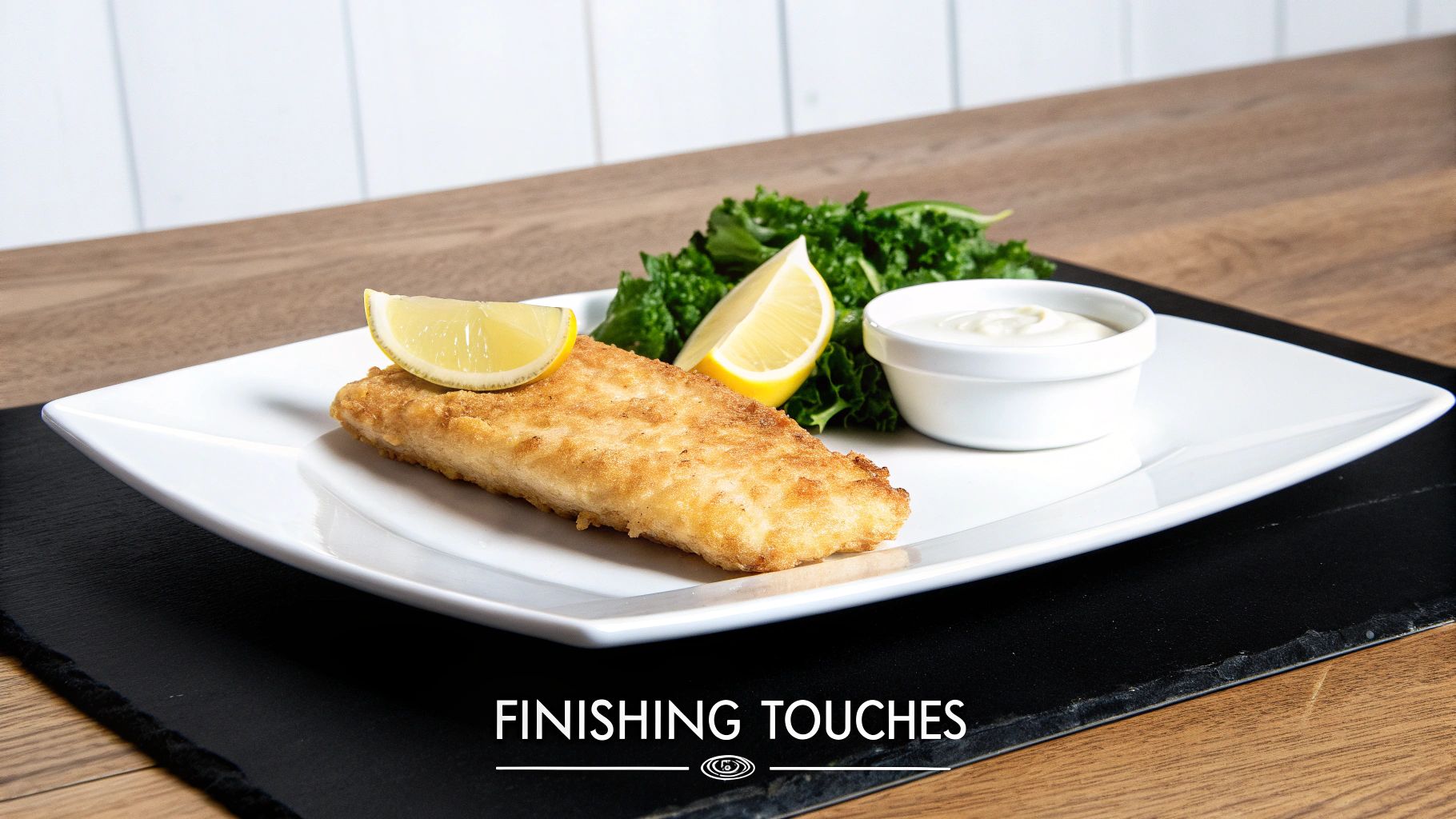
Elevating the Essentials
Some things are classics for a reason, but even the old standbys can be improved with a little attention to detail.
- Lemon Wedges: A squeeze of fresh lemon is non-negotiable. That bright, acidic kick cuts right through the richness and makes the fish taste even fresher.
- A Final Sprinkle of Salt: Ditch the fine table salt. A pinch of flaky sea salt, like Maldon, adds a delicate crunch and a clean, briny flavor that really pops.
- The Right Sauce: Tartar sauce is a classic, but don't stop there. Think about a pungent, creamy garlic aioli. Or for a completely different vibe, a zesty, herb-forward chimichurri adds a fantastic punch of freshness.
These small additions are all about creating balance. The acid from the lemon, the texture from the salt, and the creaminess or zest from a great sauce all work together to highlight the fish, not hide it.
A great finish doesn't compete with the fish; it completes it. Each element should add a layer of flavor or texture that makes the entire dish more exciting.
Building a Balanced Plate
With your perfectly garnished fish ready to go, what do you put next to it? The key is contrast.
A crisp, sharp salad tossed in a simple vinaigrette is always a winner, offering a cool, refreshing bite against the warm, savory fish. If you're looking for something more substantial, you can't go wrong with roasted new potatoes tossed with fresh rosemary and a drizzle of olive oil.
Even something as simple as steamed green beans or asparagus, finished with a little of your good olive oil and another squeeze of lemon, can round out the meal perfectly.
Many of these fantastic sides and sauces start with the same foundation. Getting comfortable with making your own sauces with olive oil will give you a whole new playbook of ideas. These final touches are what turn a piece of protein into a thoughtful, delicious, and memorable meal.
Answering Your Questions About Frying Fish in Olive Oil
Trying a new technique in the kitchen always brings up a few questions, even for cooks who've been at it for years. When it comes to frying with olive oil, I've heard the same handful of concerns pop up time and time again. Let's tackle them head-on so you can get that pan sizzling with total confidence.
Can I Really Use Extra Virgin Olive Oil to Fry Fish?
Yes, you absolutely can, and the results can be fantastic. A quality extra virgin olive oil has a smoke point well above the 350–375°F you need for pan-frying. Plus, its natural antioxidants make it more stable under heat than you might think, which is good for both the oil and your fish. The trick is to use fresh, legitimate EVOO.
That being said, if you're looking for a more neutral flavor or a budget-friendly option, a regular or "light" olive oil is a reliable workhorse. It performs beautifully and really lets the delicate taste of the fish take center stage.
How Do I Keep the Oil From Splattering Everywhere?
Splatter is the inevitable, angry reaction when water hits hot oil. Your best line of defense is a bone-dry piece of fish. After you rinse the fillets, pat them down with paper towels until they are completely dry—and I mean completely. Every drop of moisture you get rid of is one less pop and hiss from the pan.
Another common mistake is overcrowding the pan. Tossing in too many fillets at once drops the oil temperature and creates steam. That steam doesn't just cause splattering; it's the enemy of a crispy crust. And one last tip: be gentle. Always lay the fish into the pan away from you. That way, if a stray splash does happen, it goes forward, not back toward you.
The Secret to a Clean Stove: Remove the water, respect the heat, and give the fish its space. These three rules will solve 99% of your splattering problems.
My Fried Fish Always Ends Up Soggy. What Am I Doing Wrong?
There's nothing more disappointing than a soggy fillet, but thankfully, the fix is usually pretty simple. This problem almost always comes down to two culprits: timid heat or a crowded pan.
Your oil absolutely must be hot enough before the fish hits it. If you don't see a gentle shimmer, wait. If the oil isn't hot enough, the fish will just soak it up like a sponge instead of instantly forming that protective, crispy crust.
And again, don't overcrowd the pan. Cooking in batches might feel like it takes an extra minute, but it’s the only way to keep the oil hot enough to get a perfect sear on every single piece. A little patience is a small price to pay for that perfect crunch.
How Much Olive Oil Do I Actually Need?
Keep in mind, we're pan-frying here, not deep-frying. All you need is a shallow, even layer of oil to get that beautiful golden-brown crust. A good rule of thumb is to pour enough olive oil into the skillet to cover the bottom by about 1/4 of an inch.
This is just the right amount to conduct heat evenly across the entire surface of the fish. When you place a fillet in the pan, the oil should come about halfway up its side. This crisps the bottom perfectly while the top gently cooks with the rising heat, setting you up for a perfect flip. It’s the ideal balance for a light, non-greasy result.
At Learn Olive Oil, we believe that understanding the details is what turns good cooking into great cooking. With the right know-how, you can transform simple ingredients into something truly special.
Ready to explore the world of premium olive oil? Discover your next favorite bottle and perfect your technique with us.

 Learn Olive Oil
Leave a comment