Mastering Olive Oil Basics (Without Getting Overwhelmed)
Let's face it: choosing the right olive oil can be confusing. The sheer variety of options available can make even experienced cooks feel a little lost. This section simplifies things by focusing on the practical uses of olive oil in your kitchen. We'll explore the key differences between extra virgin, virgin, and light olive oil, highlighting when each type is best suited for your culinary needs.
Understanding Olive Oil Grades
First, let's decipher the labels. Extra virgin olive oil (EVOO) represents the highest quality, derived from the first cold-pressing of olives. This method preserves the natural flavors and beneficial antioxidants. Virgin olive oil, while still a good option, possesses a slightly lower quality and a more neutral flavor profile. Finally, light olive oil undergoes refining, resulting in a higher smoke point, but a less pronounced olive taste. This makes it suitable for high-heat cooking methods where the subtle flavors of EVOO might be diminished.
Matching Oil to Method
Selecting the right olive oil depends largely on how you plan to use it. Delicate EVOO, for instance, is ideal for drizzling over fresh salads or as a finishing touch for pasta dishes, allowing its robust flavor to shine. For sautéing vegetables or pan-frying, virgin olive oil provides a good balance of flavor and value. Globally, cooking with olive oil is a widespread practice, especially in countries with high consumption rates like Greece, where approximately 9.3 kg are consumed per person annually. Olive oil's versatility makes it a staple for various cooking techniques, from sautéing and roasting to enhancing the flavor of salads and pasta. For further insights into consumption statistics, visit: International Olive Council.
Storing Your Olive Oil
Proper storage is essential for maintaining the quality and flavor of your olive oil. Keep it in a cool, dark place away from direct sunlight and heat sources – a pantry or cupboard, not next to the stove, is ideal. Oxygen also degrades olive oil, so always ensure the bottle is tightly sealed after each use. These simple steps will help preserve the quality of your olive oil and allow you to fully enjoy its culinary benefits.
Essential Cooking Techniques That Actually Work
Forget complicated chef maneuvers; let's focus on mastering the everyday cooking techniques using olive oil. This section breaks down the fundamentals, from sautéing vibrant vegetables to perfectly searing proteins. We'll explore the secrets to preventing soggy vegetables and achieving that desirable golden-brown crust without burning the oil.
Sautéing: The Gateway to Flavor
Sautéing is a cornerstone of countless dishes, relying on high heat and a small amount of olive oil. The key is ensuring your pan is hot before adding the oil. This prevents sticking and promotes even cooking.
When sautéing vegetables, add them in a single layer to ensure proper browning. Overcrowding the pan leads to steaming instead of sautéing, resulting in soggy vegetables rather than rich, caramelized flavors.
Pan-Frying: Achieving the Perfect Sear
Similar to sautéing, pan-frying utilizes olive oil to create beautifully seared dishes. However, pan-frying often involves slightly lower heat and longer cooking times, especially for thicker cuts of meat or fish.
A good rule of thumb is to use enough olive oil to coat the bottom of the pan, about 1-2 tablespoons depending on the pan size. The oil is ready once it shimmers. This technique allows a delicious crust to form, sealing in juices and creating a depth of flavor. For optimal searing, ensure your protein is dry before adding it to the hot pan.
Roasting: Bringing Out Natural Sweetness
Roasting vegetables and proteins with olive oil brings out their inherent sweetness and creates a wonderful depth of flavor. Toss your vegetables or coat your protein with olive oil, ensuring every piece is evenly covered.
This technique not only enhances flavor but also prevents sticking and promotes even cooking. The high heat of the oven helps caramelize the natural sugars, creating a flavorful crust. For example, roasting root vegetables like carrots and potatoes with olive oil and herbs like rosemary or thyme is a simple yet effective way to create a delicious and healthy side dish.
Poaching: Gentle Cooking for Delicate Flavors
Poaching is a gentler cooking method that involves submerging food in a flavorful liquid, often with a touch of olive oil. This technique is perfect for delicate proteins like fish or eggs.
The olive oil adds richness and helps retain moisture. Poaching is also an excellent way to infuse subtle flavors into dishes. Poaching fish in a broth infused with herbs and a drizzle of olive oil results in a healthy and flavorful meal. Mastering these techniques opens up a world of culinary possibilities, allowing you to explore the versatility of olive oil and create delicious, healthy meals.
Learning From Global Olive Oil Traditions
The world of olive oil is rich with diverse traditions, each developed over centuries. Exploring these culinary practices offers valuable lessons in how to best utilize this essential ingredient. From Spain, where olive oil is a cornerstone of the kitchen, to Italy, where it's the heart of countless sauces, and across to Greece, where it elevates simple dishes, there's a wealth of knowledge to be gained.
Spanish Secrets: Olive Oil as a Foundation
Spanish cuisine truly showcases olive oil's remarkable versatility. Consider sofrito, the aromatic foundation of many Spanish dishes, gently simmered in olive oil to unlock its rich flavors. Or the simplicity of pan con tomate, where toasted bread is rubbed with garlic and drizzled with fragrant olive oil. These preparations highlight the importance of high-quality olive oil and its ability to enhance even the simplest ingredients.
Italian Expertise: The Art of Emulsification
In Italy, olive oil is the key to crafting light yet flavorful sauces. The technique of emulsification, blending olive oil with water-based ingredients like pasta water or vinegar, creates a silky texture and allows the oil's flavor to infuse the dish. This is evident in classic pasta dishes and vibrant salads, where the olive oil acts as a unifying element, bringing diverse flavors together.
Greek Simplicity: Highlighting Fresh Ingredients
Greek cuisine frequently uses olive oil in its purest form, emphasizing the natural flavors of fresh ingredients. Picture roasted vegetables drizzled with olive oil, or a simple salad dressed with olive oil and lemon. These dishes demonstrate olive oil's ability to enhance, not mask, the inherent flavors of the food.
This approach reflects a broader global trend of increasing olive oil consumption. Markets like Egypt and Algeria have seen a rise in table olive consumption, mirroring shifts in overall olive oil demand. Emerging markets, like China, present significant growth potential due to their large populations and growing interest in healthy eating habits. Learn more about this trend by exploring the global olive oil consumption trends.
Adapting Traditions for Modern Kitchens
While rooted in specific cultures, these traditional techniques can easily be adapted for modern kitchens. The Spanish sofrito technique can be a base for soups, stews, or stir-fries. Italian emulsification can enrich any sauce. The Greek approach to roasting works beautifully with various vegetables and proteins. By understanding the principles behind these methods, we can incorporate them into our own cooking, creating dishes that are both flavorful and authentically inspired.
Choosing The Right Oil For Every Cooking Method
Selecting the right olive oil is a critical step for any dish. Just as you wouldn't wear running shoes to a formal dinner, you shouldn't use delicate extra virgin olive oil for high-heat searing. This guide will help you choose the right olive oil for your cooking needs, ensuring delicious results every time. We'll also cover the importance of smoke points and flavor retention, helping you make the most of your olive oil.
Smoke Point and Flavor: Finding the Right Balance
The smoke point of an oil is the temperature at which it begins to break down, producing smoke and potentially harmful compounds. This breakdown also imparts off-flavors to your food. Extra virgin olive oil, known for its complex and robust flavor, has a lower smoke point than other olive oil varieties, typically around 375°F (190°C). This makes it less suitable for methods like deep-frying.
However, for low and medium-heat cooking methods like sautéing or baking, extra virgin olive oil is an excellent choice. Its rich flavor enhances the taste of your dishes. Refined olive oil, sometimes labeled as "light" olive oil, has a higher smoke point, around 465°F (240°C). This makes it suitable for high-heat cooking, although the refining process diminishes some of its flavor.
Olive Oil Types and Their Uses
Understanding the characteristics of each olive oil type is key to making the right choice. Here's a helpful breakdown:
- Extra Virgin Olive Oil: Best for salad dressings, dips, finishing dishes, and low-heat cooking such as poaching or gentle sautéing. Its robust flavor shines when not exposed to high temperatures.
- Virgin Olive Oil: This versatile oil is a good all-around option for sautéing, baking, and roasting, where a moderate smoke point is sufficient.
- Light Olive Oil: Ideal for high-heat cooking methods like searing and stir-frying. While milder in flavor, it can withstand higher temperatures without breaking down.
- Olive Pomace Oil: Extracted from the olive pulp after the first pressing, this oil has the highest smoke point of all olive oil varieties. This makes it suitable for deep-frying, but it offers a neutral flavor profile.
To help you visualize the best uses for each type of olive oil, take a look at the table below:
Olive Oil Types and Best Cooking Applications
| Olive Oil Type | Smoke Point (°F) | Best Cooking Methods | Flavor Profile |
|---|---|---|---|
| Extra Virgin Olive Oil | 375 | Dressings, dips, finishing touches, low-heat sautéing, poaching | Robust, peppery, fruity |
| Virgin Olive Oil | 420 | Sautéing, baking, roasting | Mildly fruity, slightly peppery |
| Light Olive Oil | 465 | Searing, stir-frying, high-heat cooking | Neutral, mild |
| Olive Pomace Oil | 460-500 | Deep-frying | Very neutral, bland |
This table summarizes the key characteristics of each olive oil type, making it easier to choose the right one for your cooking needs. Remember to consider both the smoke point and the flavor profile when selecting your olive oil.
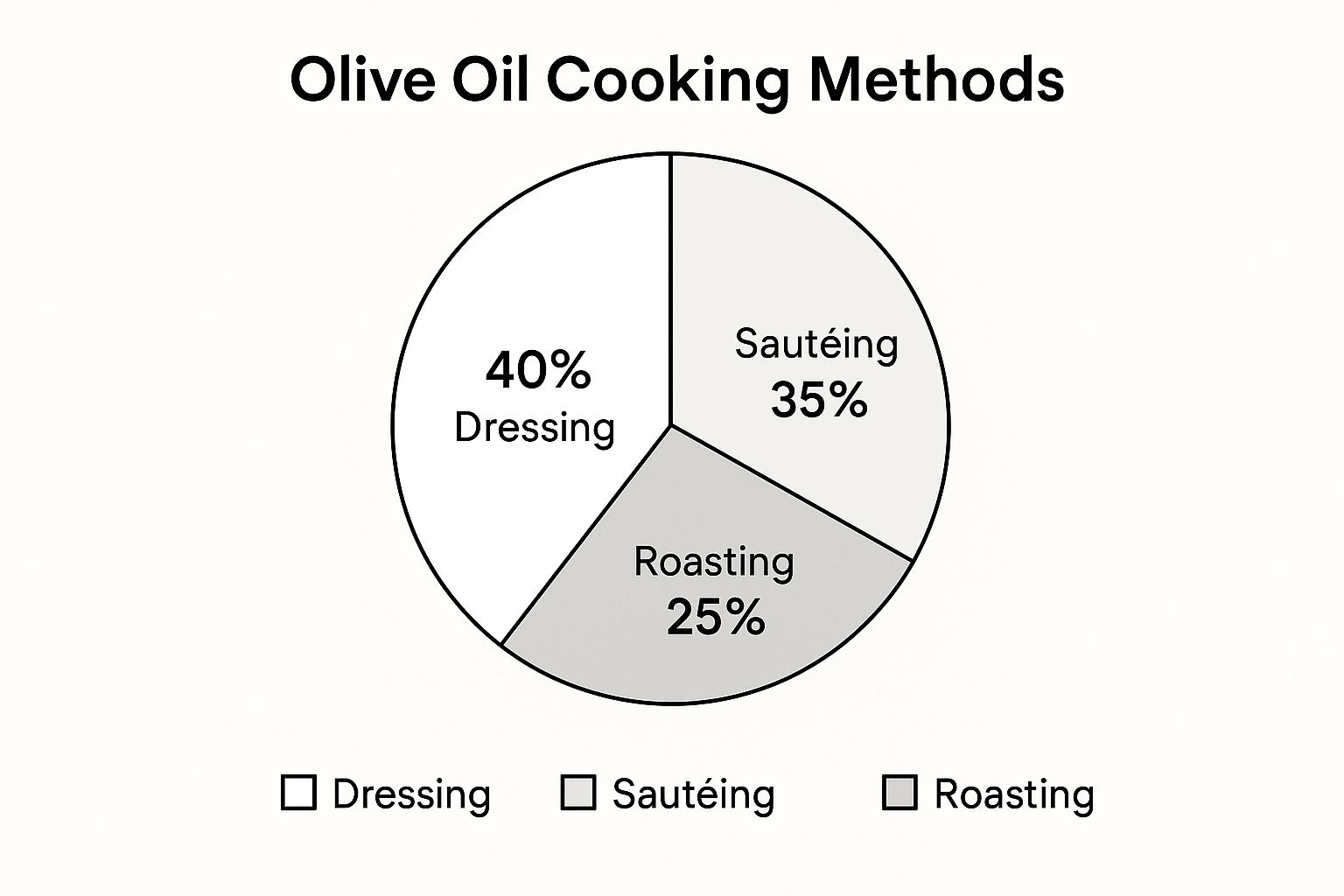
The pie chart above illustrates the most common uses of olive oil: dressing (40%), sautéing (35%), and roasting (25%). This demonstrates olive oil's versatility and underscores the importance of selecting the right type for each cooking method.
By understanding the nuances of olive oil, you can avoid common pitfalls such as burning delicate extra virgin olive oil at high temperatures or using a bland, refined oil where a richer flavor is desired. This knowledge will empower you to make informed decisions and elevate your cooking.
Avoiding The Mistakes That Ruin Great Dishes
Even with the highest quality olive oil, seemingly small mistakes can negatively impact your dishes. This section explores common errors people make when cooking with olive oil, from overheating to improper storage. We'll also provide helpful solutions for either rescuing a dish or preventing these issues altogether. Mastering these techniques will undoubtedly elevate your cooking.
The Perils of Overheating
One of the most common mistakes is overheating the olive oil. This not only diminishes the delicate flavor of extra virgin olive oil but also introduces bitter, acrid notes. These unwanted flavors can unfortunately ruin an otherwise perfect dish. Remember the importance of smoke points? Exceeding the smoke point, especially with extra virgin olive oil, leads to this undesirable outcome.
For example, using extra virgin olive oil for high-heat searing is a frequent misstep. The intense heat quickly degrades the oil, resulting in an off-putting flavor. Instead, choose an olive oil with a higher smoke point, such as virgin or light olive oil, for high-heat cooking methods. Look for a shimmering appearance in the heated oil; this indicates it's ready for cooking. Be mindful that continued heating past this point will quickly lead to overheating.
Storage Solutions: Preserving Quality
Proper storage is just as important as proper cooking techniques when it comes to olive oil. Exposure to light, heat, and air will degrade the oil over time. This degradation diminishes both its flavor and its health benefits. Store your olive oil in a cool, dark place, like a pantry or cupboard. Keep it away from direct sunlight and heat sources such as the stove.
Always ensure the bottle is tightly sealed after each use to minimize oxidation. This will help maintain the olive oil's quality and freshness for as long as possible.
Troubleshooting Common Cooking Problems
Even with the best intentions, cooking mishaps can occur. If a dish turns out too greasy, it may be from using too much olive oil. Another possibility is not allowing excess oil to drain properly. For example, when roasting vegetables, make sure they're coated but not drowning in olive oil. A light coating is all that’s needed for flavor and even cooking.
Allowing fried foods to rest on a wire rack or paper towels after cooking helps absorb excess oil. If your dish has a bitter taste, it likely indicates the olive oil was overheated. Depending on the severity, you might have to start over. However, sometimes adding a strong flavor, such as lemon juice or vinegar, can help balance the bitterness. Knowing how to troubleshoot common olive oil cooking problems can save a dish and prevent similar mistakes in the future. These simple steps and troubleshooting techniques will help you enjoy delicious results every time you cook with olive oil.
Health Benefits You Can Actually Trust
Olive oil has long been praised for its potential health advantages. Beyond its distinct flavor, olive oil, especially extra virgin olive oil, offers a range of nutritional benefits. Let's explore the science-backed advantages, separating genuine benefits from marketing claims.
Monounsaturated Fats: The Heart-Healthy Helpers
Olive oil is rich in monounsaturated fats, often referred to as "good" fats. These fats can help reduce LDL cholesterol (the "bad" cholesterol) and potentially increase HDL cholesterol (the "good" cholesterol). This positive effect on cholesterol levels contributes to better heart health. The health benefits of olive oil have contributed to its widespread use in cooking around the world. Olive oil consumption is expected to exceed 3 million tonnes in the 2024/25 crop year, a significant increase over previous years. Learn more from the International Olive Council.
Antioxidants: Protecting Against Cell Damage
Extra virgin olive oil is also packed with antioxidants, compounds that protect your body from damage caused by free radicals. These unstable molecules can lead to cell damage and various diseases. Antioxidants help neutralize free radicals, contributing to overall health and well-being.
Anti-Inflammatory Properties: A Natural Soother
Chronic inflammation plays a role in many diseases. Research indicates that olive oil may have anti-inflammatory properties due to compounds like oleocanthal. This naturally occurring anti-inflammatory agent may offer similar benefits to some over-the-counter pain relievers.
Cooking With Olive Oil: Preserving Nutrients
While olive oil offers many health benefits, it's important to remember that some of its beneficial compounds, like antioxidants, are sensitive to heat. High-heat cooking methods can reduce their effectiveness. This means that while using olive oil at high temperatures is acceptable (especially those with higher smoke points), using it in low-heat applications or as a finishing drizzle will help retain more of those valuable antioxidants.
Olive Oil in Your Diet: A Versatile Addition
Olive oil easily fits into a variety of dietary approaches. It is a staple in the Mediterranean diet, known for its health benefits. Whether you follow a low-carb, vegetarian, or simply a balanced diet, olive oil can be a valuable addition. Remember that portion control is still important, even with healthy fats. Moderation is key to maximizing the benefits of olive oil while maintaining a healthy weight. Use olive oil strategically to enhance flavors and add nutritional value without overusing it.
Making Olive Oil Cooking Effortless Every Day
This section is all about incorporating olive oil seamlessly into your everyday cooking. We'll explore time-saving strategies, budget-friendly tips, and simple meal prep methods that transform olive oil from a pantry staple into your secret weapon for quick, delicious meals. Whether you're cooking for one or a family, these practical techniques will make cooking with olive oil truly effortless.
Streamlining Your Weeknight Cooking
One of the easiest ways to incorporate olive oil is by using it as the base for weeknight meals. Quickly sautéing vegetables in olive oil with a touch of garlic and herbs creates a healthy and flavorful side dish in minutes. This method not only saves time but also minimizes cleanup.
Another simple technique is to create flavored oils. Infusing olive oil with herbs like rosemary and thyme, or spices like chili flakes, adds instant complexity to your cooking. These flavored oils can be used for everything from salad dressings to marinades, adding depth and richness to otherwise simple dishes.
Meal Prep Magic with Olive Oil
Olive oil also plays a crucial role in meal prepping, especially when roasting vegetables. Roasting a large batch of vegetables tossed in olive oil on Sunday sets you up for quick and healthy meals throughout the week. These roasted vegetables can be easily added to salads, grain bowls, or enjoyed as a standalone side dish.
Smart Shopping and Storage Solutions
Saving money on olive oil doesn't mean compromising on quality. Buying larger containers of good-quality olive oil is often more economical in the long run. Proper storage also plays a crucial role in preserving the flavor and freshness of your olive oil. Store it in a cool, dark place, away from heat and light.
Building a Repertoire of Olive Oil Combinations
Developing go-to combinations that work with ingredients you already have on hand will make cooking with olive oil even easier. This could be as simple as pairing olive oil with lemon juice and herbs for salad dressings or using it to create a quick pan sauce for pasta. Having these combinations at the ready streamlines the cooking process. The table below provides a sample weekly olive oil cooking schedule to get you started.
To help you visualize how easily olive oil can be integrated into your weekly meal plan, we’ve created a sample schedule. This table outlines how you can use different cooking methods with olive oil, along with estimated prep times.
Weekly Olive Oil Cooking Schedule
Practical meal planning guide showing how to incorporate olive oil into daily cooking routines
| Day | Cooking Method | Dish Type | Olive Oil Usage | Prep Time |
|---|---|---|---|---|
| Monday | Sautéing | Chicken and Vegetables | 2 tbsp | 15 min |
| Tuesday | Roasting | Salmon with Roasted Asparagus | 1 tbsp | 20 min |
| Wednesday | Dressing | Salad with Olive Oil & Lemon Vinaigrette | 2 tbsp | 5 min |
| Thursday | Sautéing | Pasta with Olive Oil, Garlic, & Shrimp | 3 tbsp | 20 min |
| Friday | Roasting | Roasted Chicken with Potatoes & Herbs | 1/4 cup | 30 min |
| Saturday | Dressing | Bruschetta with Olive Oil & Tomatoes | 2 tbsp | 10 min |
| Sunday | Roasting | Large Batch of Roasted Vegetables for Meal Prep | 1/4 cup | 45 min |
This schedule offers a starting point for incorporating olive oil into your meals. Feel free to adjust the dishes and cooking methods based on your preferences and dietary needs. The key takeaway is that with a little planning, olive oil can become an integral part of your weekly cooking routine.
By following these tips, you’ll find that cooking with olive oil is not only healthy and delicious but also incredibly convenient. It truly is a versatile ingredient that can elevate everyday meals and simplify your cooking routine.
Ready to explore the world of premium olive oil? Visit Learn Olive Oil to embark on your journey and discover the finest olive oils from around the world.

 Learn Olive Oil
Leave a comment