Let's be brutally honest. Most sauces are a compromise. They're either a flavor-packed nightmare of unhealthy ingredients, or a "healthy" option that tastes like watered-down disappointment.
But what if I told you there's a third way? A way to create sauces so vibrant, so delicious, and so shockingly simple, they will forever change the way you cook.
It all hinges on one ingredient, likely sitting in your pantry right now: a truly fantastic extra virgin olive oil. With it, you can transform a handful of basic ingredients into something spectacular in mere minutes. We're talking about dressings that sing, dips that demand attention, and pasta coatings so perfect, you’ll wonder why you ever bought a jar of anything.
The Foundation of Flavor: Why Your Choice of Olive Oil is Everything
Forget complicated techniques and endless shopping lists. The real secret to jaw-dropping flavor isn't a secret at all. It's a choice.
A high-quality olive oil isn't just a cooking fat; it's the heart and soul of the world's most cherished sauces. Think of rustic Mediterranean classics or fresh, modern creations that burst with life. This liquid gold is the foundation upon which true flavor is built.
It's about more than just taste. It’s about creating a luxurious, silky texture. It's about packing your food with powerful health benefits. And it’s about giving you a level of versatility that will make you feel like a genius in the kitchen.
Frankly, choosing the right olive oil is the single most important decision you'll make. Get this right, and everything else falls into place.
The Power of the Press
Let's get one thing straight: not all olive oil is created equal. The chasm between a peppery, robust extra virgin olive oil meant for finishing a dish and a milder, light olive oil for a cooked sauce base is as wide as the Grand Canyon.
One is a bold, upfront star, demanding the spotlight. The other provides a subtle, rich foundation that allows other ingredients to perform their best. Understanding the difference between these players is fundamental to making truly exceptional sauces.
There’s a reason premium oils are finally getting the attention they deserve. As more people demand food that is both delicious and genuinely good for them, the market for high-quality oils has exploded. In fact, the market for Extra Virgin Olive Oil (EVOO) is growing by about 4.5-6.3% each year—a surge driven by the undeniable, heart-healthy power of Mediterranean-style diets.
To help you make the right choice every time, here’s a quick reference for picking the right oil for your sauce.
Choosing Your Olive Oil Foundation
Selecting the right olive oil is your critical first step. A feisty, peppery EVOO is the hero of a raw pesto, but it would bully a delicate, cooked tomato sauce into submission. This table will help you match the oil to the mission.
| Olive Oil Type | Flavor Profile | Best Use in Sauces |
|---|---|---|
| Extra Virgin (EVOO) | Robust, fruity, peppery | Finishing, dressings, pesto, raw sauces |
| Virgin Olive Oil | Milder, less intense | Light cooking, marinades, all-purpose |
| Pure/Light Olive Oil | Neutral, subtle flavor | Sautéing, pan-frying, cooked bases |
The takeaway is simple: a robust, flavorful oil is your best friend for no-cook applications where its character can truly sing. For heated sauces, an oil with a more neutral profile and a higher smoke point is the smarter, safer choice.
This handy infographic helps visualize that decision-making process.
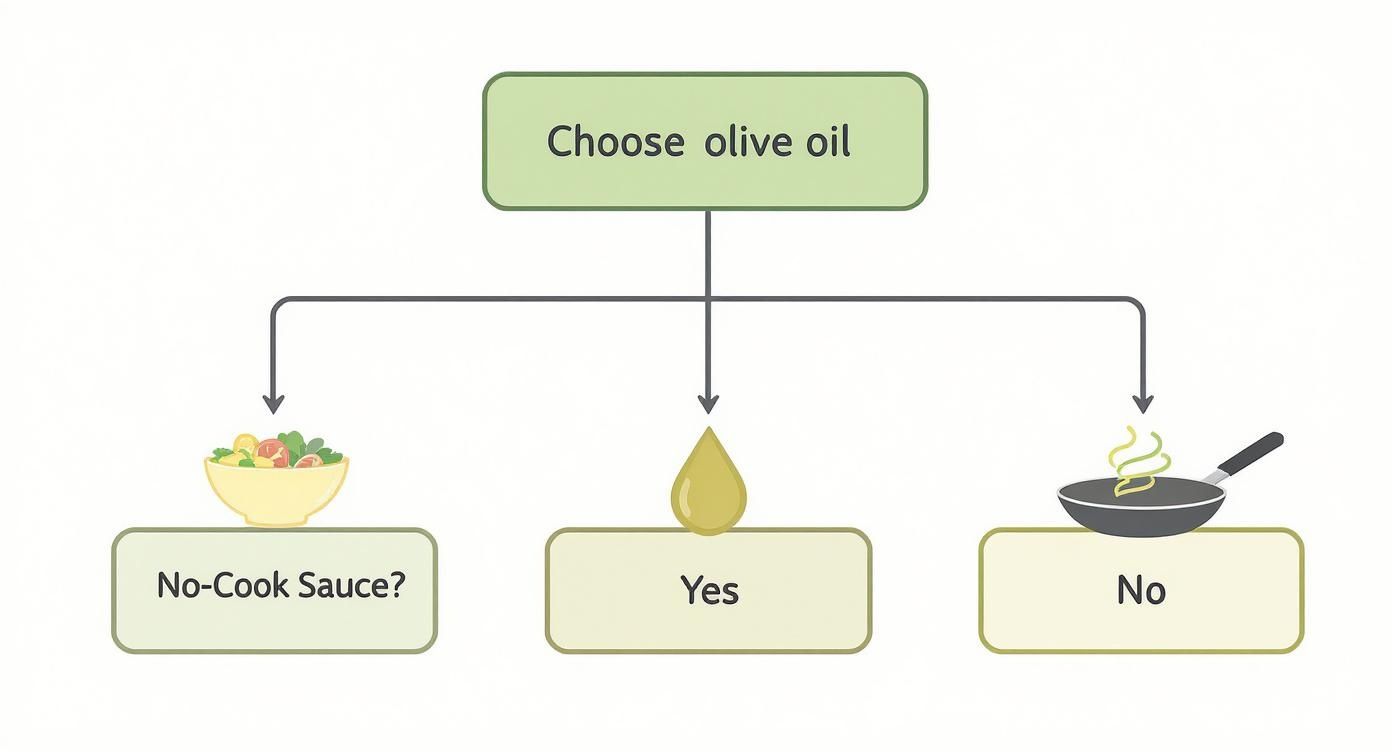
As you can see, raw applications are where those high-flavor finishing oils come alive. Cooked sauces are better suited for oils that can handle the heat without surrendering their integrity.
Unlocking Culinary Potential
Mastering the art of making sauces with olive oil is a game-changing kitchen skill. It's about understanding how this liquid gold interacts with heat, acid, and herbs to build layers of flavor that are impossible to achieve otherwise.
The right olive oil doesn't just carry flavor—it creates it. It emulsifies, enriches, and adds a silken texture that water or other fats simply can't replicate.
To truly grasp these fundamentals, it helps to learn some of the core chef secrets for crafting delicious food. Now, let’s move beyond simple drizzles and start tapping into the true power hiding in that bottle.
Crafting Effortless Five-Minute Sauces
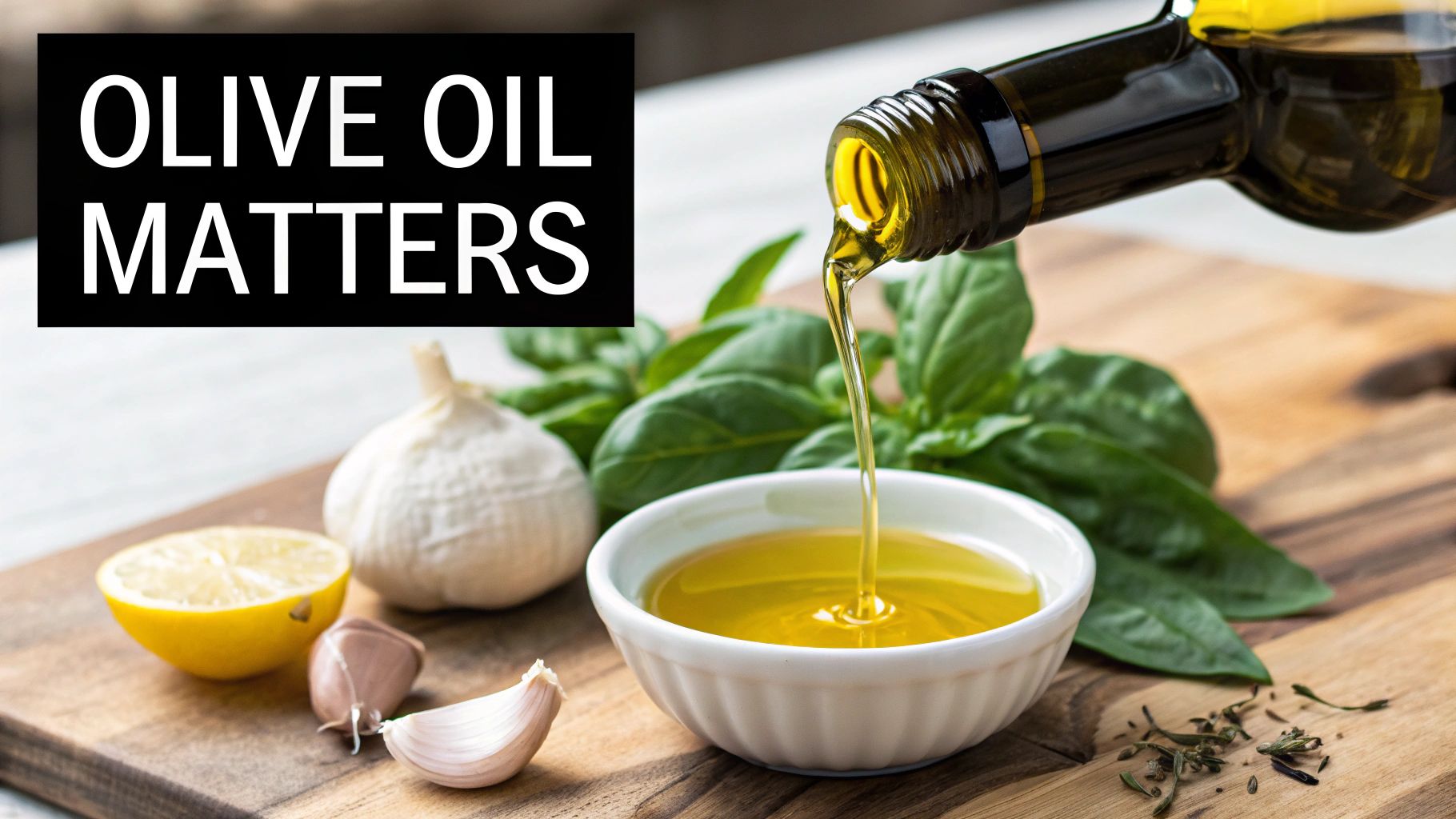
Picture this: the pasta is boiling, your guests are about to ring the doorbell, and you need a show-stopping sauce right now. Good news. You don't need to simmer anything for hours.
Some of the most incredible flavors on earth come together in just minutes. All you need is a good bottle of olive oil and a few things you almost certainly have on hand. This is where you unlock some real kitchen magic.
These foundational sauces with olive oil are about technique, not toil. They're dead simple to make but deliver a colossal punch of fresh, vibrant flavor. We're talking about timeless methods that simply work, every single time.
The Classic Aglio e Olio
At its heart, Italian cooking is about elegant simplicity, and nothing proves that more than Aglio e Olio (garlic and oil). The success of this entire dish rests on a single, crucial detail: how you handle the garlic. Your mission is to gently infuse the olive oil with that sweet, nutty flavor—not scorch it into a bitter, acrid mess.
The secret? Low and slow. Add your thinly sliced garlic to a pan with cold olive oil. Then, turn the heat on low and let them warm up together. You’ll see the garlic begin to sizzle gently, slowly turning a beautiful pale gold. The single biggest mistake you can make is rushing this with high heat.
The moment it's golden, kill the heat. Toss in your hot pasta, a splash of the starchy pasta water to create a creamy, luxurious coating, and a pinch of red pepper flakes. That's it. You're done. A masterpiece in minutes.
A Zesty Lemon-Herb Vinaigrette
A truly great vinaigrette can make a simple pile of greens feel like a gourmet experience. But the trick to a dressing that doesn’t separate into a sad, oily puddle two minutes later is all about emulsification—the art of coaxing oil and vinegar into a happy marriage. For this, a dab of Dijon mustard is your secret weapon.
For a vinaigrette that never fails, commit this ratio to memory:
- Three parts extra virgin olive oil
- One part acid (like fresh lemon juice or a quality white wine vinegar)
- A small spoonful of an emulsifier (Dijon is the undisputed champion)
First, whisk the lemon juice, mustard, salt, and pepper together. Then, and this is the critical part, keep whisking while you pour the olive oil in a very slow, thin stream. This gradual process is what forges a stable, creamy dressing that lovingly clings to your lettuce. This is a fundamental skill you’ll use for the rest of your cooking life. As you get more comfortable, learning about the best olive oil for salad dressing will elevate your game even further.
The magic isn't in the ingredients; it's in the method. A slow, steady stream of oil into a vigorously whisked base is what separates a decent homemade dressing from a truly magnificent one.
The Bold Spanish Romesco
Romesco sounds impossibly fancy, but a quick version is shockingly easy. This smoky, nutty sauce from Catalonia is absolutely brilliant with grilled fish, chicken, or roasted vegetables. While traditionally made with special ñora peppers, you can achieve a fantastic result using roasted red peppers from a jar and a bit of smoked paprika.
Just toss a jar of drained roasted red peppers into a blender with a garlic clove, a handful of toasted almonds, a splash of red wine vinegar, and a pinch of smoked paprika. Turn the blender on and stream in your olive oil until the sauce becomes smooth and lusciously creamy.
It’s a five-minute sauce that genuinely tastes like you labored over it all afternoon.
A Journey Through Global Flavors with Olive Oil
When we talk about olive oil, our minds often jump straight to Italy. But in reality, high-quality olive oil is your passport to flavor, a golden ticket that lets you travel from the sun-drenched shores of Greece to the bustling markets of the Middle East, all from your own kitchen.
This is where olive oil reveals its true character. It’s a culinary chameleon, adapting to and elevating the ingredients of any region. Think of it as a universal language of food. Once you learn a few key phrases, a whole new world of sauces with olive oil is yours to command.
And it’s not just a trend I'm seeing. The numbers confirm it. Major importing markets recently reported an average 6.4% jump in olive oil imports. In the United States alone, imports nearly doubled to around 66,000 tonnes, fueled by home cooks like us discovering new and exciting ways to use it. You can dig into more of these market insights over at CoherentMarketInsights.com.
The Bright Tang of Greek Ladolemono
Let's begin our journey in Greece with a sauce that is profound in its simplicity: Ladolemono. The name literally means "oil-lemon," and that's precisely what it is. But don't be fooled—getting this right is a masterclass in balance and force.
The goal is a sharp, tangy emulsion that clings perfectly to grilled fish, chicken, or roasted vegetables. It's shockingly simple.
You'll need:
- 1 part freshly squeezed lemon juice
- 3 parts excellent extra virgin olive oil
- A generous pinch of dried Greek oregano
- Salt and freshly cracked black pepper to taste
Grab a small jar. Add the lemon juice, oregano, salt, and pepper. Screw the lid on tight and shake it well to get everything acquainted. Now, pour in the olive oil, seal it up again, and shake like you mean it. You're looking for the mixture to turn pale and creamy. That's your emulsion.
The real secret to a great Ladolemono isn't the recipe; it's the action. The sheer force of the shake is what temporarily binds two simple liquids into a cohesive, potent sauce that punches way above its weight.
Middle Eastern Za’atar Dip
Next, we head to the Middle East, where olive oil and za’atar have been an inseparable, beloved pair for centuries. This isn't even a recipe; it's an assembly of perfection.
Pour a good, fruity extra virgin olive oil into a shallow bowl. Sprinkle a generous amount of za'atar—that fragrant, irresistible blend of thyme, sumac, and sesame seeds—right over the top.
That’s it. Serve with warm pita bread for dipping. It’s a simple, profound combination that proves the best sauces sometimes require no cooking, no whisking, no effort at all. Different regions offer unique oils that work beautifully with local spices; for example, you can explore the distinct character of Moroccan olive oil to see how it changes the entire dynamic.
A Californian Twist on Pesto
Our final stop is California, where culinary traditions are merely a starting point for something new and exciting. This take on pesto swaps out the traditional pine nuts for toasted almonds and adds a surprising, brilliant touch of creamy avocado.
In a blender, combine fresh basil, toasted almonds, garlic, and a good squeeze of lemon juice. Add a scoop of ripe avocado for a silky, unbelievably smooth texture, then stream in a peppery Californian extra virgin olive oil until you reach the consistency you desire.
What you're left with is a vibrant, rich, and nutty sauce. It’s absolutely incredible on pasta, but I also love it slathered on sandwiches or served as a dip that will have everyone asking for the recipe.
Creating Creamy Textures Without Using Cream
https://www.youtube.com/embed/GdutY-hedFc
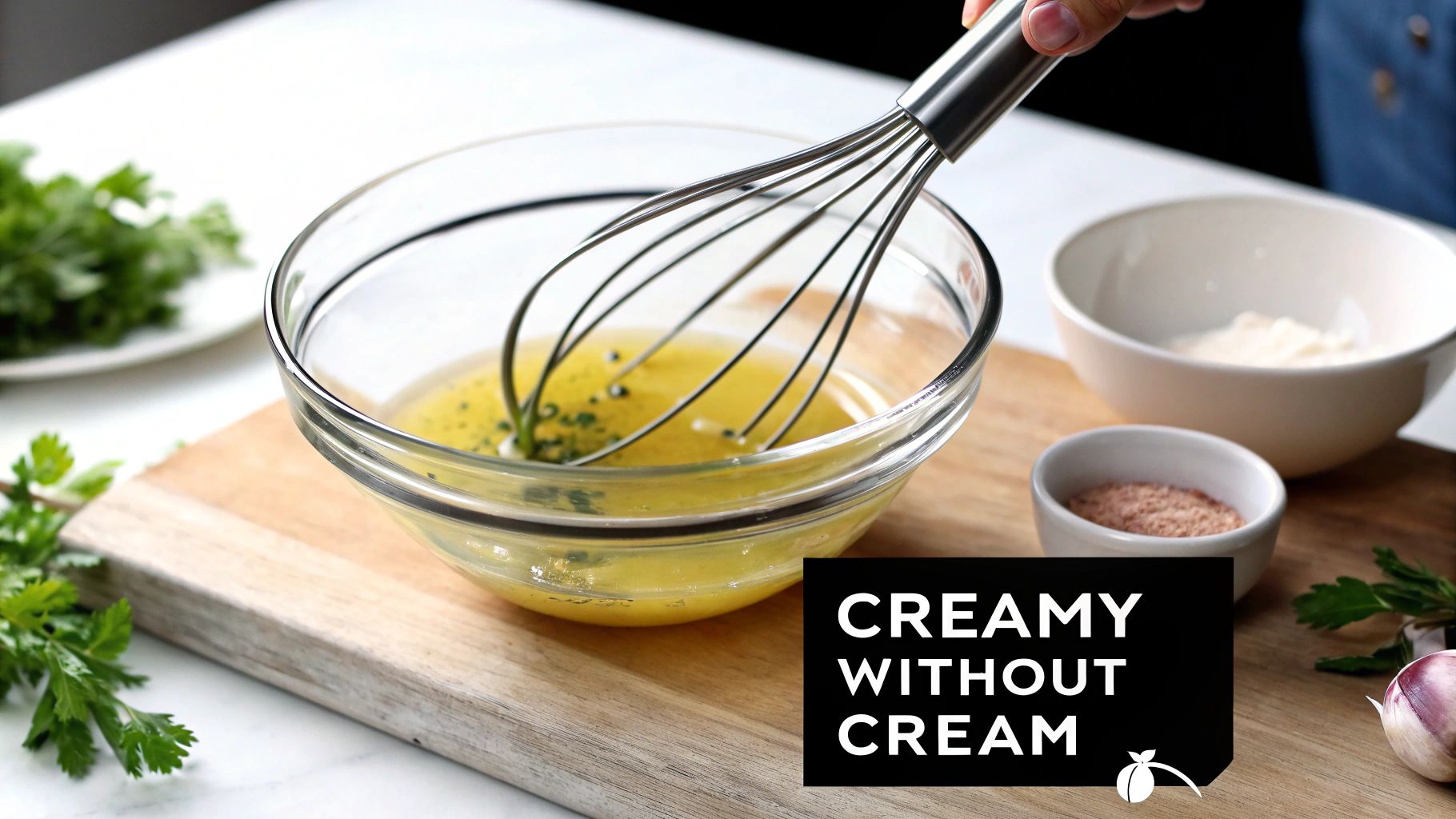
So, how do you achieve that rich, velvety texture of a great cream sauce without ever touching the dairy? The secret isn’t magic, it's science: emulsification. This is the classic, time-honored technique of convincing two ingredients that normally refuse to mix—like oil and water—to come together into a single, silky-smooth union.
It's the foundation for some of the most impressive sauces with olive oil you'll ever taste, from a sharp vinaigrette to a rich, pungent aioli. The process involves whisking a liquid base (like lemon juice or vinegar) with furious energy while very slowly drizzling in olive oil. This simple action shatters the oil into microscopic droplets that get suspended within the liquid, creating a sauce that’s wonderfully thick and creamy, yet feels much lighter than its dairy-laden counterparts.
You are, in essence, performing a bit of kitchen alchemy, transforming a few simple pantry staples into something truly extraordinary.
Mastering the Art of Emulsion
A from-scratch Aioli is the ultimate test of this process. I'm not talking about the garlic-flavored mayonnaise you find on supermarket shelves. A true Aioli is a powerful, primal emulsion of just garlic, salt, olive oil, and a whole lot of patient whisking. You start by crushing fresh garlic cloves with a pinch of coarse salt in a mortar and pestle until you have a smooth, potent paste.
Then comes the arm workout. You begin adding the olive oil literally drop by drop, whisking constantly and relentlessly. It feels painstaking at first, but you'll quickly see the mixture begin to thicken and lighten in color. Once it starts to look stable, you can graduate from drops to a very thin, steady stream of oil, whisking all the while until you've created a thick, spoonable sauce with an incredible garlic punch. The technique is very similar to what you'd use for mayonnaise, as you can see in this guide to making homemade mayonnaise with olive oil.
The true key to a stable emulsion is patience. If you get greedy and add the oil too quickly, the sauce will "break" and separate into a greasy, heartbreaking mess. Go slowly, and you'll be rewarded with that perfect, creamy texture every single time.
For those looking to achieve flawlessly smooth results, especially when making larger batches, a powerful tool can be a game-changer. An industrial immersion blender, for example, can emulsify a sauce in seconds, creating an incredibly fine and stable texture that's nearly impossible to achieve by hand.
Simple Fixes for Broken Sauces
But what happens if your sauce does break? First, don't panic. And for heaven's sake, don't throw it away! A broken sauce is almost always salvageable.
Here’s the trick to bringing it back from the brink:
- Get a fresh start. In a new, clean bowl, add a teaspoon of your base liquid—this could be more lemon juice, vinegar, or even just plain water.
- Reintroduce the broken sauce. Start whisking the broken mixture into this new base, but do it one tiny drop at a time, just like you did at the very beginning.
- Rebuild the emulsion. Once you see it starting to thicken and come back together, you can slowly stream in the rest of the broken sauce while whisking. This re-establishes the emulsion and brings your sauce right back to life.
By the way, one of the best emulsifiers is probably something you throw away: starchy pasta water. The starches suspended in that cloudy water act as a fantastic natural binder, helping the olive oil cling beautifully to the pasta for a glossy, creamy finish without a single drop of cream.
How to Perfectly Pair and Present Your Sauces
You’ve done the work. You've whisked, infused, and emulsified your way to a fantastic sauce. But a truly great sauce doesn't just stop at flavor—it needs the right stage on which to perform. Now, we move beyond the recipe and into the art of application.
Pairing your olive oil sauces isn't about following rigid, boring rules. It’s about intuition and balance. A powerful, peppery EVOO vinaigrette can stand up to a hearty grilled steak, but it would completely steamroll a delicate piece of poached cod. The goal is harmony, not a shouting match on the plate.
This approach is part of a bigger shift in how we eat. The global olive oil market, valued at around USD 18.62 billion, is projected to climb to an astonishing USD 33.66 billion by 2034. This isn't just about cooking oil; it’s a reflection of a growing global demand for healthier, more flavorful condiments where quality olive oil is the star. If you're interested, you can learn more about the growth of the olive oil market on towardsfnb.com.
Finding the Right Match
To help build that intuition, here’s a quick guide for pairing your creations.
-
Robust & Peppery Sauces: Think of a potent garlic Aglio e Olio or a sharp, assertive vinaigrette. These demand dishes with equally bold flavors that won't be intimidated. They’re fantastic with grilled red meats, bitter greens like radicchio, or hearty roasted vegetables like broccoli rabe.
-
Bright & Acidic Sauces: A Greek Ladolemono is the perfect example. Its job is to cut through richness like a knife, making it brilliant with grilled fish, roasted chicken, lamb, and steamed vegetables like asparagus.
-
Herbaceous & Nutty Sauces: Pesto and romesco fall into this wonderfully versatile category. You can toss them with pasta, spoon them over roasted potatoes, or serve them alongside grilled chicken or pork. Their earthy, savory notes are a natural fit for a huge range of ingredients.
To make things even simpler, here is a table you can reference anytime you're in the kitchen. It's a great starting point for unleashing your own creativity.
Olive Oil Sauce Pairing Guide
| Sauce Type | Pairs Best With | Flavor Profile |
|---|---|---|
| Aglio e Olio | Pasta, grilled steak, roasted broccoli rabe | Pungent, garlicky, peppery |
| Ladolemono | Grilled fish, roasted chicken, lamb chops, steamed asparagus | Bright, tangy, acidic, fresh |
| Pesto | Pasta, gnocchi, roasted potatoes, chicken, sandwiches | Herbaceous, nutty, savory, rich |
| Romesco | Grilled pork, roasted vegetables, seafood, crusty bread | Smoky, nutty, sweet, slightly tangy |
| Lemon-Herb Vinaigrette | Leafy green salads, delicate fish (cod, sole), grilled shrimp | Light, zesty, herbaceous |
Remember, this is just a guide. The best way to learn is to experiment, taste, and discover the combinations that you love the most.
Presentation Makes Perfect
We eat with our eyes first, and a few simple presentation tricks can elevate your meal from "homemade" to "restaurant-worthy." You don’t need any fancy squeeze bottles or special tools.
A simple spoon is your best friend. For a classic, elegant drizzle, just dip the tip of your spoon into the sauce and let it flow in a steady, confident motion across the plate. Don’t hesitate! For a more rustic, family-style look, a generous spoonful pooled right next to the main protein invites everyone to dive in.
The final touch is often the simplest. A scattering of fresh, complementary herbs—a few torn parsley leaves, a sprig of thyme—not only adds a pop of color but also a final layer of aroma that makes the entire dish feel complete and intentional.
Finally, think about a complementary garnish. A sprinkle of toasted nuts that echo an ingredient in your romesco or a fine grating of lemon zest over a Ladolemono-dressed fish adds texture and one last, thrilling burst of flavor. These aren't fussy extras; they're the thoughtful final steps that show you truly care about the food you serve.
Common Questions About Making Sauces with Olive Oil
Diving into the world of homemade sauces with olive oil opens up a universe of delicious possibilities, but it's only natural to have a few questions. Getting the small details right is what separates a pretty good sauce from a truly exceptional one.
Let's walk through some of the common hurdles. Once you understand the why behind a technique, you build kitchen intuition, and that's when the real fun begins.
Can I Use Any Olive Oil to Make Sauces?
This is the single most important question, and the answer is an emphatic no. The oil you choose will make or break your sauce.
For any no-cook sauce, dressing, or finishing drizzle, you want that bold, fruity, and peppery flavor to be the star of the show. This is where you bring out the good stuff: a high-quality Extra Virgin Olive Oil (EVOO). Its vibrant character is the entire point.
But for cooked sauces, like when you're sautéing garlic for a tomato base, a regular or 'pure' olive oil is often a better choice. Its flavor is much milder, so it won't overpower your other ingredients. Using a fancy, expensive EVOO for high-heat cooking is not only a waste of its delicate flavors, but you also risk hitting its smoke point. You can learn more about why that matters by understanding the olive oil smoking point, which is crucial for avoiding a bitter, unpleasant taste.
My Olive Oil Sauce Tastes Bitter. What Did I Do Wrong?
Ah, the dreaded bitter sauce. It's a common problem, but thankfully, it’s usually an easy fix once you diagnose the cause. More often than not, it’s one of two things: your oil or your garlic.
Some very robust, high-quality EVOOs have a naturally pungent and peppery finish that can be perceived as bitter. This is actually a good sign—it points to a high polyphenol count, which is where all those healthy antioxidants live. It’s a desirable trait in a premium oil.
If the bitterness is more acrid and burnt-tasting, however, the culprit is almost certainly scorched garlic. Garlic can go from fragrant perfection to terrible bitterness in a matter of seconds. The secret is to always, always cook it low and slow.
A less obvious cause of bitterness can actually be your blender. Whirring olive oil at very high speeds for too long can smash the polyphenols, releasing bitter compounds. When making pesto or aioli, blend your other ingredients first, then slowly stream the oil in at the very end with the blender on its lowest setting.
How Do I Properly Store My Homemade Olive Oil Sauces?
Proper storage isn't just about preserving flavor; it's about food safety. The right method depends entirely on what's in your sauce.
- Garlic-and-Oil Infusions: Something simple like an Aglio e Olio should always be made fresh and consumed immediately. Storing raw garlic in oil at room temperature creates the perfect oxygen-free environment for botulism to grow, which is extremely dangerous.
- Vinaigrettes & Herb Sauces: For dressings or any sauce containing fresh herbs, an airtight glass jar in the refrigerator is your best bet. Plan to use it within about a week.
- Chili-Infused Oils: If you've made a sauce with no fresh ingredients, like a chili oil, it's far more stable. Keep it in a cool, dark place (like a pantry) away from sunlight, and it will last for a good while.
And don't panic when your refrigerated sauce looks solid. That's just the olive oil firming up in the cold. Simply pull it out and let it sit on the counter for 15-20 minutes. A vigorous shake should bring it right back to its luscious, liquid state.
At Learn Olive Oil, we believe that understanding the fundamentals is the key to culinary creativity. From selecting the perfect bottle to mastering classic techniques, we provide the expert insights you need.
Discover the World of Premium Olive Oil and elevate your cooking by visiting us at https://learnoliveoil.com.

 Learn Olive Oil
Leave a comment