That bottle of golden-green liquid sitting in your pantry has a story to tell. A story of sun, soil, and meticulous craftsmanship. But when you read the words "First cold pressed extra virgin olive oil," you’re not just reading a label. You’re reading a promise.
It’s a promise of purity, a mark of tradition, and the secret key to unlocking flavors and health benefits you may never have experienced. My goal here is to decode that promise for you, so you know—with absolute certainty—what it means for your food, your family, and your well-being.
The Secret Language on Your Olive Oil Bottle
Have you ever stood in the grocery aisle, facing a wall of olive oil, and felt a wave of confusion? You’re not alone. What truly separates the good from the great? The answer is hiding in plain sight, in those five crucial words: first cold pressed extra virgin olive oil.
This isn't just marketing fluff. It’s a specific, legally defined category that represents the absolute pinnacle of olive oil quality.
Think of it this way: what’s the difference between an orange you pick from a tree and squeeze yourself, and a carton of juice made from concentrate? One is pure, vibrant, and exploding with natural goodness. The other has been processed, heated, and altered. This type of olive oil is the purest, most direct expression of the olive itself—it’s the freshly squeezed juice of the fruit, nothing more and nothing less.
Decoding the Promise of Purity
To earn this prestigious title, an oil must pass a battery of strict tests at every single stage—from the olive grove all the way to the bottle. Each word on that label signifies a critical part of a painstaking process designed to preserve the oil’s integrity.
This commitment is your guarantee that you’re getting a product not only bursting with flavor but also packed with the powerful nutrients olives are famous for.
Let's break down what this phrase truly means:
- A Purely Mechanical Process: No chemicals. No solvents. Not ever. The oil is extracted through the simple, physical act of crushing and pressing the fruit.
- Minimal Heat Exposure: The temperature is kept obsessively low. Why? To protect the delicate flavors, aromas, and life-giving compounds like polyphenols from being destroyed.
- Superior Freshness and Flavor: The oil must pass rigorous chemical tests and a sensory analysis by a trained tasting panel to prove it’s utterly free of defects.
The term first cold pressed extra virgin olive oil signifies the highest grade of olive oil you can buy. It is produced by mechanically pressing olives just once, without resorting to heat or chemicals. This method ensures the oil keeps all its natural flavor, aroma, and nutritional properties gloriously intact.
The "cold press" part of the name became standardized in the 20th century as a way to guarantee this purity, requiring that the olive paste be kept below a strict 27°C (80.6°F) during the entire extraction process.
Essentially, this label is your assurance that you're getting olive oil in its most natural, unrefined state. Getting familiar with the nuances of olive oil labeling is the first step toward becoming a more confident and informed shopper. From here, let's pull back the curtain on how this liquid gold is actually made.
How Olives Become Liquid Gold
Imagine walking through a sun-drenched grove in Italy or Greece, the air thick with the earthy scent of ripe olives. The journey from that tree to the golden oil on your table is a story of meticulous craftsmanship, not industrial chemistry. It's a process that honors the fruit, preserving its very soul.
To truly grasp this, let's go back to our orange juice analogy. If you wanted the purest, most vibrant juice, you’d hand-squeeze a fresh orange, wouldn't you? You wouldn't boil it, add chemicals, and then extract some thin, lifeless liquid. That simple, powerful comparison is the heart of what separates authentic first cold pressed extra virgin olive oil from everything else.
The Modern Path to an Ancient Tradition
In days gone by, "first press" meant exactly what it sounds like—the very first oil that flowed from olives crushed under immense, heavy stone millstones. This initial extraction was the good stuff, rich in flavor and free of impurities. Lesser oils came from adding hot water and pressing the leftover paste a second or even third time, with the quality plummeting at each step.
Today, technology has refined this principle, but the soul of the process remains untouched. Modern mills have largely replaced the old stone presses with a cleaner, more efficient method called centrifugation. The goal, however, has not changed one bit: a single, clean extraction, with no compromises.
This infographic breaks down how "first," "cold," and "virgin" come together in the modern process.
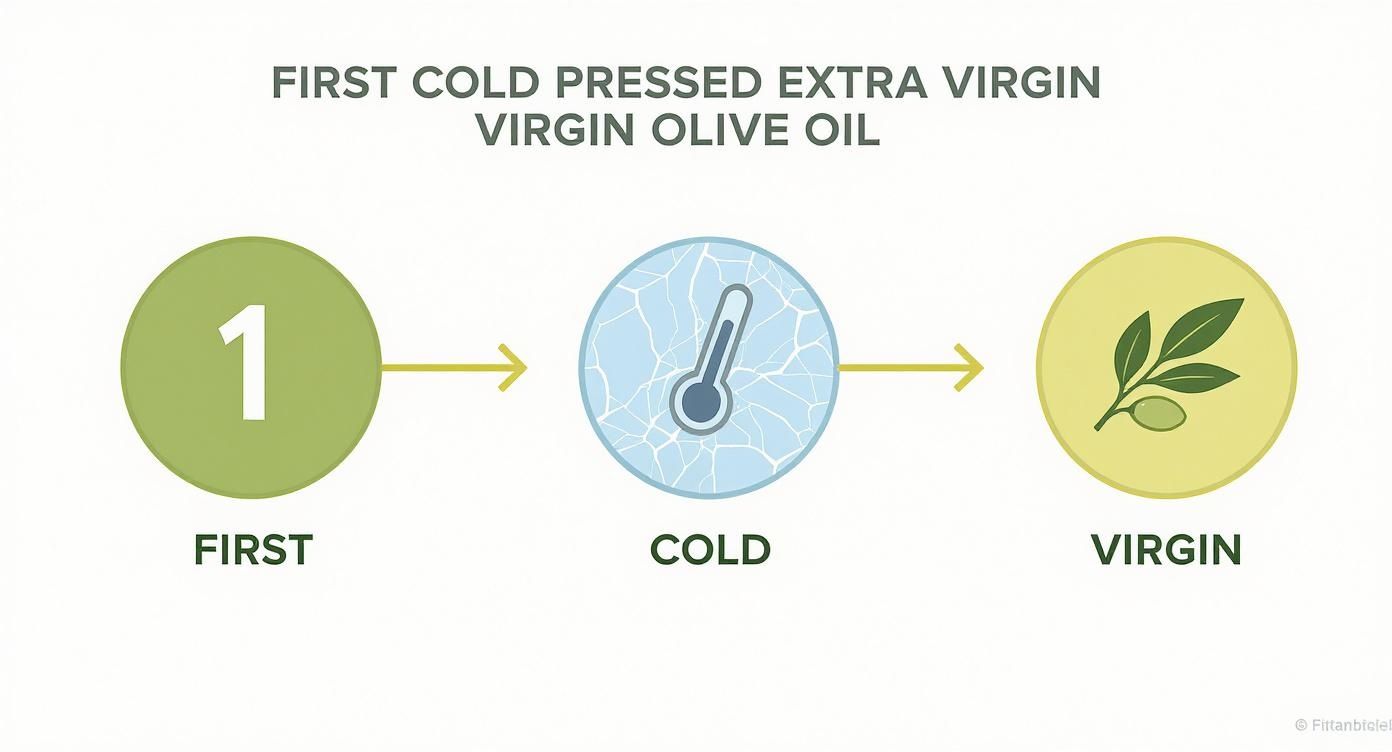
As you can see, these aren't just marketing buzzwords. A single extraction, low temperatures, and the natural purity of the fruit are the unwavering pillars of the entire operation.
This one continuous process ensures the oil is never re-processed, upholding the historical "first press" standard in spirit. The machinery is different, but the commitment to getting only the purest oil from that first run is exactly the same. You can learn more about the specific steps of how olive oil is made and the equipment used in our deep-dive guide.
Why "Cold" Matters So Much
The term "cold pressed" is a crucial promise of quality. You must understand this: Heat is the absolute enemy of great olive oil. Sure, applying high temperatures can wring more oil out of the olives, but it comes at a devastating cost to flavor, aroma, and health benefits.
Think of heat as a thief. It steals the delicate floral and fruity notes and destroys the precious polyphenols—the powerful antioxidants responsible for that peppery kick and the oil's profound health benefits.
To earn the "cold pressed" label, the entire extraction must stay below a strict temperature, typically 27°C (80.6°F). This gentle handling protects the oil’s fragile compounds, ensuring the final product is as vibrant and healthy as the fruit it came from. This isn't just a suggestion; it's a non-negotiable standard for any producer serious about crafting true extra virgin olive oil.
The Single Extraction Promise
So, what does this all mean for the oil in your bottle? It means every single drop is the result of one, carefully managed event. The journey from olive to oil follows a clear, uncompromising path to preserve the fruit's natural character.
Here’s what that journey looks like in a modern mill:
- Harvest & Cleaning: Olives are picked at peak ripeness and rushed to the mill. There, they're cleaned of leaves and twigs and washed to ensure purity from the start.
- Milling: The whole olives are crushed into a thick, uniform paste. This step is all about breaking open the fruit's cells to release the oil.
- Malaxation: Next, the paste is slowly stirred or "kneaded." This crucial step encourages small oil droplets to clump together, making them easier to separate. This is where temperature control is absolutely critical.
- Centrifugation: Finally, the paste is spun in a high-speed centrifuge. Using simple physics, this separates the three components by density: the solid pomace, the water, and the pure, beautiful olive oil.
This single, uninterrupted flow is the modern version of the "first press." There is no second press. No reheating. It’s a direct line from fresh fruit to unadulterated oil, capturing a fleeting moment of peak flavor and nutritional potency. This is how olives truly become liquid gold.
What Extra Virgin Quality Really Means
That "Extra Virgin" label on a bottle of olive oil isn't just a bit of marketing fluff—it’s a hard-earned badge of honor. To earn this title, an oil must pass a series of tough, internationally recognized tests that look deep into its chemical makeup and its sensory profile.
This elite status is built on two unshakable pillars: its chemical purity and its sensory perfection.
Think of it like an Olympic gymnast. They need the raw power and physical stats (the chemistry), but they also need to deliver a flawless, graceful performance (the taste and smell). For an olive oil to be called extra virgin, both are absolutely mandatory. It means the oil is not just free from defects but is a true, vibrant expression of the olive it came from.
The Chemistry Of Freshness
At the core of an oil's quality lies its Free Fatty Acidity (FFA). The name sounds technical, but the idea behind it is beautifully simple. FFA is a direct measure of an oil's freshness and the quality of the olives used to make it.
Picture two apples. One is crisp, perfect, and just plucked from the tree. The other fell a week ago, is bruised, and has started to go soft. A low FFA in olive oil is like that perfect apple—it signals health and freshness.
To be legally labeled "extra virgin," an oil must have an FFA of 0.8% or less. A higher number reveals a sad story—that the olives were likely damaged, overripe, or sat around too long before being milled. This one number gives you a powerful glimpse into the care and speed the producer put into their work.
An incredibly low FFA, often below 0.3%, is a hallmark of premium, artisan-produced oils. It’s a clear signal that the olives were harvested and milled with exceptional speed and precision, often within just a few hours.
This strict standard is what separates true first cold pressed extra virgin olive oil from lesser grades like "virgin" or "pure" olive oil, which have higher acidity levels and are often refined to hide their flaws. You can dive much deeper into the official standards and learn the full meaning of extra virgin olive oil in our comprehensive guide.
The Taste Of Health: Polyphenols
The second pillar of quality is where things get really interesting—it’s what you can actually taste and feel. We're talking about polyphenols, the antioxidant powerhouses that give great olive oil its signature personality and incredible health benefits.
Polyphenols are natural compounds that protect the olive from environmental stress. When we consume them in a high-quality oil, they offer similar protective benefits to our bodies. They are also the source of the complex, celebrated flavors that true olive oil lovers seek out.
So, what do these potent compounds actually taste like?
- Pungency: That peppery kick or spicy tingle you feel at the back of your throat. This is a classic sign of a fresh, polyphenol-rich oil.
- Bitterness: A pleasant, clean bitterness on the tongue, much like you’d find in good dark chocolate or a strong cup of coffee. This shows the oil is packed with healthy compounds.
For far too long, many of us were taught that the best olive oil is smooth, buttery, and mild. The truth is exactly the opposite. That peppery tickle that makes you cough or that hint of bitterness isn't a flaw—it's the taste of quality. It’s the oil telling you that it's fresh, potent, and doing exactly what nature designed it to do.
To help you connect these concepts, here’s a quick-glance table breaking down the key markers of a genuine Extra Virgin Olive Oil.
Extra Virgin Olive Oil Quality Indicators
| Quality Marker | What It Means for EVOO | What to Look For |
|---|---|---|
| Free Fatty Acidity (FFA) | A measure of freshness. Must be ≤ 0.8%. Top-tier oils are often < 0.3%. | Look for producers who list the FFA on the bottle—it’s a sign of transparency and confidence. |
| Peroxide Value | Indicates the extent of initial oxidation. Low values mean fresh, carefully handled oil. | This is a lab test, but a low FFA and a recent harvest date are good proxies for a low peroxide value. |
| Polyphenols | Powerful antioxidants that create pungent and bitter flavors. Responsible for health benefits. | A peppery sensation in the throat and a pleasant bitterness on the tongue. Don't mistake this for a flaw! |
| Sensory Analysis | A trained tasting panel must find the oil free of defects and possessing positive fruity notes. | The oil should smell and taste fresh, like green grass, fruit, or herbs. It should not smell musty, greasy, or like crayons. |
Ultimately, a true EVOO is a perfect harmony of chemistry and sensory experience. The numbers prove its purity, but the taste confirms its vitality. When you find an oil with that peppery kick, you know you've found the real liquid gold.
Trust Your Senses to Spot True Quality
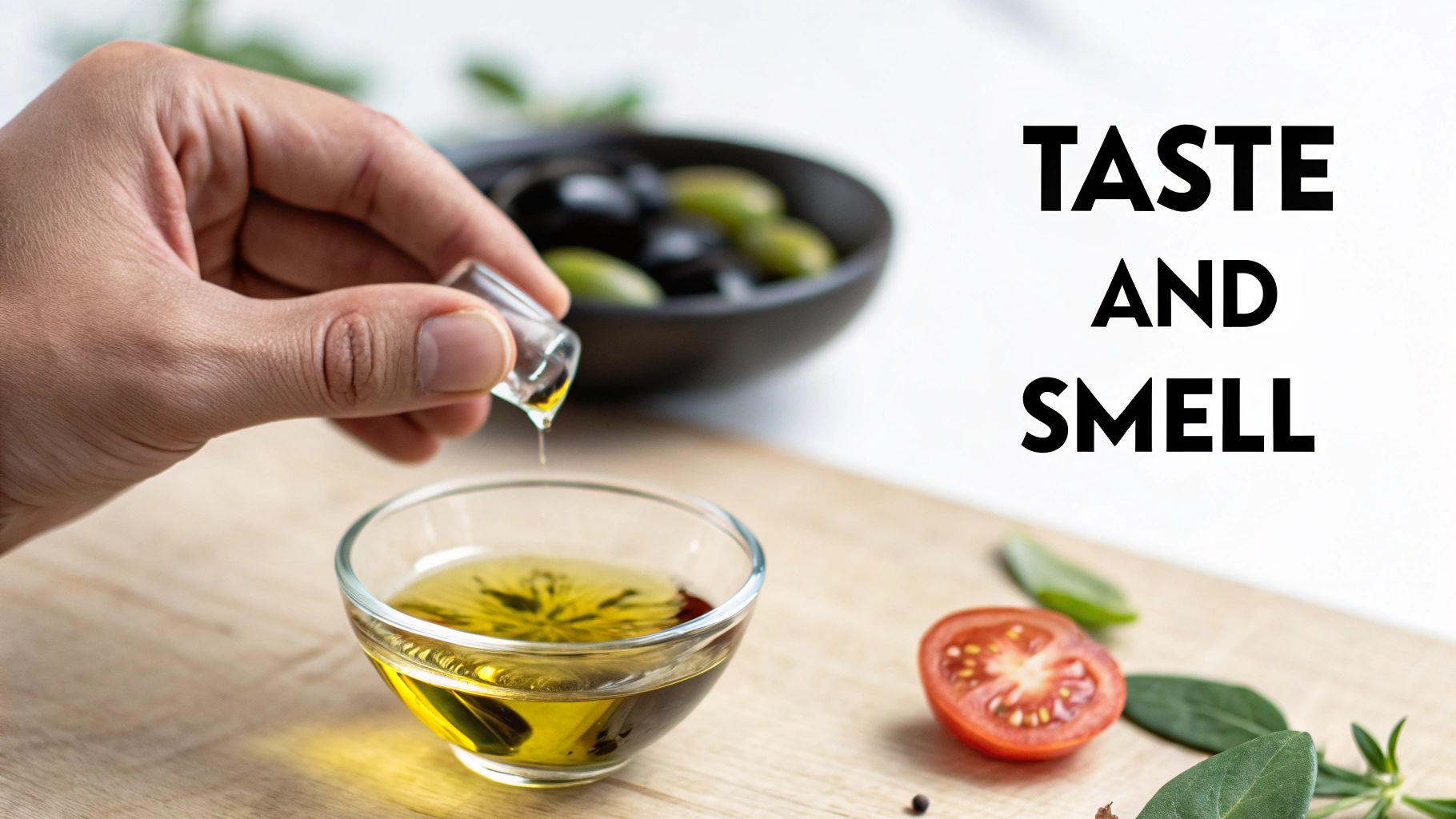
Long before you check the harvest date or squint at the acidity level on a label, you already possess two of the finest tools for judging olive oil: your nose and your tongue. A truly great oil doesn’t just sit there; it announces itself with a vibrant burst of aroma and flavor. Learning to listen to what it tells you is the final, most rewarding step to becoming a truly savvy buyer.
You don't need a lab coat or a degree in chemistry to tell a phenomenal first cold pressed extra virgin olive oil from a mediocre imposter. You just need to know what to look for—and, just as importantly, what to avoid. This is where all the science we’ve been talking about comes to life in a truly delicious way.
The Art of the Professional Sip
Tasting olive oil like a professional is about more than dipping a piece of bread. The real goal is to get air into the oil, which helps release all the subtle aromatic compounds and lets you experience its full personality. It’s a simple trick, but one that will instantly sharpen your ability to spot a quality oil.
To give it a try, pour about a tablespoon of oil into a small glass. Cup the glass in one hand to gently warm it, coaxing those fragrant aromas to the surface.
Now for the fun part: the "slurp." Bring the glass to your lips, tilt it, and take a quick, noisy sip of air through the oil. This little trick sprays the oil across your entire palate, letting your taste buds and olfactory system capture every last nuance. For a more detailed walkthrough, our guide on how to taste olive oil breaks down the whole process.
What You Want to Smell and Taste
A high-quality extra virgin olive oil is practically bursting with the fresh, clean scent of healthy olives. Think of it like walking through a garden, not an industrial plant. These positive qualities, which experts call "fruitiness," are the unmistakable signature of a well-made oil.
The specific notes can vary quite a bit based on the type of olive, where it was grown, and when it was harvested, but the overall impression should always be fresh and vibrant.
Common Positive Aromas and Flavors:
- Fresh-Cut Grass: A classic sign of an early-harvest oil, practically buzzing with green, lively character.
- Green Tomato Leaf: That distinct, sharp, and herbaceous smell you get from a tomato vine on a summer day.
- Artichoke: A pleasant, vegetal bitterness that points to a robust, healthy oil packed with good stuff.
- Almond or Green Banana: These are often softer, sweeter notes you’ll find in milder oils made from more mature olives.
And what about that peppery feeling that catches in your throat? That pungent kick is the calling card of those powerful polyphenols we discussed earlier. It’s not a flaw—it's the taste of good health itself.
That sharp, peppery cough at the back of your throat is your body's direct confirmation of the oil's antioxidant power. It’s a feeling that olive oil judges actively seek out as a primary indicator of freshness and quality.
Red Flags to Watch For
Just as your senses can confirm greatness, they're also your best defense against a bad bottle. An oil can be disqualified from being "extra virgin" if even a single sensory defect is found. Learning to spot these is a game-changer.
Your nose will almost always tip you off before the oil even hits your tongue. If something smells off, it probably is.
Common Defects to Avoid:
- Rancid: This is the most common flaw. It smells like old walnuts, oil-based paint, or waxy crayons and is caused by oxidation.
- Musty or Fusty: A fermented smell that tells you the olives sat around for too long before being milled.
- Earthy: Smells like a damp basement or a handful of dirt, which happens when the olives aren't cleaned properly.
- Vinegary: A sharp, sour aroma that points to a specific type of fermentation.
Ultimately, trust your gut. If an oil smells greasy, flat, or just plain strange, it doesn't belong in your pantry. A true first cold pressed extra virgin olive oil should always smell and taste clean, fresh, and distinctly fruity.
How to Buy Authentic Olive Oil with Confidence
Walking down the olive oil aisle can feel overwhelming. You're faced with a wall of green glass, vague promises, and confusing terms that make it tough to separate the genuine liquid gold from the impostors. How do you choose?
The good news is that the bottle itself tells a story, if you know what to look for. With a bit of know-how, you can cut right through the marketing fluff and choose an authentic, high-quality olive oil like a pro. It really just comes down to spotting a few key clues that producers of real first cold pressed extra virgin olive oil are always proud to show off.
Read the Label Like a Pro
Forget the pretty pictures on the front of the bottle; that's just marketing. The real truth is found on the back. Your mission is to ignore the romantic Italian farm scenes and shiny gold foil and hunt for the hard data that proves the oil's quality and freshness.
Think of yourself as a detective. Your most important clue is the harvest date.
The harvest date is the single most reliable indicator of freshness. It tells you exactly when the olives were picked and pressed, giving you a true picture of the oil's age. It's far more useful than a vague "best by" or "bottled on" date.
Look for a harvest date within the last year if possible. Olive oil is a fresh fruit juice, not a fine wine—it doesn't get better with age. If you can't find a harvest date at all, that’s a major red flag. It often means the producer has something to hide.
Decode the Packaging and Seals
Once you’ve found a recent harvest date, start looking at the packaging itself. How an oil is bottled and certified says a lot about the producer's commitment to quality.
-
Dark Glass or Tin: Light is one of the three mortal enemies of olive oil (the other two are heat and air). A dark green glass bottle or an opaque tin is a non-negotiable sign of a producer who actually cares about protecting their product. Clear glass might look nice on the shelf, but it lets light in, which degrades the oil before you even buy it.
-
Seals of Origin: Keep an eye out for official certifications. These seals are legally binding and guarantee the oil's origin and production standards, which means they've passed a rigorous inspection. Think of them as an extra layer of insurance that you're getting what you paid for.
Understanding Key Certifications
Those seals of origin aren't just fancy stickers. They are legally protected designations that tie an oil's quality directly to its geographical roots.
Here are the two most important ones you’ll see from European producers:
- PDO (Protected Designation of Origin): This is the gold standard. It guarantees that the olives were grown, harvested, milled, and bottled all within a specific, named region using traditional methods. Every single step is tightly controlled.
- PGI (Protected Geographical Indication): This seal is also a strong mark of quality. It ensures that at least one part of the production process—like growing or pressing—happened in the designated region.
Spotting a PDO or PGI seal on a bottle of first cold pressed extra virgin olive oil is a powerful sign that you’re holding an authentic product with real regional character. Sadly, fraudulent labeling is still a big problem in the industry. To learn more, check out our guide on how to spot fake olive oil and protect yourself. By using these label-reading skills, you’ll be able to navigate the store shelves with complete confidence.
Storing and Using Your Liquid Gold
So, you’ve done your homework. You’ve navigated the labels and brought home a genuinely fantastic bottle of olive oil. But getting that "liquid gold" to your kitchen is only half the battle.
How you store your olive oil is just as crucial as how you choose it. The delicate compounds that make it so special are fragile, and their biggest enemies are lurking in plain sight right in your kitchen.
Without the right care, even the most vibrant first cold pressed extra virgin olive oil can taste flat and stale in just a matter of weeks. To protect your investment, you need to shield it from its three main adversaries: light, heat, and air.
Think of them as flavor thieves, sneaking in to steal your oil’s peppery bite, fresh aroma, and healthy polyphenols. Luckily, keeping them at bay is pretty straightforward.
Guarding Against the Elements
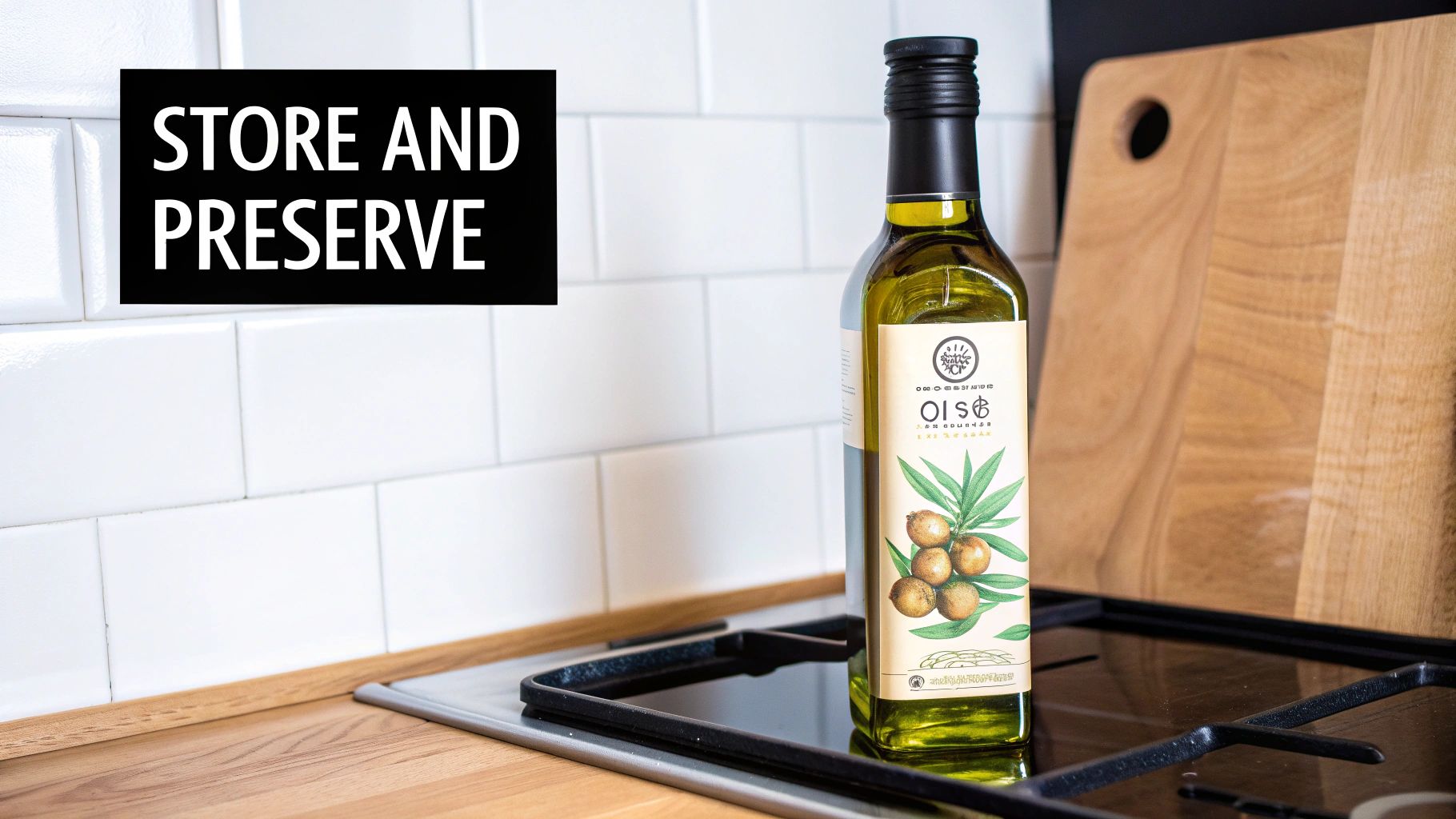
The best strategy here is a good defense. You want to give your olive oil a safe home, away from the hustle and bustle of daily cooking. The number one rule? Never, ever store your olive oil on the counter right next to your stove.
It might seem convenient, but it's the absolute worst place for it. That spot is a triple whammy, blasting the oil with direct sunlight, the heat from your cooktop, and a fresh dose of oxygen every time you uncap it.
Instead, follow these simple tips to keep it tasting great:
- Find a Cool, Dark Place: A pantry or a kitchen cupboard is perfect. Just make sure it’s far from the oven, dishwasher, or a window that gets a lot of sun.
- Keep It Sealed Tight: As soon as you finish drizzling, screw that cap back on. The less air that gets in, the better.
- Use It Up: Olive oil isn’t like wine; it doesn’t get better with age. For the best flavor, aim to finish the bottle within a few months of opening it.
Debunking the Biggest Olive Oil Myth
Let’s clear up a common misconception that just won't go away: the idea that you can't cook with extra virgin olive oil. That’s completely false. A high-quality EVOO has a smoke point that’s plenty high for most everyday cooking, from sautéing to roasting.
The notion that EVOO is just a finishing oil is a huge missed opportunity. Its incredible flavor and stable composition make it an excellent choice for cooking, adding both taste and nutrients to your dishes.
As you explore all the ways to use your oil, pairing it with the best healthy cooking pans can take your meals to another level. Whether you're searing vegetables or gently poaching fish, your first cold pressed extra virgin olive oil is a workhorse in the kitchen, not just a final garnish. Use it well and enjoy it.
Got a Few More Questions? Let's Clear Things Up
Even with all this new knowledge, you might still have a few lingering questions. That's completely normal! Let's walk through some of the most common myths and practical concerns people have about first cold pressed extra virgin olive oil.
Does a Greener Olive Oil Mean It's Better?
This is probably the single biggest misconception out there. The honest answer is no—the color of an olive oil tells you absolutely nothing about its quality.
Whether an oil is a brilliant emerald green or a soft, buttery gold simply depends on when the olives were picked. Early-harvest olives are packed with chlorophyll, giving the oil its vibrant green color. Olives harvested later in the season have less chlorophyll and produce that classic golden hue.
In fact, professional olive oil tasters use special cobalt-blue glasses for their tastings. Why? To completely hide the oil's color so it can't influence their judgment. They're focused on aroma and taste, not looks.
Help! My Olive Oil Went Cloudy in the Fridge!
If you've ever pulled your olive oil from a cold pantry or the fridge and found it cloudy and thick, don't panic! This is a completely natural, harmless process. It's not a sign of spoilage or poor quality.
Think of it like butter or coconut oil. When they get cold, they turn solid. Olive oil is no different; the natural fats and waxes simply begin to solidify in the cold.
Just let the bottle sit at room temperature for a little while. It will return to its clear, liquid state with no harm done to the flavor or its health benefits.
How Fast Do I Need to Use an Open Bottle of Olive Oil?
Here's the most important thing to remember: olive oil is not like a fine wine. It does not improve with age. From the moment you open that bottle, its mortal enemy—oxygen—starts to work against it, slowly breaking down the fresh flavors and healthy compounds.
For the best taste experience, you'll want to finish an opened bottle of extra virgin olive oil within 3 to 4 months. It won't go "bad" or be unsafe to eat after that, but you'll definitely notice that its lively, peppery notes have started to fade. The best strategy is to buy a bottle size you'll realistically use in that window.
Ready to taste what authentic, high-quality olive oil is all about? At Learn Olive Oil, we live and breathe this stuff, and we're here to help you find the absolute best. Check out our guides and top picks to find a bottle you'll love.
Start your journey and Discover the World of Premium Olive Oil.
 Learn Olive Oil
Leave a comment