You’re facing a wall of olive oil, and one phrase whispers from nearly every bottle: extra virgin. What secret does it hold? Is it just clever marketing, or does it promise something more?
Let me tell you, it's more than just words. It's a guarantee. It's a legal seal of quality that tells you the oil in your hands is the very best, the purest, the liquid gold of the olive world.
Imagine the difference between a glass of freshly squeezed orange juice, alive with sunshine and flavor, and a glass of juice from concentrate. That's the difference. Extra virgin olive oil is, quite simply, the pure, unblemished soul of the olive, bottled.
A Mark of Uncompromising Quality
The term "extra virgin" is not just a fancy name; it’s a hard-won title. It certifies that the oil was extracted from olives using nothing but mechanical force—no harsh chemicals, no damaging heat. This gentle persuasion is what preserves every drop of natural flavor, every fragrant aroma, and every one of the powerful, health-giving compounds locked inside.
To wear this badge of honor, an oil must survive a gauntlet of rigorous, internationally recognized tests. Learning what extra virgin olive oil means is the first step you’ll take from being a confused shopper to a confident connoisseur who can spot a truly magnificent bottle from a mile away.
The Two Pillars of Authenticity
So, what trials must an olive oil endure to prove its worth? The entire system rests on two critical evaluations: one in a sterile laboratory, and the other on the discerning palate of a trained expert.
-
Chemical Analysis: First, chemists measure the oil’s free fatty acidity. To be crowned extra virgin, this number must be astonishingly low—less than 0.8%. Low acidity is the tell-tale sign of healthy, impeccably handled olives, rushed from grove to mill with loving care.
-
Sensory Evaluation: Next, the oil faces a panel of human judges. These sensory experts are trained to detect the slightest flaw, yet they also hunt for the positive notes that sing of quality: the fruitiness, the bitterness, and that peppery finish that catches you in the throat.
This two-part verification is what makes the extra virgin grade so trustworthy. An oil must satisfy the cold, hard data of science and the subjective, trained senses of an expert panel. Only then is it worthy of the name.
From Sun-Drenched Grove to Golden Oil
The journey from a sun-kissed olive to the golden oil in your kitchen is where the "extra virgin" promise is truly made. It's not a relaxed, rustic affair; it's a frantic race against the clock, a story of precision and speed that determines everything about the final product.
Think of the difference between fresh-squeezed orange juice and the stuff made from concentrate. That vibrant, alive-on-your-tongue feeling is precisely what sets extra virgin olive oil apart from lesser grades. The moment an olive leaves the branch, oxidation kicks in, and the countdown begins.
The Non-Negotiables of Purity
To stop that natural decay in its tracks, producers follow a strict protocol. Olives are harvested with incredible care to prevent bruising and then whisked away to the mill, often within a matter of hours. This speed is absolutely crucial for keeping acidity low and stopping any fermentation before it can ruin the batch.
The infographic below really nails down the three pillars of this process.
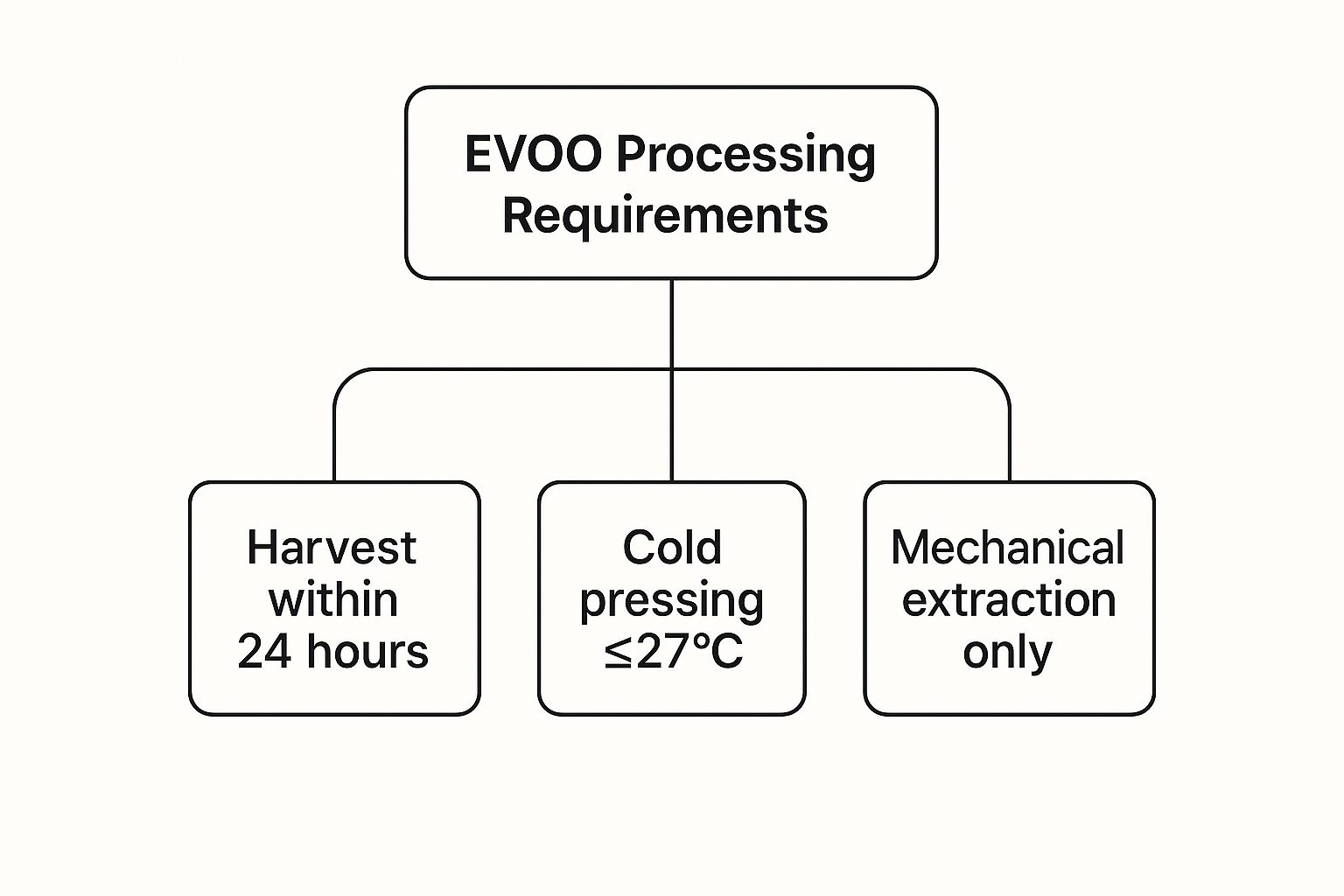
As the diagram shows, it all boils down to harvesting quickly, keeping temperatures low, and never, ever using chemicals. These aren't just suggestions; they are the rules that protect the oil's very soul—its delicate flavors, potent antioxidants, and health-giving properties. For a deeper dive, you can explore the entire olive oil manufacturing process in our detailed guide.
This painstaking process has a massive impact on both supply and quality worldwide. For the 2025/26 crop year, it's estimated the six largest producers will yield about 2.65 million metric tons of olive oil. But with weather challenges and these demanding standards, not all of that will make the extra virgin cut, which directly affects what’s available on shelves and how much it costs.
Decoding the Label: A Grade Earned, Not Given
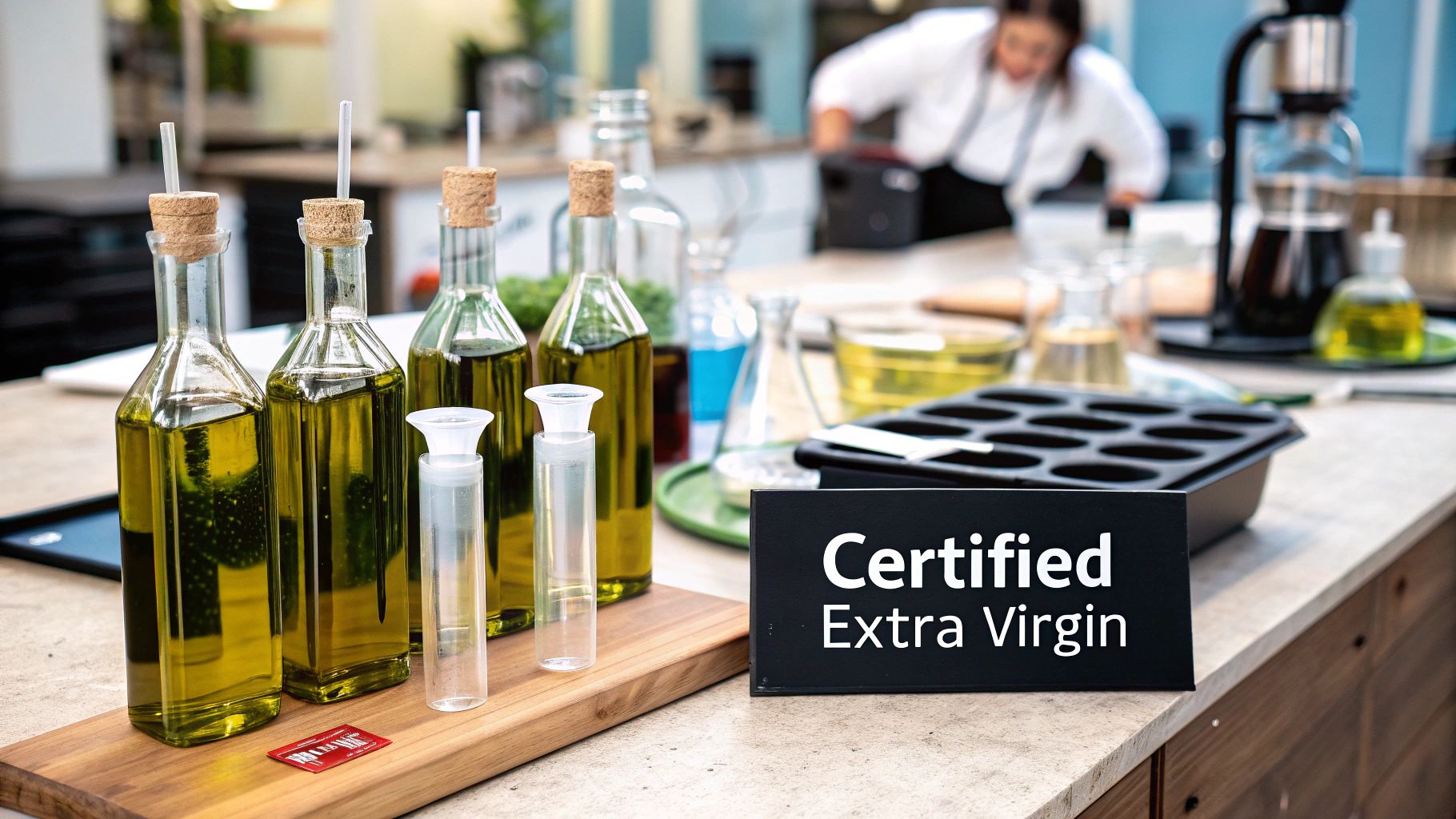
When you see "extra virgin" on a bottle, it’s not just marketing fluff. Think of it as an Olympic gold medal for olive oil—it's a hard-won grade that signifies the absolute peak of quality. This isn't a title given out lightly; it’s a promise of purity, earned only after passing a tough, two-part trial covering both chemical and sensory standards.
The Science of Purity
First up, the oil goes to the lab. Here, scientists run a battery of tests, but the most critical one measures its free fatty acidity. This is essentially a report card on the health of the olives the moment they were crushed.
To be called extra virgin, the oil’s acidity must be exceptionally low—specifically, under 0.8%. A low number like this tells you the olives were healthy, handled with care, and pressed right after harvesting. If the acidity creeps any higher, it's a red flag for bruised fruit, delays, or other issues that spoil the final product.
The Art of the Taste
Passing the lab test is only half the battle. Next, the oil faces its most discerning critics: a panel of certified human tasters. In a blind taste test, these experts have one job—to find any flaws. They're trained to sniff out the slightest defect, whether it's a hint of mustiness, a vinegary tang, or any other off-note. An oil must have zero defects to pass.
The real power behind the "extra virgin" grade is this dual-gatekeeper system. The oil has to prove its chemical purity in the lab and win over the palate of a trained expert.
But the tasters aren't just looking for what's wrong; they're also searching for what's right. They identify the positive, vibrant notes of fruitiness, bitterness, and the peppery kick known as pungency. It's this one-two punch of scientific proof and sensory perfection that truly sets extra virgin olive oil apart from the rest. You can dig deeper into the world of olive oil labeling to get a better handle on what you're actually buying.
Olive Oil Grades At A Glance
To put the "extra virgin" standard into perspective, here’s a quick breakdown of how it stacks up against other common grades.
| Grade | Acidity Level | Extraction Method | Flavor Profile |
|---|---|---|---|
| Extra Virgin | < 0.8% | Mechanical (cold-pressed) | Fruity, flavorful, zero defects |
| Virgin | < 2.0% | Mechanical (cold-pressed) | Good flavor, but minor defects |
| Olive Oil | N/A | Refined blend | Mild, neutral flavor |
| Light Olive Oil | N/A | Refined blend | Very light, almost no flavor |
As you can see, the requirements for extra virgin are in a class of their own, ensuring you're getting the purest and most flavorful product.
How to Taste EVOO Like a Pro
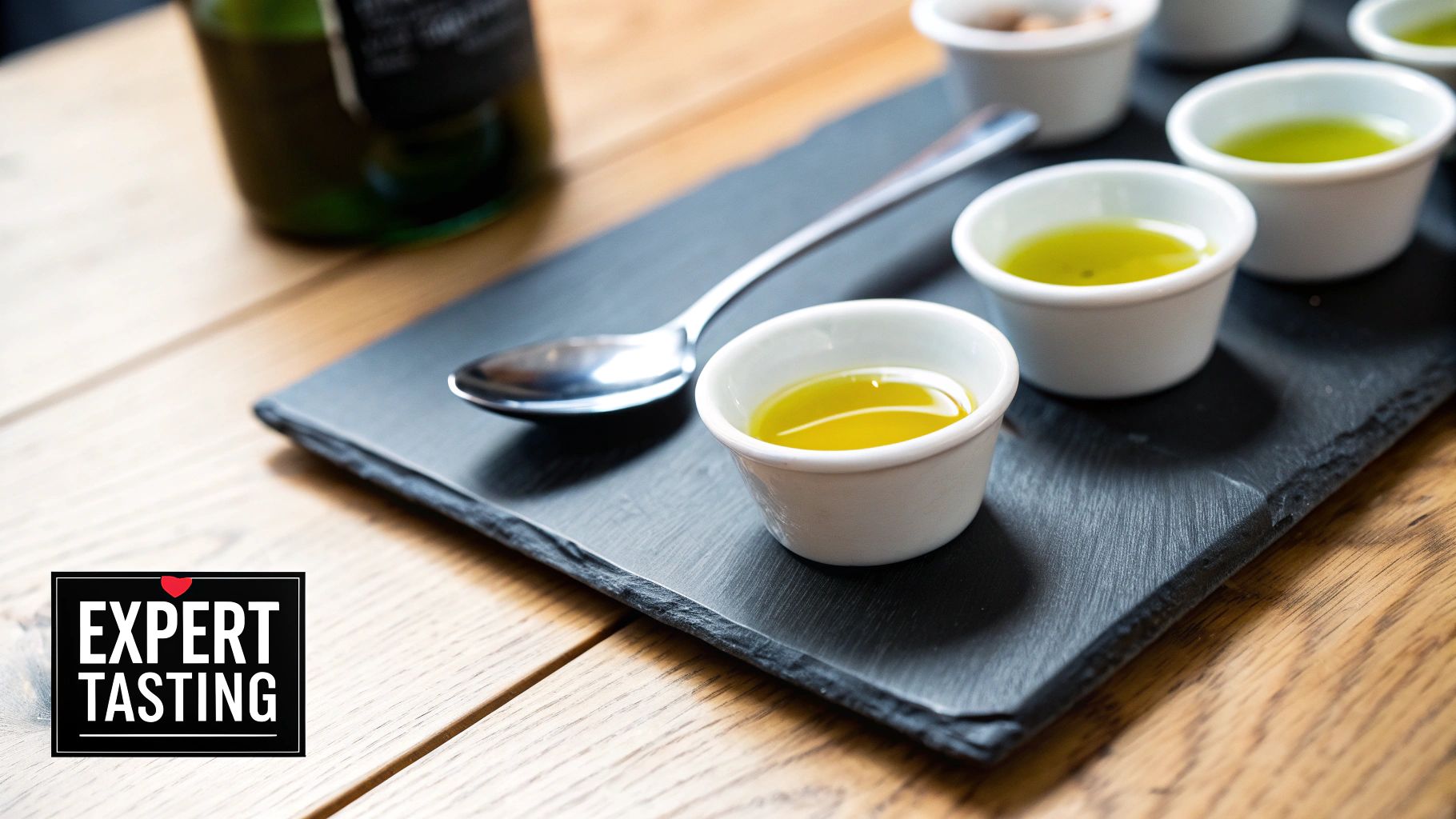
Get ready to experience olive oil in a whole new way. A true extra virgin olive oil is so much more than a cooking fat—it's a vibrant, complex agricultural product that can elevate a simple meal into something truly special. To really grasp what extra virgin olive oil means, you have to learn to taste it like the experts do.
This isn't about dipping bread. Professional tasting is a specific ritual designed to unlock an oil's unique character and aromatics. Once you learn the technique, you'll be able to spot the three positive attributes that every great EVOO must have.
The Three Positive Attributes of a Great EVOO
The entire tasting process boils down to identifying three key characteristics. Once you know what to look for, you’ll be able to confidently judge the quality of any olive oil. For a complete guide, you can learn the professional method of how to taste olive oil step-by-step.
Here’s what you're searching for:
- Fruitiness: This is the aroma of fresh, healthy olives. It has nothing to do with table fruit like berries or citrus. Instead, you might smell green grass, artichoke, almond, or even fresh-cut tomato leaves. A high-quality oil is bursting with these lively scents.
- Bitterness: This might be the most surprising one. In the world of EVOO, bitterness is a good thing! When you taste a distinct bitterness on your tongue, it’s a clear signal that the oil was made from fresh, unripe olives and is loaded with beneficial antioxidants.
- Pungency: This is that peppery tickle or spicy kick you feel in the back of your throat after swallowing. It often makes people cough, and that’s a fantastic sign.
That little cough isn't a flaw; it's the signature of oleocanthal, a powerful polyphenol with well-studied anti-inflammatory properties. It's the oil's way of telling you it's packed with goodness.
This appreciation for high-quality EVOO is fueling a huge global demand. In the European Union, extra virgin olive oil now makes up about 74.6% of all olive oil export volumes. Meanwhile, emerging markets like Brazil saw a 4.6% year-on-year jump in imports in May 2025. You can explore more of these international market trends on internationaloliveoil.org.
The Health Benefits Hiding in Your Bottle
Beyond its incredible flavor, true extra virgin olive oil is a cornerstone of the famously healthy Mediterranean diet. This isn’t just folklore; its reputation is built on solid science. When you choose a real EVOO, you’re not just picking a cooking ingredient—you’re making a conscious choice for your well-being.
The foundation of its benefits starts with its fat profile. EVOO is mostly oleic acid, a heart-healthy monounsaturated fat that helps support good cholesterol levels. But the real magic lies in the compounds you can't see.
The Power of Polyphenols
High-quality EVOO is brimming with polyphenols, powerful plant-based compounds that act as both antioxidants and anti-inflammatories. Think of them as the guardians of the oil's quality and the source of its most profound health effects. These are the very compounds stripped away in refined oils like "light" or "pure" olive oil.
One of these polyphenols, in particular, has a fascinating effect.
Oleocanthal is the compound that gives high-quality EVOO that peppery kick in the back of your throat. It's been shown to have a natural anti-inflammatory action similar to ibuprofen. That slight cough is more than just a sensation—it’s a sign of quality.
This is where your choice of oil becomes a genuine investment in your health. The strict standards that define extra virgin olive oil aren't just about protecting flavor; they're about preserving these vital, health-giving compounds.
From supporting heart health to contributing to better brain function, the benefits are directly tied to the oil’s purity. When you choose a genuine EVOO with a high polyphenol count—sometimes over 500 mg/kg—you're getting an oil packed with the natural defenses of the olive itself. It’s that delicious intersection where culinary delight meets a powerful wellness decision.
How to Buy and Protect Your Olive Oil
So, you're ready to hit the store. With a little know-how, you can confidently walk down the oil aisle and pick a fantastic bottle of extra virgin olive oil. It all comes down to knowing what to look for—and what to avoid.
Start with the Bottle Itself
Your first clue to quality is the container. Always reach for olive oil in dark glass bottles or opaque tins. Why? Because light is the mortal enemy of good olive oil, and these containers act like a shield, protecting the delicate flavors and nutrients inside.
Clear bottles might let you see the pretty golden-green color, but they're a huge red flag. They leave the oil completely exposed, which can make it go rancid before you even get it home. If you want a beautiful and functional way to serve and protect your oil on the counter, a dedicated cruet like this Giulietta Blue Oil Bottle is a great investment.
Become a Label Detective
Now, let’s look at the label. You'll want to ignore the pretty pictures and marketing buzzwords and focus on a few key pieces of information. This is where the real story of the oil is told.
Here's your smart-shopper checklist:
- Harvest Date: This is the single most important date on the bottle. Unlike wine, olive oil doesn't get better with age. Look for the most recent harvest you can find to get the freshest, most flavorful oil.
- Seals of Approval: Look for official certifications. A PDO (Protected Designation of Origin) seal, for example, guarantees the oil comes from a specific place and was made according to strict rules. These seals aren't just for show; they're a real mark of quality.
- Specific Origin: Vague phrases like "Product of the Mediterranean" are another red flag. You want to see a specific country, or even better, a single region or estate. That specificity is a sign of a producer who is proud of their product.
If the label is vague and the price seems too good to be true, it probably is. Producing genuine extra virgin olive oil is a craft, and the price reflects the immense care and hard work that goes into it.
Once you’ve brought that perfect bottle home, keeping it fresh is just as important. For all the tips and tricks, check out our complete guide on how to master proper olive oil storage.
Common Questions About Extra Virgin Olive Oil
Even once you get the basics down, a few stubborn myths about extra virgin olive oil seem to pop up everywhere. Let's clear the air and tackle the questions that really matter when you're in the kitchen or standing in the grocery aisle.
Can You Cook with Extra Virgin Olive Oil?
Absolutely. In fact, you definitely should. One of the most persistent misconceptions is that EVOO is only good for finishing a dish, like a drizzle over salad.
The reality is that a high-quality extra virgin olive oil has a smoke point that’s more than high enough for everyday cooking. It’s perfect for sautéing vegetables, searing fish, and even light frying. It not only works, it makes your food taste better by infusing it with character—something a neutral oil could never do.
What Is the Difference Between EVOO and Light Oil?
Think of it as the difference between fresh-squeezed juice and a watered-down concentrate. "Extra virgin" is the real deal: pure, unrefined olive juice that's bursting with natural flavor and powerful antioxidants.
"Light" or "pure" olive oils, on the other hand, have been heavily processed. They're refined using heat and sometimes chemicals, which strips them of their color, taste, and nearly all the healthy compounds that make EVOO so good for you.
Does the Color Mean It Is Better?
Nope, not in the slightest. The color of an olive oil—whether it’s a brilliant, grassy green or a soft, buttery gold—is a clue about the olive variety and when it was picked, not a measure of quality.
A peppery, robust green oil can be fantastic, but so can a delicate, golden one. The only true tests of quality are the chemical analysis from the lab and your own palate. Never judge an oil by its color.
At Learn Olive Oil, we believe understanding is the first step to appreciation. Explore our guides and discover the perfect bottle to elevate your next meal. Discover the World of Premium Olive Oil
 Learn Olive Oil
Leave a comment