Walk down any supermarket aisle, and you’ll see dozens of bottles screaming for your attention. But before you grab the one with the prettiest label, let me ask you a question: do you know what "extra virgin" really means?
Most people don’t. They think it’s just a fancy marketing phrase. A nice-to-have. The truth is, it’s a legally binding promise. It is the absolute highest grade of olive oil possible—a pure, unadulterated fruit juice, extracted from olives using nothing but mechanical force. No chemicals. No high heat. No shortcuts.
Understand this one simple definition, and you will forever change the way you cook, eat, and even think about flavor.
The Shocking Truth Behind the "Extra Virgin" Label
Think of it this way: what you’re holding is freshly squeezed juice, straight from the olive. Compare that to most other cooking oils, which are violently extracted from seeds using chemical solvents and industrial-level heat. The difference isn't just dramatic; it's the entire story. That is the heart of the definition extra virgin olive oil.
It is the undisputed gold standard. A champion that stands alone at the pinnacle of the olive oil pyramid. And once you discover the secrets that put it there, you’ll never be fooled by a lesser oil again.
The Two Pillars of Authenticity That Separate the Best from the Rest
So, what separates this liquid gold from the legions of impostors on the shelf? It all comes down to two brutal, non-negotiable tests: one conducted by scientists in a lab, the other by a panel of highly trained human tasters. To earn its title, an oil must pass both with flying colors. Fail one, and it's out.
- The Unforgiving Chemistry Test: An oil’s chemistry reveals its entire life story. Was it made from healthy olives? Was it processed with care? Lab tests measure key indicators that expose the truth, leaving no room for excuses.
- The Human Sensory Verdict: After the science, it's all about the art of taste and smell. A certified tasting panel must declare the oil completely free of defects. But that’s not enough. They must also identify its positive virtues—the fruitiness, the bitterness, and that tell-tale peppery kick in the throat.
The "extra" in extra virgin isn't just a word—it's a fortress of quality. It is your guarantee that the oil is flawless in taste and was produced under conditions that lock in its natural character and legendary health benefits.
The Numbers That Don't Lie
For an oil to even be considered for the "extra virgin" crown, it must meet ruthless chemical benchmarks. This isn't just industry jargon; it is your measurable proof of quality.
Here’s a snapshot of what makes an EVOO authentic.
Extra Virgin Olive Oil at a Glance
| Attribute | Defining Standard |
|---|---|
| Production Method | Mechanical extraction only (no heat or chemicals) |
| Free Acidity | Less than 0.8% |
| Peroxide Value | Below 20 meq O2/kg |
| Sensory Profile | Zero defects, with noticeable fruitiness |
Take free acidity. It must be below 0.8%. Or its peroxide value, which must fall under 20 meq O2/kg. These aren’t suggestions; they are rigid laws designed to protect the integrity of the oil from the grove to your table.
Understanding the rigorous standards behind extra virgin olive oil certification is the key to unlocking its true value. This is about more than taste. It’s about an unbreakable promise of authenticity.
The Ancient Journey from Living Fruit to Liquid Gold
Close your eyes. Picture a sun-drenched Mediterranean grove, the air thick with the scent of wild herbs and ripening olives. This is where the story of real extra virgin olive oil begins—not in a sterile factory, but here, among ancient trees that have stood for generations. The journey from olive to oil is a breathtaking blend of ancient wisdom and modern precision.
It is a frantic race against time, where every second counts. It begins with the harvest. The world's greatest producers know the final quality of their oil is decided long before a single olive meets the press. They wait for that fleeting moment of perfect ripeness, when the fruit is plump but still green-tinged and firm, bursting with explosive flavor and potent antioxidants.
From Gentle Harvest to Urgent Pressing
The finest olives are often harvested by hand, coaxed from the branches with gentle rakes and caught in nets spread below. Why such painstaking care? Because a bruised olive is a dying olive. It begins to oxidize the moment its skin is broken, just like a sliced apple turns brown. This oxidation is the mortal enemy of quality, the first step toward defects that would instantly disqualify an oil from the extra virgin club.
Once picked, the olives are rushed to the mill with a desperate sense of urgency, ideally within 12 to 24 hours. This isn’t for show. It’s a critical strike to halt oxidation in its tracks and preserve the fresh, vibrant soul of the fruit. The less time between branch and blade, the healthier the olive and the more sublime the oil.
This visual guide breaks down the core steps of this miraculous transformation.
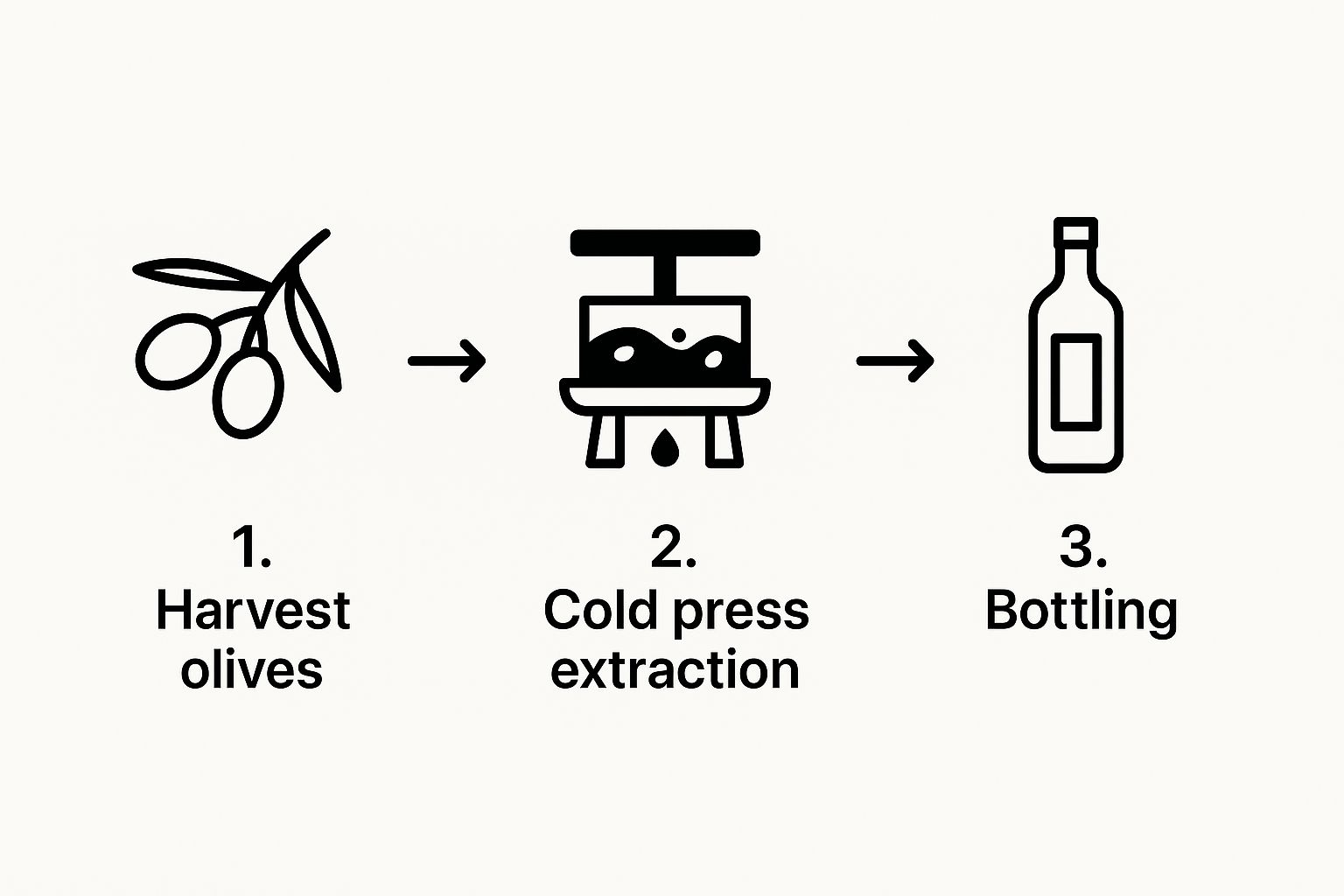
On the surface, it seems simple: harvest, press, bottle. But the real magic, the secret that separates the masters from the masses, lies in the obsessive, meticulous care taken at every single stage.
The Truth Behind "Cold Pressing"
You’ve seen "first cold press" on labels and probably imagined ancient stone wheels grinding olives in a rustic mill. While the term honors those traditions, today it stands for a non-negotiable principle of modern EVOO production: extraction without heat or chemicals.
True extra virgin olive oil is born in a centrifuge, a marvel of engineering that spins the crushed olive paste at incredible speeds, separating the pure oil from water and solids. The secret? This entire process must occur at a low temperature, typically below 27°C (about 80°F).
Why this fanatical obsession with cold? It’s simple. Heat is a thief. It may extract more oil, but in doing so, it steals the delicate aromas, annihilates the healthy polyphenols, and destroys the very essence of what makes an oil "extra virgin." True artisans always choose quality over quantity.
This unwavering commitment to cold, mechanical extraction is what separates the divine from the mundane. It ensures the oil in your bottle is nothing but pure fruit juice, loaded with the authentic flavors and life-giving nutrients of the olive. This is a world away from refined oils, which rely on high heat and chemical solvents to wring every last pathetic drop from the pulp.
The deep roots and traditions of this craft are fascinating. To truly appreciate the care that goes into every bottle, you must understand the origin of olive oil.
Finally, the fresh, vibrant oil is stored in massive stainless steel tanks, shielded from its enemies—oxygen and light—before bottling. Every single step, from the reverent harvest to the cool, clean press, reinforces the promise of purity kept all the way from the ancient grove to your kitchen.
Decoding the Secret Language of Quality
While the story of sun-drenched groves is undeniably romantic, an olive oil's true identity is written in the cold, hard language of chemistry. This is where pretenders are exposed and impostors are unmasked.
The term "extra virgin" is not a marketing slogan; it is a scientific verdict. It’s based on invisible markers that tell the unvarnished truth about an oil’s life—from the health of the olive on the tree to the precision of the miller. Once you learn to read these chemical signposts, you can see what’s really inside the bottle.
Free Acidity: The Unflinching Judge of Freshness
One of the most revealing metrics is free acidity. Imagine a perfect, unblemished apple, just plucked from the tree. It’s pristine. Now, imagine you drop it. That bruised spot immediately starts to decay. Free acidity in olive oil operates on the exact same principle.
It measures the percentage of free fatty acids that are unleashed as the olive's cells break down. This decay is triggered by bruising during harvest, pests, delays between picking and pressing, or simply using overripe, rotting fruit. It is a direct, brutal measure of the olive's health at the moment of crushing.
To earn the "extra virgin" label, an oil’s free acidity must be less than 0.8%. But the world’s elite producers scoff at this limit, consistently aiming for levels below 0.3%.
A low free acidity level is the first chemical proof of a masterful harvest and a swift, merciless race to the mill. It’s a snapshot of fruit captured in its absolute prime.
This one number reveals a producer's fanatical commitment to quality, a silent testament to the care taken to ensure only the most perfect olives make it into your oil.
Peroxide Value: A Ticking Clock of Oxidation
If free acidity tells you about the oil’s past, the peroxide value exposes its present and foretells its future. This number measures how much the oil has oxidized since the moment it was made. Oxidation is the same relentless process that turns a cut apple brown or butter rancid, and its agents are oxygen, light, and heat.
From the second the oil is pressed, a clock starts ticking. The peroxide value tells you how far that clock has run. The official limit for extra virgin olive oil is less than 20 meq O2/kg. A high number is a death sentence, signaling an oil that is already going stale or was stored with criminal negligence.
Here's how these two guardians of quality work in tandem:
- Free Acidity: Measures the quality of the olives before pressing. A low number (<0.8%) means the fruit was pristine and healthy.
- Peroxide Value: Measures oxidation after the oil is made. A low number (<20 meq O2/kg) means the oil is fresh and has been fiercely protected from its enemies.
Together, they form an unbreakable shield. An oil might start with impressively low acidity, but if it’s left to languish in a clear bottle on a warm, sunny shelf, its peroxide value will skyrocket, and its quality will plummet into oblivion. For a more detailed look, exploring what olive oil is made of can provide deeper insights.
These chemical standards aren't just arbitrary rules. They are the scientific bedrock ensuring the oil you buy delivers the explosive flavor, vibrant aroma, and profound health benefits you expect. They are the silent, unyielding guardians of the extra virgin promise.
How to Trust Your Senses and Unleash Your Inner Expert
While lab reports provide the cold, hard data, the true soul of an extra virgin olive oil is only revealed through your senses. Science may get an oil certified, but it is the aroma and taste that tell you if it deserves a place at your table. This is where you move beyond the numbers and begin to trust the profound intelligence of your own nose and palate.
This sensory trial isn't just a matter of opinion; it's a critical, official hurdle in the definition extra virgin olive oil must clear. A panel of certified tasters must confirm two things: first, that the oil has zero defects, and second, that it possesses positive, life-affirming characteristics.
The three positive notes they hunt for are fruitiness, bitterness, and pungency. Let's discover what they truly mean for you.
The Life Force of Fruitiness
The first—and most essential—positive attribute is fruitiness. Every single extra virgin olive oil must have a discernible fruity aroma. This might seem obvious, given that it comes from a fruit, but the staggering diversity of these aromas will astonish you.
Fruitiness, detected by both nose and mouth, can range from delicate and ethereal to medium or intensely robust. It is the direct expression of the olive variety, its ripeness at harvest, and the unique terroir it grew in.
A trained palate might identify specific notes that make an oil sing:
- Green Fruitiness: Imagine the scent of freshly mown grass, green tomato leaf, artichoke, or sharp green apple. These exhilarating aromas typically come from olives harvested early, while still fiercely green and firm.
- Ripe Fruitiness: These oils evoke notes of ripe banana, red apple, almond, or even tropical fruits. They are born from olives allowed to mature a little longer on the tree, developing softer, sweeter characteristics.
This aromatic complexity is the very first signal that you are in the presence of a high-quality, masterfully crafted oil. An oil that is bland or odorless has already failed the test.
Why Bitterness Is a Badge of Honor
Next comes bitterness. In most foods, bitterness is a flaw. In extra virgin olive oil, it is a glorious badge of honor. That pleasant bitter sensation that grips the sides of your tongue is an unmistakable sign of two things: the oil was made from fresh, green olives, and it is teeming with powerful antioxidants.
That bitterness is delivered by compounds like oleuropein, one of the most potent polyphenols found in olives. The more of this healthy, life-extending compound an oil contains, the more bitter it will likely taste.
Think of the satisfying bitterness in world-class dark chocolate or a bracing cup of green tea. It is a signal of complexity and healthful power at work, a clear message that the oil is fresh, potent, and alive.
An oil with no bitterness might seem "smoother," but you can bet it was made from overripe, lifeless olives or is well on its way to losing its vitality and health benefits.
The Signature Peppery Kick That Makes You Cough
Finally, there is pungency. This is that thrilling, peppery sensation that grabs you in the back of the throat a moment after swallowing. It might even make you cough—and if it does, you should rejoice! That cough is the hallmark of greatness.
This peppery kick is caused by a unique polyphenol called oleocanthal, a natural anti-inflammatory compound with properties similar to ibuprofen. Its presence is a direct indicator of a fresh, high-quality oil made from early-harvest olives. The more intense that peppery finish, the more of this extraordinary compound you are getting.
Learning how to properly assess olive oil transforms it from a simple pantry item into a source of endless fascination and pleasure. If you're ready to master this skill, our guide on how to taste olive oil is your first step.
Together, these three attributes—fruitiness, bitterness, and pungency—create a symphony of flavor. They are the living proof of an oil's journey from a healthy olive to your bottle, and now you know exactly how to recognize them.
How to Spot an Impostor in the Olive Oil Aisle
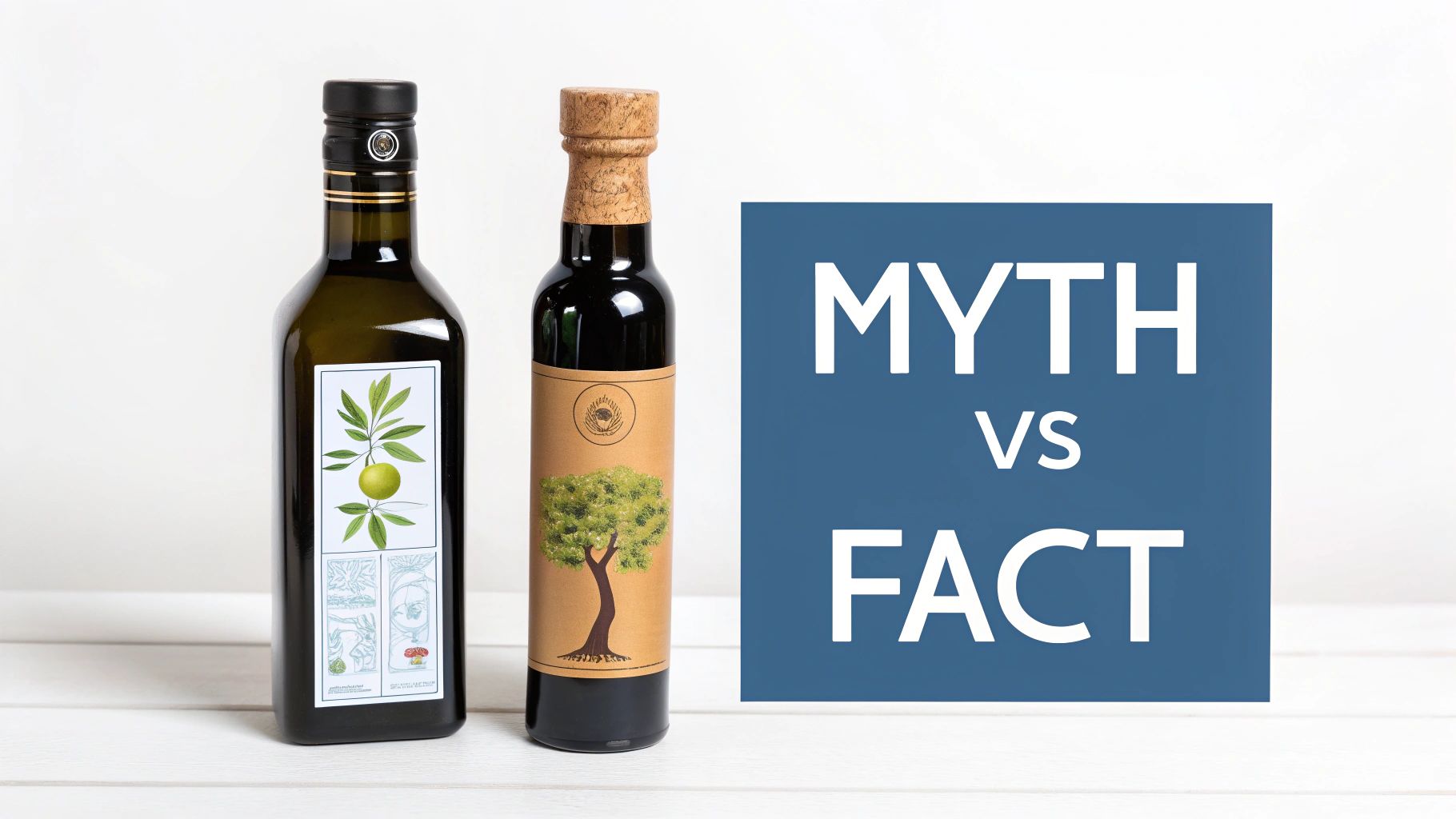
You’ve armed yourself with the science. You’ve tuned your senses. Now, it's time to enter the battlefield: the supermarket olive oil aisle. It’s an intimidating place, a dizzying wall of glass and clever marketing designed to confuse and overwhelm you. But armed with the right knowledge, you can slice through the noise and pinpoint a true champion.
The global demand for olive oil is staggering. Valued at over USD 19 billion in 2024, it's projected to soar past USD 30 billion by 2032. With that much money at stake, is it any wonder that fraud and deception are rampant? Your mission is to ignore the seductive front labels and become a label detective, focusing on the fine print where the truth lies hidden.
The One Clue That Matters Most: The Harvest Date
If you remember only one thing from this guide, let it be this: always look for the harvest date. This is, without question, the single most critical piece of information on any bottle of authentic extra virgin olive oil. It tells you precisely when the olives were picked and milled, giving you an honest, unblinking assessment of its freshness.
Do not be fooled by a "best by" or "bottling" date. These dates can be set two years or more after the oil was actually extracted, rendering them almost useless. An honest producer is proud of their harvest and will display the date prominently. If you can’t find it? Put the bottle down and walk away.
Decoding the Label's Secret Language
Beyond the all-important harvest date, a few other clues on the label can either build your confidence or scream "danger!"
Train your eyes to spot these tell-tale signs:
- Vague Origin: A label that meekly states "Product of Italy" or "Packed in Greece" is a massive red flag. This often means oils from various countries (like Tunisia, Spain, or Turkey) were blended and bottled there. Look for specificity: a single estate, a particular region, or a PDO (Protected Designation of Origin) that ties the oil to a real place with real people.
- Deceptive Buzzwords: Words like "Pure," "Light," or simply "Olive Oil" are not your friends. These are marketing code for low-grade, refined oils that have been stripped of their flavor, aroma, and health benefits. Insist on the words "Extra Virgin."
- Third-Party Seals: Look for seals of approval from reputable organizations like the California Olive Oil Council (COOC) or award stickers from major international competitions. These are not just decoration; they prove the oil passed rigorous chemical and sensory tests to earn its accolades.
The most compelling story an olive oil can tell is one of specificity. The more detail on the label—an estate name, the olive varietal, the harvest date—the more certain you can be that you are holding a product of integrity.
Judge the Bottle Before You Judge the Oil
Before you even read a single word, the bottle itself can reveal a producer’s true intentions. Light is one of olive oil's deadliest enemies; it triggers rapid oxidation that turns a beautiful oil rancid. A producer who genuinely cares about their product would never, ever sell it in a clear glass bottle.
Always choose an oil packaged in dark glass (green or brown), a tin, or an opaque ceramic container. This simple, crucial detail shows that the producer understands how to protect their oil from light, preserving its precious cargo all the way from their mill to your kitchen.
While the world is full of counterfeit and low-quality oils, you now have the power to spot them from a mile away. Our guide on how to spot fake olive oil provides even more insider secrets to ensure you always bring home the real thing. By combining your knowledge of dates, labels, and packaging, you can transform a confusing chore into a confident and rewarding purchase, every single time.
Your Burning Questions About Extra Virgin Olive Oil, Answered
Even with this newfound knowledge, it's natural to have questions. The world of EVOO is wonderfully complex, and curiosity is the first step on the path to true appreciation. Let's tackle some of the most common myths and mysteries once and for all.
Consider this your definitive guide to using and enjoying your olive oil with absolute confidence.
Can You Actually Cook with Extra Virgin Olive Oil?
This is the single biggest myth in the culinary world, and it’s time to destroy it. The short answer is a resounding YES! You absolutely can and should cook with it. The outdated notion that EVOO is only for drizzling is a tragedy that has kept incredible flavor out of countless meals.
The primary concern is the smoke point—the temperature at which an oil begins to smoke and degrade. But here's the secret most people don't know: high-quality extra virgin olive oil is far more stable than you've been led to believe. Its smoke point typically ranges from 190°C to 215°C (375°F to 420°F). This is well above the temperatures needed for most everyday cooking, including sautéing and pan-frying.
What gives it this remarkable stability? The very same compounds that make it so healthy. EVOO is rich in stable monounsaturated fats and packed with powerful antioxidants. These compounds perform double duty: they protect the oil from breaking down under heat while infusing your food with their health benefits and unmatched flavor.
Don't relegate your best oil to the salad bowl. Cooking with high-quality extra virgin olive oil is one of the smartest upgrades you can make in your kitchen. You infuse every dish with superior taste and potent antioxidants that refined oils simply cannot offer.
So go ahead—sauté your vegetables, pan-sear that fish, or roast those potatoes. You’ll be rewarded with a meal that is both profoundly healthier and exponentially more delicious.
Is Cloudy Olive Oil a Bad Sign?
If you pour your olive oil and notice it's a bit hazy, don't panic. This is almost never a bad sign. In fact, it can indicate that you have an exceptionally fresh, minimally processed oil. The cloudiness is typically just microscopic particles of the olive fruit itself that haven't been filtered out, adding to the flavor and aroma.
Here are the two most common reasons for cloudy oil:
- It’s Unfiltered: Many of the world’s best producers intentionally bottle their oil unfiltered to retain every last drop of flavor and aroma. This style, often called olio nuovo ("new oil"), is a seasonal delicacy prized for its vibrant, straight-from-the-mill intensity.
- It Got Cold: Olive oil will naturally congeal and turn cloudy when chilled. If it’s been stored in a cold pantry or the refrigerator, this is a perfectly normal reaction. Simply let it return to room temperature, and it will become clear again with no harm to its quality.
The only time cloudiness could be a concern is if it's accompanied by a "musty" or "swampy" smell, which can indicate a defect. But this is rare. In most cases, a little haze is a beautiful thing.
How Should I Store My Olive Oil?
Proper storage is the single most important thing you can do to protect the investment you’ve made in a quality oil. Olive oil has three mortal enemies: oxygen, light, and heat. Your job is to be its loyal guardian, shielding it from all three.
Think of EVOO as you would fresh-squeezed juice—because that's what it is. You wouldn’t leave orange juice in a clear glass on a sunny windowsill, would you? Apply that same logic to your oil.
Follow these three ironclad rules:
- Keep It in the Dark: Store your oil in a dark cabinet or pantry, away from all direct sunlight. This is precisely why good producers use dark bottles or tins—to protect the oil from light, which causes rapid degradation.
- Keep It Cool: The ideal storage temperature is around 14°C to 18°C (57°F to 65°F). Never store it next to your stove or oven, where constant temperature fluctuations will accelerate its demise.
- Keep It Sealed: Oxygen is the enemy of freshness. The moment you open a bottle, the clock is ticking faster. Screw the cap on tightly after every use to minimize air exposure, and plan to use the bottle within a few months of opening for peak flavor.
Storing your oil correctly means the vibrant fruitiness, the healthy bitterness, and the peppery finish you paid for will be there from the first drop to the last.
What Does the Color of Olive Oil Mean?
It's a common belief that a deep, emerald green color is a sign of superior quality. The truth? The color of extra virgin olive oil—whether brilliant green or pale gold—tells you absolutely nothing about its quality.
So what does determine the color? It all comes down to the amount of chlorophyll in the olives at the time of harvest.
- Green Oils: A vibrant green hue indicates the oil was made from olives picked early in the season. These unripe olives are full of chlorophyll, which lends the oil its intense color.
- Golden Oils: A more golden tone typically comes from olives harvested later in the season, after they have ripened and darkened. As the olive matures, chlorophyll levels decrease, allowing the naturally golden carotenoids to become more prominent.
In fact, professional olive oil judges use special cobalt-blue glasses for official tastings. This is done to deliberately mask the oil’s color, preventing it from influencing their assessment. They know that true quality is found in the aroma and taste—the fruitiness, bitterness, and pungency—not in the shade of green or gold.
At Learn Olive Oil, our mission is to cut through the confusion and empower you with the truth about premium olive oil. We believe that understanding what's in your bottle doesn't just elevate your meals—it transforms your relationship with food, health, and flavor.
Discover the World of Premium Olive Oil at learnoliveoil.com
 Learn Olive Oil
Leave a comment