Walk down the olive oil aisle, and you’re met with a wall of confusion. Extra Virgin, Pure, Light—the labels whisper promises of something special. But here’s a secret most people never learn: these aren't just clever marketing terms. They are a code. A language that reveals everything you need to know about the type of olive oil inside the bottle—from its hidden flavor and true quality to its one perfect job in your kitchen.
Cracking the Code on Olive Oil Labels
You don’t need to be a culinary expert to master this code. The real secret separating one bottle from the next boils down to a single, powerful factor: how the olives were treated.
Think of it this way: the less human hands interfere, the more glorious flavor remains. The labels are simply a roadmap, telling you how much work—or how little—it took to get that liquid gold from the olive grove to your pantry.
And this is no small matter. The global olive oil market is a giant, valued at an astonishing USD 19.4 billion in 2024. The heart of this empire beats in Europe, where countries like Spain and Italy command a market share of over USD 9.7 billion.
The Hierarchy of Olive Oil Quality
To truly grasp your options, you need to see the family tree. This chart lays out the main types of olive oil, revealing the relationships based on how they were made.
As you can see, the royalty of the olive oil world—Extra Virgin and Virgin—are born without chemicals. The refined oils, on the other hand, have been put through their paces to get them ready for the shelf. Understanding this one simple difference is the key that unlocks the entire aisle.
The word ‘virgin’ on a label is a sworn promise. It guarantees the oil was extracted using only muscle and machine—no solvents, no chemicals, just pure, pressed olives. This is the great dividing line that separates the best oils from all the rest.
Once you learn to read these terms, a world of clarity opens up. Grasping the fundamentals of olive oil labeling means you can shop with the confidence of a seasoned chef, knowing exactly what you’re bringing home. This guide will walk you through it, turning that aisle of confusion into your personal shelf of possibilities.
Extra Virgin Olive Oil: The Gold Standard
Let’s start at the absolute pinnacle. Extra Virgin Olive Oil, or EVOO, isn't just another bottle on the shelf; it is the purest expression of the olive you can find. The best way to think of it is as fresh fruit juice, squeezed directly from the olive. This simple, profound idea is what truly sets this type of olive oil apart from all others.
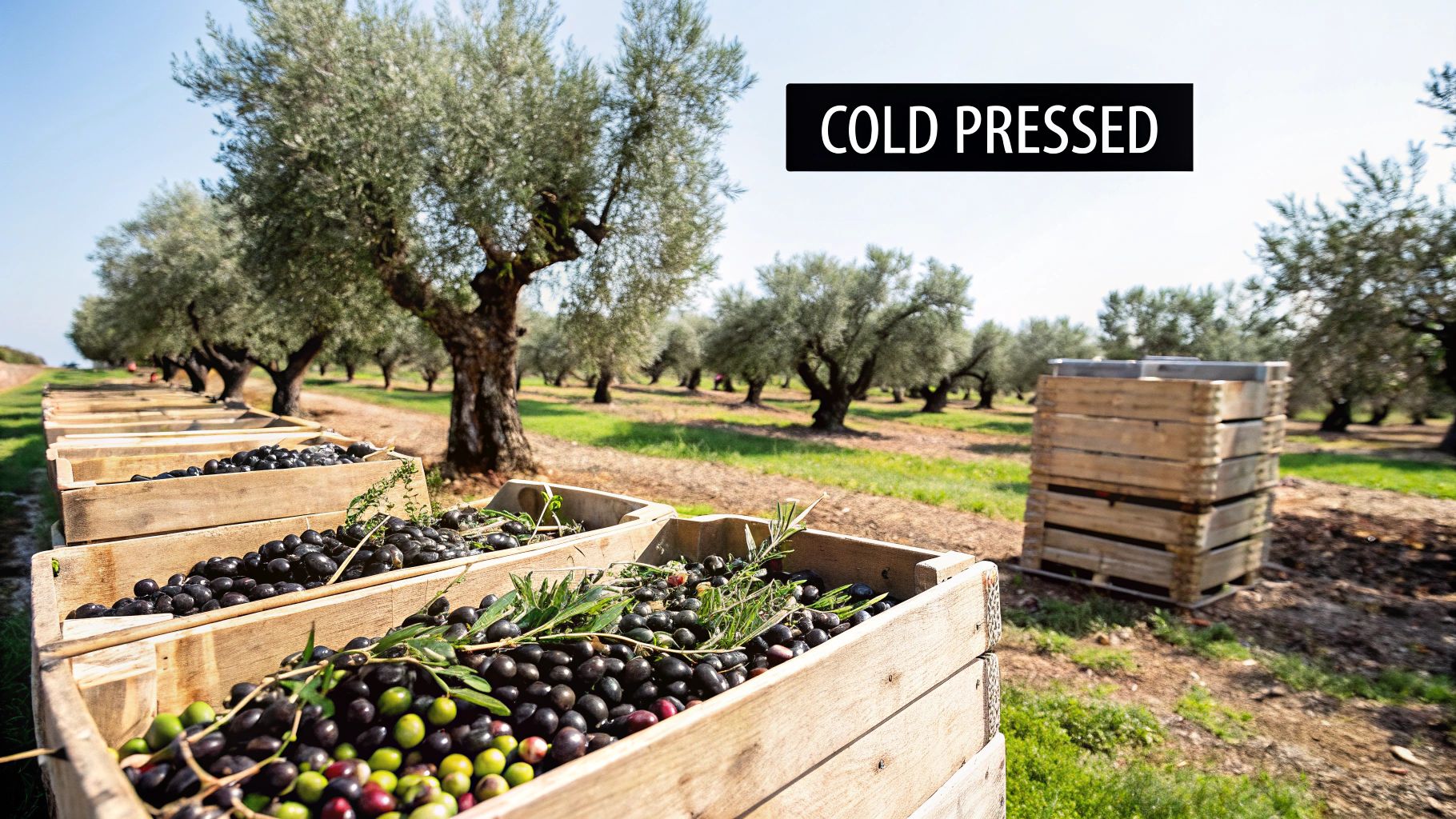
The "extra virgin" title is a seal of supreme quality. It certifies that the oil came from the very first pressing of the olives, using only mechanical methods—no scorching heat, no chemical shortcuts. This patient, hands-off approach ensures the oil’s natural character and its symphony of delicate flavors are perfectly preserved.
This gentle, cold-press method is what keeps the soul of the olive intact. It safeguards the entire spectrum of complex notes, from grassy and fruity to that tell-tale peppery finish. Most importantly, it keeps all the beneficial, health-boosting compounds right where they belong: in your oil.
Low Acidity: The Signature of a Healthy Olive
One of the key technical demands for EVOO is its free fatty acid (FFA) level, which must remain below 0.8%. But that cold number tells a warm story. A low acidity level is a direct signal that the olives were healthy, handled with reverence, and pressed swiftly after being plucked from the branch.
When acidity is high, it’s a red flag. It often means the olives were bruised, overripe, or left to sit for too long. So, the lower the acidity, the fresher the fruit and the cleaner the process. It is the very foundation of true EVOO quality.
That Peppery Kick? It’s a Very Good Thing
Have you ever tasted a truly great olive oil and felt a slight peppery burn, a "tickle" in the back of your throat? That's not a flaw—it’s the signature of greatness.
That sensation comes from oleocanthal, a potent antioxidant. It’s one of many powerful compounds called polyphenols found in genuine EVOO. These compounds are the source of the oil's robust, pungent character and a massive portion of its legendary health benefits.
A strong, peppery finish is your taste buds shouting that the olive oil is brimming with polyphenols. This bitterness and pungency are direct indicators of freshness and antioxidant power, separating the genuine article from the pretenders.
Polyphenols are fragile. They are the first casualties when an oil is exposed to heat, chemicals, or refinement, which is why they are most concentrated in true extra virgin olive oil. If you want to unlock the maximum health impact, you can learn more about finding the best high-polyphenol olive oil and ensure every spoonful is working for you.
Ultimately, choosing EVOO means choosing an oil that is as close to its natural state as possible. It is meant to be savored for its complexity, making it perfect for drizzling over a finished dish, whipping up a vibrant vinaigrette, or simply dipping with a piece of warm, crusty bread. This isn't just cooking oil; it's liquid gold.
Exploring Virgin and Refined Olive Oils
So, what happens when an oil doesn’t quite earn the prestigious "extra virgin" crown? Is it cast aside? Not at all. It simply finds a new destiny—a different, vital role to play in your kitchen as a reliable, everyday workhorse.
This is where Virgin Olive Oil enters the scene. Think of it as EVOO’s close cousin. It comes from the exact same chemical-free, mechanical pressing process, but it just misses the highest standard for acidity or flavor perfection. It’s one of the most practical types of olive oil you can own for daily cooking.
While Extra Virgin Olive Oil must have an acidity below 0.8%, Virgin Olive Oil is permitted an acidity of up to 2.0%. This small chemical distinction results in a milder, less assertive flavor, making it a fantastic choice for general cooking where you don't need a powerful, peppery finale.
Virgin Olive Oil: The Dependable Standby
Virgin Olive Oil is your trusted ally for sautéing vegetables or pan-frying. It still carries some of that authentic olive character, but it won’t dominate the other ingredients in your dish. Because it’s also unrefined, it holds onto a respectable amount of the natural vitamins and minerals from the olive.
The key takeaway is its honest origin. This oil is still born from a purely physical process, which you can explore in our guide on what cold-pressed olive oil truly means. It’s a straightforward oil that gets the job done without stealing the show.
Virgin Olive Oil is the bridge between the premium finishing oils and the high-heat cooking oils. It offers a touch of genuine olive flavor and a solid nutritional profile without the premium price tag of a top-tier EVOO.
Refined Olive Oil: The Kitchen's Unsung Hero
Now, let's pull back the curtain on another category entirely: Refined Olive Oil. What happens to oils with noticeable flavor flaws or an acidity level too high even for the "virgin" classification? They are sent for a bit of transformation.
This process uses heat, pressure, and filtering agents to neutralize those imperfections. It strips away the color, aroma, and taste, creating an incredibly neutral and stable oil. This isn't a bad thing; it’s by design. The entire point is to craft a product with very specific cooking superpowers.
This refining process gives the oil two major advantages for certain kitchen missions:
- A Neutral Flavor: It won't impose any taste on your food, allowing your ingredients’ natural essence to shine through.
- A Higher Smoke Point: It can withstand much higher temperatures before breaking down, making it perfect for high-heat cooking.
You’ll often find this oil on shelves blended with a small amount of virgin or extra virgin olive oil to add back a whisper of color and flavor. These blends are typically labeled as "Pure Olive Oil" or "Light Olive Oil." But don't let the word "light" fool you—it refers only to the flavor and color, never the calorie count. All olive oils pack the same caloric punch.
This makes refined olive oil the unsung hero for frying, deep-frying, and baking. It’s the smart, practical choice when you need heat stability and a clean palate, proving every type of olive oil has its perfect place in a well-stocked kitchen.
What Is Olive Pomace Oil?
After the giant presses have squeezed every last drop of extra virgin and virgin oil, a damp, pulpy mash of olive skins, pits, and flesh remains. This is olive pomace, and while it may look like the end of the road, it is not.
Hidden deep inside this pomace is a small but stubborn amount of oil—somewhere between 5% to 8%—that simple mechanical force can't liberate. To retrieve it, producers turn to solvents and heat to extract what's left. It's an industrial process, a world away from the gentle cold-pressing of virgin oils.
The initial liquid, known as crude pomace oil, is not fit for consumption. It must be thoroughly refined to strip out impurities, tame harsh flavors, and lower its acidity, much like the process for creating standard refined olive oil.
The Industrial Kitchen Workhorse
To create the final product, this refined pomace oil is usually blended with a splash of virgin olive oil. This adds a hint of flavor and color, resulting in what we know as Olive Pomace Oil. It has a very clear, practical purpose in the kitchen.
So, what makes it stand out?
- A Very High Smoke Point: This oil can take the heat, reaching up to 460°F (238°C) before it starts to break down.
- A Neutral Flavor Profile: The intense refining process erases any real olive taste, so it won’t flavor the food you’re cooking.
- Cost-Effectiveness: It’s made from what is essentially a byproduct, making it one of the most budget-friendly cooking oils money can buy.
Because of these traits, olive pomace oil is a true workhorse, especially in high-volume commercial kitchens. It’s the go-to for deep-frying mountains of french fries, chicken, and anything else where a stable, neutral oil is an absolute must.
Olive Pomace Oil is the ultimate example of "waste not, want not" in the olive oil industry. It takes a byproduct that would otherwise be discarded and transforms it into a functional, economical cooking oil perfectly suited for industrial frying applications.
It doesn’t possess the rich flavors or the powerful antioxidants of its extra virgin cousin, but it isn’t trying to. This specific type of olive oil is built for a job—high-heat cooking—that would cause finer oils to smoke and burn. It proves that in the culinary world, there's a right oil for every single task.
Choosing The Right Oil For Your Dish
Becoming a great cook isn't about blindly following recipes. It's about knowing your ingredients so intimately that you can make smart, creative choices on the fly. This is where we put theory into practice, pairing the right olive oil with its perfect culinary role.
The single most common mistake I see? Using a beautiful, expensive Extra Virgin Olive Oil for high-heat cooking. It’s a waste of money, yes, but more importantly, it’s a tragic waste of flavor. All those delicate, peppery, grassy notes you paid a premium for will simply incinerate, leaving you with a smoking pan and a bitter taste. A top-shelf EVOO is a finishing oil, not a frying oil.
You want to save that liquid gold for moments when its personality can be the star of the show. Think of it as the final flourish: a generous drizzle over a finished pasta, the vibrant backbone of a zesty vinaigrette, or simply pooled in a small bowl for dipping a crusty piece of bread. Its complex flavor is meant to be front and center.
Matching Oil To Method
So, when do the other, more humble olive oils get their chance to shine? For the day-to-day battles in the kitchen, you need a different kind of hero. This is where your reliable workhorses—virgin and refined olive oils—come into play.
-
For Sautéing and Pan-Frying: Reach for a good Virgin Olive Oil. It has a higher smoke point than its extra virgin cousin but still brings a pleasant, mild olive taste to the party. It’s perfect for complementing vegetables, chicken, and fish without stealing the spotlight.
-
For High-Heat Roasting and Frying: This is a job for Refined or "Light" Olive Oil. With its neutral flavor and high smoke point, it’s exactly what you need for getting potatoes perfectly crispy in the oven or putting a hard sear on a steak.
-
For Deep-Frying: When you need an affordable oil that can stand up to serious, sustained heat, Olive Pomace Oil is the undisputed champion. Its completely neutral profile means your fried chicken will taste like chicken, not like cooking oil.
Mediterranean producers have made this ingredient a global kitchen staple, with Spain alone supplying nearly half of the world's olive oil. This has given cooks everywhere a versatile toolkit. It’s become second nature to swap out an EVOO for a "regular" olive oil when you need a neutral base versus a bold flavor. You can explore more about where our olive oil comes from and its journey to our kitchens on aboutoliveoil.org.
A Simple Pairing Guide
Think of your olive oils like tools in a toolbox. You wouldn't use a delicate chisel to break up concrete, would you? The same logic applies here. The more you cook, the more intuitive this becomes. For a deeper dive, our guide on how to cook with olive oil has even more tips to help you master these techniques.
To make it even simpler, here's a quick-reference table to help you match the oil to your meal.
Pairing Olive Oil with Your Cooking
| Olive Oil Type | Flavor Profile | Smoke Point | Best For |
|---|---|---|---|
| Extra Virgin | Robust, peppery, fruity | Low (325-375°F) | Dipping, dressings, finishing drizzles, marinades |
| Virgin | Mild olive flavor | Medium (390°F) | Sautéing, pan-frying, everyday cooking |
| Refined (Light) | Neutral, very mild | High (465°F) | High-heat roasting, searing, baking |
| Olive Pomace | Neutral | Highest (470°F) | Deep-frying, high-volume cooking |
This chart is your starting point. The more you experiment, the more you'll develop a feel for which oil works best for your personal cooking style.
Your goal is simple harmony. The oil should either elevate the dish with its own distinct flavor or step back and let the other ingredients shine.
When you understand the why behind each bottle of olive oil, you stop just following instructions and start cooking with true intuition. This is the secret that separates a good cook from a great one.
Common Olive Oil Questions Answered
Even after you get a handle on the different types of olive oil, you’ll probably find yourself with more questions. That’s a good sign—it means you're starting to think like a chef, looking to understand how this kitchen staple truly works.
Let's tackle a couple of the most common puzzles people run into.
Should I Worry About a "Best By" Date?
Yes, you absolutely should. Olive oil isn't like a fine wine that improves with age; it's a fresh-pressed fruit juice. That "best by" date is your single best guide to when the oil will deliver its peak flavor and full health benefits.
Once you open a bottle, the clock starts ticking even faster. To keep it at its best, always store your oil in a cool, dark place. The worst spot for it is right next to the stove, as heat and light are the mortal enemies of freshness.
Why Is My Olive Oil Cloudy?
Don't panic! Cloudiness almost never means the oil has gone bad. It’s usually just a sign that the oil got a bit too cold, causing some of the natural waxes from the olive to solidify. Think of it like butter hardening in the fridge.
Just let the bottle sit at room temperature for a while. It should clear right up on its own, and the flavor will be perfectly fine.
Understanding the nuances of each type of olive oil transforms your kitchen. It’s not just about cooking; it’s about choosing the right tool for the job to achieve the best possible result, every single time.
This global fascination with olive oil has fueled a massive industry, with production hitting 2.7 million tonnes in 2022. But how we enjoy it varies wildly across the globe. In Greece, the average person consumes an incredible 24 liters each year, while in the United States, that number is closer to just one liter. You can dig into more fascinating facts about this global staple on Wikipedia.
Whether you’re whipping up a quick weeknight dinner or preparing an elaborate feast, the right oil can make or break the dish. For instance, knowing the best olive oil for salad dressing is a simple detail that pays off with huge flavor.
At Learn Olive Oil, we're passionate about helping you explore the rich and flavorful world of this liquid gold. Start your journey today and take your cooking to the next level. Discover the World of Premium Olive Oil


Leave a comment