Yes, your olive oil can and absolutely will go rancid. It’s a tragic, but inevitable, truth. You must think of it not as a timeless pantry staple, but as a fresh-pressed juice. It has a glorious peak… and then, a sad, inevitable decline.
When your olive oil turns, it isn’t just a subtle shift in taste. It's a complete betrayal. A full-blown transformation from a healthy, life-giving fat into something that can make your food taste, quite frankly, awful.
The Truth About Your Olive Oil
What, exactly, is happening inside that beautiful bottle you paid good money for? The villain of our story is a chemical reaction called oxidation. This insidious process kicks off the moment your oil is exposed to its three greatest enemies: air, light, and heat. These villains launch a relentless assault on the oil's delicate structure, degrading its quality, stripping away its precious health benefits, and utterly destroying its beautiful flavor.
Understanding this process is the secret to keeping your oil at its peak. If you're curious about the building blocks of olive oil that are under attack, you can dive deeper into our guide on what olive oil is made of.
This visual breaks down the three main culprits that speed up rancidity.
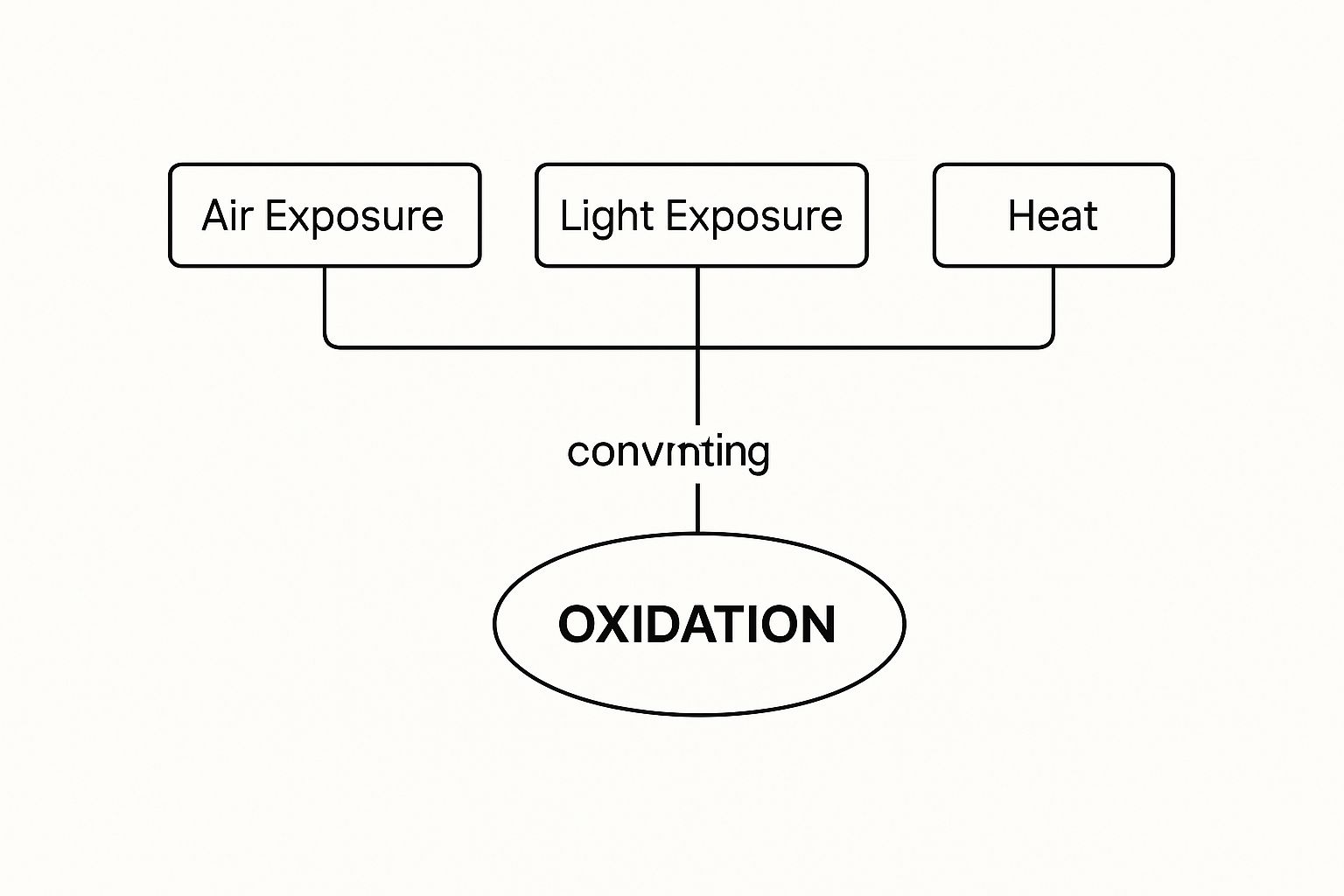
As you can see, each of these elements is a direct trigger for oxidation. Protecting your oil from them is the secret to preserving its freshness from the first pour to the last.
Why Good Olive Oil Turns Bad
https://www.youtube.com/embed/UzPsk7hy0EM
So, what exactly happens when a beautiful, fresh olive oil starts its journey to the dark side? Let's skip the dense chemistry lesson and imagine this instead: the antioxidants in fresh olive oil are like a crew of dedicated bodyguards, fiercely protecting the delicate fat molecules inside.
Every single time these bodyguards must fend off an attack from oxygen, light, or heat, one of them makes the ultimate sacrifice. Over time, that protective crew gets smaller and smaller, until one day, the oil is left completely defenseless. This is oxidation, and it's the very process that turns your vibrant, peppery oil into something flat, stale, and utterly disappointing.
It’s a cruel paradox, isn't it? The very things that make extra virgin olive oil so profoundly healthy—those powerful antioxidants—are also what make it so fragile. The oil begins to break down when it reacts with oxygen, and this battle gets massively accelerated by its two key enemies: light and heat. Getting a handle on olive oil rancidity is the first step to keeping your oil fresh.
The very health benefits you get from the antioxidants in olive oil are what get used up as they fight off rancidity. This is why it’s so important to use your oil soon after opening it. Discover more insights about olive oil oxidation.
How to Detect Rancid Olive Oil Using Your Senses
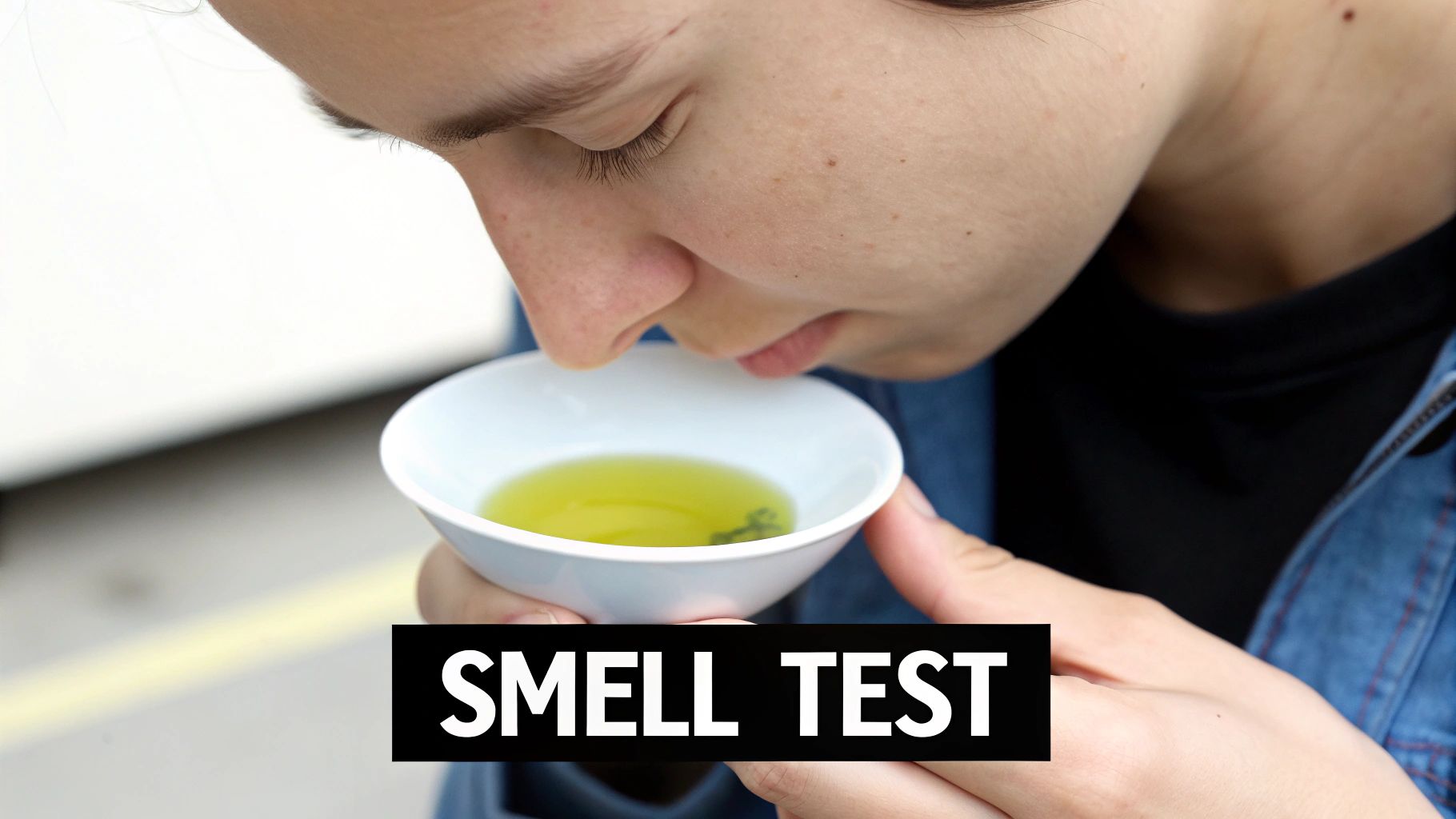
You don't need a lab coat or a fancy chemistry set to spot spoiled olive oil. Your own nose and palate are the most sophisticated tools you have. With a little practice, you can become an expert at telling the good stuff from the bad.
It all begins with a simple sniff. Pour a little oil into a small glass, warm it between your hands, and take a deep, thoughtful whiff. Fresh, high-quality extra virgin olive oil should smell vibrant and alive—an exhilarating bouquet of freshly cut grass, green almonds, or even a feisty, peppery kick.
Rancid oil, on the other hand, smells dead. Lifeless. That vibrant aroma is gone, replaced by something dull and waxy, often described as smelling like old crayons, stale putty, or forgotten nuts. Trust your gut. If it smells off, it is off.
For the final verdict, take a small sip. A rancid oil will taste greasy and leave a flat, unpleasant flavor that just hangs around, tainting your palate. You can learn the finer points of how to taste olive oil like a professional and quickly build the confidence to trust your senses every single time.
Cracking the Code: How to Read Olive Oil Labels for Peak Freshness
The life—and eventual death—of your olive oil began long before you brought it home. To bring home the freshest bottle, you must learn to read the story it tells, not just the marketing hype splashed on the front.
First, I want you to do something radical: ignore the "Best By" date. It’s often just a wild guess, sometimes a generous one, and it is not a reliable indicator of the oil's actual condition.
The Most Important Date on the Bottle
The one piece of information you should hunt for like a detective is the Harvest Date. This is your golden ticket. It tells you exactly when the olives were picked and crushed, marking the true beginning of the oil's lifespan, which is typically 18 to 24 months.
Keep in mind that high-quality extra virgin olive oils, which are loaded with natural antioxidants called polyphenols, will stay fresh longer than a more refined, lower-quality oil.
You might be surprised to learn that freshness is a regulated part of olive oil quality. To be sold as extra virgin, international standards from groups like the IOC and USDA require that the oil has a free acidity of ≤ 0.8% and a peroxide value of ≤ 20 meq O₂/kg. These chemistry markers help ensure the oil is fresh from the get-go. You can learn more about these crucial international olive oil standards here.
The bottle itself also offers powerful clues. Is it made of dark, protective glass or tin? That's a very good sign, as it shields the oil from light, one of its worst enemies. If it’s in a clear plastic bottle, you can bet that the oil inside has had a much rougher journey.
Ultimately, getting comfortable with olive oil labeling is the best skill you can develop to avoid accidentally buying a bottle that’s already past its prime.
A Foolproof Guide to Storing Olive Oil
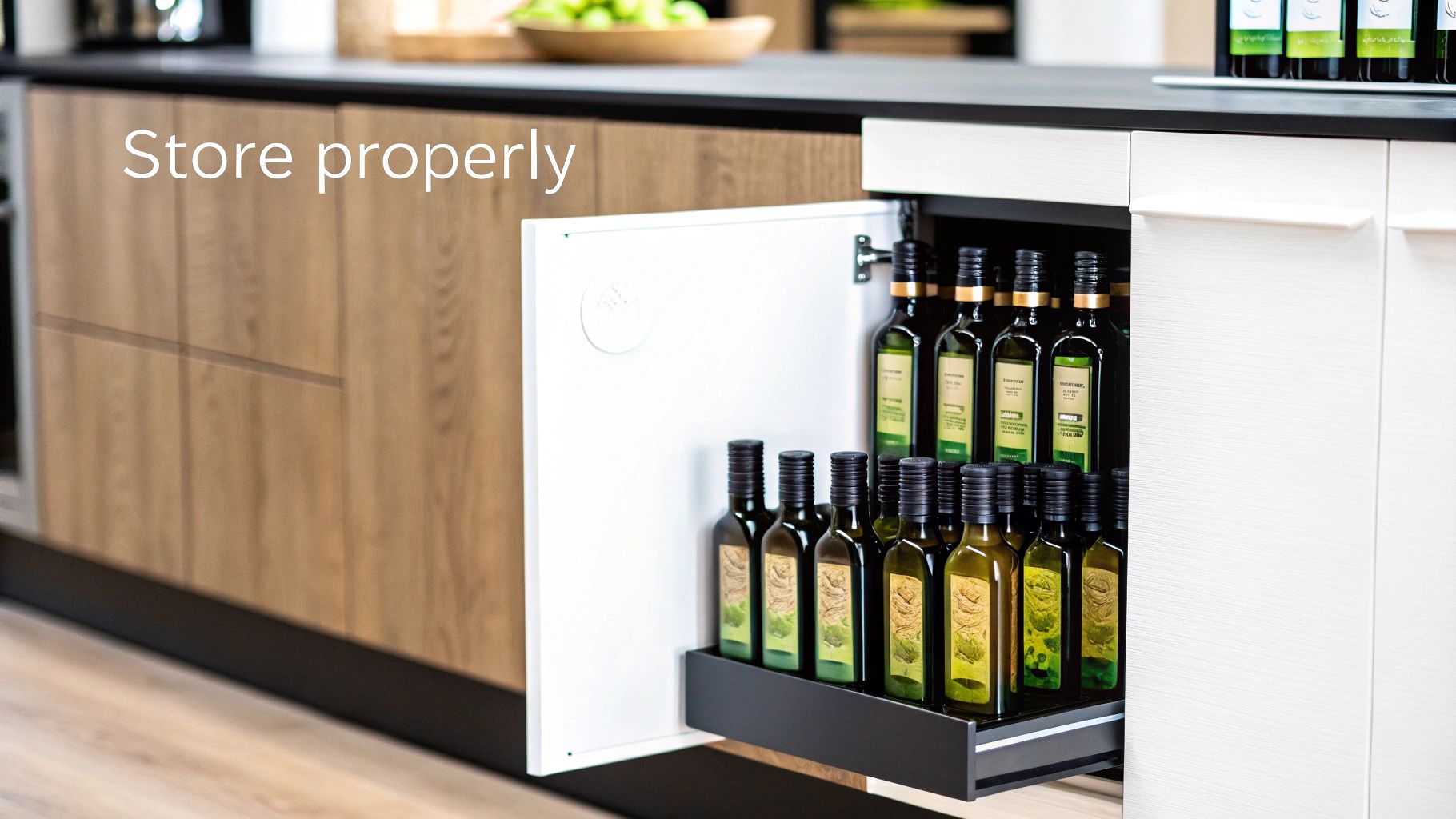
Knowing what makes olive oil go bad is half the battle; the other half is putting that knowledge into practice every single day. From this moment on, your mantra for protecting your oil should be simple and absolute: Cool, Dark, and Sealed.
Let's start by busting a few myths. Forget storing your olive oil in the refrigerator. While it seems logical, the cold can cause condensation to form inside the bottle, and it often dulls the delicate flavors. An even bigger crime? Keeping it next to your stove. The constant, penetrating heat is a fast track to spoilage.
Protecting the flavor and quality of your olive oil really just comes down to a few smart habits.
Smart Storage Habits
- Buy the right size. Choose a bottle that you’ll realistically use within a couple of months after opening it. Bigger isn't always better if it sits around, slowly dying, for too long.
- Decant if you buy in bulk. If you can’t resist a large tin, pour a smaller amount into a dark, everyday-use bottle. This keeps the bulk of your oil safe from repeated exposure to its enemy, the air.
- Always seal it tight. The moment you're done pouring, screw that cap back on snugly. Oxygen is the silent killer, so don't give it any more access than absolutely necessary.
Choosing from the best olive oil storage containers is a great first step, but the environment where you keep it matters just as much. To learn more about creating the perfect conditions in your pantry, check out these excellent cabinet humidity control tips.
How to Choose the Freshest Olive Oil at the Store
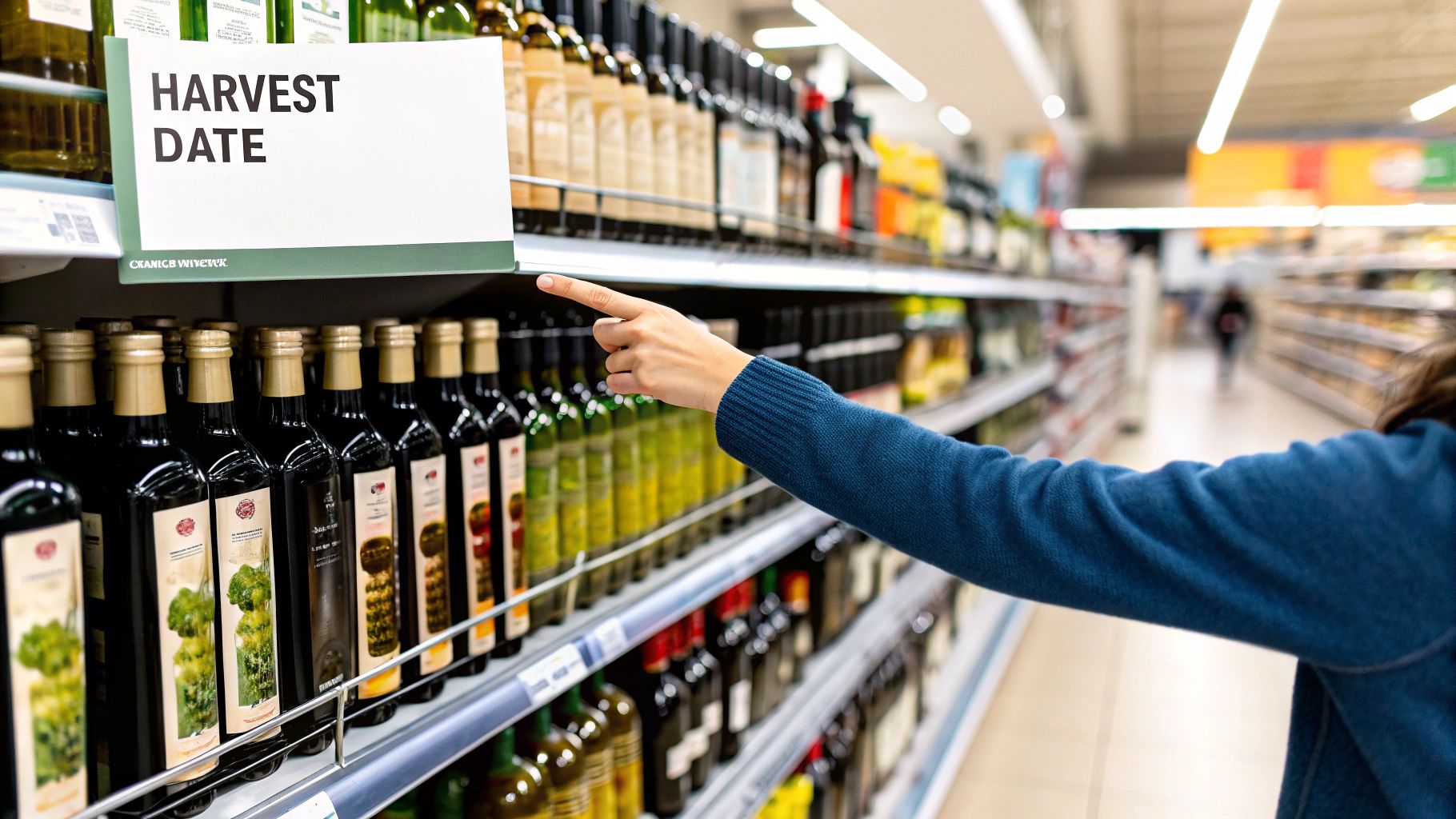
The battle against rancidity is often won or lost before you even leave the supermarket. To bring home the best possible product, you have to learn to look past the fancy labels and focus on a few key details that signal true quality.
Your most powerful clue to freshness is the harvest date. Look for it printed on the bottle—the more recent, the better. Next, judge the container itself. Always choose olive oil that comes in dark, opaque glass or a tin can, as these materials are your first line of defense against damaging light.
Why does this matter so much? Because producers around the world, from Spain to Greece, follow international quality standards for a reason. Higher-quality oils are naturally more stable and better equipped to resist oxidation. These strict standards ensure the oil starts its journey to your kitchen in peak condition.
You can discover more insights about these quality facts to shop with even more confidence.
Still Have Questions About Olive Oil Freshness?
It's perfectly normal to have a few nagging questions. Let's tackle some of the most common ones I hear so you can feel completely confident about the olive oil in your kitchen.
Can I Still Cook With Rancid Olive Oil?
Technically, you can, but I must strongly advise against it. Why would you? While a tiny taste probably won’t make you ill, it is guaranteed to ruin whatever you're cooking with an unpleasant, crayon-like flavor.
More importantly, all those amazing health benefits? They're gone. Vanished. The very antioxidants that make extra virgin olive oil a nutritional powerhouse have been utterly destroyed in a rancid bottle. It’s simply not worth it—just throw it out.
Should I Keep My Olive Oil In The Fridge?
This is a very common myth, but please don't do it! Refrigerating olive oil can cause condensation to form inside the bottle. That small amount of water is an enemy of freshness and will actually make the oil go bad faster.
Your best bet is a cool, dark place like a pantry or a kitchen cabinet far away from the heat of the stove.
Is There Any Way to Fix Rancid Oil?
Unfortunately, once an oil has turned, it's gone for good. Rancidity is a one-way street; it's a chemical process you simply cannot reverse. There is no magic trick to bring it back to life.


Leave a Reply