You’ve probably heard the warning a dozen times, whispered like a sacred kitchen commandment: don’t you dare cook with extra virgin olive oil. The common wisdom insists its smoke point is tragically low, making it unstable and unhealthy for anything more than a finishing drizzle.
Let me tell you, this is one of the most stubborn—and costly—myths in the culinary world. It’s time to set the record straight, once and for all.
The very idea that olive oil has a single, low smoke point is a complete fiction. The truth is, the temperature at which olive oil begins to smoke can swing wildly, anywhere from 350°F to a blistering 470°F (177°C to 243°C). Where your bottle falls on that spectrum is determined entirely by its quality and grade.
Not All Olive Oils Are Created Equal
Think of it like this: not all coffees are the same, and not all olive oils are either. The smoke point isn’t a fixed number etched in stone but a variable that shifts based on a few key factors.
- Quality and Purity: A genuinely high-quality extra virgin olive oil is loaded with natural antioxidants. These potent compounds don't just offer profound health benefits; they act as a protective shield, helping the oil stand firm against the assault of heat.
- Acidity Levels: The finest olive oils possess remarkably low levels of free fatty acids. Lower acidity translates directly to greater stability, which means a higher smoke point.
A good bottle of EVOO, for instance, typically boasts a smoke point between 375°F and 410°F. That’s a range perfectly suited for the vast majority of home cooking, including sautéing and pan-frying.
The notion that extra virgin olive oil is only for finishing dishes is a massive oversimplification. Its natural chemical makeup makes it a surprisingly robust and resilient cooking partner, far more capable than its reputation suggests.
This is just one of many misconceptions floating around. If you're curious to learn more, it's worth exploring some of the other persistent olive oil myths to get a clearer picture.
Olive Oil Smoke Point Quick Guide
To make things easier, here’s a quick-reference table that breaks down the typical smoke point ranges for the most common grades of olive oil you'll find.
| Olive Oil Grade | Typical Smoke Point Range (°F) | Typical Smoke Point Range (°C) |
|---|---|---|
| Extra Virgin Olive Oil | 350°F – 410°F | 177°C – 210°C |
| Virgin Olive Oil | ~390°F | ~199°C |
| Refined Olive Oil | 390°F – 470°F | 199°C – 243°C |
| Olive Pomace Oil | ~460°F | ~238°C |
As you can see, the more refined the oil, the higher the smoke point generally is. However, that refinement process strips away the very antioxidants and polyphenols that make extra virgin olive oil so special in the first place.
What Actually Happens When You Heat Olive Oil
Ever watched a drizzle of golden-green olive oil hit a cool pan? As you turn up the heat, a fascinating chemical dance begins, long before your food even touches the surface. This isn't just about getting a pan hot; it's about understanding what happens to this incredible natural fat as the temperature rises.
The most obvious sign of this change is the smoke point. Think of it as the oil's alarm bell, signaling that it’s starting to break down. It’s a bit like comparing a dense, solid log in a fireplace to a pile of dry kindling. The kindling catches fire in a flash, while the log can withstand the heat, burning steadily for a long time.
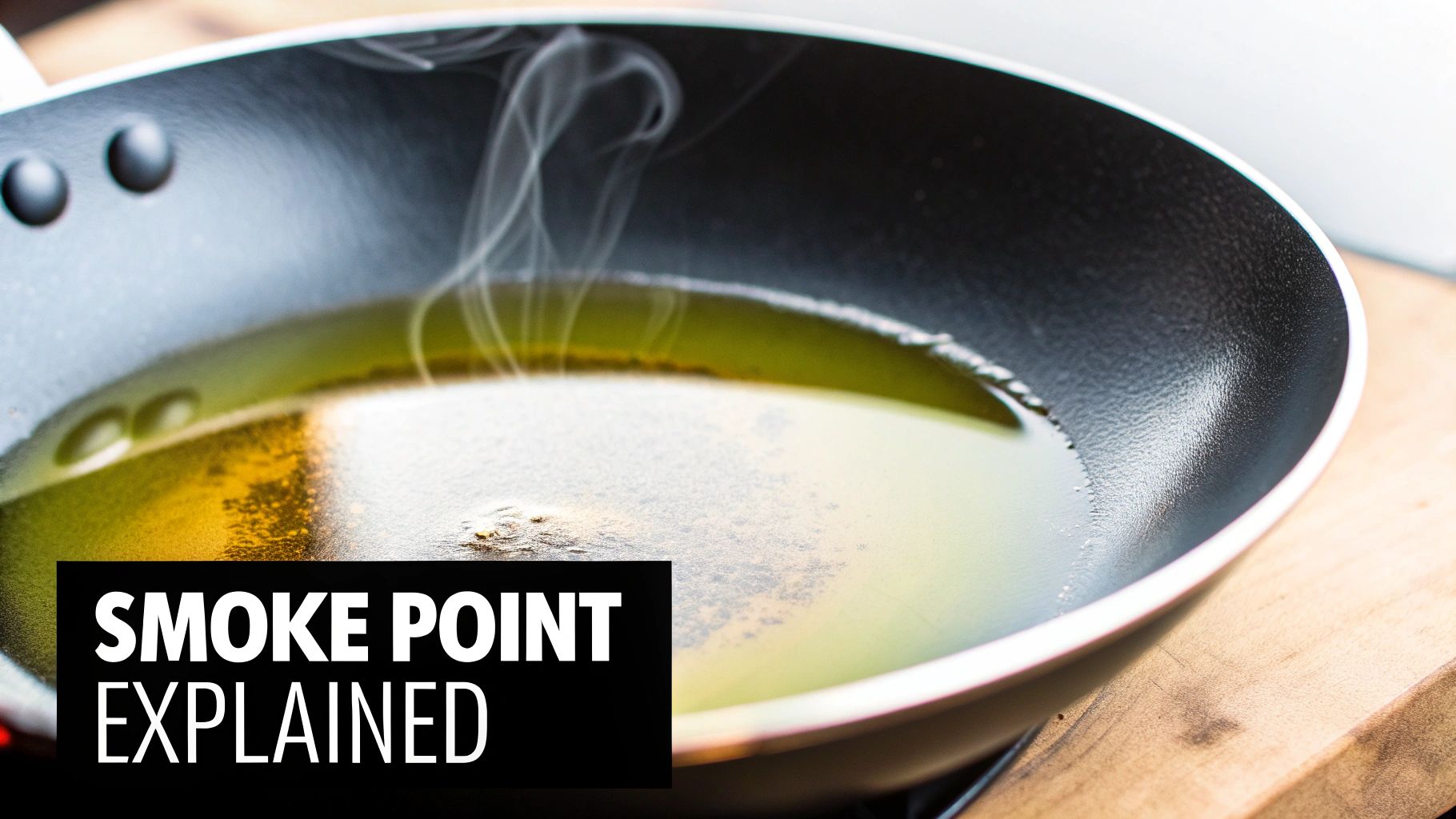
More Than Just a Number
A high-quality extra virgin olive oil is that dense log. It’s packed with natural compounds called polyphenols and has very low levels of something called free fatty acids. These polyphenols are powerful antioxidants that act like tiny bodyguards, protecting the oil from heat and making premium EVOO far more stable than a simple smoke point number might lead you to believe.
This is where the whole idea of the burning temperature of olive oil gets a little tricky. Refined "light" oils often boast a higher smoke point on paper, but that's because they've been stripped of the very compounds that offer protection.
The smoke point isn't the whole story. An oil's true stability comes from its chemical makeup and antioxidant content, which defend it against heat damage long before it even thinks about smoking.
This inherent quality makes a real difference in the kitchen. The smoke point for a good extra virgin olive oil typically sits between 190°C (374°F) and 210°C (410°F). In contrast, highly refined oils might not smoke until 243°C (470°F). This gap is mostly down to the oil's free fatty acid content—the lower it is, the more stable the oil, as you'll find in quality EVOO. For a deeper dive, you can explore why olive oil is one of the safest and most stable oils for cooking on oliveoiltimes.com.
Knowing this lets you cook with confidence. It’s the difference between just following a temperature chart and truly understanding your ingredients.
Why All Olive Oils Are Not Created Equal
Staring at the olive oil section in a grocery store can feel like trying to solve a puzzle. You've got bottles labeled "Extra Virgin," "Pure," and "Light" all vying for your attention. But what do these names actually tell you about the burning temperature of olive oil when it hits a hot pan? The real story isn't on the front label; it's in how the oil gets from the olive grove into that bottle.
The single most important factor determining how an oil behaves under heat is its processing. Picture a perfect, freshly picked olive. That’s the genesis of a true Extra Virgin Olive Oil (EVOO). It's made by simple mechanical pressing—no high heat, no chemical solvents. This gentle process keeps all the good stuff intact, especially the polyphenols and antioxidants which act like the oil's built-in bodyguards against heat.
From Fresh Fruit to Refined Fat
Now, let's look at a bottle simply labeled "Olive Oil" or "Light Olive Oil." These oils start out like EVOO but then go through an intense refining process. Refinement uses heat and chemicals to strip out flavors, colors, and any impurities. While this does raise the technical smoke point, it also removes nearly all of those protective compounds that make EVOO so special.
So, what you end up with are two very different products:
- Extra Virgin Olive Oil is basically fresh, unadulterated olive juice. It's packed with natural compounds that provide both flavor and stability.
- Refined Olive Oils are processed to be neutral and have a higher smoke point, but this comes at the cost of their natural character and health-promoting antioxidants.
It's a classic trade-off: The refinement that gives "Light" olive oil its high smoke point also strips it of the very antioxidants that make a high-quality EVOO so resilient and healthy under heat.
To help clear things up, let's break down the common grades you'll find on the shelf.
Comparing Olive Oil Grades for Cooking
This table provides a quick reference to the main types of olive oil, how they're made, and where they shine in the kitchen.
| Olive Oil Type | Processing Method | Key Characteristics | Smoke Point Range | Best Culinary Use |
|---|---|---|---|---|
| Extra Virgin | Cold-pressed, mechanical extraction only | Robust flavor, high in antioxidants, low acidity | 375-410°F | Sautéing, roasting, dressings, finishing |
| Virgin | Mechanical extraction only | Mild flavor, slightly higher acidity than EVOO | ~390°F | General cooking, when a strong flavor isn't needed |
| Olive Oil (Pure) | Blend of refined and virgin olive oils | Neutral flavor, lower in antioxidants | 410-465°F | All-purpose cooking, baking, light frying |
| Light Olive Oil | Primarily refined oil, blended with a little virgin | Very mild flavor and light color, not lower in calories | ~465°F | High-heat cooking, deep-frying, baking |
| Olive Pomace Oil | Solvent extraction from leftover pulp | Neutral, lowest quality | ~460°F | Not recommended for home cooking; used in industry |
Understanding these fundamental differences in olive oil is the first step to choosing the right bottle for the job.
It’s not just about marketing buzzwords; it's about matching the oil to your cooking method. If you're looking for a broader overview of cooking fats, this guide on which oil is best for cooking offers some great insights. Armed with this knowledge, you can confidently pick an olive oil not for its label, but for its true purpose, whether that's for a delicate vinaigrette or a perfectly seared steak.
The Critical Role of Temperature and Time
When we talk about the burning temperature of olive oil, most guides fixate on one thing: heat. But the real secret, the one that separates good cooks from great ones, is that time is just as crucial. It's a two-part equation.
An oil’s stability isn't like a switch that suddenly flips when it hits a certain temperature. It's a gradual process, where both the intensity of the heat and the duration of exposure play an immense role.
Consider this: a quick, blistering sear might actually be less damaging to your oil than holding it at a medium temperature for a long, slow sauté. That extended time gives oxygen more opportunity to wage a war on the oil, slowly breaking down its structure and dulling its wonderful, healthy properties.
The Tipping Point of Degradation
So, where's the line you shouldn't cross? The magic number is around 180°C (356°F). Pushing past this mark, even for a moment, can kickstart a rapid breakdown. But the sneakiest damage happens when you hover just below this temperature for a long time.
Research backs this up. Scientists have found that time is just as much of an enemy as temperature. At 180°C, the protective compounds in olive oil can degrade by half in just 6 minutes. Compare that to a gentle simmer at 98°C, and you'll find the breakdown at the higher temp is nearly 20 times faster. If you're interested in the nitty-gritty science, you can read the full research on olive oil degradation kinetics on pmc.ncbi.nlm.nih.gov.
This infographic gives you a great visual for how different olive oil grades typically hold up under heat.
As you can see, the natural, unrefined qualities of extra virgin olive oil actually contribute to its overall stability—something that gets lost when people only talk about a single smoke point number.
True mastery in the kitchen comes from respecting both the thermometer and the clock. For a more detailed look, check out our complete guide to the olive oil smoke point.
Putting Olive Oil to Work in Your Kitchen
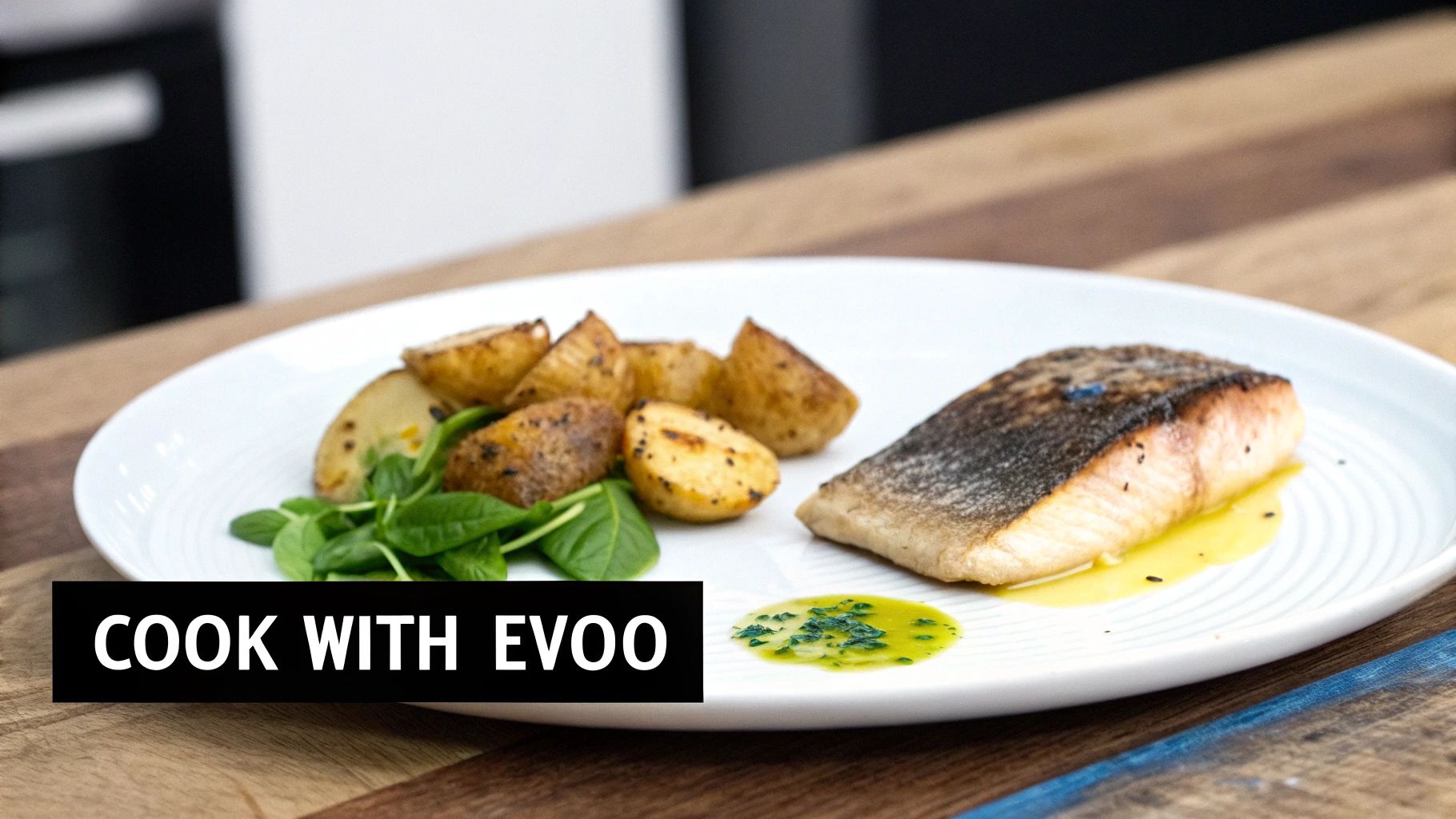
Enough with the theory. The real test is what happens on the stovetop and, ultimately, on your plate. This is where we move from the cold science of smoke points to the delicious art of cooking. Can you actually pan-fry a delicate piece of fish in extra virgin olive oil? You bet you can.
The secret is confidence—and that confidence comes from understanding. For years, countless home cooks have treated their best olive oil like a fragile treasure, too precious for anything more than a salad dressing. But with the right knowledge, you unlock the true versatility of this kitchen champion.
It’s time to get your pans hot and put this liquid gold to good use.
Mastering Your Heat
The biggest mistake I see people make isn't choosing the wrong oil; it's how they heat it. Many home cooks add oil to a cold pan and let them heat up together, waiting for the dreaded wisp of smoke. Don't do that.
Here’s a better way: get the pan hot first, then add your oil. Almost immediately after, add your food. This technique delivers an instant, sizzling sear on your ingredients without ever letting the oil sit and bake long enough to break down. Even on a high-heat gas burner, the surface of your food rarely gets close to the burning temperature of olive oil, with most sautéing happening well below 200°F.
Here are a few practical ways to build your confidence in the kitchen:
- Sautéing Vegetables: A good quality EVOO is fantastic for this. Its flavor elevates simple things like garlic, spinach, or Brussels sprouts, and its antioxidants help it stand up to the heat.
- Pan-Searing Fish: Absolutely! A robust EVOO is your friend here. It helps create a beautiful, crispy skin on a piece of salmon or sea bass while adding incredible flavor. The trick is a quick, hot sear.
- Roasting Potatoes: For the longer, sustained heat of oven roasting, reach for a regular or "pure" olive oil. Its higher smoke point is perfect for getting those potatoes perfectly golden and crisp.
Don't confuse the steam coming off your food with the oil starting to smoke. One is the sound of a delicious meal in the making; the other is a signal to pull back on the heat. Trust your senses.
When you start matching the right grade of olive oil to the right cooking method, it becomes one of your most reliable kitchen partners. To learn more, check out our complete guide on how to cook with olive oil for more specific techniques and recipes.
Frequently Asked Questions About Cooking with Olive Oil
Let's cut through the noise. When it comes to the burning temperature of olive oil, a few key questions pop up all the time. Here are the straight, no-nonsense answers you need to cook with confidence.
Is It Unhealthy to Cook with Extra Virgin Olive Oil?
Not at all. This is probably the biggest myth we need to bust. A high-quality EVOO is actually one of the most stable cooking oils out there, and that's all thanks to its high concentration of antioxidants.
These natural compounds act like a protective shield, keeping the oil from breaking down and forming harmful stuff at typical cooking temperatures. Think about it—most of what we do in the kitchen, like pan-frying or roasting, happens well within EVOO's smoke point of 375-410°F (190-210°C).
How Do I Know If My Olive Oil Has Burned?
Your senses are your best tool here. Forget the thermometer; just pay attention to what's going on in the pan.
The clearest sign is a steady wisp of thin, bluish smoke coming off the oil. Even before you see it, you'll probably notice a sharp, acrid smell that’s just plain unpleasant. If the food tastes bitter or burnt, the oil has definitely gone past its limit. Good oil should always make your food taste better, never worse.
Trust your nose and taste buds above all else. If the oil smells sharp or the food tastes bitter, the oil has broken down. It’s a simple sensory check that will never steer you wrong.
Can I Reuse Olive Oil After Frying?
Technically, you can with some highly refined oils, but it's not a great idea, especially with EVOO. Every time you heat oil, you chip away at its quality, lower its smoke point for the next use, and destroy its health benefits.
Reheating also concentrates any nasty compounds that might have formed and kills that fresh, beautiful flavor. For the best taste and health, always start fresh. To learn more about this, our guide on choosing the right olive oil for high heat cooking is a fantastic resource.
Light Olive Oil vs. EVOO: Which Is Better for High Heat?
"Light" olive oil has been refined to have a neutral taste and a higher smoke point, which can get up to around 470°F (243°C). That makes it an option for high-heat cooking where you don't want any olive flavor interfering.
But here’s the trade-off: that refining process strips out the polyphenols—the very things that make EVOO so healthy and stable in the first place. For almost all cooking methods up to about 410°F, a good quality EVOO is the better choice for both nutrition and stability.
At Learn Olive Oil, we believe that understanding the facts empowers you to make better choices in the kitchen. Explore our guides and discover the true potential of this liquid gold.
https://learnoliveoil.com

 Learn Olive Oil
Leave a comment