A bottle of olive oil can cost $13,045, and a blind taste test can still leave tasters unable to tell it apart from a $6.12 supermarket bottle during a sensory evaluation, according to this YouTube comparison of Great Value and λ/lambda/ Ultra Premium. That is the sort of fact that makes a food writer sit up straighter.
I have stood in olive groves where the trees looked older than churches. I have watched cooks in polished kitchens pour green oil over fish as if they were finishing a painting. I have also seen shelves full of glossy bottles selling fantasy more than flavor. The most expensive olive oil lives somewhere between those worlds.
Its price can come from real things. Ancient trees. Hand harvesting. Brutal selectivity. Fast, careful milling. Scarcity that is not manufactured but agricultural. Yet the higher the price climbs, the more another force enters the frame. Narrative. Status. Theater.
That is what makes this subject so irresistible. Olive oil is one of the oldest foods in the world, but luxury olive oil is a modern performance. The bottle may hold excellence. It may also hold aspiration, branding, and a very expensive story.
The Alluring Mystery of Liquid Gold
A diner sees the server set down a tiny dish of emerald oil beside warm bread. The room is hushed, the plates are spare, and the bottle comes with its own mythology. Centenarian trees. Mountain air. Handpicked fruit. Limited release. Awards.
That theater matters because olive oil asks for belief before it asks for judgment.
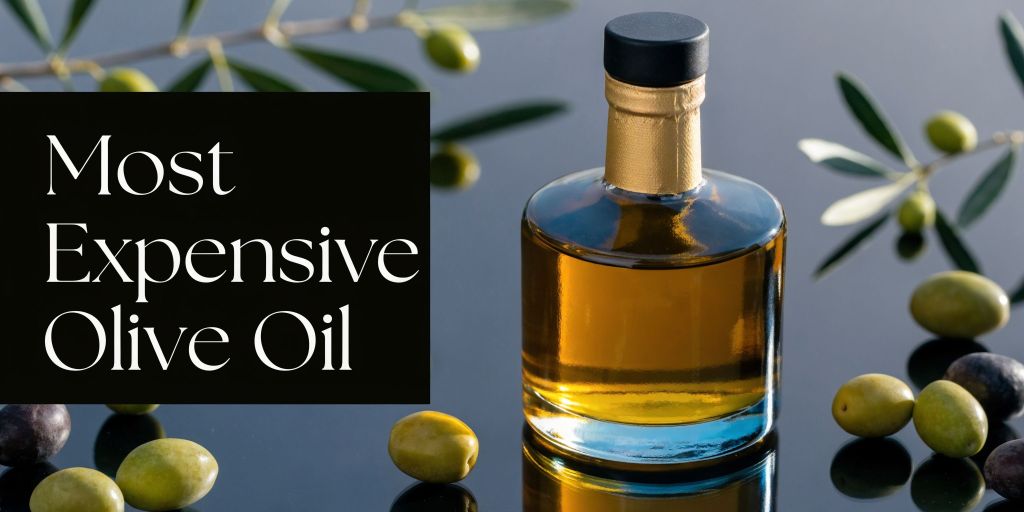
The most expensive olive oil is rarely sold as mere cooking fat. It is sold as heritage you can taste, rarity you can pour, and refinement you can signal without saying a word. In that sense, it behaves less like pantry stock and more like a watch, a vintage bottle, or a first growth wine.
Why olive oil invites romance
Olive oil has an advantage that few luxury foods enjoy. Its raw material already feels sacred. An old olive grove can look biblical. A stone mill can suggest continuity. A dark glass bottle can imply secrecy and care.
Some stories are legitimate. Trees that have survived for centuries or longer are not marketing inventions. A producer who harvests carefully and mills quickly is doing hard, costly work. But luxury markets have always known how to take a true fact and dress it for the stage.
The central question
The question is not whether expensive olive oil can be good. Of course it can.
The question is sharper. When does price reflect mastery, and when does it mainly reflect packaging, scarcity, and storycraft?
A high price can be evidence of care. It is never proof on its own.
That distinction matters because olive oil is unusually vulnerable to projection. Buyers often assume that the bottle with the grandest backstory must also hold the greatest flavor, the deepest health value, and the finest craftsmanship. Sometimes that assumption is right. Sometimes it is only expensive flattery.
The Anatomy of a High Price Tag
A bottle can start getting expensive in a place no shopper ever sees. Dawn in the grove. Pickers working row by row before the fruit heats up. Crates kept shallow so the olives at the bottom do not crush under the weight. A mill on standby because every hour after harvest steals something from the oil.
That kind of discipline costs money long before anyone orders custom glass or medals for the label. Anyone trying to separate ordinary supermarket pricing from premium positioning can get useful context from this overview of extra virgin olive oil prices.

The grove sets the terms
Producers at the top end of the market usually make one expensive choice after another. They harvest earlier, which often gives the oil more bite and aromatic lift but yields less liquid. They farm steep or awkward plots that resist cheap mechanization. They work with cultivars that may be distinctive in the cup yet fussy in the field.
Ancient trees complicate the math further. They are beautiful, yes, but beauty is the least interesting part. Old trees can be irregular producers. Their trunks twist, their spacing can be uneven, and harvesting them can be slow, careful work. The romance is real. So is the invoice.
Place matters too. A grove exposed to sea wind, altitude shifts, poor stony soil, or punishing summer heat can produce striking fruit. It can also produce a smaller crop and higher farming costs. In wine, buyers accept that tension instantly. In olive oil, many only notice it once the bottle enters luxury territory.
Time and labor shape the oil
The best producers do not merely pick olives. They manage a countdown.
Fruit picked at the right moment and milled quickly can hold onto vivid aromas, pepperiness, and structure. Fruit left sitting in piles or hauled too long in poor conditions loses freshness fast. A buyer paying for real quality is often paying for invisible restraint, more workers in the field, cleaner handling, shorter transport, and better timing at the mill.
That invisible labor rarely photographs well. Packaging does.
Milling can preserve excellence or waste it
A magnificent grove can still end in a flat oil if extraction is careless. Clean equipment, controlled temperatures, and disciplined separation all protect what the fruit had to offer. Producers who invest here are not buying glamour. They are reducing the number of ways a good harvest can go wrong.
Some costs in a luxury bottle point to substance:
- Early harvests that sacrifice volume for intensity
- Careful picking and transport that protect the fruit
- Fast, hygienic milling that preserves freshness
- Independent testing, certifications, or protected origin status
- Dark glass and closures that guard against light and oxygen
Other costs point to theater:
- Heavy bottles that feel expensive in the hand
- Limited editions designed to signal rarity
- Gift-box presentation and luxury retail placement
- Brand mythology polished until it sounds older than the grove itself
That split matters because expensive olive oil lives in two worlds at once. One is agriculture under pressure, where quality can be fragile and costly. The other is luxury marketing, where scarcity, design, and a persuasive backstory can inflate value far beyond what ends up on the palate.
The hard part is that both worlds often share the same bottle.
Price Versus Palate Does More Expensive Mean Better
The most awkward question in luxury food is usually the most important one. Does it taste better?
With olive oil, that question gets slippery fast. Tasting is partly trained perception and partly context. Serve an oil in a beautiful room with a solemn explanation, and many people will find greatness in the glass. Strip away the ceremony, and things can get uncomfortable.
The blind test that punctures the fantasy
One sensory comparison has become hard to ignore. In the blind evaluation cited earlier, tasters compared $6.12 Great Value extra virgin olive oil with $13,045 λ/lambda/ Ultra Premium, and they found no discernible difference in flavor profiles during that tasting. The same video notes that lambda’s per-drop cost was 48 times higher in that comparison, yet the sensory result did not reveal an obvious gulf.
That does not prove all expensive olive oil is a sham. Blind tastings can be crude instruments, and one test is not a final verdict on an entire category. Still, it punctures the lazy assumption that price and pleasure rise in lockstep.
What trained tasters look for
A good oil does not announce its value with a luxury bottle. It announces itself with balance, freshness, and character.
The classic positive traits are familiar to professionals:
- Fruitiness: The oil smells alive. Green, ripe, grassy, herbal, sometimes almost floral.
- Bitterness: Not a flaw. In a fresh extra virgin oil, bitterness can signal vigor.
- Pungency: That peppery catch at the back of the throat can be a welcome sign of vitality.
If you want to train your own palate rather than trust the price tag, this guide on how to taste olive oil is a useful starting point.
Taste is not the whole story
Luxury producers often defend high prices with claims about superior chemistry and healthfulness. Some of that logic is reasonable. A stable, well-made oil can preserve quality longer and travel better. But buyers should separate what can be measured from what is merely implied.
The cleanest way to consider the concepts is:
| What matters | Why it matters | What price can and cannot tell you |
|---|---|---|
| Freshness | Fresh oil tastes brighter and cleaner | A high price does not guarantee freshness |
| Stability | Better stability helps the oil resist decline | Some premium oils do justify price through careful production |
| Sensory balance | Great oil has harmony, not just intensity | Packaging cannot create balance |
| Story | Provenance can enrich the experience | Story can also inflate perceived value beyond flavor |
The bottle can be magnificent and the oil can still be merely good. The reverse is also true.
A seasoned buyer learns to hold two thoughts at once. Exceptional olive oil exists. So does exceptional marketing.
Case Study The Legend of Lambda Olive Oil
There are luxury products, and then there are products built to become symbols. Lambda Ultra Premium Extra Virgin Olive Oil belongs in the second category.
Its story is expertly composed. Greece. Centenarian trees. Handpicked olives. Limited production. An object positioned not solely for the table, but for the sort of table where status and appetite dine together.

How Lambda became a luxury object
According to Chef’s Pencil’s profile of the world’s most expensive olive oils, Lambda Ultra Premium Extra Virgin Olive Oil from Greece has a bespoke edition priced at $13,045. It is produced by Speiron using handpicked olives from some of Greece’s oldest centenarian trees.
That price alone would make headlines. But the brand did more than charge boldly. It built an aura.
The same source notes that Lambda was named Luxury Olive Oil of the Year at the LUX UK Global Excellence Awards in 2018 and 2019, and that it was included in the world’s most expensive Christmas Hamper in 2014. Earlier reports in the same source place its standard pricing at $182 to $185 per bottle or liter, describe it as the “Ferrari” of olive oils, and note its presence in places like Harrods and high-end restaurants.
Why the story works
Lambda’s genius is not that it tells a false story. It tells a true one with the discipline of a luxury house.
Consider the components:
- Origin with prestige: Greece carries ancient culinary authority.
- Scarcity: Handpicked fruit from old trees suggests limits that feel natural, not manufactured.
- Awards: Recognition gives buyers permission to believe.
- Placement: Harrods, gourmet stores, and elite hospitality settings do part of the selling before the bottle is even opened.
- Language: Calling an oil the “Ferrari” of its category does not explain flavor. It signals class, speed, desire, and ownership fantasy.
The tension inside Lambda
A food writer has to resist cynicism and reverence in equal measure.
Lambda may well be excellent. The producer’s methods and positioning are serious. The accolades are real. The heritage is real. But the brilliance of Lambda lies in showing how agricultural virtue can be converted into luxury language without losing legitimacy.
That makes it a fascinating object. It also makes it the perfect test case for the most expensive olive oil as an idea. In Lambda, craftsmanship and branding do not compete. They cooperate.
Case Study The Ancient Trees of El Poaig
If Lambda feels like modern luxury polished to a mirror shine, El Poaig feels older, quieter, and in some ways more haunting.
The power of El Poaig is not glamour first. It is time.
Oil from trees that outlived empires
In Spain’s El Maestrat region, the trees behind El Poaig are said to be between 1,000 and 2,800 years old, according to Foods and Wines from Spain’s account of El Poaig. When the oil launched in 2008, it was hailed as the world’s most expensive olive oil at around $170 to $200 for 500ml.
That figure looks almost modest beside later luxury entrants. But El Poaig’s importance is historical. It pioneered the millennial tree category and gave consumers a new reason to pay attention to provenance.
The same source notes that TIME magazine featured it as one of the 100 best inventions of the year, and that it appeared on Michelin-starred menus from cities including Tokyo, Hong Kong, and Madrid.
What the buyer is really paying for
With El Poaig, the value proposition is unusually clear. You are not only buying oil. You are buying access to a lineage of land and trees that cannot be replicated on any business timeline.
That kind of rarity is different from a limited edition assembled by marketing people. These trees took centuries to become what they are. Their age is the product. Their low yield is part of the cost. Their survival is part of the appeal.
For readers who want a grounded sense of what olive trees need before they ever become part of a premium bottle, a complete guide on olive cultivation offers practical context on the agricultural side of the story.
El Poaig and the seduction of heritage
El Poaig also reveals something subtle about luxury. Buyers often trust history more than hype.
A bottle tied to millennial trees carries a kind of gravity that no metallic label can fake. The narrative does not need to shout. It only needs to say, in effect, these trees were here long before you, and they are still producing fruit.
Heritage can be marketing. In rare cases, it is also the plain truth.
That is why El Poaig remains so compelling. It turned age itself into a category. Not gimmick age. Biological age. Cultural age. The kind that can make even a skeptical buyer pause before dismissing the premium.
A Connoisseurs Guide to Buying Premium Olive Oil
At a blind tasting in Barcelona a few years ago, one of the most elegant oils on the table came in a plain bottle with a label that looked like it had been printed at the last minute. A far more expensive rival arrived dressed for the opera. Heavy glass, metallic cap, embossed crest. Tasters admired that bottle before anyone poured it. Once the glasses were covered and the labels disappeared, confidence shifted.
This highlights the challenge of buying premium olive oil. You are not shopping for theater. You are trying to answer a harder question. Does the price reflect careful farming, fast milling, and honest freshness, or are you paying for a story that flatters the buyer?
A practical framework helps. This guide on how to buy olive oil is a useful reference, but the short version is simpler. Read the bottle like a skeptic, then buy like a cook.
What to read on the label
The best labels answer ordinary questions without fuss.
Start with the grade. Extra virgin remains the benchmark for top quality. Virgin sits below it. “Pure” and “light” olive oil usually mean refined oil, which can be useful in a kitchen but rarely offers the aroma or personality people expect from a premium bottle.
Then check for the details serious producers tend to volunteer:
- Harvest date or season: Freshness matters. Olive oil is not wine, and age rarely improves it.
- Origin: A named estate, region, or country gives you something concrete. Vague blends ask for trust without earning it.
- Producer transparency: Good bottles often mention cultivar, milling, or harvest method.
- Certification: PDO or PGI can support the story when the region matters.
- Packaging: Dark glass or protective metal keeps light from stripping flavor.
A beautiful package can still hold excellent oil. It just should not be the main event.
What separates substance from salesmanship
Luxury olive oil often borrows the language of perfume and jewelry. Some of that is harmless. Some of it distracts from the only facts that really matter once the bottle is open.
Fresh olives, milled quickly, handled cleanly, and protected from heat, light, and oxygen usually produce better oil than a grand backstory alone. As noted earlier, chemistry matters too, especially in how an oil resists oxidation and holds its character. You do not need a laboratory report at the shop, but you should want signs that the producer cares about stability, freshness, and traceability more than decorative excess.
That is where expensive bottles often separate into two camps. One group spends money on what is inside. The other spends it on the performance around it.
Buy for the plate in front of you
A peppery Tuscan style that sings over grilled beans may feel wasted in a hot pan. A softer, more affordable bottle may serve you better for everyday cooking.
Serious home cooks often keep two oils on hand. One is expressive and fresh for finishing, dipping, and dressing. The other is dependable for routine heat. If you want a quick comparison for kitchen use, a cooking oil smoke point chart helps match the bottle to the job.
Use this filter before you splurge:
| Buying question | Good answer | Red flag |
|---|---|---|
| Is the grade and origin clearly stated? | Yes, in plain language | Vague wording and luxury copy |
| Is the bottle built to protect the oil? | Dark glass, tin, or other protective packaging | Clear glass designed to be seen before it is tasted |
| Does the producer give useful production details? | Harvest, cultivar, region, milling, style | A long romance and very few facts |
| Will your intended use justify the price? | Finishing oil, gifts, tasting, special dishes | Daily frying or cooking that mutes the oil’s character |
A better definition of value
The smartest purchase is the bottle you will taste, use, and remember.
Sometimes the expensive one earns every dollar. You smell cut grass, green almond, tomato leaf. You taste bitterness, then a peppery lift in the throat. The finish stays clean and vivid. Other times the prestige dissolves the minute the bread hits the plate, and all that remains is the memory of the packaging.
That tension sits at the heart of luxury olive oil. Real quality exists. So does masterful storytelling. A good buyer learns to enjoy both, but only pay top price when they arrive together.
Tasting and Storing Your Liquid Gold
A good olive oil should not be treated like a decorative object once you bring it home. It needs protection, and it deserves attention.
Professionals have a way of tasting that strips away distractions. The method is simple. Pour a small amount into a small glass, cup it in your hand to warm it gently, then smell before you sip. The warmth helps release aroma.
How to taste with more precision
Take a sip and let the oil coat your mouth. Notice the sequence rather than hunting for a single note.
You are looking for three positive sensations:
- Fruitiness: Fresh olive character, whether green or riper in style
- Bitterness: A welcome sign in many fresh oils
- Pungency: The peppery catch that often appears at the back of the throat
This short visual guide shows the motion and pace well:
The enemies of olive oil
Olive oil declines through neglect more often than through bad luck. Its three main enemies are heat, light, and air.
Set a beautiful bottle beside the stove, and you have chosen décor over flavor. Leave the cap loose, and oxygen starts doing its quiet work. Store the oil in direct light, and the damage begins before you taste it.
For a more detailed walkthrough, this guide on olive oil storage covers the practical dos and don’ts.
Store olive oil in a cool, dark place, sealed tightly, and use it while it still tastes vivid.
Small habits that preserve quality
You do not need a cellar. You need discipline.
- Keep it cool: Not hot, not sunlit, not beside the oven.
- Close it fast: Air is not your friend.
- Buy sensible amounts: A giant bottle is only economical if you finish it while it still tastes fresh.
- Use the good stuff where it shows: Drizzle, finish, dip, dress.
The best premium olive oil is not the one you worship. It is the one you protect and enjoy at its peak.
Frequently Asked Questions About Premium Olive Oil
Should you cook with expensive extra virgin olive oil
You can, but whether you should depends on the dish. If the oil’s flavor will be obvious, using a fine extra virgin oil can make sense. If the dish is heavily spiced or cooked hard, a less precious bottle is often the wiser choice.
What does cold-pressed mean
In practice, buyers use the term as a sign of mechanical extraction with care for preserving flavor and quality. It sounds impressive on labels, but it should not replace attention to freshness, producer reputation, and how the oil tastes.
Is cloudy unfiltered olive oil better
Not automatically. Some buyers enjoy unfiltered oils for their texture and vivid character. Others prefer filtered oils for their clarity and consistency. Cloudiness alone does not prove superior quality.
How long does an opened bottle stay good
That depends on storage and the bottle’s condition when you bought it. Once opened, olive oil is on the clock. Keep it sealed, cool, and away from light, and pay attention to aroma and flavor rather than treating the bottle as immortal.
How do you avoid fake or low-quality olive oil
Start with producers and retailers that provide real detail, not just mood. Read labels closely, favor transparent packaging choices and origin information, and learn the warning signs. This guide on how to spot fake olive oil is a practical place to sharpen that instinct.
If you want to go deeper into tasting, buying, storing, and understanding premium bottles without getting lost in marketing fog, visit Learn Olive Oil . It is a strong resource for anyone who wants to buy with more confidence and taste with a more educated palate.
 Learn Olive Oil
Leave a comment