Finding a genuinely good bottle of olive oil at Walmart isn't just a possibility—it's become surprisingly simple. The retail giant has quietly transformed into a go-to spot for high-quality, and even organic extra virgin olive oil, making your weekly grocery run a golden opportunity.
The Surprising Truth About Olive Oil at Walmart
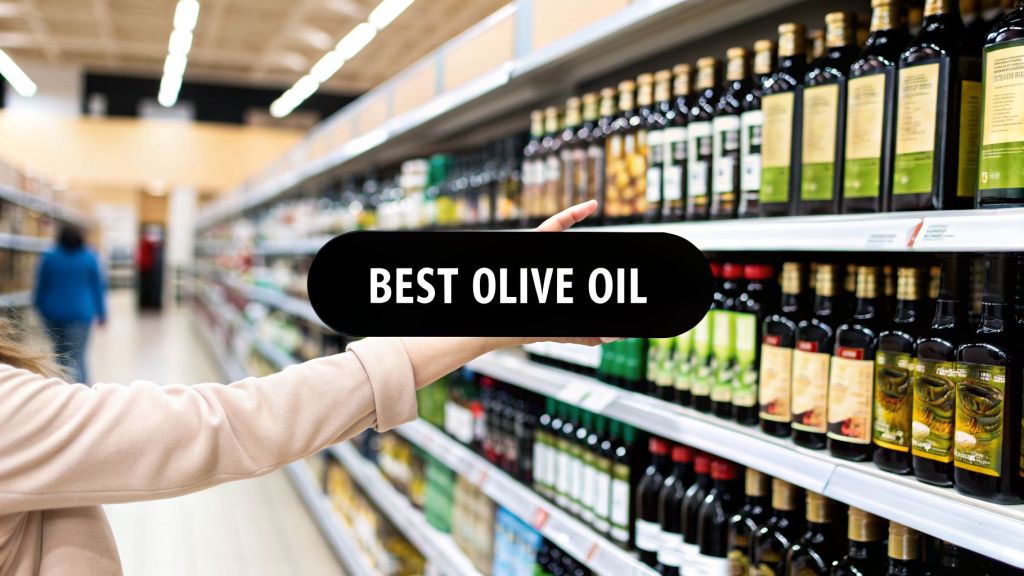
Picture this: you’re in the condiment aisle, staring at a wall of golden and green bottles. Your mission is to find a decent olive oil, but it feels like a total gamble, right? Most of us just end up grabbing a familiar label and hoping for the best.
But what if I told you those shelves hold a secret? What if that same Walmart has quietly become one of the most important places to buy high-quality, affordable olive oil in the country?
A Quiet Quality Shift
Let's bust the myth that you need to visit a specialty shop and spend a fortune for 'the good stuff.' A huge consumer push for healthier, better-quality foods has sparked a major shift, and it’s happening right where you shop every week. With its massive buying power, Walmart has become a key force in this change.
This isn't just a hunch; the data tells the story. As more shoppers look for healthier choices, Walmart has responded by stocking its shelves with more premium and organic options.
For instance, during a recent 52-week period where the overall extra virgin olive oil market actually saw a 2% dip, sales of organic extra virgin olive oil surged by an impressive 7.2%.
Industry insiders point directly to Walmart as a major reason for this growth. Thierry Moyroud, the CEO of Deoleo North America, even remarked that "Walmart has a higher share of olive oil sales than any other organic retailer." This shows the retailer isn't just following a trend; it's actively shaping the market. You can explore more on this topic in a report on organic olive oil sales from Olive Oil Times.
What This Means for You
This shift puts the power right back in your hands. It means that fresh, flavorful, high-quality olive oil is no longer a luxury item you have to hunt down in a gourmet store. It’s right there, and more importantly, it's affordable.
The secret isn't finding a new store—it's learning how to spot the hidden gems already on the shelf. This guide will pull back the curtain, giving you the know-how to find that liquid gold on your next trip to Walmart.
How to Read an Olive Oil Label Like an Expert
Think of an olive oil label as a treasure map. The problem is, it's often written in a cryptic code designed to confuse you. This is where we cut through the marketing fluff and show you what really matters on the bottles you see at Walmart.
Forget the meaningless marketing terms like ‘Pure’ or ‘Light’—they have no official standing. We're going to focus on the words that actually mean something, like ‘Extra Virgin’ and ‘Cold-Pressed,’ and what they promise about the oil’s flavor and health benefits.
The Most Important Words on the Bottle
Your first move in the aisle should be to scan for the grade. ‘Extra Virgin Olive Oil’ (EVOO) is the gold standard. This tells you it’s the highest quality oil, extracted from olives without using high heat or chemical solvents. It’s the least processed, most flavorful, and packed with the most antioxidants.
Another key phrase to look for is ‘Cold-Pressed’ or ‘First Cold Pressing.’ This confirms the oil was made by mechanically crushing the olives in a temperature-controlled environment, a gentle process that protects its delicate flavors and health compounds. It’s the difference between squeezing a fresh orange for juice and boiling it down into a concentrate—you always want the pure, unadulterated stuff.
This diagram helps visualize Walmart's powerful role in the olive oil market, showing how its scale connects quality, growth, and accessibility for shoppers like you.

The takeaway here is that Walmart's size doesn't just mean lower prices. It gives them the leverage to push suppliers for better quality, ultimately giving you access to superior olive oil.
Uncovering the Secrets to Freshness
Now, let's talk about freshness. This is absolutely critical. Olive oil isn't like wine; it doesn’t get better with age. It's a fresh fruit juice, and its biggest enemy is time. The single most important clue to its vitality is the harvest date.
The harvest date is your best friend in the olive oil aisle. It’s far more telling than a 'best by' date, which is often set years into the future. An oil harvested a year ago is going to be worlds better than one harvested three years ago, even if they share the same expiration date.
Look for a harvest or press date within the last 12-18 months. If you can't find one, that's a red flag—it could mean the company is hiding how old the oil really is.
Finally, keep an eye out for a couple of other important details:
- Country of Origin: A label that says "Product of Italy" is a much better sign than one that lists a blend, like "Product of Italy, Spain, and Tunisia." Single-origin oils usually point to a producer who has more control over their quality.
- Certification Seals: Don’t ignore those little logos. Seals like the USDA Organic certification or third-party quality seals (like from the California Olive Oil Council or the NAOOA) are proof that the oil has met specific, verifiable standards.
Once you know how to spot these simple clues, you can shop with total confidence. If you want to go even deeper, check out our complete guide to understanding all aspects of olive oil labeling. With this knowledge, you can be sure the bottle you pick up at Walmart is brimming with the fresh, vibrant flavor you deserve.
Picking the Right Olive Oil Brand at Walmart
Alright, you know how to read the label now. But when you’re standing in the Walmart aisle, staring at a wall of green glass, which bottle should you actually grab? You’ll see everything from the familiar Great Value logo to classic Italian brands, and it can feel a little overwhelming.

The trick is to think like a chef, who has different knives for different jobs. You don’t need just one olive oil; you need the right oil for the right task. Let's break down the main players you’ll find on the shelf.
The Major Players on the Shelf
Most of the oils at Walmart fall into two camps: the reliable store brand and the big, globally recognized names.
-
Store Brands like Great Value: Don't sleep on the house brand. For the price, Great Value 100% Extra Virgin Olive Oil is a perfectly respectable choice for everyday cooking. It's great for sautéing vegetables or whipping up a quick marinade. The flavor is usually quite mild, so while it won't be the star of your dish, it's a versatile, budget-friendly staple. In fact, some studies show their organic version is often cheaper than what you'd find at places like ALDI.
-
International Icons like Filippo Berio and Bertolli: These are the brands your grandmother might recognize. Seeing them at Walmart is a big deal, bringing that classic Italian heritage to millions of shoppers. Their oils typically have a more assertive, traditional flavor compared to store brands, making them a nice step up for salad dressings or for drizzling over a finished dish.
The growing presence of these heritage brands isn't an accident—it's a direct response to shoppers wanting better quality. When Filippo Berio secured nationwide distribution at Walmart, it made their entire line, from Organic EVOO to Extra Light, available to almost everyone. Giacomo Campinoti, the brand’s U.S. CEO, noted it was a significant moment for introducing authentic Italian oil to more American kitchens. You can read more about this major brand partnership and what it means for shoppers on Italianfood.net.
Choose Your Oil Based on the Kitchen Task
Here’s the real secret: stop searching for the single "best" brand. Instead, think about how you're going to use it. I like to keep two main types of oil in my kitchen.
Workhorse Oils: This is your everyday, all-purpose oil. You'll use it for sautéing, roasting, and anything where a super-delicate flavor might get lost in the heat. A big, affordable bottle of Walmart’s Great Value EVOO or a reliable option from Bertolli fits the bill perfectly here.
Finishing Oils: This is where you get a huge flavor payoff for just a little extra money. A finishing oil is more robust and peppery—think of an organic or single-origin EVOO from a brand like Filippo Berio. You don't cook with it; you use it to add a final burst of flavor. Drizzle it over pasta, a fresh Caprese salad, or a simple bowl of soup. Its bold character is meant to be tasted.
Once you start matching the oil to the job, shopping becomes so much easier. You're no longer just guessing based on a label but choosing the right tool for whatever you're making. To see how these brands compare to others on the market, check out our comprehensive guide to the best olive oil brands available today.
Spotting Deceptive Marketing and Common Traps
Where there’s a boom, there are always a few people selling fool's gold. The huge demand for quality olive oil has brought out marketers who use clever packaging to make you think you're buying something you're not. Let's walk through how to see past the marketing hype right there on the Walmart shelf.
The most common trap you'll encounter is the "Made with Olive Oil" claim. You'll find it splashed across everything from cooking sprays and salad dressings to mayonnaise. The front of the package looks great—it might show a picture of sun-drenched olives and use big, bold letters to scream "Olive Oil," giving the product an instant health halo.
But when you flip that bottle over and actually read the ingredients, you often get a completely different story.
The Truth Is in the Ingredients
This is the classic bait-and-switch. You’ll often find that olive oil is one of the very last ingredients, which means it makes up a tiny fraction of the product. The real work is being done by much cheaper oils like soybean, canola, or sunflower oil. The label isn't technically lying, but it's definitely misleading you.
This tactic is so common that it’s landed companies in legal trouble. For instance, a 2026 class action lawsuit took aim at Walmart’s Great Value mayonnaise labeled 'With Olive Oil.' The suit argued that since soybean oil was the main fat, the packaging was deceptively cashing in on olive oil's healthy reputation to sell more product. You can read more about the consumer allegations in this Walmart lawsuit.
It’s a perfect example of a crucial shopping rule: the front of the label is for advertising, but the ingredients list tells the truth.
Your Deception-Detector Checklist
To make sure you're getting the real deal and not just paying a premium for a pretty label, get into the habit of using this simple checklist.
- Read the Ingredients First: Before anything goes in your cart, flip it over. Ingredients are always listed by weight, so whatever comes first is what you're mostly getting.
- Look for "100% Olive Oil": If you’re buying a cooking spray or a marinade and you want only olive oil, the label needs to say "100% Olive Oil." Anything less specific, and you're almost certainly looking at a blend.
- Be Wary of Vague Blends: Watch out for phrases like "vegetable oil blend" where olive oil is listed somewhere else. That’s a dead giveaway that the olive oil content is minimal.
Becoming a label-detective in the grocery aisle is the best way to ensure the flavor and health benefits you want are what you actually get. Learning these tricks is just as important as knowing how to pick a good bottle of EVOO. For more on this, check out our guide on how to spot fake olive oil.
Finding the Sweet Spot Between Price and Quality
You're standing in the Walmart aisle, looking at two bottles of extra virgin olive oil. One is $7, the other is $20. Is the expensive one automatically better? Honestly, not always.
A higher price tag doesn't guarantee superior quality, but it often hints at what the oil is for. Things like organic seals, a specific country of origin, or even a fancy, dark glass bottle can nudge the price up. A pricier oil usually promises a more complex, robust flavor—perfect for some dishes, but maybe overkill for others.
Build Your Olive Oil Wardrobe
Instead of searching for one perfect bottle to do it all, think about building an "olive oil wardrobe." You wouldn't wear hiking boots with a cocktail dress, right? The same logic applies here. Having a couple of different oils on hand is the most practical and cost-effective approach.
Here’s how I recommend splitting your shelf space:
-
The Everyday Workhorse: This is your go-to for daily cooking—sautéing vegetables, pan-searing chicken, or whisking up a quick marinade. A large tin or bottle of a reliable store-brand or mid-range EVOO is your best bet. Its flavor will be milder, which is perfect since high heat mellows out the taste anyway.
-
The Flavorful Finishing Oil: Now this is where you can spend a little more. A beautiful, peppery finishing oil is what takes a good dish and makes it great. Drizzle this liquid gold over a finished bowl of pasta, fresh tomatoes and mozzarella, or even a simple soup to let its bold, grassy character shine.
Understanding how to get the most bang for your buck is key. Finding great deals on pantry staples can free up your budget for that nicer finishing oil. If you want to get smarter about your spending, there are some really practical ways to save money on groceries that apply to your entire shopping list.
By keeping these two types of oil in your kitchen, you’re always prepared. You get the best possible value by using the right oil for the right job, making sure not a single drop of that precious finishing oil goes to waste in a hot pan. For a closer look at what drives the cost of a bottle, we break down extra virgin olive oil prices in more detail.
Protecting Your Investment After You Buy
Alright, you’ve navigated the aisles at Walmart and brought home what looks like a great bottle of olive oil. But here's where so many people go wrong: what happens after you get it home is just as important as the choice you made in the store.
How you store your oil will make the difference between enjoying its fresh, vibrant flavor for weeks, or having it turn flat and stale in a matter of days. It helps to stop thinking of extra virgin olive oil as a shelf-stable pantry item like vinegar. Instead, think of it as a fresh-squeezed fruit juice. It's perishable.
Your oil has three main enemies: light, heat, and air. Your only job is to protect it from them.

Defending Your Oil from Its Three Biggest Threats
Keeping that beautiful flavor locked in doesn't take any special gear—just a few smart habits.
- Light: This is public enemy number one for olive oil. Sunlight and even harsh fluorescent lights will rapidly degrade the oil, destroying its healthy antioxidants and delicate flavors. This is the main reason quality oil comes in dark glass bottles or tins. Always tuck your bottle away in a dark cupboard or pantry, far from any windows.
- Heat: It’s so tempting to keep your oil right by the stove for easy access, but this is one of the worst things you can do. The constant exposure to heat will cook the oil and make it go rancid much faster. The ideal spot is a cool, dark cabinet away from the stove, oven, or any other heat source.
- Air: Oxygen is the final culprit, causing oxidation that makes the oil taste off. Once you crack that seal, the clock is ticking. Get into the habit of twisting the cap on tightly the second you're done pouring.
People always ask me, "Should I refrigerate my olive oil?" The short answer is no. While it won't necessarily hurt the oil, the cold temperature causes it to solidify and get cloudy. This just makes it a pain to use, and a cool pantry works much better.
Once a bottle is open, you really want to try and use it up within 60 days. After that, you'll notice those bright, peppery, and fruity notes start to fade away. To dive deeper into the science behind this, you can learn more about proper olive oil storage. Following these simple rules ensures you get to enjoy every last drop of the oil you paid for.
Frequently Asked Questions About Walmart Olive Oil
Alright, you've got the basics down. But standing in the olive oil aisle can still feel a little overwhelming. Let's tackle some of the most common questions that pop up right when you're trying to make a choice.
Is the Great Value Olive Oil at Walmart Any Good?
Honestly, for the price, it's a solid choice. I've seen Walmart's Great Value 100% Extra Virgin Olive Oil pass third-party quality tests, which is pretty impressive for a store brand. Think of it as your everyday workhorse oil—perfect for sautéing vegetables or whipping up a quick marinade without breaking the bank.
That said, if you're looking for a finishing oil to drizzle over pasta or a caprese salad, you'll want more flavor and a bigger antioxidant punch. In that case, check the harvest date on the Great Value bottle and compare it to the name-brand and organic options right next to it.
What Is the Best All-Purpose Olive Oil at Walmart?
For a great all-around oil, you can't go wrong with a mid-range Extra Virgin Olive Oil from a well-known producer like Filippo Berio or Bertolli. These brands have built their reputations on consistency.
They offer a nice balance of quality, flavor, and price. The taste is pleasant enough for a salad dressing, but it's not so expensive that you'll feel guilty using it for your everyday cooking. It’s the kind of versatile bottle that can be the backbone of your kitchen.
How Can I Tell if an Olive Oil Is Fresh in the Store?
This is the most important trick to learn. Forget the "Best By" date for a moment and look for a "Harvest Date" or "Pressed On" date. This tells you when the olives were actually picked and crushed, and it's the truest sign of freshness.
Aim for an oil harvested within the last 12 to 18 months. If you can't find a harvest date, your next best bet is to find the bottle with the "Best By" date that's furthest away. And always, always choose an oil in a dark glass bottle or a tin—light is the enemy of fresh olive oil.
Should I Spend More for Organic Olive Oil at Walmart?
If it's in your budget, I'd say go for it. Walmart has actually done a great job of making organic olive oil more affordable. It's not uncommon to see their organic EVOO priced the same as a competitor's conventional oil, which makes it a fantastic value.
The USDA Organic seal guarantees the olives were grown without synthetic pesticides, giving you some extra peace of mind. Many people, myself included, find that organic oils often have a cleaner, more vibrant flavor profile that really lets the character of the olives shine through.
Of course, once you've picked your bottle, other questions might come up, especially around health. You might wonder, Is Olive Oil Good for Acid Reflux? Digging into specific topics like that can help you get the most out of your purchase.
At Learn Olive Oil, we want to demystify this liquid gold. Our whole mission is to give you the confidence to choose, taste, and enjoy incredible olive oil, no matter where you're shopping. To continue your journey, explore all our guides over at https://learnoliveoil.com.
 Learn Olive Oil
Leave a comment