If you could bottle the essence of a sun-drenched citrus grove, it would taste exactly like a real Meyer lemon olive oil. This isn't just olive oil with a drop of lemon flavor. No, this is a culinary masterpiece, born when fresh Meyer lemons and ripe olives are crushed together, yielding an aromatic oil with a sweet, floral lemon flavor that is worlds apart from anything artificially made.
What Makes This Oil So Special?
At its heart, this beautiful oil is a tribute to an old-world craft. It all begins with the Meyer lemon—a darling of the citrus world for a very good reason. It’s not your typical, puckeringly sour lemon. It’s a delicate cross between a standard lemon and a sweet mandarin orange, which gives it a gorgeous floral aroma and a much gentler, sweeter taste.
To understand its unique character, think of the difference between a tart, classic lemonade and a refreshingly sweet Meyer lemonade. That same sweet, less-acidic nature is precisely what makes the Meyer lemon the perfect partner for rich, buttery olives.

The Art of the Press
How this oil is made is everything. The method used separates a good oil from a truly exceptional one, so it’s worth knowing the difference when you're choosing a bottle.
-
The Agrumato Method: This is the gold standard, the authentic way. It involves crushing whole, fresh Meyer lemons directly with the olives, usually within hours of harvesting them both. This co-pressing process allows the essential oils from the lemon peel to fuse completely with the oil from the olives. The result is an oil with a soul—a deep, complex, and completely authentic flavor that tells the story of the harvest.
-
The Infusion Method: This is a much more common and far simpler approach. Here, lemon flavor (from essential oils or extracts) is simply added to olive oil after it’s already been made. While it gets the job done, an infused oil often lacks the integrated, aromatic depth of a true agrumato. If you're curious about this technique, you can learn how to make infused olive oil at home.
The secret to exceptional Meyer lemon olive oil lies in the agrumato process. By crushing the fruit and olives together, you’re not just mixing flavors; you’re creating an entirely new, harmonized product from the very start.
Thanks to some incredible recent olive harvests, we're seeing more of these specialty oils on the market. In the 2024/2025 production season, global output reached a record 3.507 million tons. For those of us who love great olive oil, this abundance means more opportunities for producers to create innovative blends, marrying the bright zing of Meyer lemons with the peppery notes of extra virgin olive oil from these fantastic harvests.
Learning to Taste the Difference
Tasting a truly great Meyer lemon olive oil is an experience that goes way beyond just flavor. It’s a full sensory journey. Once you know what to look for, you'll quickly learn to spot a masterful oil and develop a real instinct for quality.
First, just look at it. Pour a little into a clear glass. A genuine agrumato oil—where the lemons and olives were crushed together—should have a stunning, sun-drenched yellow glow. You might see a faint green cast from the fresh olives, a sign that the oil is alive and vibrant.
Awaken the Aromas
Now for the best part. Cup the glass in one hand to warm the oil slightly, and give it a good swirl with the other. A true Meyer lemon olive oil will hit you with an incredible floral, citrus perfume. You’re not looking for a simple, sharp lemon scent. Instead, you want those complex, sweet notes of lemon blossom, maybe even a hint of jasmine or honeysuckle. It should smell like a lemon grove in full bloom.
The aroma is your first real clue. An authentic oil smells fresh and alive, because it is. An inferior, artificially flavored oil often has a giveaway chemical or candy-like scent that just falls flat.
The Professional Tasting Technique
To get the full picture, you can try a technique the pros use called ‘strippagio’. It’s surprisingly simple but reveals so much. We have a whole guide on how to taste olive oil professionally, but here’s the quick version:
- Sip: Take a small sip, just about half a teaspoon.
- Slurp: Let the oil coat your tongue. Then, purse your lips and take a sharp, quick breath of air in through your teeth. It feels a little silly, but this "slurp" aerates the oil, spraying it across your entire palate and unlocking every subtle flavor.
- Swallow: Finally, swallow the oil.
Pay close attention to what you experience. At first, you should get that beautiful, floral lemon character you smelled a moment ago. But then, wait for it. A gentle, peppery kick should develop right at the back of your throat.
That peppery finish is the signature of a high-quality, high-polyphenol extra virgin olive oil. It's the hallmark of freshness and a telltale sign of its antioxidant power. If an oil just tastes greasy or has no finish at all, it's not the real deal. A great Meyer lemon olive oil always delivers that beautiful one-two punch: bright, sweet citrus up front, followed by a warm, spicy goodbye.
How to Choose a Truly Great Bottle
Walking down the olive oil aisle can feel overwhelming. With so many bottles vying for your attention, how do you spot the real deal? Let’s cut through the noise. This is your field guide to picking out a spectacular Meyer lemon olive oil with confidence.
The secrets are right there on the label, if you know what to look for. When you see terms like agrumato or co-pressed, you’re on the right track. These words are your assurance that the whole Meyer lemons were crushed right alongside the olives, capturing that vibrant, authentic flavor we’ve been talking about. It’s the traditional way, and frankly, it’s the best.
Decoding the Label
Beyond the production method, a few other details on the bottle separate the exceptional from the merely average. True quality isn't just about taste; it's about freshness and the integrity of the ingredients from the grove to your kitchen.
-
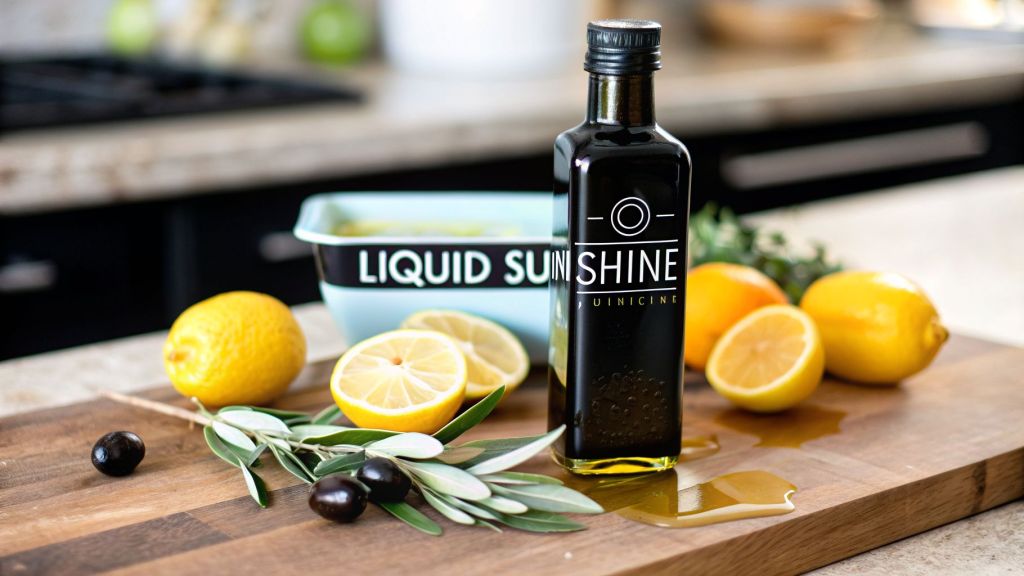
Look for a Dark Bottle: That dark green or brown glass isn't just for aesthetics. It’s a bouncer, protecting the delicate oil from light, which can quickly turn a beautiful oil rancid and destroy its healthy polyphenols.
-
Hunt for the Harvest Date: This is the single most important clue to freshness. Forget the "best by" date, which can be arbitrary. Look for a harvest or press date and always choose the most recent one you can find. Freshness is everything in olive oil.
For a deeper dive into separating the good, the bad, and the ugly on the shelf, our complete guide on how to buy olive oil has even more pro tips.
The chart below gives you a quick visual for what you should be sensing when you taste.

As you can see, a high-quality oil will greet you with bright, pleasant aromas. If you get any hint of something waxy or chemical, it's a hard pass.
Here’s a quick checklist you can use next time you're shopping.
Quality Checklist for Meyer Lemon Olive Oil
| Quality Indicator | What to Look For | Why It Matters |
|---|---|---|
| Production Method | The word agrumato or co-pressed on the label. | This confirms the lemons and olives were crushed together, creating the most authentic and aromatic flavor. |
| Freshness Date | A harvest or press date within the last year. | Olive oil is a fresh fruit juice. The closer to the harvest, the more vibrant the flavor and higher the antioxidant content. |
| Container | A dark glass bottle or an opaque tin. | Protects the oil from light degradation, which preserves flavor and health benefits. |
| Olive Varietal | The specific type of olive is named (e.g., Arbequina, Picual). | Different olives create different flavor profiles, from buttery and smooth to peppery and robust. |
Following these simple points will dramatically increase your chances of bringing home a bottle you'll absolutely love.
Understanding the Olive Base
Finally, don’t forget the olive itself! The type of olive used for the base oil creates a completely different tasting experience. A bold Spanish Picual olive will give the oil a peppery kick on the finish, while a buttery Italian Frantoio will yield a softer, more delicate result. Neither is inherently better—it all comes down to what you enjoy.
The country of origin often gives you a clue. Spain, for instance, produced a staggering 1.414 million tons of olive oil by June 2024 for the 2024/25 season. That’s nearly 40% of the world's entire supply, giving them a rich palette of olives to work with. The sweet-tart character of Meyer lemon is a fantastic match for robust Spanish varieties like Hojiblanca, creating a powerhouse of flavor that’s perfect for almost any dish. You can see more data on global olive oil production on WorldPopulationReview.com.
Your takeaway is simple: Look for "agrumato," a recent harvest date, a dark bottle, and an olive varietal that sounds good to you. If you stick to these guidelines, you’ll walk away with a truly exceptional bottle of Meyer lemon olive oil every single time.
Bringing Its Magic into Your Kitchen

Alright, enough talk about what this oil is—let's get it into your kitchen and see what it can really do. The best way to think of Meyer lemon olive oil is as your secret weapon. It’s the one bottle that can instantly make simple food feel special, and it goes so much further than just salad dressing.
A simple finishing drizzle over grilled fish or roasted chicken is all it takes. That one move lays down a bright, clean layer of flavor that tastes like you fussed over a complex marinade for hours. It’s a shortcut to sophistication, plain and simple.
Elevate Everyday Dishes
Ever wonder how to get your family to truly love vegetables? This oil is your answer. Toss some broccoli, asparagus, or even humble potato wedges in it with a good pinch of salt before roasting. As they cook, the oil helps them caramelize beautifully while infusing them with an incredible citrus perfume.
It’s also a game-changer for a quick weeknight pasta. Just imagine tossing hot linguine with a generous glug of Meyer lemon olive oil, a few slivers of garlic, and a pinch of red pepper flakes. Top it with some parmesan, and you have a meal that feels impossibly fresh and light, no heavy sauce required.
If you want to get your creative juices flowing, exploring different menus can be a fantastic source of inspiration for using this oil in ways you might not have considered.
Go Beyond the Expected
Here’s where the real fun begins. Because of those unique sweet, floral notes, Meyer lemon olive oil has a surprising place in the world of desserts. This isn't just for your main course; it can completely transform your final one.
-
Elevated Desserts: Try pouring a little over a scoop of good vanilla bean ice cream and finishing it with a sprinkle of flaky sea salt. The mix of sweet, savory, and that floral citrus note is absolutely stunning.
-
Better Baking: Next time you make a cake or muffins, try swapping out the butter or vegetable oil for this. It makes for an unbelievably moist and fragrant crumb, especially in something like a yogurt loaf cake where the lemon and oil work in perfect harmony.
Here’s a little secret from the pros: sensory panels have found that using Meyer lemon olive oil in a dish can reduce the need for salt by as much as 30% because it amplifies all the other flavors so well. It’s not just perception, either—survey data shows 40% of U.S. home cooks say their meals are more satisfying when they use it on the grill.
The playbook is simple: use it as a finishing touch to wake up savory foods, and use it as a secret ingredient to add moisture and fragrance to your baking. Its sheer versatility is what makes it a must-have in any creative kitchen.
If these ideas have sparked your curiosity, we have a whole collection of flavored olive oil recipes that will give you even more delicious ways to put it to use.
Keeping Your Liquid Gold Fresh
So, you've got a fantastic bottle of Meyer lemon olive oil. The next step is making sure that bright, beautiful flavor you bought it for actually lasts. Like any high-quality olive oil, its biggest threats are pretty simple: light, heat, and air. Keeping them at bay is easier than you might think.
The best home for your oil is a cool, dark pantry or cupboard, well away from any direct sunlight. That dark glass bottle it came in is a great start, but it can't do all the work.
The absolute worst spot for it? Right next to your stove. I know it’s convenient, but the constant exposure to heat will absolutely destroy those delicate citrus notes and turn the oil rancid in record time. After you pour, always seal the cap tightly. Oxygen is the enemy of freshness, and leaving the bottle open just invites oxidation, which dulls the flavor.
To Refrigerate or Not to Refrigerate
I get this question all the time, and my answer is always a firm "no." While it might seem like a good way to preserve it, refrigerating your Meyer lemon olive oil causes more problems than it solves. The cold temperatures will cause the natural waxes in the oil to solidify, turning it cloudy and sludgy.
Worse, this cycle of chilling and returning to room temperature can create condensation inside the bottle. That little bit of water is all it takes to accelerate spoilage.
The key to proper storage is consistency. A stable, cool temperature in your pantry is always a better choice than the drastic temperature swings of the refrigerator.
For a deeper dive into the science behind this, our guide on proper olive oil storage has all the details you'll need.
Trusting Your Senses
How long will it keep? An unopened, high-quality bottle of Meyer lemon olive oil should be good for about 12-18 months from its harvest date. Once you open it, try to use it within three to four months to enjoy it at its absolute best.
But honestly, the calendar is just a guideline. The best tools for checking freshness are your own nose and palate. A good oil will have a bright, clean citrus aroma. If you open the bottle and smell something like old crayons, putty, or stale nuts, the oil has turned. If you're still not sure, a tiny taste will tell you everything—if it’s greasy on the tongue and the flavor is gone, it’s past its prime.
Your Questions Answered
Once you have a bottle of this liquid gold in your kitchen, a few questions naturally come to mind. It's one thing to read about it, but another to start using it confidently. Let's tackle the most common ones so you can move from curiosity to culinary creativity.
Can I Cook with Meyer Lemon Olive Oil?
You absolutely can, but the real question isn't if you can cook with it, but how. The secret lies in understanding its strengths. Think of it first and foremost as a finishing oil, where its incredible aroma can shine. Its smoke point is around 375°F (190°C), making it perfectly fine for a gentle sauté of shrimp or delicate vegetables.
The mistake is hitting it with intense, high heat. Blasting it in a ripping-hot pan will cause those beautiful, floral notes to simply evaporate. The very essence you paid for will vanish into thin air. The real magic happens when you drizzle it over food just after it comes off the heat or right before it hits the table.
The true value of a real agrumato Meyer lemon oil is its raw, vibrant flavor. Preserve it. Use it as a final flourish on grilled fish, roasted vegetables, fresh pasta, or even a simple soup.
Is It Actually Healthier Than Regular Olive Oil?
This is where you get a fantastic two-for-one deal. A true Meyer lemon olive oil begins with an extra virgin olive oil base, meaning you're already getting all of its well-known health benefits—namely, heart-healthy monounsaturated fats and powerful anti-inflammatory compounds called polyphenols.
But then you bring in the Meyer lemon. When producers use the agrumato method, they're crushing the whole fruit. This means the beneficial compounds from the lemon’s peel and pulp get captured right in the oil. You're adding a bonus dose of Vitamin C and citrus-based antioxidants like limonene.
So, it's not "healthier" in the sense that it replaces the goodness of pure EVOO. Instead, think of it as a powerful combination that makes healthy eating feel like a true indulgence.
- Extra Virgin Olive Oil Base: Provides heart-protective monounsaturated fats.
- High Polyphenol Content: Fights inflammation and oxidative stress.
- Meyer Lemon Addition: Contributes Vitamin C and unique citrus antioxidants.
It's a wellness duo, packing a one-two punch of flavor and health benefits into every single drop.
How Is This Different from Mixing Lemon Juice and Oil?
This question gets right to the heart of what makes agrumato oil so special. Honestly, the difference is night and day. When you mix lemon juice (which is water-based) with oil, you’re creating a temporary mixture that will separate almost immediately. The flavor you get is sharp, acidic, and one-dimensional—just sour.
A real Meyer lemon olive oil is born from a completely different process.
The essential oils from the lemon rind are literally crushed with the olives, binding them together on a molecular level. This is chemistry, not just mixing.
By co-pressing the fruit and olives, you capture the deep, floral aromatics from the lemon zest, not just the pucker from the juice. This creates a beautifully integrated, smooth, and layered flavor that is simply impossible to replicate by stirring two things together in a bowl. You get the full complexity of the fruit, seamlessly fused with the rich character of the olive oil.
Can I Make This at Home?
You can definitely make a simple lemon-infused oil at home, and it’s a fun project! The typical method involves gently warming high-quality extra virgin olive oil with fresh lemon zest, allowing the flavors to steep over time. What you end up with is a lovely infused oil, but it’s not the same as a true agrumato oil.
A homemade infusion is great, but it has a few limitations:
- The flavor is different: It will be pleasant, but it won't have the deep, complex, and fully bonded flavor of a co-pressed oil.
- It has a very short shelf life: Introducing fresh zest adds moisture, which can unfortunately invite spoilage or off-flavors.
- Food safety is a concern: Without proper sterilization and storage, homemade infusions can create an environment for bacteria to grow.
Professional producers use highly controlled, precise methods to guarantee stability, safety, and that sublime flavor profile. If you want the authentic agrumato experience, buying from a trusted producer is always the best path. It’s the only way to ensure you're getting the real deal, crafted for peak flavor and freshness.
Ready to experience the true magic of this liquid gold for yourself? The journey starts with understanding what makes a great oil. At Learn Olive Oil, we provide the expert insights and guidance you need to choose, taste, and cook with the world's finest olive oils.
Discover the World of Premium Olive Oil at learnoliveoil.com
 Learn Olive Oil
Leave a comment