Have you ever sipped a truly great olive oil and felt that peppery tickle ignite the back of your throat? Most people mistake this for a sign of strong flavor. They’re wrong. That spicy kick is the unmistakable signature of a secret class of molecules—powerful health defenders known as phenolic compounds. They are the hidden heroes behind the pungent, bitter notes and the remarkable stability of authentic extra virgin olive oil.
The Hidden Power Inside Your Olive Oil
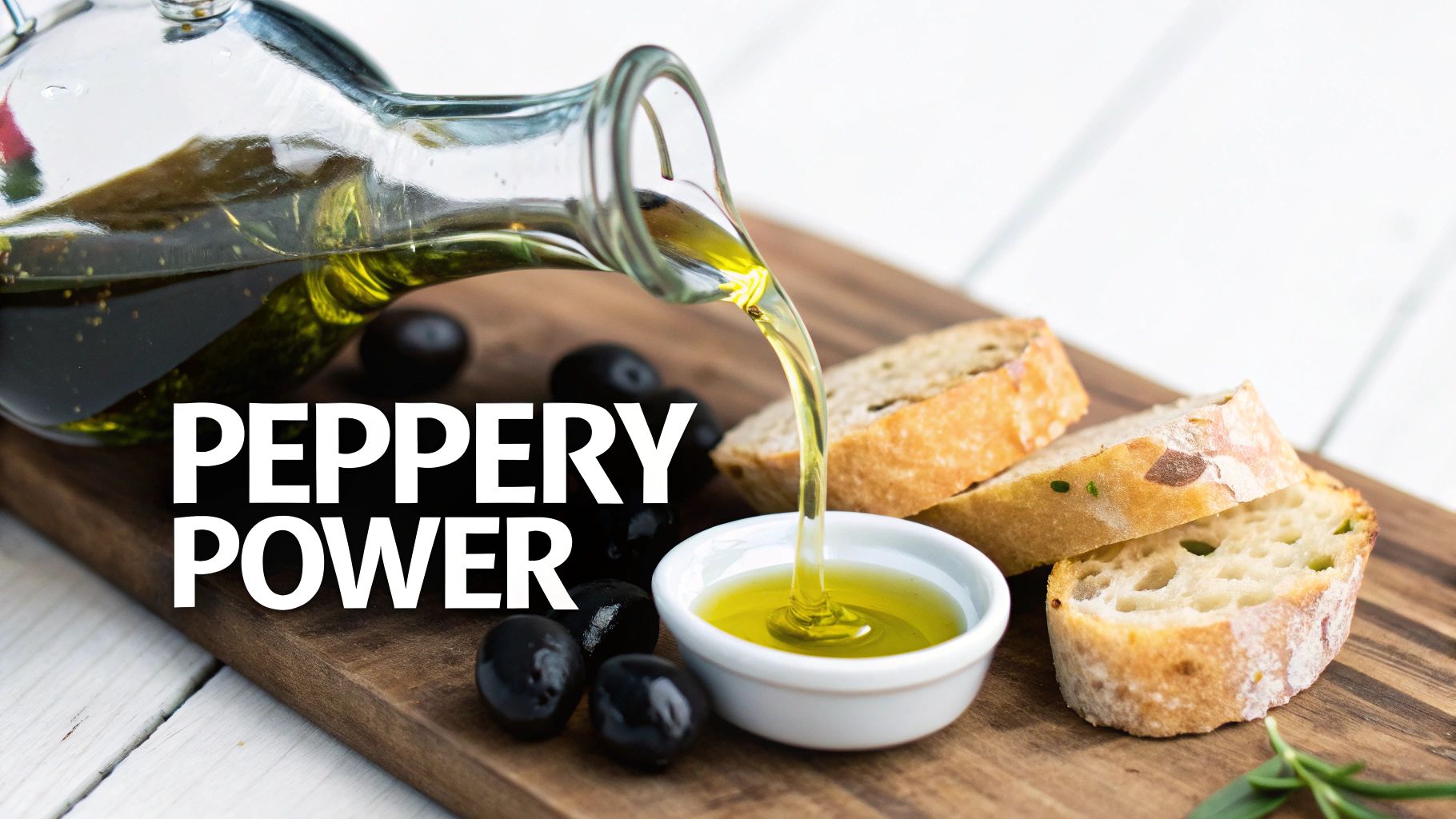
Imagine phenolic compounds as the olive’s personal security force. As the fruit hangs on the tree, these natural chemicals act as bodyguards, shielding it from pests, disease, and the relentless oxidative assault of the sun. When those olives are crushed into oil, this protective detail is transferred directly into your bottle, bringing their defensive superpowers to you.
But they do far more than just create flavor. Phenolic compounds are some of nature's most potent antioxidants and anti-inflammatory agents. A tidal wave of scientific research is now uncovering their astonishing health benefits. This guide will finally pull back the curtain on these incredible compounds, revealing what they are, how to taste their presence, and how to protect their power in every single drop.
What Makes These Compounds So Special?
The secret lies in their chemical architecture. Phenolic compounds are classified as "bioactive," meaning they have the rare ability to actively interface with your body at a cellular level. This is the chasm that separates true extra virgin olive oil from cheap, refined oils, which are brutalized with heat and solvents that obliterate these fragile molecules.
Because of this, the gap between a great olive oil and a mediocre one isn't a small step—it's a Grand Canyon. The concentration of these beneficial phenols can vary wildly from one bottle to the next.
The phenolic content in olive oil can range from a pathetic 50 mg/kg to a jaw-dropping 1,000 mg/kg or more. A landmark Greek study analyzing thousands of samples found an average of 483 mg/kg, but also uncovered some extraordinary oils with concentrations blasting past 4,003 mg/kg.
This massive range is precisely what separates a generic cooking oil from a legitimate wellness-boosting superfood. These aren't just abstract numbers on a lab report; they represent the tangible antioxidant and anti-inflammatory firepower locked inside your oil.
This journey will change the way you see olive oil forever—not as a simple condiment, but as a pillar of a truly healthy life. By understanding the critical role of phenols, you'll discover that the link between a peppery bite and potent protection is no coincidence. It’s a guarantee. To learn more, explore our detailed guide on the wide-ranging olive oil health benefits.
Meet the Phenols: Oleocanthal, Oleacein, and More
While the term "phenolic compounds" sounds like something from a dusty chemistry textbook, it’s really just a family name for a team of powerhouse molecules inside your olive oil.
Think of them as a team of specialists, each with a unique talent, all working in concert to create the signature flavors and incredible health properties of a high-quality oil. Dozens of them exist, but a few key players do most of the heavy lifting.
Let's begin with the undisputed star of the show: oleocanthal. This is the compound responsible for that peppery, pungent sensation that grips the back of your throat when you taste a robust olive oil. It’s a feeling so distinct that professional tasters have a name for it—the "oleocanthal sting."
But this isn't just a flavor quirk; it's a direct signal of potent anti-inflammatory action. In fact, research has revealed that oleocanthal possesses a natural anti-inflammatory effect strikingly similar to ibuprofen. Every time you feel that pleasant burn, you're experiencing a powerful bioactive compound getting to work.
The Dynamic Duo: Oleocanthal and Oleacein
Oleocanthal doesn't work in isolation. Its closest partner is oleacein, another major phenolic compound that contributes a distinct bitter taste. Here’s a secret most people never learn: bitterness in olive oil, just like that peppery kick, is an ironclad sign of exceptional quality and high antioxidant content.
Oleacein is one of the most powerful antioxidants found in olive oil. It acts as a natural preservative, protecting the oil itself from spoilage and extending its shelf life. More importantly, it helps protect your body's cells from the oxidative stress that drives aging and chronic disease.
Oleocanthal delivers the anti-inflammatory punch (pepper), while oleacein provides the antioxidant shield (bitter). A world-class oil will have a harmonious balance of both, creating a complex and powerfully healthful profile.
This dynamic combination is the hallmark of truly great extra virgin olive oil. Learning to identify these sensations is a crucial skill for any enthusiast. Our guide on how to properly taste olive oil can train your palate to spot these undeniable markers of quality.
Below is a look at the chemical structure of oleocanthal, the source of that signature peppery sting.
This intricate structure is precisely what allows the molecule to interact with pathways in the body, giving it its potent biological effects.
The Supporting Cast: Tyrosol and Hydroxytyrosol
Beyond the main stars, several other crucial phenols complete the team. Two of the most significant are tyrosol and its even more potent derivative, hydroxytyrosol.
While they lack the intense sensory punch of oleocanthal or oleacein, their health benefits are profound. These compounds are celebrated for their role in cardiovascular health and are particularly effective at protecting LDL (so-called "bad") cholesterol from oxidation—a critical first step in the hardening of the arteries. They are absorbed easily by the body and contribute massively to the oil's total antioxidant power.
Here’s a quick breakdown of who does what:
- Oleocanthal: Delivers powerful anti-inflammatory effects, creating a peppery sensation.
- Oleacein: A strong antioxidant that contributes bitterness and preserves the oil's freshness.
- Hydroxytyrosol: A highly bioavailable antioxidant known for protecting LDL cholesterol.
- Tyrosol: Works alongside hydroxytyrosol to support cardiovascular health.
Together, this specialist team creates a synergy that elevates extra virgin olive oil from a simple cooking fat to a genuine functional food. Their presence is the true measure of an oil's quality, flavor complexity, and health-giving potential. Understanding their individual roles is the first step toward appreciating what makes this liquid gold so extraordinary.
Why High-Phenolic Olive Oil Benefits Your Health
That peppery kick in the back of your throat? That slightly bitter finish? That’s not just flavor—it's the signature of a powerful, health-promoting olive oil. When you taste those notes, you're tasting the phenolic compounds at work. You're not just adding fat to a meal; you're introducing a squadron of microscopic defenders to your body.
These bioactive compounds get to work on a cellular level, delivering real, science-backed benefits that are a cornerstone of many of the world's healthiest diets.
Think of your body like a bustling city. It's constantly under assault from pollution, daily stress, and less-than-ideal food choices. These stressors create volatile molecules called free radicals—tiny vandals that damage cells, speed up aging, and can contribute to chronic diseases. High-phenolic olive oil is the city's specialized security team.
Your Body's Antioxidant Shield
The main job of these phenolic compounds is to act as potent antioxidants. They are incredibly effective at hunting down and neutralizing free radicals before they can cause damage. This isn't a small thing; it's a critical process for protecting your body day in and day out. The oxidative damage caused by free radicals is a known factor in everything from skin aging to heart disease.
The phenols in high-quality olive oil are exceptional bodyguards. Key players like oleuropein, hydroxytyrosol, and tyrosol are celebrated not just for their antioxidant abilities but also for their impressive anti-inflammatory properties.
This visual breaks down who these key players are and what they do.
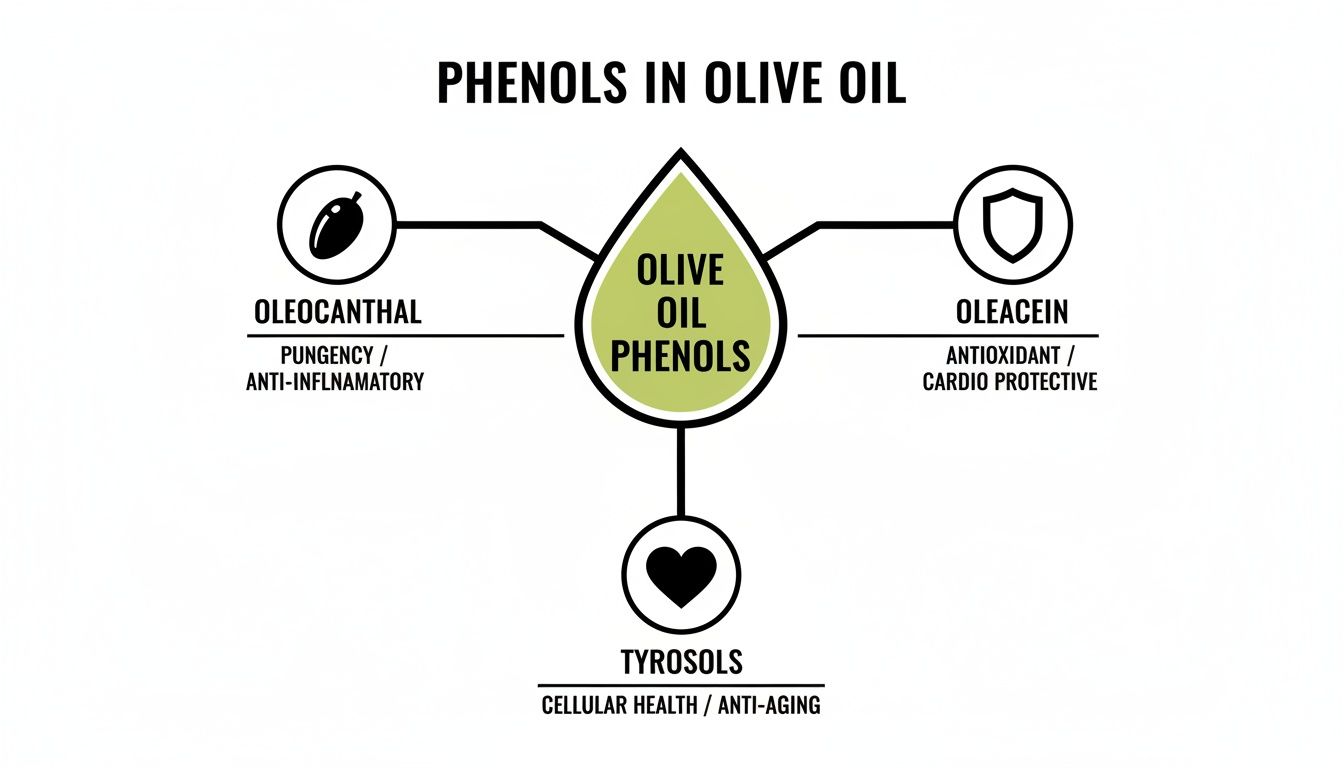
As the infographic shows, it’s a team effort. Specific phenols like oleocanthal, oleacein, and the tyrosols each bring something unique to the table, from fighting inflammation to protecting your heart.
A Natural Anti-Inflammatory Force
Chronic inflammation is the silent culprit behind many modern health problems. It's like a low-grade fire smoldering inside your body, contributing to conditions like arthritis, metabolic syndrome, and heart disease over time.
This is where oleocanthal, the phenol responsible for that peppery sensation, really shines. Its anti-inflammatory action is so remarkably similar to ibuprofen that scientists have taken notice. A daily dose of high-phenolic olive oil can help cool that internal fire, offering a gentle, consistent protective effect. It’s a major reason why diets rich in healthy fats like olive oil are consistently linked to lower rates of inflammatory diseases.
The daily, consistent consumption of these compounds doesn’t just put out fires; it helps prevent them from starting in the first place. This proactive approach is the essence of using food as medicine.
Protecting Your Heart and Arteries
One of the most well-researched benefits of olive oil's phenols is their impact on cardiovascular health. The journey toward atherosclerosis (hardening of the arteries) often starts when LDL cholesterol becomes oxidized. When damaged by free radicals, these LDL particles get "sticky" and cling to artery walls, forming the dangerous plaque that causes blockages.
Phenols, especially hydroxytyrosol, are fantastic at protecting LDL particles from this oxidative threat.
- They Shield LDL Cholesterol: They act as an antioxidant buffer, keeping LDL particles stable and preventing them from becoming harmful.
- They Support Blood Vessel Function: These compounds also help improve the health and flexibility of the endothelium, the delicate inner lining of your blood vessels.
- They May Help Manage Blood Pressure: Some evidence suggests they contribute to healthier blood pressure levels, which further reduces stress on your entire cardiovascular system.
At the end of the day, incorporating high-phenolic olive oil into your daily routine is one of the simplest and most effective investments you can make in your long-term health. It’s a direct line of defense against oxidative stress and inflammation, fortifying your body from the inside out.
Where Phenolic Content Comes From (And Where It Goes)
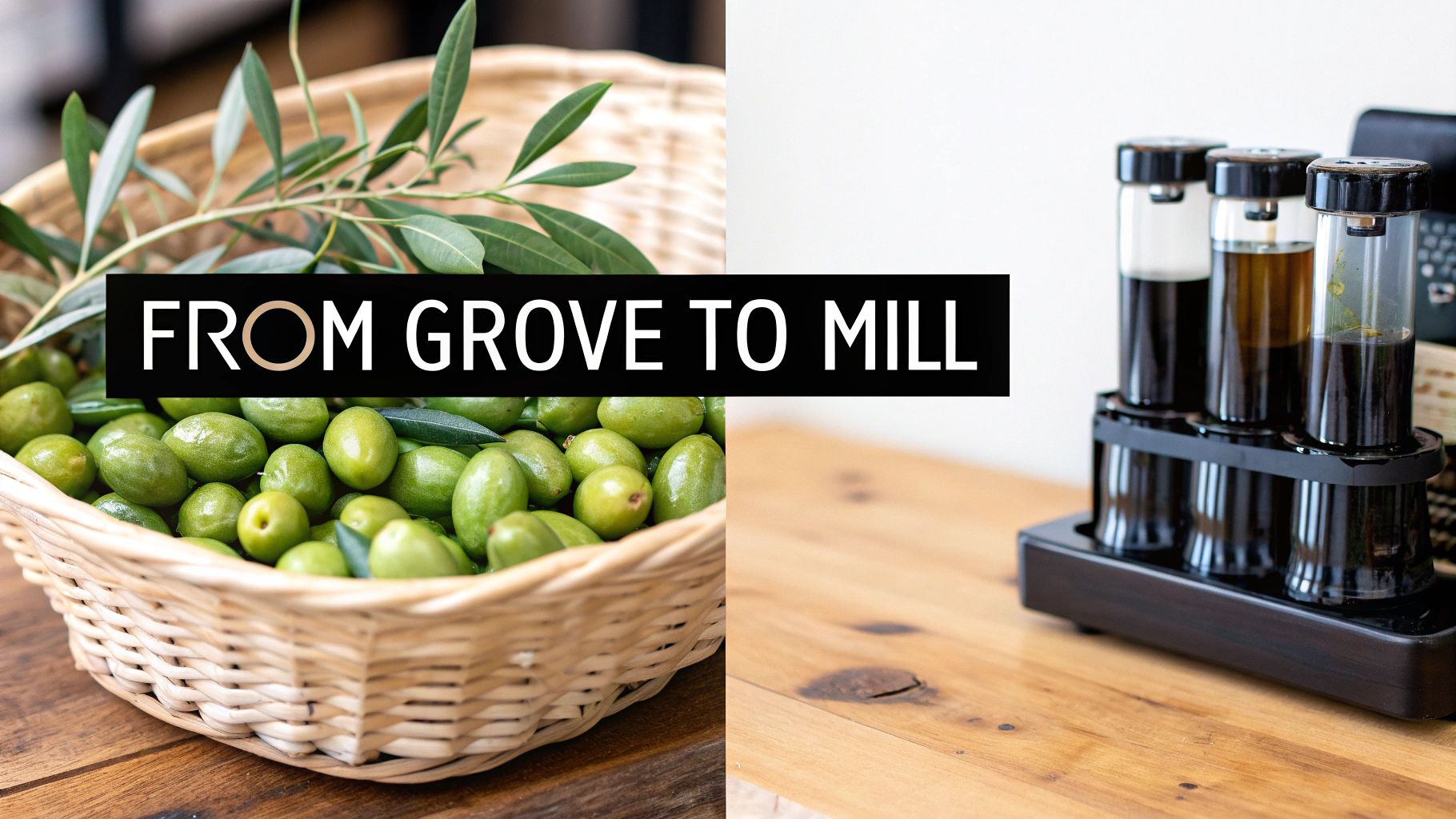
Ever wondered why some olive oils deliver a vibrant, peppery explosion while others just feel greasy and lifeless? The difference is no accident. It’s the direct result of a hundred small decisions made by the producer, from the moment the olive blossoms in the grove to the second the oil is sealed in its bottle.
The final phenolic content of an oil is a story of preservation. Think of these compounds as delicate treasures locked inside the olive. The producer's entire mission is to escort them into the bottle with as little damage as possible. Four crucial stages in this journey determine whether an oil becomes a phenolic powerhouse or just another disappointing bottle on the shelf.
The Cultivar and Its Terroir
It all begins with the olive itself. Just like a wine grape, the olive's variety, or cultivar, plays an enormous role. Some are simply genetic superstars when it comes to producing phenols.
Cultivars like Koroneiki from Greece, Picual from Spain, and Coratina from Italy are legendary for a reason. They are naturally predisposed to produce high levels of these potent compounds, giving them their characteristically robust, pungent, and even bitter flavors—all tell-tale signs of a high-phenol oil.
The Decisive Moment: When to Harvest
After genetics, the single most critical decision is choosing the right moment to pick the olives. This is the classic battle between getting the most oil and getting the best oil.
As an olive ripens, it transforms from a firm, bright green fruit to a soft, dark one. During this time, the amount of oil inside increases, but—and this is the crucial part—its phenolic content drops off a cliff.
Olives harvested early, while they’re still green, pack the highest possible concentration of phenolic compounds. This is when the good stuff, like oleocanthal and oleacein, is at its absolute peak. Waiting for the olives to fully ripen and turn black gives you more oil, but at a huge nutritional price.
This creates a fundamental conflict for producers: harvest early for less oil that is incredibly potent and valuable, or harvest late for a large volume of mild, less healthful oil. The best producers always choose quality over quantity.
The Race to the Mill
Once those olives are off the tree, the clock is ticking. The goal is to get them to the mill and pressed within hours, not days. This is where you see the stark difference between a true artisan and a mass-market producer. (You can dive deeper into this fascinating journey in our guide on how olive oil is made.)
The extraction process is make-or-break for preserving the phenolic compounds in olive oil.
- Speed is Everything: The longer olives sit after being picked, the more they begin to oxidize and ferment. This process destroys phenols before milling even starts. Top producers will often have their olives milled within a remarkable 4-6 hours of harvest.
- Cold Extraction is a Must: Heat is the arch-nemesis of phenols. True extra virgin olive oil is always made using "cold extraction," keeping temperatures strictly below 27°C (80.6°F). Sure, adding heat would squeeze out more oil, but it would effectively cook away the very compounds that provide the flavor and health benefits.
- Modern Tech is a Shield: The best mills today use state-of-the-art, closed-loop systems that minimize the oil's exposure to oxygen. Oxygen is the fuel for oxidation, which degrades phenols on contact.
The Final Guardian: Proper Storage
Even after a flawless milling process, the oil's journey isn't finished. How it's stored—both by the producer and by you at home—is the final line of defense. Light, heat, and air are the three enemies that will relentlessly destroy phenolic content.
A great producer will store fresh oil in large, oxygen-free stainless steel tanks in a cool, dark environment. When it's bottled, it must be in dark glass or an opaque tin. A clear bottle sitting on a bright grocery store shelf is a screaming red flag; it's a sign that the oil's potency is already bleeding away.
Decoding Labels to Find High-Phenolic Oils
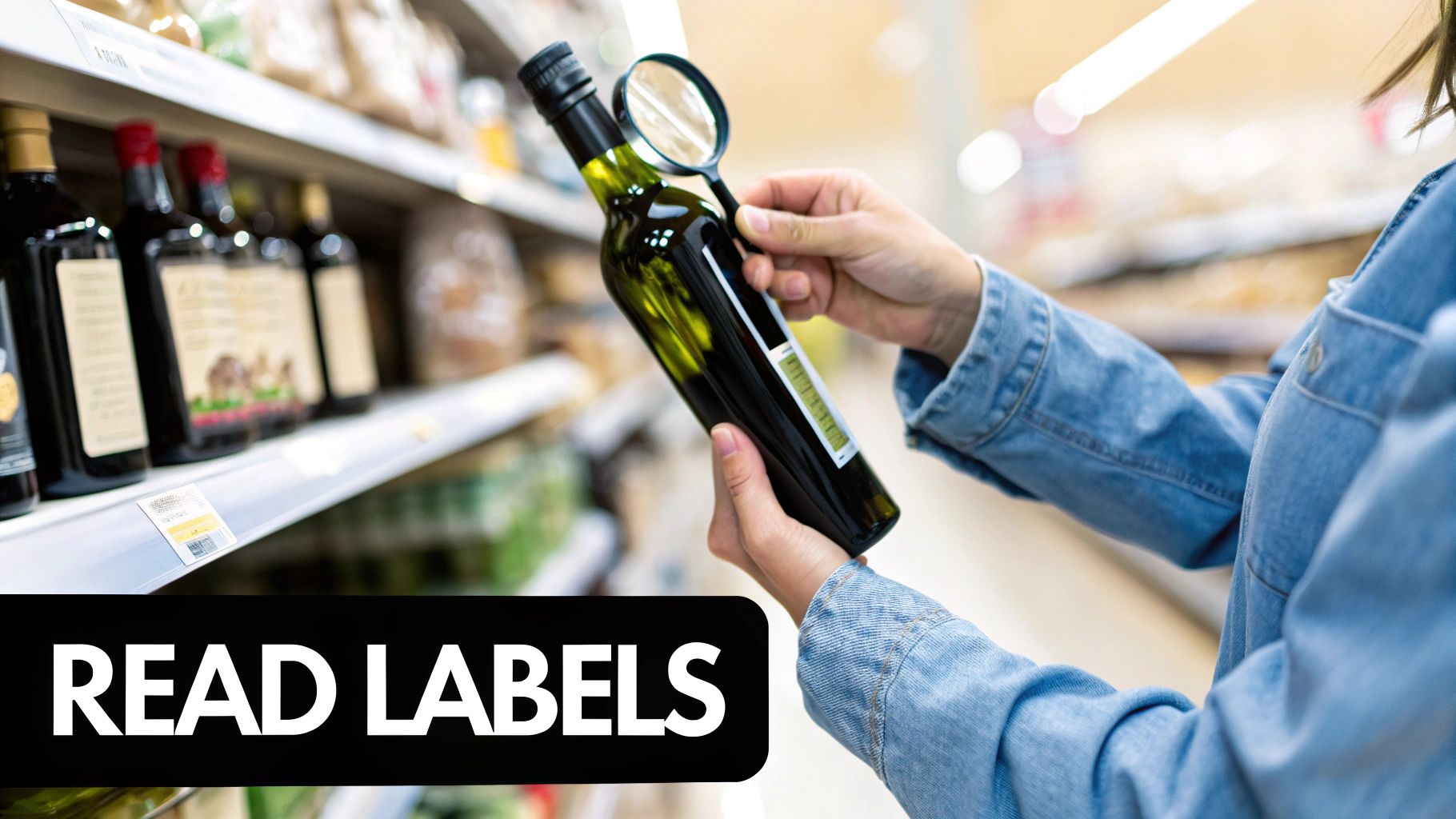
Stepping into the olive oil aisle can feel like walking into an ambush. Bottles scream claims of "pure," "light," and "first cold-pressed," but these words often say less than nothing about the oil's actual quality or its concentration of those powerhouse phenolic compounds.
What if you could read those labels like an expert, instantly spotting the signals of a truly exceptional oil? It's easier than you might think. You just have to know which words matter and which are just marketing noise. With a little insider knowledge, you can cut right through the clutter and pick a bottle that delivers on both flavor and health benefits.
The Most Important Date on the Bottle
First things first: forget the "best by" date. That date is often set two years after bottling and reveals nothing about when the oil was actually made. The single most crucial piece of information on any label is the harvest date.
High-quality producers are proud of how fresh their oil is, and they'll display the month and year the olives were picked. Think of extra virgin olive oil as fresh-squeezed fruit juice—its precious phenolic compounds degrade over time. An oil without a harvest date is a huge red flag. It’s a pretty good sign the producer is trying to hide its age.
Pro Tip: Always choose an oil from the most recent harvest you can find. An oil that's less than a year old will have the highest potency and the most vibrant, lively flavor.
Unlocking the Polyphenol Count
If you're hunting for maximum health benefits, the total polyphenol count is your golden ticket. This number, usually measured in milligrams per kilogram (mg/kg), is a direct measurement of the oil's antioxidant firepower. Not every producer lists it, but those who do are typically making a high-phenol oil they're rightly proud of.
So, what numbers should you be looking for?
- Good: Anything above 250 mg/kg is officially considered a high-phenolic olive oil.
- Excellent: Oils that clock in over 400 mg/kg are in another league and will have that noticeably robust, peppery kick.
- Elite: Some artisan producers manage to hit 500 mg/kg or even higher, elevating their oils into the realm of a true wellness product.
This number is your most reliable guide to the concentration of beneficial compounds locked inside that bottle.
The Power of the EU Health Claim
Another powerful seal of quality to look for is the official EU Health Claim (Regulation 432/2012). This isn't just marketing fluff; it's a government-regulated statement a producer can only put on their label if the oil meets strict scientific criteria. It confirms the oil contains at least 5 mg of hydroxytyrosol and its derivatives (like oleacein and oleocanthal) per 20g of olive oil.
The claim usually reads: "Olive oil polyphenols contribute to the protection of blood lipids from oxidative stress." Seeing this on a label is a scientifically backed guarantee you're holding a legitimate high-phenolic oil. It's a clear, regulated signal that cuts right through the marketing speak.
Knowing how to read a label is one of the most important skills for an olive oil lover. Here's a quick reference guide to help you decipher what you're seeing on the shelf.
How to Read an Olive Oil Label for Phenols
| Label Term or Metric | What It Really Means for You | What to Look For |
|---|---|---|
| Harvest Date | This tells you the oil's true age and freshness. | The most recent date possible, ideally within the last 12 months. |
| Total Polyphenol Count | A direct measure of antioxidant content (mg/kg). | A minimum of 250 mg/kg. Anything over 400 mg/kg is outstanding. |
| EU Health Claim | A regulated, science-backed seal of high-phenolic quality. | Look for the specific phrase about protecting blood lipids from oxidative stress. |
| Cultivar Name | Identifies the specific olive variety used (e.g., Picual, Koroneiki). | Specificity is a good sign. It shows care and traceability. |
| "Best By" Date | An arbitrary date, usually 18-24 months after bottling, not harvesting. | Ignore this. Focus on the harvest date instead. |
| Vague Terms | Words like "Pure," "Light," or "Classic" often mean refined oil. | Avoid these. They signal a lack of phenols and flavor. |
This table should help you quickly assess a bottle, but there are a few more clues to keep in mind.
Final Clues for the Discerning Buyer
Beyond the key metrics, a few other clues can guide your choice. Paying attention to the little details will help you avoid common traps and make a much smarter purchase. You can dive even deeper into the nuances by learning more about how to properly label olive oil.
Here’s a final checklist of what to seek out and what to avoid:
- Look for Dark Glass or a Tin: Light is the enemy of phenols. A producer who cares about protecting their oil will never bottle it in clear glass.
- Seek Out Specifics: Does the label name the olive cultivar or the specific estate where it was grown? Details like these are a mark of traceability and pride.
- Be Wary of Vague Language: Words like "pure," "light," or "product of multiple countries" are hallmarks of low-quality, mass-produced oils that have likely been stripped of their precious phenolic compounds.
By focusing on the harvest date, polyphenol count, and credible certifications, you can turn a confusing shopping trip into a confident and rewarding hunt for liquid gold.
Keeping Your High-Phenolic Olive Oil at Its Peak
So, you’ve brought home a bottle of exceptional high-phenolic olive oil. That's the good news. But now comes the most critical part: protecting your investment.
This isn't just any cooking oil; it's a potent, living product. Storing it incorrectly can strip away its powerful health benefits and signature peppery flavor in just a few weeks. The three biggest culprits are light, heat, and oxygen—they are the sworn enemies of your oil’s precious phenolic compounds.
The Golden Rules of Olive Oil Storage
Let's get one thing straight: that convenient spot on the windowsill or next to the stove is the absolute worst place for your olive oil. Constant exposure to light and fluctuating temperatures will rapidly degrade it, turning liquid gold into a bland, disappointing oil.
The ideal home for your bottle is a cool, dark place, like a pantry or a cupboard away from the oven. Aim for a stable temperature somewhere around 14-18°C (57-65°F). Think of it as a fine wine—you wouldn't leave that sitting out in the sun, would you?
Every time you open the bottle, you're letting in fresh oxygen, which kicks off the oxidation process. This is why a tight seal is non-negotiable and why you should aim to use up a bottle within a month or two of opening it.
A question that comes up all the time is whether you should cook with such a high-quality oil. The answer is a definite yes. It's a persistent myth that you can't cook with extra virgin olive oil. In fact, the very same phenolic compounds in olive oil that protect the olive on the tree also make the oil more stable in your pan.
These powerful antioxidants give high-quality EVOO a surprisingly high smoke point, often well over 207°C (400°F). This makes it a fantastic and healthy choice for everything from sautéing vegetables to roasting chicken. Cooking with it is one of the best ways to infuse your food with its flavor and benefits. For a deeper dive, check out our guide to proper olive oil storage.
By following these simple guidelines, you’re ensuring that every last drop delivers the powerful punch and vibrant flavor the producer worked so hard to create. You're not just storing oil; you're preserving its potency.
Frequently Asked Questions
When you start digging into the world of high-quality olive oil, a lot of questions pop up. Getting to know the phenolic compounds in olive oil is really the key to picking a bottle that’s not just delicious, but genuinely good for you. Let's clear up some of the most common questions.
Does Olive Oil Color Indicate Phenolic Content?
It’s a common misconception, but no, color doesn't tell you anything about an oil's phenolic power. That beautiful green or golden glow comes from chlorophyll and carotenoids, which are pigments, not the phenols themselves.
A bright green color can hint at an early harvest, and early-harvest oils do tend to have more phenols, but it's not a foolproof connection. The best clues are actually in the taste: a pronounced bitterness on your tongue and that classic peppery kick you feel at the back of your throat.
Can I Get These Benefits from Light or Regular Olive Oil?
I wish I could say yes, but it's a hard no. The refining process that produces "light," "pure," or just plain "olive oil" uses high heat and chemical solvents. This treatment is pretty aggressive and, unfortunately, it strips away nearly all of those delicate, beneficial phenolic compounds.
Those refined oils are made to have a neutral flavor and a high smoke point for cooking. They just don't have the powerful, health-giving properties you find only in true Extra Virgin Olive Oil.
The term "Extra Virgin" isn't just a label. It's a guarantee that the oil was made the old-fashioned way—mechanically pressed without the heat or chemicals that ruin its most valuable components.
What Is the Best Way to Consume High-Phenolic Olive Oil?
To get the full health benefits, your best bet is to consume it raw. This way, you get the complete, unaltered power of its bioactive compounds before any heat can break them down.
It’s fantastic drizzled over a finished dish—think salads, pasta, steamed vegetables, or a warm bowl of soup. Plenty of people just take a straight tablespoon every morning. While you can cook with it, using it as a finishing oil is the smartest way to preserve everything that makes it special.
How Much High-Phenolic Olive Oil Should I Take Daily?
The official EU health claim is built around consuming 20 grams a day, which is about 1.5 tablespoons. That's for an oil that meets a specific polyphenol minimum and is a solid, science-backed target for protecting your heart.
For general well-being, getting into the habit of having one or two tablespoons daily is excellent. People who follow a traditional Mediterranean lifestyle often enjoy up to four tablespoons a day, really leaning into the profound anti-inflammatory and antioxidant effects of the phenolic compounds in olive oil.
At Learn Olive Oil, our mission is to help you explore the world of premium olive oil with total confidence. Our expert guides break down everything from tasting notes to health science, so you can choose and enjoy the very best. Discover the World of Premium Olive Oil today and find a new appreciation for this liquid gold.
 Learn Olive Oil
Leave a comment