If you’ve ever wondered how a simple, bitter fruit becomes the soul of Mediterranean cooking, you’ve come to the right place. Because the journey of an olive into oil isn’t just a process—it’s a transformation. At its core, the idea is breathtakingly simple: crush olives into a paste, then separate the golden oil from the solid pulp and the fruit’s natural water.
But that simple description hides a story of frantic urgency, ancient traditions, and cutting-edge science. The truth is, the difference between a dull, greasy oil and a vibrant, peppery "liquid gold" is decided in a handful of critical hours.
The Journey Begins: A Race Against Time
Imagine standing in a sun-drenched grove, the air thick with the scent of ripe olives. This is the starting line. From the moment an olive is plucked from its branch, a clock starts ticking. Every minute that passes, the fruit begins to change, to oxidize, to lose the very essence of what makes its oil extraordinary.
This isn't a casual stroll from tree to bottle. It's a high-stakes race where timing, temperature, and technique are everything. Let’s pull back the curtain on this hidden world. You’re about to discover how the masters of olive oil turn a simple harvest into an art form.
This quick visual breaks down the core stages, from the tree to the mill.
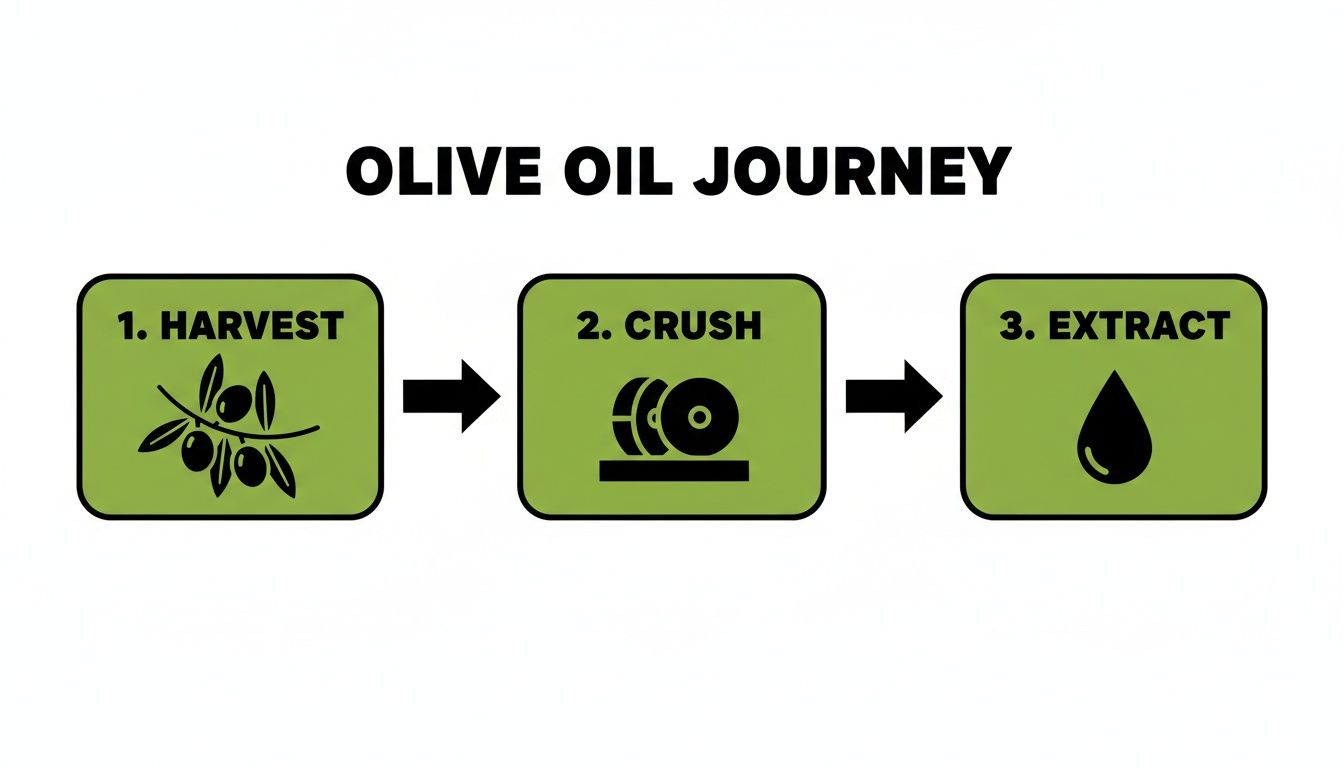
As you can see, it's a direct, three-part sequence. Each step is built on the success of the one before it.
The Critical First Steps
It all begins with the harvest, a frantic dance now aided by specialized tools like Spapperi's agricultural machinery. This single step sets the stage for everything that follows.
Once picked, the olives are not walked, but rushed to the mill. Here, time is the ultimate enemy. The longer an olive sits after picking, the more it oxidizes and ferments, creating harsh, unpleasant flavors that can ruin a batch of oil.
The world's most coveted oils are made by artisans who press their olives within 24 hours. But the true masters—the ones whose oils win gold medals—often get it done in a breathtaking 4-6 hours.
Once at the mill, the olives get a thorough cleaning. Powerful fans blast away leaves and twigs, and a quick water bath washes off any field dust. This step is non-negotiable—any stray debris can introduce bitterness and impurities, tainting the final oil from the very start.
This fanatical preparation ensures that only pure, pristine fruit moves on to the most transformative part of the process: the crush. Understanding this obsession with speed and purity is the first secret to knowing the difference between a good olive oil and a truly magnificent one.
The Traditional Path: Stone Mills and Olive Presses
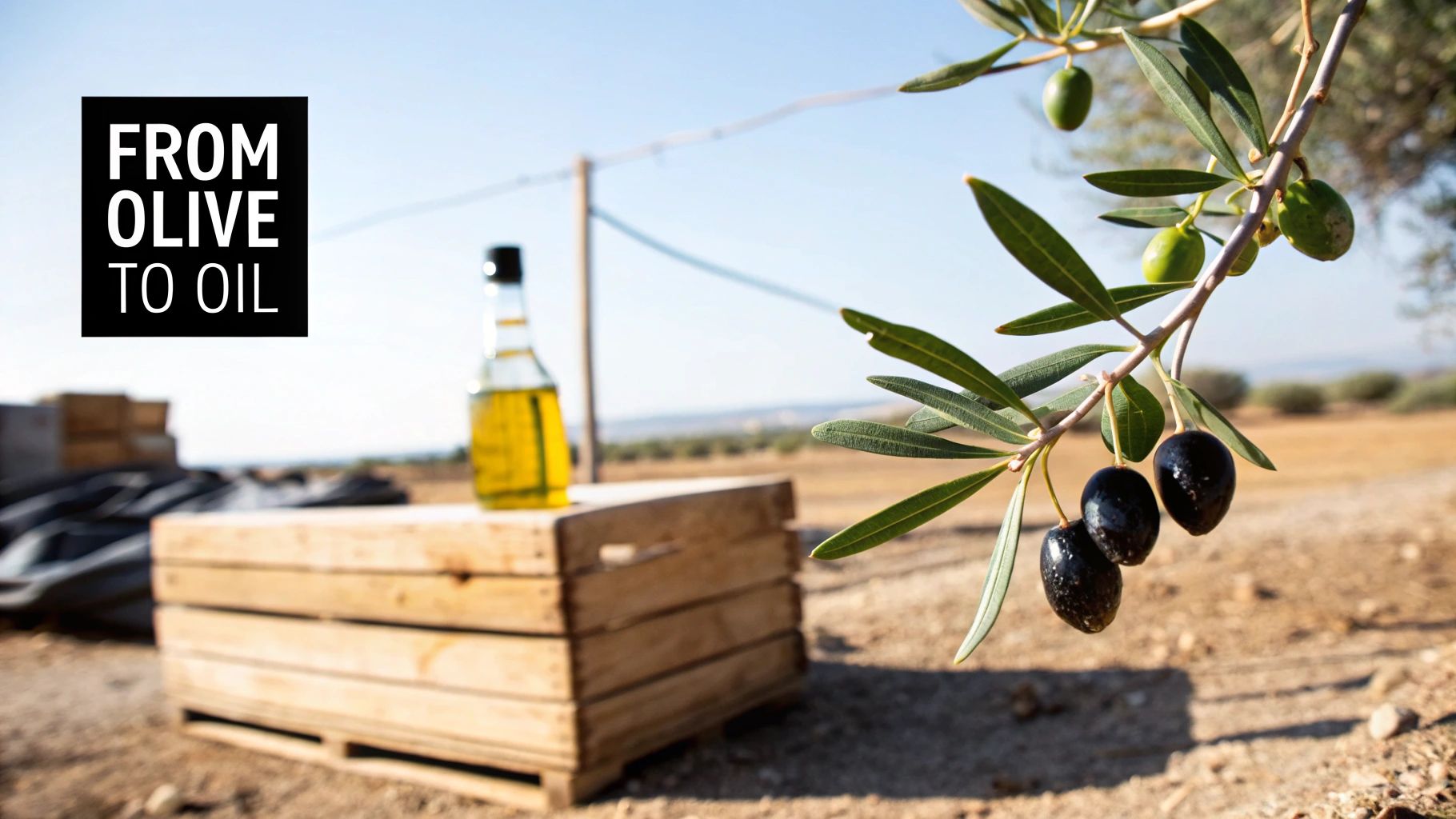
Before gleaming steel tanks and centrifuges, making olive oil was a far more primal affair. To truly grasp how we get "liquid gold" today, you must first journey back to its ancient roots: the traditional press. This is where it all began, a timeless method powered by little more than stone, pressure, and patience.
Picture a scene from the Old World. Massive granite millstones, called molazze, turn with a slow, hypnotic rhythm, crushing whole olives—pits and all—into a thick, fragrant paste. It’s a beautifully sensory experience. The air instantly fills with the unmistakable green, peppery aroma of fresh-cut grass and fruit—the first promise of the incredible oil locked inside.
This ancient technique is where the term "cold-pressed" was born. The entire philosophy was to use only mechanical pressure, never heat, to coax the oil from the fruit. Back then, it meant relying on the brute, honest force of the press.
From Olive Paste to Precious Oil
Once the olives were mashed into a consistent paste, the real work began. Millers would scoop it up and spread it evenly across round, woven mats. These mats, called fiscoli, were traditionally made from hemp or coconut fiber and acted as a natural filter.
Next, they’d stack these paste-covered mats one atop the other, building a tall column that was then slid into a massive hydraulic press. As the press groaned and squeezed down, a beautiful, cloudy liquid—a mix of pure oil and the olive’s natural water—would slowly begin to weep out, trickling into basins below. This is mechanical extraction at its most elemental.
For centuries, the final step was simply to let nature do the work. The collected liquid was left to settle, and over time, the lighter oil would naturally float to the top. All that remained was to carefully skim it off.
It’s a romantic image, connecting us directly to the long, rich history of olive oil. But does this beautiful, old-fashioned method actually produce the best oil? The answer is… complicated.
The Trade-Off Between Tradition and Purity
As charming as it sounds, the traditional press has significant drawbacks—flaws that modern technology was specifically invented to overcome. The slow, open-air process introduces two of olive oil’s greatest enemies: oxygen and heat.
The olive paste sits exposed to the air for long stretches, kicking off oxidation, which dulls the oil's flavor and destroys its healthy antioxidants. Even the friction from the slow-grinding stone wheels generates more heat than you’d think, potentially "cooking" away the delicate, flavorful compounds that define a great oil.
This exposure has real consequences for the final product:
- Higher Risk of Oxidation: The fiber mats are nearly impossible to clean perfectly. Lingering bits of old paste could introduce rancid flavors and cause the new oil to spoil faster.
- Less Freshness: The long delay between crushing and separating gives destructive enzymes more time to degrade the oil's quality.
- Potential Defects: An open system is vulnerable to contamination, which can lead to a final product that is less pure and vibrant than one made in a sealed, modern mill.
For these reasons, the true stone mill and press are now relics of a bygone era. They are kept alive mostly by artisan producers preserving a piece of history, creating a unique product with a distinct character. While it might not always meet the strict chemical and sensory benchmarks of a top-tier extra virgin olive oil, it offers a delicious taste of the past.
The Modern Method: Purity Through Centrifugal Force
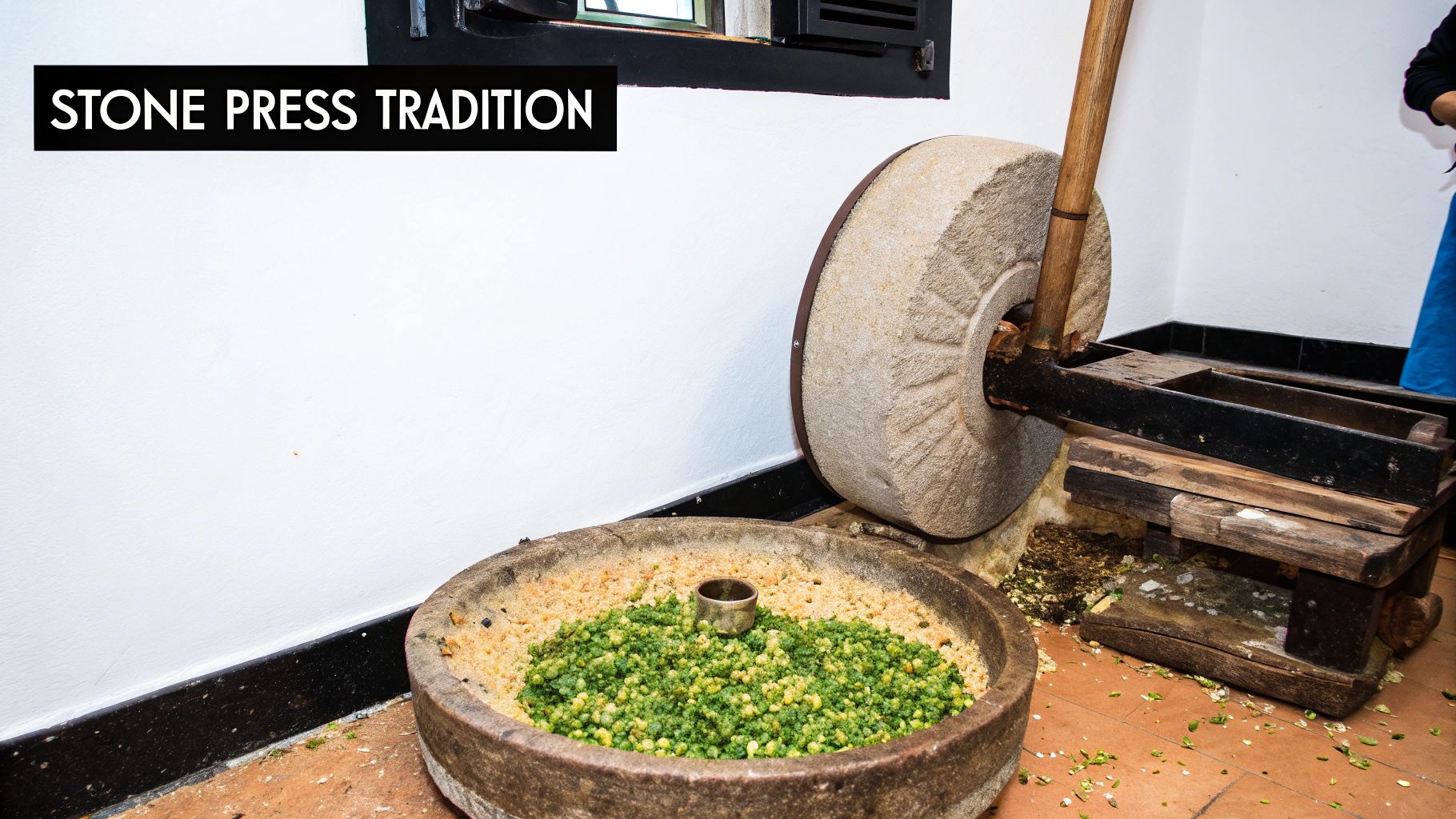
While the old stone mill whispers of rustic charm, the modern olive mill is a cathedral of scientific perfection. Step inside one today, and you’ll find gleaming stainless-steel machinery humming with precision. This is where the overwhelming majority of high-quality olive oil is born, using a method that traded gentle pressure for breathtaking speed.
Forget the slow squeeze of a press. The workhorse of the modern mill is the decanter centrifuge, a machine that revolutionized the industry. Think of it as the world’s most sophisticated spin cycle, engineered for a single purpose: to separate liquid gold from olive paste with astonishing efficiency.
This technology directly vanquishes the greatest weaknesses of the traditional press—prolonged exposure to oxygen and heat. The entire centrifuge process is continuous and sealed, a closed system that shields the fragile oil from the very elements that seek to destroy it. It may be less romantic, but it is the secret to preserving the fresh, vibrant flavors and powerful health benefits we demand from premium olive oil.
The Science of Separation
Just like the old way, the process starts with a paste made from freshly crushed olives. But instead of being spread on mats, this paste is pumped directly into the horizontal drum of the decanter centrifuge. This is where physics performs its magic.
The centrifuge spins at an incredible rate, often exceeding 3,000 rotations per minute. This generates immense G-forces, thousands of times stronger than gravity, compelling the components of the paste to separate according to their density.
It’s a surprisingly elegant concept. The heaviest materials—the solid olive pulp, skin, and pit fragments (known as pomace)—are flung to the outer wall of the drum. The much lighter olive oil naturally settles into an inner layer, while the fruit's own water forms a layer between them.
Think of a salad dressing you’ve just shaken. If you let it sit, the oil and vinegar slowly separate on their own. The centrifuge accomplishes the exact same thing, but instead of taking hours, it achieves near-perfect separation in a matter of seconds.
Internal blades and spouts continuously channel each component away. The dry pomace is expelled from one end, the water from another, and a stream of pure, brilliant olive oil flows from a third. This is how modern olive oil is extracted—not with a squeeze, but with a spin.
Understanding Cold Extraction
You will often see "cold pressed" on labels, a nostalgic tribute to the traditional method. When discussing modern centrifuges, the more precise and meaningful term is "cold extraction," and it is a critical mark of quality.
Cold extraction means the entire process, from crushing to centrifuging, was kept under fanatic temperature control. Heat is the arch-nemesis of great olive oil; it accelerates oxidation and literally cooks away the delicate aromas and beneficial polyphenols.
To legally be called extra virgin olive oil, the extraction temperature must remain below 27°C (about 80.6°F). But the world's best producers go even further, maintaining temperatures closer to 20-22°C (68-72°F) to craft oils with maximum intensity and freshness.
This obsessive focus on temperature is non-negotiable for several key reasons:
- It Preserves Flavor: Low temperatures protect the volatile compounds that give olive oil its incredible fruity, peppery, and grassy notes.
- It Maximizes Nutrients: The process safeguards the polyphenols and other antioxidants, which are highly sensitive to heat.
- It Ensures Stability: A cooler process results in a more stable oil with lower acidity and a much longer shelf life.
The centrifugal method gives millers absolute control over temperature—something that was nearly impossible with old stone mills. This control is fundamental to how modern olive oil is made to meet the highest standards, transforming an ancient craft into a modern science.
To make these differences crystal clear, let's compare the two approaches side-by-side.
Extraction Methods At a Glance
| Feature | Traditional Press (Stone Mill) | Modern Centrifuge (Cold Extraction) |
|---|---|---|
| Grinding Method | Large granite stones crush olives into a paste. | A mechanical hammer mill crushes olives quickly. |
| Separation Process | Olive paste is spread on mats, stacked, and pressed to release oil. | A centrifuge spins the paste at high speed to separate oil, water, and solids. |
| Oxygen Exposure | High. The paste is exposed to air for a long time on the mats. | Very low. The system is enclosed, protecting the oil from oxidation. |
| Temperature Control | Poor. Friction from the stones and pressing can generate unwanted heat. | Excellent. Temperature is precisely controlled throughout the process. |
| Efficiency | Lower. Some oil is always left behind in the solid pomace. | High. It extracts more oil from the olives. |
| Final Product | Can be smooth and buttery, but prone to defects due to oxidation & heat. | Typically produces cleaner, fresher, and more intensely flavored oils. |
Ultimately, while the traditional press laid the foundation, the modern centrifuge has empowered producers to consistently create the pure, flavorful, and nutrient-rich extra virgin olive oil that has become a cornerstone of kitchens around the world.
What Separates Great Olive Oil from Good
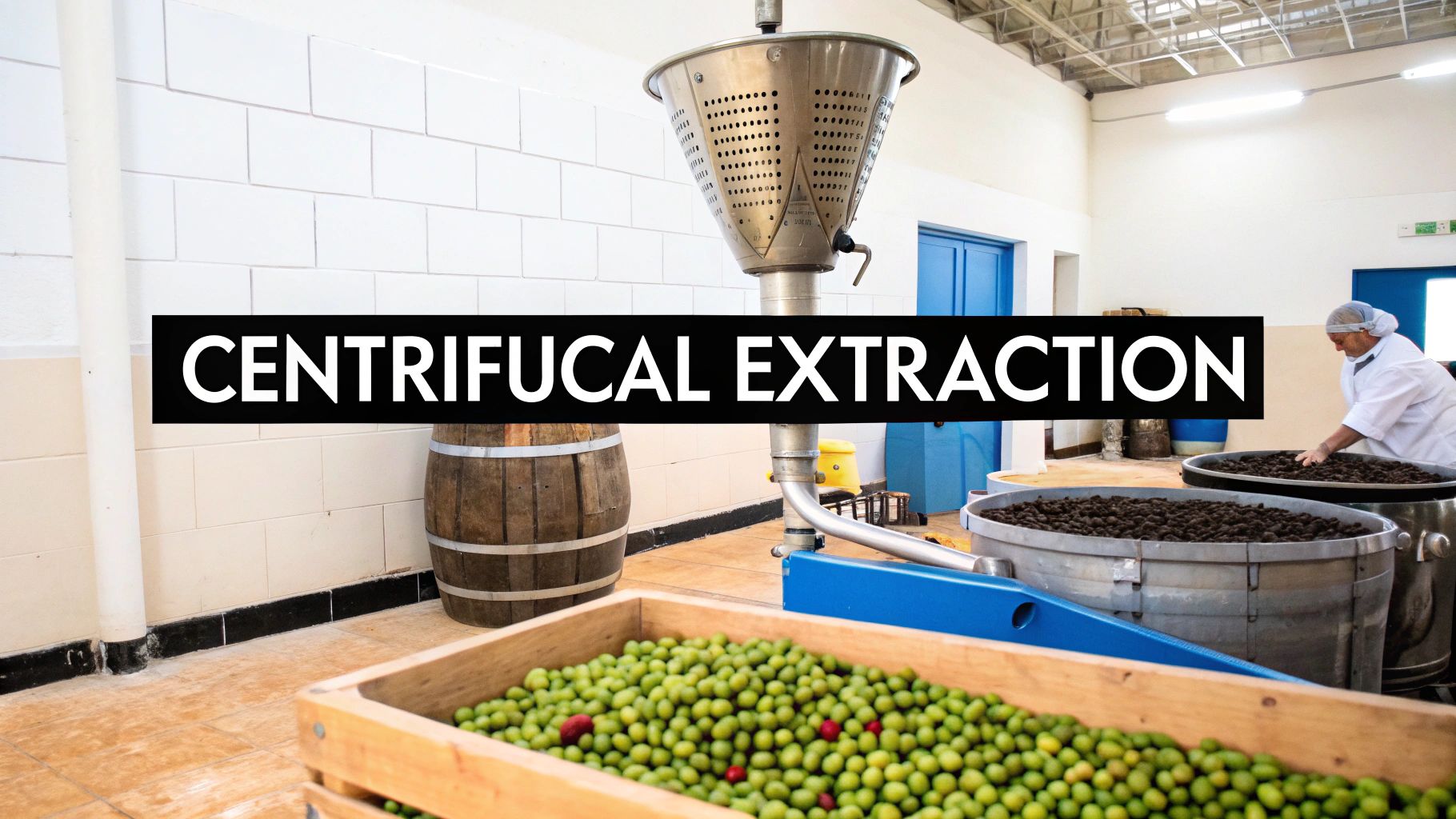
Have you ever stood in the grocery aisle, wondering why one bottle of extra virgin olive oil costs four times as much as another? It isn't just clever marketing. The real difference is born in the mill—in the countless small, deliberate decisions made during extraction that create a vast chasm in quality, flavor, and health benefits.
Understanding the mechanics of extraction is one thing. Appreciating the obsession that defines a truly great oil is another. From the moment an olive leaves the branch, three invisible enemies are at work: time, temperature, and oxygen. The world’s best producers are not just millers; they are masters of controlling these forces.
These factors don't just shape the taste; they fundamentally alter the oil's chemistry. This includes the free fatty acid level—a critical report card on quality. You can dive deeper into why the acidity of olive oil is such a crucial measure of its purity and stability.
The Frantic Race Against Time
The clock starts ticking the second an olive is picked. Immediately, the fruit begins a natural decay, releasing enzymes that degrade the oil and raise its acidity. This is why the journey from grove to mill isn't a casual trip—it's an all-out sprint.
A producer of standard-grade oil might think getting fruit to the mill within a few days is acceptable. But for an artisan creating a world-class product, every single hour is precious. Top-tier producers fight to crush their olives within 4 to 12 hours of harvest, a grueling standard that preserves the fruit's absolute peak freshness.
This rapid turnaround is non-negotiable. It halts oxidation and fermentation before they can take hold, locking in those vibrant, fresh flavors and preventing the defects that would instantly disqualify an oil from being called "extra virgin."
Heat: The Silent Destroyer of Flavor
Heat is the sworn enemy of high-quality olive oil. Yes, a little warmth can make extraction easier and yield more oil, but it comes at a devastating cost to both flavor and nutrition. The delicate aromatic compounds and powerful antioxidants that make extra virgin olive oil a superfood are incredibly fragile and heat-sensitive.
True “cold extraction” means keeping the olive paste below 27°C (80.6°F) throughout the entire process. The finest producers often go even lower, meticulously maintaining temperatures around 20-22°C (68-72°F). This fanatical control is what protects the oil’s full spectrum of peppery, grassy, and fruity notes.
Even a small, accidental temperature spike can effectively "cook" the oil, leaving you with a flat, greasy taste and a significant loss of beneficial polyphenols. This is why the best modern mills are climate-controlled sanctuaries of precision.
The Invisible Threat of Oxidation
Oxygen is to olive oil what rust is to iron. The moment the olive’s skin is broken, a war against oxidation begins. Exposure to air causes the oil to go rancid, leading to stale, unpleasant flavors that taste like old nuts or even crayons.
This is where the modern centrifuge holds a monumental advantage over the traditional press. The entire process is enclosed, minimizing the oil's contact with air at every single stage.
- Sealed Systems: From the crusher to the decanter, the olive paste and oil are protected inside stainless-steel machinery.
- Inert Gas: Some high-end producers even take it a step further, flushing their tanks with nitrogen—an inert gas—to displace any oxygen before storing the freshly milled oil.
This obsession with defeating air is what preserves the oil's shelf life and ensures the flavor you taste is exactly the one the producer fought so hard to create.
Decoding the Label for Extraction Quality
Walking down the olive oil aisle can feel like navigating a minefield. Bottles shout buzzwords at you: "First Cold Press," "Extra Virgin," "Unfiltered." It’s easy to feel lost in a sea of grand claims, wondering what any of it really means for the oil inside.
But here’s the secret: you don’t need to be an expert to choose a fantastic olive oil. The label is your treasure map, filled with clues that point directly to the quality of the extraction process. Learning to read it is your key to unlocking a world of flavor.
Once you know what to look for, you’ll transform from a confused shopper into a confident buyer, able to spot the real deal from a mile away. Let's crack the code.
The Gold Standard of Extraction
If there is one phrase you must commit to memory, it is “Extra Virgin Olive Oil” (EVOO). This is not just a marketing term; it is a legally defined grade that acts as a powerful promise about how the oil was made.
When a label says "Extra Virgin," it guarantees two non-negotiable facts about its extraction:
- No Chemical Solvents: The oil was separated from the olive paste using purely mechanical means, whether a centrifuge or a press. No hexane or any other industrial chemicals were used.
- Low-Temperature Processing: The entire extraction happened below a strict temperature threshold (27°C or 80.6°F) to preserve the oil's fragile aromas, flavors, and nutritional benefits.
Essentially, EVOO is the purest expression of the olive—the direct result of a clean, cool, and careful extraction. If an oil fails to meet these standards, it simply cannot earn the title.
Unpacking Common Label Terms
Beyond the crucial EVOO grade, other phrases on the label offer more clues. Some are incredibly helpful, while others are little more than marketing relics.
The term "First Cold Press" is a classic example. It sounds impressive, doesn't it? But it's mostly a holdover from a bygone era. Today's best oils are made with centrifuges ("cold extraction"), not presses. Since all extra virgin oil must come from the first mechanical extraction and be processed cold, the phrase is essentially redundant.
A far more revealing detail is the harvest date. Olive oil is fresh-pressed fruit juice, and like any juice, it is best when young. The harvest date tells you exactly when the olives were picked and pressed, giving you an honest benchmark for freshness. Always—always—look for the most recent date available.
Beyond the Words
The bottle itself has a story to tell. Light is one of olive oil’s worst enemies, causing it to go rancid with alarming speed. A producer who invested so much in a perfect extraction isn't going to let their work be ruined by poor packaging.
Look for these physical signs of a quality-conscious producer:
- Dark Glass or Tins: Always reach for oil sold in a dark, opaque bottle or a metal tin. These act as armor, protecting the precious contents from light damage.
- Geographical Indicators: Look for seals like PDO (Protected Designation of Origin) or PGI (Protected Geographical Indication). These are stamps of authenticity, guaranteeing the olives were grown and the oil was produced in a specific region according to strict, time-honored rules.
Recognizing these signals helps you cut through the noise and focus on what truly matters: the evidence of a careful, quality-driven extraction. For an even more detailed guide, you can learn more about olive oil labeling and what each term signifies. With this knowledge, you can confidently choose a bottle that truly holds liquid gold.
Beyond Extra Virgin: Other Extraction Methods
Not every bottle of olive oil on the shelf can claim the "extra virgin" title. After the first mechanical extraction, a damp, pulpy mash of olive solids remains. This leftover material is called pomace.
While the best oil is long gone, this pomace still clings to a small amount of oil. For a small farm, it's negligible. But on an industrial scale, that residue is a valuable resource. Getting it out, however, requires a completely different and far more aggressive approach.
The Turn to Industrial Chemistry
This is where the story of olive oil takes a sharp turn from the pristine world of cold extraction into the realm of industrial chemistry. Extracting the last stubborn drops from the pomace isn't a mechanical job; it's a chemical one.
Large processing plants wash the pomace with a chemical solvent, most often hexane, which dissolves and strips out every last bit of remaining oil. The mixture is then heated to boil off the solvent, leaving behind a substance known as crude pomace oil.
As you can imagine, this is not an oil you'd want on your salad. It is unpalatable and completely unfit for consumption in its raw state. It must undergo an intense refining process using high heat, steam, and clays to remove all off-flavors and unpleasant odors. The result is a bland, neutral, and colorless oil. To learn more, check out our detailed comparison of pomace oil vs olive oil.
Creating "Pure" and "Light" Olive Oil
This same heavy-duty refining process isn't just for pomace. It's also used on virgin olive oils that have defects—oils that failed to meet the strict chemical and sensory standards for the "extra virgin" grade. Once refined, they too become tasteless and colorless.
So, how do they become the bottles we see in the store? To make them marketable, producers blend a small amount of extra virgin olive oil back into the refined oil. This is what you're buying when you see labels like "Pure Olive Oil," "Classic Olive Oil," or simply "Olive Oil."
Products labeled "Light" or "Extra Light" olive oil are made the same way, but with an even smaller amount of EVOO blended in. The term "light" refers only to the mild flavor and pale color, not the calorie count. All olive oils have the same number of calories.
With a massive global output to process—where Spain alone recently produced 1.419 million tons—these methods ensure every last drop from the olive is put to use. You can discover more insights about the global olive oil market.
Answering Your Top Questions About Olive Oil Extraction
We've journeyed from the olive grove into the heart of the mill, seeing how ancient tradition and modern science both shape the oil in your bottle. But a few key questions always surface. Let's tackle them head-on, so you can feel like a true expert the next time you choose an oil.
Is All Extra Virgin Olive Oil Unfiltered?
Not always, and this is by design. Immediately after extraction, fresh oil is cloudy with tiny particles of olive fruit. Some producers bottle it this way as "unfiltered" or olio nuovo. It is prized for an intense, straight-from-the-mill taste.
Most producers, however, either let the oil settle or pass it through filters. This removes the sediment, which helps the oil stay fresh longer on the shelf. Neither method is inherently better; it simply depends on the producer’s style and the flavor profile they desire. Just remember that unfiltered oil is a fleeting pleasure, best enjoyed young and fast.
What Does Acidity Really Tell Me?
Think of acidity as a final report card for the entire extraction process. The "free fatty acid" (FFA) level is a direct measurement of how much the oil has degraded. A fast, cool, and clean extraction keeps this number remarkably low.
To earn the Extra Virgin title, an oil’s acidity must be below 0.8%. But the truly exceptional, artisanal oils often register much lower—sometimes as low as 0.1% to 0.3%. That tiny number speaks volumes about the producer's skill, care, and dedication.
Why Is Extraction Temperature Such a Big Deal?
Heat is the ultimate villain in the story of high-quality olive oil. Temperature is arguably the single most important factor in preserving the oil’s incredible flavors and health benefits, like its precious polyphenols. Those are the compounds that give great EVOO its signature peppery finish and powerful antioxidant punch.
A "cold extraction," legally defined as keeping the process below 27°C (80.6°F), is entirely about protecting those delicate compounds. Go even a little hotter, and you begin to "cook" the oil, leaving you with a flat, greasy liquid that has lost both its personality and its nutritional power. The best producers are fanatics about keeping things cool.
So, Can I Just Make My Own Olive Oil at Home?
Technically… you could. With a small press, it’s possible to squeeze some oil out of olives. But getting anywhere near the quality of even a basic commercial product is another matter entirely. The greatest challenges are crushing the olives finely enough and then separating the oil from the water without a powerful centrifuge.
You would likely end up with a very small amount of oil that spoils quickly due to extreme oxidation. While it’s a fun experiment, it provides a profound appreciation for the incredible skill and equipment required to create the stable, delicious olive oil we enjoy every day.
At Learn Olive Oil, we believe that knowing the story behind your food makes it taste infinitely better. When you understand the journey from olive to oil, you appreciate every last drop. Explore our guides to become a true connoisseur and Discover the World of Premium Olive Oil.
 Learn Olive Oil
Leave a comment