Walk down any grocery aisle and you’ll find a sea of bottles all claiming to be extra virgin olive oil. But if you believe they are all the same, you’re missing out on one of nature’s most spectacular gifts.
True extra virgin olive oil isn’t just another cooking fat. It is a promise. It’s a guarantee of purity, a seal of quality that elevates it far above everything else on the shelf. Imagine the fresh, unblemished juice of a perfectly ripe olive, captured in a bottle just hours after being plucked from the tree. That, in essence, is the treasure you’re looking for.
What Extra Virgin Olive Oil Actually Means
The “extra virgin” designation is the absolute highest grade of olive oil known to man. To earn this prestigious title, an oil must survive a grueling two-part trial: first, a battery of unforgiving chemical tests in a laboratory, and second, a rigorous sensory evaluation by a panel of certified human tasters.
No other food oil on the planet is held to such a punishingly high standard. It’s the difference between a glass of freshly squeezed orange juice—vibrant, complex, and alive with flavor—and a carton of watery concentrate that’s been sitting on a warehouse shelf for months. One is a gift from nature; the other is a pale imitation.
A Standard of Purity and Flavor
To officially qualify as extra virgin, an oil must meet a strict set of criteria that guarantee its integrity. These are not mere suggestions; they are iron-clad, non-negotiable standards that separate the genuine article from lesser grades like "virgin" or "pure" olive oil.
By definition, extra virgin olive oil is the pure, unadulterated juice from the first "cold pressing" of the olives, with absolutely nothing added or taken away. It must also be perfect from a sensory standpoint, meaning it cannot possess even a whisper of a defect in its taste or aroma.
Here, in a nutshell, are the core attributes that define this premium grade.
Extra Virgin Olive Oil At a Glance
| Attribute | Defining Standard |
|---|---|
| Production Method | Mechanically cold-pressed only; no chemicals or excessive heat used in extraction. |
| Free Acidity | Must be 0.8% or less, a key indicator of freshness and careful handling of olives. |
| Sensory Profile | Must have some fruitiness and be completely free of any taste or aroma defects. |
| Additives | Contains absolutely no refined oils or additives of any kind; it is 100% pure olive juice. |
These simple but profound rules ensure that what you're getting is the real deal. Producers worldwide, including in Spain where production recently jumped by 66%, strive to meet this high bar.
"Calling an oil 'extra virgin' is a bold claim. It promises the oil is in factory-perfect condition, free from any negative flavors, and retaining all of its natural health benefits and complex aromas."
This definition isn't about dry technicalities; it's a pledge of quality that directly impacts your health and the flavor of everything you cook. Understanding what separates the different grades is the first step to becoming a savvy consumer. Our detailed guide on the types of olive oils can clarify these distinctions even further.
The "extra virgin" label sets the stage for a superior product, and in the sections that follow, we'll dive into exactly what those standards mean for you.
The Chemical Fingerprint of Authentic Olive Oil
While slick marketing can weave some pretty grand tales, the real truth about an olive oil’s quality is written in its chemical makeup. To earn the coveted "extra virgin" title, an oil must pass a series of unforgiving lab tests. Think of it as a lie detector test for olive oil, a scientific interrogation that unmasks impostors and verifies purity with cold, hard certainty. It’s a process that leaves absolutely no room for opinion.
Two specific markers are especially critical in this chemical audit. The first, and arguably the most important, is Free Fatty Acidity (FFA).
Acidity: A Telltale Sign of Fruit Quality
Imagine this: when an apple gets bruised or starts to rot, its internal structure breaks down. The very same thing happens with olives. FFA is a direct, scientific measure of this degradation. Olives that are bruised, overripe, or mishandled before they reach the mill release enzymes that attack the oil, causing acidity levels to skyrocket.
For an oil to be called extra virgin, the international standard demands an FFA below a razor-thin 0.8%. Anything higher is a blaring red flag, signaling damaged fruit or sloppy production. It's a non-negotiable threshold for greatness.
Peroxide Value: The Oil's Freshness Clock
The second crucial test measures the Peroxide Value. If FFA tells you about the quality of the fruit at the moment of pressing, the Peroxide Value acts as the oil’s freshness clock, revealing what has happened to it since it was made.
This metric quantifies oxidation—the devastating damage caused by the oil's three sworn enemies: light, heat, and air. A high peroxide value means the oil has already begun its sad descent into staleness, losing its precious flavors and health-giving compounds. The official limit is less than 20 milliequivalents of oxygen per kilogram (meq O2/kg).
Together, these chemical benchmarks form a powerful one-two punch that defines authenticity:
- Free Fatty Acidity (FFA): Proves the olives were in pristine condition when pressed.
- Peroxide Value: Confirms the oil has been protected from decay since being bottled.
To help put these standards into perspective, here’s a quick comparison of the main olive oil grades you'll find on the shelf.
Comparing Olive Oil Grades Chemical and Production Standards
| Grade | Production Method | Free Acidity Limit | Sensory Standard |
|---|---|---|---|
| Extra Virgin | Mechanical extraction only, no heat or chemicals | ≤ 0.8% | No defects, noticeable fruitiness |
| Virgin | Mechanical extraction only, no heat or chemicals | ≤ 2.0% | Some defects are allowed |
| Olive Oil | Refined oils blended with Virgin or Extra Virgin oils | ≤ 1.0% (after refining) | No defects (chemically removed) |
As you can see, the strict definition of extra virgin olive oil demands this level of scrutiny, mandating mechanical extraction without any refining. This is crucial for preserving the natural compounds that create its celebrated fruity, bitter, and pungent profile. It ensures you get all the benefits of its high oleic acid content and the vibrant flavor it brings to your cooking.
You can learn more about how these compounds create those unique flavors in our guide to olive oil polyphenol content.
Ultimately, these tests are what give the term "extra virgin" its weight. They prove the title is earned through meticulous care from grove to bottle, not just claimed on a label.
The Art of Tasting: How Experts Judge Flavor
Lab reports give us the cold, hard data, but science only tells half the story. The final, make-or-break test for any great olive oil comes down to the human palate. This is where an oil's true character—its soul—is revealed through a formal sensory analysis called organoleptic testing, performed by a panel of highly trained, certified experts.
Think of these tasters like master sommeliers for olive oil. Their job is a simple one: to hunt for imperfections and celebrate excellence. Before an oil can even dream of earning the "extra virgin" crown, it must be judged as completely free of 16 official taste defects.
The Hunt for Flaws
Even the slightest hint of a flaw means immediate, unceremonious disqualification. We're not talking about subtle imperfections here; these are distinct, unpleasant notes that scream something went wrong on the olive's journey from the grove to the bottle.
Some of the most common defects include:
- Rancid: The unmistakable taste of stale crayons or old nuts, a clear sign the oil has oxidized.
- Fusty: A fermented, swampy flavor that happens when olives are piled up and start to decay before being milled.
- Musty: A moldy or earthy taste, usually from fungus that grew on olives stored in damp conditions.
But here’s the secret most people don’t know: simply being free of flaws isn't enough. An oil can be perfectly clean and still be utterly forgettable. To be truly extra virgin, it has to deliver on the positive side, too—it needs those vibrant, electrifying notes that make an oil special.
An oil without defects is merely competent. An oil with positive fruitiness, bitterness, and pungency is exceptional. This is the sensory standard that completes the true definition of extra virgin olive oil.
The Three Pillars of Greatness
Experts are trained to look for three positive attributes that signal a fresh, high-quality, and healthy oil. Once you learn to spot these, you will never look at a bottle of olive oil the same way again.
First up is Fruitiness. This is all about the fresh, lively aroma of the olive itself. It can be delicate and floral, or robust and grassy, but it should always smell clean and alive, like produce just plucked from the garden.
Next comes Bitterness. Now, I know what you're thinking—bitter is bad, right? Not in olive oil. A distinct bitter note on your tongue is a fantastic sign. It tells you the oil was made from green, unripe olives, which are absolutely packed with powerful antioxidants.
Finally, we have Pungency. That's the peppery, cough-inducing tickle you feel in the back of your throat a moment after swallowing. This sensation is the calling card of oleocanthal, a potent anti-inflammatory compound found only in top-tier olive oil. The stronger that kick, the more oleocanthal is in there working its magic.
Learning to taste this way completely changes how you shop for olive oil. It's a skill, much like the refined palates developed in professional wine tasting experiences, where experts can identify complex notes that define quality. Ready to start your own journey? You can learn more about how to taste olive oil with our detailed guide.
The Uncompromising Journey from Grove to Bottle
You can’t accidentally make exceptional extra virgin olive oil. It is the direct, deliberate result of a meticulous and delicate process, a kind of agricultural artistry where every single step is designed to protect the olive’s precious juice. This is what truly separates liquid gold from common cooking oil.
This journey starts long before the bottle, right there in the grove. An entire year's work comes down to one critical decision: knowing the perfect moment to harvest. Olives destined for the best oils are often picked while still green, just before they fully ripen, to capture the most potent flavors and health benefits.
But once they're off the branch, the clock starts ticking. Loudly.
From Harvest to Extraction
To prevent decay and keep acidity low, the freshly picked olives must be rushed to the mill within hours, not days. This urgency is everything. Any delay leads to bruising and fermentation, the twin enemies of quality that would instantly disqualify an oil from earning the extra virgin grade.
Once at the mill, the magic of “cold extraction” begins. This isn't just a marketing buzzword; it's a legally required standard. The entire process, from crushing the olives into a paste to separating the oil from the pulp, must stay below a very gentle 27°C (80.6°F). This careful temperature control is absolutely vital for preserving the oil's fragile, vibrant flavors and its powerful, heat-sensitive nutrients.
By definition, extra virgin olive oil is the highest grade possible. It’s obtained directly from olives using only mechanical means—no chemicals or excessive heat—resulting in a superior flavor, aroma, and nutritional profile. To meet the standard, its acidity must be below 0.8%. This gentle handling is also what preserves key antioxidants like oleocanthal, which has been found to have anti-inflammatory effects similar to ibuprofen.
The infographic below shows the key sensory attributes that this meticulous process aims to perfect.
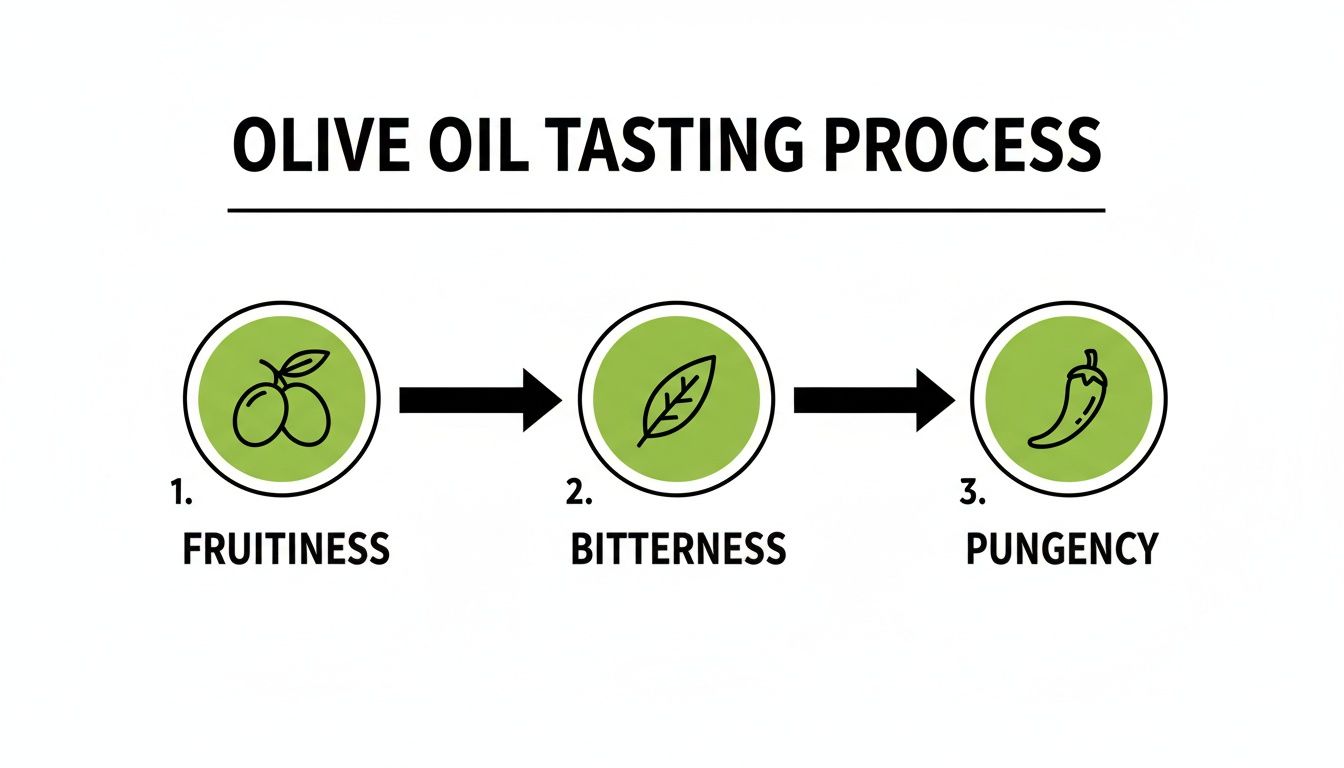
This visual highlights the three positive pillars of a great EVOO—fruitiness, bitterness, and pungency—which are the direct result of this careful production method.
The journey from grove to bottle is a race against time. Each step—from the immediate milling to the gentle cold extraction—is a deliberate act of preservation, designed to capture the purest expression of the olive without damage.
From the mill, the olive paste goes into a malaxer, where it's slowly stirred, allowing tiny oil droplets to clump together. Finally, a centrifuge spins the mixture at high speed, separating the pure oil from water and solids using only mechanical force. No chemicals, no shortcuts—just the unadulterated juice of the olive. To see this process in more detail, check out this guide on making olive oil.
How to Spot Real Extra Virgin Olive Oil on the Shelf
Walking down the olive oil aisle can feel like navigating a minefield. It's a sea of green glass and beautiful labels, all whispering promises of Italian hillsides and artisanal quality. But a shocking amount of it is just marketing noise. Your job is to become a label detective and find the real deal.
First things first: ignore the pretty words on the front. Terms like ‘Pure,’ ‘Light,’ or ‘Classic’ sound nice, but they're actually industry euphemisms for low-grade, refined oils that have been stripped of the flavor and health benefits you're looking for. The real story is always on the back.
Look for the Most Important Date
Your single most powerful tool in this fight is finding the harvest date. This tells you when the olives were actually picked from the tree and crushed. Think of olive oil as fresh-squeezed fruit juice—because that's precisely what it is. You want the freshest juice you can find.
A ‘best by’ date is far less reliable. It's often set two years after bottling, not harvesting, which can be dangerously misleading. If a bottle only has a ‘best by’ date, be skeptical. A recent harvest date is your best guarantee of a fresh, vibrant oil.
Decode the Clues on the Label
Beyond the date, a good label tells a story of pride and provenance. It’s a producer’s chance to show they care about what's inside the bottle.
Here are the signals that matter:
-
Specific Origin: A bottle that just says "Product of Italy" or "Packed in the Mediterranean" is a huge red flag. A quality producer will proudly name the specific country, region, or even the single estate where the olives were grown and milled.
-
Quality Seals: Look for official third-party certifications. A PDO (Protected Designation of Origin) seal, for example, is a legal guarantee that the oil comes from a specific place and was made according to strict, traditional standards.
Never, ever buy olive oil in a clear glass bottle. Light is one of oil's biggest enemies, causing it to degrade with shocking speed. A producer who uses dark glass or an opaque tin is showing you they're serious about protecting their product. It's a simple but powerful sign of quality.
Mastering these quick checks will completely change how you shop. To go even deeper, you can learn more about how to spot fake olive oil in our detailed guide.
Protecting Your Investment and Using It Right
So, you’ve navigated the treacherous olive oil aisle and brought home a bottle of the good stuff. Congratulations. Now what? Your final job is to protect that liquid gold, and preserving its incredible flavor and health benefits comes down to defending it from three sworn enemies: heat, light, and oxygen.
Think of your EVOO less like a shelf-stable cooking oil and more like a delicate, fresh-pressed juice. Its best qualities are fragile. To keep it that way, a few simple rules are non-negotiable. Always store your bottle in a cool, dark place, like a pantry or cabinet—never next to the stove or on a sunny windowsill.
And after you pour, seal that cap on tight. Oxygen is the enemy of freshness. Every moment the bottle is left open, air gets in and starts the oxidation process, which is a one-way ticket to rancid oil.
Shattering an Old Myth
Let's clear up one of the most persistent and damaging myths out there: you can't cook with extra virgin olive oil. That is just flat-out wrong.
A high-quality, fresh EVOO has a smoke point hovering around 400°F (204°C). That’s more than high enough for everyday sautéing, pan-frying, and even roasting.
Don't relegate your best olive oil to just a finishing drizzle. Its stability and surprisingly high smoke point make it a fantastic, flavorful, and healthy choice for all sorts of everyday cooking.
To really get the most out of your bottle, you have to treat it right from start to finish. Proper storage is key, and so is understanding the best by date on the label. Taking care of your oil ensures every drop delivers the value you paid for, letting its robust character shine whether you’re dressing a salad or searing some vegetables.
Busting a Few Olive Oil Myths
Even with a solid grasp of the basics, a few stubborn myths about extra virgin olive oil seem to hang around, creating a lot of confusion. Let’s tackle these common questions head-on.
Getting clear, straightforward answers is the final piece of the puzzle, helping you shop smarter and taste with real confidence.
Does the Color of Olive Oil Mean Anything About Its Quality?
This is probably the biggest and most persistent myth out there, and the answer is a firm, unequivocal no. An olive oil's color—whether it's a brilliant emerald green or a pale, buttery gold—tells you about the olive variety and how ripe it was at harvest, nothing more.
It has zero connection to the oil's quality. In fact, this is precisely why professional tasters use special cobalt blue glasses. The dark glass completely hides the color, forcing them to rely on the only things that matter: aroma and flavor. Quality is in the taste, not the tint.
What's the Deal with "Cold Pressed" vs. "First Cold Pressed"?
In the modern olive oil world, these terms are pretty much interchangeable and mostly just marketing speak. "First press" is a holdover from a bygone era when producers used old-school hydraulic presses. Back then, they might run the leftover olive paste through a second time, often with hot water, to squeeze out every last drop.
Today, all true extra virgin olive oil is made in one single go using a centrifuge. The only term that really has any legal weight is "cold extraction" or "cold pressed." This certifies that the temperature during the process stayed below 27°C (80.6°F), which is crucial for protecting the oil’s delicate flavors, aromas, and health benefits.
Can I Use the "Refrigerator Test" to See if My Olive Oil Is Real?
Please don't. The refrigerator test is completely unreliable and proves absolutely nothing. The idea is that since real EVOO is high in monounsaturated fats, it should get cloudy or even solidify when it gets cold.
The big problem here is that every olive oil has a unique chemical makeup based on the olive variety. Some 100% authentic EVOOs won't solidify at all in a standard fridge, while some low-quality or even fake oils might.
It’s a fun little science experiment, but it’s a terrible judge of authenticity. The only way to truly know what's in the bottle is through proper chemical and sensory analysis from a certified lab.
At Learn Olive Oil, we believe that knowing the facts is the first step toward truly appreciating this liquid gold. Our guides are here to cut through the noise and give you the confidence to choose, taste, and enjoy the very best. Discover the World of Premium Olive Oil and elevate your culinary journey.
 Learn Olive Oil
Leave a comment