Walk down any grocery store aisle, and you’ll see it. That little phrase, “Extra Virgin,” stamped on bottle after bottle of olive oil. But have you ever stopped to wonder what those three words truly promise?
Let me tell you: that label isn't just a fancy marketing term. It is a legally binding guarantee. It’s a declaration that the golden liquid inside that bottle is the absolute highest grade of olive oil known to man—the closest you can get to fresh-squeezed juice, straight from the olive.
Imagine for a moment the difference between fresh-squeezed orange juice and the stuff from a frozen concentrate can. One is vibrant, alive, and bursting with natural character. The other? It’s been processed, heated, and stripped of its soul.
It’s the same with olive oil. “Extra virgin” means you are holding the pure, unadulterated good stuff. Lower grades have been refined and altered, their natural goodness diminished. This isn't just an opinion. To earn the title “extra virgin,” an oil must survive a gauntlet of brutal chemical and sensory tests laid down by international authorities like the International Olive Council (IOC).
A Difference You Can Measure and Taste
The science behind this is startlingly precise. First, the lab report. A true extra virgin olive oil must possess a free acidity level of 0.8% or less. This isn’t a measure of sourness—it’s a scorecard. A low acidity number is irrefutable proof that the olives were pristine, healthy, and rushed to the press immediately after harvest.
But the ordeal doesn’t end there. The oil must then face a panel of human judges—a blind taste test by trained sensory experts. To pass, it must have zero flavor defects. Not one hint of mustiness. Not a trace of rancidity. Nothing but the clean, fruity character of a perfectly ripe olive.
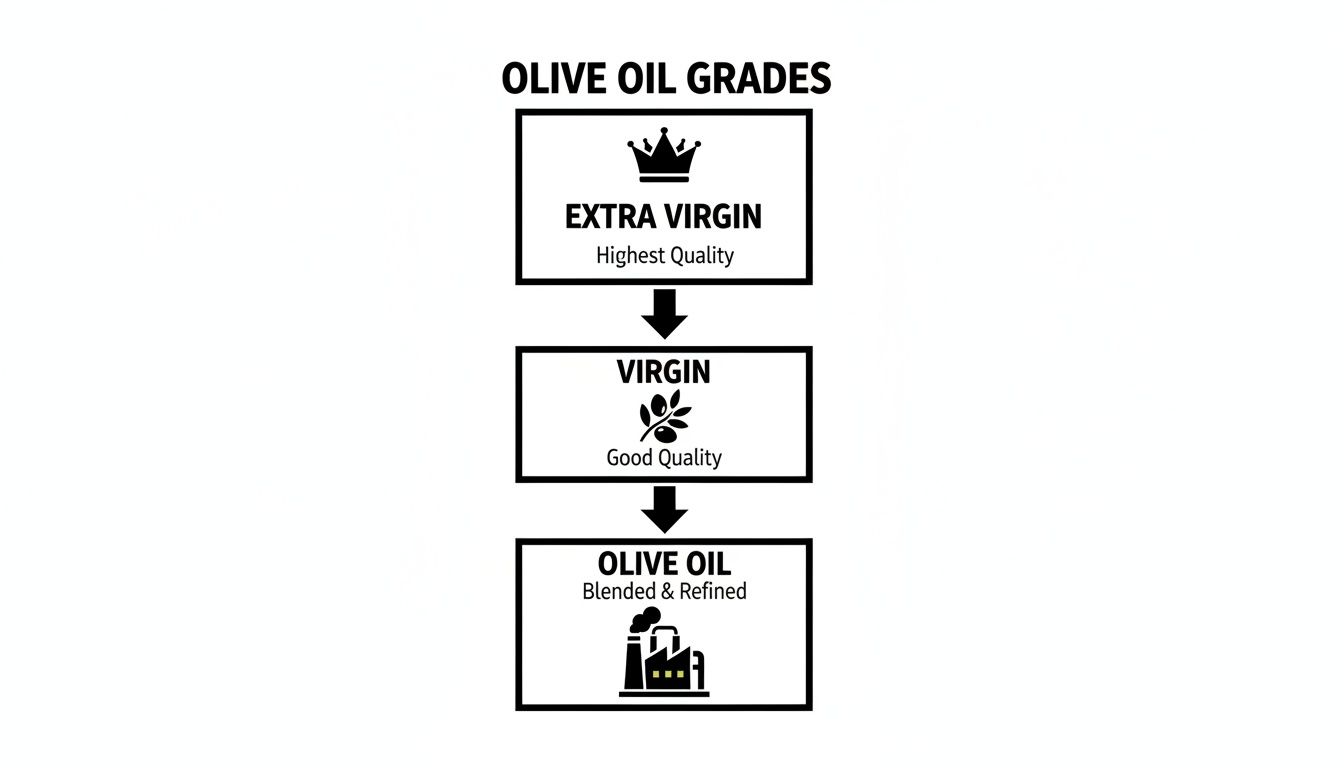
As this hierarchy shows, extra virgin reigns supreme. Descend the ladder to “virgin” and then to plain “olive oil,” and the processing grows more intense, systematically stripping away the oil’s natural excellence.
Extra Virgin vs Other Olive Oil Grades At A Glance
To put it all into perspective, here is a simple breakdown of how the main grades of olive oil truly compare.
| Attribute | Extra Virgin Olive Oil (EVOO) | Virgin Olive Oil | Olive Oil (Refined Blend) |
|---|---|---|---|
| Extraction Method | Mechanical (cold-pressed), no chemicals or heat | Mechanical (cold-pressed), no chemicals or heat | Extracted with heat and chemical solvents, then refined |
| Free Acidity | ≤ 0.8% | ≤ 2.0% | ≤ 1.0% (after blending) |
| Flavor Profile | Fruity, no defects | Noticeable flavor defects allowed | Mild, neutral flavor |
| Health Benefits | Highest in antioxidants and polyphenols | Fewer antioxidants than EVOO | Minimal natural nutrients remain |
| Processing | Unrefined, pure olive juice | Unrefined | Highly refined and blended with a small amount of virgin oil |
This table lays it bare: the “extra virgin” designation is not a mere suggestion of quality. It is a comprehensive measure of integrity, from the earth the olives grow in, to the final taste that graces your palate.
The Journey From Grove To Bottle
Ultimately, the creation of extra virgin olive oil is an act of preservation. It’s a relentless, painstaking process designed to defend the natural virtue of the olive at every single stage, from the moment it’s plucked from the branch to the second the bottle is sealed.
The entire system is a battle against damage and oxidation—the twin assassins of great flavor and profound health benefits. This is why knowing the difference is not just interesting, it's essential. If you want to delve deeper into the stringent world of certification, our guide on extra virgin olive oil certification is your next step. Knowing what that label truly means is your first move toward choosing an oil that is genuinely extraordinary.
Decoding The Chemistry Of A Superior Oil
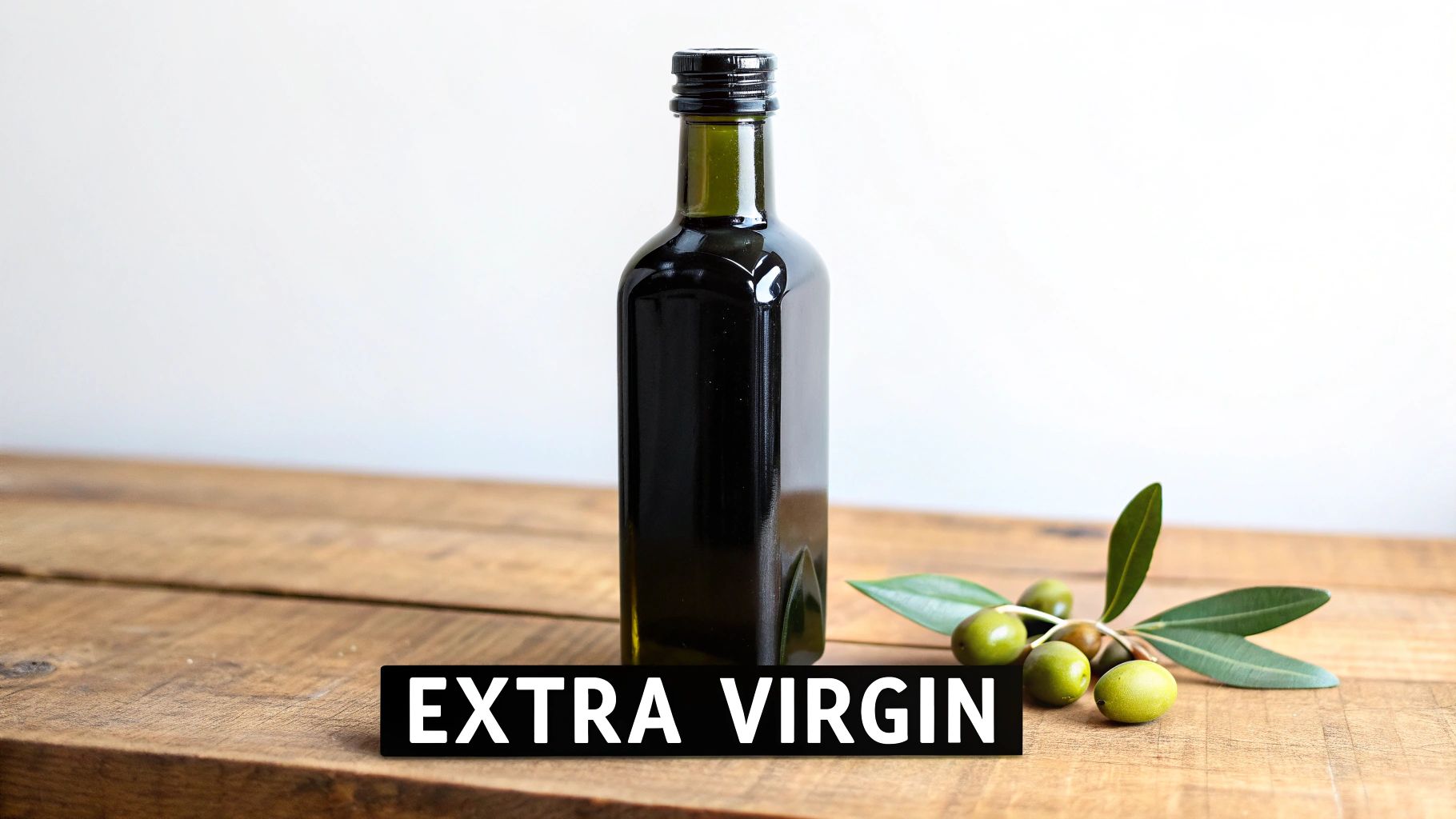
Now, let's pull back the curtain and step into the laboratory for a moment. While the romance of sun-drenched groves is a beautiful part of the story, an oil’s claim to the “extra virgin” throne is proven with cold, hard science. Two critical numbers, in particular, separate the world-class oils from the impostors.
These aren't intimidating chemical formulas. Think of them as simple scorecards that reveal the entire story of an olive’s journey from branch to bottle. Grasping what they mean is the secret to seeing past clever marketing and finding genuine quality. The first, and most famous, is free acidity.
Free Acidity: The Ultimate Quality Scorecard
When you hear “acidity,” your mind might leap to the tart sting of lemon juice. Forget that. In the world of olive oil, this is a complete misconception. Free acidity is utterly tasteless; it’s a direct, unvarnished measure of the oil’s quality and the health of the fruit it came from.
Think of it like a golfer's score—the lower, the better.
A high free acidity level tells a tragic story of damage. It’s a chemical fingerprint left by olives that were bruised, overripe, or left to sit for too long after being picked. This delay allows the natural fats inside to break down, degrade, and decay.
To legally earn the extra virgin label, an oil must clock in with a free acidity of no more than 0.8%. But here's an insider secret: the world’s finest oils—the ones producers stake their reputations on—often boast levels well below 0.3%.
A low free acidity level is the chemical signature of pristine, healthy olives that were rushed from the tree to the mill with obsessive care. It’s a direct reflection of a producer’s fanatical commitment to quality.
This single number whispers the truth about the harvest. You can explore more about the fundamental components that define olive oil in our detailed guide on what olive oil is made of. Now, let’s look at the second crucial metric, which measures not the olive's past, but the oil's present condition.
Peroxide Value: A Measure Of Freshness
If free acidity is a scorecard for the olive's health at the moment of harvest, then peroxide value is a snapshot of the oil's freshness right now. It tells you precisely how much the oil has aged or oxidized since it was milled.
It’s a bit like slicing an apple and leaving it on the counter. Over time, it turns brown as it reacts with oxygen in the air. A similar—though invisible—process happens to olive oil. Peroxides are simply the first chemical evidence of that oxidation.
A high peroxide value signals that the oil is on a downhill slide toward rancidity. It might have been exposed to too much air, light, or heat during milling, bottling, or storage. This chemical breakdown doesn't just create foul flavors; it annihilates the oil's precious, health-giving antioxidants.
For an oil to be classified as extra virgin, its peroxide value must be less than 20 milliequivalents of active oxygen per kilogram (meq O2/kg). And just like with acidity, elite producers fight for much lower numbers, often in the single digits, to ensure their oil reaches you in its freshest, most vibrant state.
Together, these two chemical markers give you an unvarnished look at an oil's quality. They are the non-negotiable standards that ensure what extra virgin oil means in the lab is what you actually get to experience in your kitchen—a fresh, healthy, and beautifully crafted product.
Passing The Ultimate Test Of Human Taste
The cold, hard numbers from a lab report only tell you half the story. While chemical analysis can confirm an oil's purity and freshness on a molecular level, it can’t tell you the one thing that really matters: does it taste good? For that, we turn from pure science to the finely tuned art of human perception.
An oil's final—and arguably most difficult—hurdle on its path to the "extra virgin" crown is judgment by a panel of highly trained sensory experts. This isn't some casual, subjective wine tasting. It's a rigorous quality control gate where the stakes are incredibly high.
These official tasters are like human instruments, calibrated to detect the slightest imperfection. Their job is to hunt for any of the 16 official sensory defects recognized by the International Olive Council. A single confirmed flaw is enough to disqualify an oil instantly, stripping it of its top-tier status.
The Anatomy Of A Flawless Oil
So, what are these experts actually looking for? They’re sniffing out specific, undesirable notes that tell a story of mishandling, poor-quality fruit, or improper storage. The presence of even one of these defects means the oil simply cannot be called extra virgin.
Here are a few common culprits that will get an oil sent packing:
- Fusty: This defect smells or tastes like fermented olives. It’s a clear sign the fruit sat in piles for too long before milling, causing them to heat up and spoil.
- Rancid: Tasting of old nuts or stale oil, this is the most common defect of all. It signals that the oil has oxidized from exposure to air, light, or heat.
- Musty: An earthy, moldy flavor that indicates the olives themselves were moldy before being pressed, often from being stored in humid conditions.
- Winey-Vinegary: A sharp, acidic flavor that points to aerobic fermentation in the olives, creating acetic acid—the very same compound found in vinegar.
For these kinds of comprehensive evaluations, professional olive oil panels often work out of a dedicated flavor laboratory designed to provide a controlled, neutral environment. This clinical setting allows tasters to focus entirely on the oil's profile without distraction, underscoring just how serious the process is.
To be considered extra virgin, an oil must have a defect score of zero. It's an absolute standard. One taster detecting a fusty note can strip an oil of its premium classification, no matter how perfect its chemical scores are.
The Indispensable Positive Attribute
But passing the test isn't just about avoiding flaws. An oil must also actively display a positive quality known as fruitiness. This is the very lifeblood of a great olive oil—that collection of fresh, lively aromas that remind you of the healthy fruit it came from.
This fruity character can be green, with notes of fresh-cut grass, artichoke, or green tomato. Or it can be ripe, bringing to mind apple, almond, or even tropical fruit. Without this essential positive attribute, an oil is considered bland and lifeless, failing to meet the extra virgin standard even if it has no technical defects.
This sensory evaluation is what connects the lab science to the living, breathing experience of flavor. It ensures that when you see "extra virgin" on a label, you are getting an oil that is not only chemically pure but also aromatically vibrant and completely free of flaws.
If you're curious to start detecting these qualities yourself, you can learn how to taste olive oil and begin training your own palate.
Becoming a Label Detective at the Grocery Store
Alright, you've learned the science behind the chemistry and the art of tasting. Now it's time to put that knowledge to work where it really counts: the grocery store aisle. This is where a little bit of know-how can transform you from a hopeful shopper into a sharp-eyed label detective, someone who can see right through the marketing fluff to find the real deal.
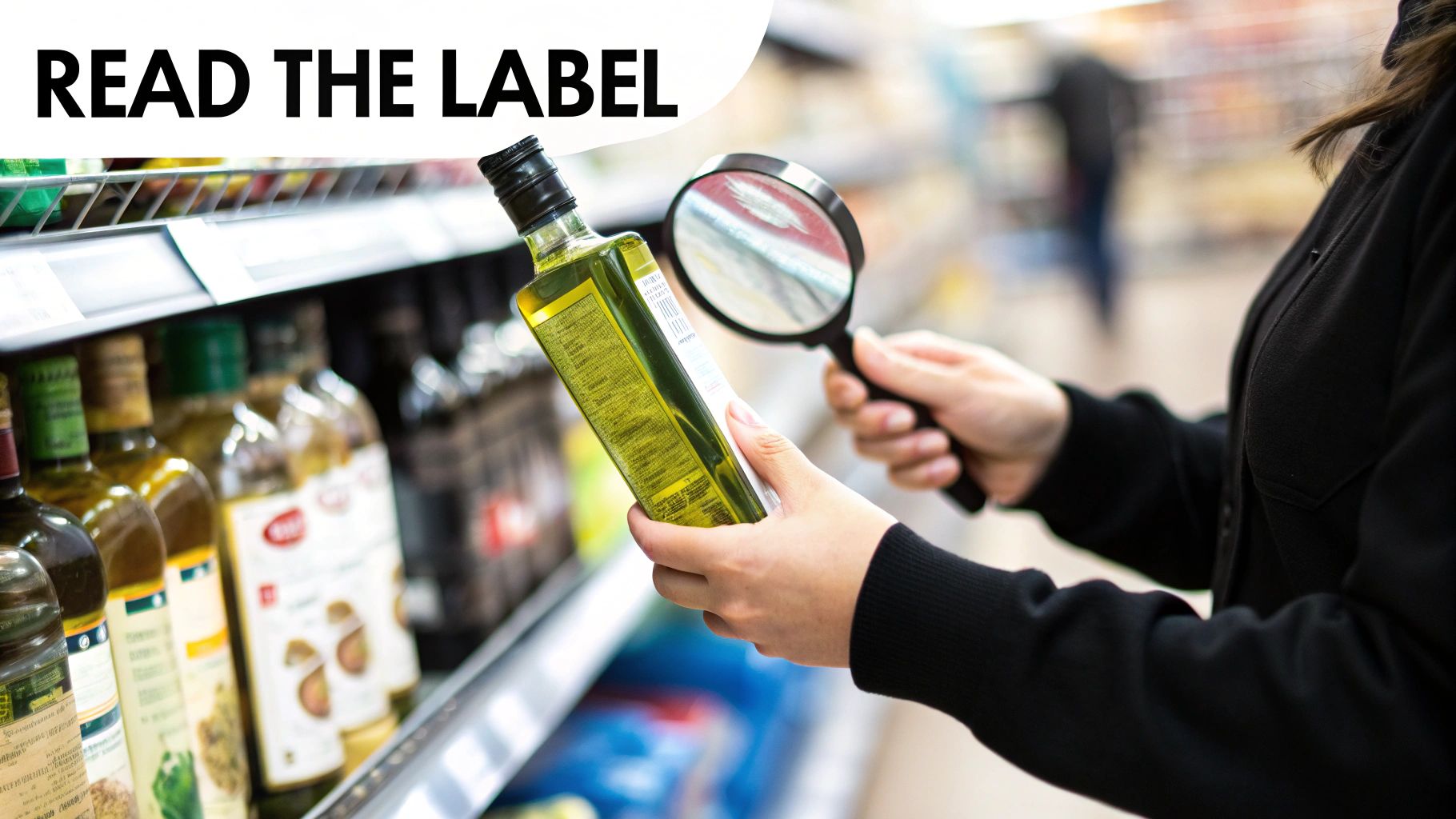
Forget the pretty pictures of sun-drenched groves for a second. The single most important piece of information on any bottle of extra virgin olive oil is the harvest date.
This is the one thing you can't compromise on. Olive oil is a fresh fruit juice, and just like any juice, it’s at its peak when it's young and vibrant. A "best by" date is often just a marketing gimmick, telling you very little about when the olives were actually picked and pressed. The harvest date is the oil’s true birth certificate.
The Power of a Specific Time and Place
Think of it this way: a bottle without a harvest date is a total mystery. You have no clue how old its contents are. A producer who proudly prints the harvest date (like "Fall 2023 Harvest") is being transparent and has confidence in their product's freshness. As a rule, always try to buy oil from the most recent harvest you can find, ideally within 12-18 months of that date.
Next up, check the origin. Vague terms like "Product of the Mediterranean" or "Packed in Italy" should set off alarm bells. This kind of language often means the bottle is filled with a blend of oils from different countries and of various ages, all mixed together to just barely meet a minimum standard. It's the exact opposite of quality craftsmanship.
A truly great olive oil tells a story, and that story always starts in a specific place. Look for a single estate, a particular region (like Tuscany, Italy, or Kalamata, Greece), or a Protected Designation of Origin (PDO) seal. That level of detail is a powerful signal of traceability and quality.
Decoding Labels and Dodging Impostors
As you scan the shelves, you'll run into a minefield of misleading terms designed to do one thing: confuse you. Knowing what these words really mean is your best defense against buying an inferior product masquerading as the good stuff.
Here are the biggest offenders to watch out for:
- "Pure Olive Oil": Sounds wholesome, doesn't it? In reality, it’s a marketing term for oil that is almost entirely refined. It usually contains just a tiny splash of virgin or extra virgin oil for a hint of flavor.
- "Light" or "Extra Light" Olive Oil: This has nothing to do with calories or fat. It means the oil is light in flavor, color, and aroma because it has been heavily refined. It's stripped of the health benefits and taste that make true EVOO so special.
- "Olive Pomace Oil": This is the lowest grade you can find. It’s extracted from the leftover olive mash using chemical solvents and heat. It's not fit for consumption unless it's heavily refined and blended.
To really get into the weeds of these labels, our complete guide on understanding olive oil labeling offers an even deeper dive into the regulations and common tricks of the trade.
Now that we've covered the words, let's talk about the bottle itself. An authentic extra virgin oil will always be housed in a protective container.
The Final Clues to Quality
Light and heat are olive oil’s two greatest enemies. They cause it to break down and go rancid in a hurry. A producer who genuinely cares about their product would never sell it in a clear glass bottle. Period.
To help you out, I’ve put together a quick checklist to use next time you're at the store.
Label Detective Checklist: Finding Authentic EVOO
Use this checklist to evaluate olive oil bottles at the store and avoid common marketing traps.
| What to Look For | Why It Matters | Red Flags to Avoid |
|---|---|---|
| Harvest Date (e.g., "Fall 2023") | This is the oil's birth certificate. The fresher, the better. | "Best By" or "Bottling Date" with no harvest date. |
| Specific Origin (e.g., "Tuscany, Italy" or PDO seal) | Pinpoints a single source, which is a strong indicator of quality, traceability, and authentic flavor. | Vague terms like "Product of Italy" or "Mediterranean Blend". |
| Dark Glass or Tin | Protects the delicate oil from light, which prevents oxidation and preserves freshness and health benefits. | Clear or transparent glass bottles. |
| Variety of Olive (e.g., "Arbequina," "Koroneiki") | Shows attention to detail and helps you understand the oil's flavor profile. Not essential, but a great sign. | No mention of olive type. |
By keeping these points in mind, you can confidently navigate the olive oil aisle. You're no longer just guessing; you're making an informed choice based on the clear evidence right in front of you. You now know what extra virgin oil means—not just in a lab, but on the shelf where it matters most.
The Real-World Payoff: Unlocking Exceptional Flavor and Health
So, why all this fuss about acidity levels, peroxide values, and harvest dates? Because those strict standards defining what extra virgin oil means aren’t just arbitrary rules. They connect directly to a massive payoff in your kitchen and for your well-being, bringing everything we've discussed full circle.
This is where the promise on the label becomes a real, tangible benefit on your plate. That meticulous, low-heat mechanical process required for extra virgin status is designed to protect one thing above all: the oil’s precious cargo of powerful nutrients.
The Powerhouse Inside the Bottle
The star players here are a group of powerful antioxidants known as polyphenols. These incredible compounds are the secret behind that signature peppery kick you feel in the back of your throat and the oil's potent anti-inflammatory properties. They are the guardians of both its flavor and its health-giving force.
When you choose a true extra virgin olive oil, you're getting a product loaded with these beneficial compounds. The industrial refining process used to create lesser oils—like "Pure," "Light," or generic "Olive Oil"—uses high heat and chemical solvents that completely obliterate these delicate nutrients. What’s left is a bland, lifeless fat with none of the goodness.
This commitment to preservation is what truly sets extra virgin oil apart, making it both the healthiest and most flavorful oil you can buy. For a more detailed breakdown, you can explore the complete nutritional information for extra virgin olive oil and see the full spectrum of benefits.
From a Healthier You to a Happier Palate
The rewards don't just stop with your body; they translate directly to your taste buds. The very same polyphenols responsible for the health perks are also what create the complex, vibrant flavors that can take a meal from good to truly memorable.
This is the ultimate payoff. It’s that lightbulb moment when you realize how the robust, grassy notes of a high-quality Tuscan EVOO can turn a simple tomato salad into something special. It’s discovering how a delicate, buttery oil from Spain can perfectly finish a piece of grilled fish without overpowering it.
- Finishing Soups and Stews: A final drizzle of a peppery, green EVOO over a hot bowl of soup or a hearty bean dish adds a fresh, aromatic complexity that wakes everything up.
- Transforming Salads: Ditch the bland, store-bought dressings. All you need is a fruity, vibrant extra virgin oil, a splash of good vinegar, salt, and pepper for a world-class vinaigrette.
- Roasting Vegetables: Tossing asparagus or broccoli in a quality EVOO before and after roasting brings out their natural sweetness while adding a rich, satisfying flavor.
Understanding what the label promises leads directly to more delicious food and a healthier life. Of course, to get this payoff, you have to protect your investment. Proper storage is crucial, and you might want to look into efficient food storage solutions to keep your oil safe from its three enemies: heat, light, and air.
Frequently Asked Questions About Extra Virgin Olive Oil
Even after you get the hang of what makes an olive oil "extra virgin," a few practical questions always pop up. Let's tackle the most common ones head-on so you can feel completely confident bringing that beautiful bottle from the store into your kitchen.
These are the details that turn good intentions into delicious results.
Can I Cook With Extra Virgin Olive Oil?
Yes, absolutely. This is probably the biggest and most stubborn myth out there. The reality is that a quality EVOO has a smoke point somewhere between 375°F and 410°F (190-210°C).
That range makes it perfectly safe for almost all of your daily cooking, from sautéing vegetables to roasting chicken. Just don't use it for deep-frying at screaming-hot temperatures. For everything else, not only is it safe, but it also adds incredible flavor and health benefits that other cooking oils just can't touch.
What Does "Cold-Pressed" Mean on a Label?
You'll see "cold-pressed" or "first cold press" splashed across many labels, making it sound like a premium, exclusive feature. In truth, it's a fundamental requirement for all extra virgin olive oils. The term simply confirms the oil was extracted with a machine (a press or centrifuge) without using heat over 27°C (80.6°F).
While it sounds impressive, think of "cold-pressed" as a given for any true EVOO. Its presence is more for marketing reinforcement than a signal of uniquely superior quality. Every bottle of genuine extra virgin oil is, by definition, cold-pressed.
How Should I Store My Olive Oil to Keep It Fresh?
This part is non-negotiable if you want to protect your oil. Olive oil has three mortal enemies: oxygen, light, and heat. These culprits will ruin the delicate flavors and destroy the healthy polyphenols faster than anything else.
To keep your oil tasting great from the first pour to the last, just follow these simple rules:
- Find a cool, dark home for it. A pantry or cupboard is perfect. Never, ever store it next to the stove or on a sunny windowsill.
- Always put the cap back on tightly. Oxygen is the arch-nemesis of freshness, so seal it up right after you use it.
- Don't let it linger. A good oil is meant to be used. Aim to finish the bottle within 12-18 months of its harvest date and, more importantly, within a few months of opening it.
Stick to these steps, and you'll ensure the fantastic quality you paid for is the same quality you get to enjoy, right down to the last drop.
At Learn Olive Oil, we believe that understanding olive oil shouldn't be complicated. Our goal is to give you the confidence to choose, taste, and enjoy the world's best oils. Discover your next favorite bottle by exploring our expert guides and recommendations at https://learnoliveoil.com.

 Learn Olive Oil
Leave a comment