When you see "low acidity" on a bottle of olive oil, it's easy to think it means the oil will taste less sour or tart. But here's a little secret from inside the olive oil world: acidity in olive oil has absolutely nothing to do with how it tastes. Instead, think of it as a hidden message from the producer—a precise chemical score that reveals the oil's quality, freshness, and the care taken on its journey from a sun-drenched grove to your kitchen.
The Secret Language of Your Olive Oil Bottle
Staring at a wall of olive oil can feel like a test you haven't studied for. Golden bottles, dark tins, and labels shouting terms like "cold-pressed" and "first press," all fighting for your attention. Yet, among all these claims, one of the most powerful indicators of quality is also the most misunderstood: acidity.
Let me be blunt: you are not meant to think of acidity as a flavor note. Think of it as a "freshness score." This single number tells a story. It’s a story about the olives themselves, the hands that picked them, and the entire journey they took to become the oil in that bottle.
A Tale of Two Olives
To make this crystal clear, let me tell you a story. Imagine a perfect, plump olive, harvested at its absolute peak, unbruised and treated like a precious jewel. Its fats are stable, whole, and perfectly protected inside the fruit.
Now, picture another olive. This one was bruised when it was shaken from the tree. Maybe a bird pecked it. Or perhaps it was left to sit in a hot pile for days before being milled. Its delicate cellular structure has been shattered, and its fats have begun to break down.
That breakdown is precisely what acidity measures. A high acidity olive oil is the chemical fingerprint of damaged fruit, sloppy handling, or long, lazy delays between harvest and milling. It’s a dead giveaway that something went wrong.
Low acidity isn't a flavor profile; it is the fundamental proof of quality. It confirms that the olives were pristine and the process was meticulous, creating the perfect foundation for spectacular flavor and profound health benefits.
Why This Score Matters to You
Once you grasp this one powerful concept, your entire perspective as a buyer will shift. You’ll no longer be guessing based on pretty labels or clever marketing slogans. You will possess the inside knowledge to see right past the fluff. Understanding the numbers is your first step in decoding proper olive oil labeling and making smarter choices, every single time.
This guide will teach you to read that label like a seasoned pro. You'll soon know how to:
- Pinpoint the key numbers that define a true Extra Virgin Olive Oil.
- Connect the dots between low acidity and superior, vibrant taste.
- Confidently sidestep mediocre oils and choose bottles that will truly shine.
By the time we're done, you'll feel empowered in the grocery aisle, armed with the knowledge to select an olive oil that elevates your food and supports your well-being.
What Acidity in Olive Oil Actually Measures
Let’s get straight to the point, without the confusing chemistry jargon. To truly understand what acidity in olive oil means, you have to picture a perfect olive, still hanging on the branch.
Inside that beautiful, unbruised fruit, all the fats are perfectly stable. They’re bundled up in molecules called triglycerides—think of them as tiny, secure packages of potential flavor and energy. At this point, the olive is a fortress, protecting the incredible oil within.
But what happens when that fortress gets a crack in its walls?
How the Breakdown Starts
Imagine that perfect olive gets nicked during harvest, baked by the sun, or left in a pile for hours—or even days—before it gets to the mill. Any kind of stress or damage will rupture the olive's delicate cell walls.
Once those walls are broken, enzymes are released. These enzymes are like a tiny demolition crew, immediately starting to break apart those stable triglyceride bundles. When a triglyceride molecule splits, it lets go of what we call free fatty acids.
This is the moment of truth. The acidity level in olive oil is simply a measurement of how many of these free fatty acids are floating around. It’s not about how the oil tastes (it’s not a pH thing, like in lemons), but rather a direct chemical measure of damage and decay.
The free acidity level is like the olive’s biography written in chemicals. A high number tells a story of stress, damage, and delay. A low number speaks of a gentle, swift trip from the tree straight to the bottle.
Oleic Acid: The Key Indicator
When a lab tests for acidity, they are specifically measuring the percentage of oleic acid by weight, which is the main fatty acid in olive oil. The result is given as a percentage, like 0.2% or 1.5%.
That number is a direct reflection of the quality of the fruit the second it was crushed.
- Pristine, healthy olives that are milled within just a few hours of picking will have very few broken triglycerides. The result? An incredibly low free fatty acid level.
- Bruised, overripe, or poorly stored olives have already started to break down significantly, releasing a much higher concentration of free fatty acids.
It’s an honest, unforgeable measure of the raw material’s quality. You can’t hide bad fruit—whether it’s bruised, bug-bitten, or fermented—from a chemical test. The free fatty acids always reveal the truth. To get a better handle on the building blocks of this liquid gold, it helps to understand what olive oil is made of and its basic composition.
No matter how skilled the producer is, they can't reverse the damage that has already happened inside the olive. It all starts with the fruit.
The Foundation of Quality, Not a Guarantee of Flavor
Now, here’s a crucial point that trips people up. Low acidity doesn't create amazing flavor. What it does is prove the oil was made with such care that it has the potential for amazing flavor and fantastic health benefits.
Think of it as the strong, invisible foundation of a well-built house. The very same practices that keep acidity levels low—like careful harvesting, quick milling, and spotless equipment—are the exact things that protect the delicate, volatile compounds that give great olive oil its wonderful peppery, fruity, and grassy aromas.
A low acidity level is a producer's badge of honor. It's their way of showing you they did everything right to bring you an oil that's as pure, fresh, and vibrant as it can possibly be. It’s the essential starting point for greatness.
Decoding the Numbers on the Label
This is where you go from just buying olive oil to truly understanding it. All around the world, regulatory bodies like the International Olive Council (IOC) set firm standards for grading olive oil. The numbers you see on a label aren't just marketing—they're the official rules of the road, separating the good stuff from the rest.
Once you know these rules, you're in control. No more guessing based on a fancy bottle or a charming backstory. You can use hard facts to know exactly what you're buying.
The quality of the olive at the very moment it's picked is the single biggest factor in an oil’s final acidity. Think of it this way: great oil can only come from great olives. It’s that simple.
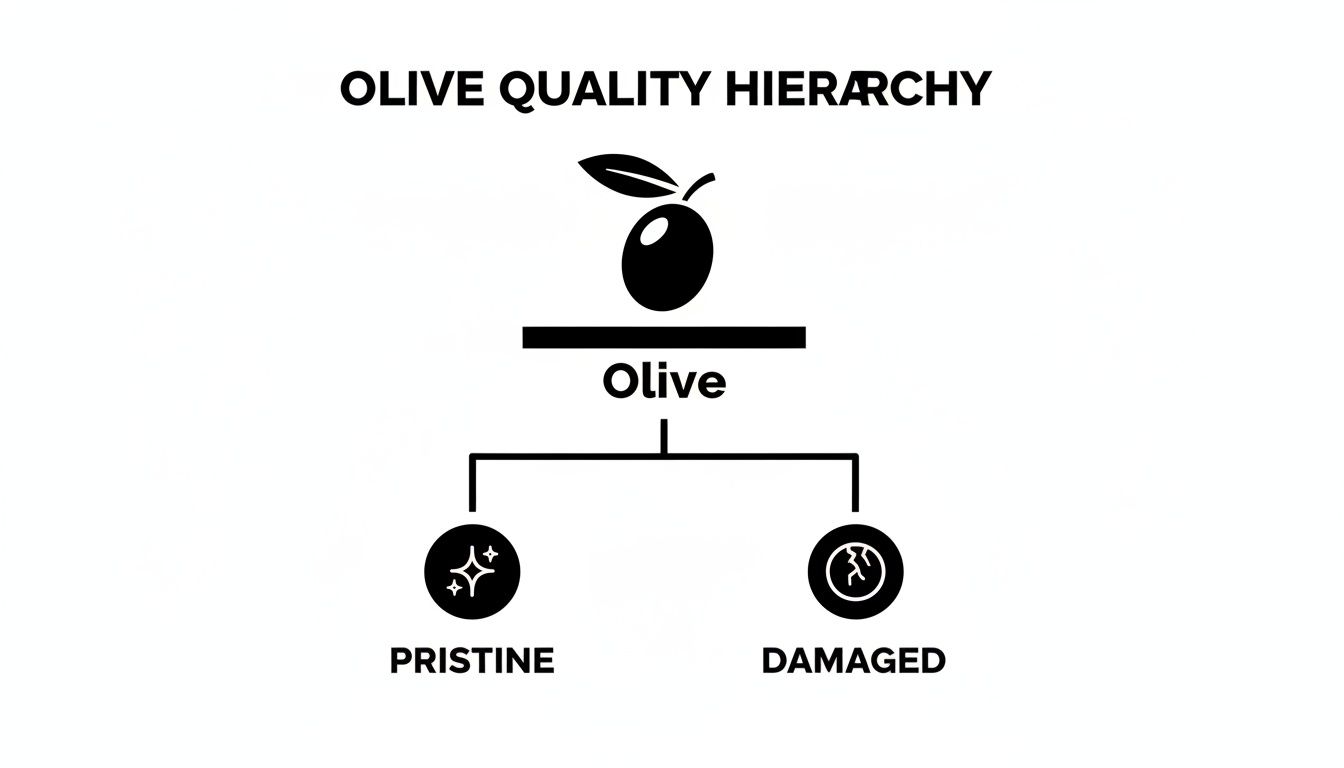
This diagram shows that an oil’s potential is set from the start. Pristine, healthy fruit gives you low acidity, while damaged fruit guarantees a higher, less desirable level.
The Magic Number for Excellence
When it comes to the top-tier grade, Extra Virgin Olive Oil (EVOO), one number is king: 0.8%. That’s not a guideline; it’s the absolute legal limit for free acidity. If an oil ticks even a hair above that, it legally cannot be called "extra virgin."
This strict cutoff is the ultimate gatekeeper of quality. It tells you that any bottle with "EVOO" on it was made from healthy olives that were handled carefully and milled quickly, stopping those fats from breaking down into unwanted free fatty acids.
An acidity level of 0.8% or lower is the non-negotiable passport for an olive oil to enter the world of "Extra Virgin." It's the clearest, most reliable sign that the basic quality standards have been met.
But the best producers don't just aim to scrape by. They work to blow that standard out of the water. It’s not uncommon to find premium EVOOs with acidity levels as low as 0.3% or even 0.15%. They often display this number right on the label as a badge of honor—a direct signal of superior fruit and masterful craftsmanship.
Understanding the Official Grades
The acidity scale for olive oil creates a clear ranking, so you always know where an oil stands. Global standards from the IOC, the European Union, and the USDA all agree: to be called Extra Virgin, an olive oil’s free acidity must not exceed 0.8%. This key metric, expressed as a percentage of free oleic acid, is the primary benchmark for quality. You can discover more insights about international olive oil standards on BHOOC.com.
To make it simple, let's break down the official grades in a table.
Official Olive Oil Grades By Acidity Level
This table clearly defines the internationally recognized grades of olive oil based on their maximum free acidity percentage, helping consumers understand label claims.
| Olive Oil Grade | Maximum Free Acidity (% Oleic Acid) | What It Means For Quality |
|---|---|---|
| Extra Virgin Olive Oil (EVOO) | ≤ 0.8% | The highest grade. Made from pristine olives, processed quickly. It must also pass sensory tests for superior flavor and aroma. |
| Virgin Olive Oil | > 0.8% to ≤ 2.0% | A good quality oil, but with detectable flavor defects or slightly higher acidity. It did not meet the strict EVOO criteria. |
| Lampante Virgin Olive Oil | > 2.0% | Not fit for human consumption without processing. The high acidity signals significant defects. It must be refined to become edible. |
Armed with this information, you're no longer just a shopper—you're an informed buyer. You can now look at a label, find that crucial acidity percentage, and understand the story behind it. You can spot true quality, recognize oils that just missed the cut, and steer clear of those never meant for your kitchen in the first place.
How Acidity Impacts Flavor and Health
That small percentage you see on an olive oil label—the acidity level—is more than just a number for grading. It’s a direct window into the oil's quality, with a powerful influence on everything from its flavor in your kitchen to the health benefits it delivers.
Think of it this way: free acidity is a chemical fingerprint of decay. As that number goes up, it’s a clear signal that the olive oil is breaking down, becoming less stable and more vulnerable to its greatest enemy: oxygen.
The Tug-of-War Between Acidity and Quality
When it comes to olive oil, there’s an unbreakable rule: as acidity rises, quality falls. It’s a direct, inverse relationship. Higher free fatty acid content means the oil's natural defenses are weakening, opening the door wide for oxidation. This is the very process that turns a beautiful, fresh oil into something flat, unpleasant, and rancid.
High acidity doesn't just invite spoilage. It's also a sign that the very compounds giving olive oil its "superfood" status have started to disappear. The same meticulous care that keeps acidity low is what preserves the oil’s most precious assets.
You can think of a low acidity level as the guardian of both flavor and nutrition. It’s the proof in the bottle that the oil’s best qualities—from its peppery finish to its heart-healthy compounds—were protected all the way from the olive grove.
A low-acidity oil is a pristine canvas, allowing the true, vibrant character of the olives—those fruity, grassy, or spicy notes—to shine through. A high-acidity oil, on the other hand, is a flawed one, where those beautiful flavors are often muted or completely masked by defects.
How Acidity Shapes Flavor and Aroma
A high free acidity level is a massive red flag for flavor problems. While you can't taste the acidity itself, its presence almost always travels with off-flavors that you can definitely detect.
An oil with elevated acidity is far more likely to have defects like:
- Rancidity: This is the most common flaw, giving off an aroma like old nuts, wax, or even crayons. It’s the direct result of oxidation, which high-acidity oils are extremely susceptible to.
- Fustiness: This defect creates a fermented, muddy taste that comes from olives being piled up and stored for too long before they're milled. This exact kind of poor handling is a primary driver of high acidity.
Conversely, an exceptionally low acidity level (well below the 0.8% EVOO maximum) is a testament to speed and care. It tells you the olives were rushed from harvest to mill, preventing any decay from setting in. This careful process is what locks in the fresh, clean aromas and flavors that define a world-class oil.
The Connection to Health Benefits
Those same free fatty acids that signal decay are also linked to the destruction of the oil’s most valuable health-promoting compounds: its polyphenols.
These powerful antioxidants are the nutritional superstars behind many of the well-documented health benefits of extra virgin olive oil, from fighting inflammation to supporting heart health. They're also responsible for that characteristic peppery kick and pleasant bitterness you find in the best EVOOs.
But polyphenols are fragile. The very things that cause acidity to rise—damaged olives, oxygen exposure, processing delays—are the same things that destroy these beneficial compounds.
So, an oil with very low acidity is almost guaranteed to have a higher concentration of protective polyphenols. That number on the label isn't just about chemical stability; it’s a reliable stand-in for nutritional potency. When you choose an oil with a low acidity score, you're not just getting better flavor—you're getting more of what makes olive oil one of nature’s true superfoods.
The Artisan's Quest for Low Acidity
Achieving exceptionally low acidity in olive oil is never an accident. It's an obsession, the culmination of a thousand correct decisions made under the relentless pressure of time. To really get why true extra virgin olive oil is a premium product, let's walk through the journey of an olive with two very different producers.
First, picture a producer who cuts corners. The harvest is rough, maybe a mechanical shaker that tumbles olives into large bins where they sit, bruised and broken. That fruit might wait for a day, or even two, before it ever sees a mill—and that mill isn't perfectly clean. Every moment of delay, every single bruise, is a tiny invitation for decay to set in, causing those stable fats to break down into free fatty acids.
The oil that comes from this process is inevitably high in acidity. It's a chemical testament to carelessness. You'll taste it, too—the flavors are flat, maybe even a little off. This oil will never earn the title of extra virgin. It's destined for a refinery, where it will be stripped of its character and sold as a bland, generic cooking oil.
The Path to Purity
Now, let’s imagine the artisan. Their quest for low acidity olive oil begins right in the grove with a gentle, often manual, harvest to keep the delicate fruit from bruising. The second those olives are off the branch, a clock starts ticking. They are raced—not walked—to a spotless, modern mill, often within just a few hours.
This relentless speed is the artisan's greatest weapon against acidity. By crushing the olives almost immediately, they give those fat-degrading enzymes virtually no time to do their destructive work.
This commitment to speed and precision is what separates the best from the rest. It takes more labor, more investment, and an unwavering focus on every single detail. You can dive deeper into the meticulous steps involved by exploring the process of making premium olive oil. It's here that the foundation for ultra-low acidity is built.
This difference in process directly shapes the final product's value and the market itself. The acidity threshold is a major factor in olive oil pricing. Extra virgin olive oil, with its mandated ≤0.8% acidity, always commands a higher price than lesser grades. To give you an idea, in early 2025, Spanish EVOO averaged significantly more per 100 kg than its virgin counterpart, which allows up to 2.0% acidity. This price gap is a direct reflection of the meticulous work required to keep acidity low—a quality marker discerning consumers are willing to pay for. You can read more about how acidity influences olive oil market prices.
In the end, the artisan’s bottle is a testament to all that sweat and passion. It holds an oil with an acidity level far below the legal limit, brimming with the vibrant, complex flavors that were so carefully preserved. Every single drop is proof that low acidity isn't just a number on a lab report—it’s the signature of a master craftsman.
Your Guide to Buying and Storing Superior Olive Oil
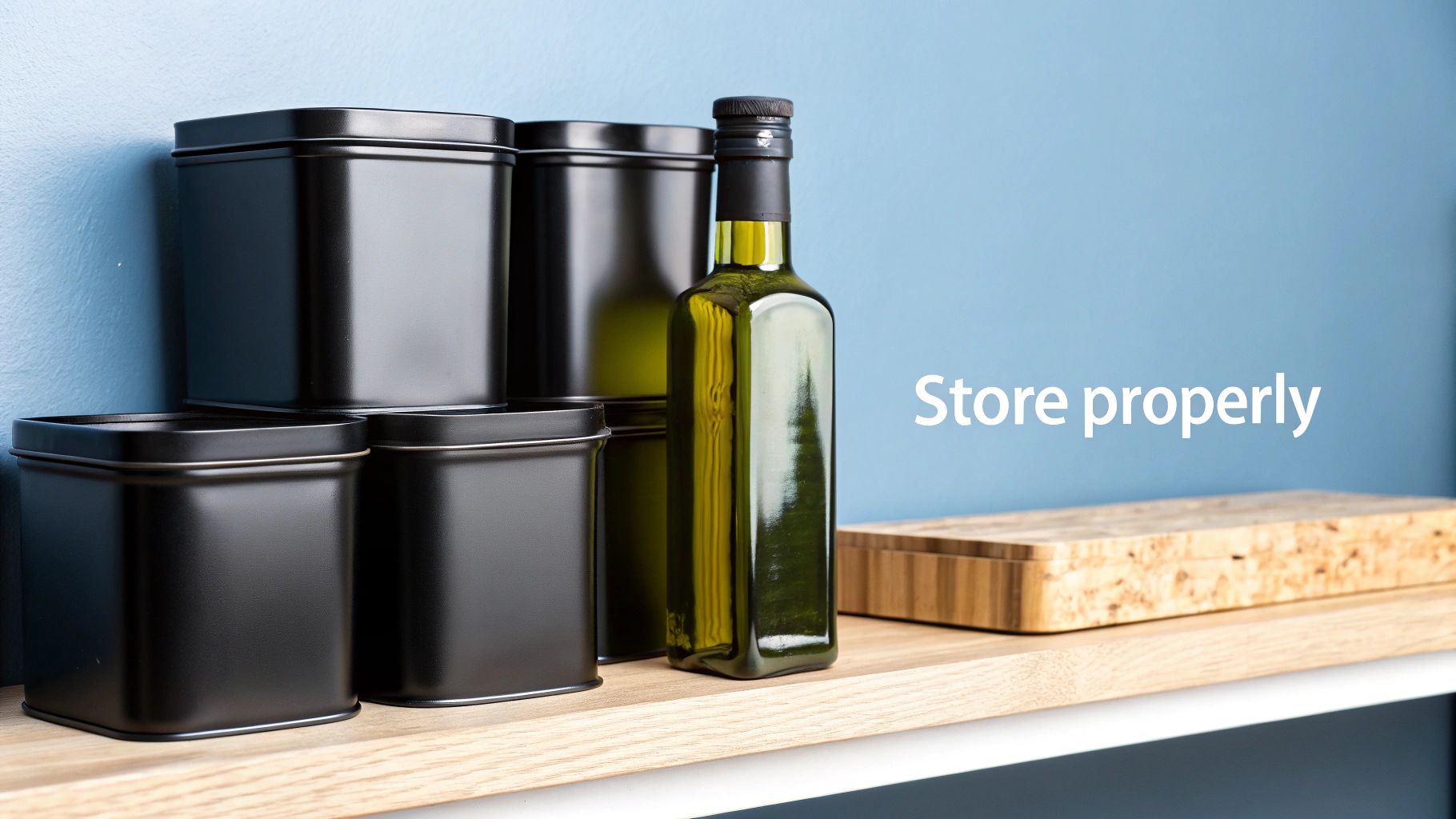
Now that you understand what acidity in olive oil really means, let's put that knowledge to work. Think of this as your practical playbook for the grocery aisle—a simple guide to help you buy with confidence and sidestep the marketing fluff.
Your first mission is to hunt for the numbers. Scan the label for the free acidity percentage. While the legal ceiling for EVOO is 0.8%, you'll find that top-tier producers often showcase levels far lower, sometimes even dropping below 0.3%. For them, it’s a badge of honor, a clear sign of their commitment to quality.
What to Look For on the Label
Beyond acidity, a few other clues on the bottle separate the truly great oils from the merely good ones. A fresh, high-quality product won't be shy about sharing the details.
- Demand a Harvest Date: This is your most important clue. Don't settle for a vague "best by" date. Olive oil is essentially a fresh fruit juice, and you want the most recent harvest you can find.
- Insist on Dark Packaging: Light is the enemy of fresh olive oil, causing it to break down and turn rancid. Always reach for oils in dark glass bottles or fully opaque tins that protect the liquid gold inside.
- Seek Out Specifics: Vague labels like "Product of Italy" can be a red flag. The best producers get specific, telling you the growing region, the exact olive varietals used, and sometimes even the name of the estate.
A price that seems too good to be true probably is. Crafting exceptionally low-acidity olive oil is a costly, hands-on process. That bargain-bin bottle likely involved cutting corners you can't see but will definitely taste.
Protecting Your Investment at Home
Once you’ve brought that beautiful bottle home, your job isn't quite done. Proper storage is the key to preserving the low acidity and complex flavors you paid for. Remember the three enemies of olive oil: heat, light, and air.
Always keep your bottle sealed tightly in a cool, dark place like a pantry or cabinet. Never store it next to the stove or on a sun-drenched windowsill. For a deeper dive into the best practices, our guide offers more tips on proper olive oil storage.
Once opened, a bottle of extra virgin olive oil is at its peak for about 3 to 6 months. After that, oxidation starts to take over, slowly raising the acidity and muting its vibrant taste. Treat it like the fresh product it is, and your taste buds will thank you.
Answering Your Questions About Olive Oil Acidity
Even after getting the hang of what acidity in olive oil really means, a few questions tend to linger. Let's tackle those common head-scratchers with some straight, simple answers. This is where you go from just understanding the concept to truly knowing it.
Can I Actually Taste The Acidity?
Nope. And this is probably the biggest myth we need to bust. Free acidity is a number that comes from a lab test; your taste buds can't detect it at all.
If you ever taste something that strikes you as "sour" or "acidic" in an olive oil, you're tasting a flavor defect. That's usually a sign the oil has started to ferment or spoil—a problem that often goes hand-in-hand with high acidity, but you're not tasting the acidity itself.
So, Is Lower Acidity Always Better?
For the most part, yes. The international standard for Extra Virgin Olive Oil sets the ceiling at 0.8% acidity, but the best producers in the world consistently hit levels far below that. It's not uncommon to see premium oils clocking in under 0.3%.
An extremely low acidity level is a strong signal that the olives were healthy, harvested carefully, and milled quickly. It points to a higher potential for incredible flavor, a longer shelf life, and more of those healthy antioxidants we all want.
A low acidity number is more than a technical spec; it's a producer's badge of honor. It's transparent proof of their commitment to quality from the grove all the way to the bottle.
Why Doesn't Every Bottle List The Acidity Level?
In most countries, it's not a legal requirement. As long as the oil is under the legal limit for its grade (like 0.8% for EVOO), manufacturers don't have to print the exact number on the label. But this is where you can be a savvy shopper.
Think of it this way: high-quality, craft producers are incredibly proud of their low acidity numbers and often display them right on the front label. It’s a mark of quality and a key selling point. If you see a bottle of EVOO without any mention of its acidity, it’s often a quiet hint that the number is probably pushing that upper legal limit.
Does Acidity Go Up After I Open The Bottle?
It sure does, but you have a lot of control over how fast that happens. The second you open a bottle, oxygen gets in, and oxygen is olive oil's worst enemy. Oxidation kicks off a slow process that increases free acidity and will eventually make the oil go rancid.
The good news? You can slow this way down. Just be sure to seal the bottle tightly after every pour and store it in a cool, dark place—like a pantry, not next to your hot stove. For the best flavor and quality, try to use up the oil within a few months of opening it.
At Learn Olive Oil, we believe that understanding these details empowers you to choose better, taste smarter, and enjoy every drop. Explore our expert guides to continue your journey into the rich world of premium olive oil at https://learnoliveoil.com.
 Learn Olive Oil
Leave a comment