Forget everything you think you know about olive oil.
We’re not talking about that bland, lifeless liquid you use to grease a pan. We’re talking about a vibrant, peppery, life-giving elixir—a true “liquid gold” that has been the secret to vitality in sun-drenched Mediterranean villages for centuries.
When people search for the best olive oil to drink, they are seeking something far more profound than a simple cooking ingredient. They are looking for a daily ritual, a powerful investment in their health, and a return to a kind of wisdom our ancestors understood instinctively.
This guide will show you how to find it.
The Mediterranean Secret to Lifelong Vitality
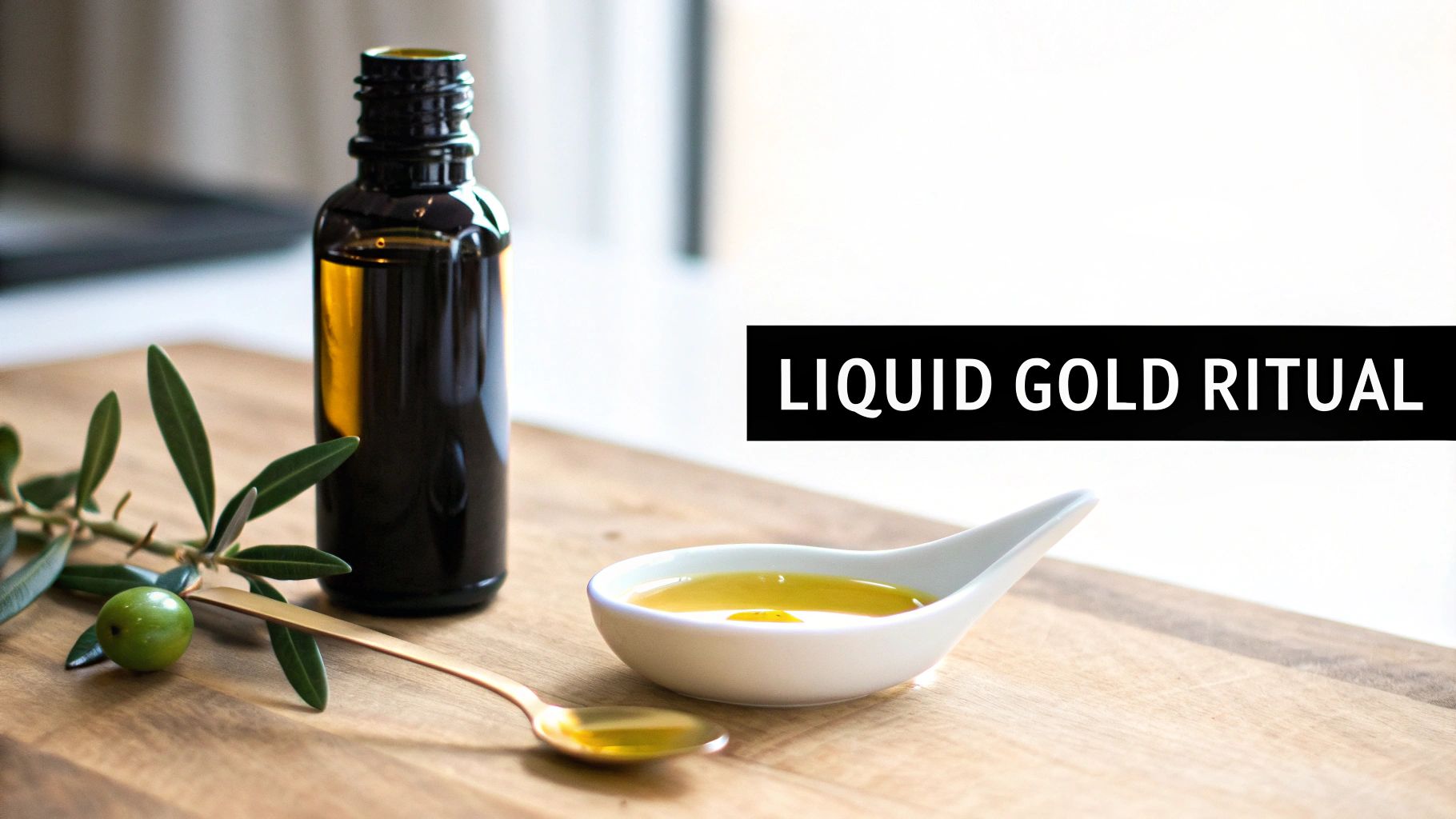
Picture this: you start your day not with a synthetic pill from a plastic bottle, but with a spoonful of something pure, potent, and utterly natural. This isn’t a fleeting health trend cooked up on social media. It is a time-honored practice, a cornerstone of well-being from the rocky coasts of Greece to the rolling hills of Italy. For generations, this simple act has been synonymous with a long and vigorous life.
This is not about casually drizzling oil over a salad. It is a deliberate, mindful act of wellness, centered on sourcing the most potent, life-giving oil you can find.
More Than Just a Cooking Oil
Here is the truth you must understand: the gulf between a standard cooking oil and one crafted for drinking is immense. It’s like comparing a common table grape to the meticulously cultivated fruit destined for a Grand Cru wine. Yes, both are grapes. But one has been nurtured for a higher purpose, possessing a complexity and character that puts it in another league entirely.
The olive oils worthy of this daily ritual have specific, non-negotiable qualities that set them leagues apart from the imposters on the shelf.
- Extra Virgin: This is the absolute, unshakeable foundation. It means the oil is unrefined, extracted by purely mechanical means, preserving the full spectrum of its natural compounds.
- High in Polyphenols: These are the antioxidant titans that give the oil its health-giving power and its signature peppery finish that grips the back of your throat.
- Freshly Harvested: Freshness is paramount. An olive oil’s beneficial compounds are fragile and degrade over time. The harvest date is your single most important clue to its vitality.
This tradition is woven into the very fabric of the Mediterranean lifestyle, a way of life celebrated for its remarkable longevity and low incidence of chronic disease. This is no coincidence. It is a testament to the profound impact of integrating powerful, functional foods into your daily routine. To truly grasp this connection, exploring the role of olive oil in the Mediterranean diet reveals a time-tested blueprint for health.
Think of this daily spoonful as a direct investment in your cellular health. You aren't just consuming fat; you're ingesting a complex elixir of antioxidants and anti-inflammatory compounds that your body can immediately put to work.
Ultimately, choosing an olive oil to drink is about becoming the curator of your own well-being. It demands a shift in mindset—from seeing olive oil as a mere condiment to recognizing it as one of nature’s most powerful tools for a long and vibrant life. This guide will show you precisely how to identify these exceptional oils and leave the inferior ones to gather dust.
Unlocking the Power in Every Sip
So, what really happens inside your body when you swallow a spoonful of truly great olive oil? You are doing far more than ingesting a healthy fat. You are deploying a squadron of nature’s most potent defenders to guard your body from the inside out. This simple daily act is a direct, powerful investment in your long-term cellular health.
The magic lies in the oil’s microscopic components: polyphenols and monounsaturated fats. These are not just scientific terms; they are the active ingredients that give a genuine drinking olive oil its life-enhancing punch. This is a whole-food solution, not something synthesized in a laboratory.
The Bodyguards Inside the Bottle
Imagine polyphenols as tiny, vigilant bodyguards for your cells. Every moment of every day, your body is under assault from environmental toxins and internal processes that generate “oxidative stress.” Think of it as a slow, internal rusting. This relentless process breaks down your cells, accelerating aging and paving the way for chronic disease.
A high-quality extra virgin olive oil is teeming with these antioxidant bodyguards. They hunt down and neutralize the damaging free radicals that cause this cellular rust, helping your internal systems run clean. It’s a proactive defense you can deploy with a single tablespoon.
One of the most celebrated of these polyphenols is oleocanthal. This is the specific compound responsible for that peppery tickle—or even a slight burn—you feel in the back of your throat.
That pungent "kick" isn't a flaw—it's the hallmark of a potent, anti-inflammatory oil. It's the taste of oleocanthal at work, a natural compound that functions similarly to ibuprofen, helping to soothe inflammation throughout your body.
If you’re serious about this, getting familiar with the specifics of olive oil polyphenol content is a game-changer. The higher the polyphenol count, the stronger the protective shield.
Fueling Your Heart and Beyond
Beyond the polyphenols, the very fat profile of olive oil is a profound gift to your cardiovascular system. Over 70% of olive oil is a monounsaturated fat called oleic acid, a true hero for heart health that stands in stark contrast to the saturated fats that clog our arteries.
Here’s how it works:
- Optimizing Cholesterol: It helps lower LDL (the “bad”) cholesterol while often giving a boost to HDL (the “good”) cholesterol—the precise balance cardiologists dream of.
- Supporting Blood Vessels: It helps maintain the suppleness and health of your blood vessel walls, a critical factor for healthy blood pressure.
- Reducing Inflammation: Like its polyphenol partners, oleic acid has its own powerful anti-inflammatory properties, adding another layer of defense for your entire circulatory system.
This isn't wishful thinking. The science is robust. Landmark nutritional studies have shown that a daily intake of around 20ml—just over a tablespoon—is linked to a significantly lower risk of cardiovascular events.
This growing awareness is fueling a global search for authentic, high-quality oils. The olive oil market trends show a projected climb from USD 15.1 billion in 2024 to USD 21.2 billion by 2033, driven by health-conscious consumers. This demand surges around harvest time—like the upcoming October 2024 harvest, which will yield the freshest, most potent oils for 2025.
Ultimately, every sip delivers a synergistic payload of compounds that work in concert to fight inflammation, protect your heart, and shield your cells from the ravages of time. It’s a compelling reason to make this ancient practice part of your modern life.
How To Identify a Truly Great Drinking Olive Oil
Step into the olive oil aisle of any supermarket and you are met with a wall of confusion. Bottles scream ‘Pure,’ ‘Light,’ and ‘Extra Virgin,’ all vying for your trust and your money. How can you possibly know which one is a genuine health elixir and which is just a glorified cooking fat?
Let’s cut through the marketing noise. Becoming a discerning buyer isn't about memorizing brand names. It's about learning to recognize the non-negotiable signs of quality that separate the authentic from the imitation.
This quick visual guide can help you connect how you're feeling with the specific benefits a high-quality olive oil can deliver.
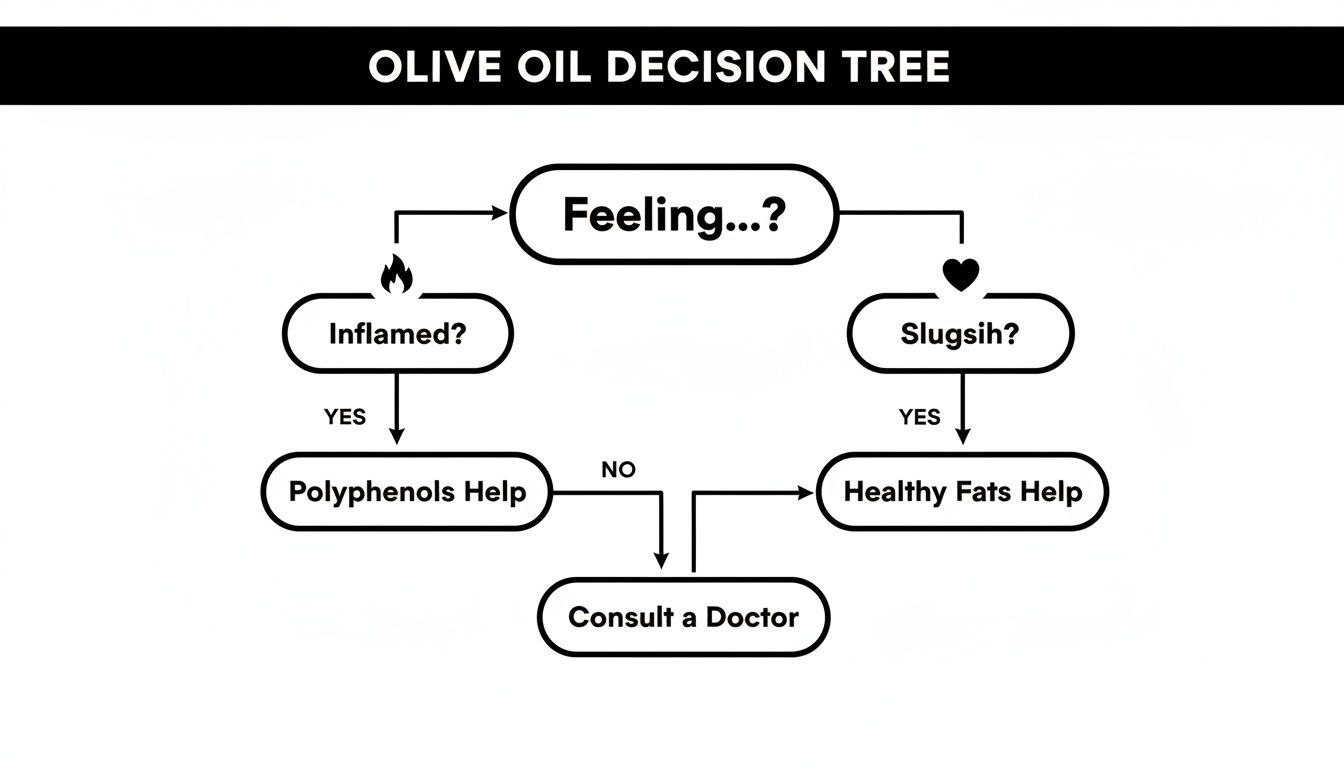
The message is simple: the powerful compounds in olive oil—those remarkable polyphenols and healthy fats—are tailor-made to address the common feelings of inflammation and sluggishness that plague modern life.
When you’re ready to choose a bottle, a few key indicators on the label will tell you nearly everything you need to know about its quality and suitability for drinking.
Here's a breakdown of the most important markers to look for.
Quality Markers of a Drinkable Olive Oil
| Quality Marker | What to Look For | Why It Matters for Drinking |
|---|---|---|
| Free Fatty Acidity (FFA) | A level below 0.3% | This proves the olives were pristine and pressed immediately. A lower number means higher purity and stability. |
| Polyphenol Count | At least 250 mg/kg or higher | These are the antioxidant powerhouses. A high count guarantees more anti-inflammatory benefits and the signature peppery kick. |
| Harvest Date | The most recent date possible | Olive oil is fresh fruit juice. This date reveals its true age, unlike a "best by" date which is often meaningless. |
| Packaging | Dark glass, tin, or ceramic | Opaque or dark containers are essential to protect the oil from light, which destroys its delicate compounds. |
By arming yourself with these four points, you can navigate the shelves with confidence and choose an oil that truly delivers on its promise of health.
The Numbers That Never Lie
While taste can be subjective, certain numbers on a label are objective facts. Think of them as the oil’s vital signs—your most reliable clues to its potency, freshness, and authenticity.
First, look for the Free Fatty Acidity (FFA). To even earn the "extra virgin" title, an oil’s FFA must be below 0.8%. But for a drinking oil, you must be far more demanding.
A truly exceptional drinking oil will boast an acidity level below 0.3%. This astonishingly low number is the direct result of using perfect, healthy olives and crushing them within hours of being picked, preventing any decay.
Next, hunt for the polyphenol count. These are the antioxidant compounds that fuel the health claims and deliver that signature peppery kick. A producer who is proud of their oil will display this number like a badge of honor.
Look for an oil with a polyphenol count of at least 250 mg/kg, though the world's best can easily soar past 500 mg/kg. The higher the number, the more potent its anti-inflammatory and antioxidant punch. Trying different varieties, like a high-quality Arbequina olive oil, is a fantastic way to discover how different olives yield unique polyphenol levels and flavor profiles.
Look for a Date, Not a Deadline
This is one of the most critical shifts you can make: ignore the "Best By" date. It is practically useless. The only date that matters is the Harvest Date.
Olive oil is fresh-pressed fruit juice. Its health benefits are at their absolute zenith right after it is made. An expiration date is often set two years from bottling, but that tells you nothing. The oil could have sat in a giant tank for a year before it even saw a bottle.
The harvest date is the oil's true birthday.
- A simple rule: Always choose the oil from the most recent harvest available. An oil from last year's harvest is a mere shadow of one pressed just a few months ago.
Of course, finding the right numbers is just the beginning. If you want to truly verify your choice, you can learn how to test olive oil at home with a few simple techniques.
The Fortress Protecting Your Oil
Finally, never underestimate the bottle itself. Light is one of olive oil’s greatest enemies. It mercilessly degrades those precious polyphenols and healthy fats, turning a superfood into a rancid disappointment.
A producer who genuinely cares about their oil will never sell it in a clear glass bottle.
Here’s what to look for:
- Dark Glass: Deep green or amber bottles are the standard for blocking destructive UV rays.
- Tins or Ceramic: Opaque containers like these offer absolute protection from light.
- A Good Seal: Check that the cap is secure. Oxygen is the other enemy, and a poor seal is an open invitation for decay.
That dark, heavy bottle isn’t just for looks; it’s a fortress. It is a clear signal from the producer that they have done everything in their power to ensure the potent, health-giving liquid inside reaches you with its full power intact.
Training Your Palate to Recognize Excellence
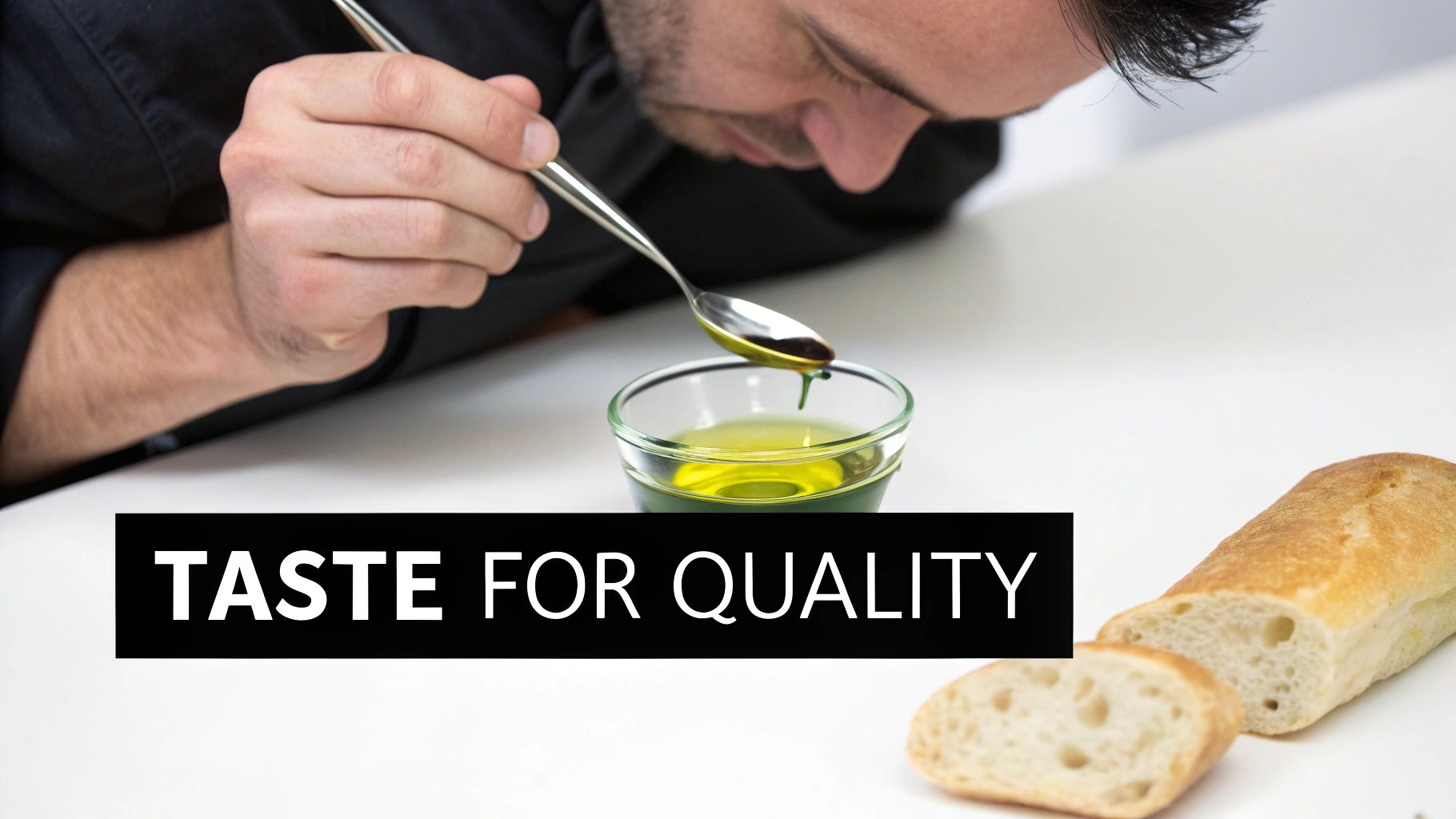
For a moment, set aside the lab reports and marketing claims. The ultimate proof of a superior olive oil is revealed in the tasting. An exceptional drinking oil is not a mere condiment; it is a full-sensory experience, alive with vibrant, complex flavors and a distinct peppery finish that tells you everything you need to know.
This is your personal masterclass in tasting. We will move beyond dipping bread and learn to evaluate olive oil like a seasoned professional. It is about training your own senses to become the ultimate arbiter of quality.
The Professional Technique: Strippaggio
To unlock an oil’s true character, professionals use a method called “strippaggio.” It may look and sound strange, but it is the most effective way to aerate the oil and release its full spectrum of aromas and flavors. Think of it like swirling wine in a glass, only far more powerful.
Imagine the oil is a locked treasure chest. Strippaggio is the key.
- Warm the Oil: Pour about a tablespoon into a small, curved glass. Cup it in one hand and cover the top with your other to trap the aromas. Swirl it gently for a minute, letting your body heat warm it slightly.
- Inhale the Aroma: Bring the glass to your nose, uncover it, and take a deep, deliberate sniff. What do you smell? Fresh-cut grass, green banana, tomato leaf, perhaps even almonds? These are all signs of excellence.
- Taste and Aerate: Take a small sip, but do not swallow. With the oil coating your tongue, purse your lips and suck in several short, sharp bursts of air. This is the “strippaggio”—this rapid inhalation sprays the oil across every taste receptor.
- Evaluate the Finish: Now, swallow. Pay close attention to the sensation at the back of your throat. A world-class oil will leave a distinct peppery or spicy kick.
This technique might feel awkward at first, but it is a revelation. For a more detailed walkthrough, our complete guide on how to taste olive oil breaks down every step.
The Three Pillars of a Great Olive Oil
When you taste, you are searching for three key positive attributes. These are the tell-tale signs of a fresh, potent, and masterfully made extra virgin olive oil. A truly great oil will present all three in perfect, harmonious balance.
A truly great oil is balanced. It isn't a one-note wonder; it's a symphony of fruitiness, bitterness, and pungency that tells the story of the olive from which it came.
Let's break down what each of these positive notes feels like:
- Fruitiness: This describes the full range of pleasant aromas and flavors derived from fresh, healthy olives. It can be grassy and herbaceous (from green olives) or softer and buttery (from riper olives).
- Bitterness: This often surprises novices, but bitterness is a profoundly good sign. Detected on the sides of your tongue, it is clear evidence of freshness and the presence of healthy antioxidants.
- Pungency: This is that signature peppery or spicy sensation in the back of your throat, the one that might even provoke a single cough. That "kick" is your body’s direct confirmation that you are tasting a powerful, antioxidant-rich oil.
For anyone seeking the best olive oil to drink for its wellness benefits, that peppery finish is arguably the most important indicator. It is caused by a specific polyphenol called oleocanthal, a potent natural anti-inflammatory. The stronger the kick, the more oleocanthal the oil contains.
By learning to recognize these three pillars, you cease to be a mere consumer and become a connoisseur. You will be able to identify excellence not by what a label promises, but by what your own palate confirms as true.
The Art of the Daily Olive Oil Ritual
You’ve done the work. You’ve found the perfect bottle, and now you hold a powerhouse of wellness in your hands. But what is the best way to incorporate it into your life? This is not a shot to be rushed through like an unpleasant medicine. It should be a mindful ritual, a quiet moment of self-care that sets the tone for your entire day.
Weaving this simple habit into your daily routine is where the real magic happens. The goal is consistency, not intensity. The key is to make this powerful practice sustainable and pleasant, transforming it from a chore into a cherished part of your morning.
Timing is Everything
To get the most from every single drop, timing matters. The consensus among long-time advocates and health experts points to one ideal window: first thing in the morning, on an empty stomach.
After a night of rest, your digestive system is in a calm, receptive state. Taking your olive oil now allows its potent polyphenols and healthy fats to be absorbed with minimal interference from other foods. It also acts as a gentle primer for your digestive tract, preparing it for the day ahead.
Finding Your Perfect Dose
There is no need to overdo it. The goal is a consistent, beneficial dose that your body can use effectively.
- The Starting Point: Begin with one tablespoon (about 15 ml). This is a well-researched quantity that delivers significant benefits without being overwhelming.
- The Method: Pour it into a small tasting glass or onto a spoon. Take a moment to breathe in the aroma, then sip it slowly. This is not just a supplement; it is an act of nourishment.
This daily practice is deeply rooted in cultures renowned for their longevity. In Greece, which leads the world in olive oil consumption at an astonishing 9.3 kg per person annually, drinking olive oil on an empty stomach is a time-honored tradition to kickstart digestion and support cardiovascular health. You can explore more about these global consumption habits and their cultural significance.
Making it a Pleasant Experience
If the bold, peppery kick of a high-quality oil is new to you, do not be discouraged. Your palate will adapt, but there are simple ways to make the experience more enjoyable from the very beginning.
The most powerful health habits are the ones you actually stick with. The secret isn't forcing it down; it's finding a way to make the ritual something you genuinely look forward to.
A simple and effective trick is to add a small squeeze of fresh lemon juice to your spoonful of oil. The bright citrus acidity cuts through the richness and balances the peppery notes, creating a surprisingly refreshing and palatable combination. This one small addition can completely transform the taste and make your new ritual an effortless delight.
Protecting Your Health Investment
When you purchase a premium, high-polyphenol extra virgin olive oil, you are making a serious investment in your health. Leaving that bottle sitting next to your stove is like parking a new sports car in a hailstorm with the top down. You are practically inviting the destruction of its most valuable assets.
To receive the full health benefits you paid for, you must become a fierce guardian of your oil. It has three mortal enemies: heat, light, and oxygen. These are the silent assassins that rapidly destroy the potent compounds and delicate flavors that make a drinking-quality olive oil so powerful.
The Three Enemies of Freshness
The battle for preservation is simpler than it sounds. It comes down to a few basic, non-negotiable rules that ensure every spoonful is as vibrant and healthful as the first. This isn't merely about taste—it's about protecting the very polyphenols and healthy fats that are the entire reason for this ritual.
- Heat: Never store your olive oil near the stove, oven, or on a sun-drenched countertop. Heat sends oxidation into overdrive, turning a superfood rancid with shocking speed.
- Light: Just as damaging as heat, light degrades the oil. This is precisely why the best producers use dark glass bottles or opaque tins—they are building a fortress to shield the oil from harmful UV rays.
- Oxygen: Every time you open the bottle, air rushes in. Oxygen is the final enemy, slowly but surely dismantling the oil’s structure and nutritional value.
Protecting your oil is non-negotiable. Storing it properly ensures that the last drop from the bottle is just as potent as the first, delivering the full antioxidant and anti-inflammatory power you expect.
This demands a clear storage strategy. Always keep your oil in a cool, dark place like a pantry or cupboard. Avoid the refrigerator, as condensation and crystallization can do more harm than good.
Make it an ironclad habit to seal the cap tightly the instant you are done pouring. It is a small detail with enormous consequences.
Finally, think of your olive oil like fresh produce, not a pantry staple with an infinite shelf life. Plan to finish the bottle within a few months of opening it to enjoy it at its absolute peak. Understanding how to store cooking oil safely to maintain its quality is just as critical as choosing the right bottle. For an even deeper dive, our guide on how to store olive oil after opening covers everything you need to know.
Common Questions About Drinking Olive Oil
It is wise to ask questions before embracing any new wellness practice. A daily olive oil ritual is a significant commitment, and having clear, direct answers is essential for proceeding with confidence. Let's address some of the most common questions.
Can I Just Drink My Regular Cooking EVOO?
You might glance at that bottle of extra virgin olive oil by your stove and wonder, "Can't I just use this?" I must urge you not to. While that oil is perfectly acceptable for sautéing vegetables, it is almost certainly not the best olive oil to drink for your health.
Consider this analogy: think of a simple table wine versus a complex, aged Bordeaux. Both are made from grapes, but they offer entirely different experiences and benefits. Your everyday cooking EVOO is the table wine—functional, but unremarkable. A true drinking oil has been cultivated and produced specifically for the highest possible polyphenol content and peak freshness. That is where the health benefits lie. Sipping a standard cooking oil will likely just taste flat and greasy, devoid of the vibrant, peppery kick that signals potency.
Will Drinking Olive Oil Make Me Gain Weight?
This is the number one concern, and it’s understandable. Olive oil is a fat, and fats are calorically dense—a single tablespoon contains about 120 calories. However, when you adhere to a moderate amount, like the recommended one-tablespoon-a-day ritual, it is highly unlikely to cause weight gain.
In fact, some evidence suggests the opposite. The healthy monounsaturated fats in olive oil, particularly oleic acid, are known to promote satiety, or a feeling of fullness. This can help you feel satisfied longer, potentially reducing cravings and your overall calorie consumption throughout the day.
Moderation is everything. The goal is not to flood your diet with calories, but to add a small, concentrated dose of powerful anti-inflammatory compounds. One tablespoon is the sweet spot.
What if My Olive Oil Doesn't Have a Peppery Taste?
If you take a sip and feel absolutely nothing—no tingle, no burn, no cough—that is a massive red flag. That signature pungent, peppery sensation at the back of your throat is your most reliable indicator of a high-quality, polyphenol-rich oil. What you are tasting is the direct effect of a powerful antioxidant called oleocanthal.
If that peppery finish is absent, it typically means one of several things:
- Low Polyphenol Content: The oil was made from the wrong type of olives or processed improperly, destroying these vital compounds.
- It's Old or Rancid: The oil is long past its prime, and its health-giving compounds have degraded.
- Poor Quality: It may not be true extra virgin olive oil at all.
Never settle for a bland oil. That peppery kick is not just a flavor note; it is the taste of potency. You should actively seek it out as proof that you are getting the health benefits you desire.
Is It Safe to Drink Olive Oil Every Single Day?
Yes, absolutely. Not only is it safe, but consistency is the only way to achieve the profound, long-term benefits. Daily consumption is a cornerstone of the Mediterranean diet, a pattern of eating that has been celebrated for decades for its association with longer lifespans and lower rates of chronic disease.
Our bodies are designed to process healthy fats. Adding a tablespoon of world-class EVOO to your daily routine is a perfectly safe and scientifically-backed method to support your heart, brain, and overall health from the inside out. Think of it less as a quick fix and more as a daily deposit into your long-term wellness account. Making it a habit allows its protective compounds to accumulate and work their magic over time.
Ready to dive into the world of premium olive oil and find the perfect bottle for your wellness routine? At Learn Olive Oil, we offer expert guides, tasting notes, and advice to help you choose with total confidence.
Explore our resources and elevate your health journey at https://learnoliveoil.com.
 Learn Olive Oil
Leave a comment