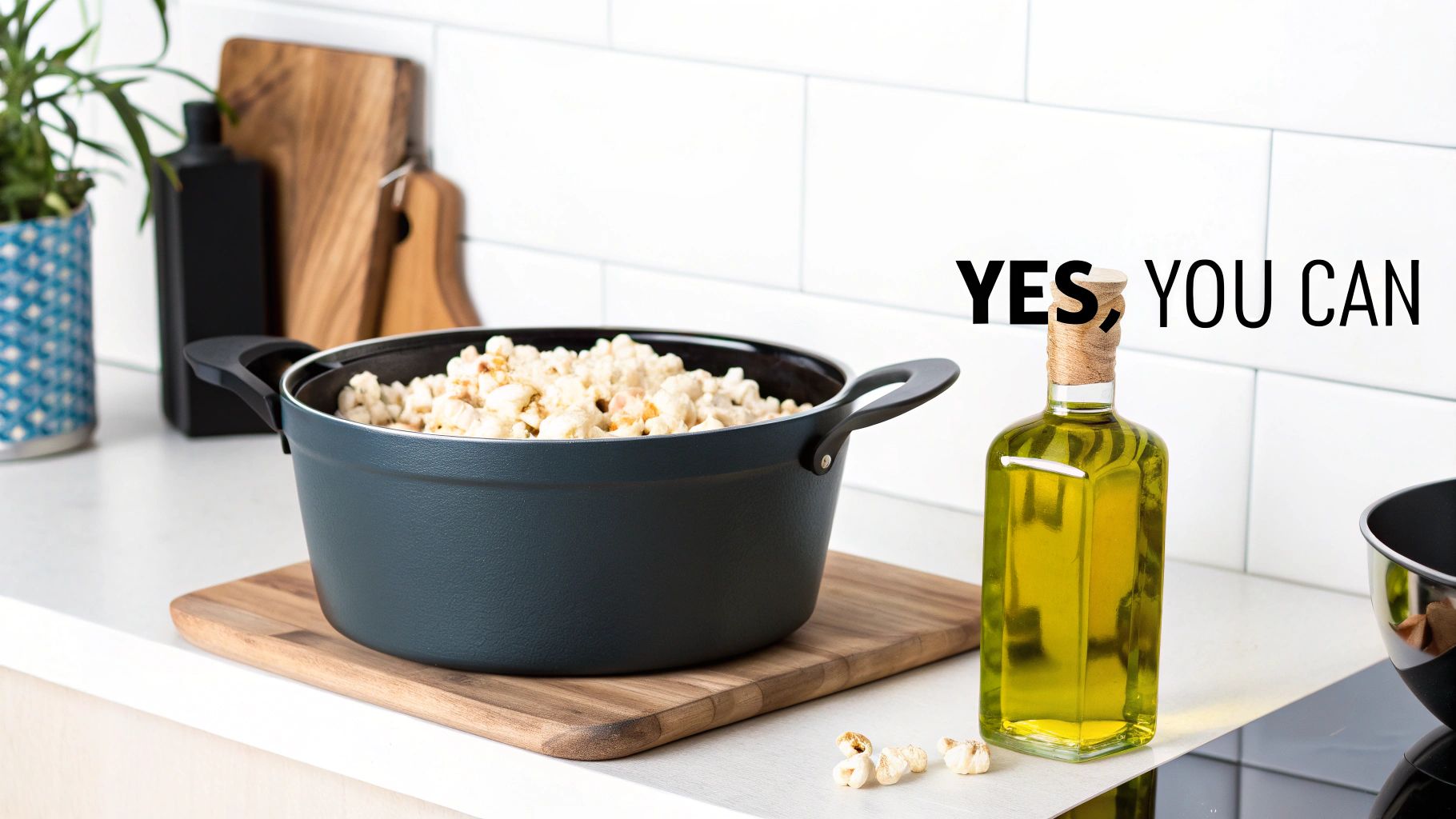
Let's finally settle this delicious debate. The simple answer is yes, you absolutely can cook popcorn with olive oil. But the real secret—the one that separates a soggy, smoky tragedy from a perfectly crisp, flavorful batch—is understanding that you must choose the right kind of olive oil for the job.
It’s not as simple as grabbing the first bottle you see.
Why Olive Oil for Popcorn Isn't a Simple "Yes"
Think of your olive oils like different tools in a master craftsman's workshop. That beautiful, green extra virgin olive oil (EVOO)? That's your delicate finishing tool, a masterstroke for adding a final flourish of bold, grassy flavor. The more refined, 'light' olive oil, on the other hand, is your trusty workhorse—a dependable cooking fat built to withstand the inferno.
Once you grasp this simple distinction, the confusion melts away. You'll possess a clear framework for making the right choice every time that craving for homemade popcorn strikes. This isn't just about a yes-or-no question; it's about learning how to craft a truly superior snack.
The Two Paths for Your Olive Oil
Your journey to perfect olive oil popcorn really comes down to a single decision, which this flowchart lays out perfectly.
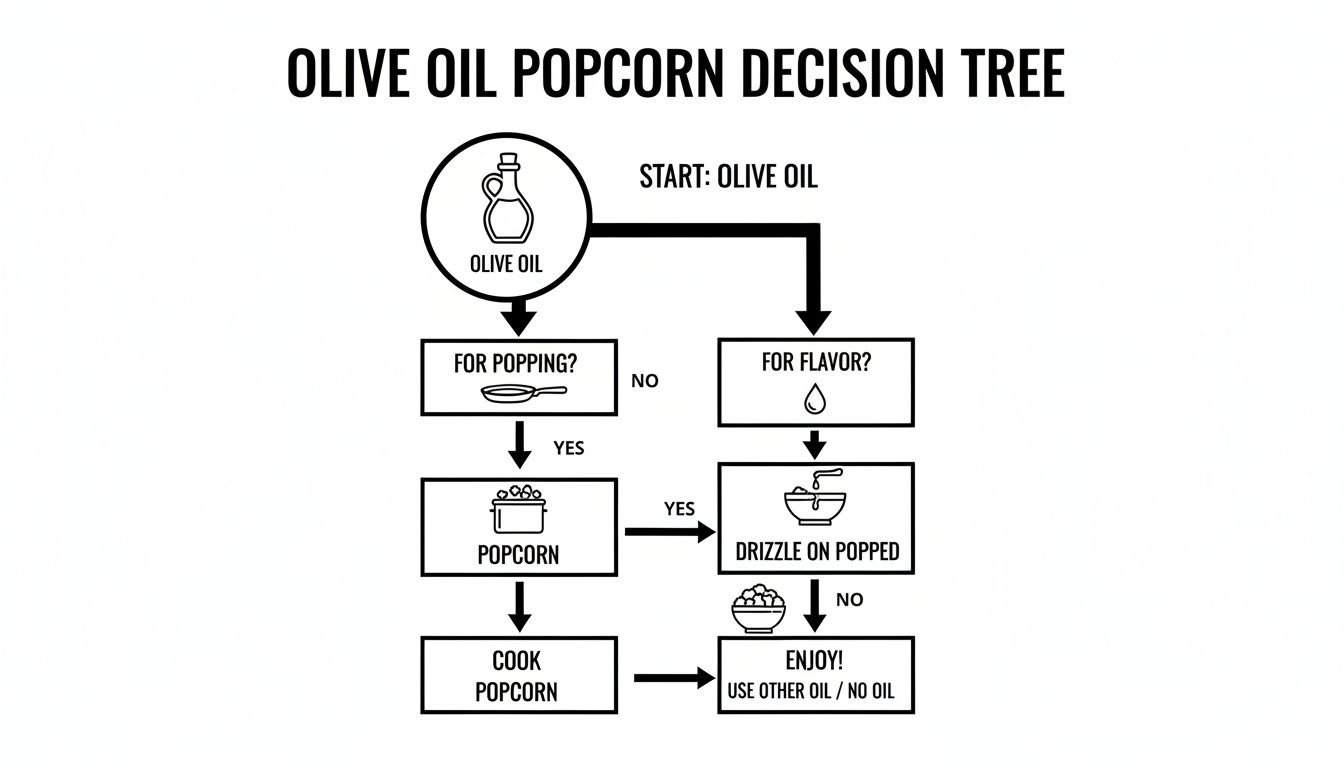
Ultimately, it’s about using a heat-stable oil for the actual popping and a more flavorful one for the final touch.
So, how do you know which is which? It’s not just about the name on the bottle; it comes down to one crucial factor that determines success or failure in your pot. This one concept is the gatekeeper to crunchy, delicious, and perfectly cooked popcorn, and it’s called the smoke point.
Before you pour a single drop of oil, you have to understand how this simple scientific principle will make or break your next batch. We'll dive into that next.
Cracking the Code on Smoke Points
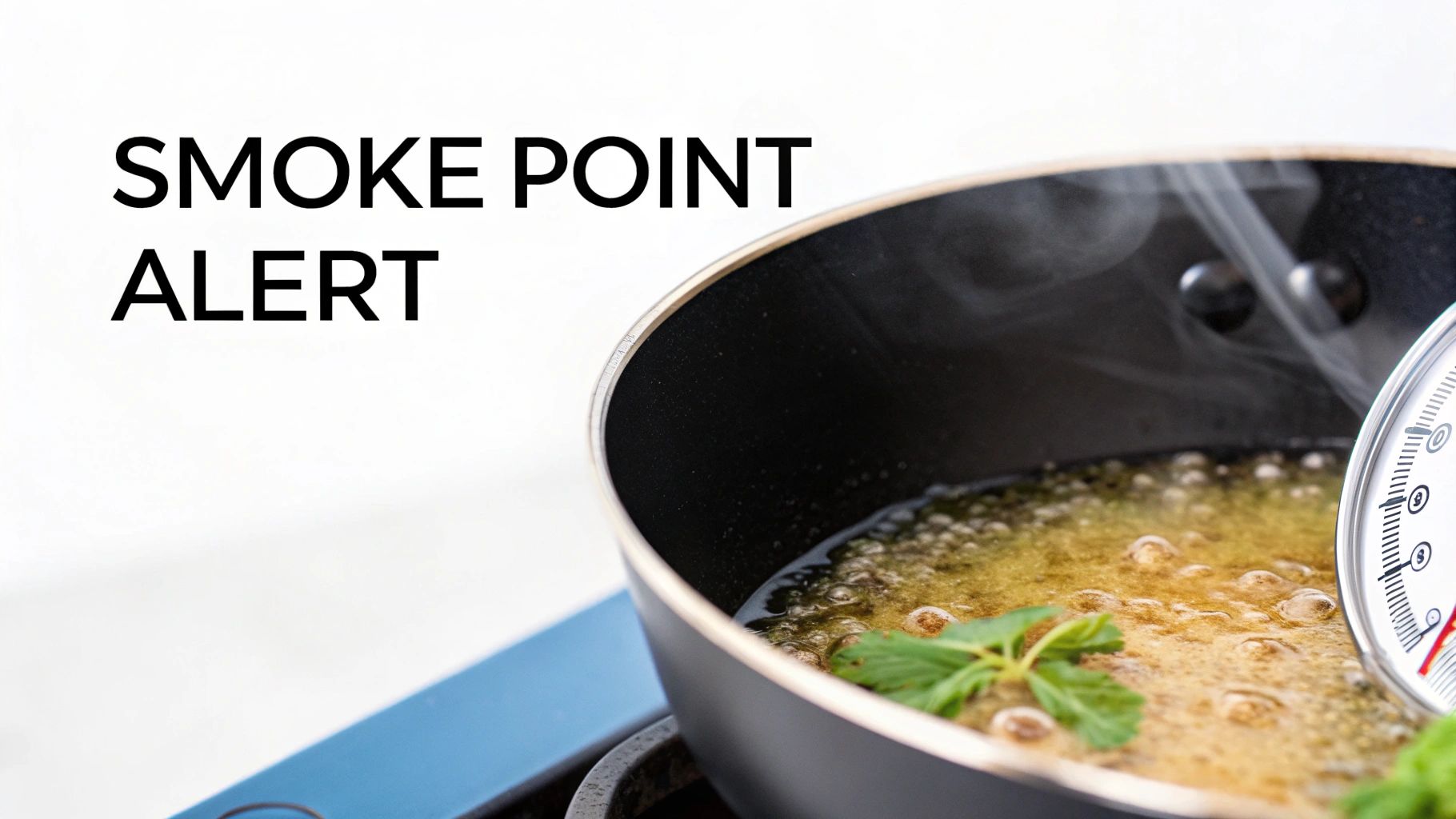
The term ‘smoke point’ might sound like something out of a science textbook, but it's the single most important factor for making flawless popcorn with olive oil. Don't just think of it as a number. Think of it as your oil’s breaking point—the temperature where it ceases to be a beautiful, fragrant cooking fat and begins to chemically disintegrate.
When an oil is pushed past its smoke point, it’s not just a little smoke. It’s the villain that ruins countless snacks. You get a harsh, acrid smell, a burnt, bitter taste, and the oil can even release harmful compounds. This is the exact moment your popcorn goes from a delicious idea to a culinary tragedy.
Why Extra Virgin Olive Oil Is a Different Beast
That amazing peppery flavor and all the health benefits you love in extra virgin olive oil (EVOO)? They come from delicate, volatile compounds. Unfortunately, these natural goodies are also EVOO's Achilles' heel when you crank up the heat. They are sensitive and start degrading at much lower temperatures, giving EVOO a relatively low smoke point.
This is exactly why using your expensive, flavorful extra virgin olive oil for the initial high-heat popping stage is a common mistake. You’re not just burning off its beautiful, nuanced flavor; you're actively creating a bitter, unpleasant taste in your final product.
The smoke point isn’t just about seeing smoke. It's a clear signal that your oil’s flavor and nutritional integrity are being destroyed. Respecting this limit is the first rule of great stovetop popcorn.
On the other hand, refined or ‘light’ olive oil has been processed specifically to remove those delicate compounds. This filtration and treatment give it a much higher smoke point, making it far more stable and a much better choice for the intense, direct heat needed to pop corn kernels. You can see how different oils stack up in this detailed cooking oil smoke points chart.
The Science of a Perfect Pop
To truly understand why this matters, let's look at the physics of a popcorn kernel. For a kernel to pop, its internal temperature has to hit around 180°C (356°F). This creates enough steam pressure inside to burst the hull. That means the oil in your pan has to get at least that hot, and stay there.
Most stovetop popcorn methods push the oil temperature well past this mark. This puts it squarely in the danger zone for a typical EVOO, which can have a smoke point as low as 160°C (320°F). This is why you often see recommendations for oils like refined canola or peanut oil, which have smoke points well above 200°C (392°F). They give you a much bigger safety margin against burning.
So, choosing a refined olive oil for the actual popping isn't a compromise; it’s a smart, strategic move. It lets you get the oil hot enough for a perfect pop without filling your kitchen with smoke or ruining the flavor. You get a clean, crisp batch of popcorn that becomes the perfect blank canvas for a final, flavorful drizzle of the good stuff.
Choosing Your Olive Oil for Maximum Flavor
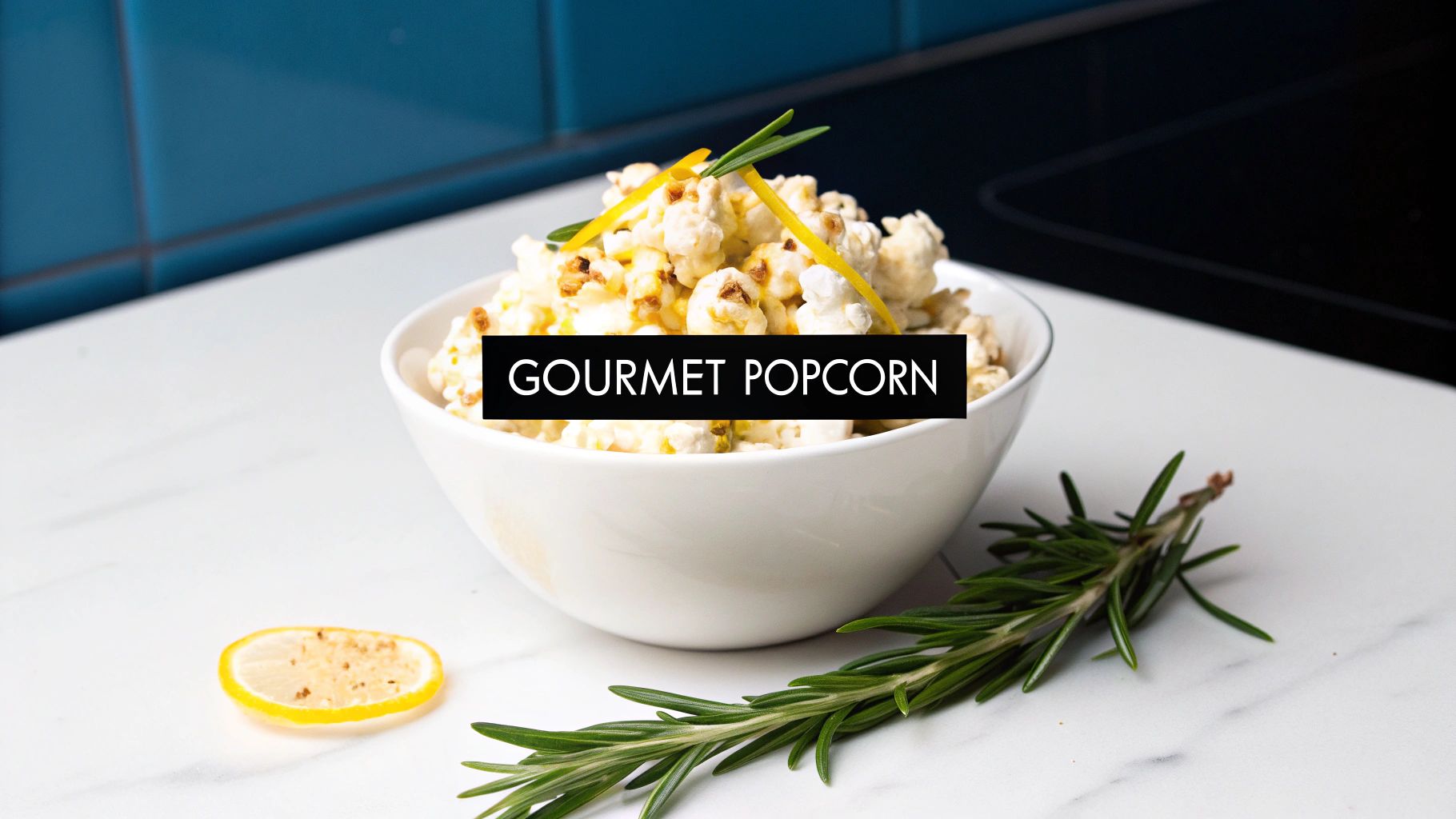
Now that we've covered the science of heat, it's time to get into the art of taste. This is where you go from just making a snack to creating a genuinely memorable bowl of popcorn. Picking the right olive oil isn't just about function; it's about understanding the oil's character and deciding what kind of flavor experience you're in the mood for.
A high-quality extra virgin olive oil is so much more than just a cooking fat. It's an explosion of flavor—often complex with peppery, grassy, or fruity notes that tell the story of where it came from. Drizzling this liquid gold over hot, freshly popped corn is a game-changer because it preserves that delicate, sun-drenched character.
Popping Oil vs. Finishing Oil: The Flavor Showdown
The role your olive oil plays changes completely depending on when you add it. One is the workhorse that handles the heat in the pot, while the other is the finishing touch meant to be the star of the show.
-
For Popping (Refined Olive Oil): Think of a refined or 'light' olive oil as your blank canvas. It’s clean and neutral, so it gracefully steps back and lets the pure, nutty flavor of the corn take center stage. Its job is purely functional: transfer heat and get those kernels popped without adding any competing flavors.
-
For Finishing (Extra Virgin Olive Oil): This is where the real magic happens. A bold, high-quality extra virgin olive oil drizzled over the top completely transforms your popcorn. It can introduce a vibrant, almost spicy kick that elevates the whole bowl from a simple snack to a gourmet treat. Using it this way protects the EVOO's delicate flavors from the pan's intense heat.
The choice is yours: Do you want the pure, classic taste of the corn to shine, or are you looking to add a bold, sophisticated layer of flavor? The oil you choose, and when you use it, determines the final taste.
Your Strategy for Taste
So, can you cook popcorn with olive oil and get amazing flavor? Absolutely. Here’s the best way to do it.
Use a neutral, high-smoke-point refined olive oil for the actual popping. Then, once the corn is popped and still piping hot, generously drizzle it with a top-tier extra virgin olive oil. This two-step approach really gives you the best of both worlds: perfect popping without any smoke, and a huge burst of fresh flavor at the end.
Many of us who cook at home already swear by this method. A good rule of thumb is 1–2 teaspoons of EVOO per 4 cups of popped corn, which adds both spectacular taste and a dose of healthy monounsaturated fats. It's the secret behind many gourmet popcorn recipes that feature things like herbs, truffle salt, or grated cheese.
Understanding your cooking fats is key. As more people learn how to avoid seed oils in your cooking, the unique benefits of high-quality olive oil become even clearer. For a deeper dive into picking the right bottle for every kitchen task, you can check out our guide on the best olive oil to cook with.
The Perfect Stovetop Popcorn Method
This is where theory meets taste. Forget those complicated, dense instructions you've seen elsewhere. I'm going to share a simple, foolproof ritual for making incredible stovetop popcorn—the kind of secret you'd get from a trusted friend. Once you nail this, you'll have the confidence to banish microwave bags from your kitchen for good.
The whole process comes down to one brilliant, classic trick: the three-kernel test. This isn't just some old wives' tale; it’s your built-in thermometer, letting you know the precise moment your olive oil is hot enough for a truly explosive pop.
Get this right, and you're already halfway to popcorn perfection.
Your Tools and Ingredients
First things first, let's gather your gear. A good, heavy-bottomed pot is your best friend here. Its thick base spreads the heat out evenly, which is the key to preventing those scorched spots that can ruin a whole batch. Thin pans create nasty hot spots, and that's a one-way ticket to burnt kernels.
Here’s your simple shopping list:
- 1/2 cup of high-quality popcorn kernels
- 3 tablespoons of refined olive oil (this is your workhorse for the actual popping)
- A large, heavy-bottomed pot with a lid that fits snugly
- High-quality extra virgin olive oil (this is for that final, glorious drizzle of flavor)
- Salt to taste (I love a good flaky sea salt for this)
This specific oil-to-kernel ratio is your secret to maximum fluffiness without a greasy, heavy finish. It’s just enough oil to coat every kernel and conduct the heat needed for a perfect pop. If you're curious about how your choice of pot impacts your cooking beyond popcorn, this guide on the best cookware for health and safe cooking is a great read.
The Foolproof Popping Ritual
Ready? Let’s make the best popcorn of your life. It all comes down to a simple dance of heat, timing, and a little bit of motion.
- The Temperature Test: Pour your 3 tablespoons of refined olive oil into the pot and drop in just 3 tester kernels. Put the pot over medium-high heat with the lid on. Now, just listen.
- The Signal: As soon as you hear all three of those kernels pop, your oil is at the perfect temperature. That’s your green light. Immediately pull the pot off the heat and fish out those three sacrificial popped kernels.
- The Main Event: Dump the remaining 1/2 cup of kernels into the hot oil. Give the pot a quick swirl to get them all coated, pop the lid back on, and let the pot sit off the heat for exactly 30 seconds. This is a critical step! It allows all the kernels to come up to the same temperature, which is why they'll all pop at nearly the same time.
- The Pop: Put the pot back on the medium-high heat. Within a minute or so, you'll hear a flurry of popping. As the action really gets going, start gently shaking the pot back and forth over the burner. This gentle shake is what keeps the kernels moving and prevents any of them from sitting in one spot for too long and burning.
- The Finale: When the popping slows down to 2-3 seconds between pops, your work here is done. Immediately take the pot off the burner and pour the popcorn into a large bowl. This stops the residual heat in the pot from scorching your masterpiece.
While the popcorn is still piping hot, this is the moment to drizzle it with that luxurious extra virgin olive oil. Toss it with your salt, and just listen to that satisfying crunch. That’s the sound of victory.
You've just proven that the answer to "can you cook popcorn with olive oil?" is a resounding, delicious "yes." And if you're now curious about using olive oil for high-heat cooking in other dishes, you'll find the same principle of choosing the right type of oil applies there, too.
Gourmet Olive Oil Popcorn Inspirations
You've mastered the basics, so now it's time for the fun part: playing with flavors. Think of this as your creative launchpad. I'm going to walk you through three of my favorite popcorn recipes that show just how incredible olive oil can be. We're not just listing ingredients here; we're crafting experiences.
Each of these starts from the same place: a fresh batch of popcorn popped on the stovetop with a mild, refined olive oil. The real magic, though, happens after it's popped. That's when we'll add a finishing drizzle of a high-quality extra virgin olive oil and a few simple, yet powerful, seasonings.
Let's turn that humble bowl of popcorn into something truly memorable.
The Mediterranean Dream
This one is like a little trip to a sun-drenched coastline, right in a bowl. It’s incredibly simple, wonderfully aromatic, and proves that sometimes the most direct flavors are the best.
- Extra Virgin Olive Oil: Drizzle it generously over the still-hot popcorn.
- Dried Oregano: Sprinkle about a teaspoon over the top and give it a good toss.
- Flaky Sea Salt: A good pinch is all you need to make the other flavors pop.
- Lemon Zest: Grate the zest from half a lemon right over the bowl for a bright, fragrant finish.
What you get is a snack that's herbaceous and zesty. The peppery bite from a good EVOO plays perfectly with the bright citrus and earthy oregano. It’s an instant classic in my book.
The Smoked Paprika and Garlic Kick
If you're after something deeply savory with a bit of a punch, look no further. This combination is smoky, aromatic, and almost dangerously addictive. The smoked paprika and garlic powder come together to create a rich flavor that coats every single kernel.
The real secret here is to toss everything together while the popcorn is still piping hot. That heat helps the spices bloom and meld with the oil, ensuring a perfectly even coating.
- Extra Virgin Olive Oil: Drizzle enough to lightly coat the popcorn.
- Smoked Paprika: Start with about a teaspoon for that robust, smoky base.
- Garlic Powder: A half-teaspoon adds that savory, aromatic depth we're looking for.
- Fine Sea Salt: Add it to your personal taste.
This blend is bold and incredibly satisfying. It tastes far more complex than its simple ingredient list would have you believe.
The Rosemary Parmesan
This recipe feels truly gourmet—it's elegant, salty, and wonderfully herbaceous. The key is to use finely chopped fresh rosemary. As soon as it hits the warm popcorn, it releases its incredible, fragrant oils.
- Extra Virgin Olive Oil: Drizzle it over the hot popcorn.
- Fresh Rosemary: Finely chop about a tablespoon.
- Finely Grated Parmesan Cheese: Use around 1/4 cup and toss it in immediately.
- Black Pepper: Finish with a few grinds of fresh black pepper.
The residual heat from the popcorn gently melts the Parmesan, helping it stick to every piece. You're left with a salty, cheesy, and aromatic crunch in every single bite. If you want to take that herbal note even further, you could get creative and learn how to make infused olive oil with rosemary for an extra layer of flavor.
A Snack with a Story: The History of Popping Corn in Oil
Behind every great snack, there’s usually a great story. The simple act of popping corn in a shimmering layer of hot oil isn’t some new-age health trend; it’s a tradition with surprisingly deep roots in culinary history. This is a story about moving from pure chance to deliberate craft.
For centuries, making popcorn was a wild, unpredictable affair. People often tossed kernels in wire baskets over open flames, a method that left behind as many burnt casualties as perfectly fluffy morsels. But one man’s vision changed all that.
The Birth of a Modern Snack
The game was forever altered in the late 19th century when street vendors started perfecting the art of oil-popping. Innovator Charles Cretors patented a groundbreaking steam-powered machine in 1885 that cooked kernels evenly in oil, delivering a consistently delicious snack that was impossible before. You can read more about how his invention turned popcorn into a commercial powerhouse on Wikipedia.
Cretors' original recipe was a rich blend of clarified butter and lard, engineered for that irresistible fairground aroma we all know. But the core principle he pioneered—using hot fat to create a better, more reliable pop—is the very same one we follow today.
Choosing to cook popcorn with olive oil isn't a departure from tradition. It's the next logical step in a century-long quest for better flavor, better texture, and a better bite.
This history connects directly to the olive oils we reach for in our own kitchens. Just as Cretors searched for the perfect fat for his machine, we now look for the perfect oil for our health and our palate. And just as popcorn has a story, understanding where olive oil originates adds another fascinating layer to this timeless tale of food evolution.
Got Questions? We've Got Answers
Even after you've got the basics down, a few questions tend to pop up. Let's tackle some of the most common ones I hear about making popcorn with olive oil, so you can pop with total confidence.
Can I Use Extra Virgin Olive Oil in the Microwave?
I'd really steer clear of this. Microwaves are notorious for creating super-intense, uneven hot spots. These can easily scorch the delicate, flavorful compounds in a good EVOO, leaving you with a bitter, acrid taste. It completely ruins what makes extra virgin olive oil so special.
The best way to do it? Air-pop your corn first. Then, while it's still piping hot, go ahead and drizzle that beautiful, high-quality EVOO over the top. You'll get all the amazing flavor without any of the bitterness.
How Much Olive Oil Do I Need for Stovetop Popcorn?
You need less than you might think. The goal here is just to coat the bottom of the pot in a thin, shimmering layer of oil—you're not trying to deep-fry the kernels.
For a standard half-cup of kernels, I find that 2 to 3 tablespoons of a refined olive oil is just right. This gives every kernel enough of a coating to pop up light and crispy, without making the finished popcorn feel greasy.
Is Popcorn with Olive Oil Actually Healthier Than Butter?
Yes, from a nutritional standpoint, it definitely is. Olive oil is loaded with monounsaturated fats—the good kind, famous for being heart-healthy. It’s also packed with antioxidants that help fight inflammation. Butter, on the other hand, is mostly saturated fat.
So, by swapping out butter for olive oil, you're making a smarter choice for your health. Drizzling a little EVOO on top after popping is the best of both worlds: you get that satisfying crunch with a much better fat profile.
 Learn Olive Oil
Leave a comment