You’ve seen it on countless bottles: cold pressed evoo. The phrase whispers of rustic stone wheels, sun-drenched Italian groves, and a pure, traditional quality your grandmother would approve of.
But what if I told you that mental picture is mostly a marketing story?
The truth behind how modern, high-quality extra virgin olive oil is made is quite different—and frankly, much better. Let me show you why.
Decoding the "Cold Pressed" Label
Let's get straight to the point. When you pick up a bottle labeled "cold pressed" today, it’s almost certainly made using a modern, highly precise method called cold extraction. The charming stone presses of yesterday have been replaced by sophisticated stainless-steel centrifuges. These machines spin the crushed olive paste at astonishing speeds, neatly separating the pure oil from the fruit solids and water.
This isn’t a step down. It's a massive leap forward in hygiene, efficiency, and quality control. The term "cold pressed" has simply stuck around because it paints a romantic picture that sells well. The principle behind it, though, is more important than ever.
The Real Secret is Temperature Control
The most critical factor isn't the press; it's the cold. For an olive oil to legally earn the "extra virgin" title, the entire process—from crushing to extraction—must stay below 27°C (or 80.6°F). This isn't just a casual guideline; it's a hard-and-fast rule for quality.
Think of it like making a delicate green tea. If you use boiling water, you scald the leaves and end up with a bitter, harsh brew. Use water at the correct, lower temperature, however, and you unlock all those beautiful, subtle flavors. It's the exact same principle with olives.
Heat is the enemy of quality. Pushing the temperature past that 27°C threshold starts to destroy the very things that make EVOO special: its fresh, vibrant aromas, complex flavors, and the powerful, health-boosting antioxidants.
Keeping the process cool is all about preserving the oil's natural character. It protects the fragile polyphenols—the compounds responsible for that peppery kick you feel at the back of your throat, which is a key sign of a fresh, top-tier oil.
This visual guide breaks down how modern production uses temperature control to create a true cold pressed evoo.
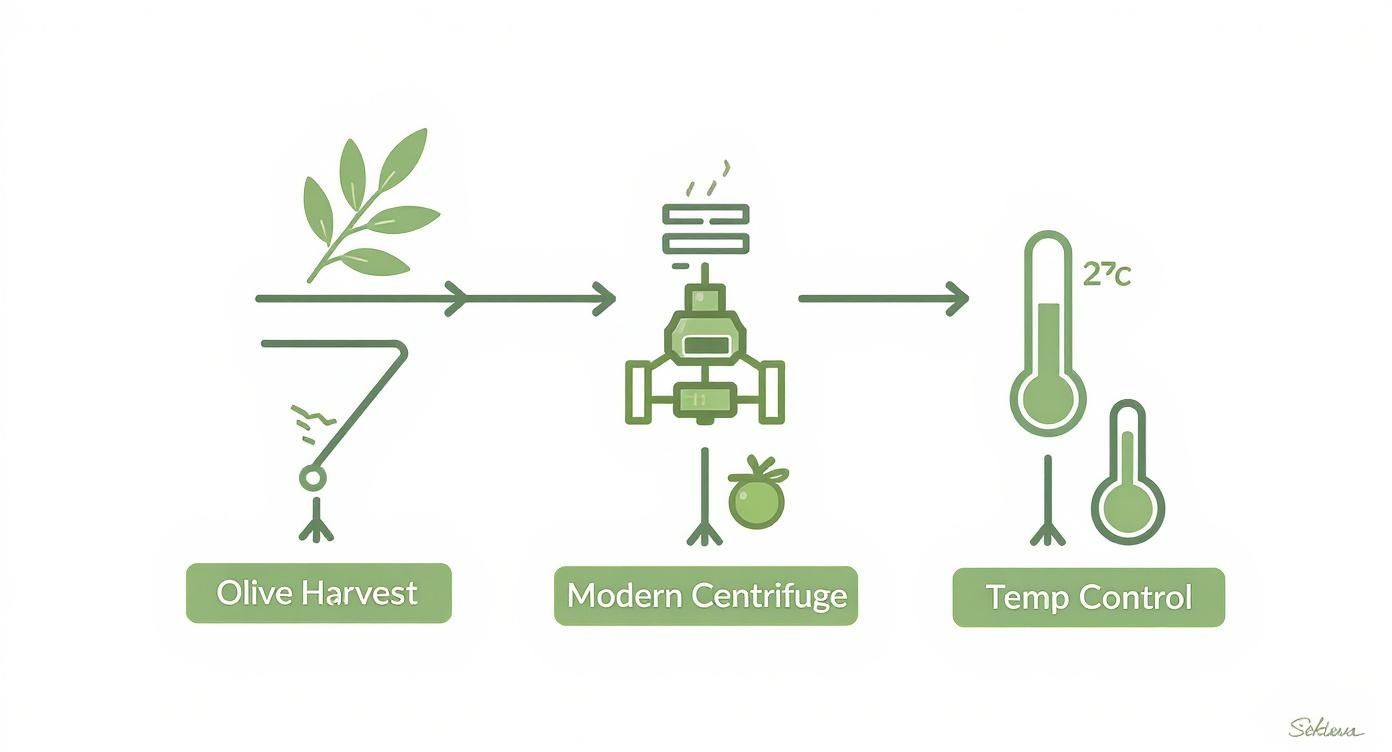
As you can see, modern quality isn't about an old-fashioned press. It’s about a meticulously managed, temperature-controlled journey from the olive to the bottle.
First Cold Press vs. Cold Extraction
You might also spot "first cold press" on a label. This is another term that’s a holdover from a completely different era. Decades ago, olive paste was often pressed multiple times. The first press yielded the best oil, while later presses used hot water or steam to squeeze out every last drop, creating a much lower-grade product.
Today, that's irrelevant. By definition, all extra virgin olive oil must come from the first (and only) extraction. The modern centrifuge method is a single, continuous process. The term "first cold press" is essentially redundant.
Whether a label says "cold pressed" or "cold extraction," the message is the same. The producer is telling you they are committed to low-temperature production to protect the oil's quality. If you want to dig deeper into the history, you can learn more about the cold pressed meaning and how the terminology has evolved.
Here’s a simple table to help you visualize the difference between the romantic idea and the modern reality.
Cold Pressed vs Modern Cold Extraction At a Glance
| Attribute | Traditional 'Cold Pressing' | Modern 'Cold Extraction' |
|---|---|---|
| Method | Crushing olives with stone mills and pressing the paste with hydraulic presses. | Crushing olives in a steel hammer mill and separating oil via a decanter centrifuge. |
| Efficiency | Lower yield; less efficient at extracting all the oil. | Highly efficient; extracts oil quickly and completely in a single pass. |
| Hygiene | Absorbent mats were hard to clean, posing a risk of fermentation and defects. | Stainless steel equipment is easy to sanitize, ensuring purity and preventing off-flavors. |
| Oxygen Exposure | The open process exposed the olive paste to air, leading to rapid oxidation. | A closed, continuous system minimizes oxygen exposure, preserving freshness. |
| Temperature | Harder to control precisely; friction from stones could generate unwanted heat. | Temperature is precisely monitored and controlled throughout the entire process. |
| Result | A rustic oil, but often with a shorter shelf life and potential for defects. | A clean, stable, and vibrant oil with maximum flavor and health benefits. |
In the end, it’s time to move past the romantic but outdated image of stone wheels. The true hallmark of excellence in today's cold pressed evoo lies in the precise, technologically advanced, and temperature-controlled methods that deliver the purest and most flavorful expression of the olive.
Why Temperature Is the Secret to Flavor and Health
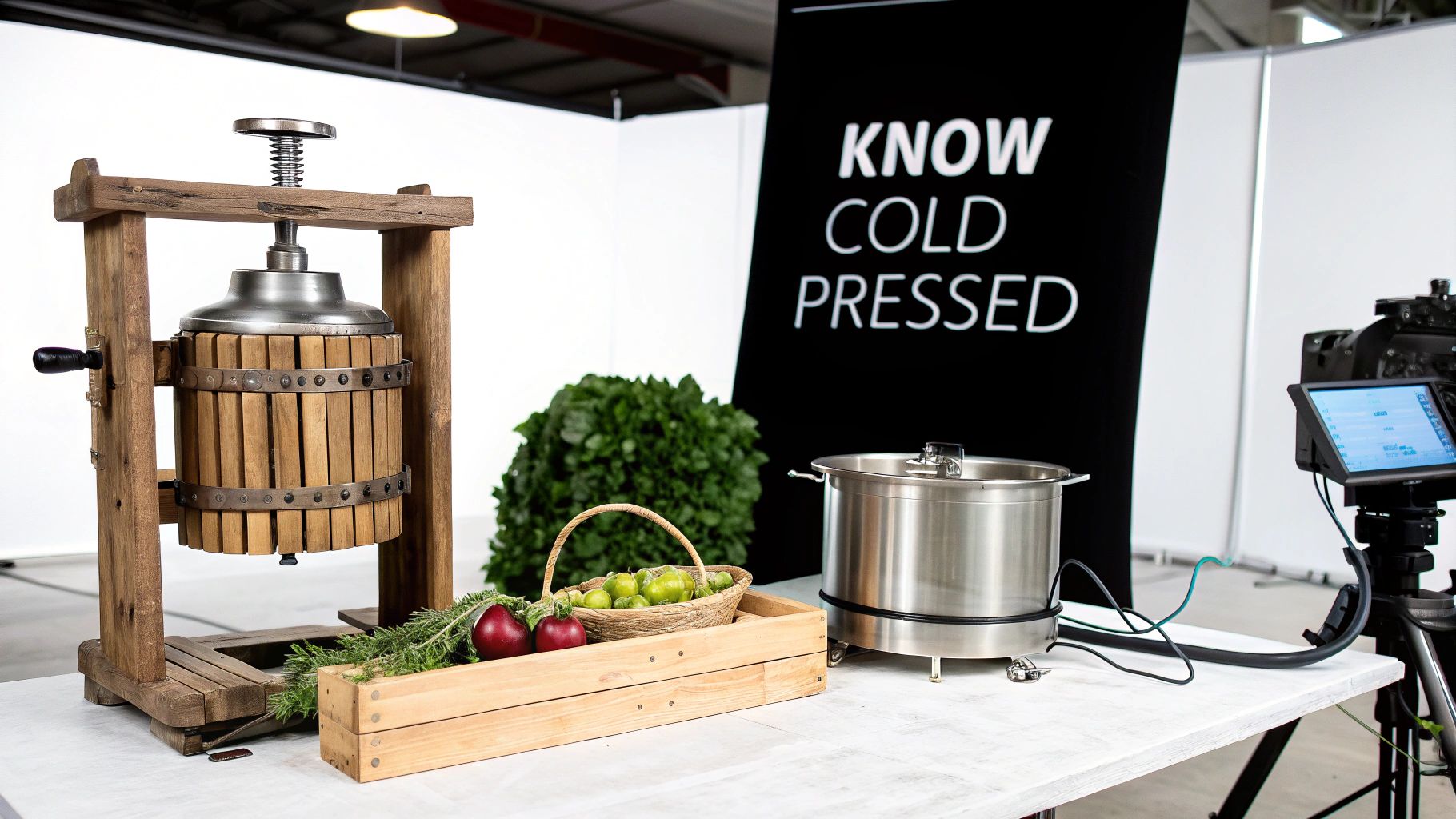
So, why does a few degrees of temperature matter so much? Because when it comes to extra virgin olive oil, heat is the ultimate thief. It quietly steals flavor, robs the oil of its nutritional punch, and can turn a vibrant, living product into something flat and forgettable.
This commitment to keeping things cool is what separates true artisan producers from mass-market mediocrity.
Think of it like a master chef preparing a delicate sauce. They would never blast it with a harsh flame; that would scorch the ingredients and kill the subtle layers of flavor. Making premium cold pressed evoo follows the exact same logic. It’s all about gentle, controlled handling to coax out the very best from the olive.
The Powerhouse Polyphenols
The real magic lies in a group of remarkable compounds called polyphenols. These are the powerful antioxidants that give authentic extra virgin olive oil its signature peppery kick and impressive anti-inflammatory properties. They’re the source of those fresh, grassy notes and the pleasant bitterness that signals a high-quality, healthy oil.
But here’s the catch: these vital compounds are incredibly fragile.
When the temperature during extraction creeps above the strict 27°C (80.6°F) limit, polyphenols start to break down. The higher the heat, the faster they disappear, taking the oil's health benefits and complex taste profile right along with them. A cool, careful process is the only way to protect these potent molecules, ensuring the final product is a genuine health food.
Connecting Temperature to Taste
Ever tasted an olive oil that was just… greasy? Flat, with no distinct character? Chances are, it was produced with too much heat. High temperatures essentially dull the oil's senses, burning off the volatile aromatic compounds that create its beautiful bouquet.
A low-temperature process preserves the very things we love in a great EVOO:
- Fresh, Grassy Aromas: That scent of freshly cut grass, artichoke, or green tomato leaf is a tell-tale sign of a well-made oil, and it's all protected by staying cool.
- A Peppery Finish: You know that pleasant sting at the back of your throat? That’s a polyphenol called oleocanthal, a natural anti-inflammatory. Heat destroys it.
- Complex Fruitiness: Delicate notes of green apple, almond, or even banana can only survive a gentle, cold extraction.
This principle isn’t unique to olive oil, either. You can see a direct parallel in how temperature affects flavor in other food products like specialty coffee, where the right temperature unlocks amazing flavors and the wrong one ruins the entire cup.
A Market Built on Quality
The global demand for high-quality EVOO is booming, and it’s because more people understand these benefits. Shoppers are actively looking for oils that deliver both exceptional taste and real health advantages, which is why the market for cold pressed evoo just keeps growing.
The global extra virgin olive oil market was valued at approximately USD 1.57 billion and is projected to reach USD 2.17 billion by 2033. This growth is a direct result of consumers prioritizing the antioxidants, healthy fats, and anti-inflammatory properties that only a carefully produced oil can offer.
This market value is built entirely on the promise of quality—a promise that begins and ends with temperature control. It’s also worth remembering that this quality impacts how the oil behaves in your kitchen. High-quality EVOO is brilliant for cooking, a topic we dive into in our guide to the olive oil smoke point and why the old myths about it are just plain wrong.
Ultimately, choosing a cold pressed evoo is an investment. It’s a vote for flavor, complexity, and the preservation of nature's best work. That simple number—27°C—is the silent guardian of everything that makes this golden liquid so extraordinary.
How to Spot Real Quality on the Supermarket Shelf
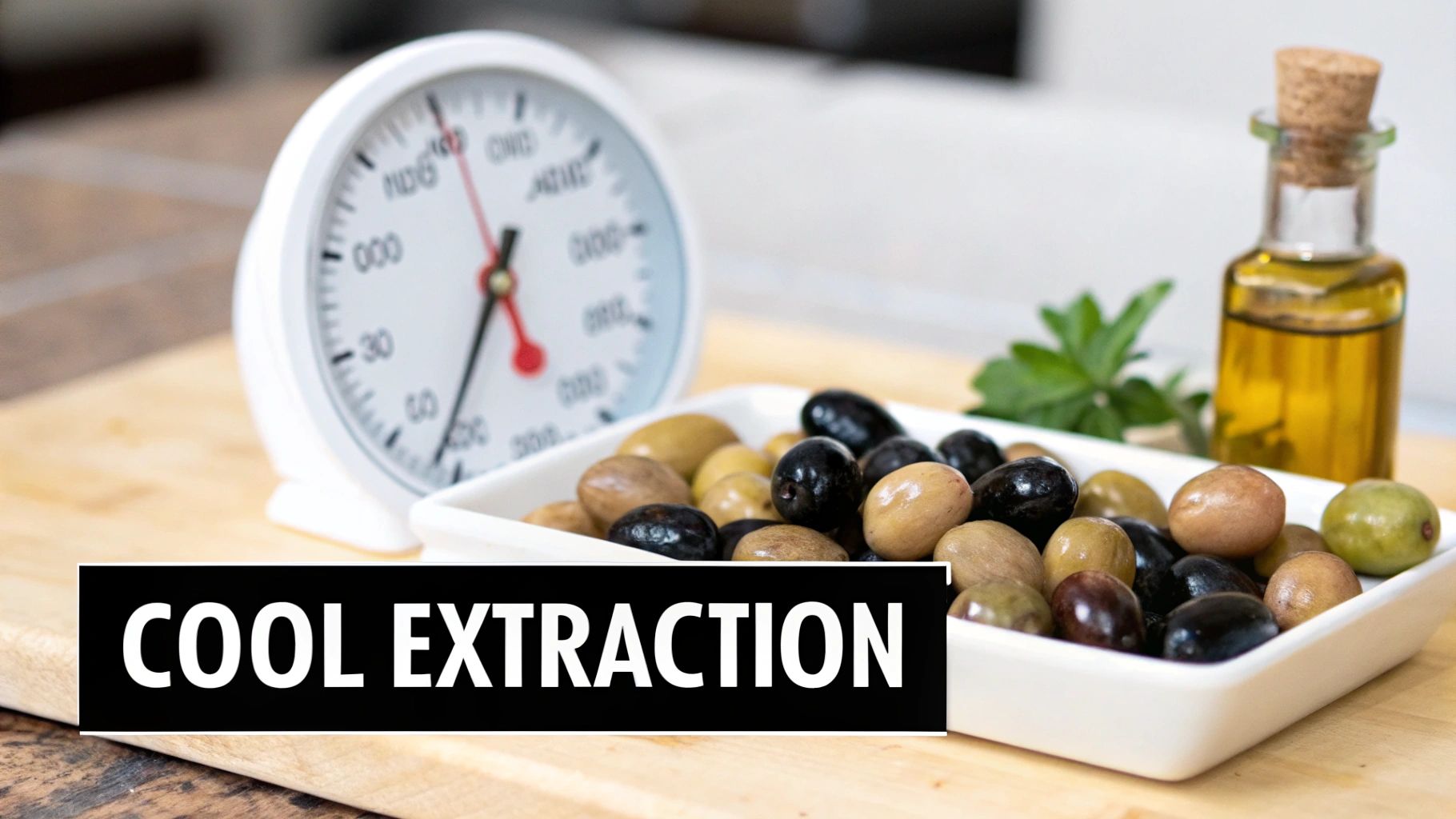
Walking down the olive oil aisle can feel overwhelming. The shelves are a sea of beautiful bottles, rustic labels, and words that sound impressive. But how do you separate a genuinely great oil from a cleverly marketed one?
Think of this as your field guide to becoming a savvy olive oil shopper. We're going to cut through the confusing jargon and deceptive claims. You'll get simple, powerful tools to spot true quality and bring home a bottle of cold pressed EVOO that’s worth every penny.
The Most Important Date on the Bottle
If you only remember one thing from this guide, make it this: the single most crucial indicator of quality is the harvest date. Olive oil is, at its heart, a fresh fruit juice. Just like orange juice, it’s at its peak right after it’s made. Its vibrant flavors and health-boosting polyphenols start to degrade from the moment it leaves the mill.
Don't be fooled by a "best by" or "bottled on" date. An oil can sit in a massive storage tank for a year or more before it's finally bottled. This makes the "best by" date look great, but the oil inside is already past its prime. The harvest date tells you the real story—when the olives were actually picked and pressed.
Always look for a harvest date that is as recent as possible. Ideally, you want an oil from a harvest within the last 12 to 18 months. This one detail cuts right through the marketing noise.
Decoding Deceptive Label Language
Marketers are experts at using words that sound good but mean very little. Let's bust a few common myths so you can see right through the sales pitch.
- "First Press" or "First Cold Press": This is just a romantic-sounding marketing term. As we’ve discussed, all true extra virgin olive oil must come from the first mechanical extraction. Seeing "first" on the label adds zero value and is often just a way to make an average product seem more traditional or special.
- "Light" or "Extra Light": This has nothing to do with calories. It refers to a lighter color and flavor, which is a direct result of heavy refining using heat and chemical solvents. These oils have been stripped of almost all their distinctive taste, aroma, and health benefits. They are not EVOO.
- "Pure Olive Oil": Sounds wholesome, right? Unfortunately, "pure" is another misleading industry term. It typically means the bottle contains a blend of mostly refined olive oil with just a tiny amount of virgin olive oil mixed in for a hint of color and flavor. It’s a lower-grade product, worlds away from a true EVOO.
These terms are designed to confuse you. Your best defense is to simply ignore them and focus on what really matters.
The secret to buying great olive oil isn't about memorizing complex definitions. It's about learning to tune out the marketing noise and focus on a few key signals of authenticity: the harvest date, a specific origin, and official seals of quality.
Your Quality Checklist at the Shelf
When you’re standing in that aisle, run through this quick mental checklist. It will help you filter out the duds and home in on the best bottles of cold pressed EVOO.
- Find the Harvest Date: This is your number one priority. If there’s no harvest date, be suspicious. An honest producer is proud of their oil's freshness and will state it clearly.
- Look for a Specific Origin: Vague phrases like "Product of Italy" or "Packed in Spain" can be red flags. This often means the oil is a blend from many different countries and of varying qualities. Look for a specific estate, region, or even a town. This signals traceability and a higher standard of care.
- Check for Certifications: Official seals like PDO (Protected Designation of Origin) or PGI (Protected Geographical Indication) are a strong guarantee of authenticity. These European Union certifications ensure the oil was produced, processed, and prepared in a specific geographical area using time-honored methods. They’re a legal promise of quality.
- Choose a Dark Bottle or Tin: Light is one of olive oil's greatest enemies. It causes the oil to oxidize and go rancid quickly. A quality producer knows this and will always package their oil in dark glass or an opaque tin to protect it. Avoid clear bottles completely.
For a deeper dive into these terms, our guide to understanding olive oil labeling breaks it all down. By arming yourself with this knowledge, you’ll go from a hopeful buyer to a confident consumer, ready to choose a bottle that truly represents the best of the olive.
From Tuscan Hills to Your Table: A Global Perspective
When you pour a stream of golden-green olive oil, you’re tasting more than just a condiment; you're tasting a place. Every great bottle of cold pressed EVOO is like a liquid postcard from its homeland, telling a story shaped by sun, soil, and the hands that picked the fruit.
The character of an olive oil is deeply tied to its terroir—that unique blend of climate, geography, and soil that gives agricultural products their distinct personality. A bottle from the windswept hills of Tuscany has a completely different soul than one from the sun-drenched groves of Andalusia.
Understanding this global perspective unlocks a deeper appreciation for the incredible diversity behind each bottle. It also sheds light on the economic and environmental forces that influence the cost and availability of your favorite oil.
The Mediterranean Powerhouses
The world of olive oil is really driven by a few key players, with Spain and Italy leading the pack. These countries don't just produce oil; their output sets the rhythm for the entire global market. A single bad drought in Andalusia, Spain’s largest olive-growing region, can make prices jump on supermarket shelves thousands of miles away.
On the flip side, good weather can lead to a production boom. For example, after a tough season, Spain’s output recently bounced back to an estimated 1,419,128 tons—a massive 66% increase—all thanks to normal rainfall returning. At the same time, Italy saw its own production climb by 30% to 300,000 tons. These figures show just how tightly supply is linked to regional climate. You can dive deeper into these market dynamics with detailed reports on global olive oil production and see how weather truly runs the show.
The global olive oil market is a delicate dance between nature and demand. A good year in the Mediterranean means stable prices for consumers worldwide, while a bad one reminds us just how precious this liquid gold truly is.
This interconnectedness is exactly why the origin of your cold pressed EVOO matters. It connects your kitchen directly to the fortunes of farmers an ocean away.
A World of Distinct Flavors
Just as a wine from Bordeaux tastes nothing like one from Napa Valley, olive oils from different places have their own signature profiles. Learning to recognize these personalities is one of the real joys of exploring premium EVOO.
Here’s a quick tour of what to expect from a few classic regions:
- Tuscany, Italy: Famous for producing bold, robust, and peppery oils. Think intense notes of green grass and artichoke, with that signature spicy kick in the back of your throat—a clear sign of high polyphenol content.
- Andalusia, Spain: This region is home to the Picual olive, which creates a full-bodied oil with hints of green tomato vine and a pleasant bitterness. You can also find Spanish oils, especially from Arbequina olives, that are wonderfully smooth, buttery, and gently fruity.
- Kalamata, Greece: Greek oils, often from the Koroneiki olive, tend to be aromatic and fruit-forward, with a softer peppery finish. They beautifully balance a delicate bitterness with notes of herbs and citrus.
- California, USA: As a "New World" producer, California offers a wide range of styles. Many California EVOOs are celebrated for being fresh, buttery, and often less bitter, with tasting notes of ripe avocado and almond.
Each region's oil tells a different story. A sharp Tuscan oil is the perfect, assertive finish for a hearty steak, while a milder Greek oil might be the gentle touch needed for delicate grilled fish. This global tapestry of flavor is what makes discovering a new cold pressed EVOO so much fun.
Tasting and Cooking with Your Premium EVOO
You’ve done the hard part. You navigated the confusing supermarket aisle and brought home a bottle of genuine, high-quality cold pressed EVOO. But the journey doesn’t stop there. Now for the best part—putting that liquid gold to work and making your food taste incredible.
This is where you graduate from a smart shopper to a confident cook. Learning how to properly taste and pair your olive oil is the secret to unlocking its full potential, turning a simple meal into something memorable.
Learning to Taste Like a Pro
Before you even think about drizzling it over a salad, take a moment to taste the oil all by itself. This isn't just for sommeliers; it’s a simple practice that reveals your oil's unique personality. A quick tasting will tell you everything you need to know about its core qualities.
Pour a small amount, just a tablespoon or so, into a small glass.
- Warm and Swirl: Cup the glass in your hands to gently warm the oil. This helps release its delicate aromas. Give it a gentle swirl, just like you would a glass of fine wine.
- Smell Deeply: Bring the glass to your nose and take a good sniff. What do you smell? A great cold pressed EVOO should smell fresh and vibrant—think freshly cut grass, artichoke, or green tomato leaf. If it reminds you of crayons, old nuts, or anything musty, it's likely defective.
- Sip and Slurp: Take a small sip and let it coat your entire mouth. Now, for the pro trick: suck in a little air through your teeth. This move, called stripaggio, sprays the oil across your palate, helping to reveal its full range of flavors.
As you taste, you're looking for three positive attributes. These are the holy trinity of a high-quality EVOO.
- Fruitiness: This is all about the fresh aromas and flavors of the olive fruit itself. It can range from delicate and ripe (buttery, nutty) to intense and green (herbaceous, peppery).
- Bitterness: A pleasant bitter note on the tongue is an excellent sign. It’s an indicator of fresh olives and a good measure of those health-boosting polyphenols.
- Pungency: That’s the peppery kick you feel in the back of your throat, the one that might even make you cough. This sensation comes from oleocanthal, a powerful natural anti-inflammatory compound. A strong peppery finish means you've got a fresh, high-antioxidant oil.
Ready to really master this? Our complete guide on how to taste olive oil will walk you through every step of the process.
The Art of Pairing Oil with Food
Once you have a feel for your oil's character—is it delicate, medium, or robust?—pairing it with food becomes second nature. The goal is to create balance, letting the oil complement and elevate the dish without overpowering it.
Think of your different EVOOs like spices in your pantry.
A delicate, buttery oil with soft fruity notes is the perfect finishing touch for gentle flavors. Try it on grilled fish, steamed vegetables, fresh mozzarella, or even a surprising drizzle over vanilla ice cream.
A robust, spicy oil with bold, peppery notes can stand up to powerful dishes. It’s brilliant over a thick grilled steak, a hearty bean soup, bitter greens like radicchio, or a rich tomato sauce.
The best way to learn is to play with your food. A simple slice of toasted bread is the perfect canvas for experimenting with different oil and food combinations.
Busting the Biggest Myth in the Kitchen
Let’s put one of the most persistent and damaging food myths to rest for good: you absolutely can cook with extra virgin olive oil. The idea that it has a low smoke point and can't handle heat is just plain wrong.
A high-quality cold pressed EVOO has a smoke point between 190–210°C (375–410°F). That's well above the temperatures you need for most home cooking, including sautéing, roasting, and even light frying.
What makes it so stable? It’s packed with monounsaturated fats and antioxidants, which resist breaking down under heat far better than the polyunsaturated fats in many common seed oils. Not only is cooking with it perfectly safe, but it also infuses your food with incredible flavor and nutrients. So go ahead—sauté your garlic, roast your vegetables, and sear your chicken with total confidence.
Your Questions About Cold Pressed EVOO Answered
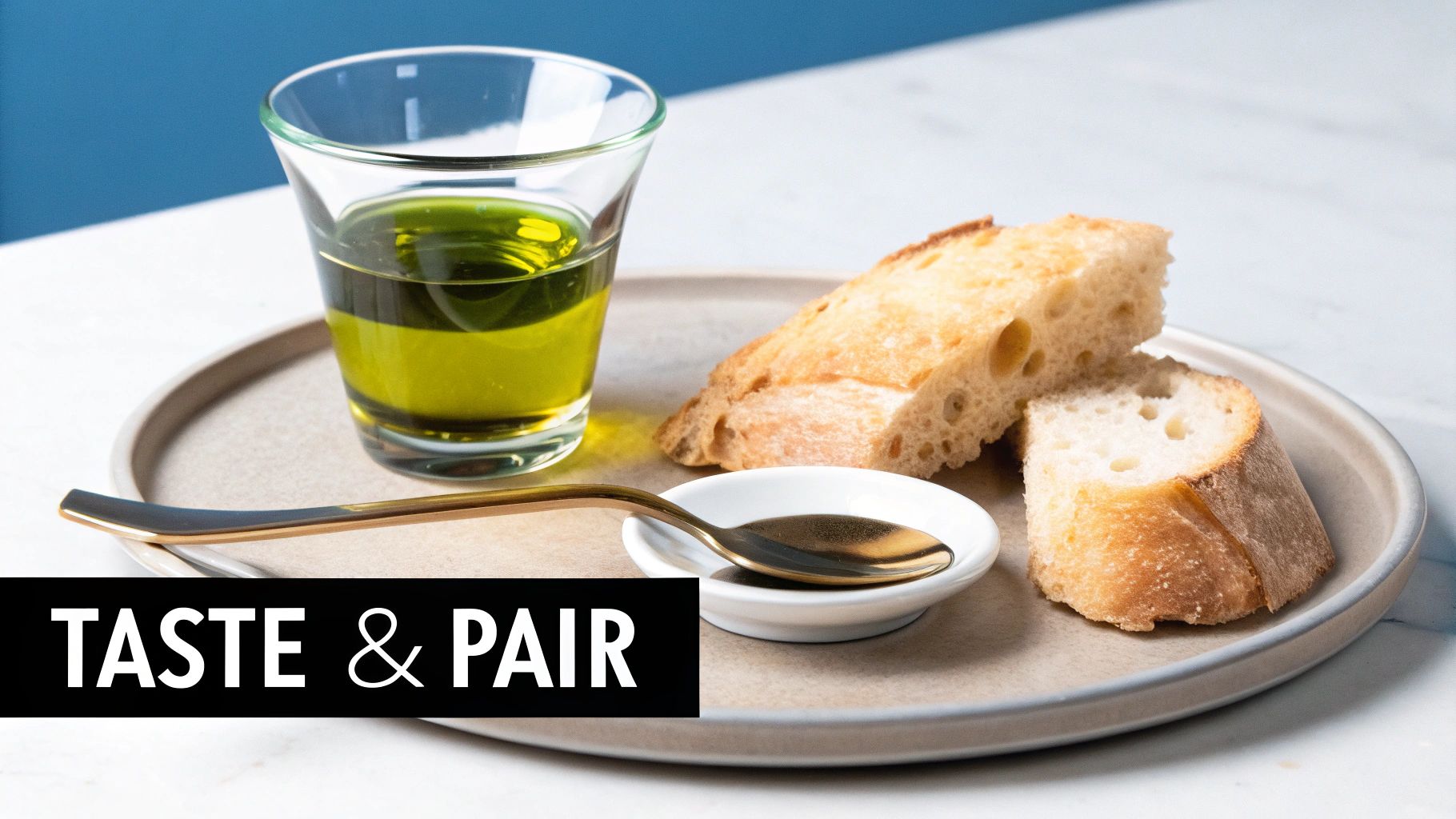
Even after you've learned the basics of premium olive oil, there are always a few questions that pop up. Let's tackle those common head-scratchers so you can feel completely confident when choosing and using your oil.
We've cut through the marketing noise, and now it's time to put that knowledge to work in your kitchen.
Is "First Cold Pressed" Better Than "Cold Pressed"?
In short, no. It’s a classic marketing phrase that sounds official but doesn’t mean much anymore. It's a relic from a bygone era when olive paste was literally pressed over and over with mats, but that technology is now history.
Today, all extra virgin olive oil must, by definition, come from the very first extraction. Modern centrifuges handle this in a single, continuous flow. So, adding the word "first" is just for show. The really important part of that phrase is "cold"—the guarantee that the temperature never went above 27°C (80.6°F), protecting all that amazing flavor and nutritional value.
Can I Really Cook With Cold Pressed EVOO?
Yes, absolutely! This is probably the biggest and most stubborn myth out there. It’s time to set the record straight. A genuine, high-quality cold pressed EVOO has a smoke point between 190–210°C (375–410°F). That’s more than high enough for everyday cooking like sautéing, roasting, and even light frying.
What makes it so stable? It’s packed with heat-resistant monounsaturated fats and powerful antioxidants that prevent it from breaking down. Not only is it safe, but cooking with a good EVOO infuses your food with incredible flavor and a boost of healthy polyphenols.
The old belief that you can't cook with EVOO is completely outdated. Its chemical makeup actually makes it one of the most stable cooking oils you can have in your pantry, far outperforming many refined seed oils.
You can dive deeper into the science behind this and discover all the other cold pressed olive oil benefits that make it such a kitchen powerhouse.
What’s the Best Way to Store My Olive Oil?
If you've invested in a great bottle of oil, proper storage is non-negotiable. Olive oil has three mortal enemies: heat, light, and air. To keep your oil tasting fresh and vibrant, just follow these simple rules:
- Find a cool, dark spot. A cupboard or pantry is perfect. Never store it next to the stove or on a sunny windowsill.
- Keep the cap on tight. Oxygen is the fastest way to turn a beautiful oil stale. Seal it up after every use.
- Choose dark packaging. A reputable producer will always use dark glass bottles or tins to shield the oil from damaging light.
Once you open a bottle, try to use it within two to three months to enjoy it at its absolute best.
Does Greener Olive Oil Mean It’s Higher Quality?
Not at all. The color of an olive oil tells you nothing about its quality. The shade can range from a brilliant, grassy green to a soft, buttery gold, and this all comes down to the olive variety, how ripe it was at harvest, and the level of chlorophyll.
In fact, professional olive oil tasters use special cobalt blue tasting glasses just to mask the color. This prevents it from subconsciously influencing their assessment. Instead of looking at the color, rely on the true signs of quality: a recent harvest date, a fresh and fruity aroma, and a complex, balanced taste with a peppery finish.
At Learn Olive Oil, we believe that understanding the story behind your food makes every meal better. We invite you to continue your journey and discover the world of premium olive oil with us. https://learnoliveoil.com

 Learn Olive Oil
Leave a comment