Picture this: you're holding a freshly picked olive. If you could squeeze it with just your hands and capture the vibrant, electric-green juice that trickles out, that would be the essence of cold-pressed olive oil.
It’s a term that whispers of tradition, of quality, of a time before factories and chemicals. It means the oil was extracted using nothing but pure, mechanical force. No shortcuts. No scorching heat. No chemical trickery. Just the raw, unadulterated soul of the olive, bottled.
This gentle persuasion is what stands guard over the olive’s peppery, complex flavors and its arsenal of health-boosting compounds—all of which vanish in the face of high temperatures.
The Simple Truth That Separates Good Oil from Great Oil
When you see “cold pressed” on a label, you’re not just reading a marketing slogan. You are reading a promise. A promise of a time-honored craft that values purity over profit, and flavor over high-volume efficiency.
This ancient method is the secret behind the lively, almost electrifying taste that defines a truly magnificent olive oil. It is the only way to preserve the living heart of the fruit.
At its core, the cold-press method is brutally simple: the oil is liberated from the olive using only physical force. The temperature is kept obsessively low, and chemical solvents are banished. This is the key that unlocks the olive’s delicate aromas, its rich flavors, and its potent nutrients.
This maniacal focus on temperature is everything. To earn the "cold pressed" title, the olive paste must never climb above a strict 27°C (around 80°F) during the entire extraction. Staying beneath this critical line is what separates a forgettable, commodity oil from a premium, life-giving elixir.
This meticulous standard is a pillar of what makes an olive oil truly "extra virgin." To see how deeply they are connected, you must read our guide on what extra virgin olive oil means. It’s this gentle handling that delivers a final product overflowing with both flavor and vitality.
Here is a stark comparison of what you’re really choosing at the shelf.
Cold Pressed Oil At a Glance
| Attribute | Cold Pressed Olive Oil | Standard Refined Olive Oil |
|---|---|---|
| Extraction Method | Mechanical press, no external heat allowed | High heat and/or chemical solvents |
| Temperature | Kept below 27°C (80°F) | High temperatures used to force maximum yield |
| Flavor Profile | Robust, fruity, peppery, complex | Neutral, bland, or lifeless |
| Nutritional Value | High in antioxidants (polyphenols) and vitamins | Nutrients are incinerated by heat and chemical refining |
| Acidity | Naturally pristine and low | Chemically treated to reduce high acidity |
| Color & Aroma | Vibrant green to gold; fresh, grassy aroma | Pale, washed-out yellow and often odorless |
Ultimately, choosing cold-pressed oil means you are choosing a product that is as close to its natural, living state as possible—a difference you can taste, smell, and feel in your body.
From Sun-Drenched Grove to Golden Oil
Imagine an ancient Mediterranean grove, the sun glinting off the silvery-green leaves of olive trees. The story of cold-pressed olive oil doesn't begin in a sterile factory but right here, under an open sky. It’s a process born of patience and precision, a universe away from the brutal industrial methods that chase quantity and sacrifice quality.
The journey ignites at harvest, the very moment the olives reach their peak of flavor and power. They're rushed to the mill, washed, and then crushed—skins, pulp, pits, and all—into a thick, astonishingly fragrant paste.
Now, the magic begins. This olive paste enters a crucial phase called malaxation—a fancy word for slow, gentle mixing. Think of it like a master baker kneading dough, a patient ritual designed to coax the tiny oil droplets to join together, all while the temperature is guarded like a state secret.
The Gentle Separation
Once the oil has gathered, it's time for the final, delicate act: extraction. Using nothing but mechanical pressure, the pure, golden-green liquid is carefully liberated from the solid olive paste and water. There is no added heat. There are absolutely no chemicals. This is the moment the true, living essence of the olive is captured in liquid form.
The diagram below reveals this simple, yet profoundly powerful, journey from the tree to the press and, finally, into the bottle.
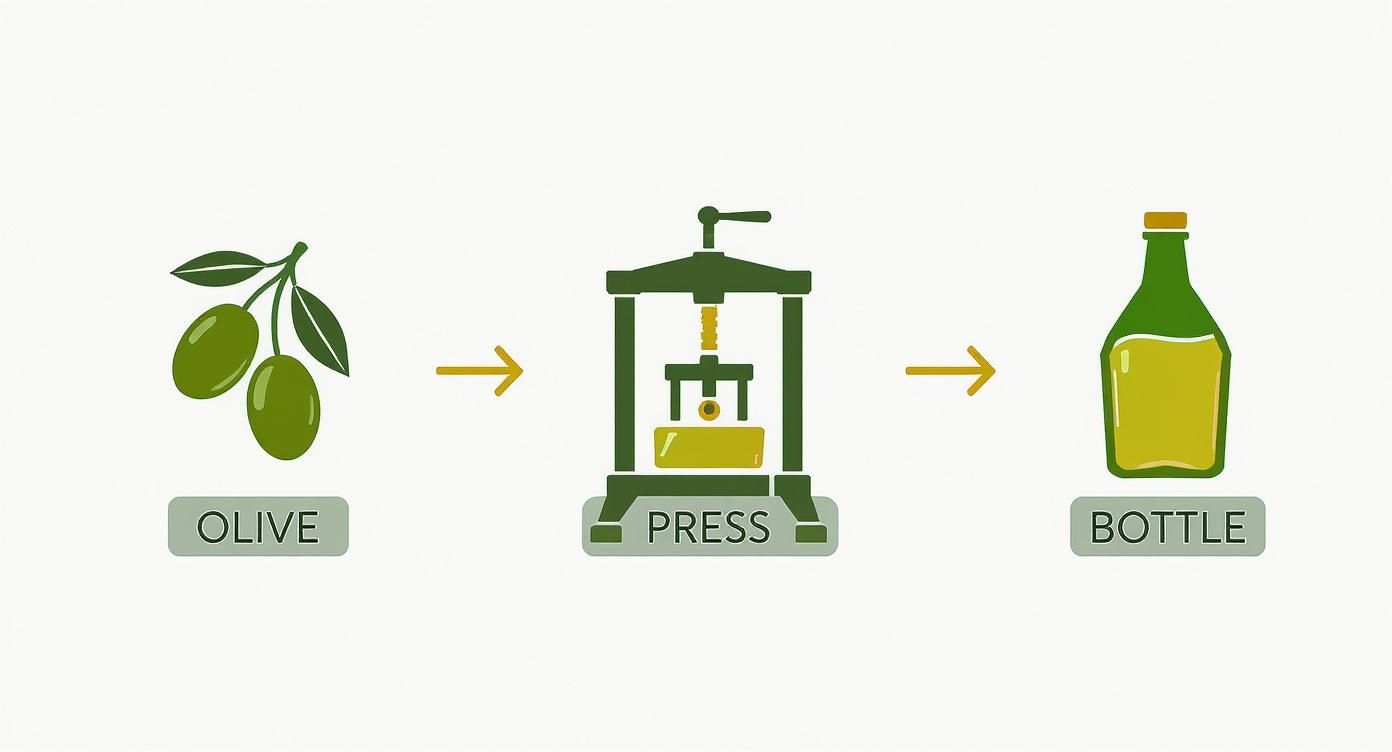
As you can see, it's a direct, mechanical transformation—and that is the secret that preserves the oil's astounding quality.
This method has been perfected over centuries, especially in the Mediterranean, the cradle of olive oil. In 2022 alone, global production reached about 2.7 million tonnes, with giants like Spain and Italy leading the way with these time-tested techniques.
This devotion to a natural, unhurried process is precisely what defines authentic cold-pressed olive oil. To get a closer look at the machinery and steps, see this fantastic guide on how olive oil is made. It’s a method that honors the fruit, ensuring every drop is as vibrant and potent as nature commanded.
Why Heat Is the Arch-Enemy of Great Olive Oil
In the world of mass production, heat is a powerful ally. It accelerates processes, extracts more product, and inflates profits. But when it comes to olive oil, heat is a vandal. It is a thief that robs the final product of everything that makes it precious.
Applying heat during extraction is an industrial shortcut, plain and simple. It violently breaks down the olive paste, making it easier to wring out every last drop of oil. While this maximizes yield for the producer, it inflicts a catastrophic loss on you, the consumer. The vibrant, living character of the oil is simply cooked to death.
Think of it like this: you can gently pan-sear a delicate fillet of fish to perfection, or you can boil it into a tasteless mush. You start with the same ingredient, but the results are from different universes. Heat degrades the very compounds that give extra virgin olive oil its legendary superfood status.
The Guardian of Goodness: The Temperature Limit
That sacred temperature limit for cold-pressed olive oil—below 27°C (about 80°F)—is not some arbitrary number. It is the scientifically proven line in the sand that separates true quality from a worthless commodity. Go above this point, and the destruction begins instantly.
This gentle, low-temperature process is the guardian of the oil's character and nutritional firepower. It protects the delicate, health-giving compounds from being obliterated before they ever reach your table.
So, what exactly do we lose when the temperature gauge creeps up?
- Polyphenols: These are the potent antioxidants that deliver the oil’s peppery kick and its famous anti-inflammatory benefits. They are also tragically sensitive to heat.
- Aromas: Those fresh, grassy, and fruity notes that sing in a great olive oil are volatile compounds. They simply evaporate under heat, leaving behind a dull, one-dimensional oil.
- Vitamins: Essential nutrients like Vitamin E are decimated during high-temperature processing.
This is precisely why "cold-pressed" is more than a marketing phrase; it's your ironclad guarantee that you’re getting an oil that is alive with both flavor and nutrition. While this process protects the oil's integrity during production, that's a different concept from its performance in your kitchen. To learn more about how it holds up to heat during cooking, you can read our complete guide on the smoke point of EVOO.
Cold Pressed vs The Other Guys: An Unfair Fight
It’s a brutal truth: not all olive oils are created equal. While cold pressing is a philosophy hell-bent on preserving the authentic soul of the olive, many oils on your supermarket shelf are products of a completely different, and far more sinister, mindset.
This is where a sharp line is drawn in the sand. Modern industrial methods are engineered for one thing: to squeeze every possible molecule of oil from the fruit, prioritizing sheer volume over flavor, aroma, and nutritional value. The most common shortcuts involve punishing heat and chemical solvents.
The High-Yield, Low-Quality Gamble
Blasting the olive paste with heat is an easy way to get more oil, but it comes at a terrible cost. Heat annihilates the delicate polyphenols—the antioxidants responsible for olive oil's legendary health benefits—and incinerates the fresh, vibrant aromas that define a superior oil. The result is a bland, dead product.
Chemical extraction takes this violation a step further. After an initial pressing, industrial solvents like hexane (a component of gasoline) are used to chemically rip the remaining oil from the olive paste. This oil is utterly unfit for human consumption until it undergoes an intense refining process that involves bleaching and deodorizing.
What you're left with is a neutral-tasting, pale yellow liquid that is technically from olives, but it has been stripped of its soul. It's the ghost of what olive oil should be, utterly lacking the antioxidants, flavor, and vibrant color of its cold-pressed cousin.
To truly grasp the chasm between them, let's pit these methods head-to-head.
Olive Oil Extraction Method Showdown
| Extraction Method | Process | Impact on Flavor | Nutritional Value |
|---|---|---|---|
| Cold Pressing | Mechanical pressing below 80.6°F (27°C). No heat or chemicals. | Preserves fresh, complex flavors (peppery, grassy, fruity). | Highest. Rich in polyphenols, antioxidants, and vitamins. |
| Heat Extraction | Mechanical pressing with added heat to force a higher yield. | Muted, flat, or even burnt flavors. Lacks fresh notes. | Lower. Heat degrades delicate antioxidants and nutrients. |
| Solvent Extraction | Uses chemical solvents (e.g., hexane) and heat on leftover paste. | Neutral/Bland. Requires industrial refining to remove chemicals and odors. | Lowest. The refining process strips away nearly all beneficial compounds. |
As you can see, how the oil is freed from the olive determines everything about what ends up in your bottle. This principle of gentle, heat-free processing isn't unique to olive oil. You can see how it preserves quality in other products by learning about cold extraction methods in beverages like specialty coffee.
Ultimately, choosing cold-pressed olive oil means you are choosing the authentic, uncompromised juice of the olive. To get into the fascinating details of the machinery and steps, you can take a deeper dive into the world of olive oil extraction.
How to Spot Authentic Cold Pressed Olive Oil Like an Expert
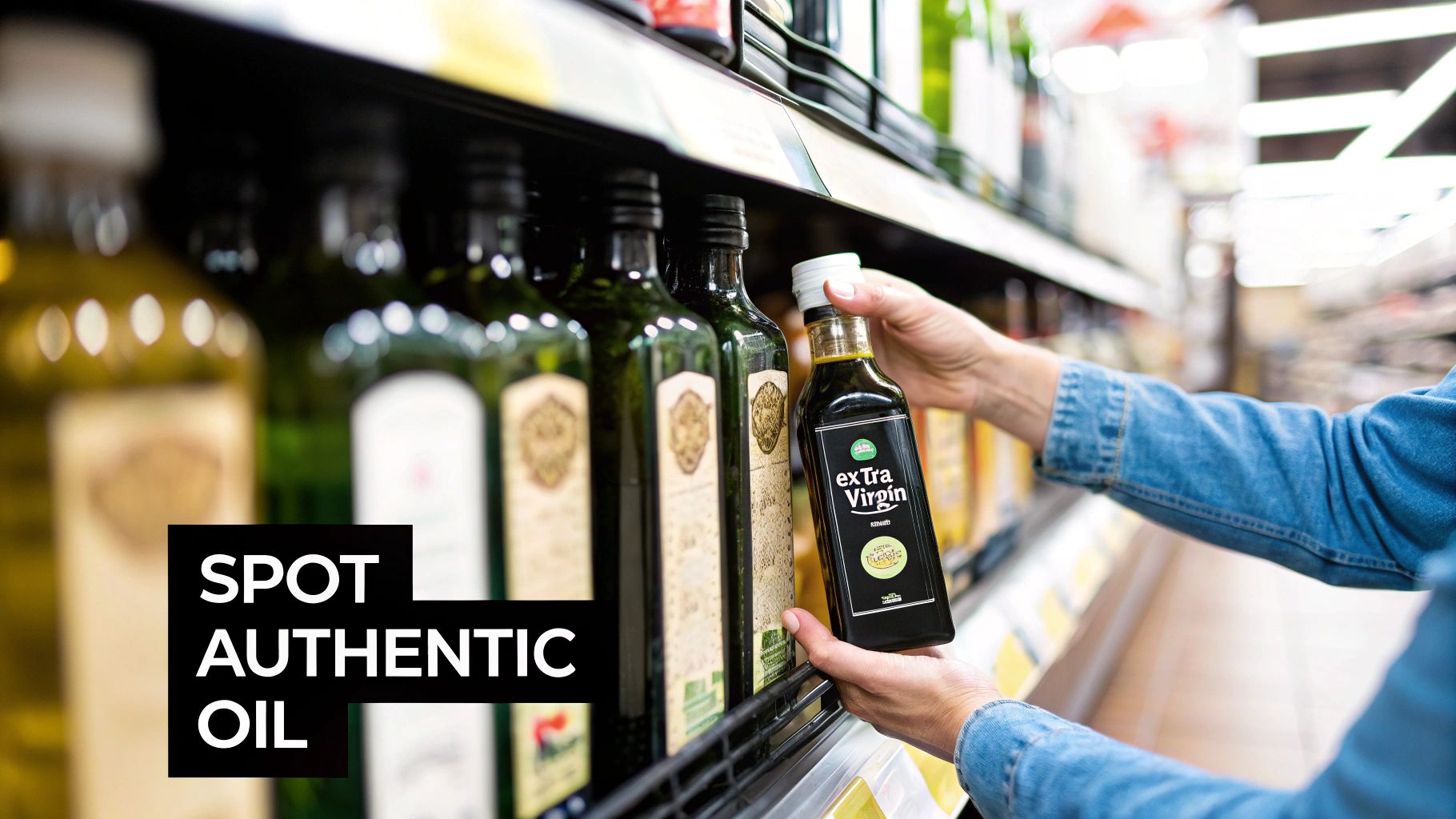
Walking down the supermarket oil aisle is an exercise in confusion. The shelves are a sea of bottles, and every label screams a different promise. To find a genuinely great bottle of cold-pressed olive oil, you must learn to cut through the marketing noise and spot the genuine article.
First, a critical secret: ignore the "best by" or "bottled on" dates. They tell you nothing about when the olives were actually picked and pressed. The single most important clue you can find is a harvest date. A producer who is proud of their oil’s freshness will shout it from the rooftops, often listing the season and year (e.g., "Fall 2023 Harvest"). This is your best indicator of the oil's age and potency.
Decoding the Label and Judging the Bottle
Next, your eyes must hunt for one key phrase: "Extra Virgin Olive Oil." This isn't just marketing fluff; it's a legally defined grade signifying the highest quality, lowest acidity, and a complete absence of defects. While you also want to see "Cold Pressed" or "Cold Extraction" on the label, those terms are only truly meaningful when they ride shotgun with the "Extra Virgin" classification.
Think of "Extra Virgin" as the non-negotiable foundation of quality. A truly great oil will always be both extra virgin and cold-pressed.
Once you’ve vetted the words, judge the packaging. High-quality olive oil is a delicate, living product with three sworn enemies: light, air, and heat.
- Light: A true artisan knows that light is poison to their oil. Always choose oil sold in a dark-colored glass bottle (deep green or brown) or a sealed, opaque tin. A clear bottle is a giant red flag—it signals that the fragile, health-giving compounds inside have been degrading from the moment the bottle hit the shelf.
- Origin: Demand specifics. A label that says "Product of Italy" is better than "Product of the Mediterranean," but a label that names the specific region or even the family estate is your gold standard. Vague origins can mean the oil is a cheap blend from multiple countries.
Unfortunately, even with these clues, mislabeling is a plague upon the olive oil industry. To truly arm yourself, it's worth learning how to spot fake olive oil and getting familiar with the common scams. A little knowledge is a powerful weapon, ensuring you bring home an authentic, healthy, and breathtakingly delicious olive oil every time.
So, Why All the Fuss About Cold-Pressed?
The obsession with cold-pressed olive oil isn't just another passing foodie trend. It's a key part of a much larger story—a global rebellion against fake, over-processed food. People are tired of industrial-scale products and are actively hunting for ingredients that are authentic, clean, and transparent.
This is about more than just a label; it’s about a deep-seated desire for wellness. We don't just want our food to fill a hole in our stomach; we demand that it nourishes us. Cold-pressed oil, with its promise of being unrefined and bursting with nutrients, answers that demand perfectly.
This isn't a niche market anymore. The worldwide hunger for high-quality, authentic ingredients has created a tidal wave, and the premium oil sector is riding the crest. It is undeniable proof that people are willing to invest in their health and in a superior taste experience.
And this isn't just a feeling. The numbers tell the story. The market for cold-pressed oil rocketed to USD 31.26 billion in 2024 and is climbing a steep upward curve. This is a powerful consumer vote for quality over mere quantity. For a closer look at these figures, explore this detailed market analysis.
Frequently Asked Questions
First Cold Pressed vs. Cold Pressed: What’s the Real Difference?
In today's world of olive oil production? Absolutely nothing. The term "first cold pressed" is a romantic relic from old-world methods where a single batch of olive paste might have been pressed more than once.
Modern extraction is a marvel of efficiency, getting all the best oil out in one continuous process. So while seeing "first cold pressed" on a label feels traditional and reassuring, any bottle of extra virgin olive oil labeled "cold pressed" has undergone the exact same superior process. It’s mostly marketing nostalgia.
So, Can I Actually Cook With Cold Pressed Olive Oil?
Absolutely, and you are missing out if you don't! It's one of the most persistent myths in cooking that you can't heat extra virgin olive oil. A high-quality EVOO has a smoke point between 375-410°F (190-210°C), which is safely above the temperatures for most home cooking, including sautéing and roasting.
While its magnificent flavors are showcased when drizzled over a finished dish, do not hesitate to make it your everyday cooking oil. It is both a healthier and more delicious choice.
Does Cold Pressed Olive Oil Go Bad?
Yes, it most certainly does. Unlike a fine wine, olive oil is a fresh fruit juice; it does not get better with age. Its greatest enemies are light, heat, and oxygen, which ruthlessly degrade its flavor and health benefits over time.
Always hunt for a harvest or press date on the bottle and aim to use it within 18-24 months of that date. Once opened, you are in a race against time. Try to finish the bottle within a few months to experience it at its peak power and flavor.
A simple rule to live by: treat your olive oil like fresh produce, not a forgotten pantry staple. Storing it in a cool, dark place is non-negotiable if you want to preserve its vibrant character and potent nutrients.
Ready to explore the world of premium, authentic olive oil? At Learn Olive Oil, we provide expert guides, tasting notes, and recommendations to help you discover your next favorite bottle. Start your journey with our expert olive oil guides.

 Learn Olive Oil
Leave a comment