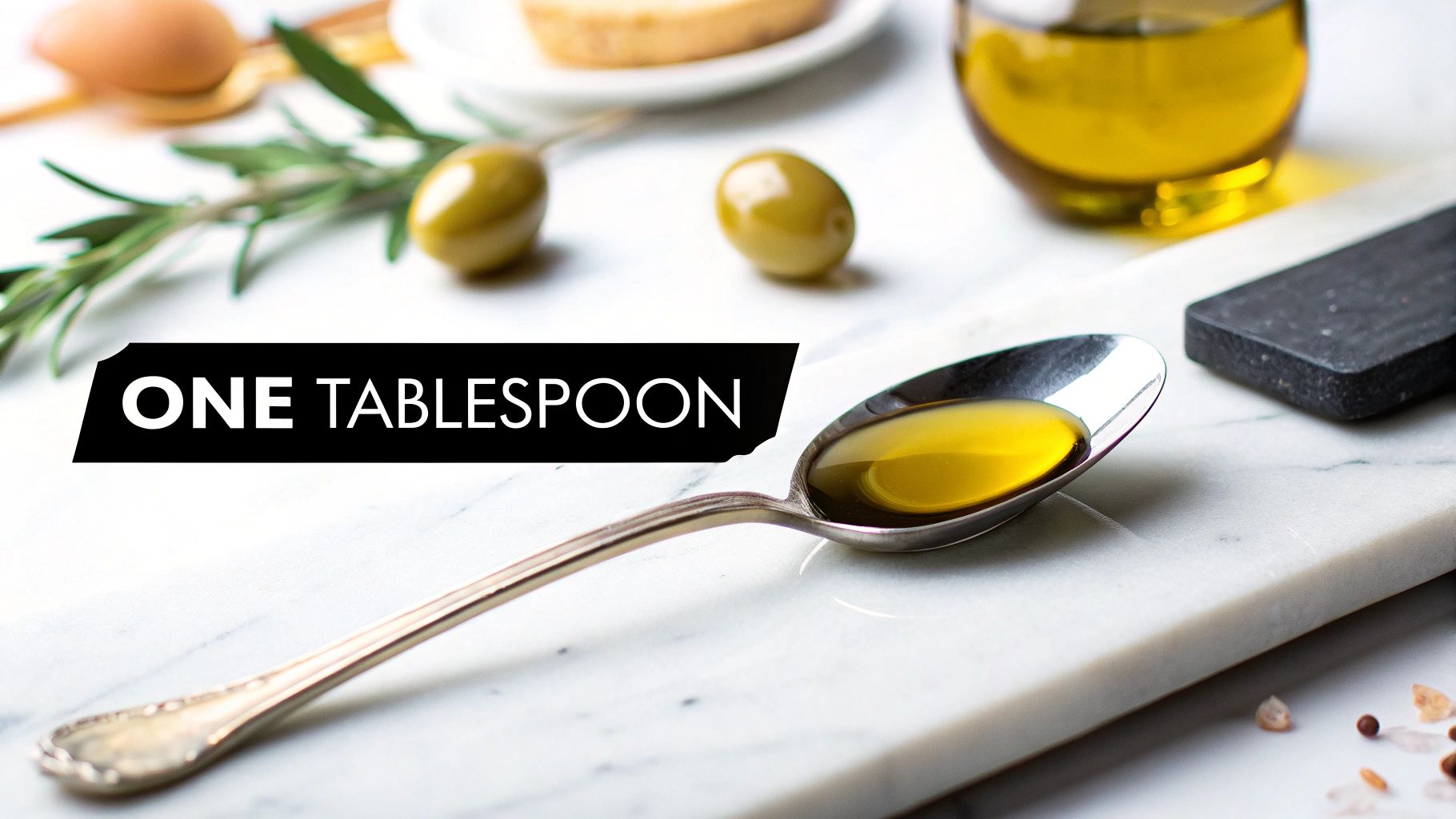
Let's cut to the chase. When you drizzle that luscious, golden-green liquid over your salad, what are you really adding to your food? You think it's just a simple cooking fat. But what if I told you that a single tablespoon holds a nutritional secret so potent it could change the way you think about food forever?
At its most basic, one tablespoon (15 ml) of extra virgin olive oil delivers about 126 calories and 14 grams of fat. But don't let the word "fat" send you running for the hills—this is where the real story begins. The fat in genuine EVOO is almost entirely the heart-loving, unsaturated kind your body craves. Forget carbs, protein, or fiber. They’re not invited to this party.
Think of it as pure, liquid gold—a concentrated source of clean energy and life-enhancing fats. Grasping this simple fact is the first step to understanding why true extra virgin olive oil has been a pillar of robust health for thousands of years.
A Deeper Dive Into the Spoonful
So, what do those numbers truly mean for your body? Each spoonful is a powerful dose of energy, fueled almost entirely by heart-healthy monounsaturated fats. For a more detailed look at the numbers, you can explore our full breakdown of olive oil calories per tablespoon.
But the story doesn't end there. That tablespoon is also a delivery system for crucial fat-soluble vitamins that your body desperately needs. It’s a surprisingly rich source of Vitamin K, providing about 9% of the daily value—essential for everything from blood clotting to building strong bones.
You'll also get a significant hit of Vitamin E, a mighty antioxidant that acts as a bodyguard for your cells, protecting them from the daily onslaught of oxidative stress. This is what separates real EVOO from any other oil on the shelf; it's a functional food that actively works to improve your health from the inside out.
Here’s the powerful promise in every serving:
- Energy-Rich: A pure, dense source of fuel for your body's engine.
- Heart-Healthy Fats: Comprised almost entirely of beneficial monounsaturated and polyunsaturated fats.
- Essential Vitamins: A meaningful source of both Vitamin E and Vitamin K.
Extra Virgin Olive Oil Nutrition at a Glance (Per Tablespoon)
To make it crystal clear, here is a quick summary of the key nutritional components hidden inside a standard 15ml serving of authentic extra virgin olive oil.
| Nutrient | Amount | What It Means for You |
|---|---|---|
| Calories | ~126 | A concentrated source of clean energy. |
| Total Fat | 14 g | The foundation of EVOO's health benefits. |
| Monounsaturated Fat | ~10 g | The "good fat" linked to heart health. |
| Polyunsaturated Fat | ~1.5 g | Includes essential fatty acids. |
| Saturated Fat | ~2 g | A minimal amount, far less than butter. |
| Vitamin E | ~13% DV | An antioxidant that protects cells. |
| Vitamin K | ~9% DV | Crucial for blood clotting and bone health. |
| Carbs & Protein | 0 g | A pure fat source, ideal for many diets. |
This simple nutritional profile sets the stage for the cascade of incredible health benefits we’re about to uncover. This isn't just an ingredient; it's a nutritional powerhouse in a bottle.
Why All Fat Is Not Your Enemy
Let's be brutally honest. Seeing "14 grams of fat" on a label feels like a red flag. For decades, we've been brainwashed into believing that fat is the villain—a number to be feared and avoided at all costs. But this is where the story of extra virgin olive oil takes a dramatic turn. And it’s a twist that could change your health forever.
The simple, liberating truth is this: not all fats are created equal. Some are the dietary demons we’ve been warned about, but others are the unsung heroes of a long, healthy life. The fat in EVOO belongs firmly in the hero category, and discovering why is the key to unlocking its almost magical benefits.
A jaw-dropping 73% of the fat in extra virgin olive oil is monounsaturated fat. This isn't just inert filler; it's an active, benevolent force working to fortify your body from within.
The Miracle of Oleic Acid
The undisputed superstar in this cast of "good fats" is a fatty acid called oleic acid. This is the powerhouse compound that has earned EVOO its ironclad reputation for supporting long-term health, especially for your heart.
Think of oleic acid as a silent, diligent maintenance crew for your circulatory system. It doesn’t work with brute force. Instead, it gently and persistently helps keep your arteries flexible and clear.
This supports a healthy cholesterol balance, championing the "good" HDL cholesterol while helping to manage the "bad" LDL cholesterol. It's like a daily tune-up for one of your body's most critical systems, delivered in every delicious spoonful.
In essence, the fats in EVOO aren't just empty calories. They are functional components that actively contribute to your body's defense systems, helping to reduce inflammation and protect against oxidative stress.
This demands a complete revolution in how we view fat. Instead of a menace to be shunned, the right kind of fat becomes an indispensable ally for lifelong vitality. This is precisely why diets built around authentic extra virgin olive oil are consistently linked to superior health outcomes around the world.
More Than Just Heart Health
But the benefits don't stop at your heart. The unique fatty acid profile of EVOO is what makes it a cornerstone of a truly healthy lifestyle. Its powerful anti-inflammatory properties and its role in protecting your cells are just a couple of examples of its wide-reaching impact.
You can dive deeper into the wide range of evidence-backed olive oil health benefits in our comprehensive guide. Learning to embrace these "good fats" isn't just about tweaking your diet; it's about changing your entire perspective on wellness. It’s about turning a one-time foe into your body’s most valuable friend.
The Hidden Power of Polyphenols
If healthy fats are the star of the show, then polyphenols are the behind-the-scenes miracle workers delivering an astonishing array of benefits. These potent plant compounds are the secret that separates genuine extra virgin olive oil from its cheap, refined, and nutritionally barren cousins. They are, quite simply, the life force of the olive—responsible for its unique flavor, its remarkable stability, and the vast majority of its profound health properties.
Exploring the microscopic world of EVOO reveals a vibrant ecosystem of these compounds. Have you ever felt that sharp, peppery sensation in the back of your throat when you taste a truly high-quality oil? That isn’t a defect—that is the unmistakable signature of oleocanthal, one of EVOO’s most powerful polyphenols, announcing its presence. That feeling is a direct signal of the oil's potent antioxidant and anti-inflammatory power.
Your Body’s Cellular Guardians
To truly grasp what polyphenols do, picture what happens when you slice an apple and leave it on the counter. It quickly turns brown from exposure to oxygen—a process called oxidation. A similar, but invisible, type of damage known as oxidative stress is happening to the cells in your body every minute of every day.
Polyphenols are your body's internal army against this cellular decay. Just as a squeeze of lemon juice shields the apple from browning, the antioxidants in extra virgin olive oil protect your cells from the relentless assault of free radicals.
This cellular protection is monumental for your long-term health. It’s not about a single benefit; it's about forging a more resilient internal environment. You can learn more about the specifics of olive oil polyphenol content and discover why higher levels make such a dramatic difference. This shielding action helps explain why diets rich in high-polyphenol EVOO are consistently linked to better health and longevity.
Beyond a Single Source
While extra virgin olive oil is a phenomenal source of these protective compounds, it belongs to a larger family of powerful plant-based foods. Other natural sources also pack a significant antioxidant punch, like the powerful antioxidant EGCG found in matcha. The critical lesson is that these microscopic molecules, whether they come from an olive or a tea leaf, play a colossal role in safeguarding your well-being.
The polyphenols in EVOO are what truly elevate it from a simple cooking fat to a functional superfood. They are the invisible artisans connecting a simple drizzle of oil to some of the most impressive health results known to nutritional science.
How to Read an Olive Oil Label Like a Pro
That walk down the grocery aisle can feel like an ambush. Bottles shout "Pure," "Light," and "Virgin," but what do these words really mean for the olive oil extra virgin nutrition facts you're desperately seeking? It’s a deliberately confusing landscape, designed to make you grab any bottle in frustration and move on.
This is where you seize control. The label is your secret weapon, a treasure map that reveals the oil’s true character and nutritional potency. Learning to decode it is the single most important skill for ensuring you’re bringing home authentic, health-boosting liquid gold, not a worthless counterfeit.
To earn the coveted "extra virgin" designation, an olive oil must pass a battery of strict international tests. This isn’t just marketing jargon; it's a hard-won guarantee of quality, earned through a meticulous journey from the olive grove to your bottle.
Unlocking the Label's Secrets
The most vital information is rarely on the front. To unearth a truly superior oil, you must become a detective, searching for a few key clues on the back or side of the bottle.
-
Harvest Date: This is your #1 indicator of freshness and potency. Look for a specific date, like "November 2024." The fresher the oil, the higher its polyphenol count and the more powerful its health benefits. An old oil is a dead oil.
-
Country of Origin: Honest oils proudly declare where the olives were grown and milled. Beware of vague phrases like "Packed in Italy," which can mean the olives were sourced from anywhere in the world and simply bottled there.
-
Acidity Level: This is a key chemical benchmark of quality. To be classified as EVOO, the oil must have a free acidity level of 0.8% or less. This low number is your proof that the olives were healthy and processed with lightning speed, preserving their freshness and purity.
The Real Meaning of Quality
One of the most revealing metrics of an oil's quality is its free acidity. Don't think of it as a measure of taste; think of it as a "freshness score." It reveals how much the fats have begun to break down between the moment the olive was plucked from the tree and the oil was bottled.
A lower acidity number signifies a healthier, more stable oil. It's a direct reflection of careful harvesting and expert milling—the two factors most responsible for preserving the precious nutrients you expect from a premium product.
Making sense of these details might seem daunting at first. But once you know what to look for, it's incredibly empowering. For a deeper look into this topic, check out our complete guide to understanding olive oil labeling. Armed with this knowledge, you can confidently choose a bottle that delivers both extraordinary flavor and a powerful nutritional payload.
EVOO vs. Other Oils: A Nutritional Showdown
So, how does extra virgin olive oil truly measure up against the other bottles lurking in your pantry? When you pit it against common oils like coconut, canola, or a generic vegetable blend, the differences are not just noticeable—they're monumental. This isn't just a matter of taste. It’s about the fundamental impact these fats have on your body.
Many popular oils, especially those anonymous "vegetable oil" blends, are brimming with omega-6 polyunsaturated fats. Worse, they typically endure a harsh chemical refining process that strips them of the very micronutrients and antioxidants that make an oil genuinely good for you. They may have a purpose, but they simply cannot deliver the nutritional knockout punch of a high-quality EVOO.
Consider coconut oil. It's composed almost entirely of saturated fat. While it enjoyed a brief moment as a health fad, its high saturated fat content makes it a far less desirable choice for daily, heart-conscious cooking when compared to the monounsaturated champion, EVOO.
The Fatty Acid Face-Off
At the core of this battle are the fatty acid profiles. An oil's unique fat composition directly dictates how it interacts with your body, from your cardiovascular health down to your cellular function. The olive oil extra virgin nutrition facts reveal a profile overwhelmingly dominated by heart-friendly monounsaturated fats, particularly oleic acid, which has been studied extensively for its remarkable benefits in supporting cardiovascular wellness.
It’s fascinating to see how different fats affect us. Even fats from other "healthy" sources can have unexpected side effects, as some research into Omega-3 fish oil supplements and digestive comfort reveals.
The true magic of EVOO isn't just its "good fats." It's the powerful synergy between its healthy fatty acid profile and its rich concentration of polyphenols. That's a one-two punch that refined oils simply cannot replicate.
If you want to dive deeper into a specific comparison, our guide on olive oil vs. canola oil offers a detailed breakdown of these two kitchen staples.
Let's put some of the most common oils side-by-side to get a clearer picture.
Cooking Oil Comparison: EVOO vs The Competition
This table breaks down the nutritional profiles and ideal uses for extra virgin olive oil compared to other popular cooking oils you might have at home.
| Oil Type | Primary Fat Type | Key Nutrients & Compounds | Best Culinary Use |
|---|---|---|---|
| Extra Virgin Olive Oil | Monounsaturated | Oleic Acid, Vitamin E, Polyphenols | Sautéing, dressings, finishing, roasting |
| Coconut Oil | Saturated | Lauric Acid, Medium-Chain Triglycerides | High-heat baking, some frying |
| Canola Oil | Monounsaturated | Omega-3 & Omega-6 (ratio varies) | All-purpose cooking, baking, frying |
| Vegetable Oil (Blend) | Polyunsaturated | High in Omega-6, low in micronutrients | General-purpose frying and baking |
| Avocado Oil | Monounsaturated | Oleic Acid, Vitamin E, Lutein | High-heat cooking, searing, dressings |
As you can see, while other oils have specific uses, EVOO stands alone with its unique combination of heart-healthy monounsaturated fat and powerful, protective antioxidant compounds.
The image below shows you exactly what to look for on a label to make sure you're getting a bottle with maximum nutritional value.
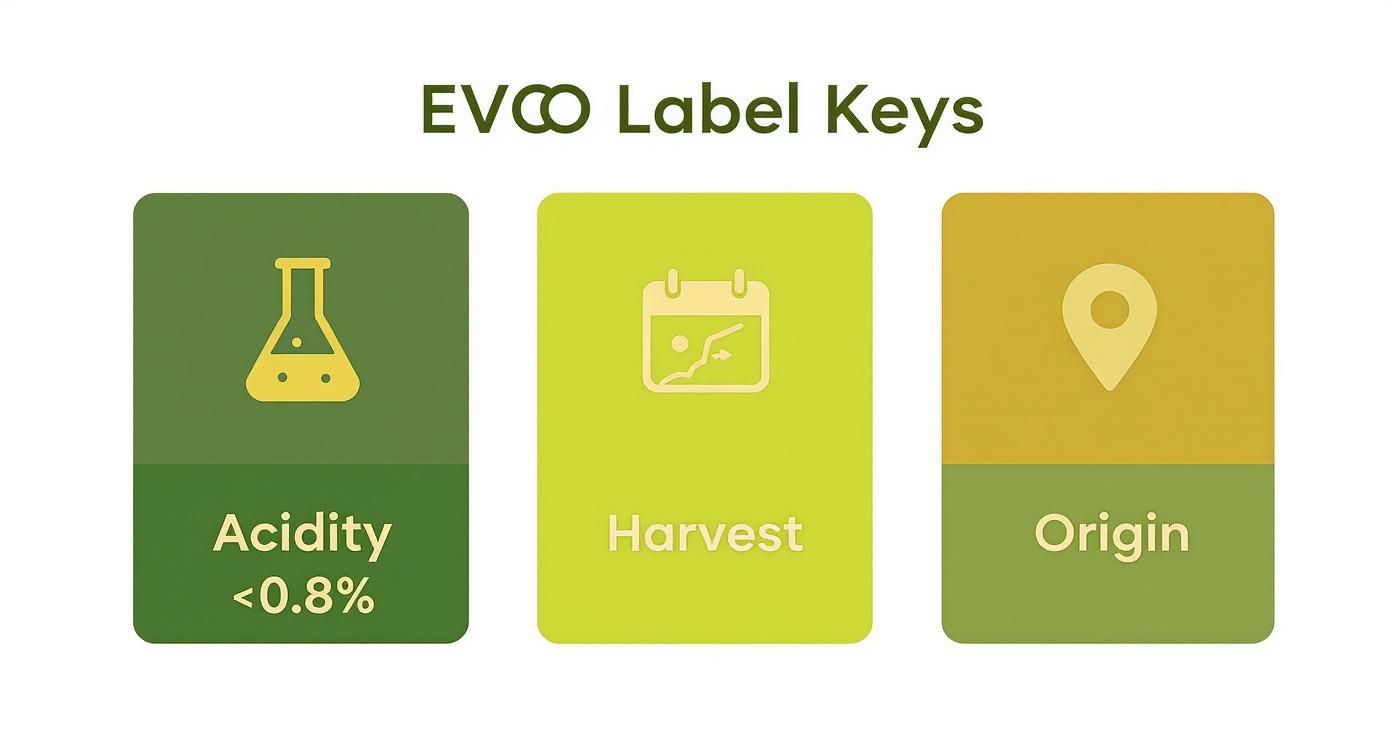
This isn't about finding a single "perfect" oil. It's about understanding the key players so you can make smarter choices for your health. By paying attention to acidity, harvest date, and origin, you guarantee the oil you bring home is not just delicious, but a genuine investment in your well-being.
The Rise of a Global Health Phenomenon
What was once a cherished secret of sun-drenched Mediterranean kitchens has exploded into a global wellness movement. Extra virgin olive oil has evolved from a simple cooking staple into a celebrated superfood, and this is no passing trend. We are witnessing a fundamental shift in how people view the powerful connection between food, health, and flavor.
Millions are making the switch, and the reason is undeniable. As irrefutable scientific evidence continues to mount—linking EVOO to everything from improved heart health to reduced inflammation—people are taking notice. They are no longer just grabbing any bottle of cooking oil; they are deliberately investing in a functional food, an ingredient that delivers tangible health benefits far beyond basic nutrition.
This seismic shift in consumer awareness is fueling astounding market growth. The global olive oil market was valued at an impressive USD 25.5 billion in 2023 and is projected to soar to USD 38.4 billion by 2030. The extra virgin category is the undisputed engine driving this surge, with forecasts suggesting it could reach nearly USD 19.8 billion by 2031. This boom is a direct result of the growing demand for oils bursting with antioxidants and healthy fats. You can dig deeper into the numbers behind this growth in this comprehensive market analysis.
A Movement Rooted in Proof
This is not a phenomenon built on slick marketing or social media hype. It is a movement anchored in decades of rigorous research that has finally validated the time-honored health wisdom of Mediterranean cultures. The link between the olive oil extra virgin nutrition facts and real-world health outcomes is simply too powerful to ignore.
It's a simple, powerful equation: as scientific proof of its benefits became more widespread, consumer demand followed. This created a cycle where discerning buyers sought out higher-quality, authentic EVOO, fueling a market that prizes transparency and nutritional potency.
Ultimately, the global rise of EVOO represents more than just a change in our shopping habits. It signals a collective awakening towards more conscious eating, where every meal is an opportunity to nourish and fortify our bodies. This liquid gold stands at the very forefront of that movement—delicious, versatile, and profoundly good for you.
Your EVOO Questions, Answered
Let's cut through the confusion. When you finally bring a bottle of exceptional extra virgin olive oil into your kitchen, a few persistent questions and myths always surface. Getting clear, honest answers is the key to using this incredible ingredient with total confidence, every single day.
This isn't just about the numbers on a label; it’s about how EVOO fits into your real life. We want to ensure nothing holds you back from enjoying both the spectacular taste and the serious health advantages of a world-class extra virgin olive oil.
So, Can I Actually Cook With Extra Virgin Olive Oil?
Yes, you absolutely can. This is perhaps the most stubborn myth surrounding olive oil, and it's time to demolish it once and for all. A high-quality extra virgin olive oil has a smoke point that sits comfortably between 375°F and 410°F (190-210°C).
That range is more than sufficient for the vast majority of your home cooking. We're talking sautéing, roasting, baking, and even light frying. But here's the kicker: the high concentration of stable monounsaturated fats and those protective antioxidants we discussed make EVOO surprisingly resilient under heat. These natural compounds act like a shield, preventing the oil from breaking down and helping it retain its nutritional integrity far better than most refined seed oils.
What’s the Right Way to Store Olive Oil?
To get every ounce of value from the olive oil extra virgin nutrition facts you paid for, you must protect your oil from its three mortal enemies: heat, light, and air.
- Heat: Never, ever leave your bottle next to the stove or on a sunny windowsill. A cool, dark cupboard or pantry is its only safe harbor.
- Light: Always purchase oil that comes in a dark glass bottle or an opaque tin. A clear bottle might look pretty, but light is a primary executioner of quality.
- Air: Oxygen triggers oxidation, which makes the oil go rancid and destroys its health benefits. Make sure you screw the cap back on tightly after every single use.
Think of high-quality EVOO like fresh-squeezed juice, not a can of beans. It's a fresh product. For the best flavor and health impact, aim to use a bottle within a few months of opening it.
Master these simple storage habits, and you will ensure every drop you pour is as vibrant, peppery, and profoundly healthy as nature intended.
At Learn Olive Oil, we're dedicated to helping you discover the world of premium olive oil, from understanding its benefits to choosing the perfect bottle for your kitchen. Explore our expert guides and recommendations at https://learnoliveoil.com.
 Learn Olive Oil
Leave a comment