Look at the nutrition facts for extra virgin olive oil, and you'll quickly understand why it has been a cornerstone of healthy eating for millennia. A single tablespoon contains about 119 calories, almost entirely from its 14 grams of heart-friendly fats. It's also a potent source of monounsaturated fats and essential vitamins like E and K, making it one of the most nutrient-dense choices you can make in the kitchen.
The Essential Nutrition in Every Tablespoon
Imagine an ingredient so powerful it has been central to the world's healthiest diets for thousands of years. That ingredient is extra virgin olive oil (EVOO), and its remarkable power isn’t magic—it’s locked deep inside its unique nutritional profile.
So, what are you truly getting in one spoonful of this liquid gold? Let's get straight to the facts.
Extra Virgin Olive Oil Nutrition at a Glance
This simple breakdown is your go-to guide for understanding what makes EVOO a world apart from other oils. The table below details the key numbers for a standard one-tablespoon (15ml) serving, giving you a clear snapshot before we dive into what these figures mean for your well-being.
| Nutrient | Amount per Tablespoon (15ml) | Daily Value (DV) % |
|---|---|---|
| Calories | 119 | 6% |
| Total Fat | 14g | 18% |
| Monounsaturated Fat | 10g | – |
| Polyunsaturated Fat | 1.5g | – |
| Saturated Fat | 2g | 10% |
| Vitamin E | 1.9mg | 13% |
| Vitamin K | 8.1mcg | 7% |
These numbers tell a compelling story. The overwhelming majority of the fat is the heart-healthy monounsaturated kind, which we’ll explore in a moment. It’s also astonishing how such a small amount contributes meaningfully to your daily needs for crucial vitamins.
But what's just as important is what you don't see on this list in any significant amount: cholesterol, sodium, sugar, or carbs. EVOO is a pure source of superior fats and fat-soluble vitamins, free from the additives most of us are trying to eliminate.
Knowing the numbers is just the first step. For a closer look at how these calories compare, you can learn more about olive oil calories per tablespoon and why they are rightly called "good" calories. Now, let’s investigate the different types of fats and reveal why they are so beneficial.
Understanding the Fats That Fuel Your Heart
Let’s be honest. For years, the word 'fat' has been unfairly demonized. We were taught to see it as the enemy of good health, but that's a dangerous oversimplification. The truth is, our bodies require fat to thrive—the secret is choosing the right kind. This is where extra virgin olive oil doesn't just shine; it reigns supreme, with a fatty acid profile that makes it a true powerhouse for heart health.
So, what’s actually in the bottle? Extra virgin olive oil is overwhelmingly composed of monounsaturated fats, which can make up anywhere from 55% to 83% of the oil. If you picture your arteries as clean, flowing rivers, these are the good guys that help prevent debris like "bad" LDL cholesterol from building up and causing disastrous logjams.
The Superstar: Oleic Acid
The chief monounsaturated fat in EVOO is a formidable fatty acid called oleic acid. This isn't just a minor component; it is the primary reason behind so many of the oil's incredible health benefits. Oleic acid is remarkably stable, which means it fiercely resists oxidation—a destructive process that can trigger cellular damage.
It's this very component that has catapulted extra virgin olive oil to the top of the market. Health-conscious shoppers are actively seeking out that high oleic acid and omega-3 content to safeguard their hearts. You can see this trend reflected in market research showing how consumers value these healthy fats.
A Balanced Blend of Fats
While oleic acid steals the show, EVOO's magic also lies in its beautifully balanced profile. It contains small, but vital, amounts of other fats too:
- Polyunsaturated Fats (PUFAs): This group includes the essential omega-3 and omega-6 fatty acids, which our bodies cannot produce. They are critical for everything from brain function to taming inflammation.
- Saturated Fats (SFAs): EVOO contains a very small amount of saturated fat. Unlike the excessive levels found in many processed foods, this minimal amount is perfectly in line with a healthy, balanced diet.
This intelligent combination does more than just help manage bad cholesterol. It plays a direct role in keeping your blood vessels flexible and can even have a positive impact on blood pressure. For a deeper dive on this, check out our guide on using olive oil for blood pressure control.
The genius of extra virgin olive oil lies in its balance. It delivers a powerful dose of heart-protective monounsaturated fat while providing the other necessary fats in healthy, moderate amounts, creating a profile that works in perfect harmony with your body.
Vitamins and Antioxidants: Olive Oil's Protective Shield
If the healthy fats are the workhorses of olive oil, then the vitamins and antioxidants are its hidden superheroes. These microscopic compounds work tirelessly behind the scenes, protecting your body from the inside out.
Let's break down what's inside a single tablespoon of high-quality extra virgin olive oil. You're getting around 1.9 mg of Vitamin E and 8.1 µg of Vitamin K.
While those numbers might seem small, they're surprisingly meaningful. That one spoonful delivers roughly 13% of your daily recommended Vitamin E and 7% of your Vitamin K. It's a simple, delicious way to top up these vital nutrients.
What These Vitamins Actually Do
Think of Vitamin E as your personal cellular security guard. It's a fat-soluble antioxidant, meaning it dissolves in fat and excels at protecting cell membranes from oxidative stress—the kind of relentless damage that can accelerate aging.
Vitamin K, on the other hand, is all about structure and regulation. Its most famous job is in blood clotting, but it's also absolutely critical for building and maintaining strong, healthy bones by helping your body use calcium effectively.
Here's a quick look at their benefits:
- Skin Health: Vitamin E helps shield your skin from environmental damage and keeps it looking its best.
- Bone Density: Vitamin K is essential for activating proteins that anchor calcium into your bone matrix.
- Heart Support: Both vitamins help combat oxidative stress, which is fantastic news for your arteries and overall cardiovascular system.
The Power of Polyphenols
Beyond the standard vitamins, extra virgin olive oil's true claim to fame lies in its polyphenols. These are powerful plant compounds that act as both potent antioxidants and fierce anti-inflammatories.
Ever notice a peppery kick or a slightly bitter taste in a truly great olive oil? That's them. That sharp sensation at the back of your throat is a tell-tale sign of Oleocanthal, a specific polyphenol that's been studied for its natural anti-inflammatory effects, often compared to ibuprofen.
Oleocanthal is a sign of a high-quality, fresh olive oil. That peppery tingle is literally the taste of powerful anti-inflammatory compounds at work.
The different polyphenols have distinct jobs and contribute different notes to the oil's flavor profile.
| Compound | Role | Flavor Note |
|---|---|---|
| Oleocanthal | Natural anti-inflammatory | Peppery, pungent kick |
| Oleuropein | Potent antioxidant | Mild, pleasant bitterness |
It's important to remember that polyphenol content isn't universal. It changes based on the type of olive, when it was harvested, and how the oil was processed. To dive deeper, our detailed guide on olive oil polyphenol content is a fantastic resource.
So, how much do you need? A good starting point is 1–2 tablespoons of high-quality extra virgin olive oil per day. Drizzle it over salads, toss it with roasted vegetables, or use it as a finishing touch for soups and grilled fish.
By making a high-quality EVOO a regular part of your diet, you're not just adding flavor—you're adding a daily dose of protection that your body will thank you for.
How These Nutrients Translate to Real Health Benefits
The numbers and chemical names on a nutrition label are interesting, but they don't tell the whole story. The real magic happens when these components work together inside your body to produce tangible, life-enhancing results. This is where the dry facts transform into a powerful argument for making extra virgin olive oil a staple in your kitchen.
When we talk about olive oil, the conversation almost always turns to heart health, and for good reason. That high concentration of monounsaturated fat isn't just a number; it's a powerful agent for change within your cardiovascular system.
Championing Your Cardiovascular System
Let’s use an analogy. Think of your bloodstream as a busy highway. The "bad" LDL cholesterol is like reckless traffic, causing congestion and dangerous pile-ups that clog the arteries. The "good" HDL cholesterol, on the other hand, is the cleanup crew, clearing the road and keeping everything flowing smoothly.
This is where EVOO’s nutritional profile shines. We know that 100 grams of extra virgin olive oil contain roughly 73 grams of monounsaturated fats and a healthy dose of antioxidants like Vitamin E. Research has consistently shown that these specific fats help lower the reckless LDL traffic while supporting the HDL cleanup crew. The result is a safer, more efficient system that reduces long-term cardiovascular risk.
This domino effect leads to some incredible health perks:
- Healthier Blood Pressure: The polyphenols in EVOO help keep your blood vessel walls flexible and elastic, which is key to maintaining stable and healthy blood pressure.
- Reduced Oxidation: Antioxidants like Vitamin E act as bodyguards for your cholesterol particles, protecting them from the oxidative damage that kickstarts the formation of artery-clogging plaque.
- Balanced Cholesterol: The star of the show, oleic acid, directly helps maintain a better ratio of HDL to LDL cholesterol, which is one of the most important markers for heart wellness.
Beyond the Heart: A Sharper Mind and Calmer Body
The benefits of extra virgin olive oil don’t stop at your arteries. The very same compounds that protect your heart also offer powerful support for your brain and can help manage inflammation throughout your body.
Think of chronic inflammation as a low-level fire constantly smoldering in your cells. A unique polyphenol in olive oil, oleocanthal, acts like a natural fire extinguisher. Its anti-inflammatory properties are so potent that some researchers have compared them to a low dose of ibuprofen, helping to quell the "fire" that contributes to so many chronic diseases.
The verdict is clear: A daily habit of incorporating high-quality extra virgin olive oil isn't just about adding flavor. It's a strategic investment in your long-term health, directly supporting your heart, brain, and ability to fight inflammation from the inside out.
When it comes to brain health, the antioxidants in EVOO are crucial. They help protect delicate brain cells from the oxidative stress that can, over time, impair memory and cognitive speed. By defending against this cellular damage, EVOO helps keep your mind sharp and resilient.
If you want to see how these nutrients impact your own health, a simple way to start is by keeping track of what you eat. Using a food diary app for easy nutrition tracking can make it easy to monitor your intake and connect the dots. It’s a simple choice, but a profound act of self-care.
How to Read an Olive Oil Label and Choose the Best Bottle
Walking down the olive oil aisle can feel overwhelming. With dozens of bottles all vying for your attention, how do you actually spot the good stuff? Forget the fancy marketing on the front label for a moment; the real story is usually told in the fine print on the back.
First things first, hunt for the harvest date. This is, without a doubt, the single most important piece of information on the bottle, far more telling than a vague "best by" date. Think of olive oil as a fresh fruit juice. You want it as close to the time it was pressed as possible. A recent harvest date—ideally within the last 12-18 months—is your best indicator of a vibrant, flavorful, and nutrient-packed oil.
Decoding Key Label Terms
Once you've zeroed in on a fresh oil, a few other terms can tell you a lot about its quality and how it was made.
-
"First Cold Press" or "Cold Extracted": This isn't just marketing fluff. It tells you the olives were crushed and the oil was extracted mechanically, without using high heat or chemical solvents. This gentle process is crucial for preserving the delicate polyphenols and vitamins that are central to the extra virgin oil nutrition facts.
-
Dark Glass Bottle or Tin: Light is one of olive oil's worst enemies. An opaque container, like dark green glass or a metal tin, acts as a shield, protecting the oil from light damage that can destroy its antioxidants and quickly turn it rancid. A clear bottle might show off the oil's color, but it’s a major red flag for quality.
What to Look For and What to Avoid
When you're standing in that aisle, just run through a quick mental checklist. You're looking for signs of freshness and careful production while steering clear of anything that suggests it's old or has been poorly handled.
The most honest bottles tell you when the olives were picked and where they came from. Specificity—like a particular region or even a single estate—is a great sign. It shows the producer is proud of their product and has nothing to hide.
To become an even more discerning shopper, you can dive deeper into the nuances of olive oil labeling and what various certifications truly mean. At the end of the day, a great label tells a story of care, from the grove to the bottle. Learning to read that story ensures every drop you bring home delivers the incredible flavor and health benefits you're paying for.
EVOO Compared to Other Common Cooking Oils
When you're standing in the cooking oil aisle, the sheer number of choices can be overwhelming. Every bottle tells a different story about flavor, health, and how it will behave in your pan. So, how does real extra virgin olive oil actually stack up against the other go-to options like coconut, canola, or avocado oil?
Let's break it down. It’s crucial to understand that not all oils are created equal, and knowing the key differences helps you make the best choice for your health and your dinner plate.
This infographic gives a fantastic visual summary of what truly matters when you're buying olive oil.
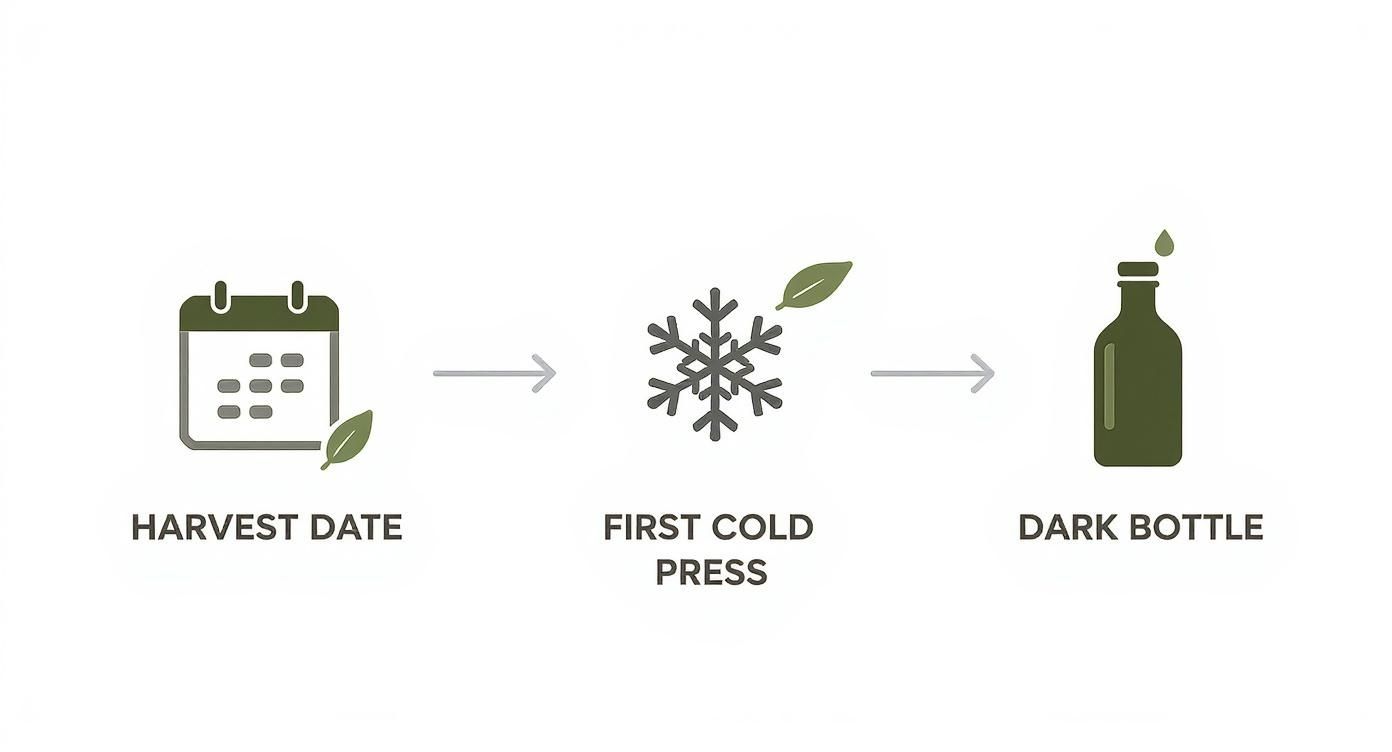
As you can see, things like the harvest date, a "cold-pressed" label, and a dark, protective bottle are the non-negotiables that signal a top-tier product.
A Head-to-Head Nutritional Showdown
The real story behind any cooking oil is found in its chemical makeup—specifically, its fat profile and nutrient density. Many common seed oils are heavily refined, a process that strips them of their natural goodness. EVOO, on the other hand, is prized because it keeps its powerful polyphenols and vitamins intact.
- Coconut Oil: This one is a world apart from EVOO. Coconut oil is overwhelmingly saturated fat—we're talking over 80%. While it has its place in certain diets, its fatty acid profile is the polar opposite of olive oil's heart-friendly monounsaturated fat base. We dig deeper into this in our olive oil vs. coconut oil comparison.
- Canola Oil: Canola is the workhorse of many commercial kitchens because it's cheap, has a neutral flavor, and can handle high heat. But it's almost always highly processed, meaning it's missing the rich antioxidant and anti-inflammatory compounds that make EVOO so special.
- Avocado Oil: Here's a closer competitor. Like EVOO, avocado oil is high in monounsaturated fats. The main difference? It typically contains far fewer polyphenols, which are the antioxidant powerhouses behind so many of olive oil's famed health benefits.
Cooking Oil Comparison Chart
To make things even clearer, here’s a side-by-side look at how extra virgin olive oil stacks up against other common cooking oils when you consider their nutritional and culinary properties. This table quickly highlights the unique strengths of each.
| Oil Type | Primary Fat Type | Antioxidant Content | Smoke Point | Best For |
|---|---|---|---|---|
| Extra Virgin Olive Oil | Monounsaturated | High (Polyphenols) | Medium (375°F / 190°C) | Sautéing, dressings, finishing |
| Coconut Oil | Saturated | Low | Medium (350°F / 177°C) | Baking, medium-heat cooking |
| Canola Oil (Refined) | Polyunsaturated | Very Low | High (400°F / 204°C) | High-heat cooking, frying |
| Avocado Oil (Refined) | Monounsaturated | Low-Medium | High (520°F / 271°C) | Searing, high-heat roasting |
This comparison really drives home the point: while every oil has its niche, EVOO offers a unique combination of healthy fats and protective antioxidants that others just can't match.
The deep-rooted trust in extra virgin olive oil isn't just a trend; it's a global tradition. In Greece, for instance, the average person consumes an incredible 24 liters a year! It's the cornerstone of the famously healthy Mediterranean diet. You can learn more about these global olive oil consumption trends.
Beyond nutrition, it’s also important to think about function. When you're looking for the best oils for seasoning woks, for example, factors like a high smoke point and a neutral flavor profile become the top priority, which is where oils like canola or avocado might step in.
Ultimately, while other oils certainly have their specific uses, none deliver the same one-two punch of healthy fats, powerful antioxidants, and incredible culinary versatility as a true extra virgin olive oil. It truly stands in a class of its own as a foundation for both health and flavor.
Common Questions About EVOO Nutrition
There’s plenty of chatter around Extra Virgin Olive Oil—some of it helpful, some of it confusing. We’re here to separate myths from facts with clear, science-backed answers.
One of the hottest questions is about using EVOO for cooking. Can you safely heat it? The short answer is yes. A quality bottle of Extra Virgin Olive Oil typically has a smoke point of 375°F (190°C), making it suitable for sautéing, stir-frying, and even light roasting. Its high proportion of monounsaturated fats not only helps it hold up under heat but also supports healthy cholesterol levels and overall heart health. Even at medium-high temperatures, EVOO maintains its nutritional integrity far better than many seed oils.
Cooking is only half the story; how you store your bottle matters just as much.
Getting The Most Out Of Every Bottle
Think of olive oil’s three mortal enemies: heat, light, and air. Proper storage isn’t a suggestion; it’s a requirement to protect the powerful antioxidants and delicate flavors you paid for.
Try these simple tips to lock in freshness:
- Keep bottles tucked away in a cool, dark cabinet—never on the countertop beside the stove.
- Swap plastic or clear containers for dark glass or a stainless-steel cruet to fend off UV rays.
- Always tighten the cap after pouring to minimize exposure to oxygen.
Finally, what really sets Extra Virgin Olive Oil apart from “regular” olive oil? It comes down to processing. EVOO is unrefined and cold-pressed, preserving its natural polyphenols, vitamins, and that signature peppery finish. In contrast, standard olive oil blends refined oils stripped of most nutrients with a small amount of virgin oil for flavor.
And don’t judge quality by color alone. A deep green hue often reflects the olive variety and chlorophyll content rather than antioxidant levels or freshness. Instead, rely on the harvest date printed on the label as your best quality cue.
At Learn Olive Oil, we believe informed cooks make healthier, more flavorful meals. Dive into our expert guides at Learn Olive Oil and elevate every dish.

 Learn Olive Oil
Leave a comment