When you're forced to choose between olive oil vs. soybean oil, you're facing a deceptively simple question that hides a world of difference. Here's the truth in a nutshell: Olive oil is a flavorful, antioxidant-rich juice pressed from a fruit. Soybean oil is a neutral, mass-produced oil extracted from a seed, built for pure utility.
The right choice hinges entirely on your answer to one question: Are you adding a flavor or are you adding a fat? Are you seeking a jolt of health-boosting antioxidants and a taste that sings of the Mediterranean sun, or do you simply need a functional, flavorless workhorse for high-heat cooking? Your answer to that single question will instantly tell you which bottle to reach for.
The Choice That Defines Your Cooking
Picture yourself in the cooking oil aisle. It's a wall of confusion. But in this sea of glass and plastic, two titans stand out. In one corner, olive oil—that bottle of liquid gold that promises flavor, tradition, and a touch of the exotic. In the other, the silent, unassuming soybean oil—a staple of commercial kitchens and the invisible backbone of countless foods on your shelf.
Make no mistake. This is more than a choice about cooking fat. It’s a decision that will dictate the final taste of your meal, influence your long-term health, and even define your style as a cook. We're going to cut through the marketing noise and get right to the unvarnished truth. This guide isn't here to slap "good" or "bad" labels on these oils. It's here to arm you with the real-world knowledge of where each one truly shines. By the end, you won't just know which bottle to grab—you'll understand why it's the only logical choice for the meal you're about to create.
Olive Oil and Soybean Oil at a Glance
Before we dive deep, let's establish the battlefield. Here are the core identities of these two kitchen giants. Mastering these fundamentals is the first step toward using them with the skill of a seasoned chef. Consider this the 30,000-foot view before we descend into the crucial details of nutrition, flavor, and culinary performance.
| Feature | Olive Oil | Soybean Oil |
|---|---|---|
| Primary Fat Type | Monounsaturated | Polyunsaturated |
| Flavor Profile | Fruity, peppery, distinct | Neutral, bland |
| Common Uses | Dressings, finishing, sautéing | Frying, baking, processed foods |
| Processing Method | Mechanical pressing | Chemical solvent extraction |
While this table offers a powerful starting point, the real story is far more fascinating. For instance, not all olive oil is created equal. The quality spectrum is immense, and understanding the different types of olive oil is non-negotiable for anyone who takes their food seriously.
From Ancient Groves to Global Commodity
Long before a bottle of oil reaches your kitchen, its destiny has been sealed. The journey—from the soil to the shelf—is what truly forges its flavor, sets its price, and defines its role in your cooking.
Imagine olive oil. Its story is ancient, woven into the sun-drenched, rocky earth of the Mediterranean for thousands of years. We're talking about gnarled, twisted trees, some of which have witnessed the rise and fall of empires. These trees are temperamental, demanding painstaking, hands-on cultivation, forever at the mercy of the weather.
Now, pivot to soybean oil. It's an entirely different universe. Soybean oil is a product of the vast, mechanized agricultural plains of the Americas. Its story isn't one of ancient tradition but of staggering industrial might, engineered for one purpose: massive scale and unwavering consistency.
A Tale of Two Harvests
This profound difference begins with how the raw ingredients are gathered. Harvesting olives is often a delicate, almost reverent process. For the world's finest extra virgin olive oils, the fruit is meticulously hand-picked to prevent bruising—a tiny injury that can ruin the final quality and flavor of the oil.
Soybean farming, in contrast, is a symphony of mechanization. Gargantuan combines sweep across endless fields, harvesting soybeans with brutal efficiency. This is precisely what makes it a global staple; the colossal yields ensure a steady supply and keep prices astonishingly low.
This isn't just a quaint piece of farming trivia. This contrast in scale is the single biggest reason olive oil is revered as a premium, artisanal product, while soybean oil is a global commodity powerhouse. It dictates everything from cost to sustainability.
Production Volume and Global Reach
The chasm in agricultural philosophy leads to a jaw-dropping difference in production. The modern world literally runs on soybean oil. For the 2024/25 crop year, global consumption is projected to hit a staggering 62.859 million metric tons. This colossal number cements its position as one of the most consumed oils on Earth. You can find more data on the global vegetable oil market over at Tridge.com.
By comparison, olive oil is a boutique player. Its global production is a mere drop in the bucket, a direct consequence of its more demanding farming methods and geographically limited growing regions. Learning about the origin of olive oil provides a stunning perspective on why it has fiercely guarded its status as a specialized, high-value product for millennia.
This staggering difference in scale forms the backdrop for the entire olive oil vs. soybean oil debate. It sets the stage for the nutritional and culinary battles we're about to explore, explaining why one is a budget-friendly workhorse and the other is a celebrated flavor enhancer.
Unpacking the Nutritional Differences
When you strip everything else away, the olive oil vs. soybean oil debate becomes intensely personal—it’s about your health. To discover which oil is truly serving your body, we must look beyond the calorie count—they're virtually identical—and investigate what they're actually made of.
The explosive truth lies in their fatty acid profiles. Think of it like this: you can put two different types of fuel in your car. Both will make it run, but one burns cleaner, protects the engine, and dramatically improves long-term performance.
Extra virgin olive oil is legendary for its payload of monounsaturated fats, particularly oleic acid. This is the hero compound, widely celebrated for its heart-protective qualities and its ability to fight inflammation. It's a clean, premium fuel for your body.
The Omega Imbalance
Soybean oil, however, is a different beast entirely. It's packed with polyunsaturated fats, and specifically, an overwhelming amount of omega-6 fatty acids. Here’s the problem: the modern diet is already drowning in omega-6 and starved of omega-3. This lopsided ratio is a well-known catalyst for chronic inflammation.
This is not a minor point. When that delicate balance is thrown off, it's been linked to a cascade of health problems. The goal isn't to eliminate omega-6 fats, but to restore their healthy harmony with omega-3s—a balance that olive oil naturally promotes.
If you remember only one thing, let it be this: Olive oil's fat profile is inherently anti-inflammatory. In stark contrast, soybean oil's heavy omega-6 load can push your body into a pro-inflammatory state, a risk magnified by its hidden presence in so much of our food supply.
This infographic hammers home just how much more soybean oil is produced, explaining why it has silently infiltrated so many foods we eat.
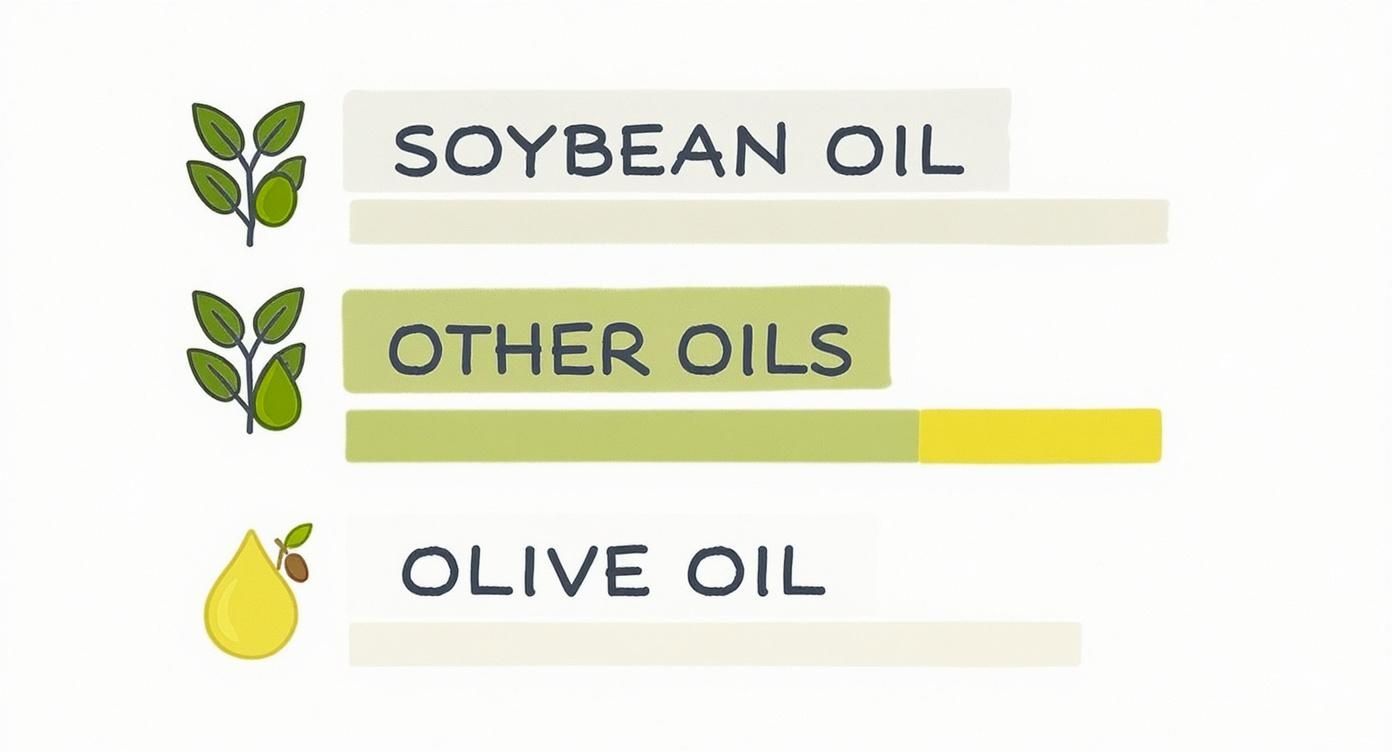
The chart makes it painfully clear why soybean oil is everywhere. Its production volume dwarfs olive oil's, making it the cheap, default fat for an astonishing array of processed foods. This is why you must become a label detective, checking ingredients even in things like the ready meals Australia has available.
Let's put the numbers head-to-head.
Nutritional Profile At a Glance: Olive Oil vs Soybean Oil
This table dissects the critical nutritional components in a single tablespoon of each oil.
| Nutrient | Extra Virgin Olive Oil (1 tbsp) | Soybean Oil (1 tbsp) | Key Takeaway |
|---|---|---|---|
| Calories | 120 | 120 | Identical calorie count. The difference is in the composition, not the energy. |
| Total Fat | 14g | 14g | Both are pure fat, but the types of fat are what matter for your health. |
| Saturated Fat | 2g | 2.2g | Very similar and relatively low in both. |
| Monounsaturated Fat | 10g | 3.1g | Olive oil is the undisputed champion here. This heart-healthy fat is its main component. |
| Polyunsaturated Fat | 1.5g | 7.9g | Soybean oil is dominated by polyunsaturated fats, primarily inflammatory omega-6s. |
| Omega-3 | ~0.1g | ~0.9g | Soybean oil has more omega-3, but its omega-6 content overwhelms this benefit. |
| Omega-6 | ~1.3g | ~7g | Soybean oil's omega-6 content is massive, which can throw off your body's balance. |
| Vitamin E | 1.9mg (13% DV) | 1.1mg (7% DV) | Olive oil provides a better dose of this important antioxidant. |
| Vitamin K | 8.1mcg (7% DV) | 25mcg (21% DV) | Soybean oil is a significant source of Vitamin K, which is crucial for blood clotting. |
As you can see, while they appear identical on the surface, their internal composition tells two vastly different stories about their impact on your body.
Antioxidants And Micronutrients
But the story doesn't stop with fats. The nutritional quality chasm widens when we examine micronutrients.
Extra virgin olive oil is brimming with powerful antioxidants called polyphenols. These are the very compounds that give high-quality EVOO its signature peppery bite and are absolute titans in the fight against oxidative stress and cellular damage. If you're curious, you can explore the complete nutrition facts for extra virgin olive oil.
Soybean oil, on the other hand, endures a brutal industrial refining process. It is blasted with high heat and chemical solvents that mercilessly strip away nearly all its natural, beneficial micronutrients. What remains is a bland, nutritionally barren oil. While it does hold onto a good amount of Vitamin K, it simply cannot compete with the protective army of antioxidants that makes extra virgin olive oil such a cornerstone of a healthy life.
Performance Under Pressure in the Kitchen
Nutrition labels are one thing. An oil’s true soul is revealed the second it hits a hot pan. This is where the olive oil vs. soybean oil debate leaves the laboratory and enters the fiery art of cooking, where performance and flavor reign supreme.
When cooking with high heat, one factor rules all: the smoke point. This is the temperature at which an oil stops shimmering and starts smoking, breaking down into foul-tasting, potentially harmful compounds. On this front, soybean oil has a clear and decisive advantage.
Refined soybean oil boasts a high smoke point of around 450°F (232°C). This makes it a brutally effective workhorse for deep-frying, stir-frying, or putting a hard sear on a steak without filling your kitchen with smoke.
The Flavor Dimension Where Olive Oil Shines
While soybean oil can withstand the inferno, olive oil brings the flavor. And this is its defining culinary power.
Soybean oil is prized precisely because it's a ghost. Its blandness is its greatest asset; it allows the true flavors of your ingredients—the delicate herbs in a batter, the sweetness of a cake—to be the undisputed star of the show.
Extra virgin olive oil, however, is an active ingredient. Its flavor profile can range from buttery and mild to grassy, fruity, and intensely peppery. A final drizzle of a great EVOO over a finished soup or pasta adds a layer of sophisticated complexity that soybean oil could never dream of achieving.
The choice is a strategic one: Do you need an oil that functions as a silent, invisible tool, or one that is a distinct, flavor-enhancing ingredient? Your answer to this question will guide you to the correct bottle every single time.
A quality extra virgin olive oil is at its most sublime when its flavor can be savored. Reserve it for:
- Vinaigrettes and Dressings: Its fruity notes create an electrifying base for any salad.
- Finishing Dishes: A final swirl over grilled fish, roasted vegetables, or a bowl of hummus elevates the entire dish from good to unforgettable.
- Dipping: Paired with nothing but fresh bread, its complex character takes center stage.
Handling The Heat When Cooking With Olive Oil
It’s a pervasive myth that you can’t cook with olive oil. It’s simply not true. While you wouldn’t waste a delicate, expensive extra virgin olive oil on deep-frying, regular olive oil and even many EVOOs are perfectly suited for sautéing and pan-frying over medium heat. You can learn much more about the nuances of using olive oil for high-heat cooking to get the best results.
It's also fascinating how global production impacts our kitchens. Olive oil production in the Mediterranean, for example, is expected to rebound by about 20%, while global soybean oil production recently surged by roughly 1 million tons in a single quarter. These figures highlight how olive oil is tied to regional terroir, while soybean oil operates like a massive, unstoppable global commodity.
In the end, there is no single winner here. Soybean oil is the undisputed champion for high-temperature applications where you demand neutrality. Olive oil, especially extra virgin, is the artist's choice, the secret weapon for adding unparalleled character and depth to your food, particularly with gentle heat or as a final, glorious touch.
The Economics of Your Pantry Shelf
Walk down any grocery store aisle, and the price tags tell an immediate and dramatic story. A bottle of decent extra virgin olive oil can easily command five, or even ten times, the price of a massive jug of soybean oil. This isn't an accident—it's the final chapter of two vastly different economic sagas.
One oil’s story is steeped in tradition, delicate handling, and perceived value. The other is a tale of brutal efficiency, industrial scale, and global domination. Understanding why they cost what they do is the key to making intelligent choices for your kitchen and your wallet.
What Drives the Price Gap?
The enormous cost difference is determined long before either oil sees the inside of a bottle. Harvesting olives is often a painstaking, manual craft. To preserve their fragile quality, they must be pressed mechanically with great care, resulting in lower yields and higher labor costs. It is an art form.
Soybean oil production, by contrast, is a monument to industrial efficiency. It’s a high-yield, fully mechanized behemoth engineered from the ground up to churn out staggering quantities for the lowest possible cost.
Market dynamics also play a huge role. Olive oil consistently commands premium prices despite its relatively tiny global production. The olive oil market was valued at an impressive $29.88 billion in 2025, a testament to its luxury status. Soybean oil, meanwhile, competes in the much larger vegetable oils market—estimated at a colossal $429,524.2 million in 2025—where the only game that matters is volume and affordability.
The premium you pay for a true extra virgin olive oil is for a less efficient, more delicate process that fiercely protects flavor and nutrients. The value of soybean oil comes from its incredible efficiency, which delivers a consistent, affordable product for everyday tasks.
Making an Intelligent Purchase
So, how do you spend your money wisely? The answer isn't to simply buy the most expensive bottle. It’s about strategically matching the oil’s price and quality to its intended purpose.
-
For Finishing and Flavor: When the oil is the star of the show—drizzled over fresh pasta, whisked into a vinaigrette, or used for dipping crusty bread—splurging on a high-quality extra virgin olive oil is not just worth it; it's essential. Its magnificent flavor and health benefits are the entire point.
-
For High-Heat and Neutral Cooking: When you just need a functional workhorse for frying, or for a baked good where you want zero flavor interference, soybean oil is the smart, economical choice. It is financial madness to spend a premium on a delicate olive oil only to destroy its nuanced compounds in a hot fryer.
Reading the label is your most powerful weapon. For olive oil, look for the words "extra virgin" and "cold-pressed," and always check the harvest date to ensure freshness. If you want to dive deeper into what drives the cost, our guide on extra virgin olive oil prices offers invaluable insights.
Ultimately, the smartest kitchen is a dual-pantry kitchen. Have both. Each brings a unique and irreplaceable economic and culinary value to your table.
Making the Right Choice for Every Meal
After dissecting all the evidence, the olive oil vs. soybean oil debate doesn't have a single winner. The truth is, it's about forging a strategic alliance in your pantry. The secret to great cooking isn't choosing one oil to rule them all; it’s recognizing that a well-equipped kitchen needs both.
Think of it this way: you wouldn't use a sledgehammer to hang a small picture frame. By the same token, you shouldn’t use a delicate, expensive extra virgin olive oil for a task like deep-frying. It’s all about deploying the right tool for the job.
Your Situational Pantry Guide
For anyone who puts health and vibrant flavor at the top of their list, the choice is often clear. When you want a blast of antioxidants and a taste that transforms a dish, extra virgin olive oil is your non-negotiable ally. Its heart-healthy monounsaturated fats and powerful polyphenols make it the perfect choice for:
- Flavorful Dressings: It is the soul of any great vinaigrette, where its unique, peppery character can sing.
- Finishing Touches: A final, confident drizzle over pasta, soup, or grilled vegetables adds an incredible layer of sophistication.
- Low-Heat Sautéing: Gently cooking garlic or wilting spinach are perfect tasks for EVOO, where its delicate compounds are preserved.
On the other hand, when your kitchen demands a reliable, neutral workhorse, soybean oil is ready for duty. Its high smoke point and invisible flavor profile make it the superior choice for jobs that require pure performance and consistency.
- High-Heat Frying: It's your secret to achieving a perfectly crispy, golden-brown crust on fried chicken or tempura without a smoke-filled kitchen.
- Baking: When you need moisture in cakes and muffins without a trace of distracting flavor, soybean oil is a baker's trusted friend.
The most powerful shift in thinking is this: Stop seeing these oils as rivals. Start seeing them as specialists. One is the artist's brush, adding nuance and character. The other is the foundational tool, ensuring the structure and texture are perfect.
For those carefully planning their overall diet, choices can be shaped by specific goals, like embracing a plant-based diet, which adds another dimension to which oils you might prefer. Ultimately, by keeping both olive and soybean oil in your culinary arsenal, you empower yourself to make the smartest, healthiest, and most delicious decision for every single meal you cook.
Frequently Asked Questions
It's easy to get lost in the sea of cooking oils. The olive oil versus soybean oil debate, in particular, seems to stir up a lot of confusion for home cooks. Let's clear the air with some straight answers to the questions I hear most often.
Can I Substitute Olive Oil for Soybean Oil in Baking?
You can, but in most cases, you absolutely shouldn't. Think of soybean oil as a silent partner in your baking; it contributes moisture and a tender texture without announcing its presence. This neutrality is exactly what you want when the delicate flavors of vanilla, chocolate, or fruit are the intended stars.
Most olive oils, especially extra virgin, bring a loud, distinct personality to the party. A robust, peppery olive oil will completely steamroll the subtle flavor of a simple sugar cookie. For predictable, delicious results that let your main ingredients shine, stick with soybean oil.
Using a powerful olive oil in a delicate dessert is like having a drummer play a blistering solo during a flute recital. It's technically possible, but it utterly misses the point of the original composition.
Is Refined Olive Oil Healthier Than Soybean Oil?
This is where the lines begin to blur. The brilliant health halo surrounding olive oil belongs almost exclusively to the extra virgin variety, which is bursting with beneficial polyphenols and antioxidants. Once you refine olive oil down to a "light" or "pure" version, most of those nutritional powerhouses are destroyed.
At that point, its primary advantage is its fat profile—it's still predominantly monounsaturated fat. Soybean oil is mostly polyunsaturated omega-6 fat. While neither is inherently "evil," the vast health gap that exists between EVOO and soybean oil shrinks dramatically when you compare their refined versions.
How Does Processing Affect These Oils Differently?
The journey from plant to bottle is the fundamental difference that defines these two oils. At its heart, authentic extra virgin olive oil is a fresh-pressed fruit juice. It is made by simply crushing olives and extracting the oil—a pure, mechanical process that preserves all the natural flavors, colors, and health-boosting compounds.
Soybean oil is an entirely different creation, born from an aggressive industrial process. It is typically extracted using chemical solvents (like hexane) before being subjected to intense heat, bleaching, and deodorizing. This brutal procedure results in a cheap, shelf-stable oil with a high smoke point, but at the cost of nearly all of its natural character and nutrients.
At Learn Olive Oil, we believe that knowing how your oil gets from the grove to your table is the secret to becoming a more confident cook. We're here to give you the expert insights needed to choose, taste, and cook with the world's best olive oils. Come discover a world of flavor and health at https://learnoliveoil.com.

 Learn Olive Oil
Leave a comment