Before you anoint your next salad or pasta with that liquid gold, do you know what you're really adding to your plate?
It's true, a single tablespoon of extra virgin olive oil delivers around 119-120 calories, every one of them from fat. But here is the secret most people miss: these aren't empty calories. They are the delivery vehicle for a payload of powerful, health-fortifying compounds.
What's Really Inside Extra Virgin Olive Oil
Extra virgin olive oil is far more than a simple cooking fat. For thousands of years, it has been the cornerstone of health in the world's longest-living cultures. To understand why it's so revered, you must look beyond the basic numbers on a nutrition label and discover the potent components working behind the scenes.
This is your guide to the essential nutrition facts for olive oil extra virgin. We're cutting through the marketing hype to get straight to what matters.
A Tablespoon of Truth
Let's break down what's packed into every single tablespoon. This quick glance reveals precisely why this oil is prized in kitchens and clinics alike.
- Heart-Healthy Fats: The star of the show is oleic acid, a monounsaturated fat celebrated for its positive impact on cholesterol levels.
- Essential Vitamins: You get a solid dose of Vitamin E (a potent antioxidant) and Vitamin K, which is crucial for blood clotting and bone health.
- Zero Cholesterol or Sodium: It lavishes food with incredible flavor and richness, yet contains none of the things most of us are trying to limit.
This impressive nutritional profile is exactly why EVOO is a non-negotiable staple in diets focused on wellness and longevity. It's a smart fat that works for you.
When you're building a comprehensive diet for fitness, understanding how healthy fats contribute is essential, a concept often covered in guides on how to build muscle mass.
To give you a clearer picture, here’s a simple summary of what you'll find in a standard serving.
Extra Virgin Olive Oil Nutrition at a Glance (Per Tablespoon)
This table gives you a quick snapshot of the core nutritional values in a standard 15ml (1 tablespoon) serving of high-quality extra virgin olive oil.
| Nutrient | Amount | Notes |
|---|---|---|
| Calories | ~119 | All calories are derived from fat. |
| Total Fat | 14g | The cornerstone of EVOO's profile. |
| Saturated Fat | ~2g | A small fraction of the total fat. |
| Monounsaturated Fat | ~10g | Primarily heart-healthy oleic acid. |
| Polyunsaturated Fat | ~1.5g | Includes Omega-3 and Omega-6. |
| Cholesterol | 0mg | Naturally cholesterol-free. |
| Sodium | 0mg | Naturally sodium-free. |
| Vitamin E | ~1.9mg (13% DV) | A powerful antioxidant. |
| Vitamin K | ~7.2mcg (6% DV) | Important for bone health. |
As you can see, every drop is an investment in your well-being. For a more granular breakdown, you can explore the specifics of olive oil calories per tablespoon.
Why All Fats Are Not Created Equal
Let's be honest. For years, we were fed a lie. The word 'fat' was made into a villain, something to be avoided at all costs. But when we talk about extra virgin olive oil, fat is the hero of the story—a smart, functional nutrient that fuels your body instead of fighting it.
To truly grasp the nutrition facts for olive oil extra virgin, we must demolish one outdated idea: not all fats are the same. Think of them like fuel for your car. The trans fats in processed foods are like sludgy, low-grade gasoline that clogs the engine. The fats in EVOO? That’s the clean-burning, premium fuel that makes everything run better.
The Good Fat That Dominates EVOO
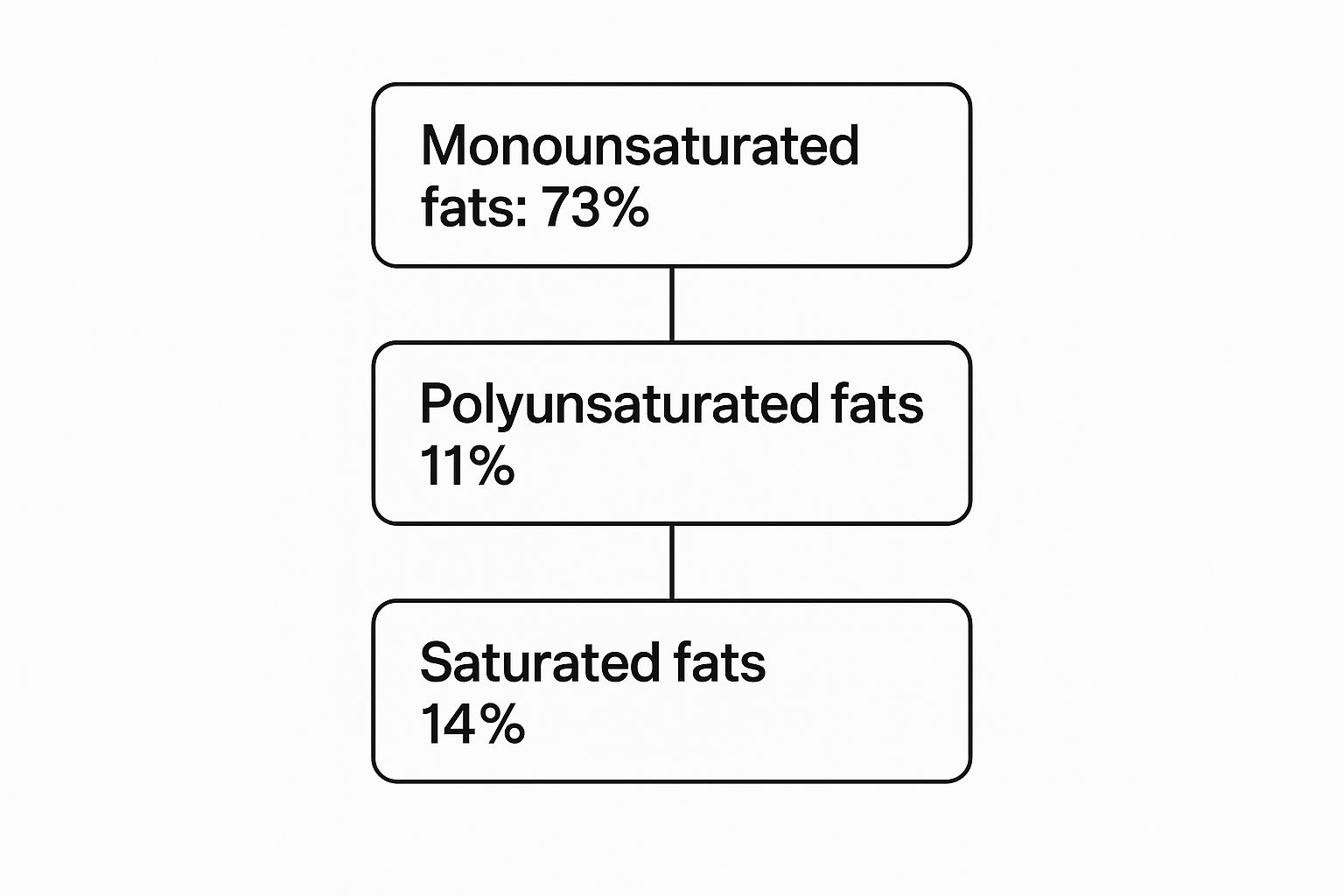
The superstar in extra virgin olive oil is a monounsaturated fat called oleic acid. This isn't just a minor ingredient; it's the main event. What makes EVOO a nutritional champion is its massive concentration of these beneficial monounsaturated fats, which typically account for 70-80% of its total fat content.
The rest is made up of about 14% saturated fat and 11% polyunsaturated fats, including omega-6 and omega-3 fatty acids. This unique profile is what sets it leagues apart from the pretenders on the shelf. You can discover more about how its composition stacks up against other market oils from Fortune Business Insights.
This visual gives you a quick look at the fat breakdown, showing just how much monounsaturated fat is packed into every drop.
This powerful fatty acid profile is precisely why EVOO is a staple in heart-healthy diets and a much smarter choice than highly refined seed oils. If you want to see a direct comparison, check out our guide on the difference between canola oil and olive oil.
Relying on healthy, plant-based fats is especially important for anyone leaning into a more plant-forward lifestyle. To make sure you're covering all your bases, you might also want to explore essential supplements for a well-rounded vegan diet.
The Hidden Power of Polyphenols
So, what truly separates a world-class extra virgin olive oil from the impostors crowding the shelf? It’s not the color, and it’s certainly not the price. The real secret is an invisible army of microscopic defenders that you can’t see, but you can absolutely taste and feel.
This is the hidden world of polyphenols, the unsung heroes of EVOO. Think of them as the olive's natural defense system, protecting the fruit from pests and environmental stress. When we press the olives into oil, that same protective power gets bottled up and passed on to us.
These potent compounds are what elevate the nutrition facts for olive oil extra virgin from simply "good" to "exceptional." They act as your body's personal security team, fighting off the daily cellular damage that leads to premature aging and chronic disease.
The Signature of Authenticity
Have you ever tasted a truly high-quality EVOO and felt a distinct, peppery kick in the back of your throat? That isn’t a flaw—it's the hallmark of authenticity. That very sensation is caused by a specific polyphenol called oleocanthal.
This unique compound is a powerful natural anti-inflammatory, so effective that scientists have compared its action to a low dose of ibuprofen. It's nature’s way of signaling that the oil is fresh, potent, and brimming with the good stuff.
The peppery sensation you feel is the direct result of oleocanthal at work. A mild or non-existent kick often signals a lower-quality, less fresh, or refined oil that has lost its most valuable health-protecting compounds.
Ultimately, that peppery finish is one of the most reliable indicators of a truly high-grade oil.
Here are a few of the key players you'll find in an EVOO's polyphenol lineup:
- Oleocanthal: The star of the show, famous for its powerful anti-inflammatory properties and that signature peppery finish.
- Oleuropein: A potent antioxidant that lends the oil its slightly bitter taste while helping shield your cells from oxidative stress.
- Hydroxytyrosol: Considered one of the most powerful antioxidants in nature, well-known for its role in supporting cardiovascular health.
The concentration and variety of these compounds are what really define a superior extra virgin olive oil. For those who want to dive deeper, you can find more information on the importance of olive oil polyphenol content and how experts measure it.
When you choose an oil rich in these natural defenders, you're not just picking a condiment; you're choosing a functional food designed to protect and support your body from the inside out.
The Unsung Vitamins in Your Olive Oil
While the healthy fats and those powerful polyphenols get all the applause, extra virgin olive oil has a couple of micronutrients working quietly behind the scenes. Think of them as the supporting cast that makes the whole nutritional performance even more impressive.
These vitamins aren't just minor additions; they’re essential for keeping your body running smoothly. Let's pull back the curtain on the two most important ones: Vitamin E and Vitamin K.
Vitamin E: Your Body’s Cellular Bodyguard
Picture Vitamin E as a bodyguard for your cells. Every day, your body faces a relentless assault from unstable molecules called free radicals. Vitamin E leaps into action, neutralizing these threats before they can wreak havoc on your cells.
This powerful, fat-soluble antioxidant is one of your best defenses against oxidative stress—a key culprit in both aging and many chronic diseases. In fact, a single tablespoon of good EVOO can deliver over 10% of your daily value for Vitamin E. It's an almost ridiculously easy way to reinforce your body's defenses at every meal.
Vitamin E isn't just about passive defense. It actively maintains the health and integrity of everything from your skin cells to your immune system, helping them perform at their peak.
Vitamin K: The Essential Traffic Cop
Vitamin K might not be a household name, but it’s a master regulator for some of your body’s most critical functions. Its best-known job is helping your blood clot, which is essential for healing.
But Vitamin K is a true multi-tasker. It's also vital for:
- Building Strong Bones: It acts like a traffic cop for calcium, directing it to your bones where it belongs, not into your arteries.
- Supporting Heart Health: By managing calcium, it helps keep arteries clear and flexible, a major factor in long-term cardiovascular wellness.
Every drizzle of extra virgin olive oil provides a solid dose of this nutrient, quietly building a stronger, more resilient you from the inside out.
Why Where Your Olive Oil Grows Matters
The final nutrition facts for olive oil extra virgin aren't cooked up in a lab. They're forged by the sun, the soil, and centuries of tradition long before the olives are ever pressed. Think of it like a fine wine—the terroir, or the unique environment where it's grown, is everything.
Each bottle of EVOO is a liquid snapshot of a specific place. The rugged hillsides of Greece, the vast plains of Spain, and the sun-soaked fields of Italy all produce oils with their own distinct nutritional profiles and flavor signatures. It's this unique combination of climate and olive variety that creates a masterpiece.
The Mediterranean Epicenter
At its heart, this liquid gold is a Mediterranean treasure. The European Union dominates production, accounting for well over half of the world's supply. A recent estimate put global production at 3.39 million metric tons, and of that, a staggering 1.99 million tons—nearly 59%—came from EU countries.
Spain is the undisputed giant in the industry, contributing a massive 1.29 million tons on its own. If you're interested in keeping up with global trends, you can check out the latest insights on olive oil markets from Critida.
This concentration isn't just a matter of geography; it's about a deep history of craftsmanship passed down through generations. To really get a sense of this legacy, you can discover olive oil origins and its rich historical journey.
The biggest mistake people make is looking only at the "best by" date. The most important date on any bottle is the harvest date. Fresher oil means more of those powerful polyphenols and, in turn, more health benefits.
Once you understand this deep connection between origin and quality, you can start unlocking the true potential of great olive oil. It’s so much more than just a product; it’s the art of capturing nature's best in a bottle.
How to Spot a True Extra Virgin Olive Oil
https://www.youtube.com/embed/kflUjpHiaHo
Walking down the olive oil aisle can feel like navigating a minefield. With so many bottles vying for your attention, it’s dangerously easy to be fooled by clever marketing and misleading labels. You might think you're grabbing a bottle packed with the powerful health benefits of extra virgin olive oil, but end up with something far less impressive.
The good news is, you don't need a trained palate to pick a winner. The secret is knowing how to read the label—looking past the pretty pictures and focusing on a few crucial details.
Forget vague, unregulated terms like "pure" or "light." Those are just marketing fluff. Instead, let's focus on the clues that signal genuine quality and freshness. Once you know what to look for, you can confidently choose an oil that actually delivers the amazing flavor and nutritional punch you expect.
Your Quality Checklist
Before a bottle of olive oil makes it into your shopping cart, give the label a quick scan for these essential markers of quality. These are the details that separate the real deal from the impostors.
-
Harvest Date: This is, without a doubt, the most critical piece of information on the bottle. Olive oil is a fruit juice, and it's best when fresh. Look for a harvest date within the last year to ensure the oil still has its peak flavor and antioxidant content.
-
Country of Origin: Specificity is your friend here. A label that says "Product of Italy" or "Grown in Crete, Greece" is a much better sign than a generic blend like "Packed in Italy from Mediterranean oils." The latter often means lower-quality oils from various places were simply bottled there.
-
Dark Glass Bottle: Light is one of olive oil's worst enemies. It causes the delicate, healthy compounds to break down quickly. Always choose oil in a dark green or black bottle, which acts as a shield, protecting the contents and preserving its nutritional value.
A classic mistake is looking only at the "Best By" date. This date can be set as far as two years from the bottling date, not the harvest. Always, always prioritize the harvest date to get the freshest, most nutrient-rich oil.
Mastering these simple cues is your first line of defense. If you want to go even deeper and become the olive oil expert in your kitchen, check out our complete guide on how to spot fake olive oil.
Got Questions About EVOO? We've Got Answers.
Let's cut through the noise and tackle some of the most common questions and myths about extra virgin olive oil. Here are the straight-up, practical answers you need to feel confident about the bottle in your pantry.
Can You Actually Cook with Extra Virgin Olive Oil?
Yes, you absolutely can—and you should! It’s a stubborn myth that EVOO is only for drizzling. A good quality extra virgin olive oil has a smoke point that sits comfortably between 375-400°F (190-205°C).
This makes it a fantastic and safe choice for most everyday cooking, from sautéing vegetables to roasting chicken. In fact, the healthy fats in EVOO are much more stable when heated compared to highly processed seed oils, making it a healthier and far more flavorful option.
How Many Calories Are We Talking About?
A single tablespoon of EVOO comes in at about 120 calories, all of which are from fat. But it's crucial to understand that not all calories are created equal.
These are what I’d call "working calories." They're incredibly nutrient-dense, loaded with heart-healthy monounsaturated fats and powerful antioxidants that benefit your body. So, you're getting a lot more than just energy.
Don't judge an olive oil by its color. A vibrant green hue simply points to an earlier harvest when chlorophyll levels are higher. A beautiful golden oil can be just as complex, flavorful, and high in quality.
What really matters is the aroma and taste—the things that signal high polyphenol content and freshness. This is why professional tasters often use special blue glasses, so the oil's color can't influence their judgment.
Here at Learn Olive Oil, our mission is to help you explore the incredible world of authentic olive oil. Dive into our expert guides and find out what makes this liquid gold so special at https://learnoliveoil.com.


Leave a Reply