Let’s be honest. The bland, generic oils lining most supermarket shelves have nothing to do with real olive oil from italy. A true bottle isn't merely a condiment; it's a story captured in glass—a liquid snapshot of culture, tradition, and the very soul of the land. It offers a taste of a sun-scorched Sicilian grove or a misty Tuscan morning, a culinary revelation that mass-produced pretenders can never hope to imitate.
What Makes Italian Olive Oil So Special
Think about wine for a moment. You wouldn’t judge a fine Barolo without knowing a little about its grapes or the hallowed ground where they grew, would you? The same principle applies to Italian olive oil, which is why true connoisseurs speak of it with the same reverence. Its secret boils down to a concept the French call terroir.
Terroir is the profound idea that a food's character is a direct gift from its environment. It’s the unrepeatable symphony of soil, climate, the specific type of olive, and the generations of human hands that give each oil its unique personality. An oil from the rocky, sun-blasted hills of Puglia will taste worlds apart from one born in the cooler, gentler climate near Lake Garda.
The Soul of the Olive
At the very heart of this staggering diversity are the olive varieties, or cultivars, as they're known in Italy. The country is a living library of flavor, boasting over 500 different types of olive cultivars—more than anywhere else on the planet. This biodiversity is the master key that unlocks the endless spectrum of flavors you'll find in Italian oils.
- Coratina Olives: Grown mostly in the south, these olives deliver a powerful, intensely fruity oil with that legendary peppery kick that blossoms at the back of your throat.
- Frantoio Olives: A Tuscan classic. This cultivar yields a more refined oil with notes of fresh-cut grass, artichoke, and a pleasingly bitter finish that speaks of sophistication.
- Taggiasca Olives: Hailing from the northern region of Liguria, these tiny olives create a light, buttery oil with delicate notes of almond, making it the perfect accomplice for subtle dishes.
This fierce devotion to regionality means you're not just buying "olive oil." You're buying a sensory postcard from a specific place, a taste of its unique traditions.
Italy’s astonishing diversity of olive cultivars is the bedrock of its global reputation. Each variety tells a different story of the land, creating a flavor profile that simply can’t be duplicated anywhere else.
More Than Just Flavor
Beyond the breathtaking taste, authentic Italian olive oil is a powerhouse of health benefits. That peppery tingle you feel at the back of your throat? That's the signature of potent antioxidants called polyphenols. These magnificent compounds are the force behind many of the oil's celebrated anti-inflammatory properties.
The freshness and meticulous production methods used for a true olive oil from italy ensure these delicate compounds actually make it into the bottle. If you're curious, you can learn more about olive oil polyphenol content and discover why it's a cornerstone of the Mediterranean diet.
Ultimately, what makes Italian olive oil so special is passion. It’s the direct result of generations of farmers who see themselves as guardians of a cultural treasure, not just producers of a commodity. From the painstaking hand-harvesting to the swift, careful pressing of the olives, every step is a testament to quality over quantity. It’s this devotion that elevates a simple cooking fat into an unforgettable culinary experience, turning any meal into a celebration.
Touring Italy's Famed Olive Oil Regions
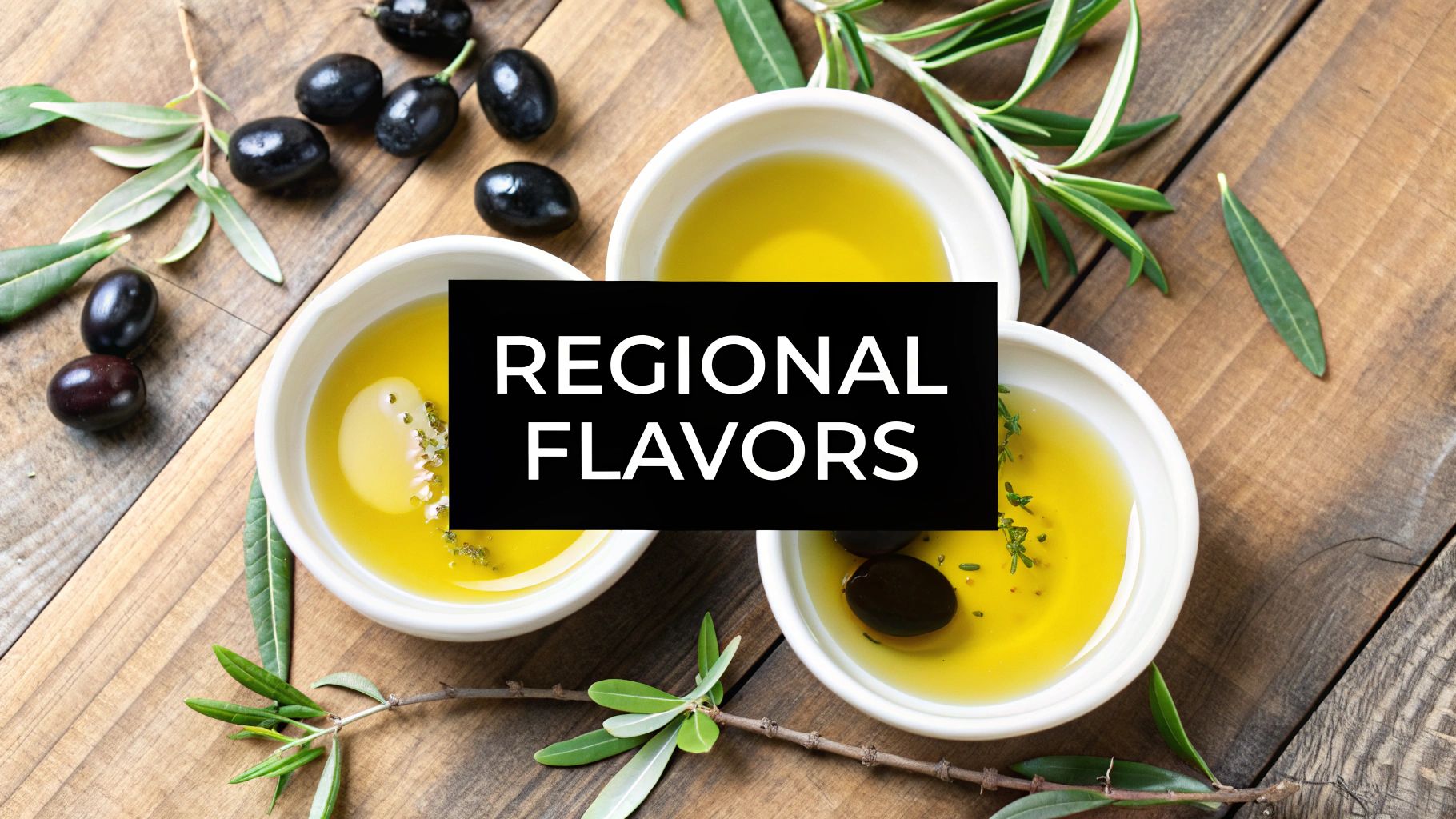
To truly understand olive oil from Italy, you must journey across the country in your mind—from the sun-drenched heel of the boot all the way to the cooler, alpine-kissed north. Each region speaks through its oil, a unique flavor dialect shaped by the sun, the soil, and centuries of tradition. Italy isn't a monolith; it's a magnificent patchwork of microclimates and ancient olive varieties, which gives us an incredible spectrum of tastes.
Let's begin our journey in the south, the undisputed powerhouse of Italian olive oil. This is where the sun is relentless, the land is rugged, and the flavors are big and bold.
The Bold and Robust South
Puglia, the region that forms the "heel" of Italy, is the undisputed king. It produces nearly 40% of the country's entire olive oil supply. Here, the Coratina olive reigns supreme, and an oil made from it is not for the timid. It’s intensely fruity, with a powerful, peppery kick at the back of your throat that feels almost electric.
That peppery finish, which Italians call pizzica, is the tell-tale sign of high polyphenol content—a hallmark of freshness and quality. A gutsy Puglian oil is the perfect partner for hearty dishes like grilled steak, bitter greens, or a rustic bean soup.
From there, we can hop over to Sicily, an island of dramatic landscapes and equally dramatic flavors. Sicilian oils, often from Cerasuola or Nocellara del Belice olives, are vibrant and complex. You'll often taste green tomato leaf, artichoke, and wild herbs, all balanced by a pleasant bitterness. Drizzle a Sicilian oil over grilled swordfish or a simple caprese salad to see what it's all about.
"The olive oils of Southern Italy are a direct reflection of the intense Mediterranean sun. They are bold, spicy, and full of life—a true taste of the landscape itself."
This journey through Italy's diverse regions highlights the incredible variety available. For those interested in exploring these areas firsthand, a unique perspective on the country's diverse landscapes and culture can be found through a dedicated rail tour of Italy.
The Elegant Heart of Tuscany
Moving north, we arrive in the iconic rolling hills of Tuscany, a landscape that is the very definition of classic Italian beauty. The olive oil here is every bit as elegant. It’s a world away from the assertive oils of the south, offering something more refined and beautifully balanced.
Tuscan oils, typically from a blend of Frantoio, Leccino, and Moraiolo olives, are famous for their distinctive "green" notes. Think fresh-cut grass, green almond, and a pleasant, lingering bitterness. This is the kind of oil that just sings when poured over a simple slice of toasted bread (fettunta), a classic Florentine steak, or fresh pasta. Its sophisticated character enhances food without ever stealing the show.
The Delicate and Buttery North
Our final stop is in Italy’s northernmost olive-growing regions, like Liguria and the area around Lake Garda. The cooler climate and unique local olives produce oils that are strikingly different from their southern and central cousins.
- Liguria: This coastal region is home to the small, delicate Taggiasca olive, which creates oils that are sweet, mild, and buttery. They carry subtle hints of almond and pine nut, with almost no bitterness or peppery finish. This is why Ligurian oil is the essential, non-negotiable ingredient for authentic Pesto Genovese and a perfect finishing touch for delicate fish or steamed vegetables.
- Lake Garda: The oils from this stunning lake region are light and fruity, often with hints of green apple. Prized for their delicacy, they are ideal for freshwater fish, light salads, and even some desserts.
This grand tour reveals a fundamental truth about Italian olive oil: there is no single "best" one. The ideal bottle depends entirely on what you're eating and the flavor experience you're after.
To make it a little easier, here's a quick guide to what you can expect from each of these major regions.
A Taste of Italy's Olive Oil Regions
| Region | Primary Olive Varietals | Typical Flavor Profile | Best Culinary Pairings |
|---|---|---|---|
| Puglia | Coratina, Ogliarola | Bold, intensely fruity, peppery, robust, sometimes with bitter notes of chicory or arugula. | Grilled red meat, bean soups, bruschetta with hearty toppings, bitter greens, aged cheeses. |
| Sicily | Cerasuola, Nocellara del Belice | Vibrant, complex, with notes of green tomato leaf, artichoke, and wild herbs; a pleasant bitterness. | Grilled fish (swordfish, tuna), tomato salads, roasted vegetables, pasta with vegetable sauces. |
| Tuscany | Frantoio, Leccino, Moraiolo | Elegant, balanced, with "green" notes of fresh-cut grass, almond, and artichoke; pleasant bitterness. | Florentine steak (Bistecca alla Fiorentina), toasted bread (fettunta), fresh pasta, salads. |
| Liguria | Taggiasca | Delicate, mild, sweet, buttery, with subtle hints of almond and pine nut; very little bitterness or pepper. | Pesto Genovese, delicate seafood, steamed vegetables, focaccia, light vinaigrettes. |
As you can see, understanding the distinct personalities of olive oils from Italy is the first step toward transforming your cooking. The right oil isn't just an ingredient; it's the final, defining touch.
From Ancient Grove to Golden Bottle
Have you ever wondered how that bitter little fruit, hanging from a gnarled, ancient tree, becomes the liquid gold you drizzle over your salad? I can tell you, it’s far more art than industry. The journey behind every bottle of authentic olive oil from Italy is a story of tradition, timing, and a relentless race against the clock. This is where true quality is forged, separating it from the mass-produced pretenders on the bottom shelf.
It all begins with the harvest, a single decision that dictates the oil's entire personality. While giant machines can strip a tree in minutes, the best producers still insist on the ancient ritual of hand-picking. Why? Because it’s gentle. This careful approach prevents bruising the olives, which is the very first defense against defects and the secret to locking in the fruit's vibrant, delicate flavors. It’s grueling, painstaking work, but it’s the ultimate form of quality control.
The Miller's Craft
Once they're off the branch, the olives are in a frantic sprint to the frantoio, the Italian term for an olive mill. The clock is officially ticking. Oxidation begins the moment an olive is picked, and to create an exceptional oil, producers must get them pressed within 12 to 24 hours. Any longer, and you risk fermentation, which unleashes foul, off-flavors that no amount of filtering can ever erase.
At the mill, the miller is the true artisan, the guardian of the olive's soul. You’ve probably seen the term "first cold press" on labels—this is where that phrase comes to life. It’s a sacred promise that the oil was extracted using only mechanical force, with no heat or chemicals involved. The temperature is obsessively kept below 27°C (80°F) to protect the oil's precious antioxidants and all those subtle, beautiful aromas.
Think of the miller less like a factory worker and more like a master winemaker. They're constantly smelling, tasting, and adjusting, using years of experience to coax the most expressive juice from the fruit. Every choice they make ends up in the bottle.
The infographic here really breaks down the key stages of this quality-driven process.
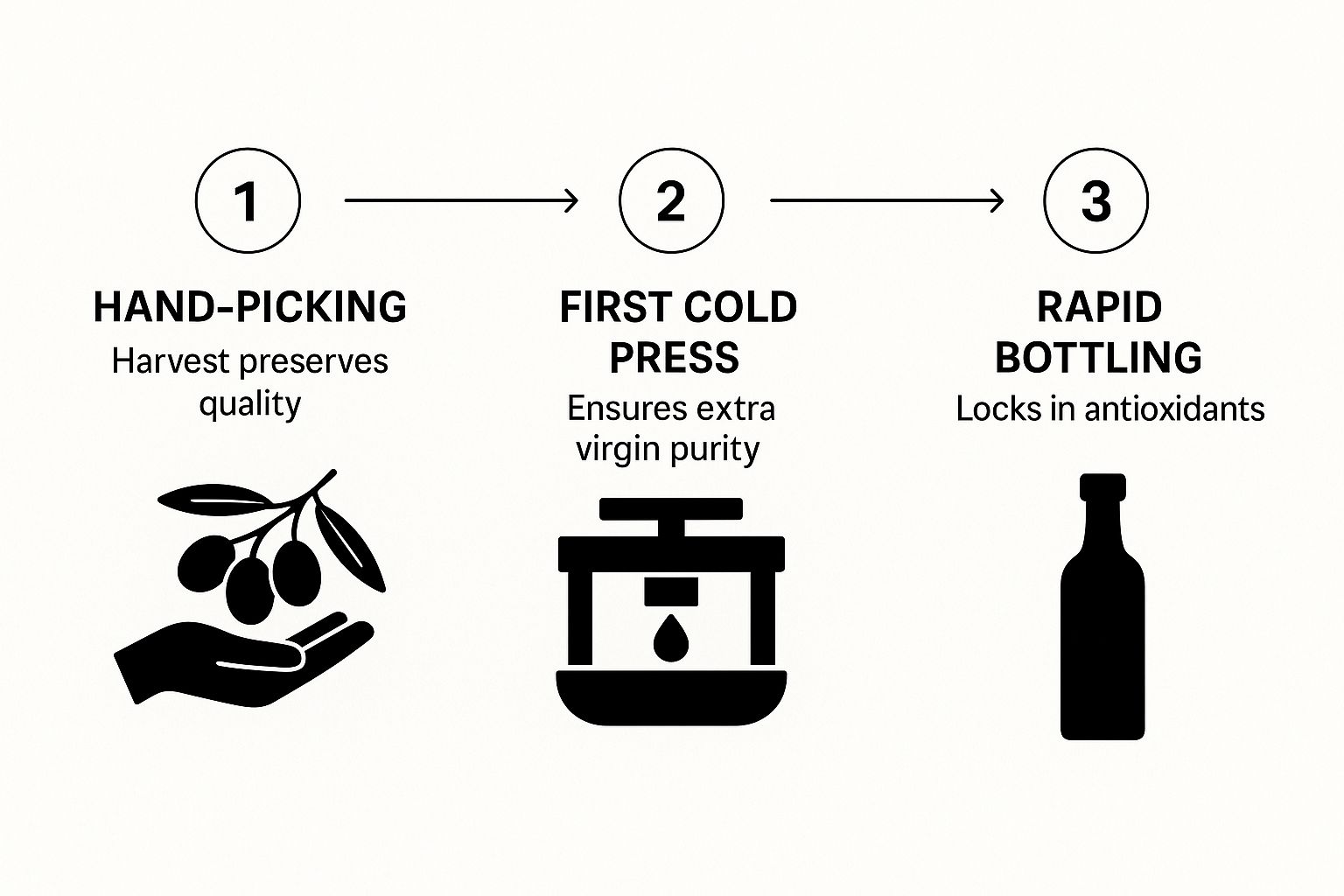
As you can see, making excellent olive oil isn't about finding shortcuts; it's about a fanatical devotion to a sequence of careful, deliberate steps.
Old Ways And New Tools
The specific extraction method also leaves its own unique signature on the oil. The romantic image of massive stone wheels slowly grinding olives into a paste isn't just for show—some producers swear by this traditional method for the mellow, unique character it imparts to the oil.
That said, most of today's high-end producers have embraced modern stainless steel hammer mills and centrifuges. This newer technology gives them incredible control over temperature and hygiene, which minimizes oxygen exposure and helps preserve those fresh, peppery notes. Neither way is "better," they're just different tools a miller uses to achieve a particular style.
- Traditional Stone Mills: Often yield a softer, rounder, more buttery oil.
- Modern Centrifuges: Tend to produce a cleaner, greener oil with more robust, pungent flavors.
Ultimately, the process proves that great ingredients are just the starting line. It's the journey from the grove to the bottle, guided by human skill and dedication, that transforms a simple harvest into an extraordinary culinary masterpiece. If you want to get into the nitty-gritty, you can learn more about how olive oil is made and the machinery that makes the magic happen.
How to Choose Authentic Olive Oil From Italy

Walking down the olive oil aisle can feel like navigating a minefield. The shelves are a dizzying maze of beautiful bottles whispering promises of sunny Italian hillsides, but I’m here to tell you, not all of them are telling the truth. To find a truly authentic olive oil from Italy, you have to become a bit of a detective, learning to see past the marketing fluff and focus on the clues that really matter.
The good news? You don't need to be a certified taster to make a brilliant choice. You just need to know what to look for. Think of the label not as an advertisement, but as a fact sheet—if you know how to decode it, you’ll find the liquid gold.
Read the Label Like an Expert
Your first mission is to completely ignore the "Best By" or "Use By" date. This date is often set 18 months to two years after the oil was bottled, not harvested, which tells you almost nothing about its true freshness. The real prize, the detail that separates the honest from the ambiguous, is the harvest date (you might see raccolta on the label).
An honest producer is proud of their harvest and will print that date for all to see. Look for the most recent one you can find, ideally from the last year. Olive oil is essentially a fresh fruit juice; it's at its absolute peak right after being pressed and slowly loses its vibrant flavors and health benefits over time.
A harvest date is a producer’s promise of transparency. If it's missing, that's a major red flag. Always prioritize an oil that tells you exactly when the olives were picked.
Another critical piece of the puzzle is location. Be wary of vague terms like "Packed in Italy" or "Imported from Italy." These phrases often mean that oils from other countries (like Spain, Greece, or Tunisia) were simply blended and bottled in Italy, not actually grown and pressed there.
Understanding Italian Seals of Quality
To cut through this kind of confusion, the European Union created certification systems that guarantee an oil's origin and how it was made. When you see these seals on a bottle of olive oil from Italy, they are legally binding assurances of quality and place.
-
DOP (Denominazione di Origine Protetta): This is the gold standard. A DOP seal is a rock-solid guarantee that the entire process—from growing and harvesting the olives to pressing and bottling the oil—happened within a specific, protected geographical area. It’s a promise of authentic regional character.
-
IGP (Indicazione Geografica Protetta): This certification is also a fantastic indicator of quality. An IGP seal guarantees that at least one part of the production process occurred in a specific region. It offers a great balance between regional identity and value.
Think of these seals as a pedigree for your olive oil, ensuring the product is genuinely tied to the Italian land it claims to represent.
The Final Clues for Authenticity
Once you've checked the dates and looked for seals, a few final visual cues can help you feel confident in your choice. Pay close attention to the bottle itself.
Light is one of olive oil's mortal enemies. It causes the oil to oxidize and go rancid with shocking speed. A serious producer would never dream of putting their oil in clear glass. Always, always choose an oil that comes in a dark glass bottle, a tin, or even a ceramic container that shields it from light.
Finally, the price tag can be a surprisingly reliable—if sometimes painful—indicator. Making high-quality extra virgin olive oil is a difficult and expensive process. If you see a price that seems too good to be true, it almost certainly is. That bargain bottle is likely a low-quality blend or, even worse, a fraud. To stay safe, it’s worth taking a moment to learn how to spot fake olive oil and the tricks some producers use.
With this checklist in hand, you can walk into any store with confidence. You'll be able to sidestep the marketing traps and bring home a bottle that delivers the true, vibrant taste of Italy.
The Hidden Struggles of Italian Olive Groves
https://www.youtube.com/embed/oSxqWiE72Oc
Behind that postcard-perfect image of sun-drenched Italian hillsides lies a harsh and difficult reality. For many growers, life is a constant battle against forces that threaten not just their livelihood, but a core piece of Italy’s cultural soul. Every single bottle of authentic olive oil from italy you bring home is a small victory against these hidden struggles.
This fight unfolds on multiple fronts, often against an unpredictable and increasingly cruel natural world. Climate change isn't some distant concept for these farmers; it's a punishing, day-to-day reality. One season might bring a savage drought that starves the trees, while the next delivers torrential rains that can ruin the delicate fruit right before harvest.
These wild swings in weather are a huge reason why production can be so volatile. For instance, the 2024/25 olive oil season was particularly challenging, with projections showing output dropping to between 215,000 and 235,000 tons. That's a staggering decrease of as much as 32% from the previous year’s yield of over 328,000 tons. You can discover more insights about the 2024-2025 season on theoliveoilco.it for a closer look at the harvest data.
The Unseen Enemy
Beyond the weather, a microscopic enemy has brought the industry to its knees in certain regions. The plant bacterium Xylella fastidiosa has been an unmitigated catastrophe, especially in Puglia, the heartland of Italian olive oil. Spread by insects, this disease essentially clogs the tree’s circulatory system, causing it to wither and die from the inside out.
The result is nothing short of an agricultural apocalypse. Millions of olive trees have been lost—many of them irreplaceable, centuries-old giants. Driving through parts of Puglia today, you’ll see ghostly groves of skeletal, dead trees, a tragic monument to the disease's relentless march.
The fight against Xylella fastidiosa is more than an agricultural problem; it's a battle to save a living heritage. Each ancient tree lost is a library of history and flavor that can never be recovered.
Economic and Generational Pressures
On top of these natural disasters, there are powerful economic forces at play. The costs of maintaining groves, harvesting olives by hand, and milling with care keep climbing. Meanwhile, producers of authentic oil have to compete in a global market flooded with cheap, low-quality, and sometimes fraudulent products that unfairly drive down prices. You can learn more about the factors influencing extra virgin olive oil prices in our detailed guide.
This constant financial squeeze creates a generational problem, too. Younger Italians are often drawn to cities, leaving behind the back-breaking, less profitable work of their ancestors. It takes immense passion and a special kind of grit to stick with it.
Knowing all this adds a new layer of appreciation for that bottle in your kitchen. It’s not just oil. It’s a testament to resilience, a product of a farmer’s unwavering dedication to protecting a cultural treasure against all odds.
Your Questions About Italian Olive Oil Answered
Walking into the world of olive oil from Italy can feel a bit intimidating. With all the beautiful bottles, fancy terms, and lingering myths, it's easy to feel lost. It's completely natural to have questions, and we're here to clear the air.
Let's cut through the noise together. Think of this as a straightforward chat where we tackle the most common questions head-on, giving you the confidence to pick a great bottle and enjoy every last drop.
Does the Color of Olive Oil Indicate Its Quality?
This is probably the biggest myth in the olive oil world, and the answer is a simple, resounding no. The color of olive oil—whether it’s a brilliant, almost electric green or a soft, shimmering gold—tells you a story about the olive variety and when it was picked. It tells you nothing about quality.
A deep green hue often means the olives were harvested early in the season when they were packed with chlorophyll. A golden tone usually points to a later, riper harvest. Neither is better than the other; they just offer different flavors. In fact, professional tasters use special cobalt blue glasses to completely mask the oil's color so they can judge it based purely on what matters: aroma and taste.
Don't let the color fool you. Your best clues to an olive oil's quality are its smell, its flavor, and the details on the label, like the harvest date.
What Is the Best Way to Store Olive Oil?
So you've brought home a fantastic bottle. Now what? Protecting it is everything. Olive oil has three sworn enemies that will rapidly destroy its flavor and health benefits: light, heat, and air. Storing it properly isn't just a good idea—it's essential to preserve the quality you paid for.
To keep your oil tasting its best, just follow these simple rules:
- Keep It Cool and Dark: A pantry or a cupboard is perfect. Just make sure it's away from the stove and out of direct sunlight. The absolute worst spot for your oil is on the counter right next to the oven.
- Seal It Up Tight: Oxygen is the enemy of freshness. Always screw the cap back on tightly right after you pour. This simple step stops the oxidation process that makes oil go rancid.
- Use It!: Real extra virgin olive oil is a fresh product, like produce. It’s not meant to be saved for a special occasion. Its bright, lively character fades over time, so enjoy it generously within a few months of opening the bottle.
Can I Cook With Extra Virgin Olive Oil?
Yes, you absolutely can—and you should! It’s a huge misconception that good extra virgin olive oil is only for drizzling. The truth is, its smoke point is much higher than people think, usually sitting somewhere between 375-410°F (190-210°C).
This makes it a remarkably stable, healthy, and flavorful choice for most of your daily cooking, from sautéing and roasting to even light frying. A quality EVOO is packed with stable monounsaturated fats and antioxidants that help it hold up beautifully to heat. When you cook with it, you’re not just adding a fat; you're infusing your entire dish with character.
Of course, price is a factor. As of early 2025, the price for Italian extra virgin olive oil at the source was about €9.60 per kilogram, with supermarket prices closer to €12 per liter due to production and demand. Even so, Italy's passion for its liquid gold keeps it at the heart of the kitchen. You can read the full olive oil market report from Certified Origins to get a better handle on these economic trends.
What Does "First Cold Press" Actually Mean?
You’ve seen this phrase plastered on labels, often presented as the ultimate seal of quality. "First cold press" is really a romantic term left over from the old days. Back then, olive paste was literally pressed between heavy mats to squeeze out the oil. The "first press" was the initial, highest-quality extraction, and "cold" meant no heat was used, which would have ruined the delicate flavors.
Today, that phrase is mostly symbolic. The vast majority of high-quality olive oil from Italy is now made using modern centrifuges. These machines spin the olive paste at incredible speeds, separating the oil from the water and solids in one continuous, temperature-controlled process.
But here’s the key: it’s still a "cold" process. To be legally classified as "extra virgin," the temperature must stay below 27°C (80°F). So while the machines have changed, the core principle is identical: the best oil is extracted mechanically, without heat, to keep all its fresh flavor and nutritional goodness intact. Seeing "first cold press" or "cold extraction" on a label is simply an assurance that those strict modern standards were met.
At Learn Olive Oil, our mission is to pull back the curtain on the world of premium olive oil and turn curiosity into confidence. From the grove to your kitchen, we share expert insights to help you choose, taste, and truly enjoy this liquid gold. Start your journey today and Discover the World of Premium Olive Oil.

 Learn Olive Oil
Leave a comment