You’ve seen the words “extra virgin” on countless olive oil bottles. A pretty phrase, you might think. But what if I told you it’s not just marketing fluff? What if those words were a legally binding promise—a guarantee that you’re holding the absolute best, purest olive oil money can buy?
Because that’s exactly what it is. Think of it less as a condiment and more as fresh-pressed fruit juice, captured straight from the olive. It’s the purest expression of the fruit, untouched by chemicals or destructive heat. When a label says “extra virgin,” it’s making a powerful claim. Here’s what’s behind that promise.
Unpacking the Gold Standard
For an oil to earn the prestigious "extra virgin" title, it must pass a battery of grueling tests. This isn't about sounding fancy. It’s a protected classification, governed by a strict set of international standards that scrutinize everything from how the oil is made to its chemical DNA and, most importantly, its taste.
The journey begins in the olive grove. The oil must be extracted using only mechanical methods—think presses or centrifuges, not chemical solvents. This gentle, physical process ensures the oil's fragile flavors, vibrant aromas, and powerful antioxidants are preserved, not boiled away or stripped out.
The Core Requirements
So, what separates true EVOO from the pretenders? It all comes down to two critical hurdles: a chemical analysis and a sensory trial.
- Extremely Low Acidity: The free fatty acid (FFA) level is a non-negotiable health marker. For an oil to be called extra virgin, its acidity must be less than 0.8%. A lower number is a secret signal, telling you the olives were healthy, harvested with care, and rushed to the mill.
- A Flawless Palate: Here’s where the art comes in. The oil undergoes a sensory analysis by a trained tasting panel. It must have zero taste or smell defects and must also exhibit positive "fruity" characteristics, like notes of fresh-cut grass, artichoke, or almond.
These strict benchmarks are your guarantee of an authentic, flavorful, and high-quality product. If you're curious about the nitty-gritty, you can learn more about the complete process behind extra virgin olive oil certification.
To make it simple, here’s a quick breakdown of what makes EVOO the best of the best.
The Four Pillars of EVOO Quality
| Pillar of Quality | What It Means for You |
|---|---|
| Mechanical Extraction | Your oil is pure fruit juice, extracted without chemicals or high heat, preserving its natural goodness. |
| Low Acidity (<0.8%) | This is a scientific guarantee that the olives were fresh, healthy, and handled with extreme care. |
| Zero Sensory Defects | A certified tasting panel confirms the oil has a clean, fresh flavor and aroma with no "off" notes. |
| Unrefined Nature | You're getting an all-natural product that hasn't been chemically altered, bleached, or deodorized. |
Ultimately, these four pillars ensure that the "extra virgin" label is a reliable seal of quality.
"Extra virgin is the highest quality and most expensive olive oil classification. It should have no defects and a flavor of fresh olives."
When you choose extra virgin, you’re choosing an unrefined, premium oil crafted with meticulous care from the grove all the way to your kitchen.
From Olive Grove to Glass Bottle
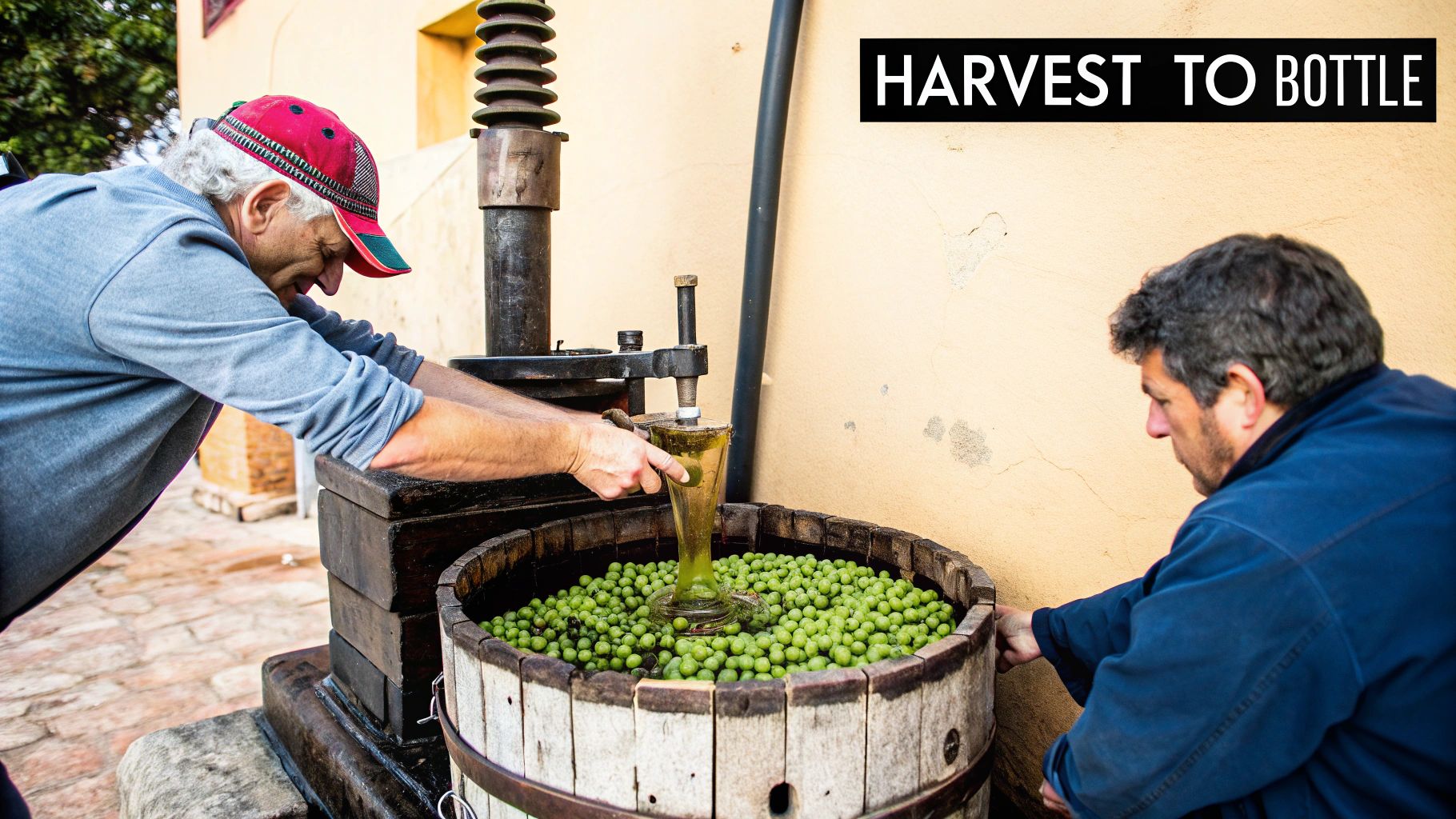
Imagine making fresh-squeezed orange juice. You wouldn't use chemicals or heat, would you? You'd simply press the fruit. Making extra virgin olive oil is no different. It’s all about capturing the pure, unadulterated essence of the olive using nothing but mechanical force.
From the moment an olive leaves its branch, a countdown timer begins. The fruit must get to the mill within hours, because oxidation and fermentation are the sworn enemies of great olive oil. Any delay invites decay, which compromises the flavor and ruins the quality. Speed is everything.
The Gentle Art of Cold Extraction
At the mill, the whole olives are crushed into a thick paste. This is where the term “cold extraction” comes into play—a non-negotiable rule for true EVOO. The entire process, from crushing to spinning, must be kept below a strict temperature of 80.6°F (27°C).
Why the obsession with staying cool? You could certainly extract more oil by cranking up the heat, but you'd be cooking away everything that makes it special. Heat murders the delicate, peppery flavors and destroys the powerful antioxidants (polyphenols) that give EVOO its legendary health benefits. Keeping it cool is about protecting the good stuff.
This gentle, low-temperature method is what preserves the oil’s fragile aromas, complex flavors, and nutritional integrity. It’s a process focused entirely on quality, not quantity.
It's a painstaking approach that ensures the oil is as close to its natural state as possible. Just pure fruit juice. To get a closer look at this journey, you can dive deeper into how oil is extracted from olives.
What "First Press" Really Means
You’ll often see “first press” on a label. This term is a romantic throwback to the days of old-school stone presses. Today, the technology is different—most modern mills use a centrifuge—but the core principle is identical.
- Purity is Paramount: The oil is extracted in a single, continuous step.
- No Second Chances: What’s left of the olive paste isn't re-pressed to squeeze out lower-quality oil.
This single, uninterrupted extraction guarantees that you're getting the absolute best from the olive. It truly is the first, and only, press.
Reading the Label: The Secret Numbers That Reveal Everything
Those numbers printed on a bottle of high-quality olive oil aren't just for show. They're the oil's vital signs, offering a secret window into its true character. Once you know what they mean, you can see past the clever marketing and judge the quality for yourself.
Two of the most critical metrics you'll find are free acidity and peroxide value. Together, they tell the hidden story of an olive's journey, from the moment it was picked to the second it was bottled.
The Truth About Acidity
Think of free acidity as a snapshot of the olive's health at the precise moment of pressing. It measures how much the fats have broken down into free fatty acids—a process that kicks into high gear the instant an olive is bruised, damaged, or simply left to sit too long.
To earn the extra virgin title, an oil’s acidity must be below 0.8%. But the truly world-class oils? Their producers brag about much lower numbers. An incredibly low acidity, like 0.2%, is a testament to pristine olives, handled like precious jewels, and milled within hours of being picked. You can dive deeper into olive oil acidity to see why a lower number is always a good sign.
Peroxides and Freshness
While acidity tells you about the past (the quality of the fruit), the peroxide value tells you about the oil's present and future. It’s a measure of oxidation—a fancy word for aging. It’s the same chemical reaction that makes a sliced apple turn brown on your kitchen counter.
A low peroxide value is your best indicator of freshness and proper handling. It’s proof that the oil has been shielded from its enemies—light, heat, and air—and still holds onto its powerful antioxidants and vibrant flavors.
These two numbers work in tandem to paint a complete picture. A low acidity level proves the oil was made from perfect raw materials, while a low peroxide value proves it has been treated with care ever since. Together, they are your most reliable guide to finding an olive oil that is truly extra virgin in every sense of the word.
Why Taste Is the Ultimate Test
A lab report gives us a crucial snapshot of an oil’s health, but the numbers only tell half the story. A chemical analysis can't capture the vibrant, complex character of a truly exceptional olive oil. For that, we rely on the most sophisticated tool of all: the human palate.
This is where sensory analysis comes in. Before any oil can be certified "extra virgin," it must pass a rigorous blind taste test conducted by a panel of trained experts. These professionals can detect the slightest imperfections that a machine would miss, ensuring the oil is not just chemically sound, but genuinely delicious.
The Three Hallmarks of Quality
What are these experts searching for? They’re looking for three specific positive attributes that define the soul of extra virgin olive oil. To pass, an oil must have them.
- Fruitiness: This is the aroma of fresh, healthy olives. It might remind you of green grass, artichoke, tomato vine, or even hints of apple or almond.
- Bitterness: A touch of bitterness on the tongue isn't a flaw—far from it. It’s a classic sign of a fresh oil packed with powerful, healthy antioxidants.
- Pungency: This is that peppery or spicy kick you feel in the back of your throat, the one that might make you cough.
That peppery tickle isn't a mistake. It’s the signature of potent, health-giving polyphenols like oleocanthal, a natural anti-inflammatory compound. That sensory kick is a direct signal of an oil's quality and nutritional firepower.
This human-led tasting is absolutely non-negotiable for certification. It confirms the oil has the premium character we expect.
If you want to train your own palate, you can find great tips on how to taste olive oil just like the pros do. At the end of the day, taste is what truly proves an oil has earned its prestigious title.
Navigating the Olive Oil Aisle
Walking down the olive oil aisle can feel like a pop quiz. The shelves are a sea of green and gold, with bottles shouting terms like "Pure," "Light," and "Virgin," all vying for a spot in your cart. What’s the real story behind these labels? It’s actually simpler than it looks, and knowing the difference puts you in control.
At the very top of the quality ladder, you'll find Extra Virgin Olive Oil (EVOO). This is the good stuff—the highest grade, full of flavor and health benefits.
Just one step down is Virgin Olive Oil. It's made the same way as EVOO, using only mechanical presses without any chemicals. The main difference? It has a slightly higher acidity level (up to 2.0%) and might have some minor sensory flaws. It's still a decent, unrefined oil, but it just doesn't quite meet the impeccable standards of its extra virgin cousin.
The Refined Oils
Now, this is where things get tricky. Oils labeled "Pure Olive Oil" or "Light Olive Oil" sound healthy, but the names are seriously misleading. These are refined oils.
Refining is an industrial process that uses heat and chemical solvents to treat low-quality olive oils that are riddled with defects. This aggressive process strips the oil of its color, aroma, and, most importantly, nearly all of its beneficial nutrients like polyphenols. What's left is a bland, neutral, and colorless oil. To make it sellable, producers then blend in a tiny amount of virgin or extra virgin olive oil to add back a hint of flavor and color.
Don't be fooled: "Light" has nothing to do with calories. It simply refers to the oil's pale color and neutral taste after all that heavy processing.
So, how should you use a true EVOO? This infographic offers a handy guide, showing its best uses from raw drizzles to gentle cooking.
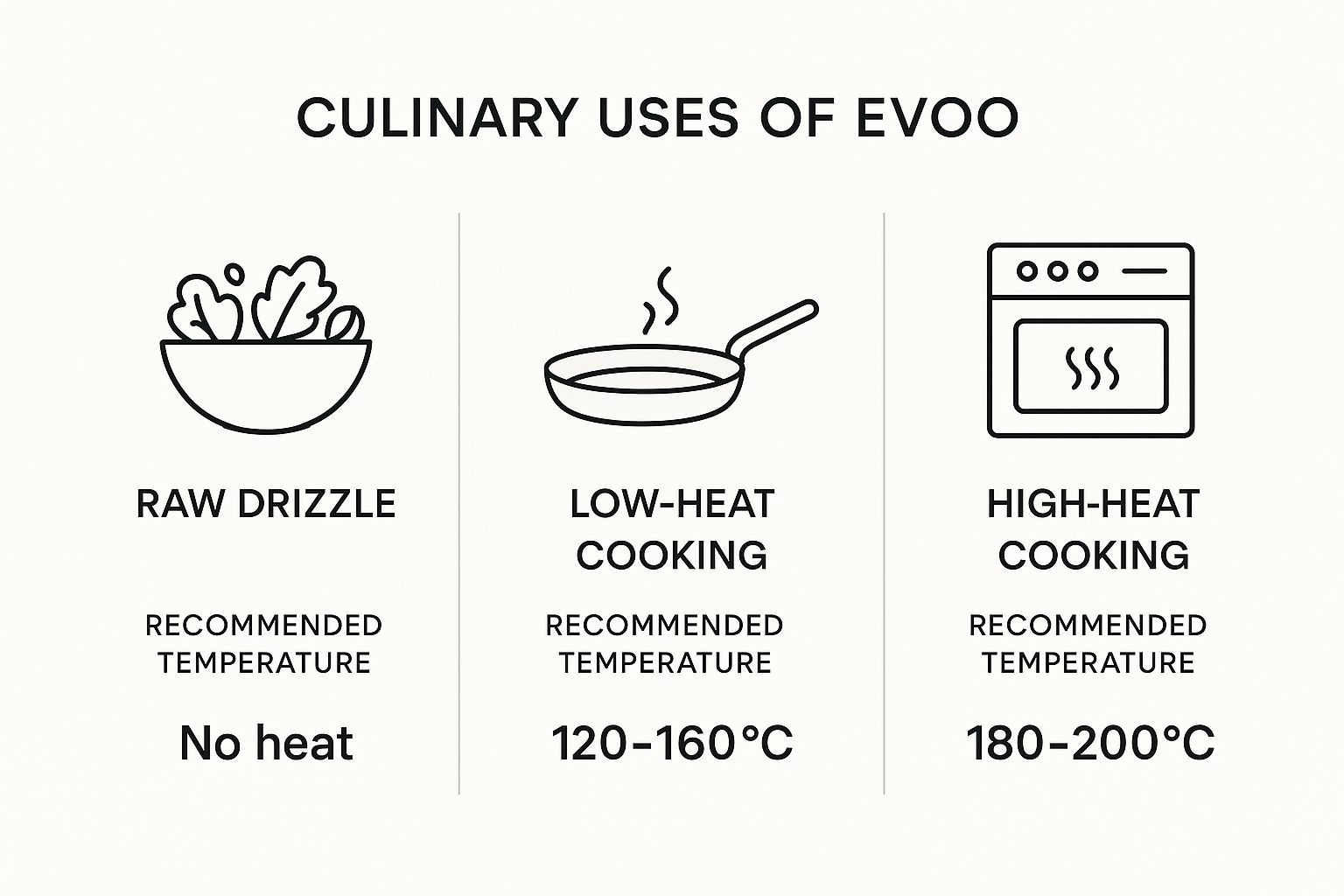
As the chart shows, EVOO’s versatility is one of its greatest strengths, perfect for finishing dishes and gentle cooking where its fantastic flavor and nutrients can shine. This is a world away from refined oils, which are really only good for high-heat cooking where you don't want any flavor interference.
To make things even clearer, let's break down the key differences side-by-side.
Olive Oil Grades: A Clear Comparison
This table cuts through the marketing noise, giving you a straightforward comparison of the main olive oil grades you'll find on the shelf.
| Attribute | Extra Virgin Olive Oil (EVOO) | Virgin Olive Oil | Refined Olive Oil ('Pure' or 'Light') |
|---|---|---|---|
| Production Method | Cold-extracted, no chemicals or heat. Pure fruit juice. | Cold-extracted, no chemicals or heat. | Treated with heat and chemicals. |
| Acidity Level | Below 0.8%. | Up to 2.0%. | Acidity is chemically neutralized. |
| Flavor & Aroma | Fruity, peppery, complex, and aromatic. | Milder flavor, may have minor sensory defects. | Bland, neutral, and almost flavorless. |
| Health Benefits | Highest in antioxidants (polyphenols) and vitamins. | Fewer antioxidants than EVOO, but still beneficial. | Most nutrients and antioxidants are destroyed. |
| Best For | Salad dressings, drizzling, dipping, low-heat cooking. | General cooking, sautéing. | High-heat frying and baking (when flavor is not desired). |
Ultimately, choosing the right oil comes down to what you're doing in the kitchen and your standards for quality.
If you want to become a true expert at the grocery store, our complete guide on how to buy olive oil is the perfect next step. After all, understanding what extra virgin olive oil means is about embracing a commitment to quality you can actually taste.
The Global Journey of Liquid Gold
Ever wonder how that bottle of extra virgin olive oil made its way to your kitchen? It didn’t just magically appear. It’s the final stop on a long, winding global journey that starts in ancient Mediterranean groves and ends in supermarkets thousands of miles away. This isn't just about farming—it's about a massive economic engine, especially for Europe.
Extra virgin olive oil is a cornerstone of the European Union's agricultural economy. It's a prized commodity that shapes international trade and sways markets worldwide. Just look at the numbers: over a recent eight-month period, the EU saw its olive oil export volumes jump by 36.1% compared to the previous year. A massive 74.6% of that was top-tier extra virgin olive oil.
But at the same time, fierce market competition pushed the average export price down by 42.4%. It's a perfect example of the powerful forces at play in this global market. You can dig deeper into the latest market statistics on olive oil exports to see the full picture.
From Local Treasure to Global Commodity
The path from a small, family-owned grove in Italy or Spain to your pantry is shaped by an incredible number of factors. The price you ultimately pay is a direct reflection of this complicated supply chain.
- Harvest Yields: If there's a bad harvest in Andalusia, Spain—the world's largest olive oil-producing region—it sends shockwaves through the entire market. Supply tightens, and prices inevitably go up.
- Consumer Demand: As people in countries like the United States and Japan become more health-conscious, they're creating huge new markets and driving up demand for authentic EVOO.
- Logistics and Tariffs: Don't forget the hidden costs. Transportation, import duties, and international trade agreements all add layers of complexity and cost long before a bottle ever hits a retail shelf.
The next time you drizzle that golden liquid over a salad, take a moment to think about its story. It’s not just the work of one farmer; it’s the result of a delicate balance between agriculture, tradition, and global economics.
This worldwide perspective helps explain why the price of olive oil can swing so dramatically from one year to the next. In this context, extra virgin olive oil isn't just a cooking ingredient—it's a product deeply tied to the health of both the land and the global economy.
Your Toughest EVOO Questions, Answered
Even after getting the basics down, a few questions always seem to pop up. Let's clear up some of the most common myths and practical sticking points so you can feel completely confident about how you use and store your liquid gold.
So, let's get right to the big one: the cooking debate.
Can You Really Cook with Extra Virgin Olive Oil?
Yes, you absolutely can. The idea that EVOO is only for finishing is a myth that just won't quit.
A high-quality extra virgin olive oil has a smoke point somewhere between 375-410°F (190-210°C). This range makes it a fantastic and safe choice for everyday cooking, from sautéing vegetables to roasting chicken. Its stability under heat isn't magic; it comes from its very low free fatty acid content and a high concentration of antioxidants, which act as a natural shield against breaking down.
Another bit of confusion often comes from some old-school terms you see on the label.
What Does "First Cold Press" Actually Mean Today?
The phrase "first cold press" paints a romantic, rustic picture, doesn't it? While the sentiment is nice, modern olive oil production has changed what it really means.
These days, "first press" is basically a given. Almost all genuine EVOO is made with a single, continuous extraction process using a centrifuge, not an old-fashioned press.
The key term to focus on here is "cold." This is your guarantee that the olive paste was kept below a tightly regulated temperature of 80.6°F (27°C) during the entire milling process. This gentle handling is what protects the oil's delicate aromas, its rich flavors, and all those healthy polyphenols.
Finally, once you have that beautiful bottle, how do you keep it that way?
Your olive oil's three greatest enemies are heat, light, and air. Protecting it from these elements is the secret to preserving its fresh flavor and health benefits.
To keep your oil in top condition, always store it in a cool, dark place like a pantry or cabinet—and never right next to the stove. Always screw the cap back on tightly to keep oxygen out. And remember, unlike a fine wine, olive oil doesn't get better with age. For the best flavor and quality, try to use it up within a year of its harvest date.
At Learn Olive Oil, we believe understanding the details empowers you to make better choices. Continue your journey and discover the world of premium olive oil at https://learnoliveoil.com.

 Learn Olive Oil
Leave a comment